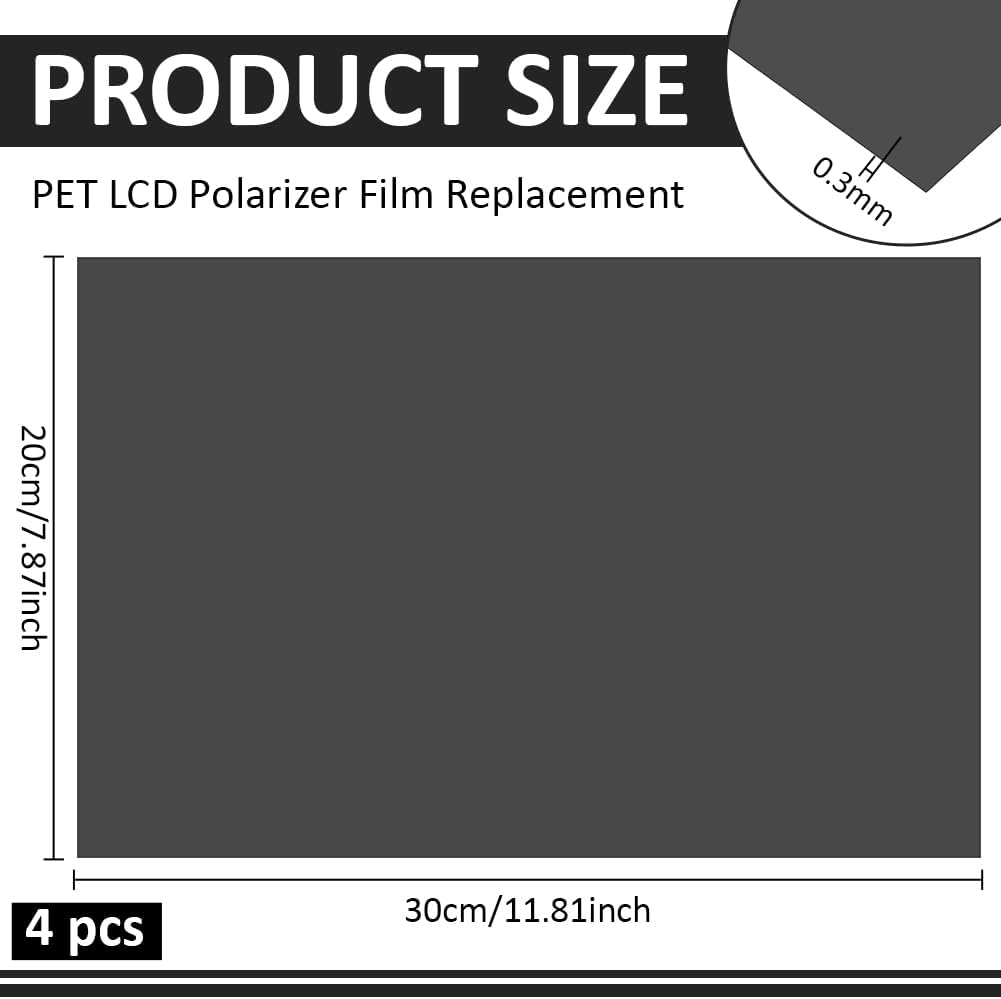
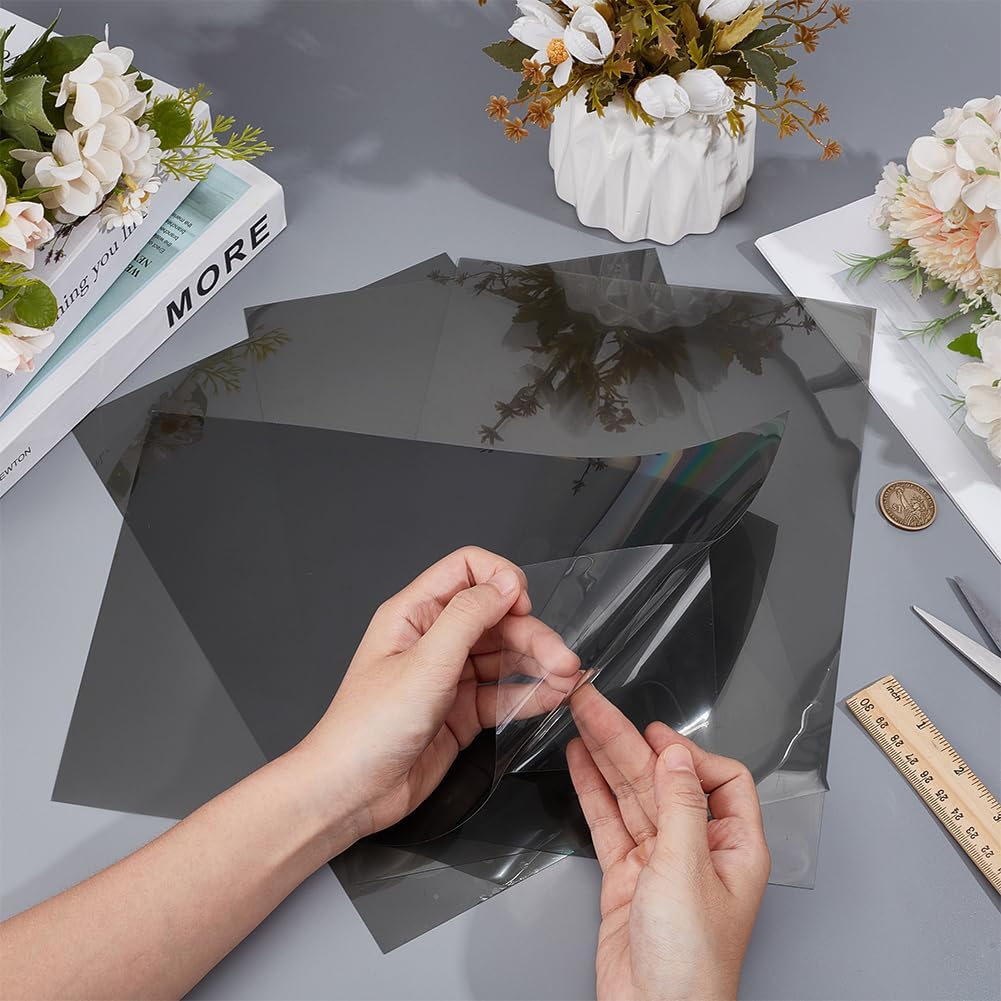
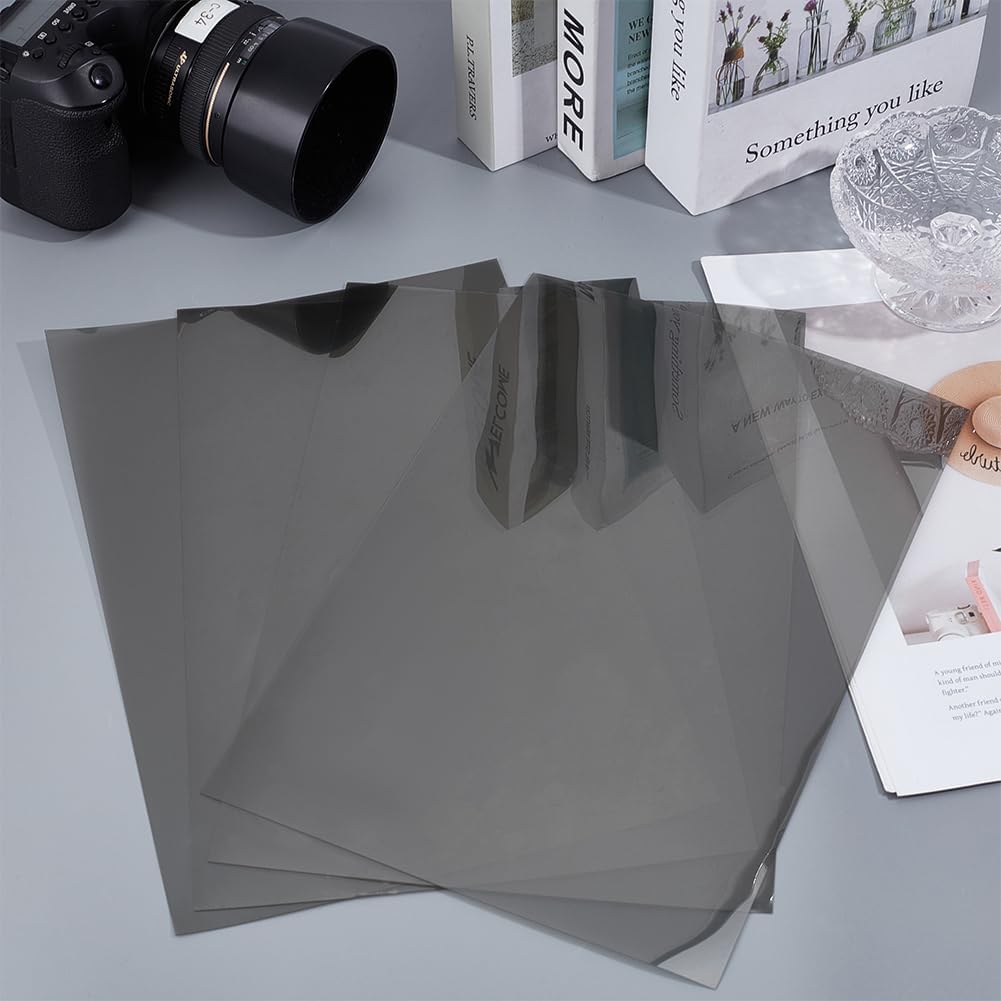
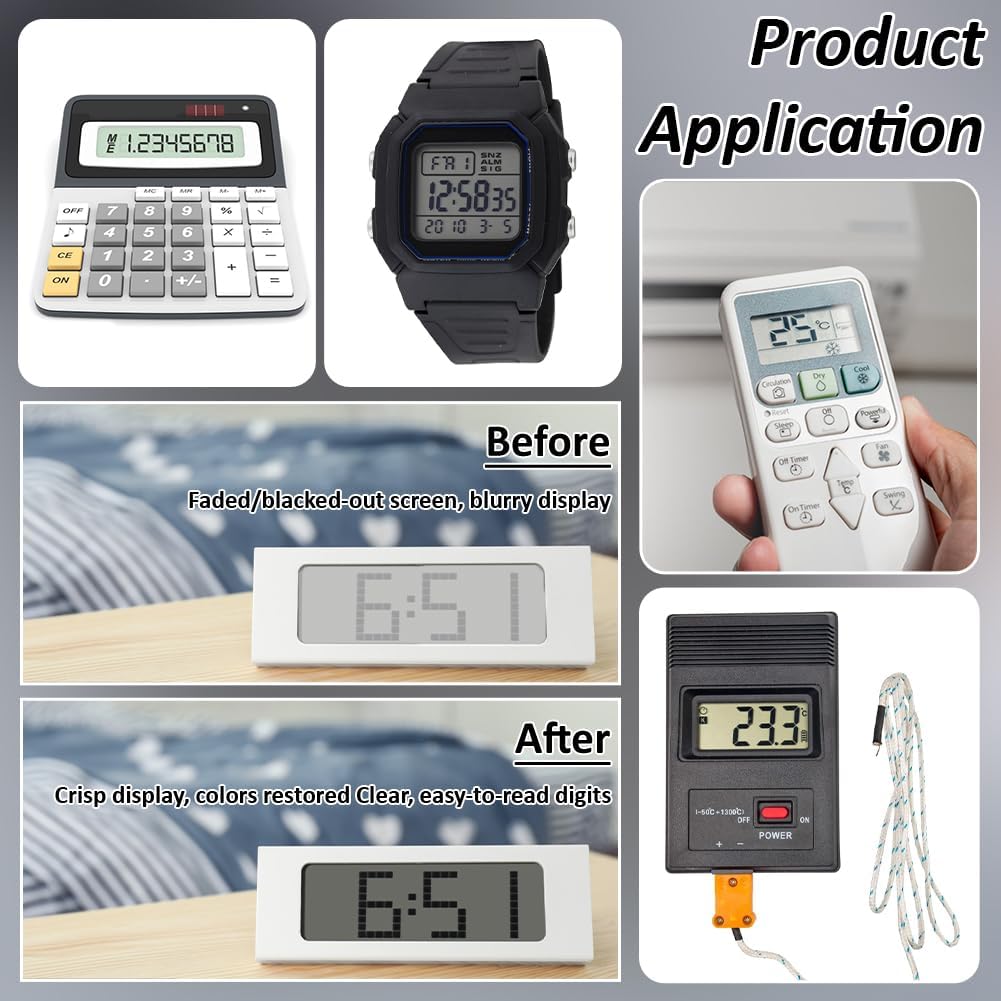
What this is and what it solves\nThe BENECREAT set includes four rectangular polarized films made from PET, each measuring 11.8 x 7.8 inches (30 x 20 cm) with a thickness of 0.3 mm. On the surface you’ll find a scratch- and deformation-resistant layer designed for durability, which helps when you’re cutting to fit or applying to screens that may be bumped or touched during a project. If you’re looking to explore light polarisation or simply want a practical, reusable filter for screen-related tasks, these sheets offer a straightforward, low-cost option that doesn’t require a complex setup.\n\n## How it’s used and what to expect\nThe films can be cut to the exact size you need, then peeled and stuck onto the target surface. This makes them handy for smaller projects like electronic watch displays, motorcycle dashboard panels, or projector screens. They also lend themselves to physics teaching experiments where observing light polarisation is part of the exercise. If you’re new to polarising sheets, you’ll likely appreciate the flexibility to tailor the size as you go.\n\n## Strengths you’ll notice in everyday use\nOn the positive side, the material is designed to hold its shape, resist scratches and deformation, and accept custom cuts without tearing. The ability to adapt the film to odd dimensions means you can experiment with different layouts or installations without buying multiple sizes. The four-pack gives you a little leeway: you can start with one sheet on a model or display, then save others for future projects.\n\n## Limitations and trade-offs\nIt isn’t a universal, magic solution—polarising film can still lose clarity or performance if misaligned, or if the protective surface isn’t removed cleanly. The description notes scratch resistance and deformation resistance, but it doesn’t specify optical quality metrics or transmission efficiency, which can matter for high-contrast displays or precise educational demonstrations. If your priority is pristine, cinema-grade polarisation, this may fall short of a high-end filter.\n\n## Who this is best for\n- Hobbyists and teachers looking to demonstrate polarisation concepts or to refurbish simple displays.\n- Students or makers who want inexpensive, cut-to-fit filters for projects around LCDs, dashboards, or projection surfaces.\n- Practitioners who value flexibility and a low barrier to entry for light experiments.\n\n## Who might want to skip it\nIf you require strict optical performance, guaranteed transmission figures, or filters designed for professional measurement or cinema-grade displays, this set may not meet that level. Also, if you frequently work with very small components where 0.3 mm thickness becomes a constraint, a different format might be preferred.\n\n## Before you buy: quick considerations\n- Check whether your project can accommodate a cut-to-size approach and whether you’ll benefit from four sheets in a single pack.\n- Consider whether you’ll benefit from polarisation demonstrations or screen adjustments rather than full-screen, high-precision polarisation effects.\n- Ensure you remove the protective film fully before applying to avoid trapping air or debris.\n\n## Practical use case example\nImagine upgrading a small projector screen in a classroom: you measure the panel, trim one sheet to fit, and apply it to reduce glare during daytime demonstrations. You can then switch to another sheet for a different test or to compare polarisation angles in student experiments.\n\n## The buying decision: when it makes sense, when to pass\nBuying it makes sense if you value a flexible, low-cost starter set for demonstrations, DIY repairs, or light screen projects. It’s less compelling if you need rigorous, quantified optical performance or if your use case involves demanding professional display work.\n\n## FAQ (focused on practical points)\n- Can I cut these sheets with household scissors? Yes, and sharper cutters will yield cleaner edges.\n- Do I need any special adhesive or mounting solution? A simple peel-and-stick approach is described, ensure the surface is clean before application.\n- Will these sheets affect colour accuracy on displays? Minimal impact is likely for casual use, exact colour shift isn’t specified in the product details.\n- How many projects can I run from four sheets? This depends on project size, larger screens will use more material per application.\n- Are they suitable for outdoor use? The base material is PET with scratch resistance, but outdoor exposure isn’t specified.\n\n## Decision point: should you buy it?\nBuying verdict: It’s a solid pick if you prioritise flexibility, value, and the ability to tailor film size for varied, low-stakes projects. It isn’t the best option if you need precise optical metrics or a premium finish for professional lab work. If you’re a teacher or hobbyist focused on practical demonstrations and light repairs, this set aligns with that use-case.