

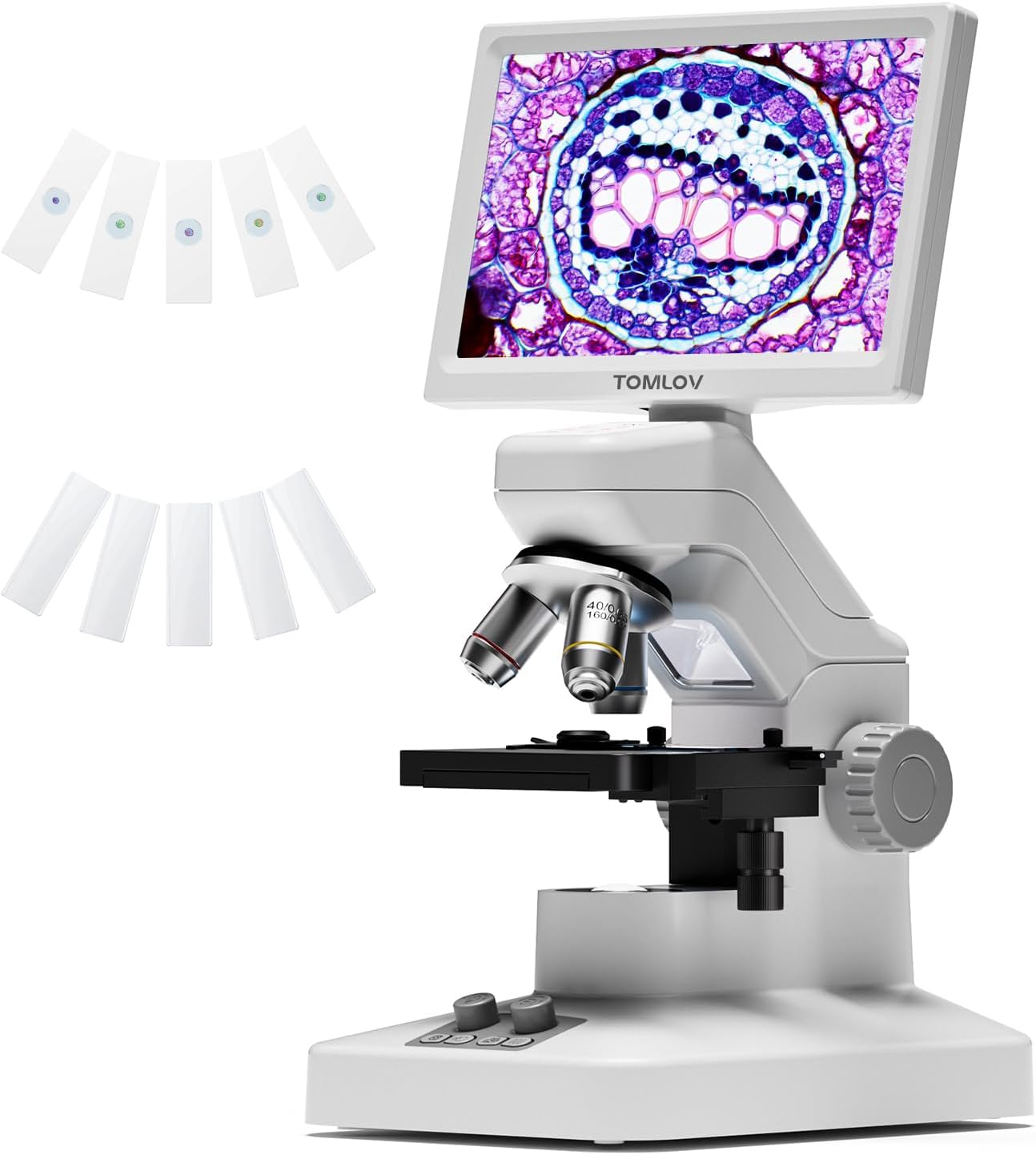
TOMLOV DM301 Max 7-inch digital biological microscope with HDMI, WiFi app control & measurement scale
Product description
If you’re buying a microscope for home learning or classroom demos, the TOMLOV DM301 Max is built around sharing and documenting what you see. You get a 7-inch IPS screen designed for easy viewing at arm’s length, plus phone/WiFi app control and HDMI/USB outputs if you want to put the image on a TV or PC.
It’s not a lab instrument and it’s not trying to be one. Still, it ticks several practical boxes at once: clear magnification for common biological specimens, adjustable illumination for different slide types, and an on-screen measurement scale that can help with basic quantifying.
Key takeaways
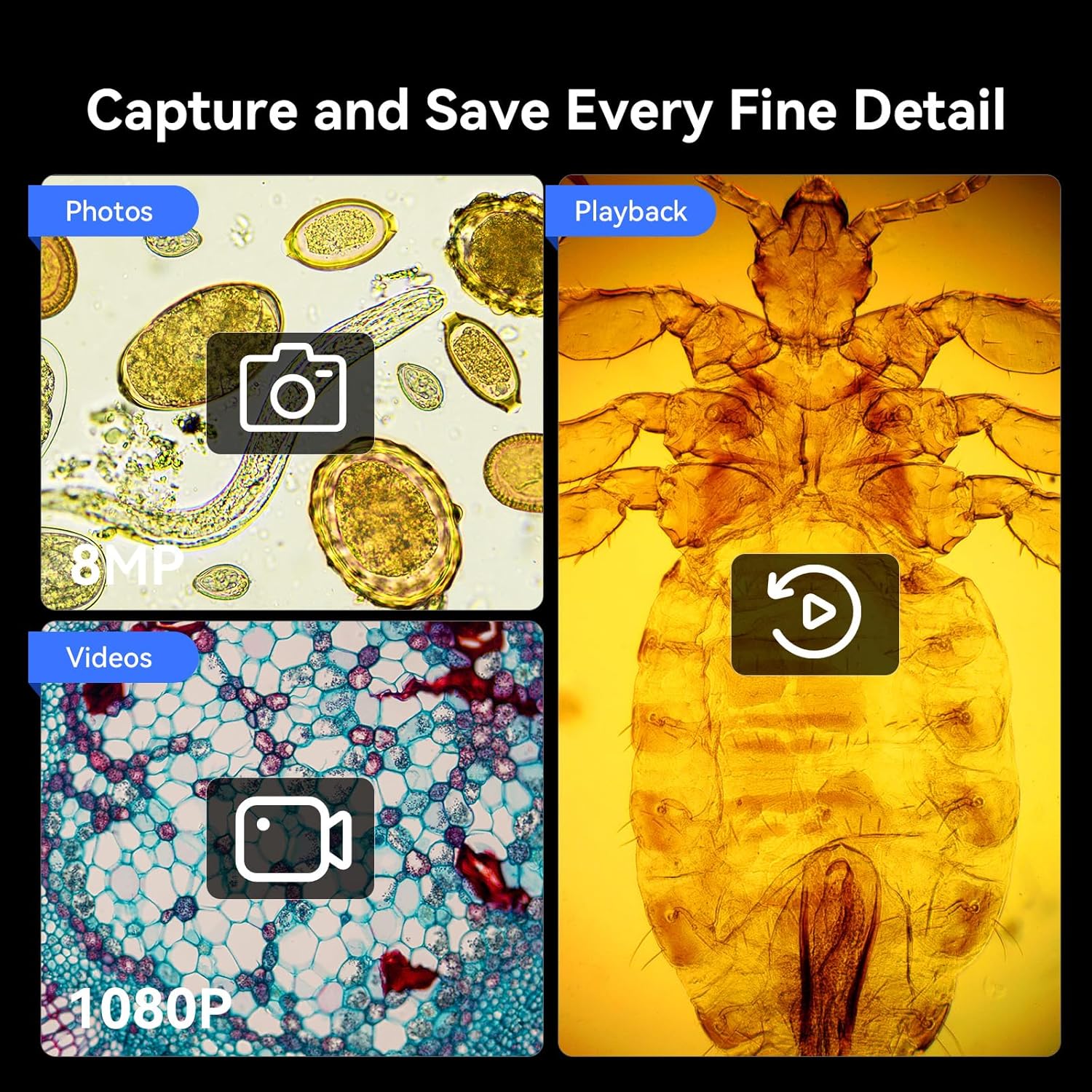
On paper, the DM301 Max looks like a “learn, capture, compare” microscope rather than a purely optical one. The 7-inch IPS display with a wide viewing angle and adjustable tilt is a sensible feature for group work, and the ability to capture 8MP photos and full HD 1080P video makes it easier to keep records for projects.
It also leans into control and convenience: you can operate it via a smartphone app over WiFi, and you don’t have to rely on extra software just to use the built-in measurement scale. If you’re teaching science in a shared setting (family, classroom, after-school clubs), that combo can feel more useful than a microscope that only works through a computer.
The main limitation to bear in mind is that “up to 1200X” is a maximum figure. In real learning terms, you’ll still need to adjust lighting, focus, and slide preparation to get the crispest results—especially with thicker or uneven specimens.
What stands out in everyday use
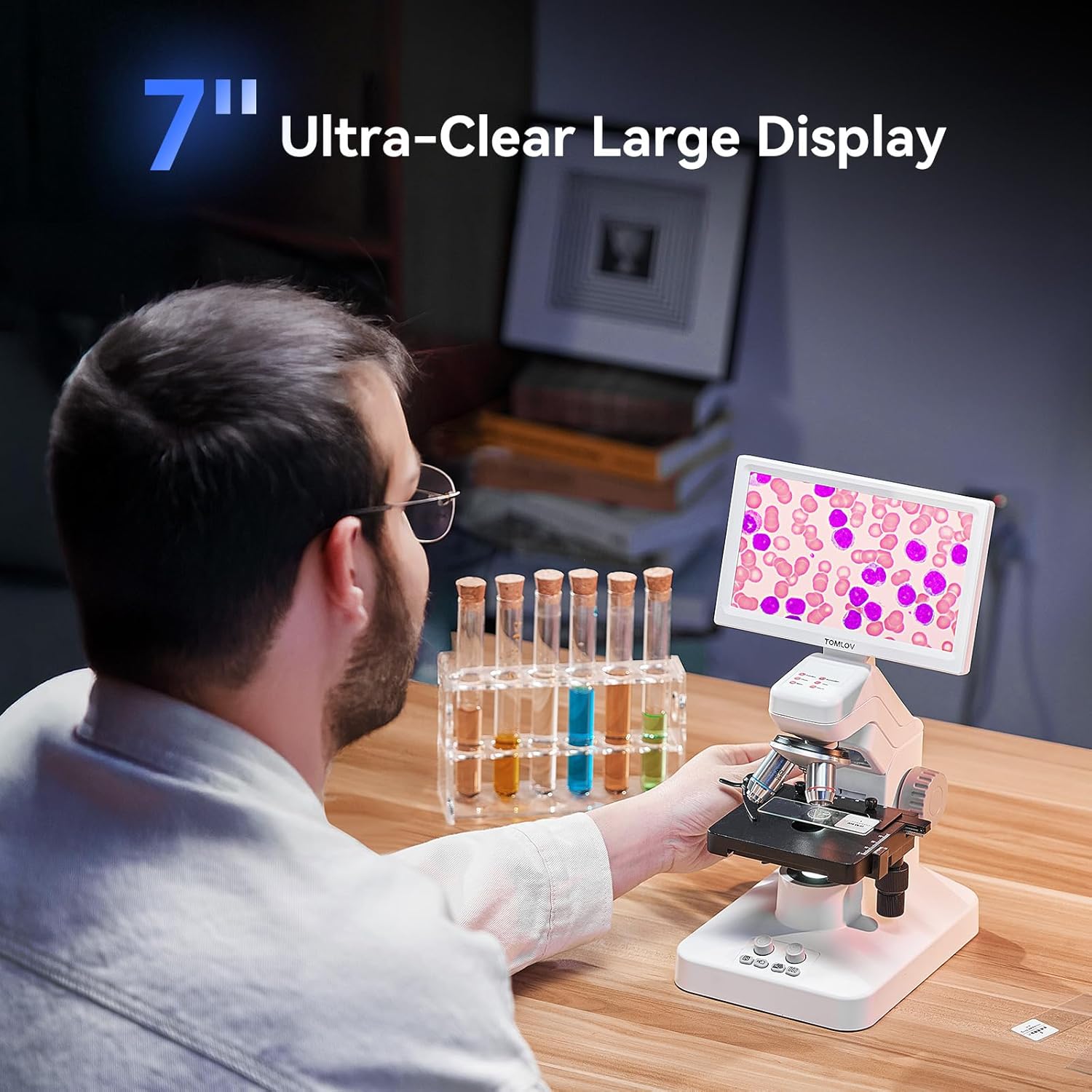
A 7-inch IPS screen is genuinely the point here. Instead of everyone crowding around a small viewing lens, you can show observations on the screen and share them with others. The adjustable 135° tilt is aimed at making that easier from different seating positions.
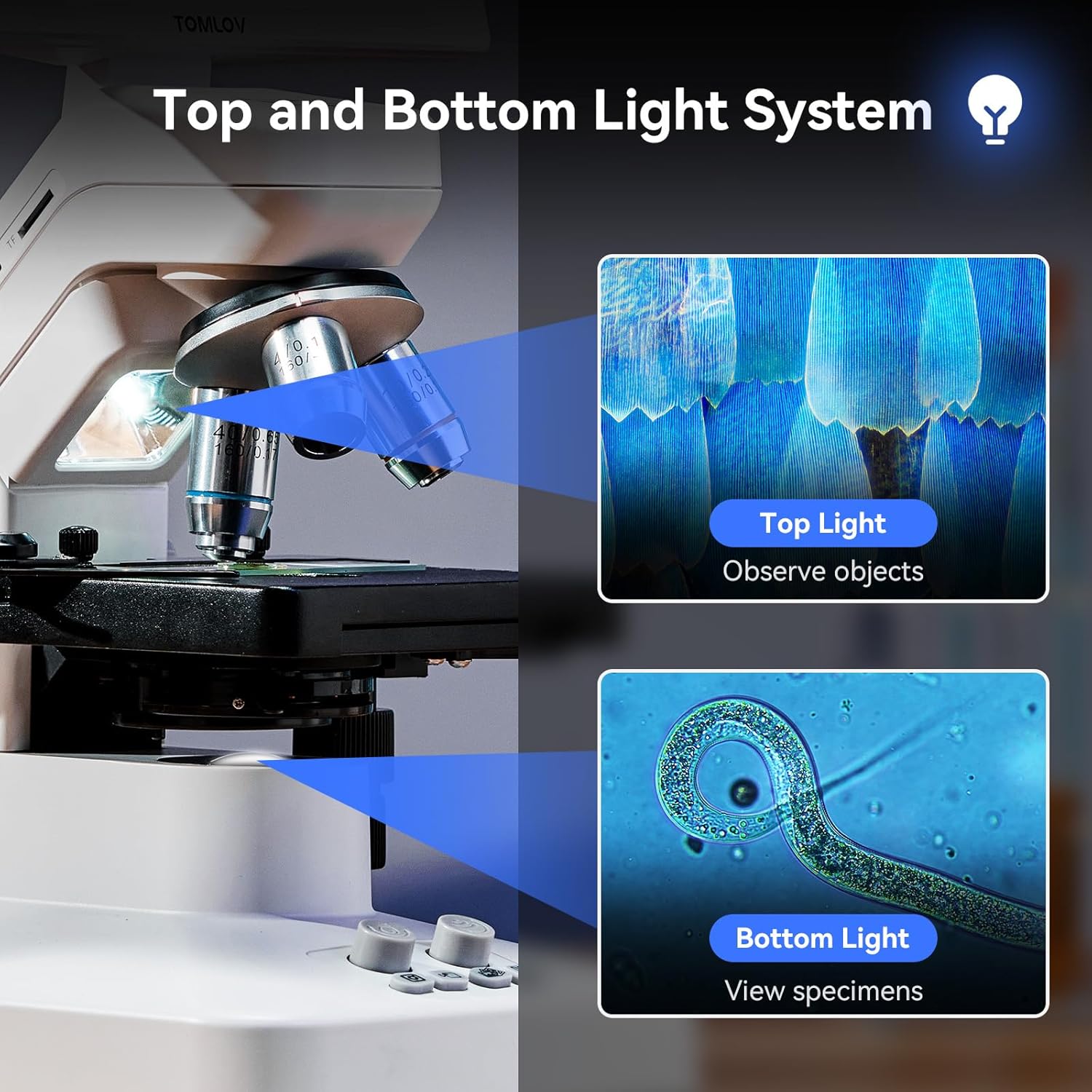
Dual LED lighting (top and bottom) with adjustable brightness is also the kind of feature you notice quickly. Opaque or solid samples need different lighting than transparent slides, and the ability to switch between top and bottom illumination gives you more control over visibility.
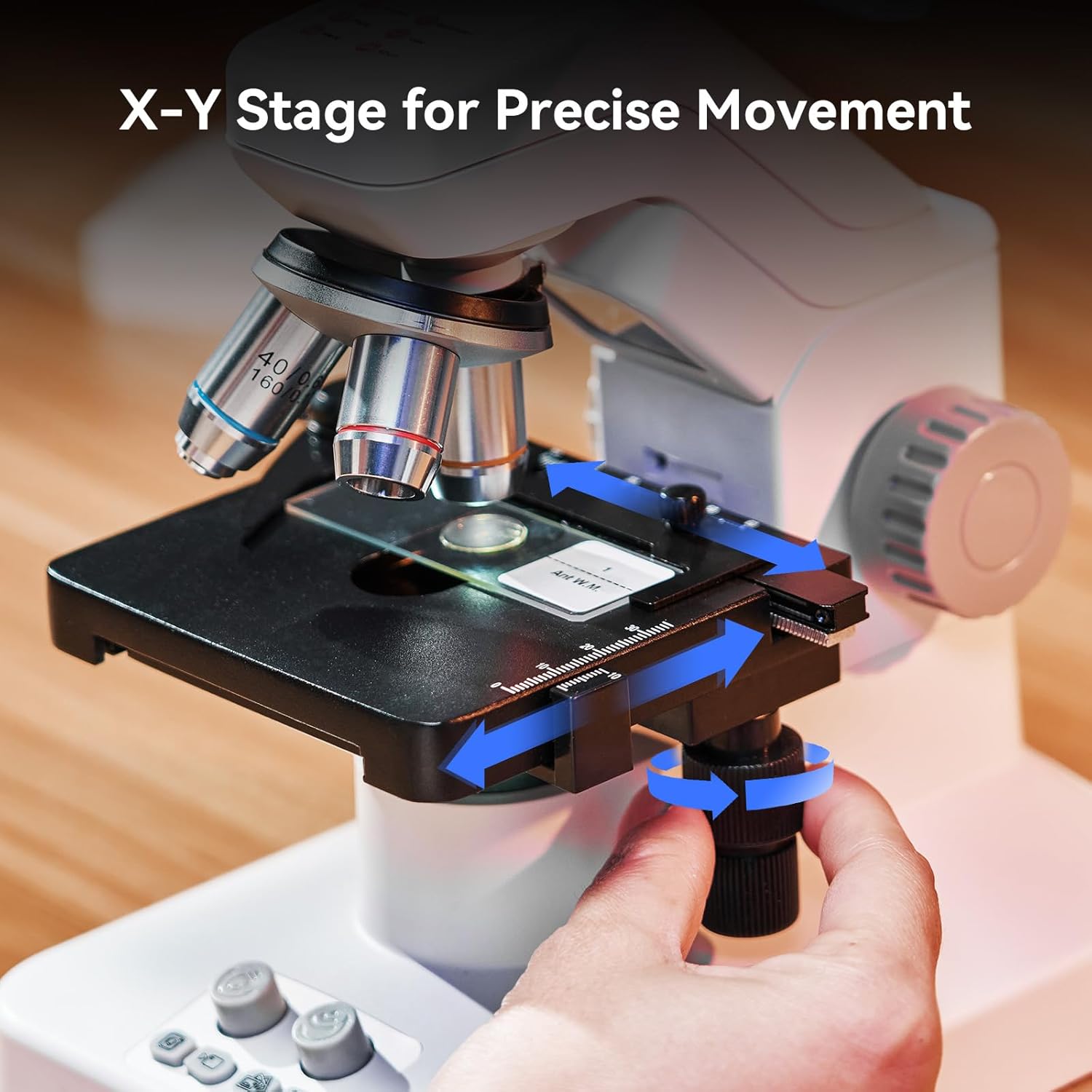
For navigation, the mechanical stage is designed to move slides more smoothly and predictably than a basic tray. The inclusion of an X–Y mechanical stage with a 1.0mm scale divisions hints at repeatable positioning—useful when you’re trying to re-find the same area for a photo, video clip, or a measurement.
There’s also a practical measurement element: a built-in measurement scale on the screen. That’s helpful when you’re recording observations and want to avoid jumping through hoops.
How it compares as a learning microscope
Many entry-level microscopes fall into one of two patterns: either they’re great for looking but awkward to document, or they’re designed for screens but require more computer-driven workflow. This model sits closer to the “document and share” side.
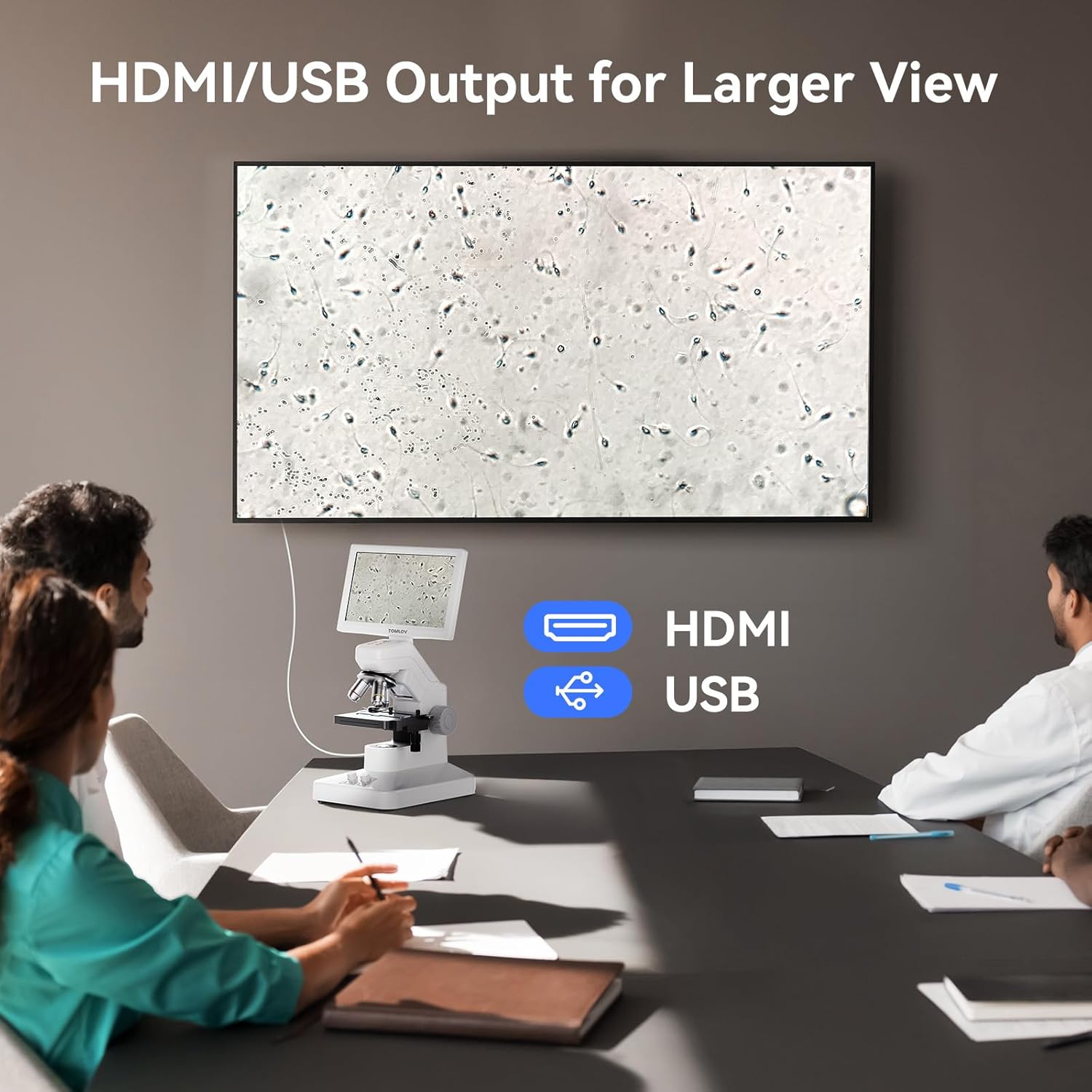
If you often take photos and videos for school projects, or you want to show results to someone else without leaning over a single eyepiece, HDMI output to a TV and the ability to view on a phone/PC can make the microscope feel more flexible.
At the same time, if your goal is advanced specimen analysis where you want deep, operator-controlled optical performance, you may find this more in the educational/materials-learning lane than the scientific research lane.
Tech details that matter before you buy
The TOMLOV DM301 Max uses three achromatic lenses, aiming for sharp, distortion-free images across biological specimens. It’s designed for magnification up to 1200X (as stated), covering a range of specimen types such as blood cells, plant tissues, and small detailed objects.
For output and capture, it supports: - 8MP photos - full HD 1080P videos - HDMI output and USB outputs for viewing on bigger screens and collaboration
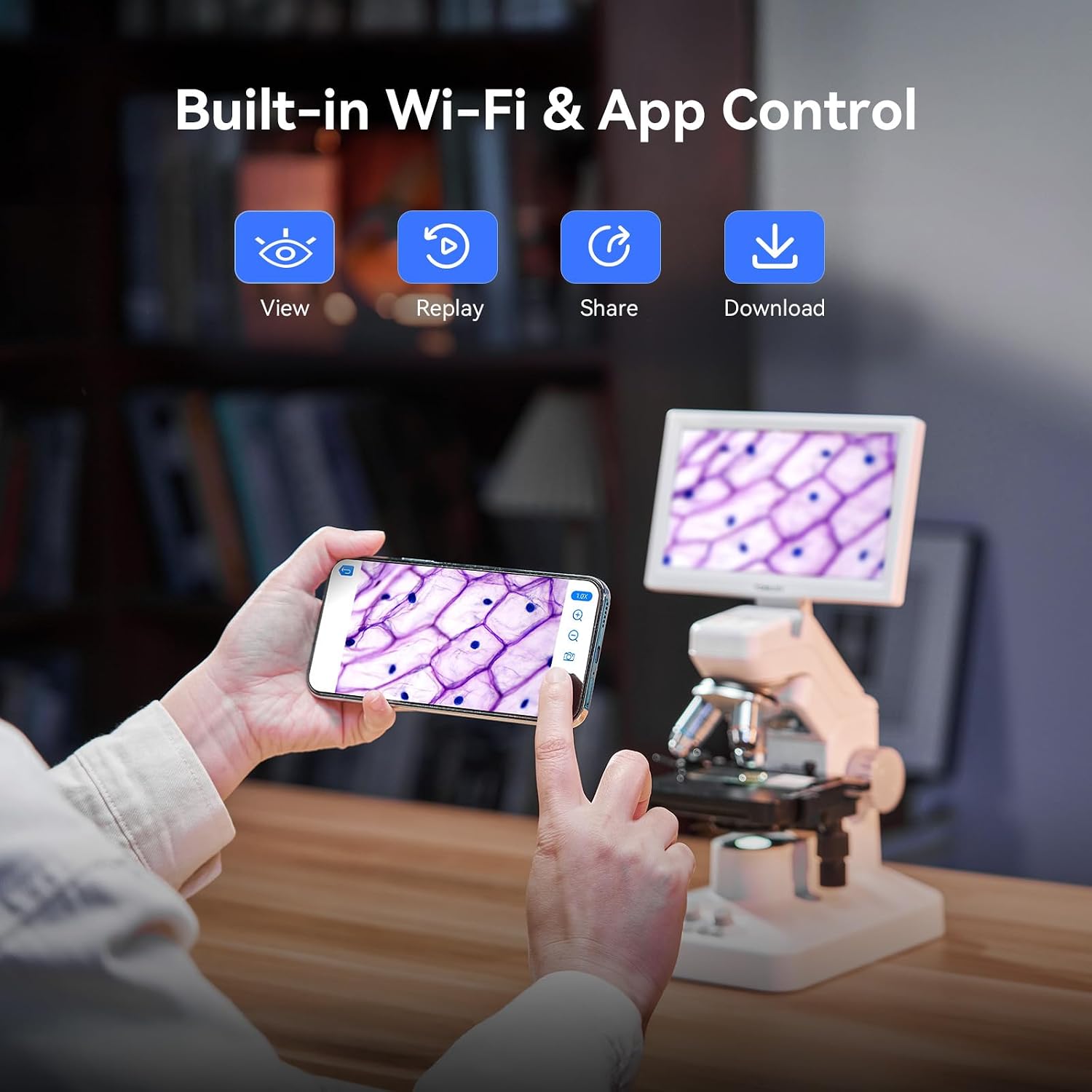
Control is split across two modes: direct operation and wireless app control via WiFi. The app is described as enabling zoom, image/video capture, and on-screen measurement.
For slide handling, it includes a mechanical stage with X–Y movement and a scale division of 1.0mm, intended to support smoother navigation and more repeatable focus.
Who it suits (and who should be cautious)
It makes sense if you’re buying a microscope for adults, kids, or mixed-group learning where sharing and documenting are important. The combo of screen viewing, adjustable lighting, and outputs for TV/PC fits well with STEM learning at home and in classrooms.
It may not suit you if you need a microscope purely for precision optical work, or if your priority is maximum professional-grade performance regardless of screen workflow. Also, if your specimens are very thick or your slides aren’t well prepared, you might find you spend more time adjusting lighting and focus to get the clarity you expect.
You’ll likely get the most from it if you’re happy to work like a “guided lab assistant”: prepare a slide, adjust illumination, use the mechanical stage to move steadily, then capture and measure what you see.
Getting the most from it (practical tips)
Start with lighting before you chase magnification. With dual LED lighting, try bottom illumination for transparent slides and use top lighting when the sample needs extra contrast. Then increase clarity by adjusting brightness rather than jumping straight to the highest magnification.
Once you’ve found a good view, use the mechanical stage to move in small, deliberate steps. That approach helps when you want to capture a consistent image or repeat a measurement area.
A simple “at home” workflow could look like this: place a prepared biological slide, adjust bottom and/or top LED brightness until the specimen edges are visible, zoom in on the feature of interest, capture an image on the screen (or via the app), and then reference the built-in on-screen measurement scale to record approximate size for your notes.
If you’re presenting to a group, use HDMI to put the live view on a bigger screen, so everyone can follow along without moving seats.
Is it worth it?
Buy the TOMLOV DM301 Max if you want a digital biological microscope that’s set up for learning, capturing evidence (photos and video), and sharing observations via the built-in 7-inch IPS display and HDMI/USB outputs. It’s a strong match for STEM projects where measuring on-screen and recording results matter.
Skip it or be cautious if your main requirement is high-end optical performance for demanding research, because this sits firmly in the educational/digital learning category. Also, if you expect flawless clarity at the highest magnification straight away, keep expectations realistic—good slides and careful lighting/focus still make a big difference.
Mini FAQ
Can I use it without a computer?
Yes, the microscope has a built-in 7-inch IPS screen for direct viewing, and it also includes a built-in measurement scale described as usable without extra software.
Does it connect to a phone?
It’s described as compatible with a smartphone via WiFi app control, where the app supports zoom and capturing images/videos.
Can I display it on a TV or bigger screen?
HDMI output is listed, and there are also USB outputs for versatile viewing and collaboration.
Is the measurement scale built in?
Yes, a built-in measurement scale is described as shown on-screen for more precise measuring while observing.
What’s the practical magnification limit?
Magnification is stated as up to 1200X. In practice, clarity will depend on lighting, focus, and slide preparation as with most learning microscopes.