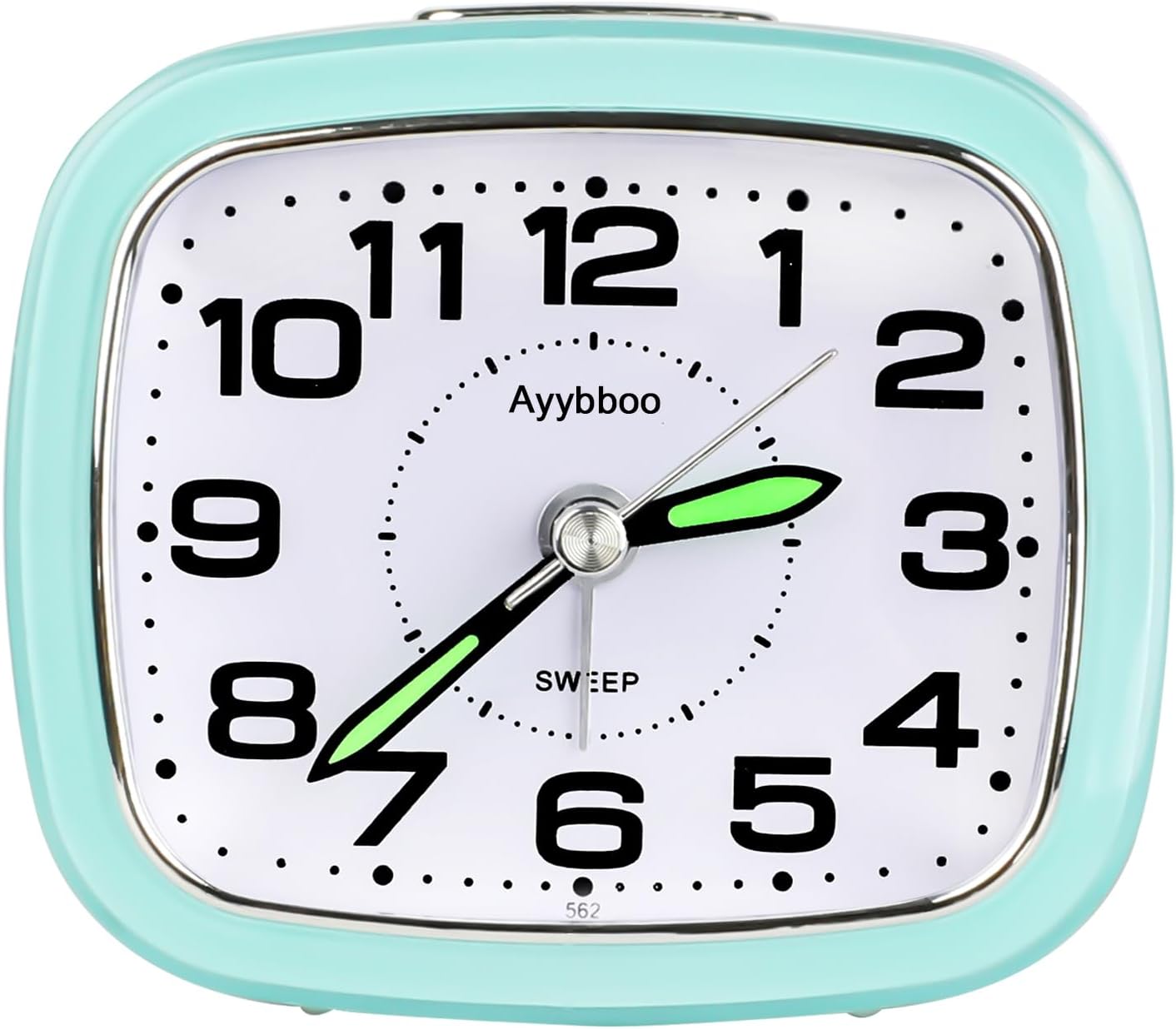
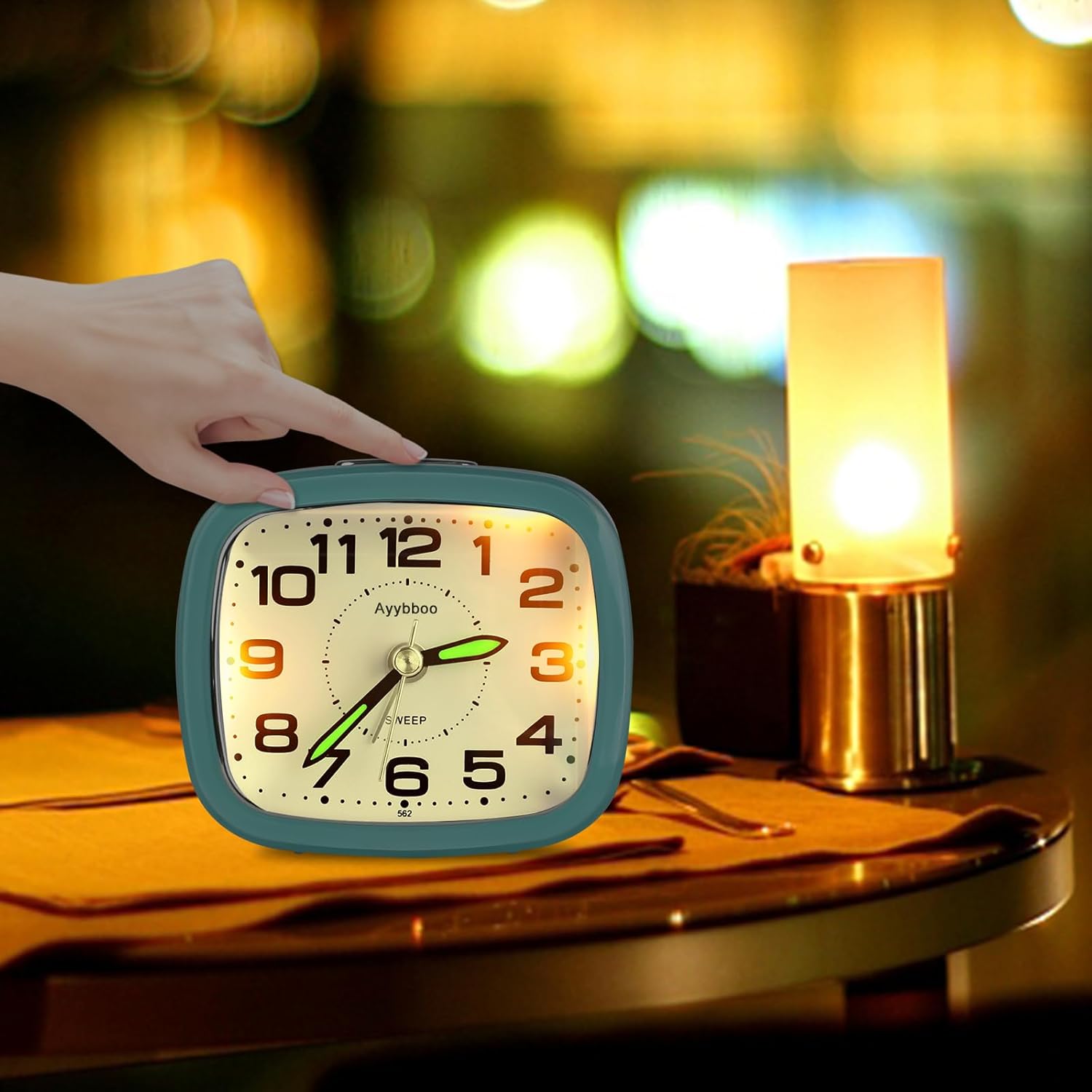
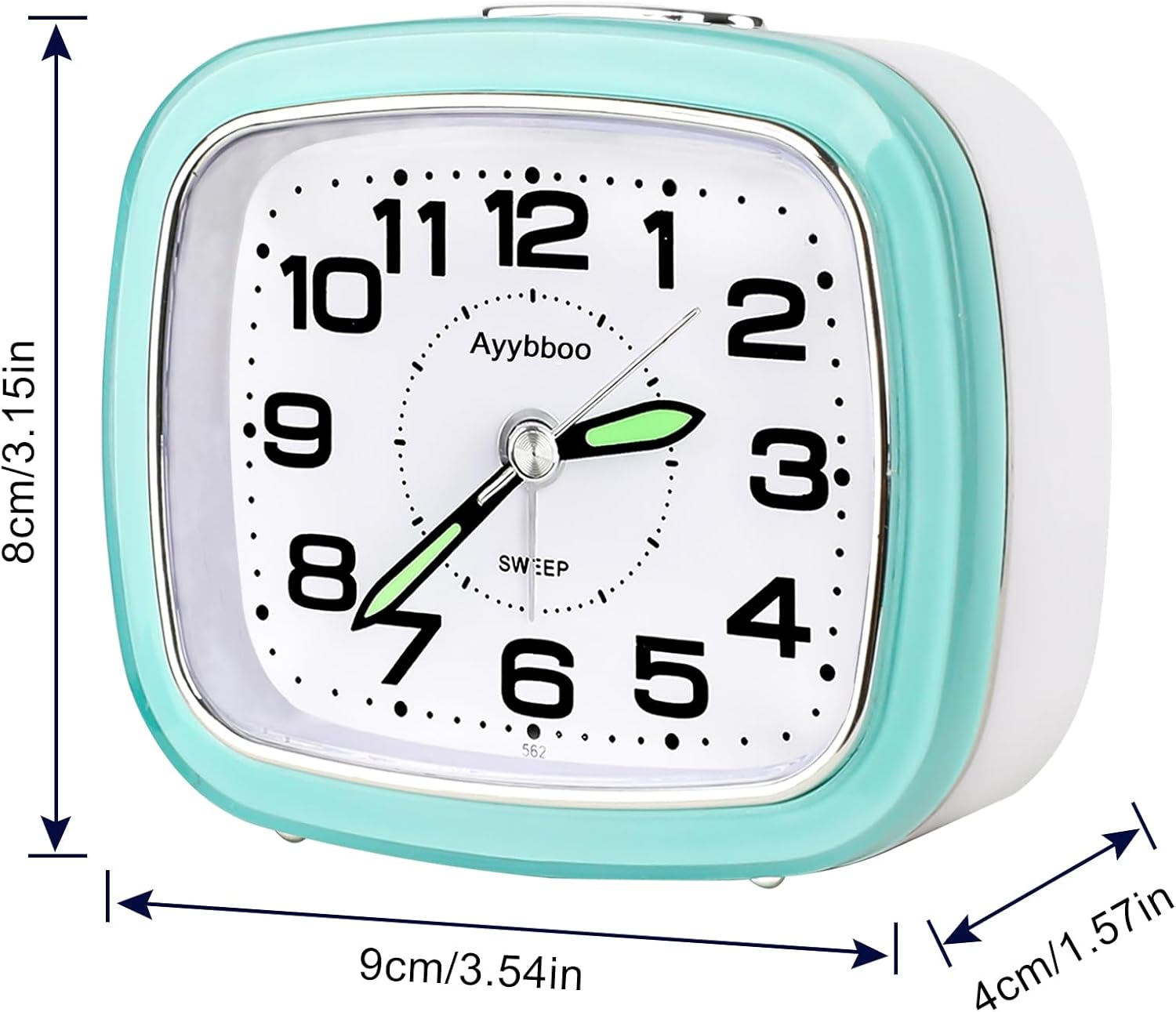
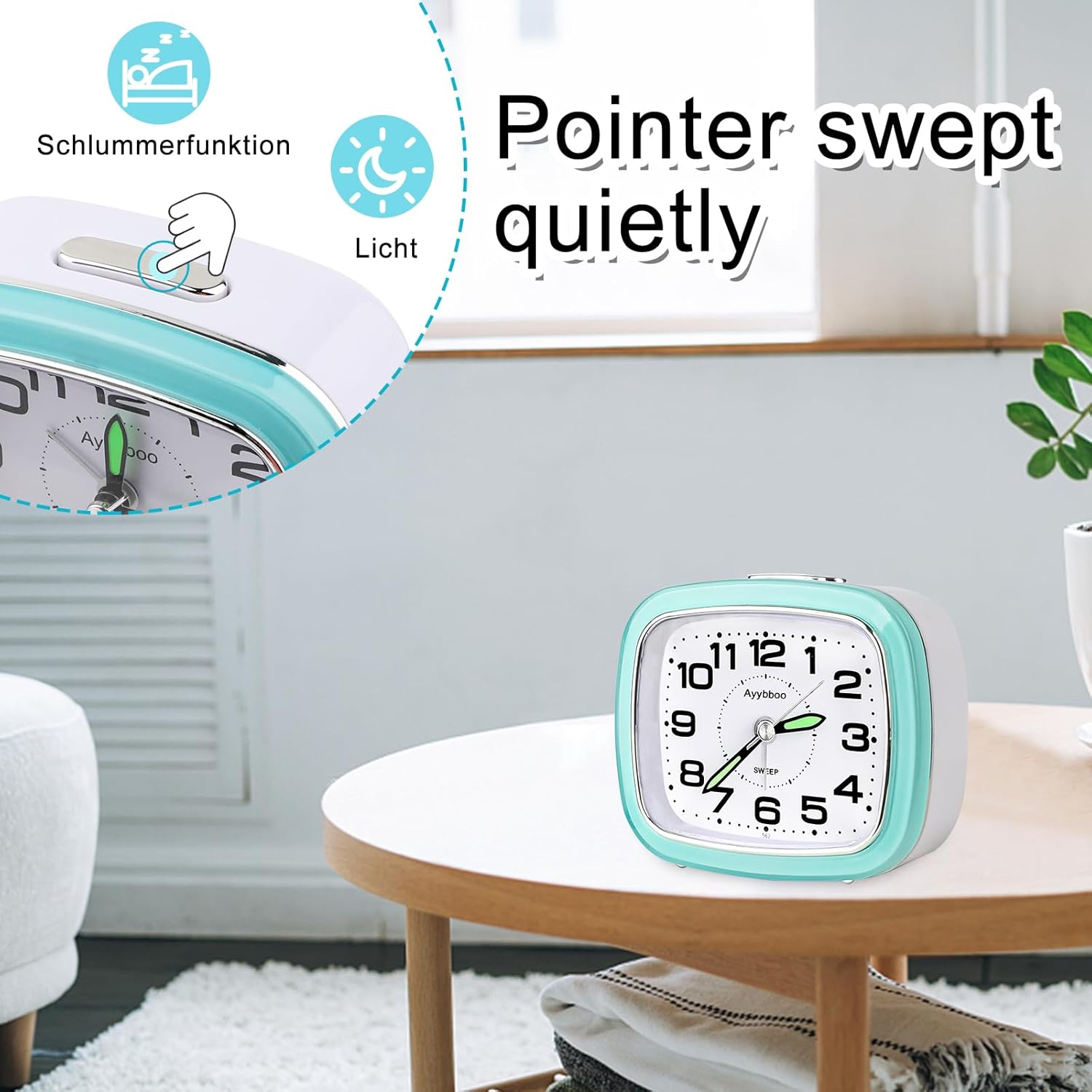
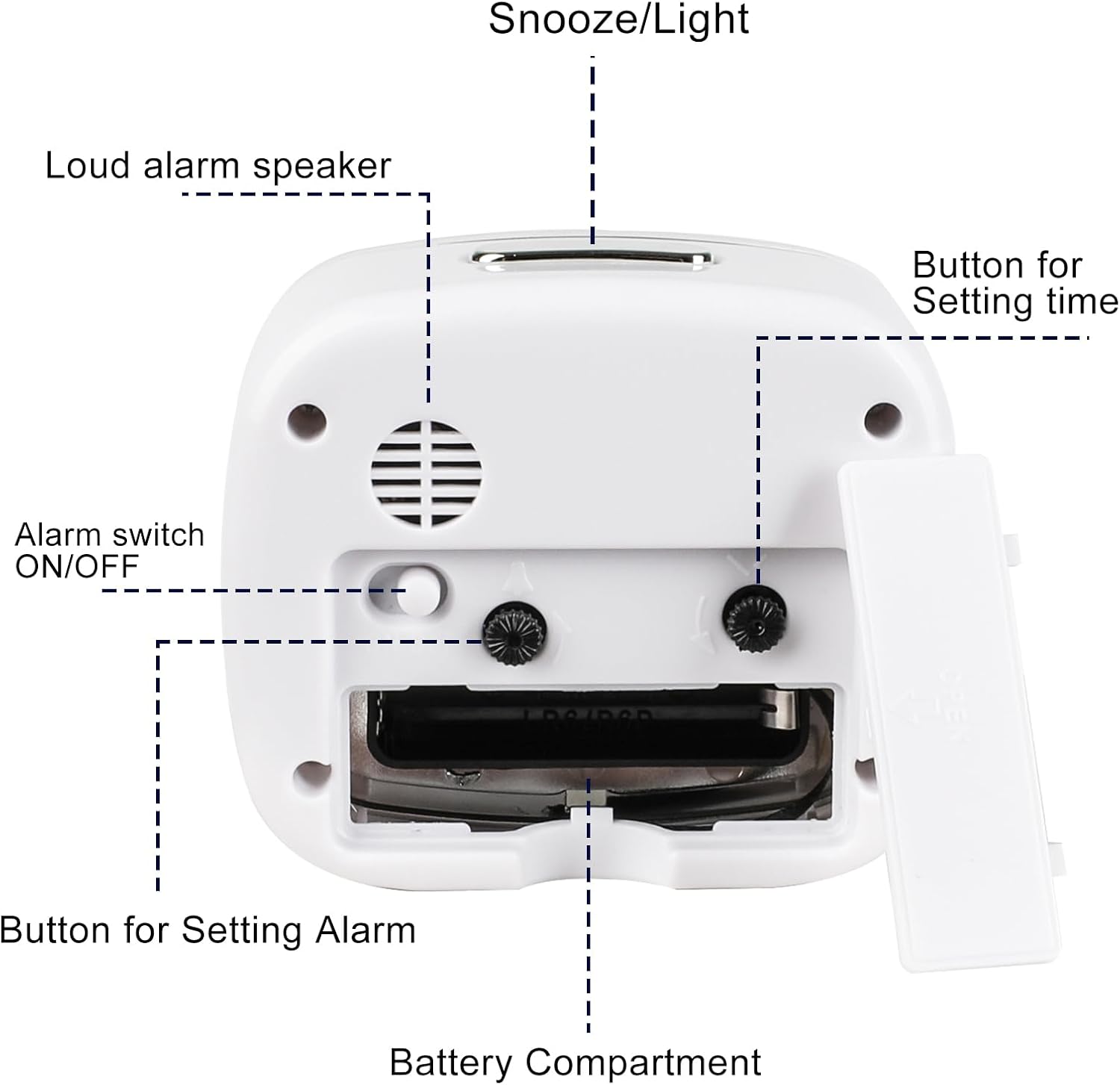
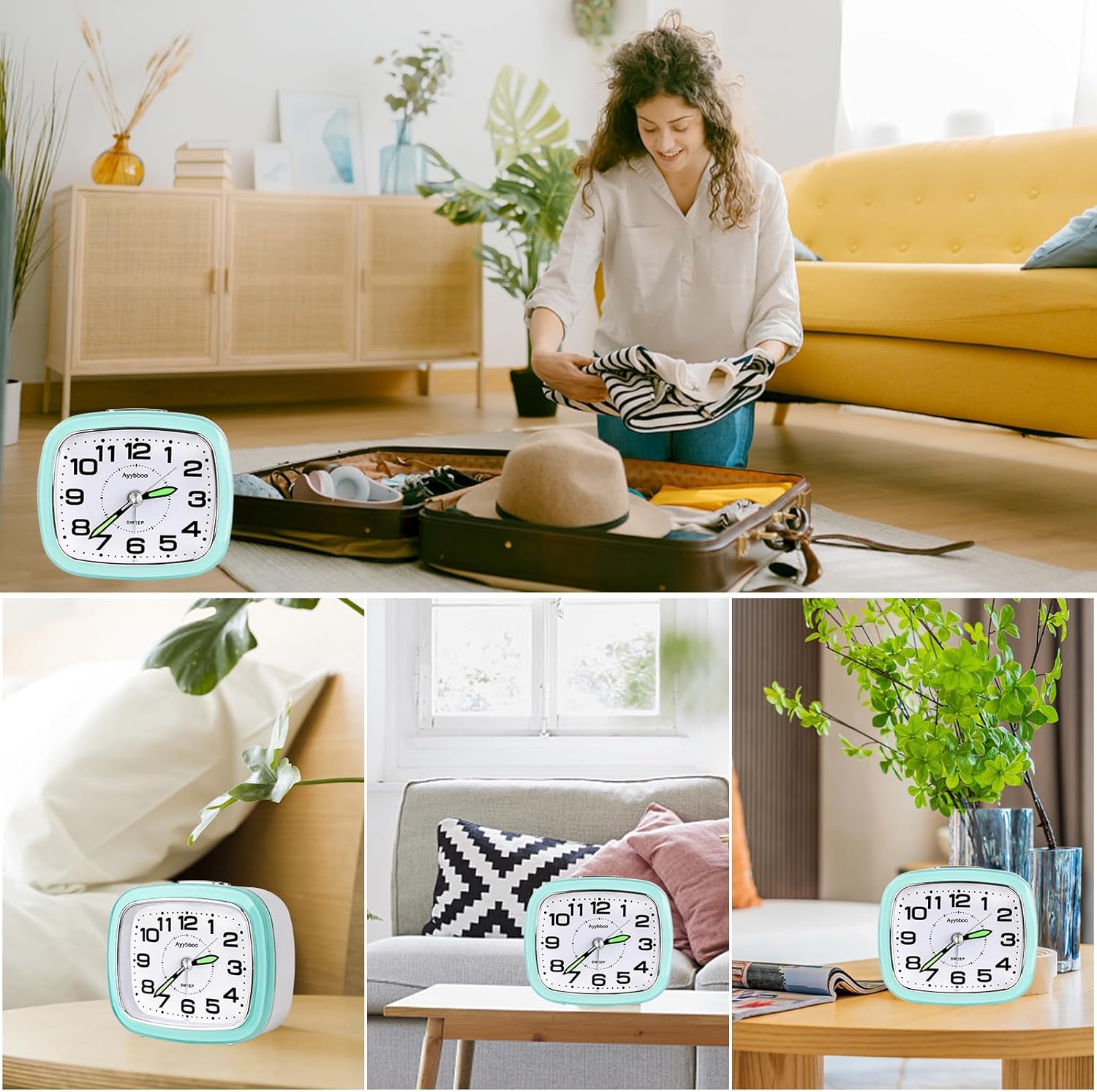
What it is and what it’s for\nAyybboo’s small bedside alarm clock combines a quiet analogue movement with a gentle night light and a straightforward snooze. Its compact footprint (9 × 4 × 8 cm) makes it a practical companion for bedrooms, desks or travel, without dominating the space. If you need a低-maintenance wake-up aid that doubles as a night-light, this clock fits the bill and can be a handy travel partner for those who prefer an analogue alarm over a digital beeper.\n\n## How it works and what stands out\nThis is a battery-powered clock, designed to run on a single AA carbon battery (not included). It features a soft light to help you read the time in the dark, a 5-minute snooze function and a multi-stage alarm that increases in volume. The incremental beeps start gentle and build in intensity until you turn it off or press snooze. The design is deliberately straightforward: no loud digital display, no bluetooth, just a reliable, easy-to-use alarm with a reassuring ticking-free face.\n\n## Pros and cons you’ll notice\nPros: compact size, clear night light, analogue quiet operation, simple snooze mechanics, predictable alarm progression, affordable price point for a practical bedside clock.\nCons: the time accuracy is stated as ±5 minutes, which is typical for analogue travel clocks but might be a deal-breaker if you need stricter accuracy. It requires carbon batteries (not included), and alkaline batteries are not recommended. The light is useful but modest and not a bright night lamp.\n\n## Who it’s best for\nIt suits anyone who wants a non-digital alarm that stays unobtrusive on a bedside table, a traveller who needs a compact clock, or a household member who prefers a gentler wake-up with a soft glow. It’s especially suitable for light-to-moderate sleepers who appreciate a low-profile device with a reproducible wake-up routine.\n\n## Who might want to look elsewhere\nIf you rely on precise timekeeping to the minute, or if you need a brighter bedside light for reading in bed, you may find the performance of a simple analogue alarm clock insufficient. Those who want rechargeable power or smart features should consider alternatives with longer battery life or additional connectivity.\n\n## What to check before buying\nVerify you have the correct battery type (carbon AA) and be prepared to replace it when it starts to lag. Consider the placement of the clock to ensure the light is visible but not disturbing. If you travel often, the compact size is a real advantage, but remember this isn’t a multi‑functional smart clock.\n\n## Practical usage and how it compares\nIn practice, this clock offers a straightforward wake-up approach far from the complexities of digital devices. It’s a practical alternative for people who want a reliable alarm that doesn’t depend on an app or internet connection, and it pairs nicely with a clutter-free bedside setup. If you’re weighing options, think about whether you prioritise portability and simplicity over extra features like USB charging or radio alarms.\n\n## FAQ (practical 3–5 questions)\n- Does it tick loudly? No, it advertises a silent analogue movement, which many users find less distracting than some digital models.\n- Can I rely on the alarm during travel? Yes, its compact size is travel-friendly, and the function set is simple to use on the go.\n- What about battery life? Battery life depends on the battery type and usage, ensure you use a carbon AA as recommended and replace when needed.\n- Is the night light strong enough for reading? The light is designed to be soft and non-dazzling, suitable for early-night time visibility more than full-room illumination.\n- Are there any cautions about batteries? Do not use alkaline batteries, as this can affect timekeeping and battery life.\n\n## Decision: Is it worth it?\nWorth considering if you want a small, dependable analogue alarm with a gentle night light and uncomplicated operation for a bedside or travel setting. It’s not the most feature-rich option, but for a straightforward wake-up tool that won’t distract you with screens, it represents sensible value. If you prioritise minimalism and reliability over extra features, this clock makes sense.\n