

GooQand Electric Fly Swatter Rechargeable (4000V) USB 2-in-1 Bug Zapper Racket, 2 Pack
Reviews
Price
Product description
What it is and why you’d buy it
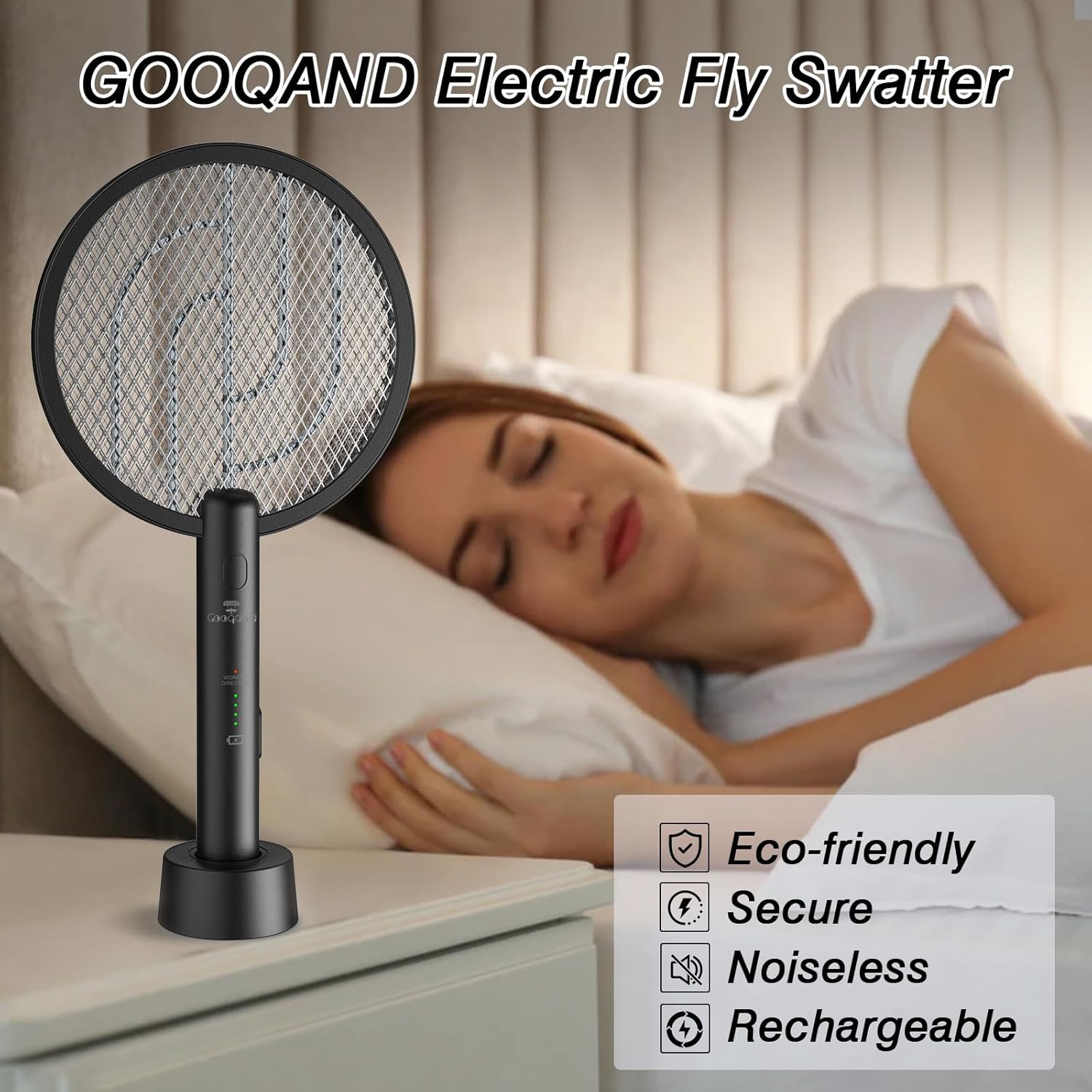
GooQand’s rechargeable fly swatter racket is designed for anyone who wants a “grab it and zap it” approach to indoor and outdoor flying insects, rather than relying on sticky traps or the usual swat-and-hope routine. The idea here is simple: the racket uses multiple LED lights to attract insects, then an electronic high-voltage output is used to destroy them. It’s positioned as a UV-assisted bug zapper, aimed at day-to-day use in places like the garden, around the home, or when camping.
On paper, it’s also trying to be more user-friendly than chemical sprays: there’s no mention of added fragrances or chemical toxins in the provided description. Instead, it’s about reducing contact and mess by eliminating the insect quickly, with the result being less “squish on the skin” risk.
How the zapper works in real life
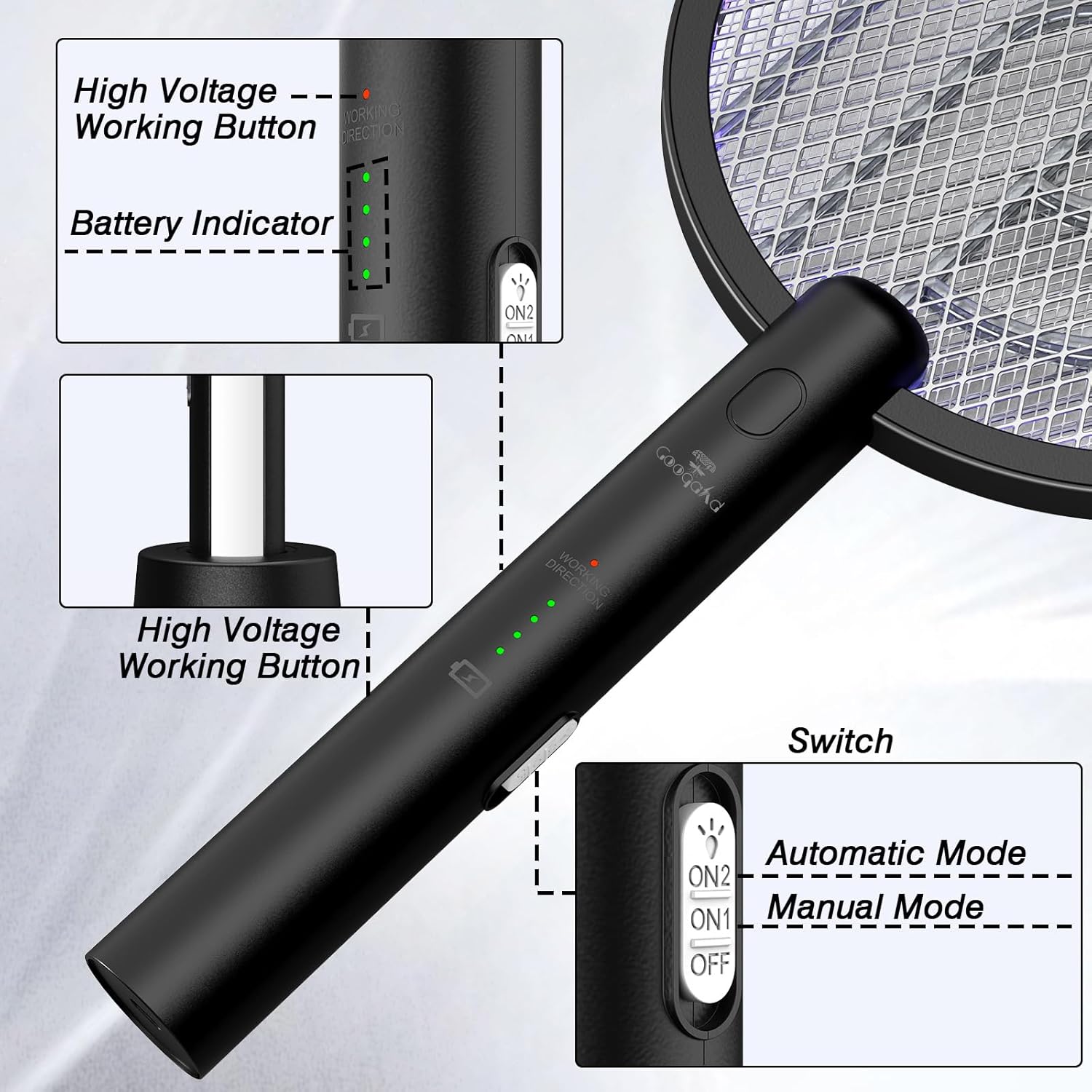
The manufacturer’s approach centres on UV-range attraction. The racket includes 6 LED lights, and the description states that UV rays in the 360–400 nm range are used to draw insects in before the electronic zap. Power is triggered by pressing the grey battery cap in the handle, which is a key detail: you’re not just turning on lights—you’re activating the high-voltage output when you press.
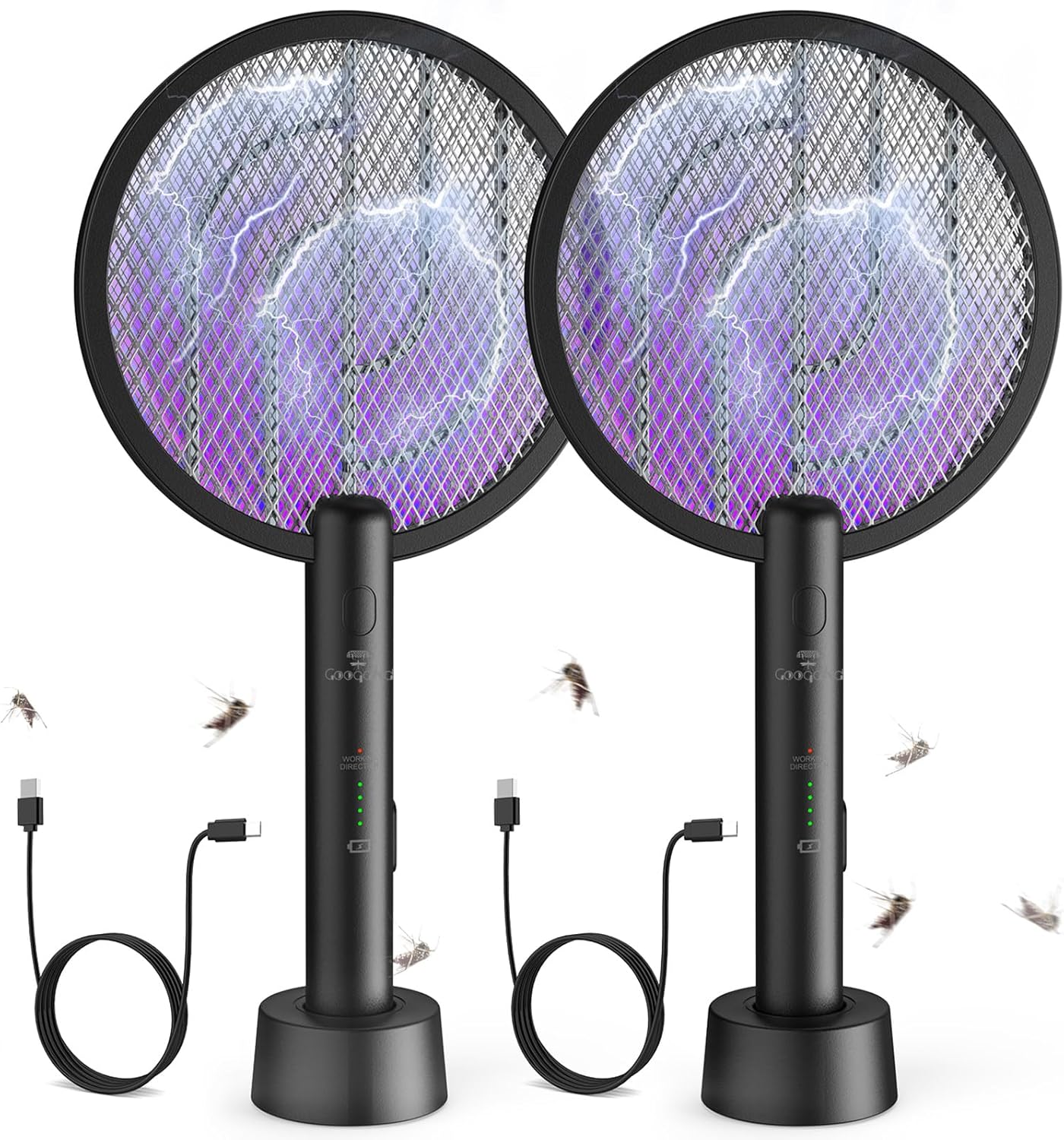
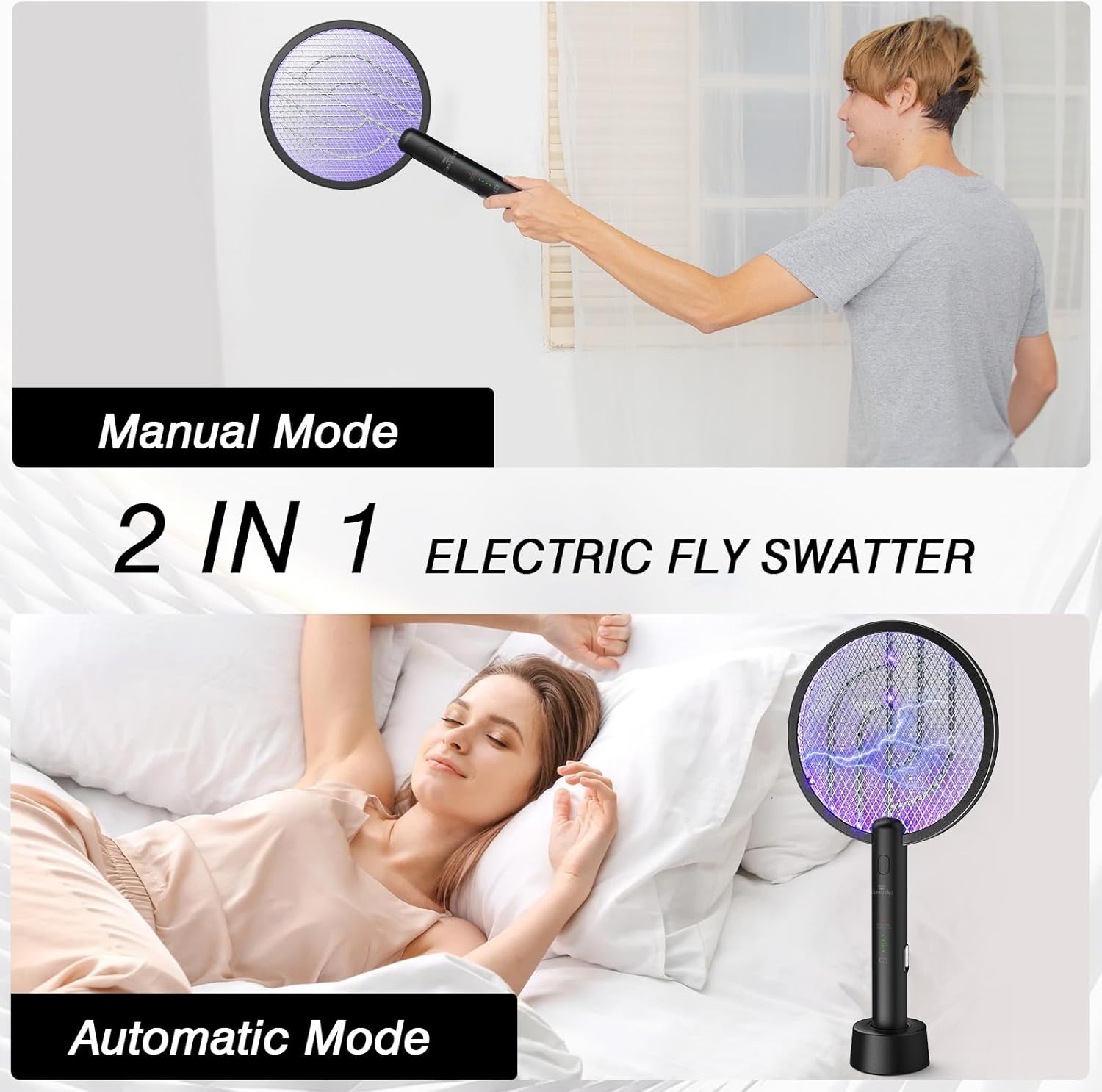
A small, practical example: if you’re sitting near an open door at dusk and a few mosquitoes hover around, you’d switch to the “ON2” mode after charging, then hold the racket close enough for the LEDs to draw them in. Once the insect approaches the mesh, pressing the handle cap delivers the zap. Afterward, you can clean up by shaking or brushing the dead insects off the mesh.
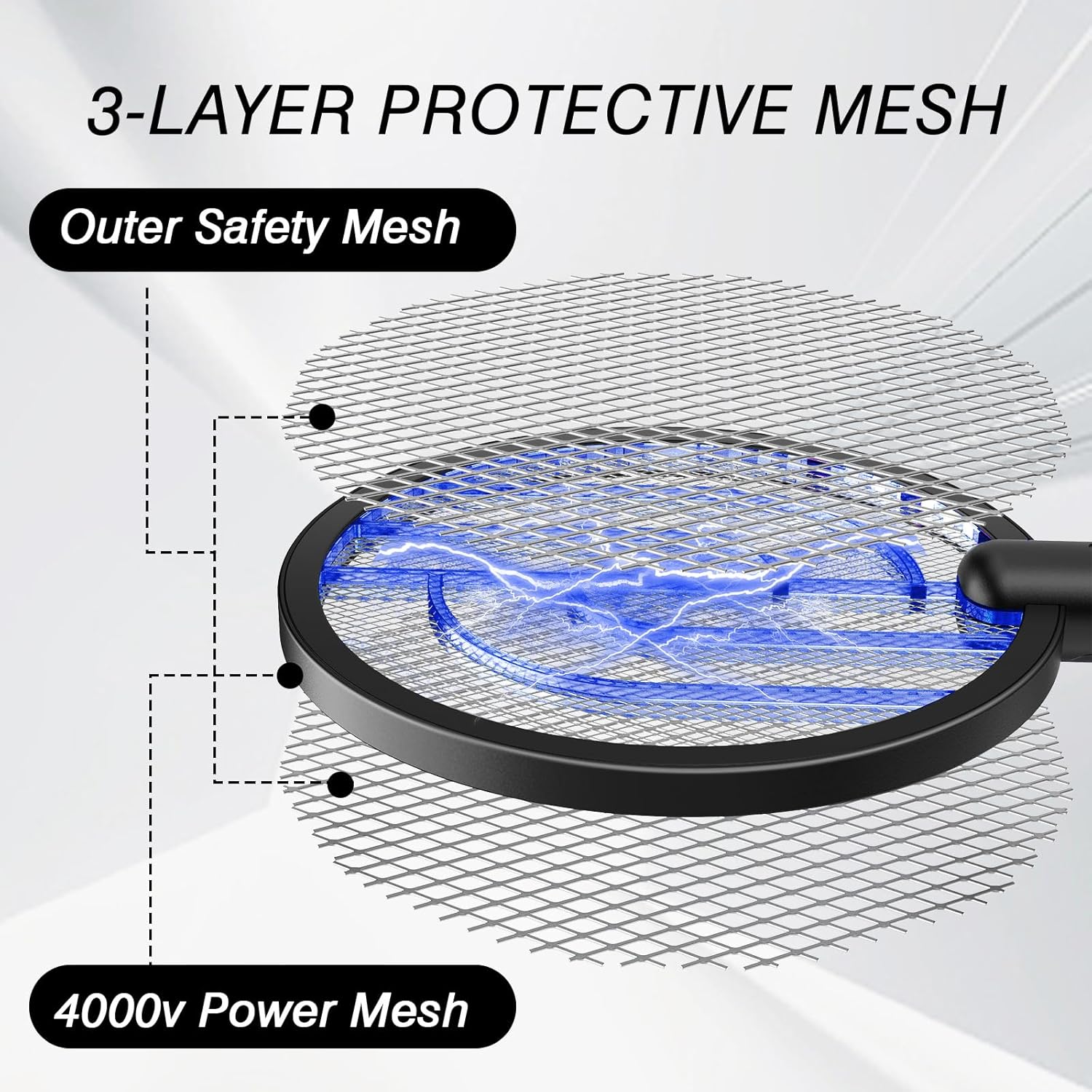
That “mesh-first” approach is important. It’s intended to avoid direct skin contact, which is one reason electric swatters can feel more hygienic than traditional fly-swatting.
Power modes and what the LED levels mean
Rather than being a one-settings-only gadget, this racket includes a power display tied to the number of lights you’ve selected: 25% when one light is on, 50% with two lights, 75% with three lights, and 100% when four lights are on.
This matters because the strongest setting may be useful in heavier insect activity, while lower levels could be preferable if you’re in a calmer area or just want a bit of control. The description doesn’t spell out exact performance differences beyond the stated percentages, so it’s not something you can fully “optimise” like a professional device—but the visual power cue does help you avoid guessing.
Safety and charging protection (where it earns trust)
A rechargeable electric fly swatter is only as reassuring as its safety design. The description specifically mentions multiple protections around charging: overload protection, over-discharge protection, over-current protection, and short-circuit protection. It also mentions a design with a switch intended to provide double safety.
There’s also a practical safety detail: it says the device detects the charging voltage to help ensure safe charging. That’s the sort of feature that can make a difference if you’re using USB charging routines at home.
Build and materials for the racket head
The outer mesh is described as made from nickel-plated stainless steel, while the inner layer is stated to be aluminium. In the real world, that combination is meant to stand up to repeated use and handling, which is exactly what you want from something you’ll be grabbing quickly when insects are around.
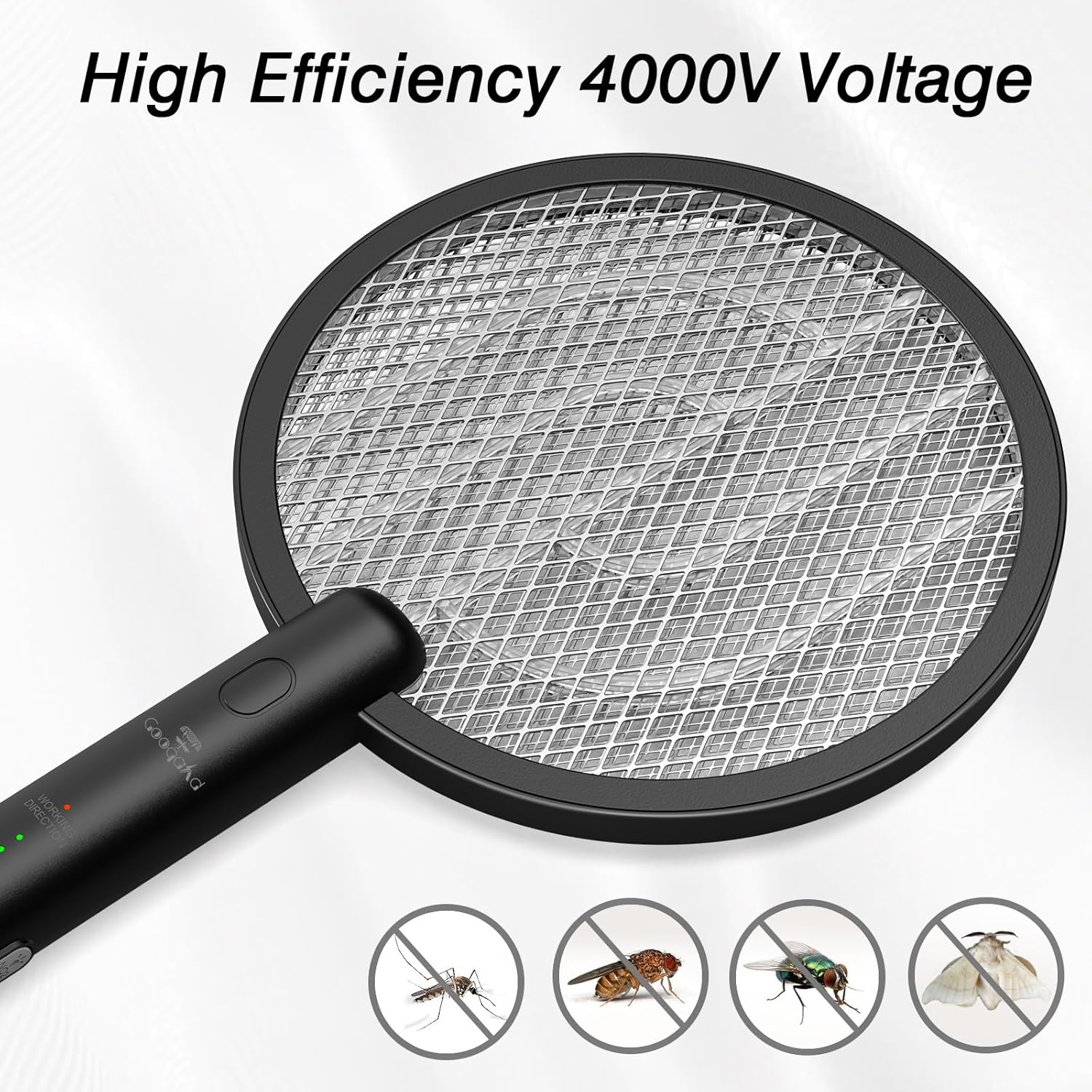
The high-voltage element is described as a “4000V” high-voltage power supply. It’s worth treating that as the product’s stated capability rather than a guarantee of outcomes in every environment—factors like how close the insect gets to the mesh can still affect results.
Where it fits your routine (and when it may not)
It’s a good fit if
It makes sense if you want an electronic bug zapper racket that’s rechargeable and designed for both indoor and outdoor use. If you mainly deal with flying insects around garden spaces, patios, camping areas, or rooms where you’d rather avoid chemical sprays, this kind of UV-attraction + electronic zap setup can be a practical match.
You may want to skip it if
Not the best choice if you’re expecting a “set and forget” automatic solution. Because the output is activated by pressing the handle cap, you’ll still need to be present and use it intentionally. Also, if you’re dealing with a broader pest problem (beyond occasional mosquitoes/flies), this device may help with the insects that come near the racket, but it won’t replace other control steps.
What to check before buying
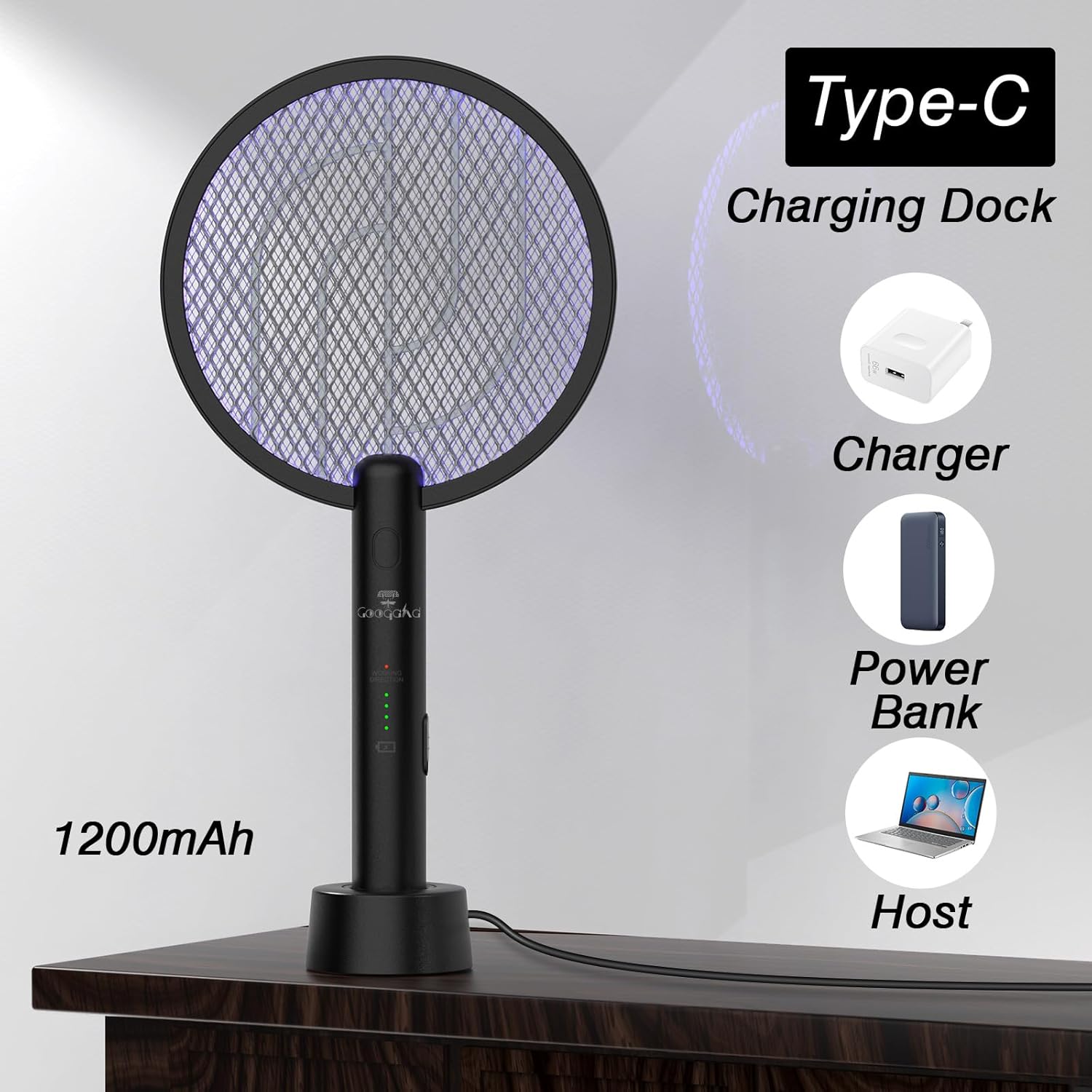
Before you commit, it’s worth checking the charging and usage specifics you’ll follow day-to-day: the product description says you charge it by placing the swatter in its charging base, connecting a power source, and switching to “ON2.” If you’re buying as a 2 pack for different rooms or to keep one charged, make sure you understand how the charging base and power selection are meant to be used.
Also consider your environment. Since attraction relies on light/UV and insects need to come close to the mesh, results can be less consistent if insects don’t approach the racket area.
Mini FAQ
How does the GooQand fly swatter attract insects?
It uses 6 LED lights, with UV rays in the 360–400 nm range described as part of the attraction process before the insect is destroyed by the electric output.
Is it rechargeable or disposable?
It’s rechargeable, and the description states it uses a rechargeable lithium-ion battery (with an indicator to show battery life margin).
Does it use chemical sprays or added fragrances?
The description explicitly says there are no added chemical fragrances or toxins.
What’s the difference between the power levels?
The device uses a power display tied to the number of lights you turn on: 25% (one light), 50% (two), 75% (three), and 100% (four).
How do you clean it after use?
The description suggests cleaning by shaking or brushing the dead insects off the mesh.