

AUTOOL SDT206 Automotive Smoke Machine EVAP & Vacuum Leak Detector (12V)
Product description
What it is for
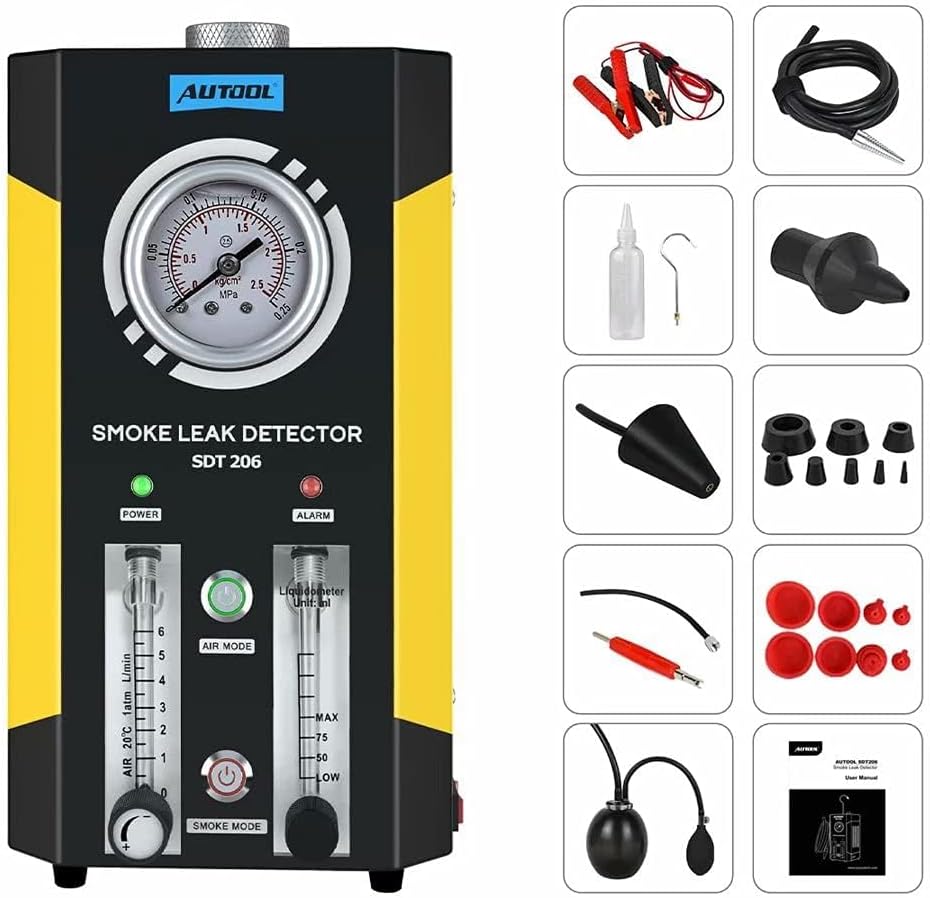
The AUTOOL SDT206 is an automotive smoke machine designed to help you find leaks in vehicle pipe and air/vacuum systems. Instead of guessing where the problem is coming from, it fills the relevant system path with smoke so leaks become visible.
On paper, it’s aimed at quicker, more repeatable diagnostics for EVAP service ports and a wider set of intake, cooling/EGR/exhaust-related and vacuum/airtightness checks. It’s the sort of tool you tend to appreciate most if you do mobile work, or if you regularly get jobs where “it holds pressure until you drive it” type faults are the headache.
It’s not perfect—any smoke machine is only as good as your access to the service points and your ability to follow the vehicle-specific procedure. Also, if you only diagnose occasionally, it may feel like overkill.
Key takeaways
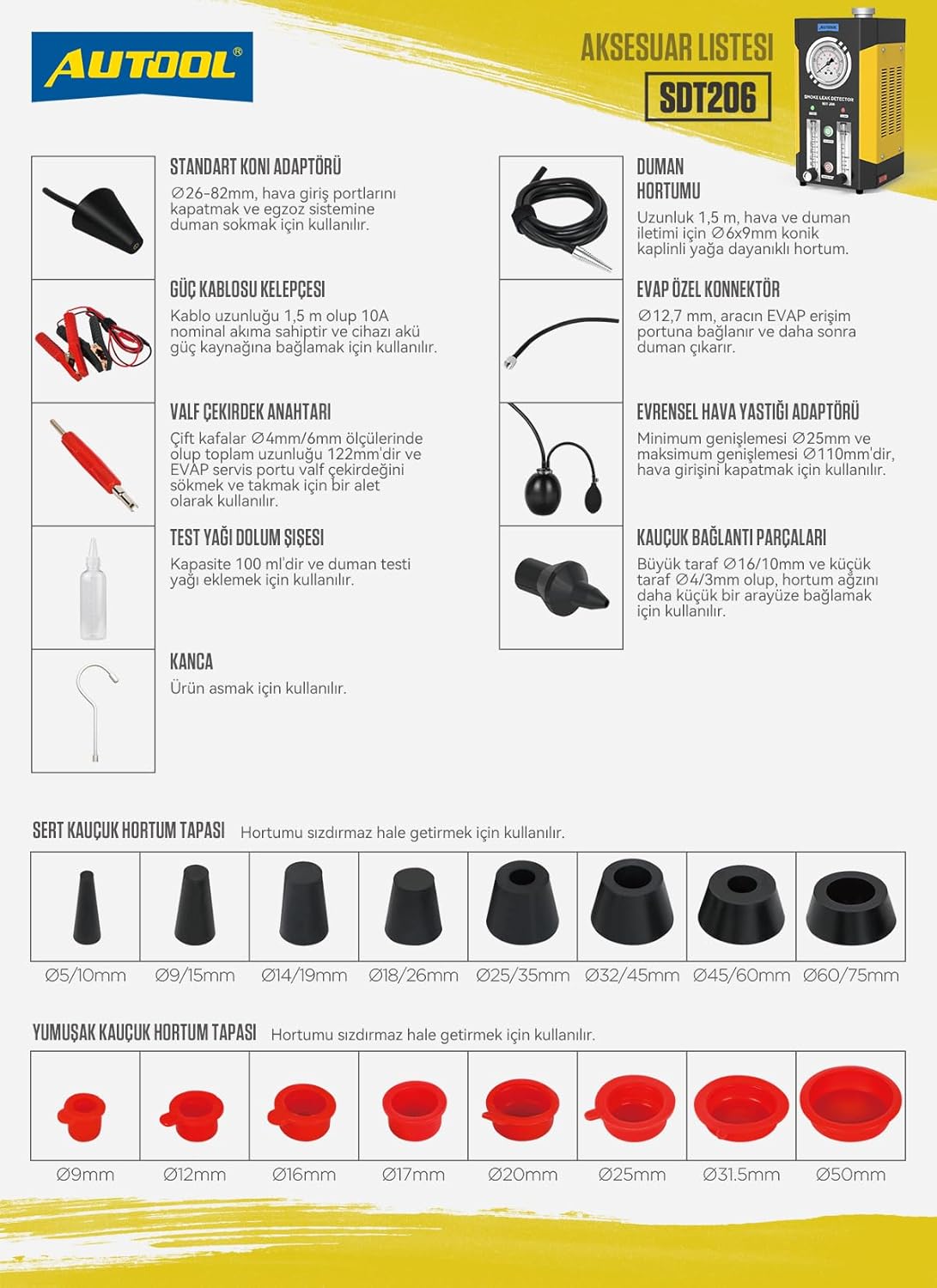
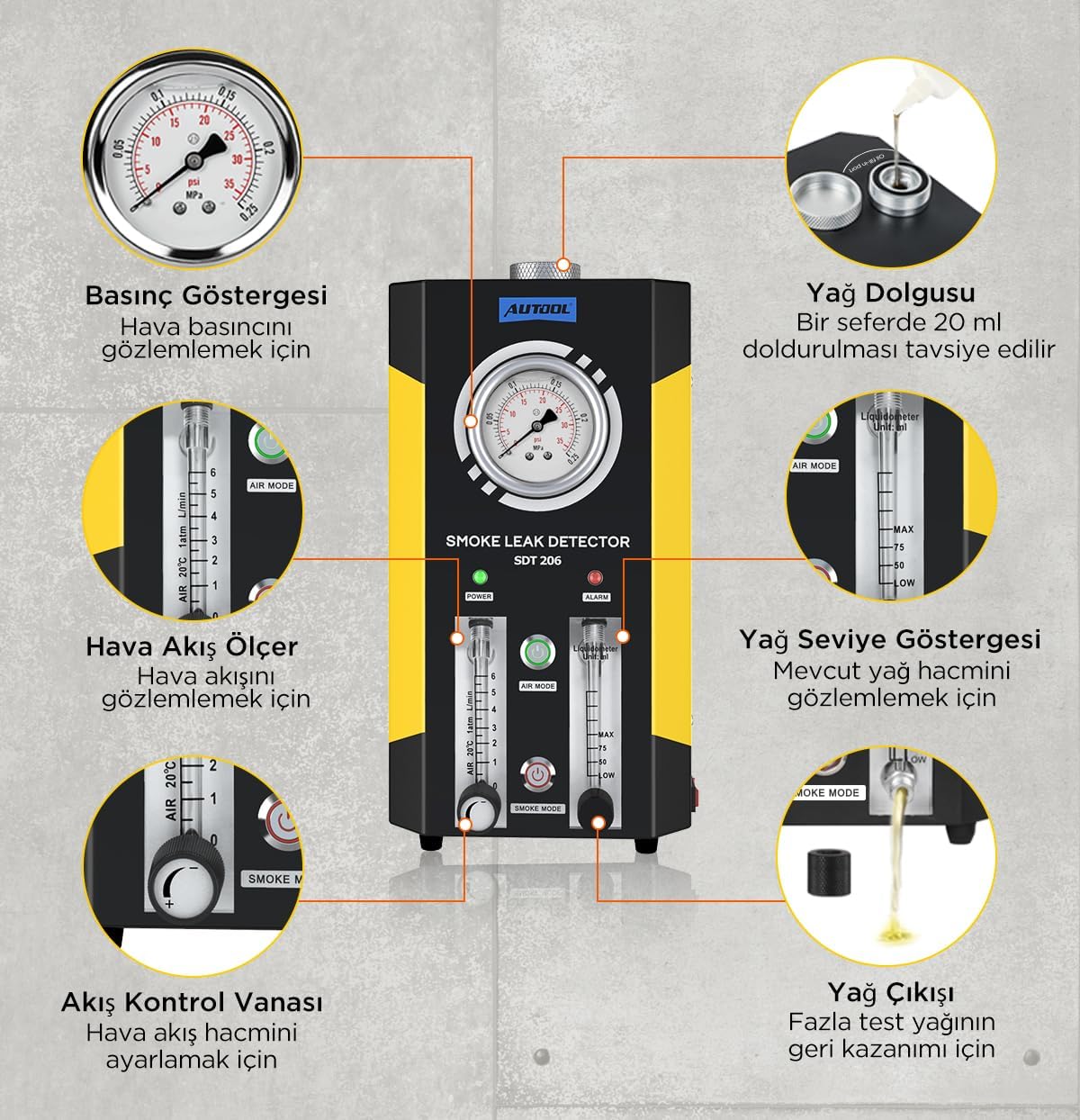
This model is built around an internal air pump and smoke generator, plus monitoring aids so you can keep an eye on flow/pressure behaviour during a test. It also includes an EVAP-focused approach using an EVAP service port adapter and a check valve removal step.
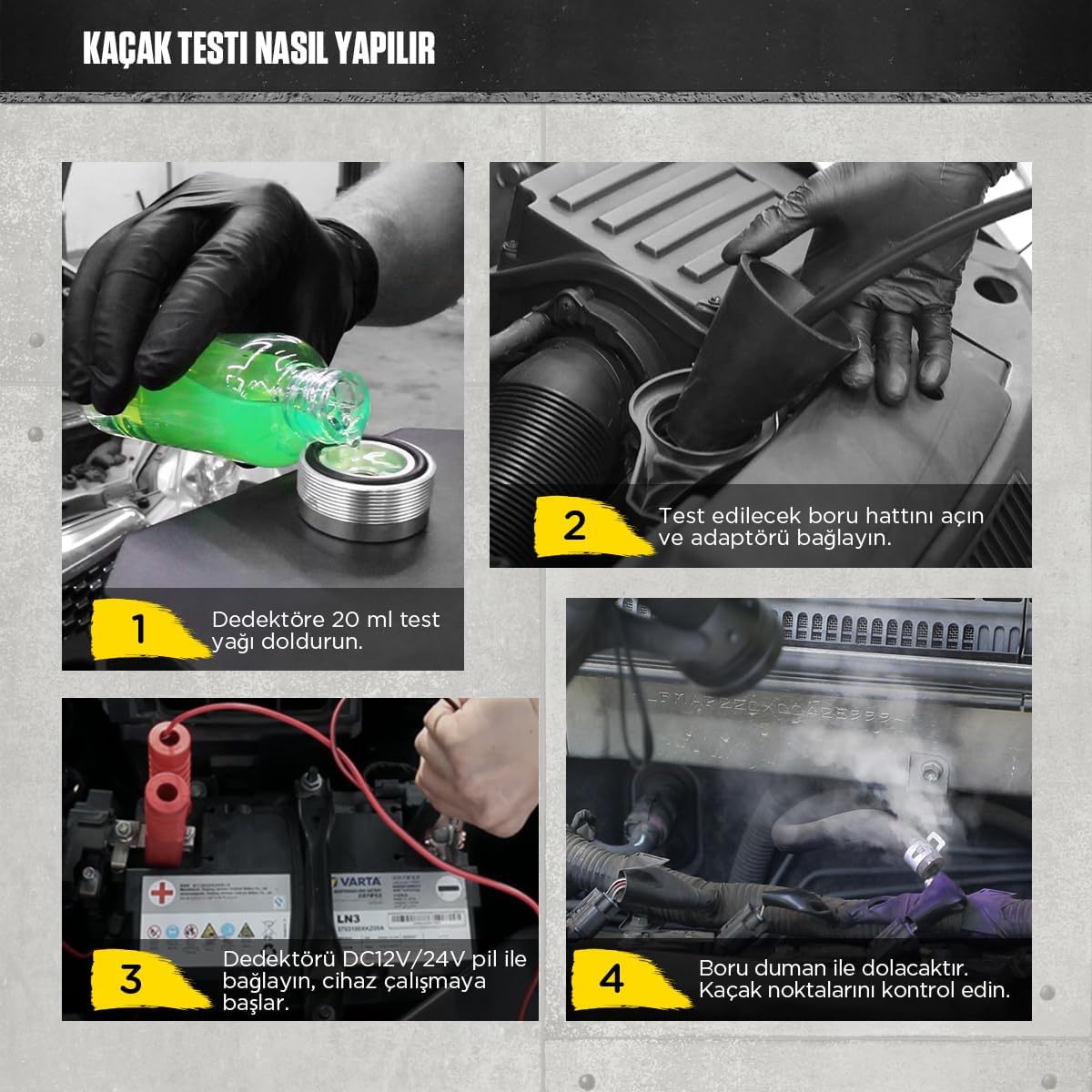
In normal use you’d typically: - Connect to the relevant service point (for example, an EVAP service port in the engine bay on many American cars). - Introduce smoke and watch for where it escapes. - Use the pressure gauge and flow control behaviour to judge whether you’re looking at a leak that needs attention.
What you’ll notice during diagnosis
A big practical selling point is the time-to-smoke: the smoke can be produced within 7–15 seconds. That matters when you’re doing back-to-back checks, trying to confirm a suspected leak, or working in a workshop environment where delays add up.
The SDT206 also includes a flow meter and a pressure gauge approach “based on the pressure of the detection pipeline”. The idea is straightforward: you can observe pressure rise/decrease patterns while smoke is present. If the pressure gauge continues to rise, the description suggests the pipeline is not showing an issue. If it keeps decreasing, that’s a cue that the pipeline is leaking and may need repair.
That’s useful, but do keep expectations realistic: these readings help you interpret what’s happening, yet they don’t replace proper diagnosis if the issue is intermittent, hidden behind panels, or related to a component you can’t see.
Air mode and smoke mode (and why it matters)
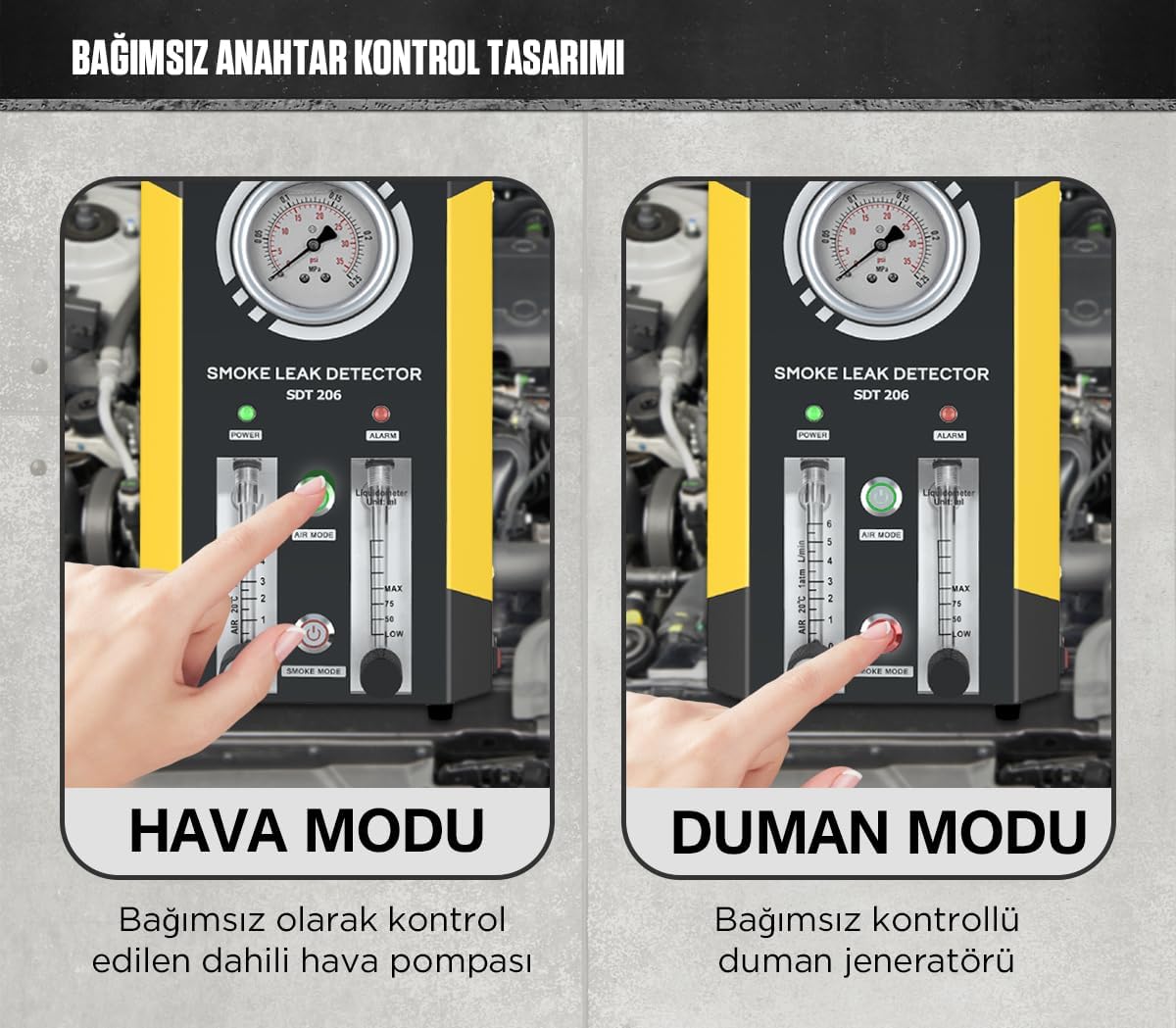
This smoke detector is described as having built-in air pump and smoke generator, so it does not rely on an additional air machine. For mobile automotive repair, that’s a sensible convenience—less kit to lug around and less dependence on external equipment.
It also means you’re more likely to keep the workflow smooth: you can start tests quickly, generate smoke fast, and then focus on tracking where it escapes.
If you’re used to doing EVAP or vacuum leak checks in a more “hand tools and hope” way, this approach is a step up in clarity. On the flip side, if your main work is purely electrical or you rarely touch fuel/EVAP or vacuum plumbing, a smoke tool may not get used often.
Where it fits best (testing range and use cases)
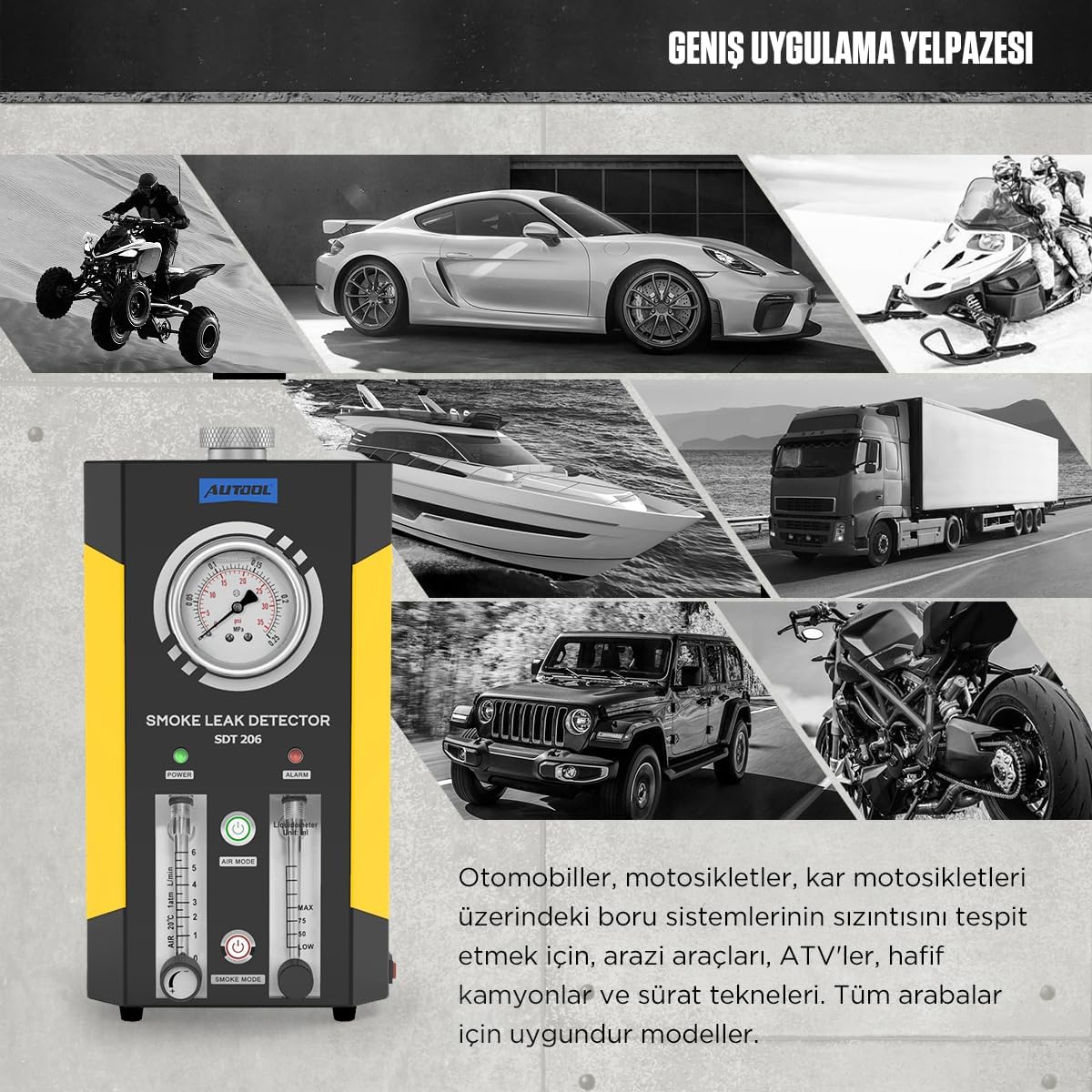
The stated testing range is broad, covering systems such as EVAP systems, intake systems, cooling/EGR/exhaust systems, crankcase systems, engine airtightness, vacuum leaks, and low pressure turbo leaks.
It also mentions applicability across a variety of vehicle types: cars, motorcycles, snowmobiles, off-road vehicles, ATVs, light trucks and even speedboats. That wide “on paper” list suggests versatility, but in real buying terms you should focus on whether your likely jobs match the tool’s access points—especially EVAP service ports and the ability to connect the adapter correctly.
EVAP detection procedure: what to be ready for
For American cars that began production in 1996 with EVAP service ports, the process is described with specific steps: open the plastic cover, remove the check valve clockwise using a spool wrench, then install an EVAP service port adapter and introduce smoke from the port into the EVAP leak detection system.
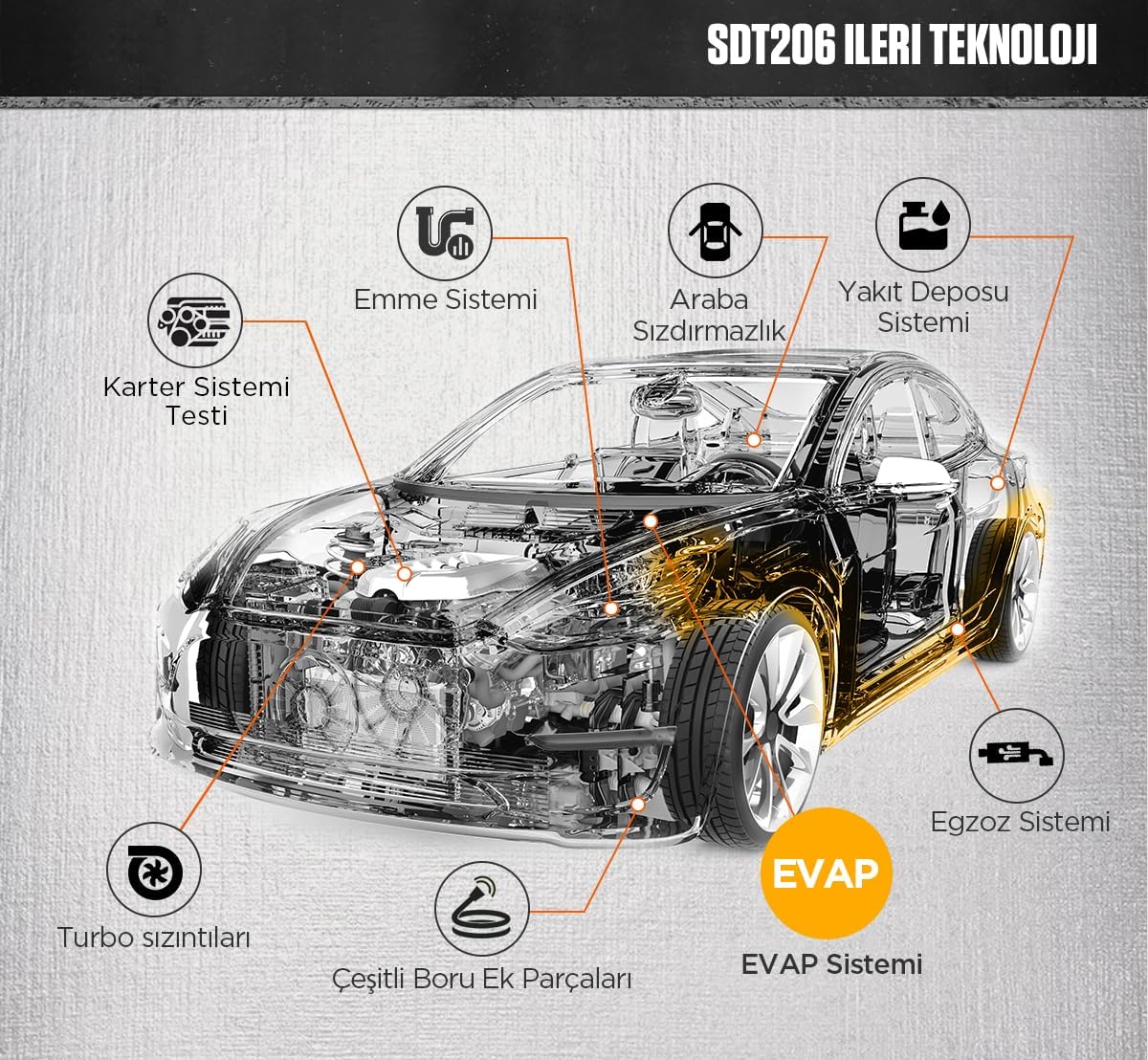
Worth noting: some special models may place the EVAP service port in locations other than the engine compartment. So before you commit, it’s sensible to check where the port is on the vehicles you typically work on.
What to check before you buy
Because the entry doesn’t list compatibility by exact makes/models, the safest approach is to review your own use cases: - Do your target vehicles have EVAP service ports (and can you access them without major disassembly)? - Can you use an EVAP service port adapter and follow the check valve removal step described? - Are your common leaks likely to be in intake/vacuum/EVAP plumbing where smoke can visibly escape?
Also, the smoke output value is given as 1–6L/min and the tool can build smoke within 7–15 seconds. That suggests it’s intended for reasonably fast diagnostics, but you may still need patience if a leak is tiny or buried.
Pros
- Built-in air pump and smoke generator, designed not to need an extra air machine.
- Smoke can be produced quickly (7–15 seconds), which can cut diagnostic time.
- Flow meter and pressure gauge help interpret what’s happening during the test.
- EVAP-focused workflow is included in the description.
Cons / limitations to keep in mind
- The EVAP process relies on access and the correct service-port/adapter setup, not every job will be straightforward.
- The guidance on interpreting gauge behaviour is helpful, but smoke diagnosis still depends on what you can physically observe once smoke is introduced.
- The broad range of systems is good, yet if you only work on a narrow set of vehicles or fault types, it may not justify the cost for occasional use.
Mini FAQ
How quickly does the smoke generate?
The description states the smoke can be produced within 7–15 seconds.
What does the pressure gauge tell you?
According to the provided guidance, a pressure gauge that continues to rise indicates no problem with the pipeline, while a gauge that continues to decrease suggests a leak that needs repair.
Is it aimed at EVAP testing?
Yes. It specifically references EVAP service ports on American cars produced from 1996 and outlines a procedure using an EVAP service port adapter.
Where is the EVAP service port usually located?
For most American cars referenced in the description, it’s usually in the engine compartment, but it notes some special models may place it elsewhere.
Should you buy it if you only diagnose occasionally?
It may be more tool than you need if you rarely test EVAP, vacuum leaks, or related pipe systems where smoke makes leaks easier to spot.
Is it worth it?
Buy the AUTOOL SDT206 if you want a smoke-based approach for quicker EVAP and vacuum leak diagnostics, especially when you’re doing mobile work or you regularly face “can’t see the leak” problems in air/fuel vapour plumbing. The built-in pump/smoke generator, fast smoke start, and the flow/pressure monitoring approach look like the kind of practical features that support real diagnostic routines.
You may want to skip it if your vehicle work rarely involves EVAP/vacuum or if you don’t have easy access to service points and adapters. In that scenario, the tool’s strengths can’t really show, and you might be better off with a simpler inspection approach tailored to your typical faults.