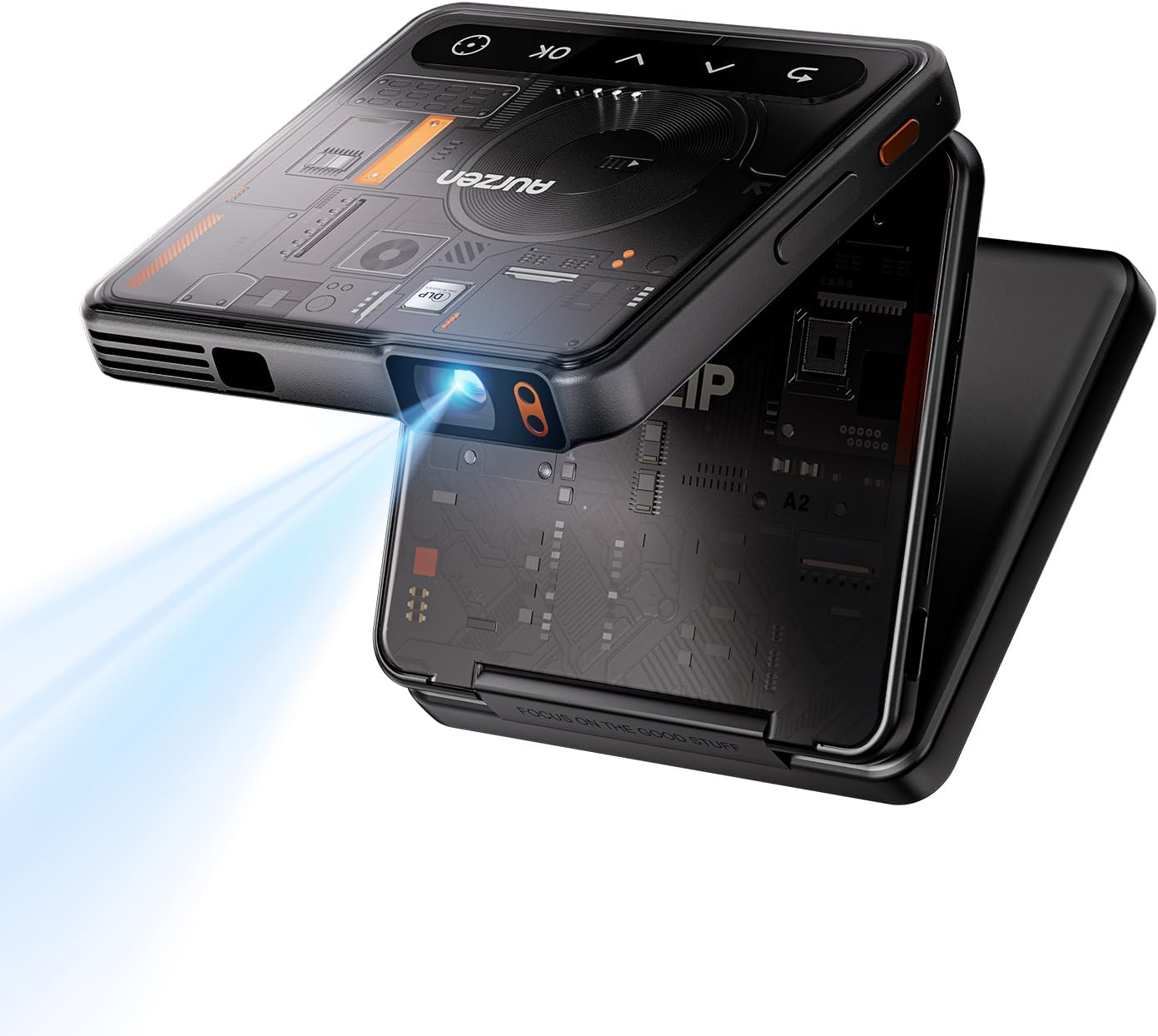
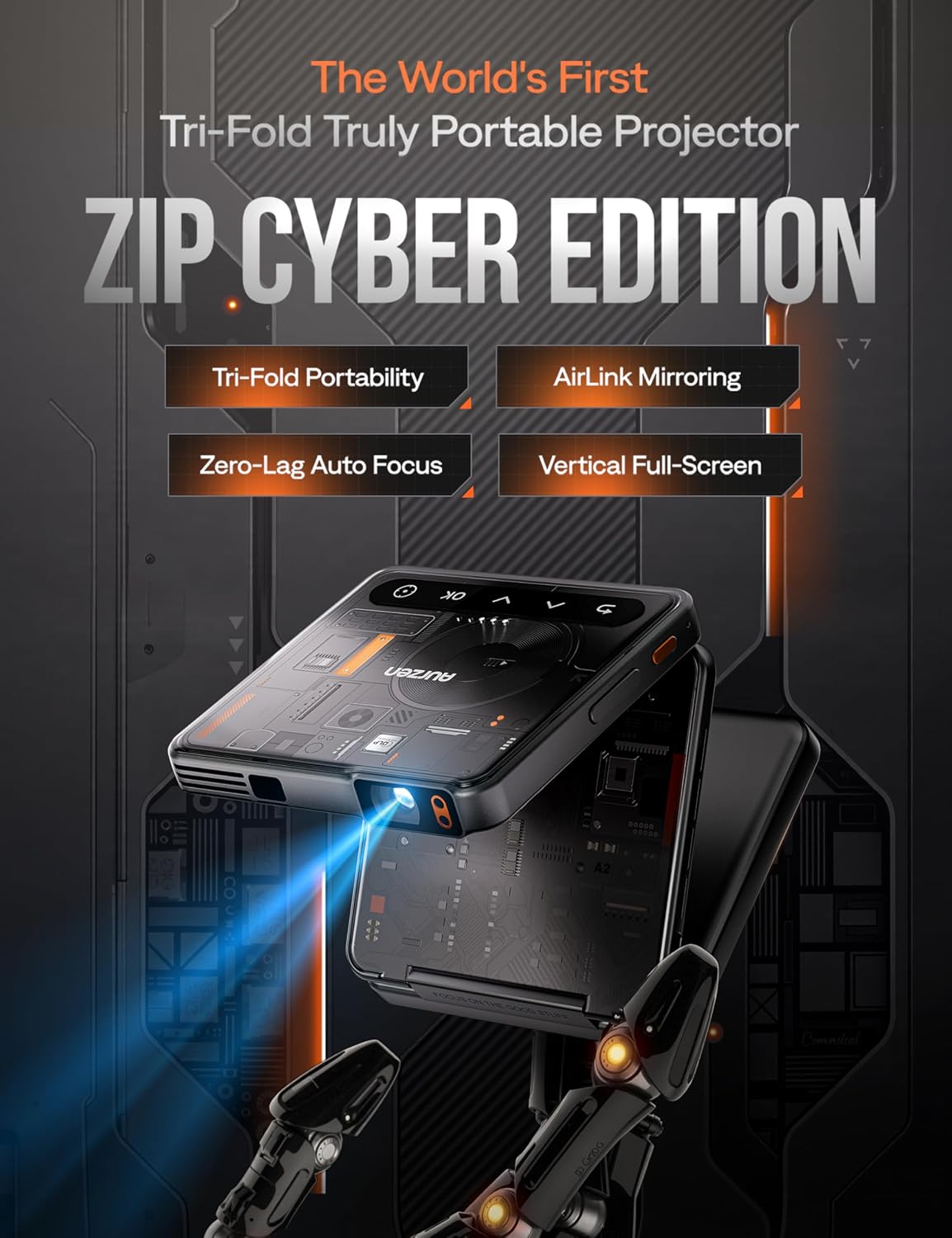
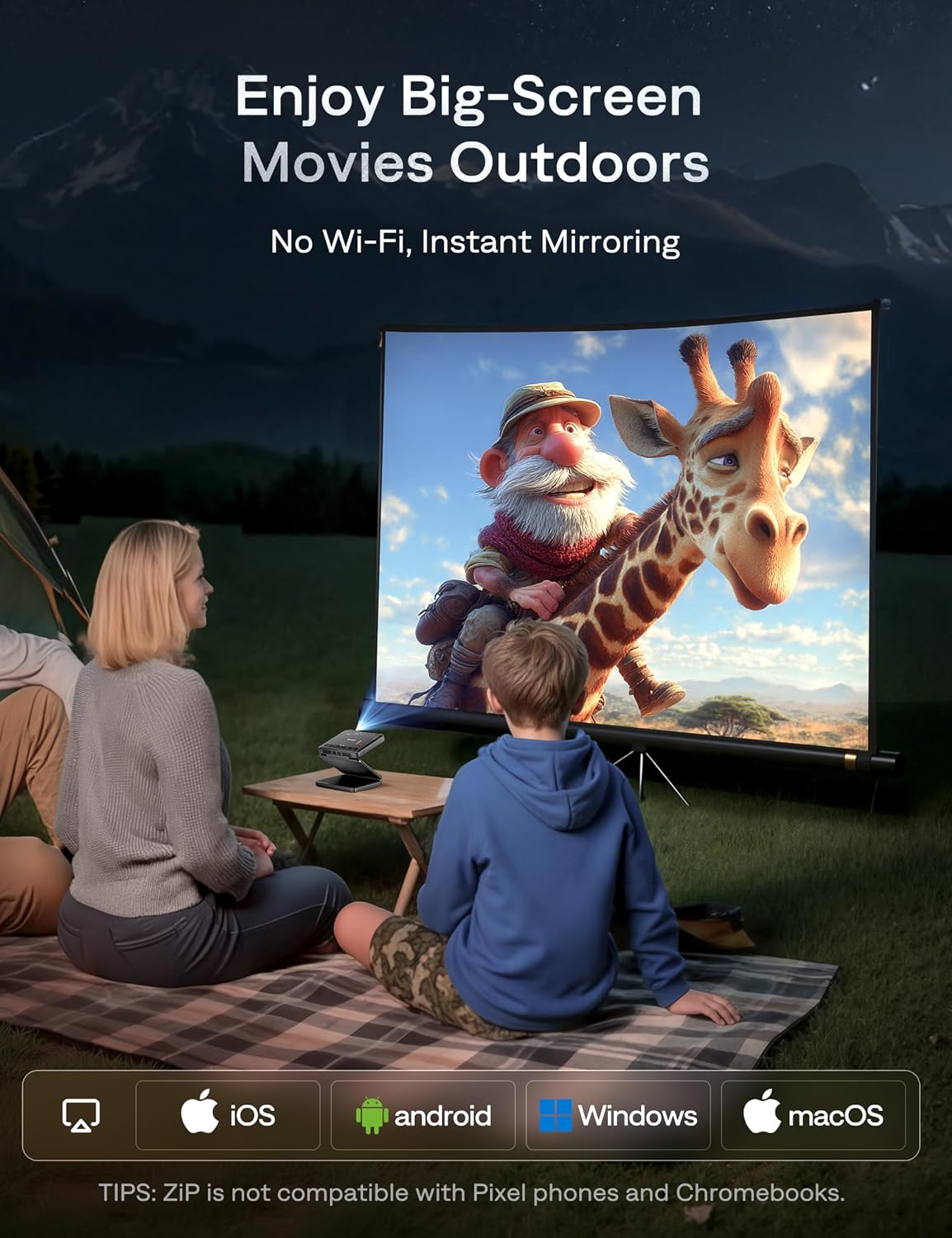
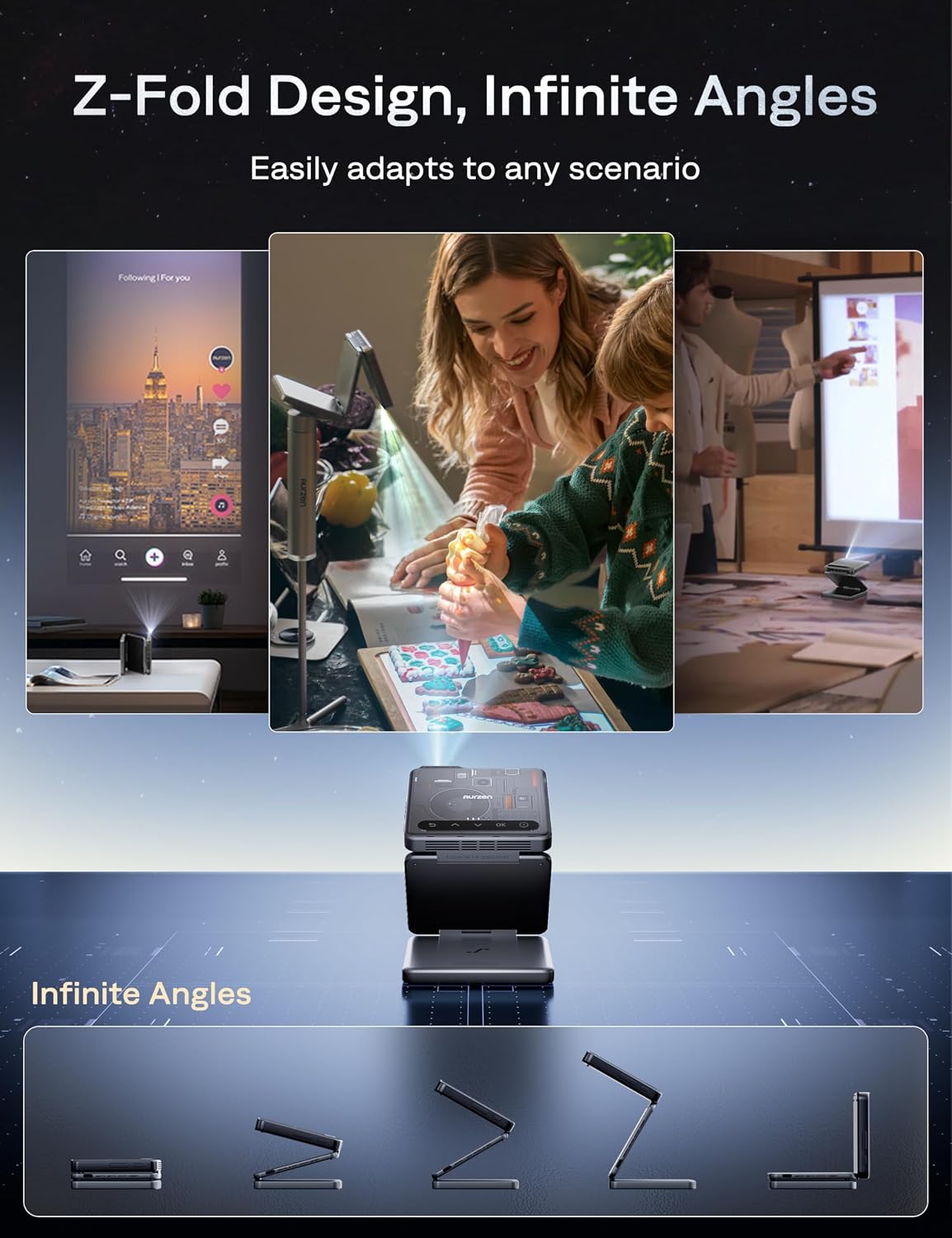
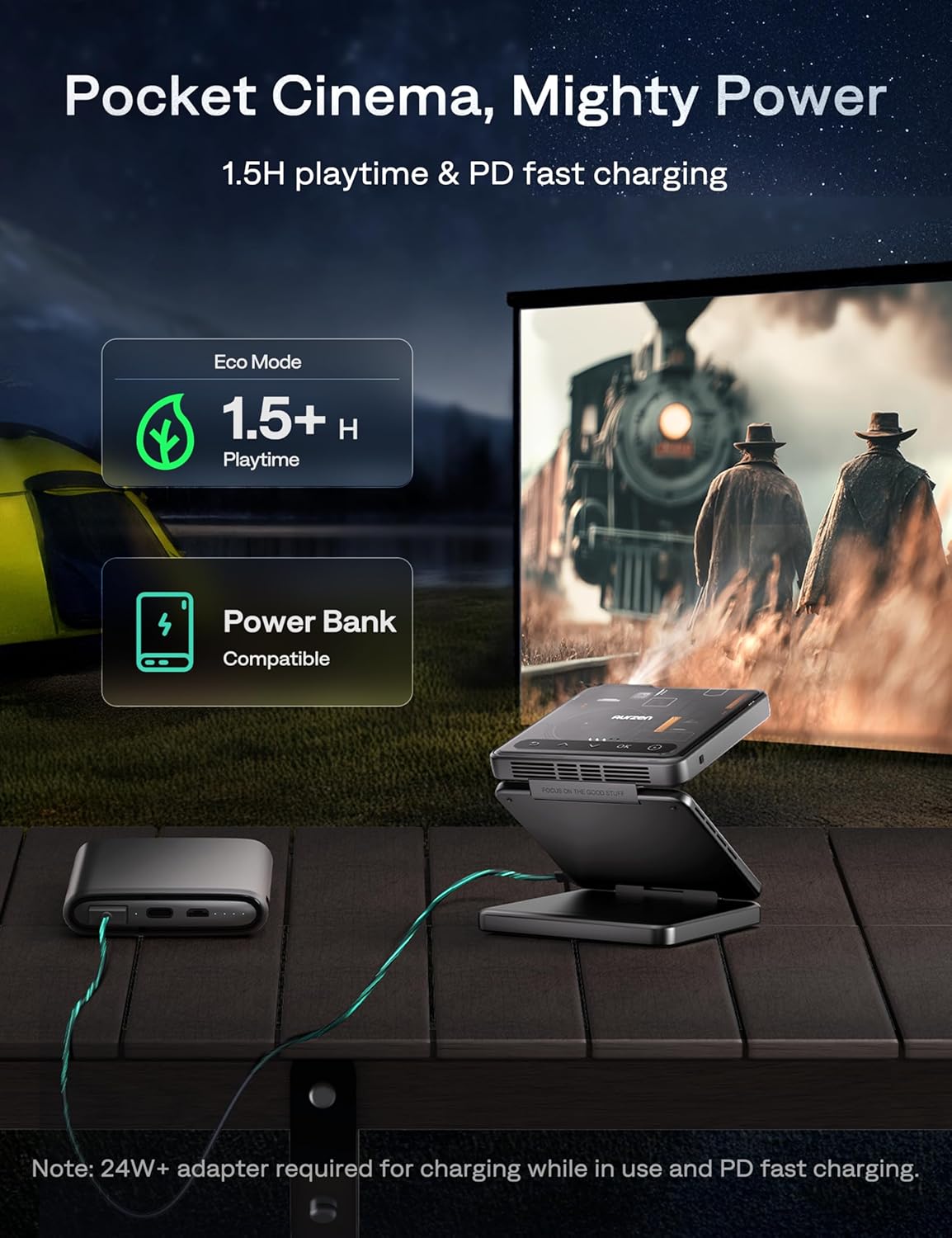
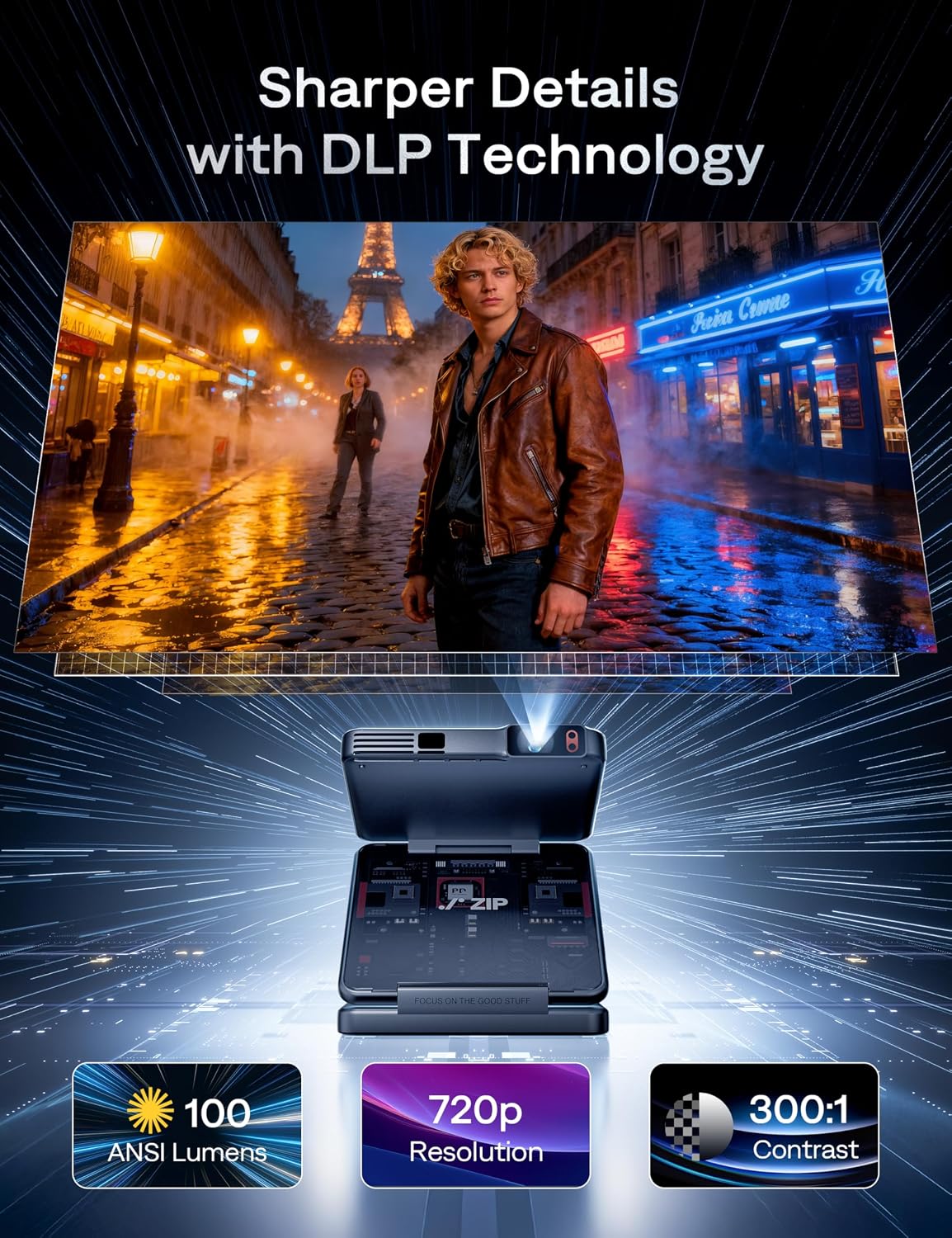
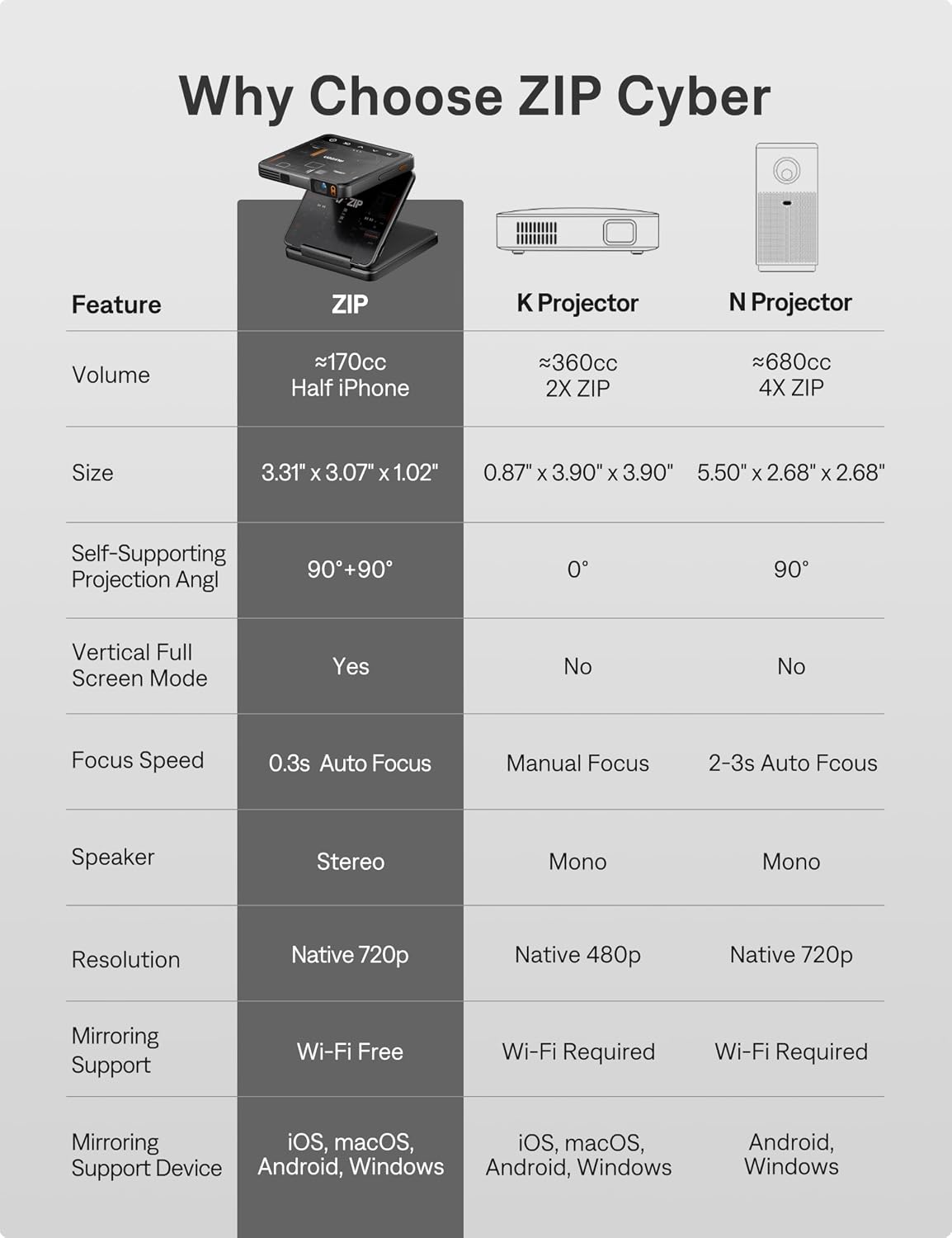
What it is and what it solves\nThe Aurzen ZIP Tri-Fold is a compact, foldable DLP mini projector designed to bring a big-screen experience to small spaces. Its tri-fold form folds down to wallet size, aiming to offer true portability for creative work, casual movie nights, or on-the-go presentations. If you value a pocket-friendly projector that can mirror from multiple devices without requiring a Wi‑Fi network, ZIP positions itself as a practical option for spontaneous viewing or quick demos.\n\n## How it performs on paper\nThe ZIP delivers 100 ANSI lumens with native 720p while supporting 1080p input, using DLP technology for color accuracy. It has a vertical full-screen rotation, which makes it handy for portrait-friendly content like short videos or art demonstrations. The focusing and keystone corrections are described as zero-lag, powered by ToF technology, with distance measurements updating 30 times per second to keep images sharp. A built‑in 5000mAh battery promises around 1.5 hours of playback, and it charges via a 24W Type-C PD connection. Bluetooth 5.4 adds wireless audio, while screen mirroring works across iOS, Android, macOS and Windows without a network.\n\n## Best use cases\n- On-the-go art tracing, cake-decorating tutorials and small-group demonstrations.\n- Quick movie or gaming sessions away from mains power.\n- Portable viewing or teaching aids in classrooms or temporary spaces.\nHowever, if your primary need is a bright home cinema or large-screen gaming, this model may feel underpowered compared with higher-luminosity projectors.\n\n## Strengths you’ll notice in use\n- Ultra-compact, foldable design that fits in a pocket or small bag.\n- True vertical screen capability enables full-screen portrait content.\n- No Wi‑Fi required for mirroring, which simplifies use in travel or venues with limited connectivity.\n- Zero-lag auto focus and keystone help keep drawings, decorations and tutorials sharp as you move closer or farther.\n- Built‑in stand adds convenience for quick setup on desks or shelves.\n\n## Limitations and caveats\n- Brightness is modest by home‑theatre standards, ambient light will affect perceived image quality.\n- The native resolution is 720p, with 1080p input supported, so it won’t match higher‑end projectors for very detailed 4K content.\n- Bluetooth is audio-only, video must come from another connection, and some devices may have compatibility quirks for screen mirroring.\n- Some users note the device is more about portability and convenience than cinema‑grade performance.\n\n## Who it’s for\n- Creatives and hobbyists who want a tiny, travel-friendly projector for drawings, tracing or quick demos.\n- Families or students seeking an affordable projectable display for casual media or school work.\n- People who value built‑in battery and quick charging over maximum brightness.\n\n## Who it isn’t for\n- If you prioritise high brightness, large image sizes, or best-in-class colour fidelity for dark-room cinema, you may prefer a larger, more powerful model.\n- If you rely on video mirroring from Google Cast‑enabled devices, compatibility notes suggest potential limits.\n\n## What to check before buying\n- Assess your primary usage environment: will you be in dim rooms or well-lit spaces? The ZIP’s 100 ANSI lumens will fare better in subdued light.\n- Consider the device ecosystem you’ll mirror from, ensure your phone or computer supports screen mirroring without network access.\n- Confirm whether vertical full-screen content is a priority for your use cases (e.g., social media tutorials and portrait content).\n- Think about battery life versus run-time needs, if you expect longer sessions, plan for a power source or easy charging options.\n\n## Comparison in context\nIf you want something truly pocketable for light entertainment or quick demonstrations, this design makes more sense than larger, more capable portable projectors. For home cinema enthusiasts or professional presentations, a brighter, higher‑resolution option would generally be preferred.\n\n## Decision block\n### Is it worth it?\nWorth considering if portability, quick setup, and wireless audio are important, and you’re content with modest brightness and 720p base resolution. It suits casual use, art tracing, and travel scenarios.\n\n## Quick FAQ\n- Does it support video mirroring without Wi‑Fi? Yes, via instant mirroring across supported devices.\n- Can I use it outdoors? It can be used outdoors in low-light conditions but brightness limitations remain a constraint.\n- How long does the battery last? Up to about 1.5 hours of video playback.\n- Is it suitable for teaching demonstrations? It’s practical for quick, portable demonstrations and art projects, though not a substitute for high‑brightness classroom setups.\n