

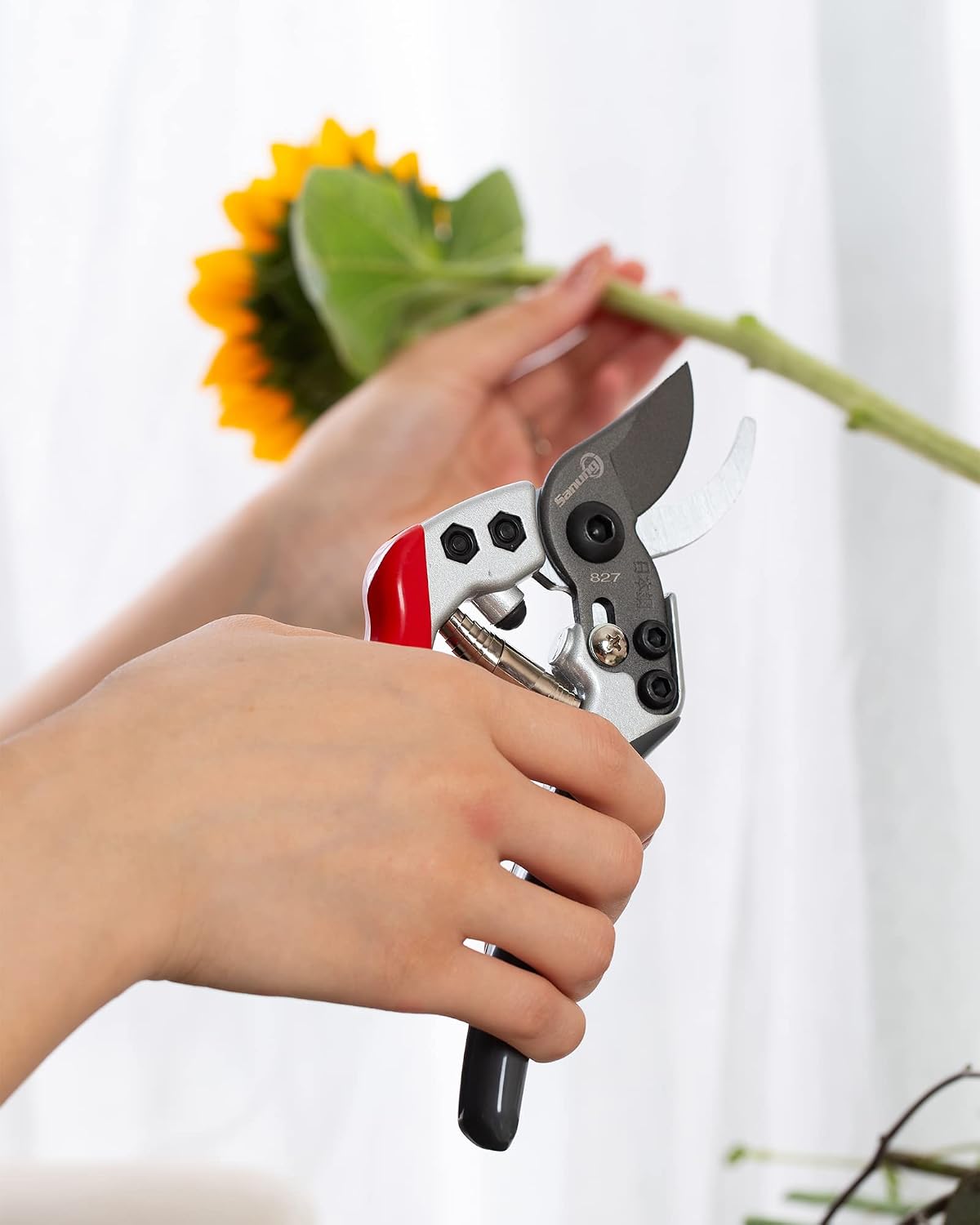
Sanung Pruning Shears, High-Carbon Steel
Product description
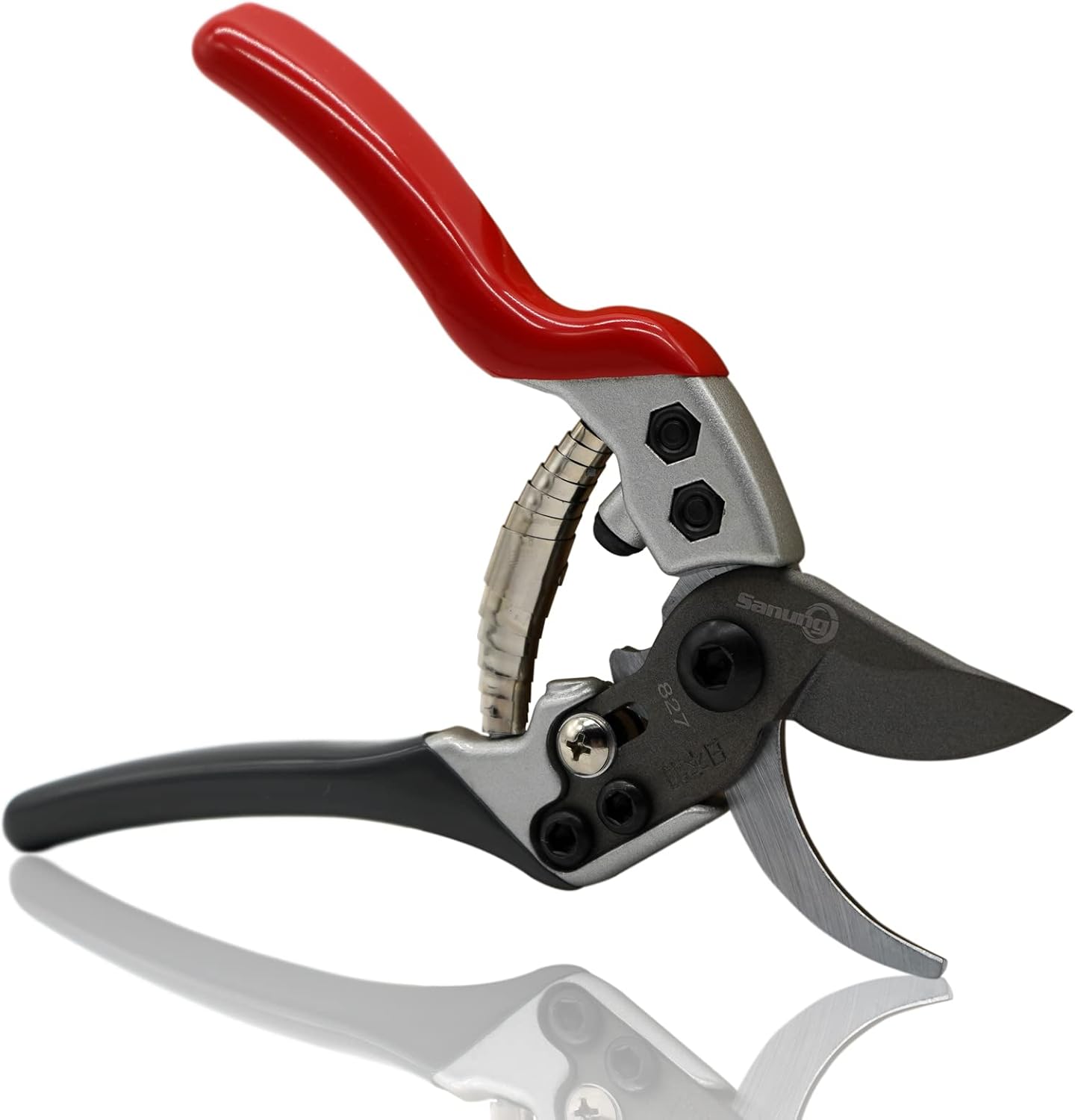
For gardeners trimming rose stems, dead growth and small branches, these Sanung pruning shears focus on a coated steel blade, shaped handles and a built-in safety lock. The product details describe Japanese high-carbon steel for the cutting jaws, a Teflon coating intended to help prevent rust, and a sturdy alloy-steel lower blade. That makes them worth considering for routine garden maintenance, including work around outdoor bonsai and awkward corners.
The handles are described as non-slip and shaped to fit the palms. A manual lock keeps the shears closed for storage, the listing says it can be released with a tap. There’s no stated cutting capacity, though, so it’s hard to tell which branch thicknesses they can handle confidently.
How to use it
These are hand pruners for trimming branches and other garden growth. Picture tidying a rose bush: you can reach between stems, cut away dead growth, then close and lock the shears before putting them down. The product description also points to outdoor bonsai and hard-to-reach areas, where a compact hand tool may be more practical than a larger garden cutter.
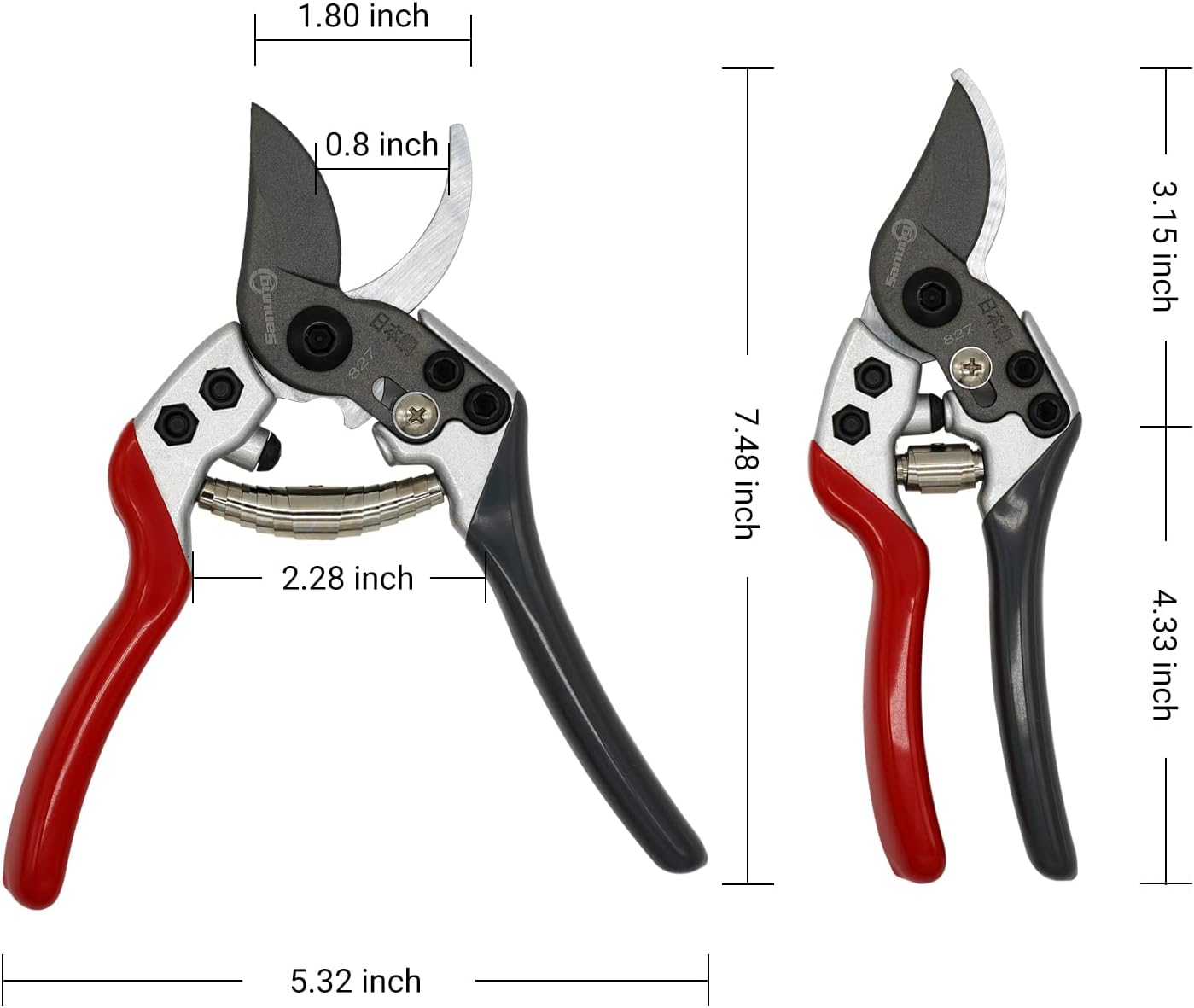
The curved blade is presented as suitable for both dense twigs and rougher branches, with a lower blade made from alloy steel. But without a maximum cutting diameter or dimensions, don’t assume it will replace a heavier-duty tool for substantial woody growth. Are you mainly shaping plants and clearing smaller branches? That’s the use case this design appears to target.
Pros
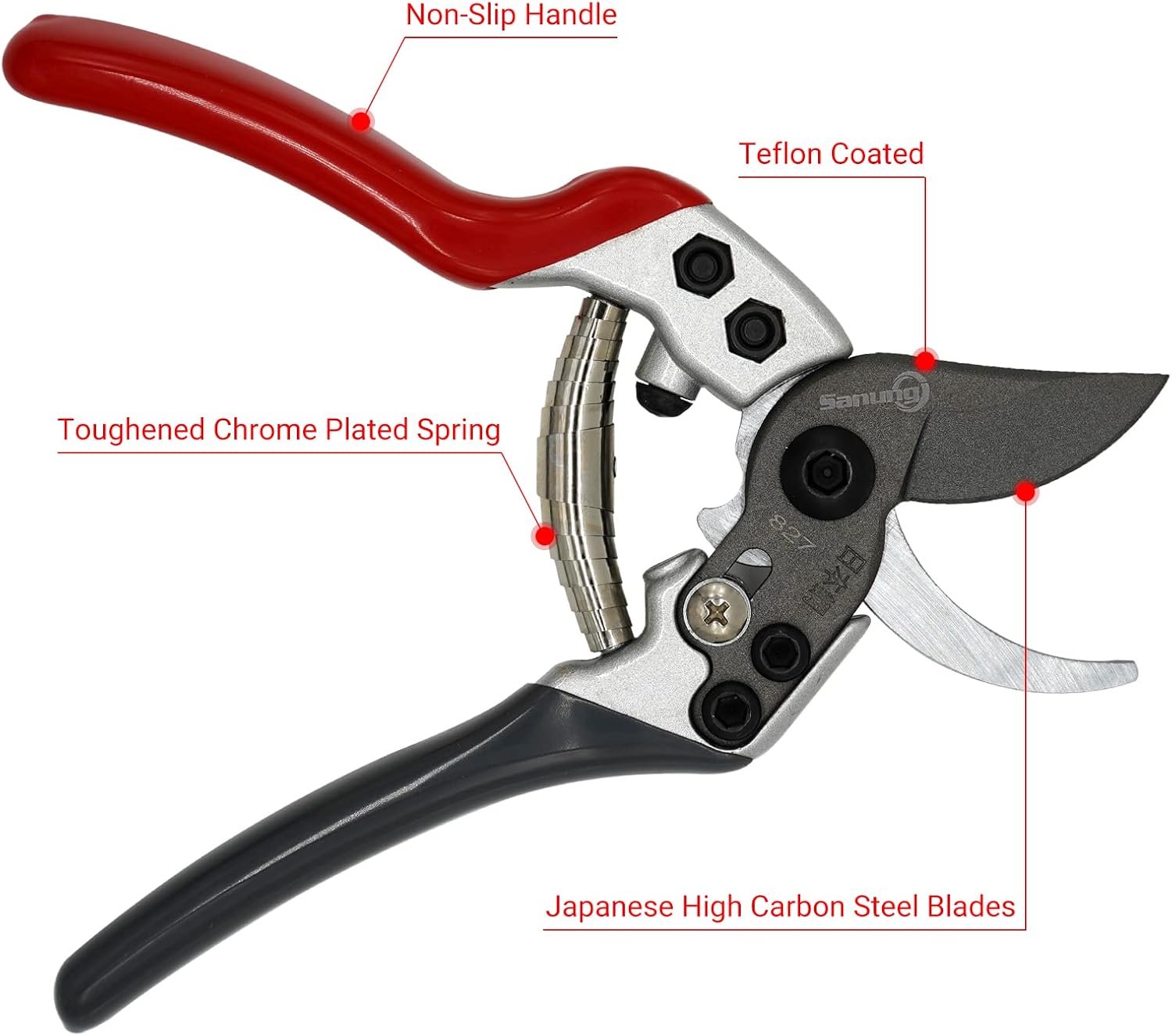
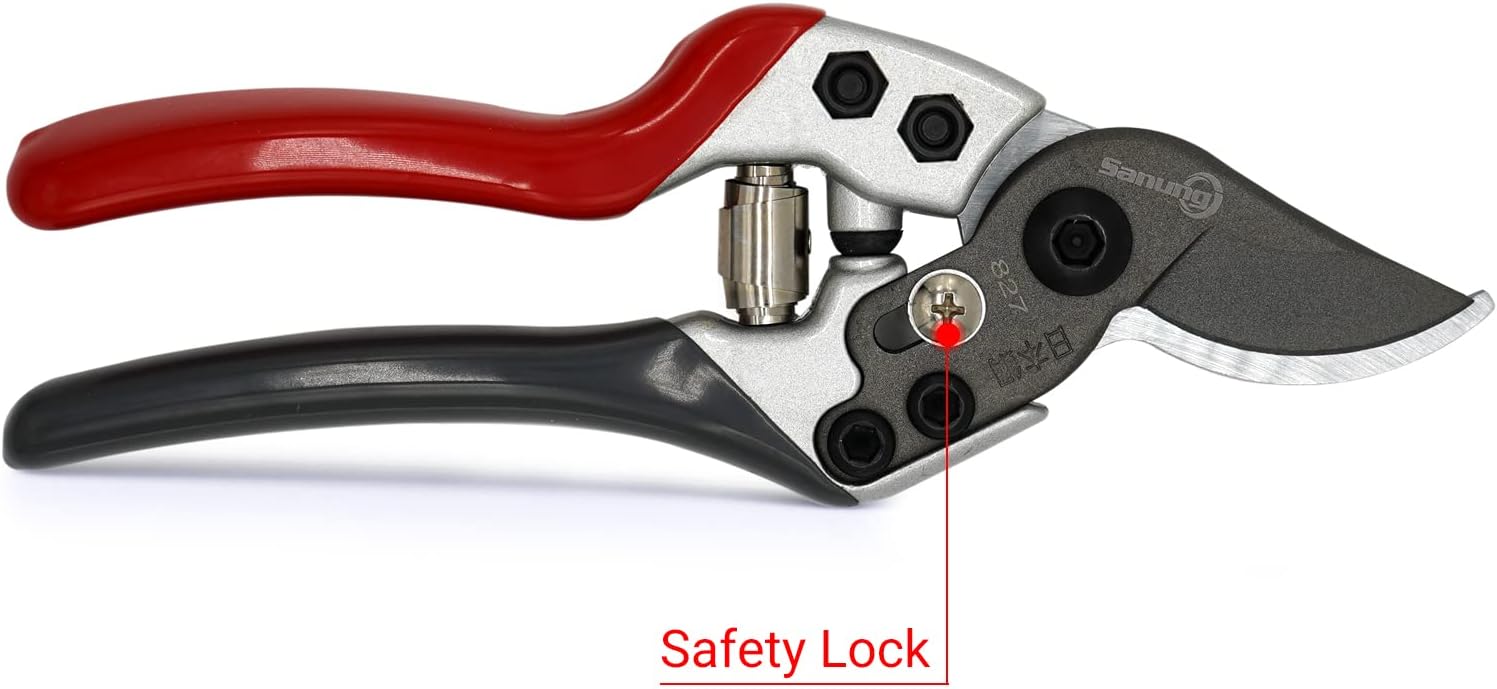
The high-carbon steel jaws, Teflon-coated blade and manual lock give the shears a practical set of features for everyday pruning. The coating is intended to isolate the blade from oxygen and help resist rust, according to the manufacturer, no additional rust protection is needed. That does not remove the need to clean and dry garden tools after use, particularly if they are stored in a damp spot.
The handle shape and non-slip finish are meant to make gripping more comfortable, including during longer pruning sessions. Still, comfort depends on hand size and grip, and no measurements are supplied. It suits you if you want straightforward hand shears for routine trimming and value a lock for storage. Better avoid it if you need a clearly rated tool for thick branches or want cutting-capacity details before choosing.
Spec sheet
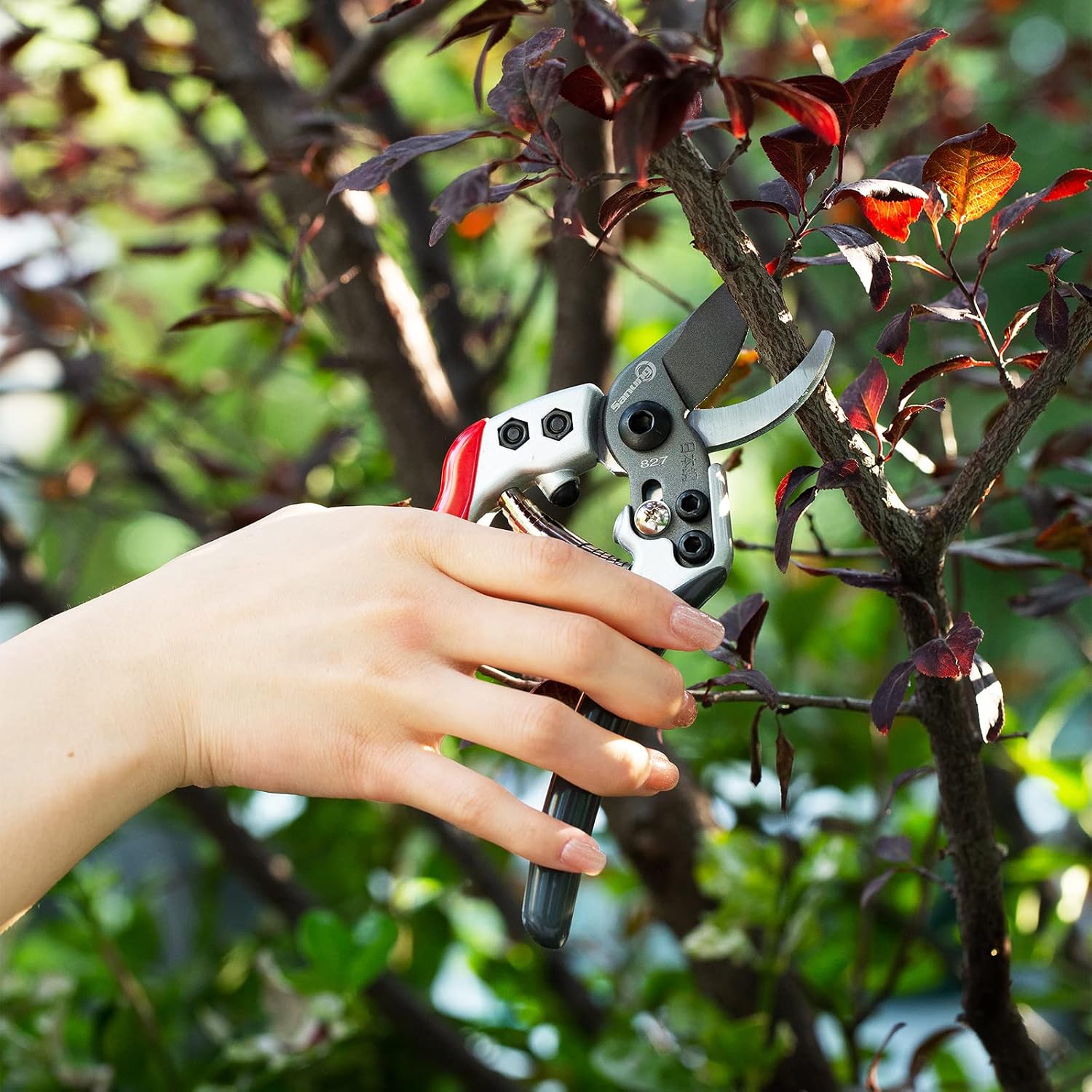
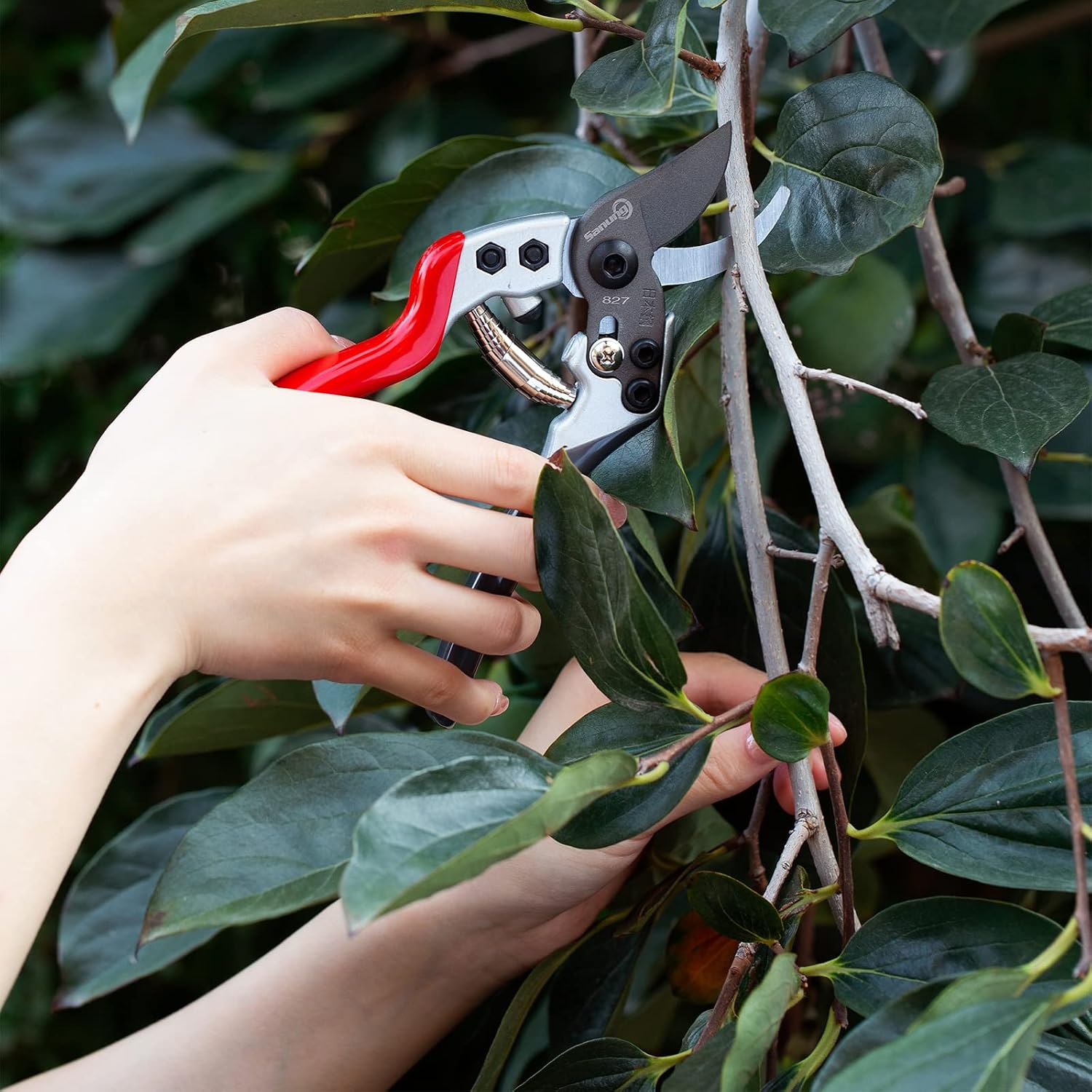
- Name: Sanung pruning shears
- Type: Hand-operated garden shears
- Material: Japanese high-carbon steel jaws, alloy-steel lower blade
- Blade coating: Teflon
- Handles: Ergonomic design with a non-slip finish
- Safety: Built-in manual lock
- Intended tasks: Trimming branches, rose branches, dead branches and outdoor bonsai
My take
The appeal here is a familiar hand-pruner format with a coated blade and a storage lock, rather than a larger or more specialised cutting tool. For light, regular garden work, those details may be enough to make the shears a sensible fit. The main trade-off is missing sizing and cutting-capacity information: if your pruning involves thicker branches, a model with a stated capacity would make a more informed choice. For shaping roses or clearing smaller growth, these are the kinds of details to weigh against how often you prune and how much leverage your jobs demand.