

General Tools & Instruments Plastic Metric Dial Caliper 144MM
Product description
For DIYers, students and workshop users who need to take more than one kind of measurement, this General Tools & Instruments caliper combines a dial readout with a plastic, fibre-reinforced body.
Its stated maximum length is 150 mm, and the dial is described as reading to 0.001 mm. Those details make it worth considering for small-part measuring, but the listed reading precision should not be mistaken for a guarantee of real-world accuracy in every setup.
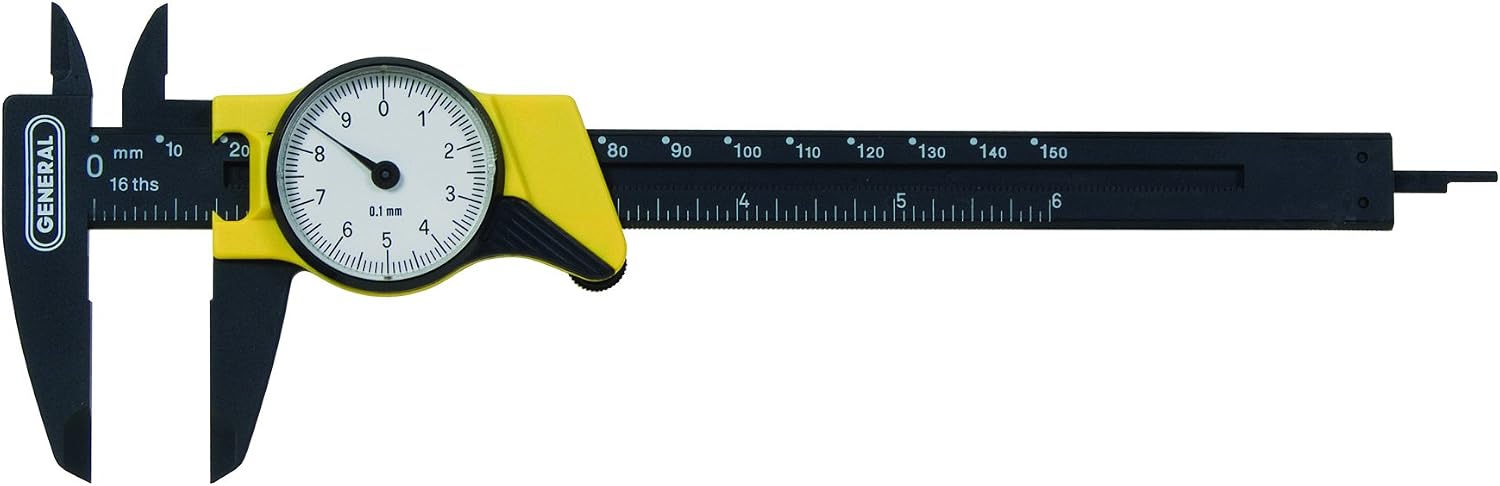
If you prioritise a lightweight plastic tool with several measurement modes, this has a useful range of functions, if you prefer a metal-bodied caliper for demanding workshop use, this is a different kind of purchase.
Where it shines
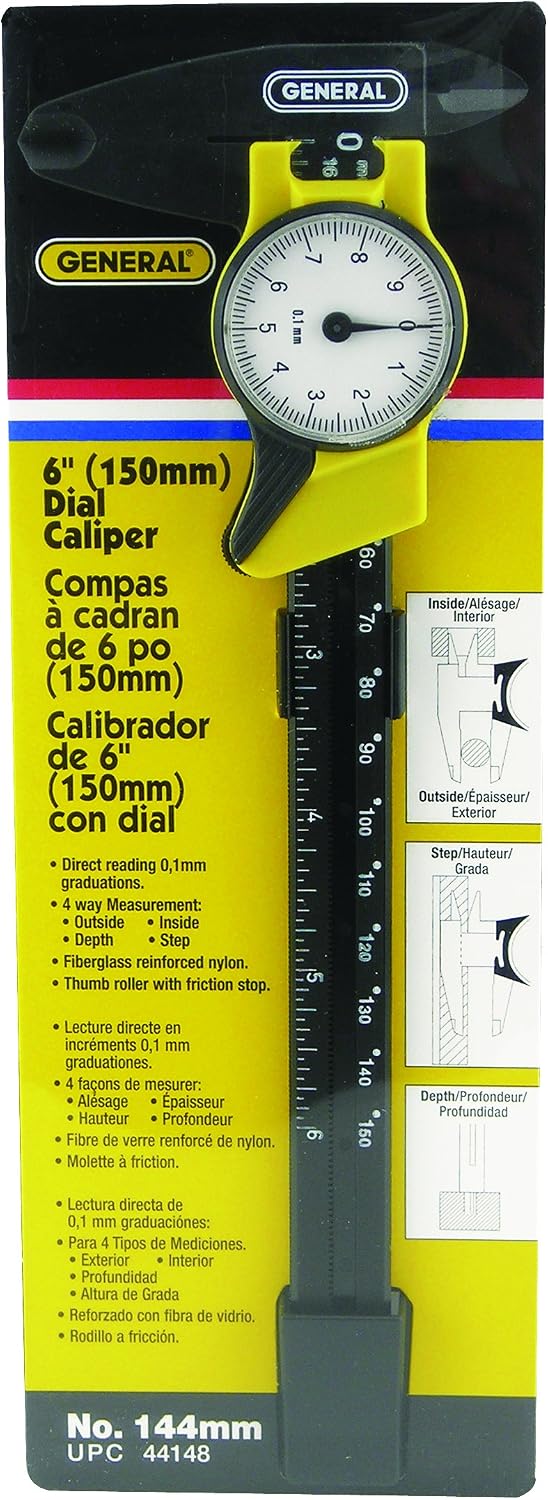
The main advantage is flexibility. The jaws and depth feature support inside, outside, depth and step measurements, so you can use one tool for checking an opening, the outside width of a part, a recess or a change in surface height. For example, when checking a small component, you can measure its outside width and then use the depth function to gauge a recess without switching tools.
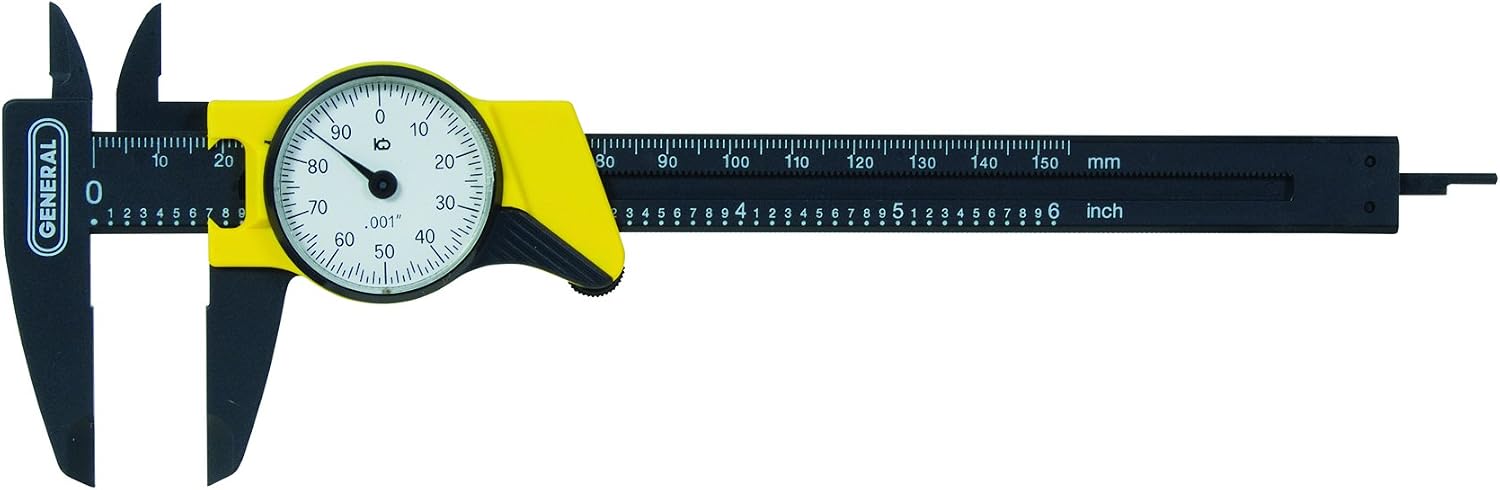
The bar has inch and millimetre graduations on the front, while a fractional conversion table is printed on the back. That can help when a project mixes measurement conventions, although the dial itself is presented as a metric readout. The large dial has a no-glare lens, a practical detail when you need to read the scale under bright workshop lighting.
Highlights
The body is made from FRP (fibre-reinforced plastic), and the product description positions it as a more economical way to get precision measurements. The maximum length is listed as 150 mm, the 144MM name is part of the product listing, so check that the stated range fits the parts you expect to measure.
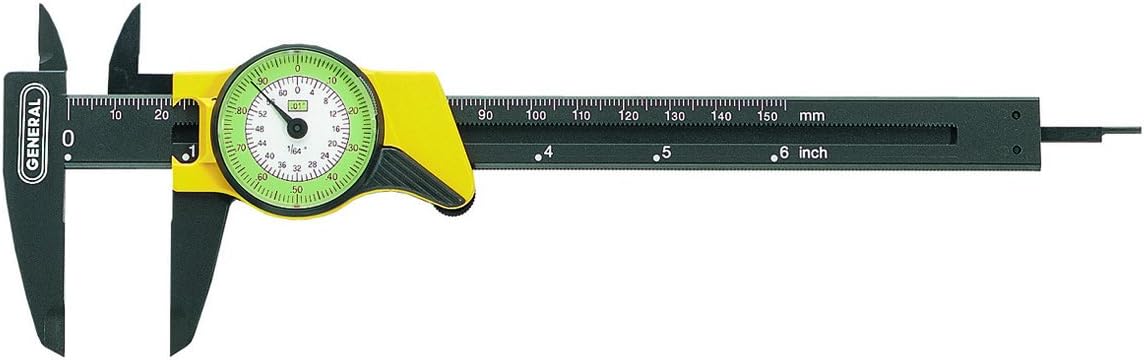
According to the manufacturer, the dial reads to 0.001 mm. That is the stated scale resolution, not independent evidence of measurement accuracy. No details are provided here about calibration, repeatability or long-term wear, so buyers whose work depends on those factors may want a tool with those specifications clearly documented. The plastic construction is also a point to weigh against a metal-bodied alternative if a more substantial tool is your preference.
Best use cases
This caliper makes sense if you want one instrument for several basic measuring tasks and value both metric and inch markings on the bar. It may suit occasional home projects, learning measurement techniques or checking small parts where the listed 150 mm maximum is sufficient.
It is not for you if your work requires documented calibration or a specific level of repeatability: neither is given in the supplied details. Likewise, someone who needs measurements beyond the stated maximum length should look for a longer-range tool rather than relying on the dial’s fine graduation alone.
Final thoughts
The appeal here is the combination of four measurement modes, a readable dial and dual-unit bar markings in a plastic FRP caliper. That makes it a practical candidate for general measuring when you want more than a basic ruler, without moving straight to a metal-bodied instrument. The trade-off is that the available information does not establish calibration or durability, so choose it for the functions and range that are actually listed—not for an assumed level of workshop performance.