

BSIDE Infrared Thermometer
Product description
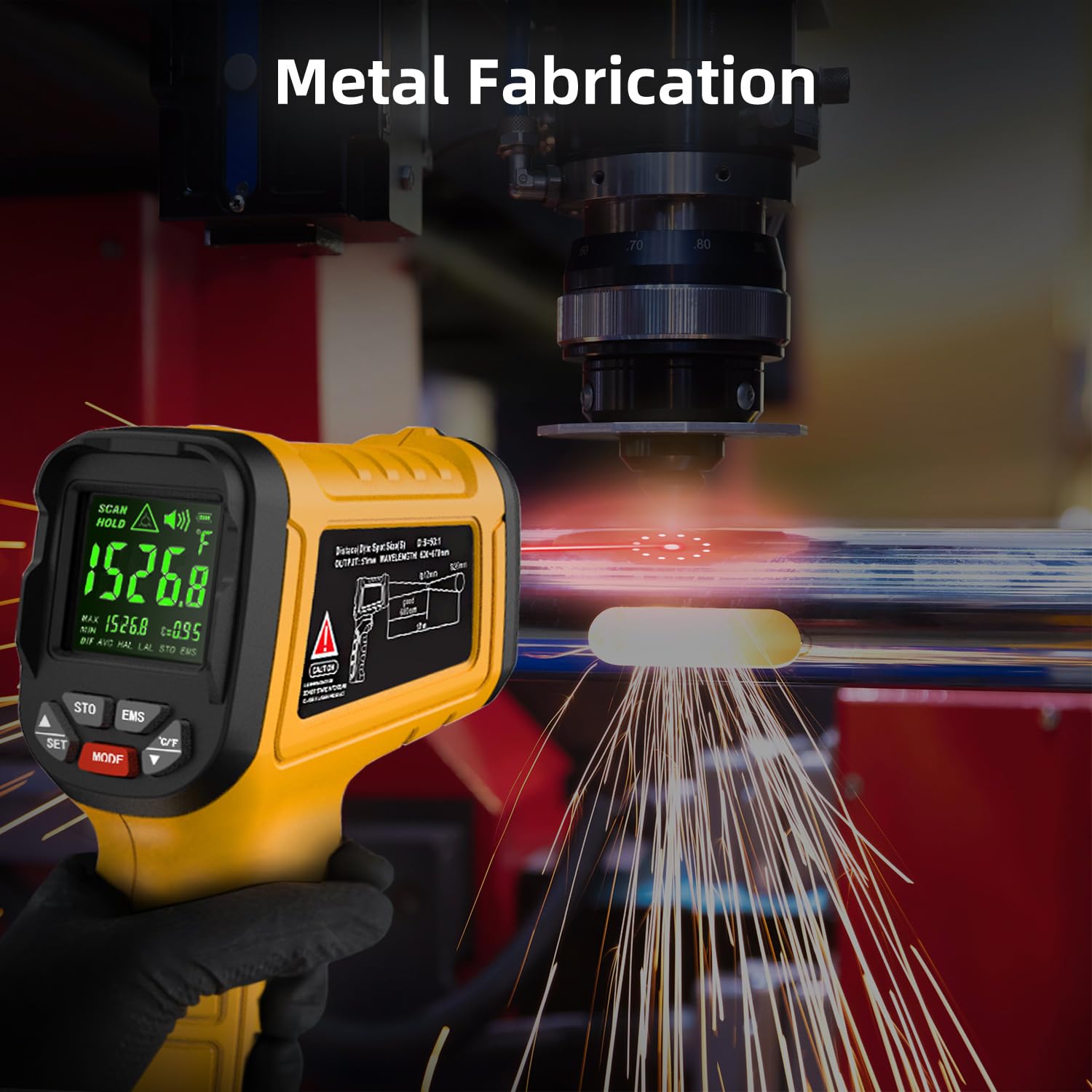
If you work with HVAC equipment, hot metal or kiln-fired materials, the BSIDE infrared thermometer is designed for checking surface temperatures without touching the target. Its stated range extends from -50°C to 1400°C (-58°F to 2552°F), which gives it a more industrial focus than a basic household temperature gun.
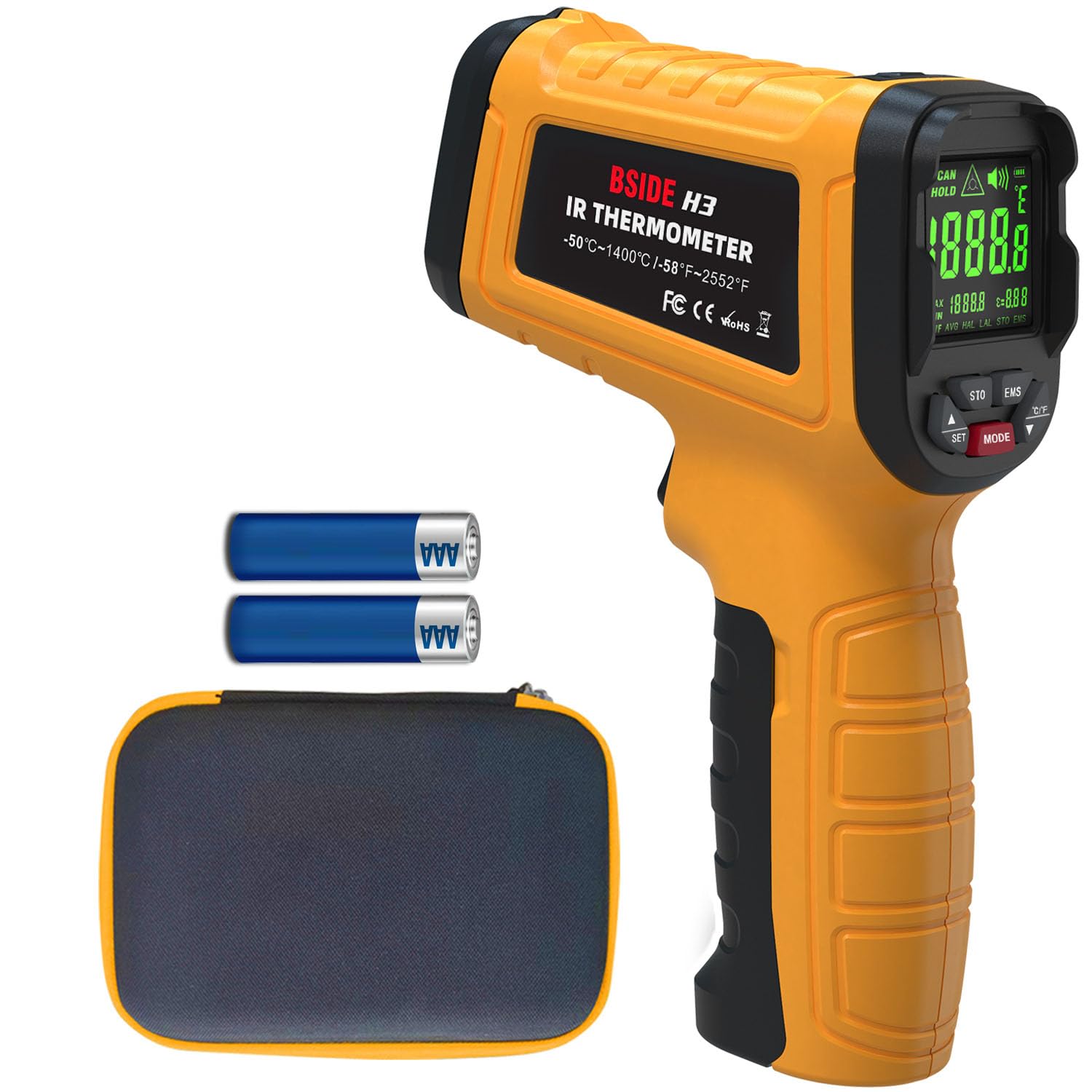
A 50:1 distance-to-spot ratio is intended to let you take readings from farther away. That can be useful when a surface is difficult or unsafe to approach.
The trade-off is that this is a surface-measuring tool, not a way to check the temperature inside a material. Is that distinction important for your work? It is if you need to assess a hot object from the outside rather than verify its internal temperature.
Best use cases
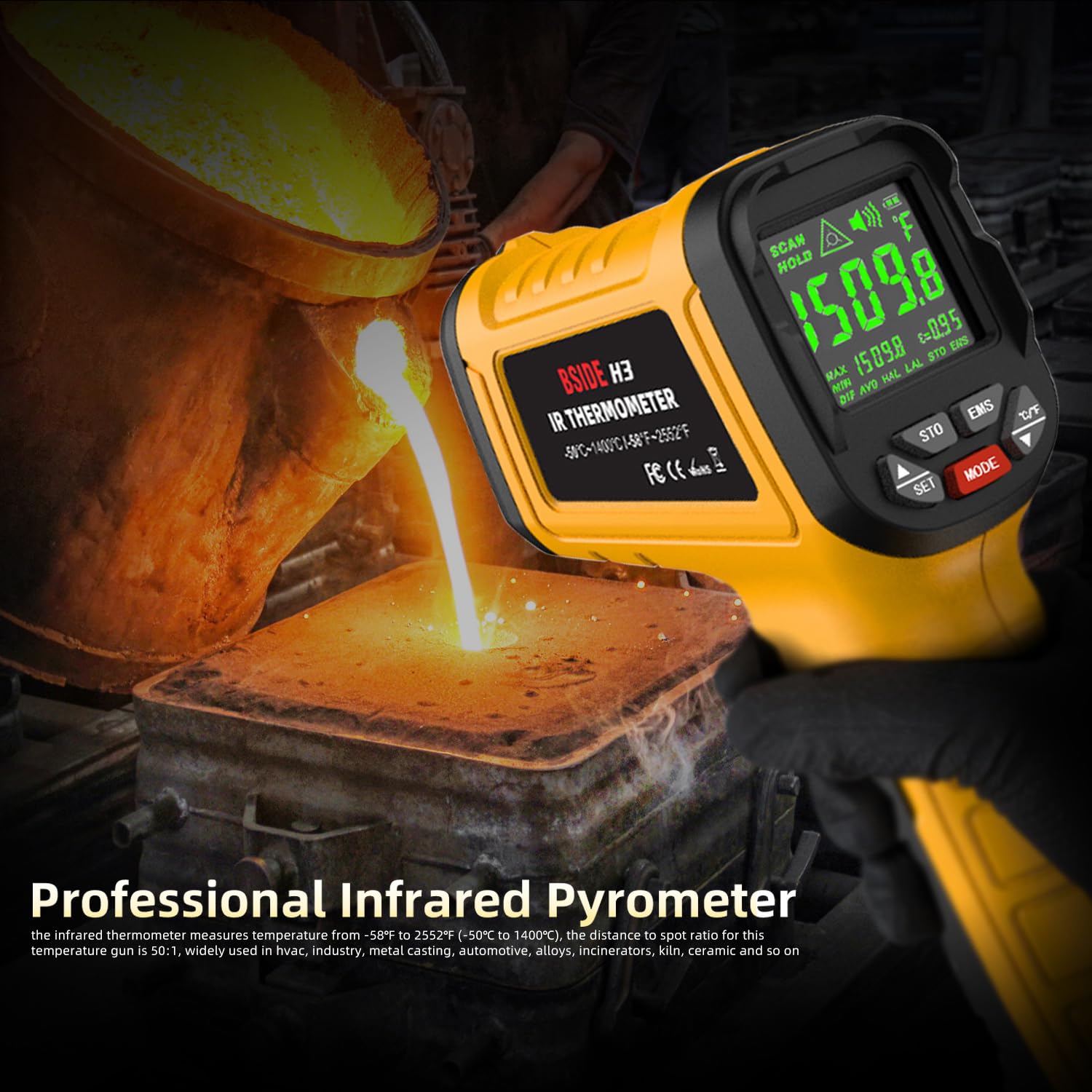
This model is aimed at tasks such as HVAC checks, metal casting, smelting, forging, alloy work, incinerators, kilns and ceramics. For example, when checking a hot section of equipment, you can point the gun at the surface and read the temperature without making contact. The longer working distance may help when the target is hot or awkward to reach, though the measurement area grows with distance, so a small target still needs careful aiming.
It suits you if you need a non-contact reading across a broad temperature range and want maximum, minimum, difference and average readings available. The high- and low-temperature alarms may also be useful when you need a warning if a reading passes a chosen limit. Best avoided if your task requires an internal temperature, or if you need a contact instrument for a measurement method not described here.
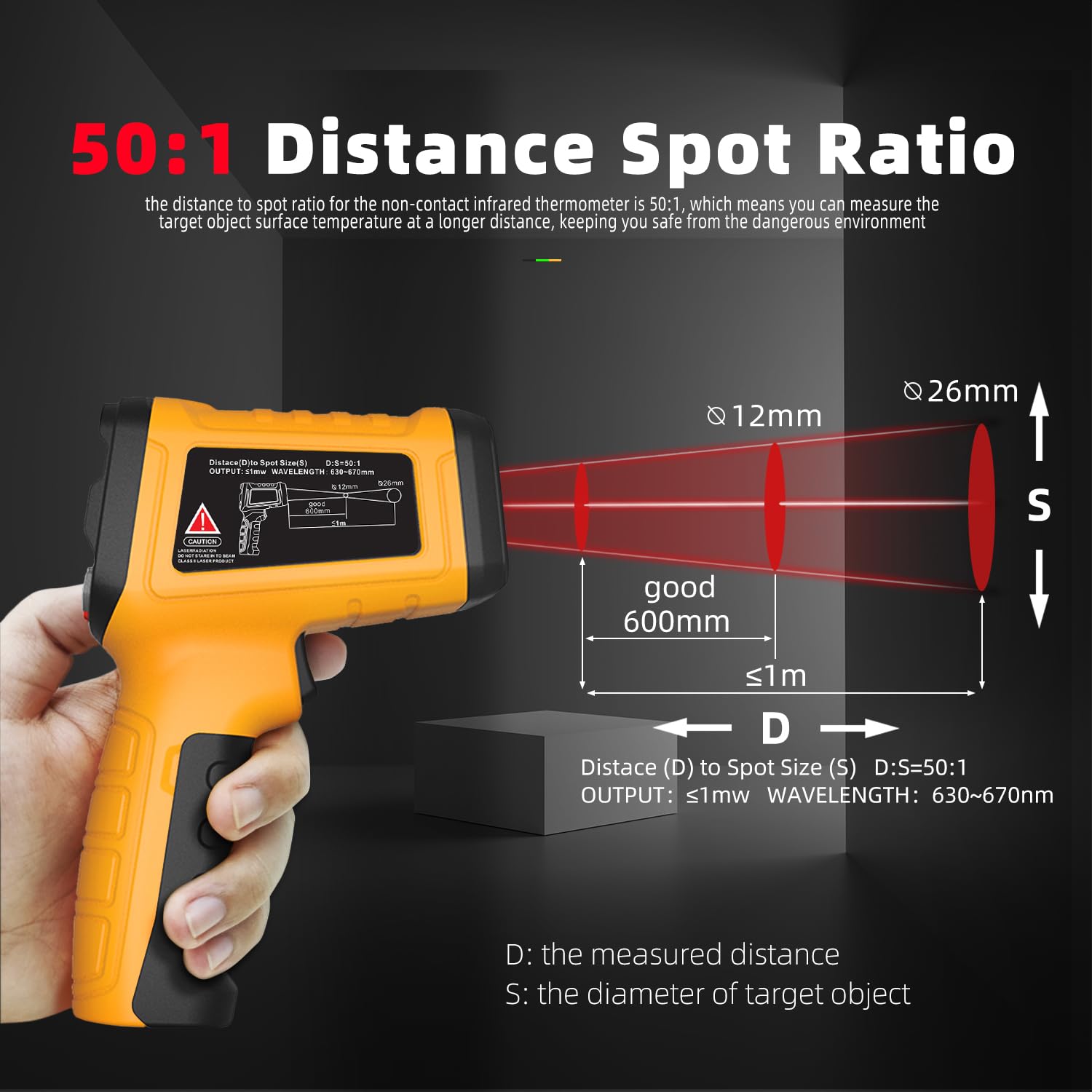
Product specs
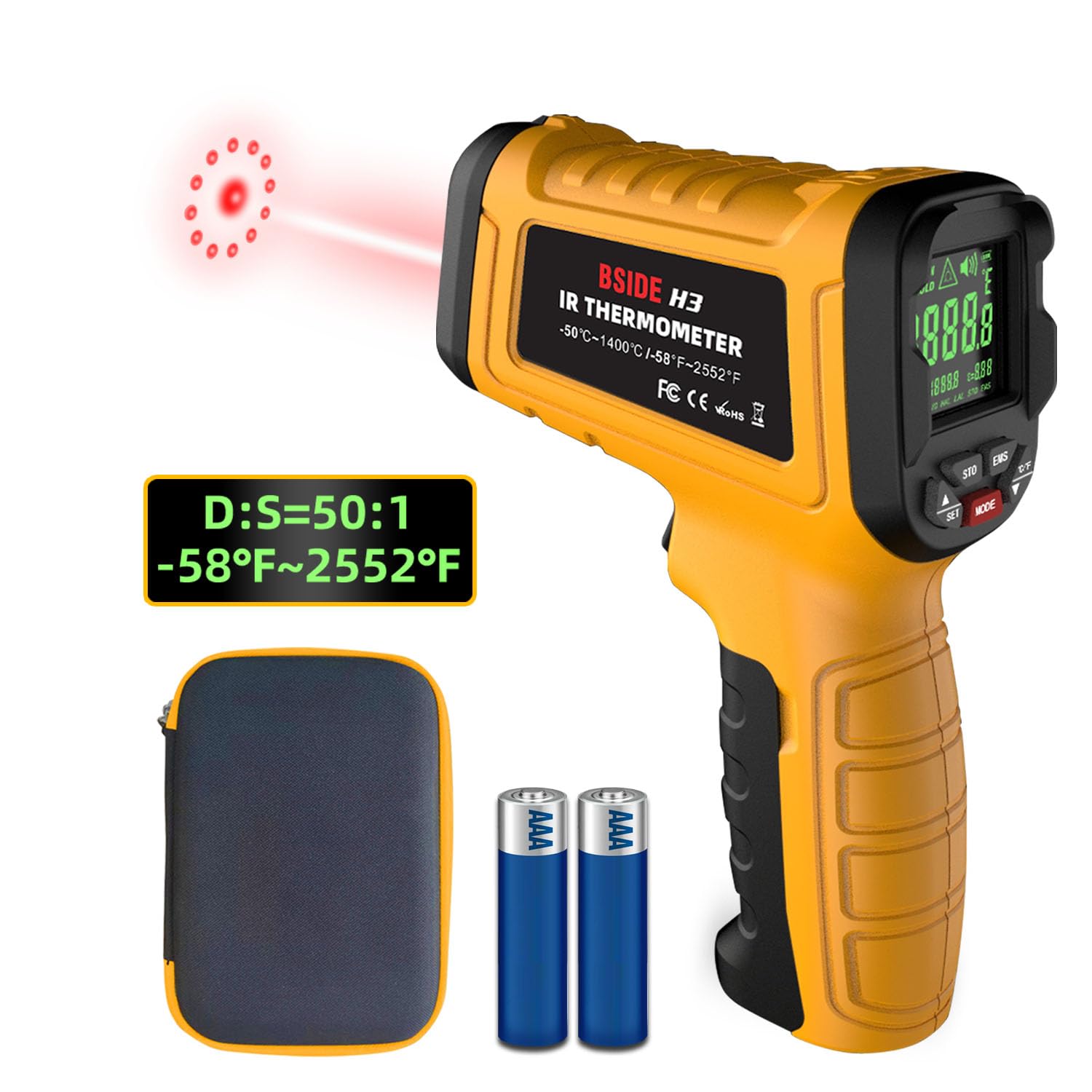
The thermometer uses infrared measurement and lists a temperature range of -50°C to 1400°C (-58°F to 2552°F), with stated accuracy up to ±2°C or ±2%. Its distance-to-spot ratio is 50:1. The colour LCD is intended to make readings easier to see in dim or bright conditions, and the display supports MAX, MIN, DIF and AVG measurements. High- and low-temperature alarms are also included. Without having tested it, those are the manufacturer’s stated capabilities rather than a guarantee of results in every working setup.
Where it shines
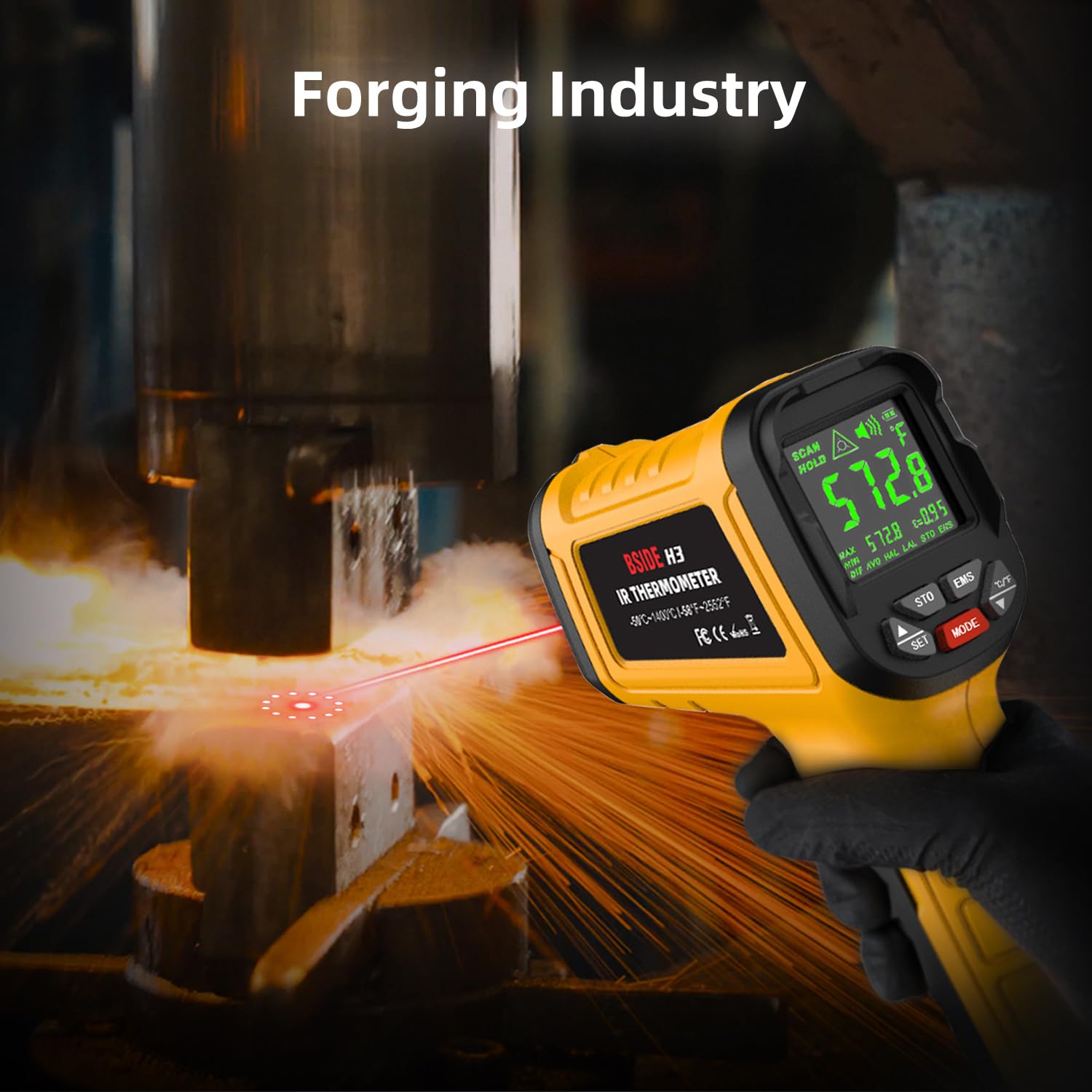
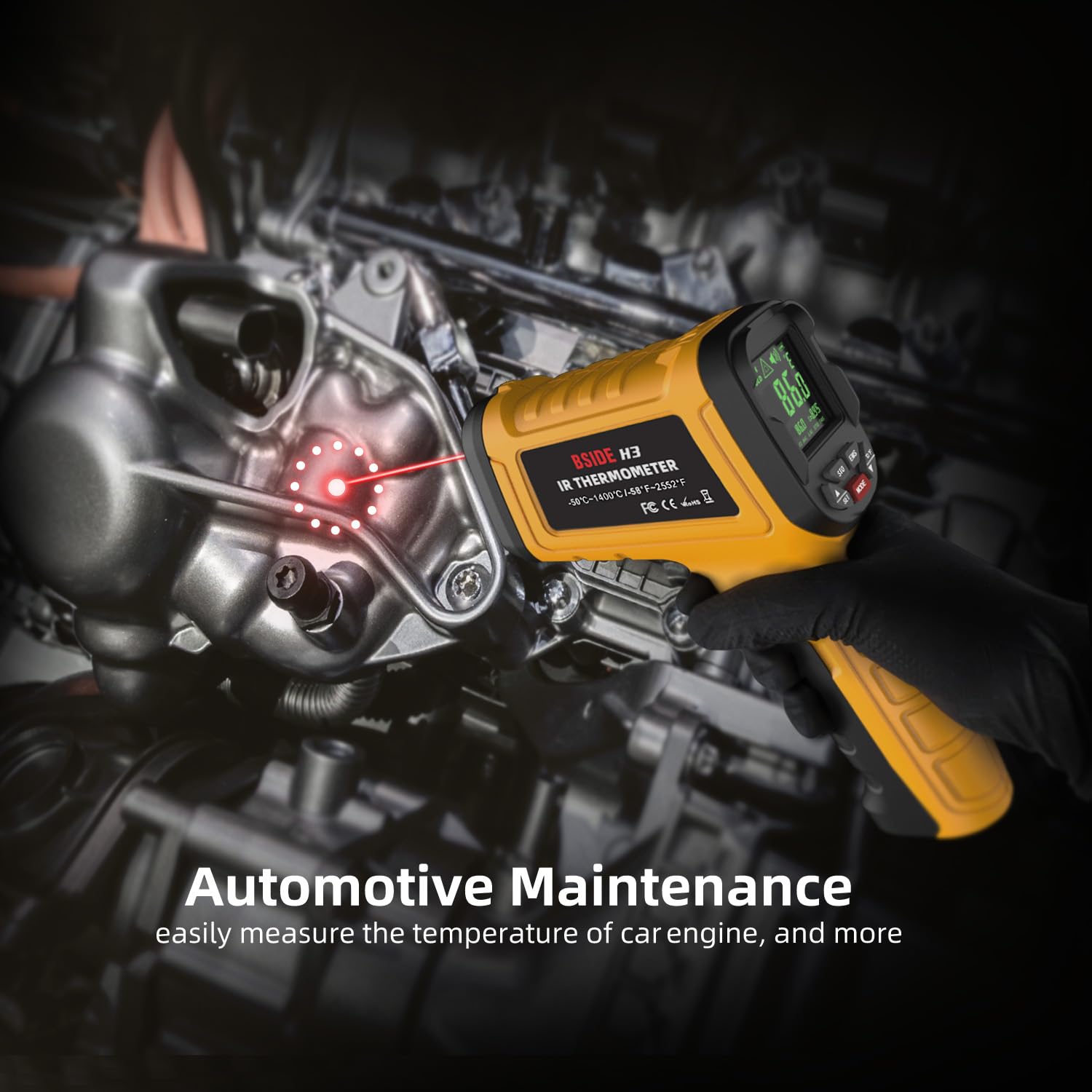
The practical advantage here is reach: compared with a more basic short-range infrared gun, the 50:1 ratio is intended to make it possible to measure from farther away. That can matter around hot equipment, but distance alone does not make every reading reliable, keep the target large enough within the measurement area and follow the needs of the job. The broad stated range also makes this a more specialised choice than a thermometer intended only for everyday home checks.
Its limits are worth weighing alongside those features. Infrared readings describe the surface you aim at, so they cannot confirm a material’s internal temperature. The listing does not give further detail about settings or measurement conditions, which may matter if your work depends on tightly controlled readings. If you need documented procedures or more application-specific guidance, look for those details before choosing a thermometer.
Final decision
Choose the BSIDE if non-contact surface checks, a wide stated range and a 50:1 distance-to-spot ratio match the way you work. It offers a set of useful reading modes and alarms for industrial or HVAC tasks, rather than just a single temperature display. Best avoided if you need to measure inside an object, or if your application calls for specifications beyond those provided here.