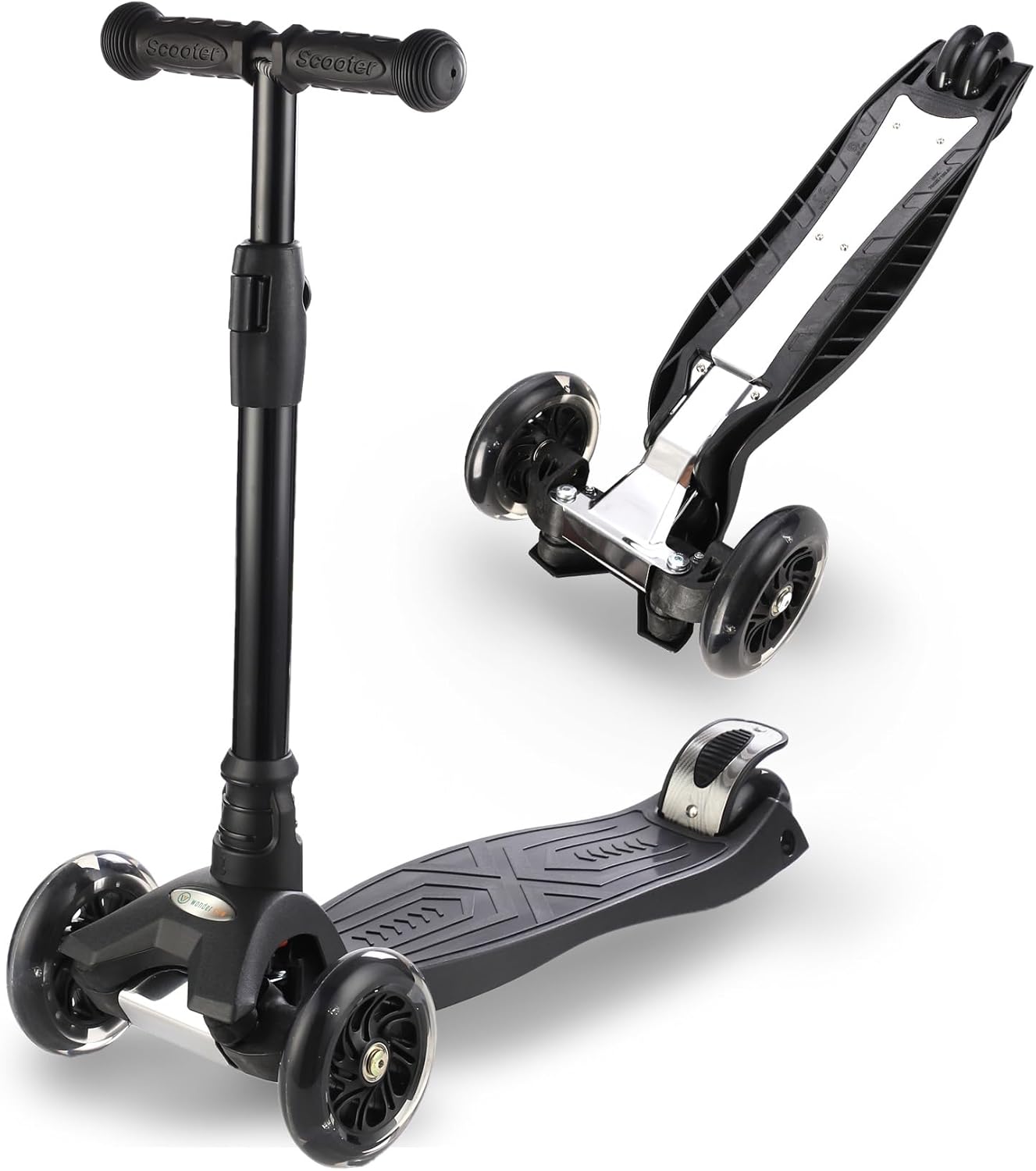
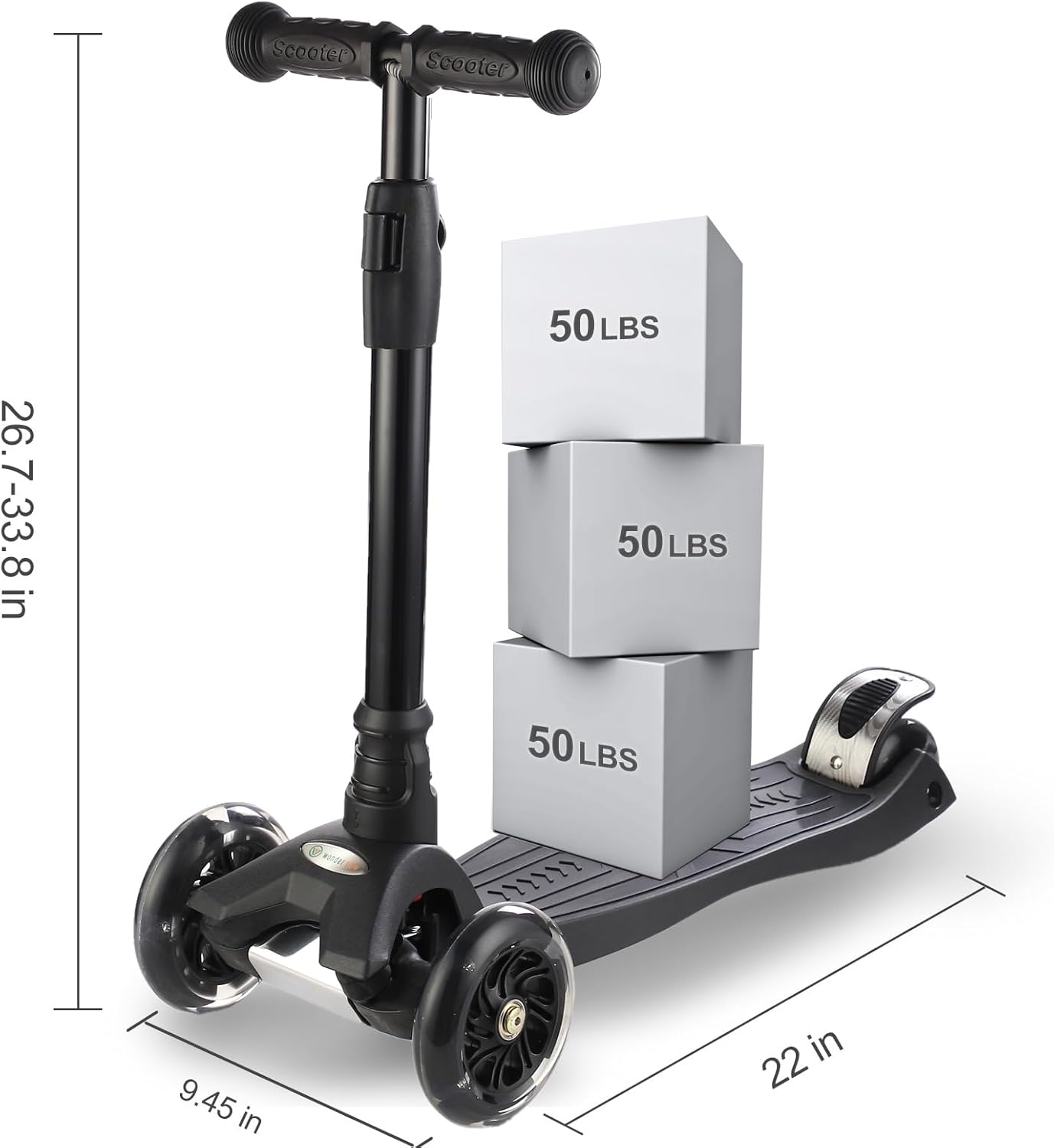
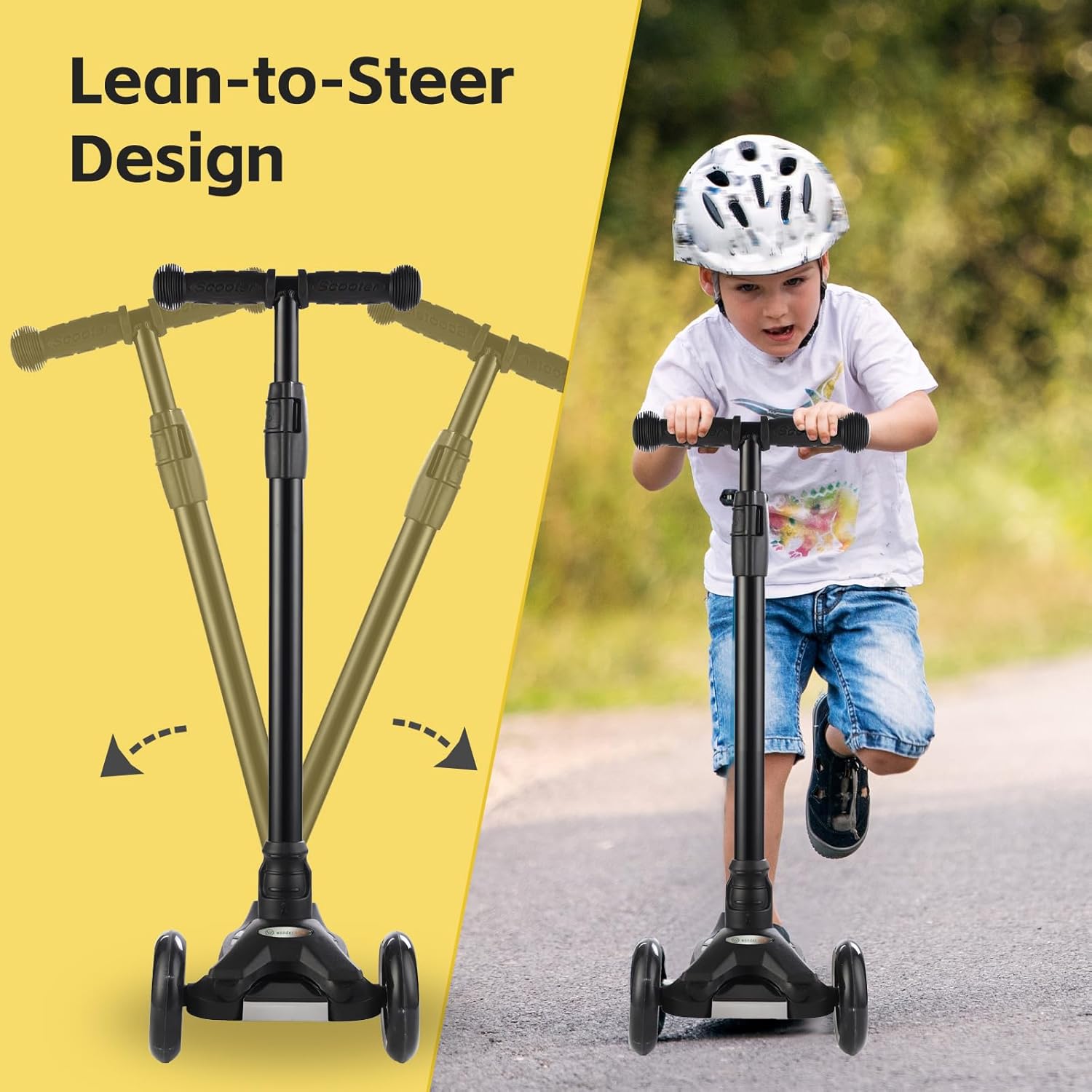
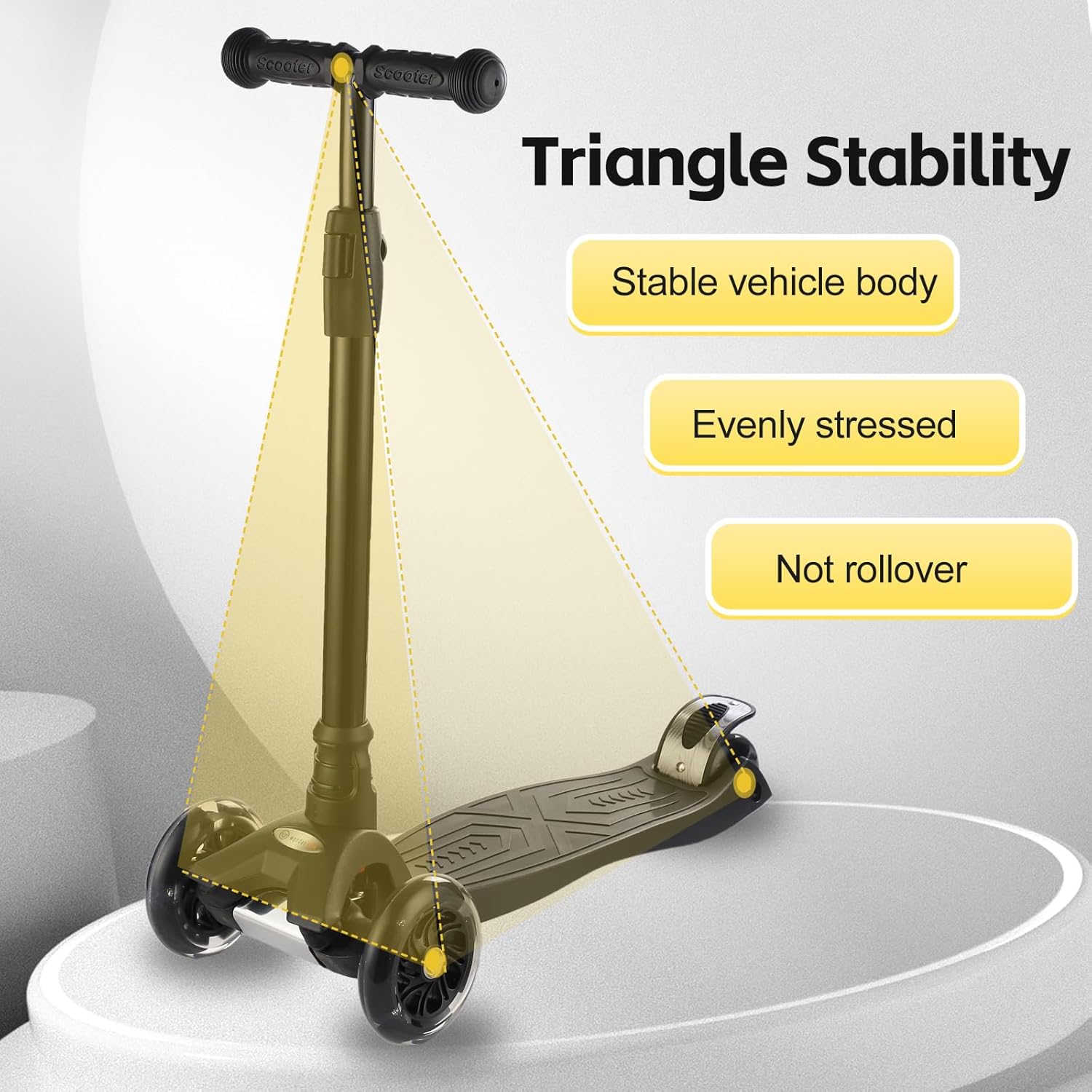
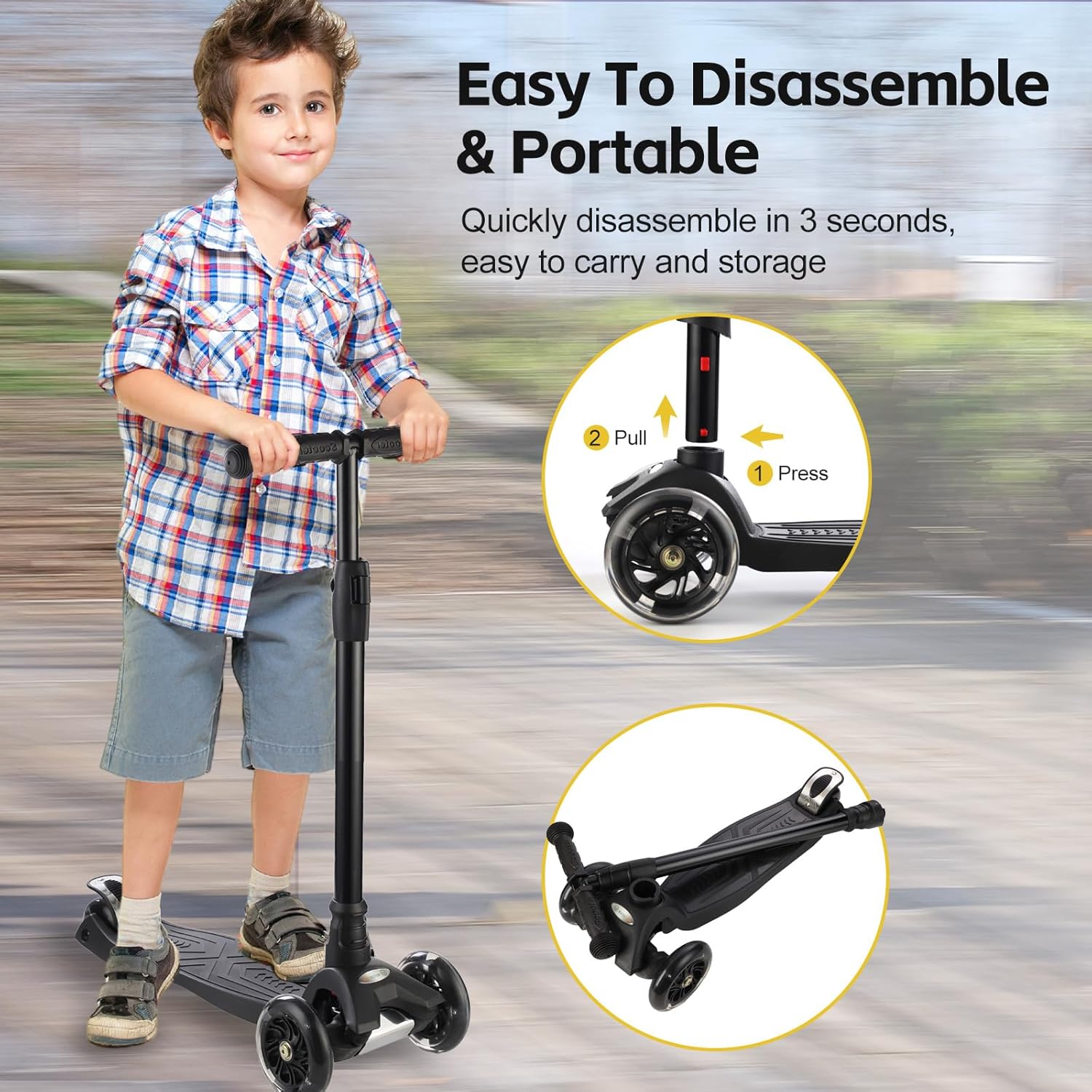
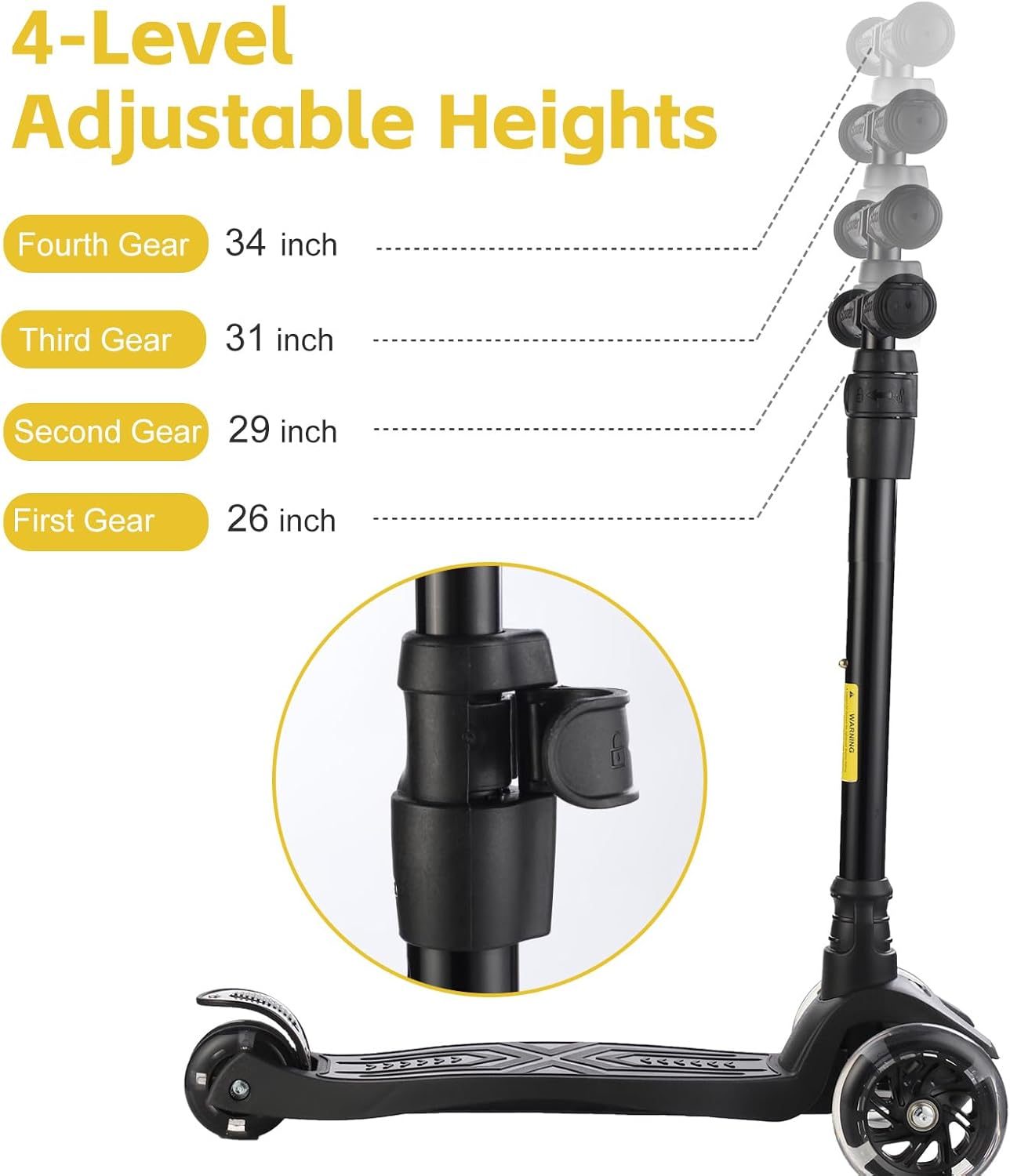
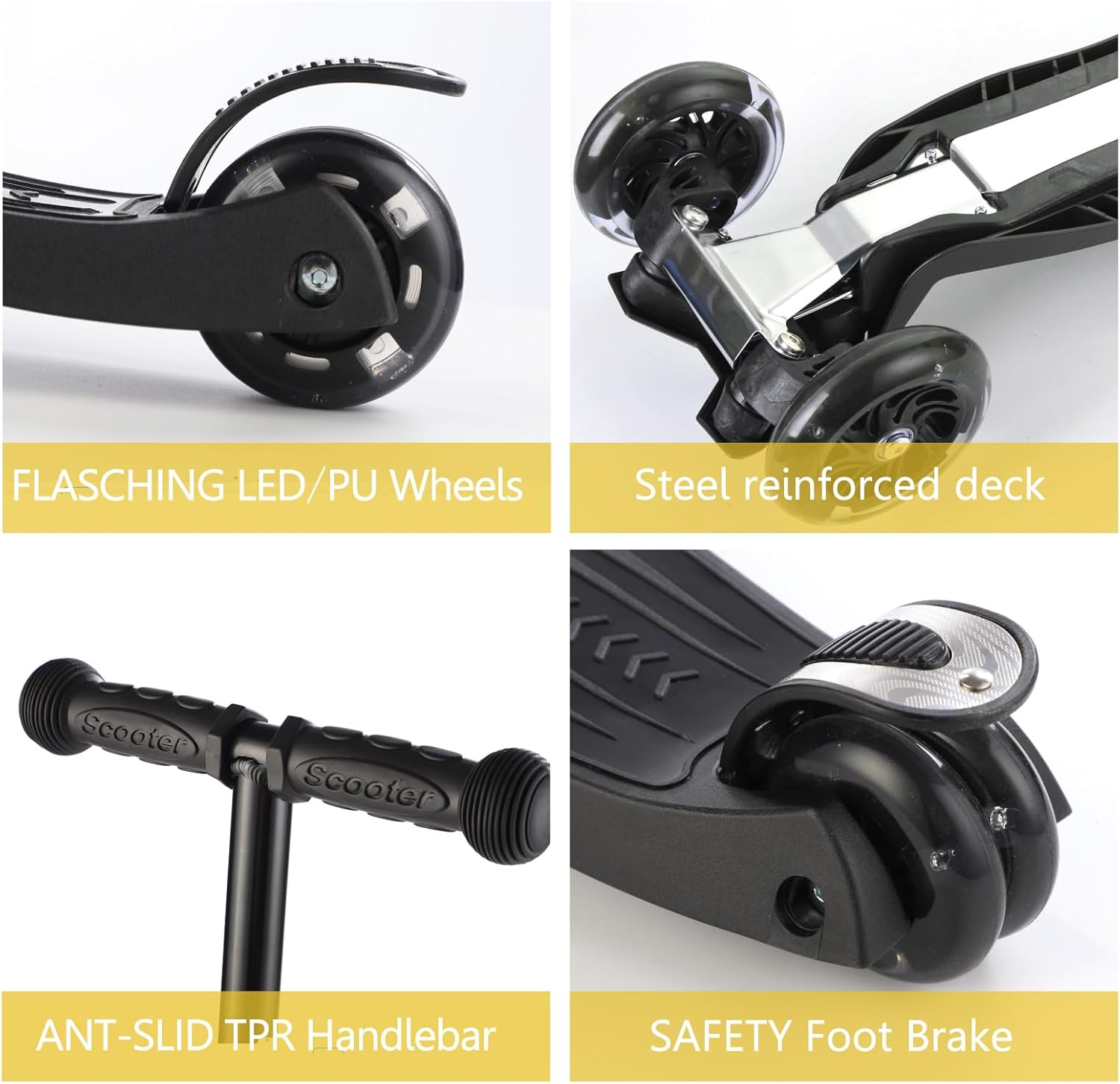
What it is and what needs it meets\nThis is a three-wheel scooter designed for younger riders who are building balance and confidence. The three-wheel setup generally offers more stability than a two-wheel model, which can help new riders learn steering and lean-to-turn techniques without as much wobble. If you’re shopping for a first or transitional scooter for a child who’s learning to ride, this setup is worth considering.\n\n## Build and materials you can rely on\nThe deck is described as 5.3 inches wide and made with a nylon deck on a stainless-steel base paired with an aluminum alloy pipe. That combination aims to deliver a sturdy, lightweight frame that can handle active kids. The weight capacity is listed at 154 lbs, which covers a broad range of kids as they grow. Keep in mind that actual durability will depend on use and maintenance, but on paper the materials are chosen to balance stability with portability.\n\n## Adjustability for growing riders\nA standout feature is the four adjustable height options, intended to accommodate children roughly from ages 3 to 13. This can extend the usable life of the scooter as a child grows, reducing the need for a later upgrade. Comfort at the handlebars matters, and four height settings can help ensure a natural stance while riding.\n\n## Lighting and motion\nThe scooter uses four PU LED light-up wheels with ABEC-7 bearings. The lighting adds visibility and a bit of fun, which can help with safety in lower light or evening rides. The ABEC-7 rating suggests smoother rolling and better efficiency than basic bearings, contributing to easier balance and longer glides for younger riders.\n\n## Assembly, storage, and day-to-day use\nSetup is described as simple: insert the handlebar into the deck and align with the red pins. When not in use, the handlebar can be detached for easier storage or transport. This kind of quick setup can be handy for families that move between neighborhoods, parks, or friends’ houses.\n\n## Pros and points to watch\n- Pros: stable three-wheel design, four adjustable heights, LED wheels for visibility, decent weight capacity, relatively straightforward assembly.\n- Cons/limitations: the weight capacity tops out at 154 lbs, so it may not be suitable for heavier riders as they approach late adolescence. Also, the long-term durability depends on ongoing maintenance and how aggressively the scooter is used on rough surfaces.\n\n## Who it’s for\nIdeal for younger kids who are just learning to ride and need extra balance. It can also serve kids who are transitioning from a beginner two-wheeler to a more advanced scooter, thanks to the four height adjustments that support growing bodies. If you prioritize stability, easy setup, and a bit of flair with light-up wheels, this model aligns with those needs.\n\n## Who it isn’t for\nIf you expect a high-end, long-term scooter for bigger kids or teens, this model may not meet those needs. Likewise, for riders who frequently navigate rough terrain or require very high-speed performance, a more robust or sport-focused option could be preferable.\n\n## Before you buy, what to double-check\n- Confirm the height range and ensure the child’s height fits the available settings for comfortable grip and knee clearance.\n- Consider where the scooter will be used most—pavement, sidewalks, or parks—since this design emphasizes balance and light-up wheels more than rugged off-road capabilities.\n- Check maintenance needs for the bearings and LED wheels to keep performance steady over time.\n\n## How this compares to other approaches\nIf you’re choosing between a three-wheel learner scooter and a traditional two-wheel model, the extra stability can reduce early frustration and help kids build confidence faster. On the other hand, if you want a long-term device for a bigger child or a teen, you might lean toward a larger, higher-performance option.\n\n## Practical usage example\nPicture a 6-year-old rolling down the driveway at dusk, the wheels lighting up with each turn, learning to lean slightly to steer while keeping both feet planted and balanced. The four-height setting lets the rider adjust as they grow taller, keeping comfort consistent during practice sessions or casual park outings.\n\n## Final decision and buying guidance\n### Is it worth it?\nIf stability, adjustable sizing, and a touch of nighttime visibility matter for your child’s first scooter experience, this model offers a compelling package. It may be especially appealing for parents seeking a single scooter that can adapt over several years of a child’s growth.\n\n## Quick FAQ\n- How adjustable is the height? It offers four height options to accommodate ages roughly 3–13.\n- Do the wheels light up? Yes, all four wheels have PU LED lighting for visibility and fun.\n- What’s the weight limit? The deck is built to support up to 154 lbs.\n- Is assembly difficult? Setup is described as straightforward—plane the handlebar into the deck and secure with pins.\n- Is this good for beginners? The three-wheel design is generally more stable for first-step riders, helping with balance and steering training.