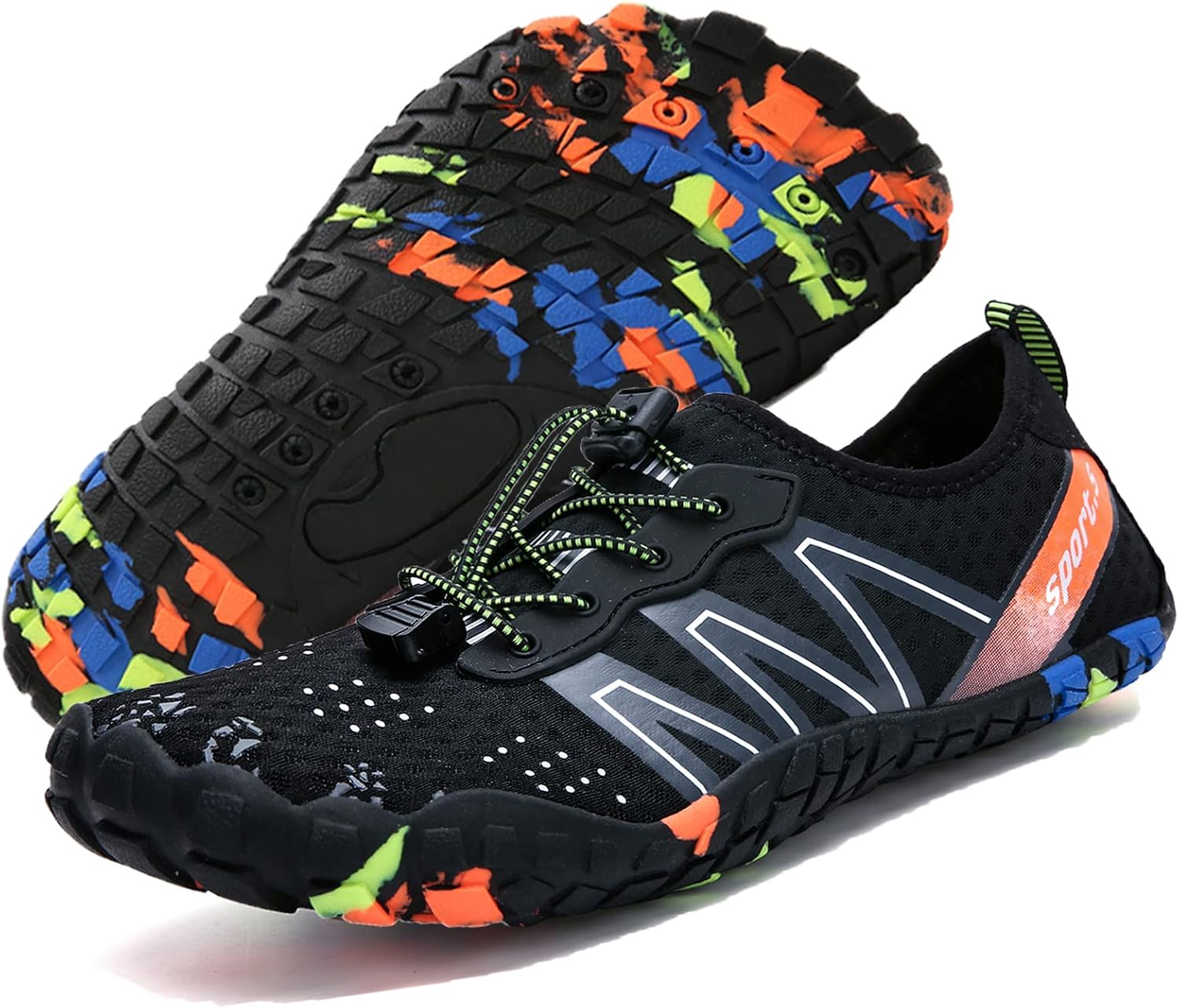
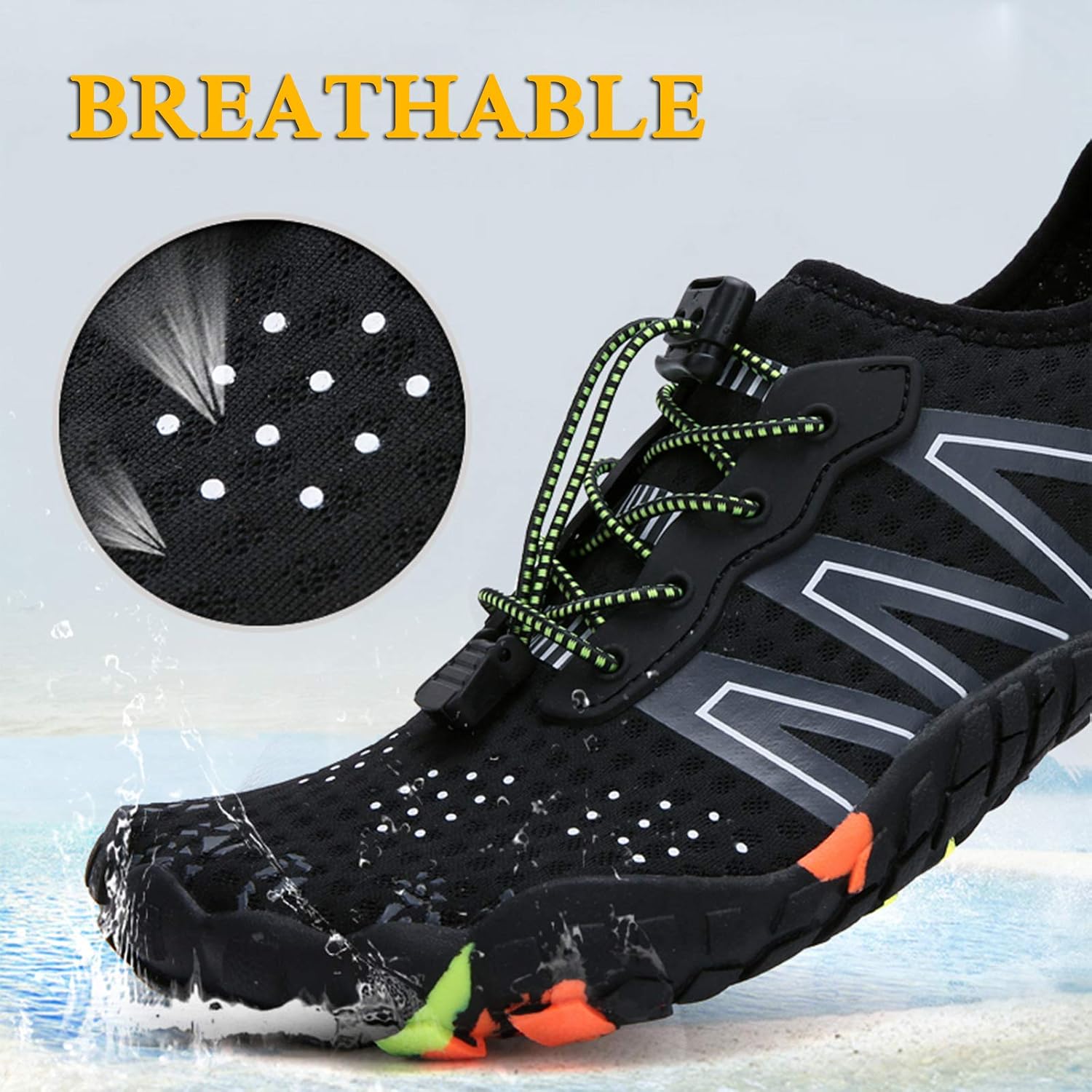
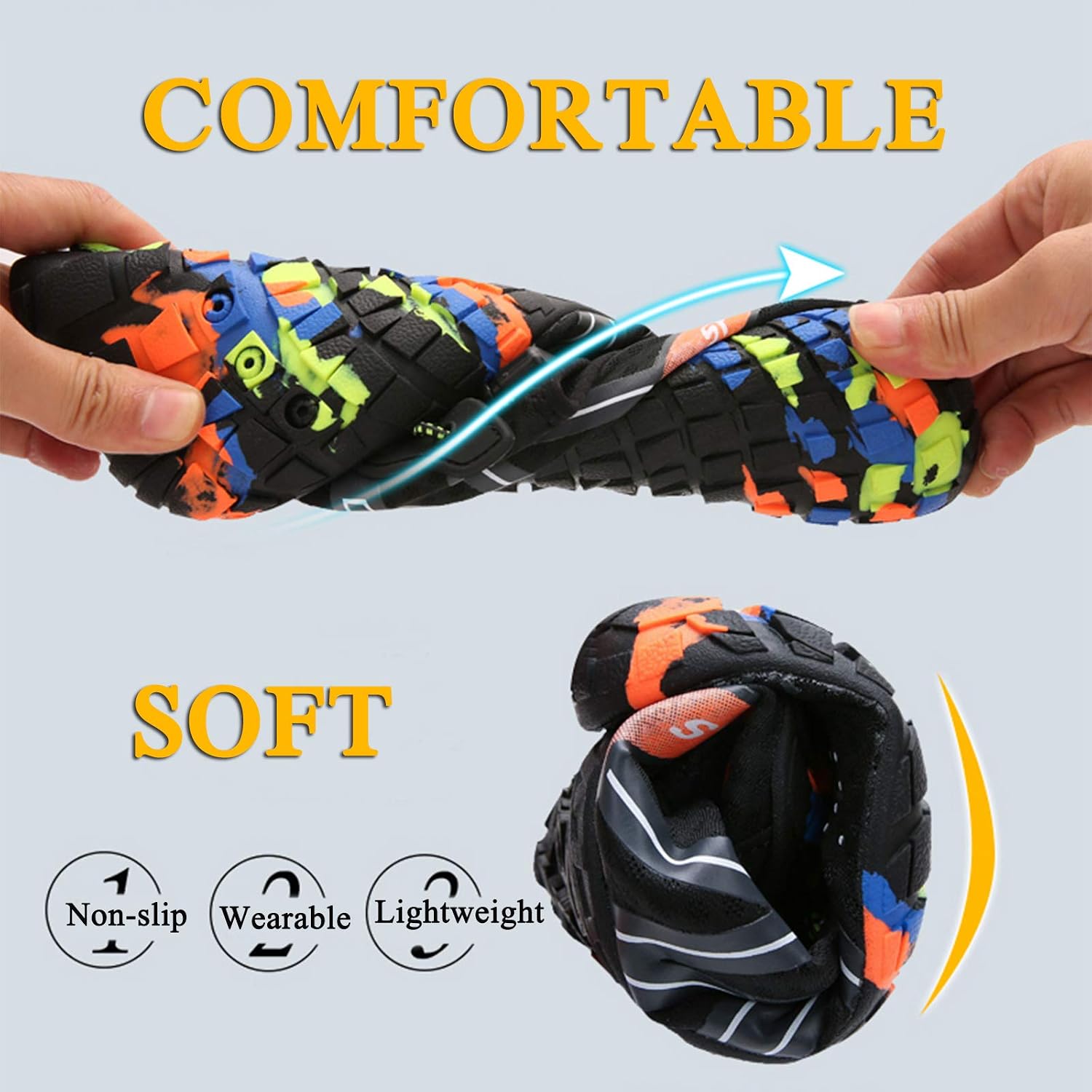
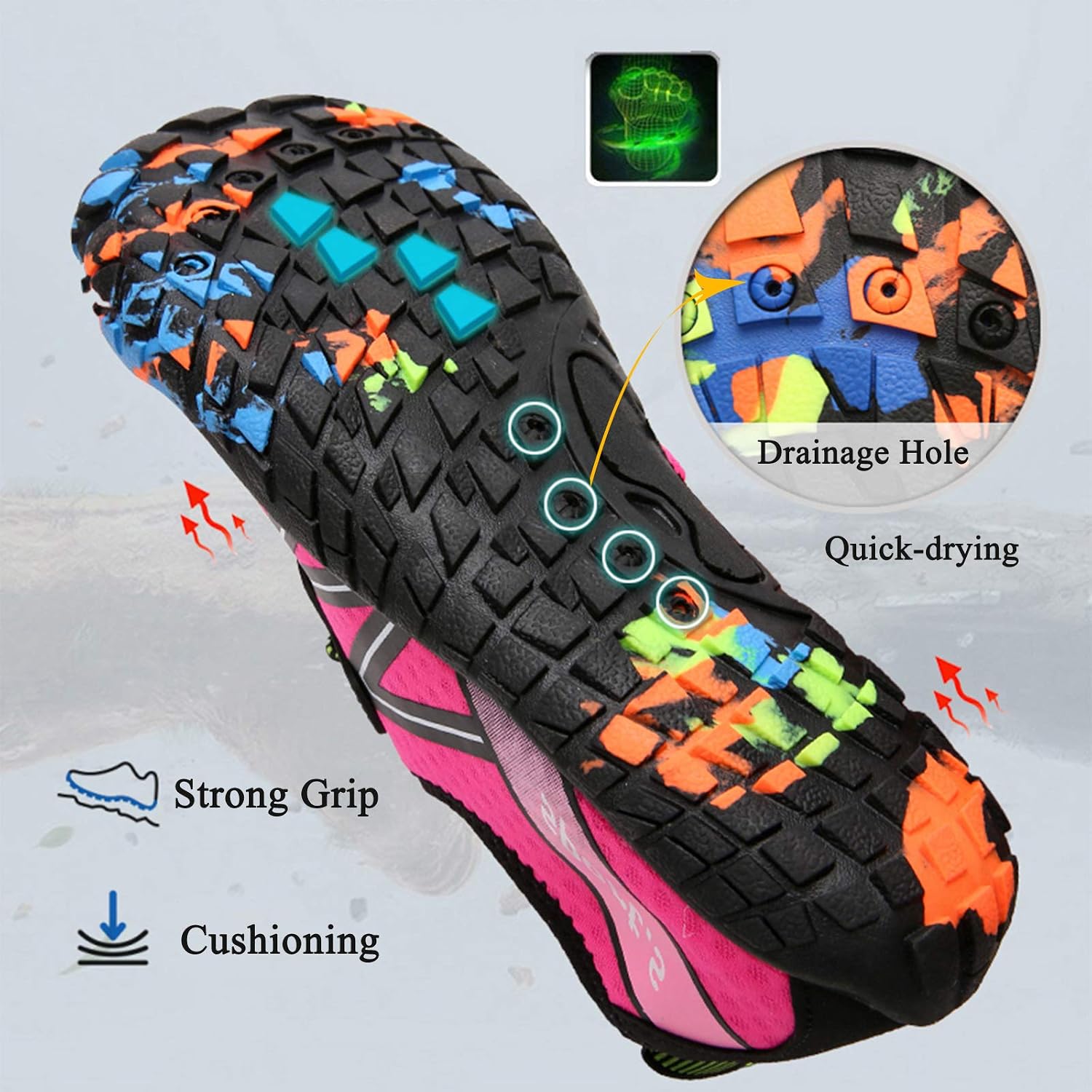
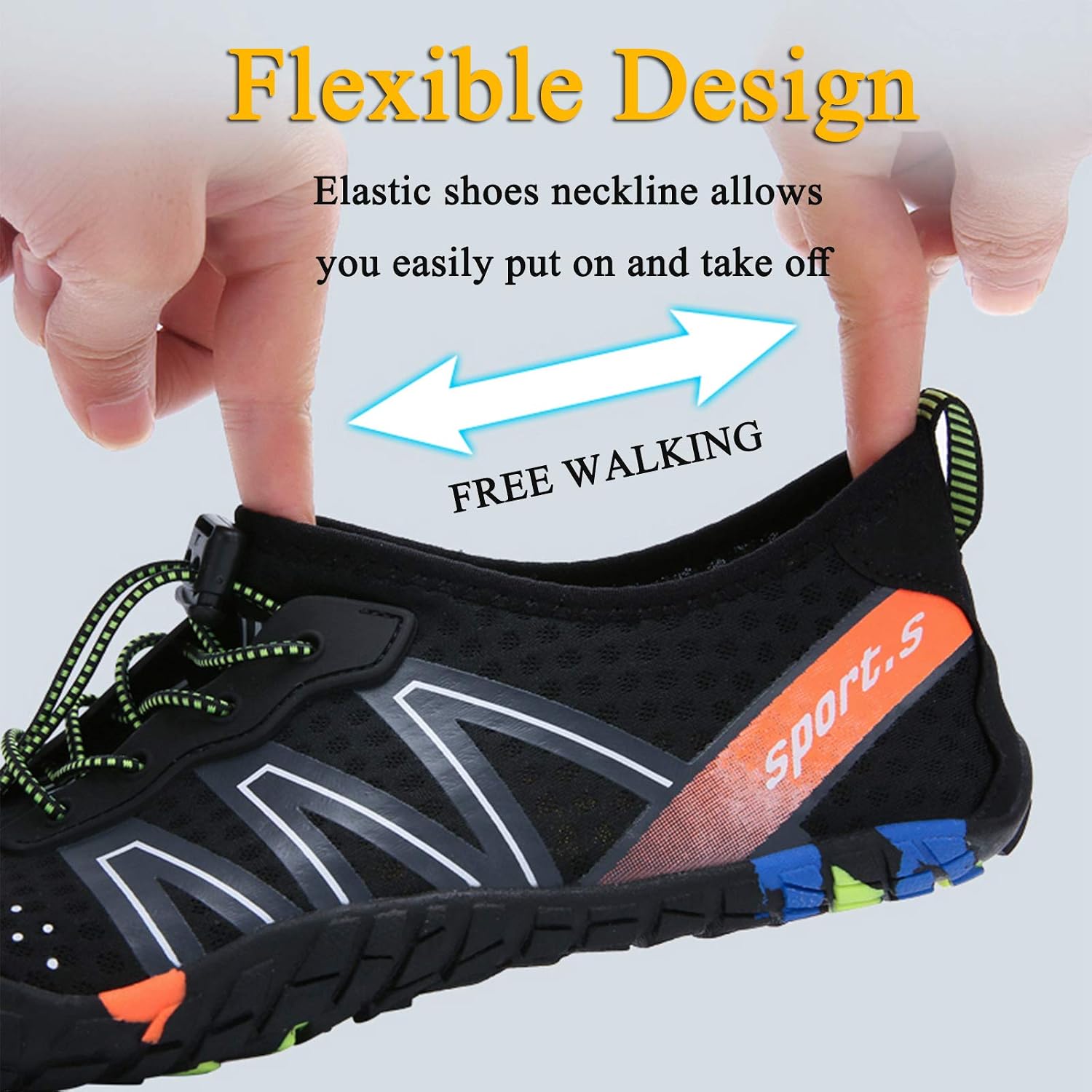
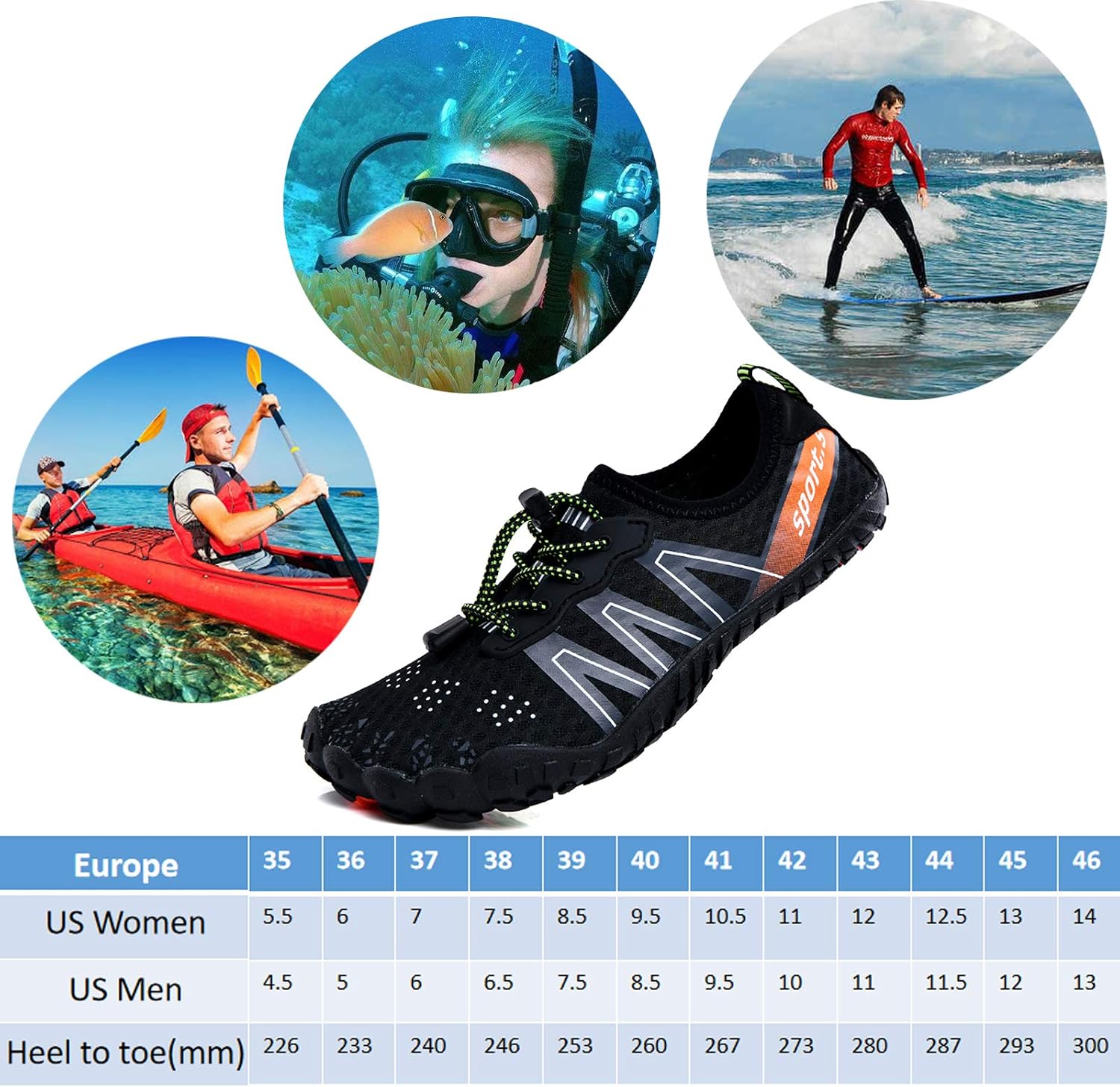
What this is and who it’s for\nThese are unisex water shoes designed for a wide range of warm-weather activities—from beach days and pool swims to river excursions, boating, fishing, and even fitness routines like yoga and aerobics near water. The idea is simple: protect your feet from sharp rocks or hot pavement, while letting water drain quickly and keeping things comfortable enough for extended wear. If you value grip, foot protection, and a breathable fit for quick sprints or long walks along the shore, this kind of footwear can be practical. The design aims to combine barefoot-like feel with a protective sole so you don’t have to choose between natural movement and foot safety.\n\n## How it’s built to work\nThe base concept is a flexible rubber sole paired with a relatively thick foam arch-support insert. That combination is meant to cushion the midfoot and aid shock absorption, which helps when you’re stepping on uneven riverbeds or rocky pools. An anti-slip rubber outsole is mentioned, along with a toe guard and ergonomically molded cushioning—that’s the part aimed at preventing toe injuries while you’re moving quickly in or around water. A notable feature is the multiple drainage holes on the bottom, designed to promote rapid water egress. In practice, that drainage helps keep feet cooler and reduces waterlogging after quick transitions from water to land. The uppers are described as breathable with some elasticity, and the neck of the shoe is designed to reduce chafing as you slip them on. The design intent is to “wrap” the foot comfortably with a standard foot model, which generally means it aims for a familiar, snug fit without being tight.\n\n## What stands out on paper\nOn the surface, the five-toe design and the flexible yet protective sole position these shoes as a versatile option for activities that bounce between water and land. The quick-dry and drainage system is a practical detail for anyone who moves in and out of water repeatedly, such as surfers, divers, or boaters. The combination of a cushioned insole and a rugged outsole could be appealing if you’re balancing foot protection with mobility.\n\n## Pros and potential drawbacks\nPros: practical foot protection without heavy boots, quick-dry properties, good breathability, and a design that aims to minimize chafing. The five-toe concept and molded toe guard can contribute to better toe protection during rocky or uneven water activities. The versatility of usage—from yoga on the deck to light trail walking—can be a plus for folks who want one pair for many summer tasks.\nCons: the description notes a thick foam arch-support insert, which might feel bulky for some wearers who prefer a minimal feel. The “unisex” fit means sizing and width could vary, so it may not suit everyone perfectly out of the box. If you’re specifically chasing a barefoot feel with ultra-light traction, these might not be the lightest option available.\n\n## Ideal users\nIf you’re someone who moves frequently between water and dry land—beach volleyball, poolside workouts, boating days, or river hikes—these can offer practical value. They’re likely a reasonable choice for casual swimmers, pool-goers, and outdoor enthusiasts who want a single pair for multiple summer activities without committing to sport-specific footwear. Those who prioritize a truly minimal barefoot experience or premium lightweight sneakers might prefer alternatives with a lighter profile.\n\n## Where it may not be the best fit\nNot ideal for heavy-duty water sports that demand high ankle support or maximal foot protection (for example, rugged rocky river passages or long scuba itineraries). If you rely on a precise barefoot sensation or need a snug, sport-specific fit for intense training, this approach may feel off. Also, if fit consistency is critical, the unisex sizing could require trying a size up or down.\n\n## What to check before buying\nConfirm your preferred balance between cushioning and flexibility, and consider how you’ll wear them—on the beach, at the pool, or for quick transitions during water sports. Look for a comfortable neck edge to prevent rubbing, and ensure the drainage holes align with your typical water flow. Consider trying on with socks if you’re between sizes, since the upper stretch can influence overall comfort.\n\n## How this compares to other approaches\nIf you want true barefoot movement and ultra-minimalism, there are lighter, simpler water shoes or sandals. If you prefer more protection and a cushioned feel, this model’s foam arch-support and thicker sole may be more comfortable, especially for longer wear in mixed environments. It sits in a mid-range space between ultra-minimal water footwear and more protective, sport-specific options.\n\n## Is it worth it?\nFinal verdict: it depends largely on your priorities. If you value quick-dry performance, toe protection, and a flexible sole that still cushions the foot during mixed-use outdoor days, this model can offer solid everyday utility. It may not be the best choice if you’re chasing a featherweight feel or a highly specialized sport shoe.\n\n## Quick FAQ\n- Do they run true to size? sizing guidance isn’t specified, so you may want to check fit notes or order with an easy return option.\n- Are they suitable for yoga or Pilates on the deck? Yes, the breathable upper and flexible sole support light movement and balance activities near water.\n- Can they replace hiking shoes for short coastal trails? They can cover light trails, but for rugged terrains you might want more ankle support and a sturdier outsole.\n