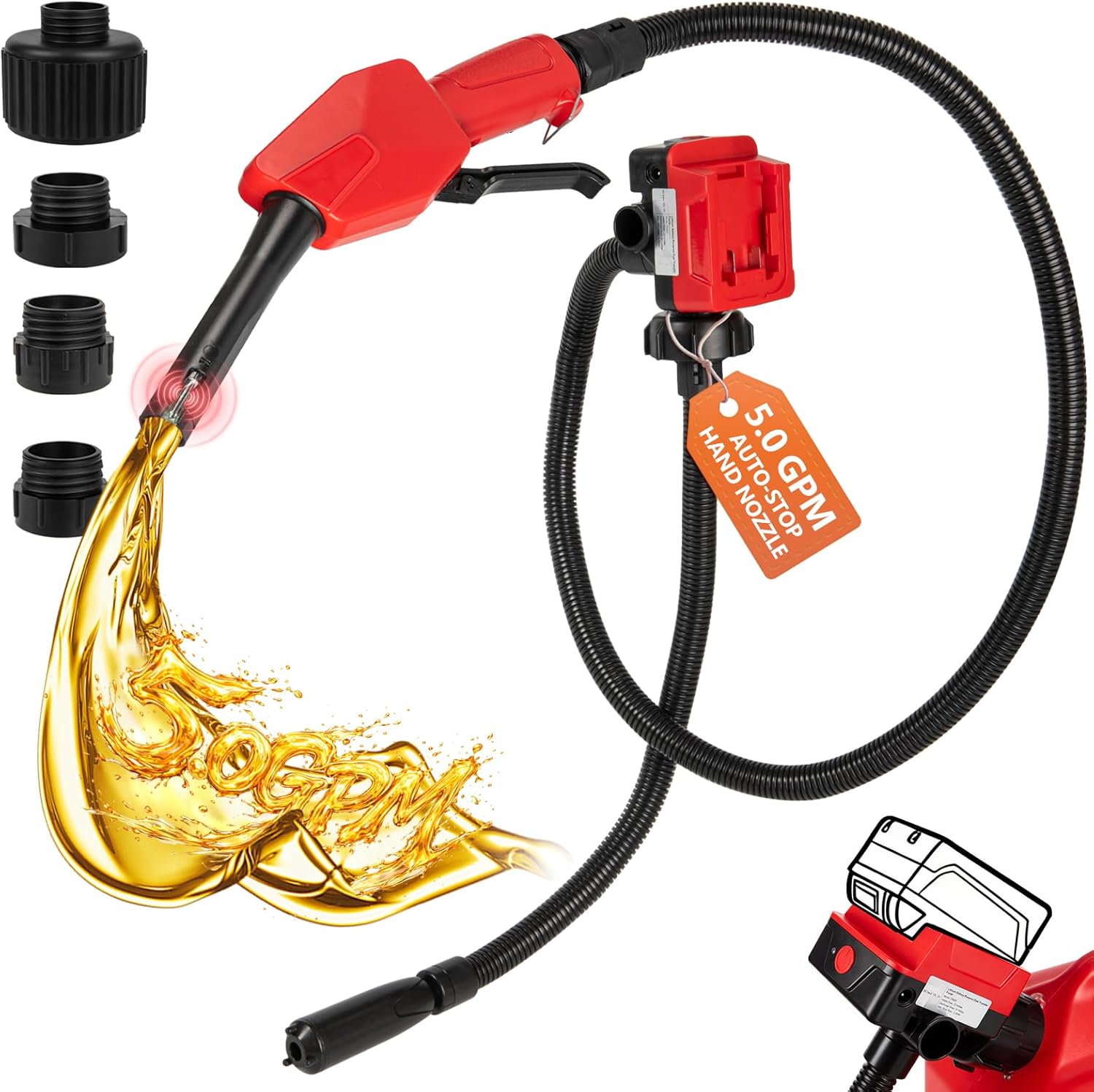
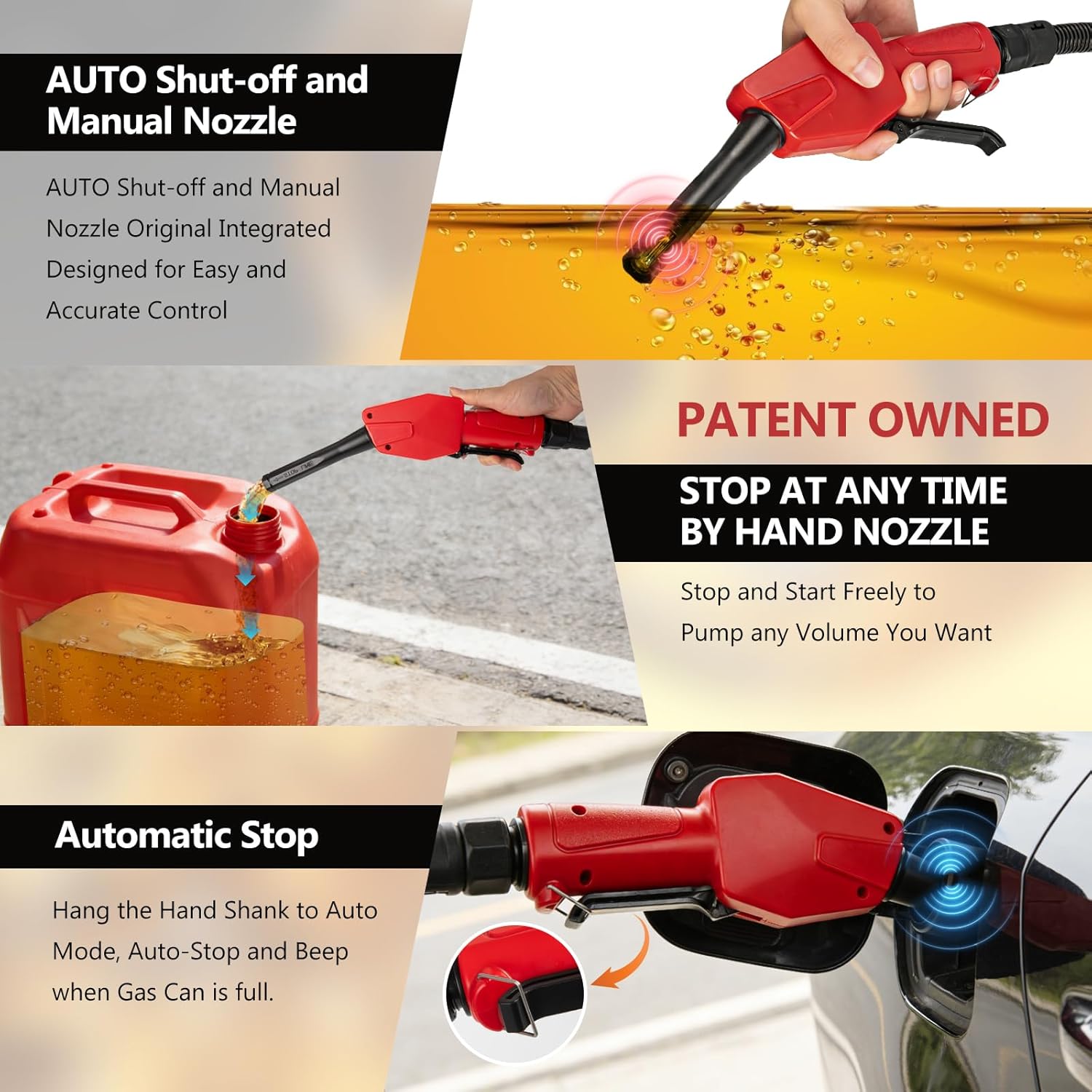
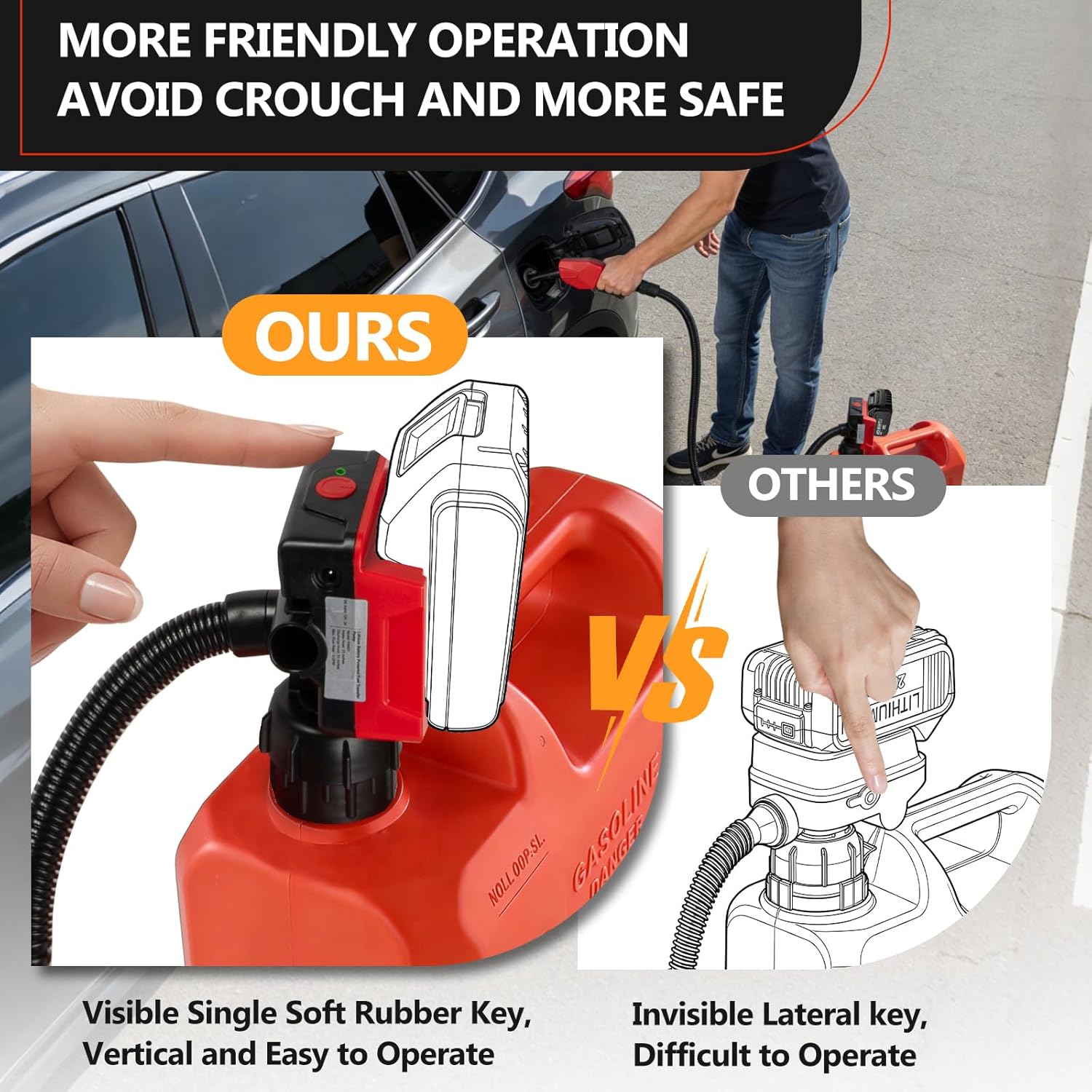
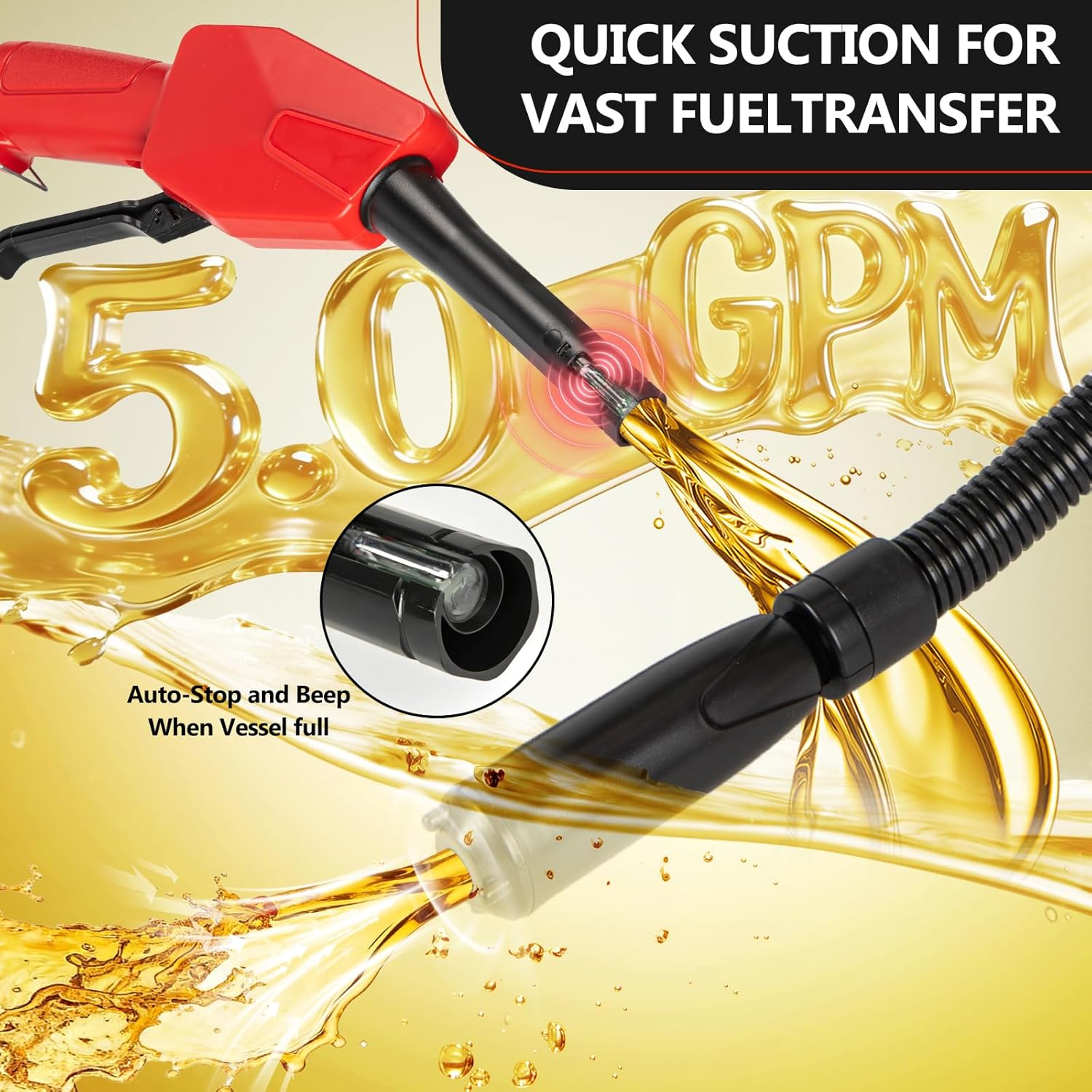
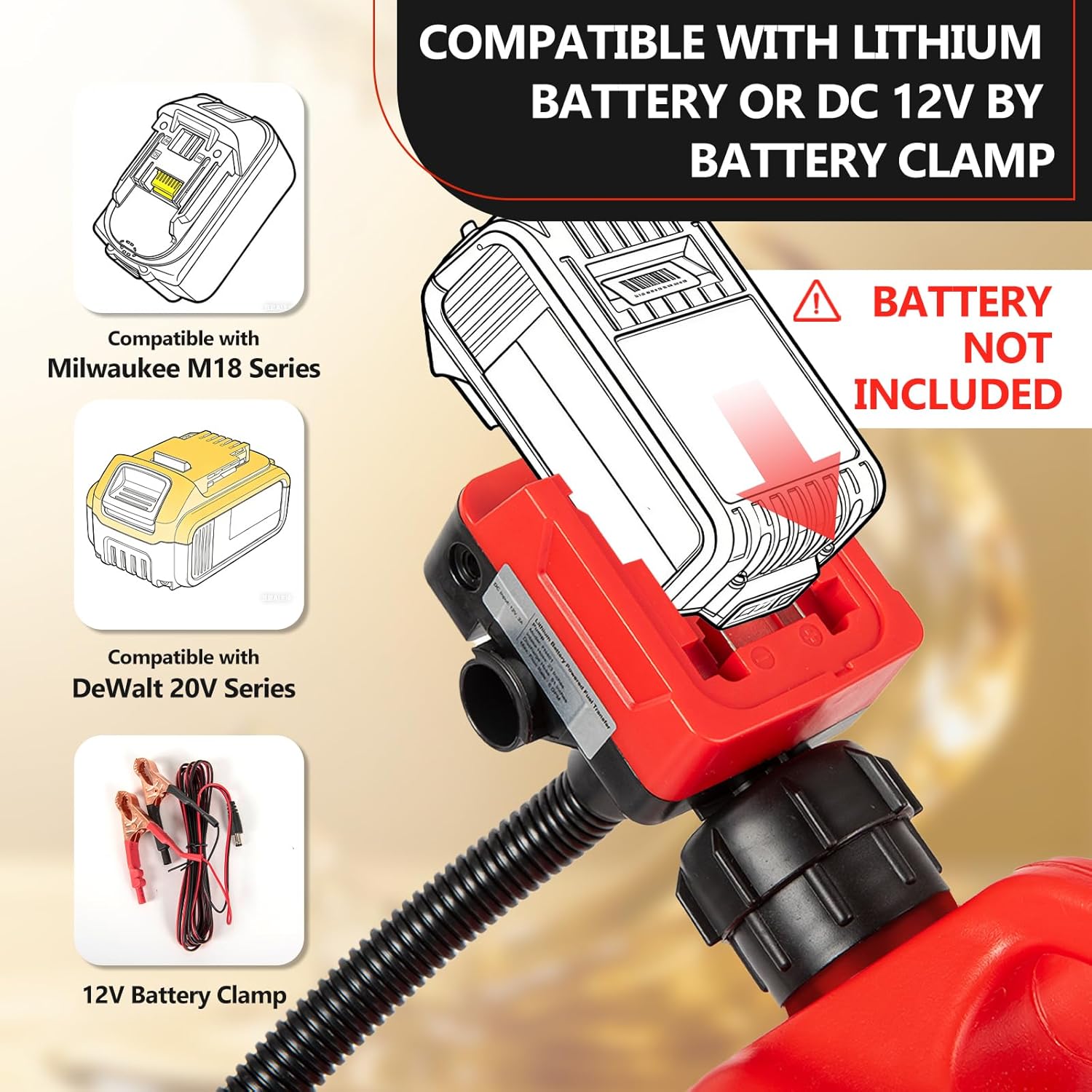
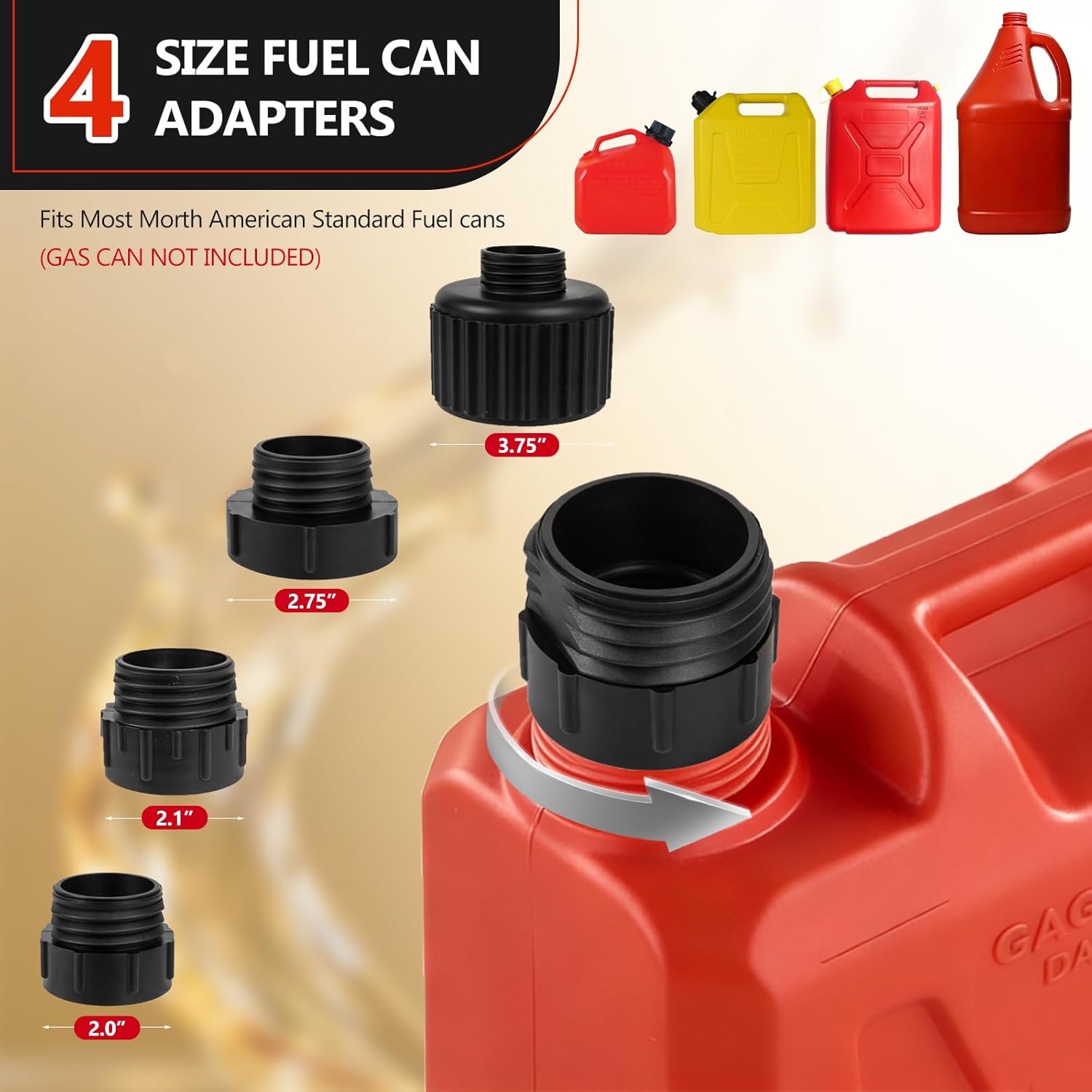
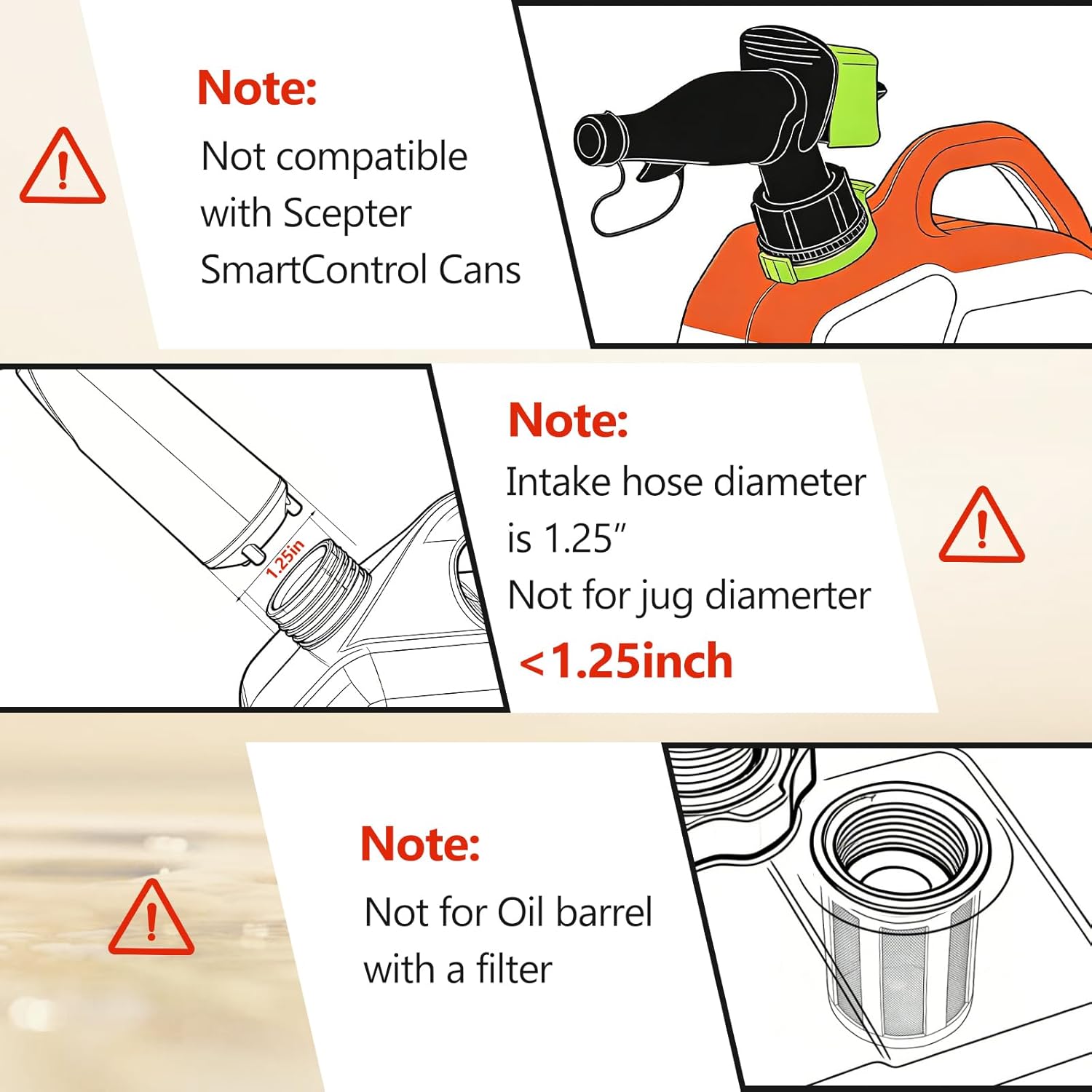
What it is and what it solves\nThe Vierkate 5GPM Cordless Fuel Transfer Pump is a battery-powered tool designed to move gasoline, diesel, oil, or water from cans or drums without relying on a manual pump. It combines auto-stop safety with a manual hand nozzle, so you can start or stop transfer as needed and even fill containers fully without constant attention. The auto-stop sensor helps prevent overfilling, and an enhanced rubber ring inside the hose reduces leaks and spills.\n\n## How it works and power options\nThis pump runs on common power sources you might already own: DeWalt 20V or Milwaukee 18V lithium-ion batteries. It’s designed for portability and sustained use, plus it includes 12V battery clamps for versatility when a battery isn’t handy. The motor spins at up to 16500rpm, delivering a claimed 5GPM (18.9 L/min) flow rate, making it suitable for mid-to-large transfers.\n\n## What stands out in use\nOne notable design choice is vertical operation. Unlike many cordless pumps that require awkward bending or crouching, this model is easier to operate with the battery installed and the controls within easy reach. A single soft rubber key provides tactile feedback and an LED indicator helps confirm status at a glance. It ships with four gas-can adapters to fit typical North American cans (including VP racing jugs), plus a long 51" discharge hose and a 23" intake hose for deeper suction.\n\n## Pros and potential drawbacks\nOn the plus side, you get a combined auto-stop and manual nozzle, flexible power options, and a longer reach for deeper fills. The dual-power approach can be convenient for on-site work, roadside tasks, or garage use where different battery setups exist. A possible limitation is that this is a bare tool, batteries are not included, so you’ll need to supply DeWalt 20V or Milwaukee 18V packs. For heavy-duty or continuous-use scenarios, you may want to assess battery runtime and charging availability on-site.\n\n## Who it’s for\nThis tool is well-suited for DIYers, fleet managers, mobile mechanics, and small-business owners who frequently transfer fuel or fluids from cans or drums and value hands-free control, reduced spills, and portable operation. It’s especially appealing if you already own compatible 20V or 18V batteries and need a flexible transfer solution at the job site, in the garage, or on the road.\n\n## When it makes sense to buy\nIf you prioritize a cordless transfer setup that minimizes spills and supports larger-volume tasks, and you want compatibility with common battery ecosystems, this pump offers a compelling option. It’s not ideal if you need an integrated battery pack included or if you require a plug-and-play unit that doesn’t depend on your existing battery lineup.\n\n## What to check before purchasing\nVerify battery compatibility with your current DeWalt 20V or Milwaukee 18V packs, and confirm that you’ll benefit from a longer 51" hose when you need to reach distant cans or containers. Also confirm that you’re comfortable using a bare tool and sourcing batteries separately.\n\n## Practical usage scenario\nImagine fueling a tractor or a trailer in a workshop where you don’t want to drag out a powered pump from a shop. You attach the appropriate adapters, mount the battery, and in seconds you’re transferring fuel with a controlled flow that stops automatically when full. The long discharge hose helps you stay clear of the container’s opening while you monitor the level.\n\n## What you’re choosing instead (contextual comparison)\nIf you don’t want to rely on battery power, traditional manual siphon pumps or corded electric pumps are alternatives—each with their own trade-offs. This Vierkate model sits between manual ease and cordless convenience, offering flexibility when you have compatible batteries on hand and need to work away from outlets.\n\n## Final decision (Is it worth it?)\nFinal verdict: Worth considering if you already own compatible DeWalt 20V or Milwaukee 18V batteries and you want a portable, relatively spill-resistant fuel transfer solution with a built-in auto-stop and reachable operation. If you rarely transfer fuel, or you require an all-in-one kit with batteries included, you might want to explore other options.\n\n## FAQ\n- Does it come with batteries? No, batteries are not included.\n- What fluids can it transfer? It’s designed for gasoline, diesel, and similar fuels, but you should verify compatibility with your specific cans and regulations.\n- Is it suitable for large continuous transfers? It’s built for mid-to-large volume transfers, but battery runtime will depend on the battery used.\n