

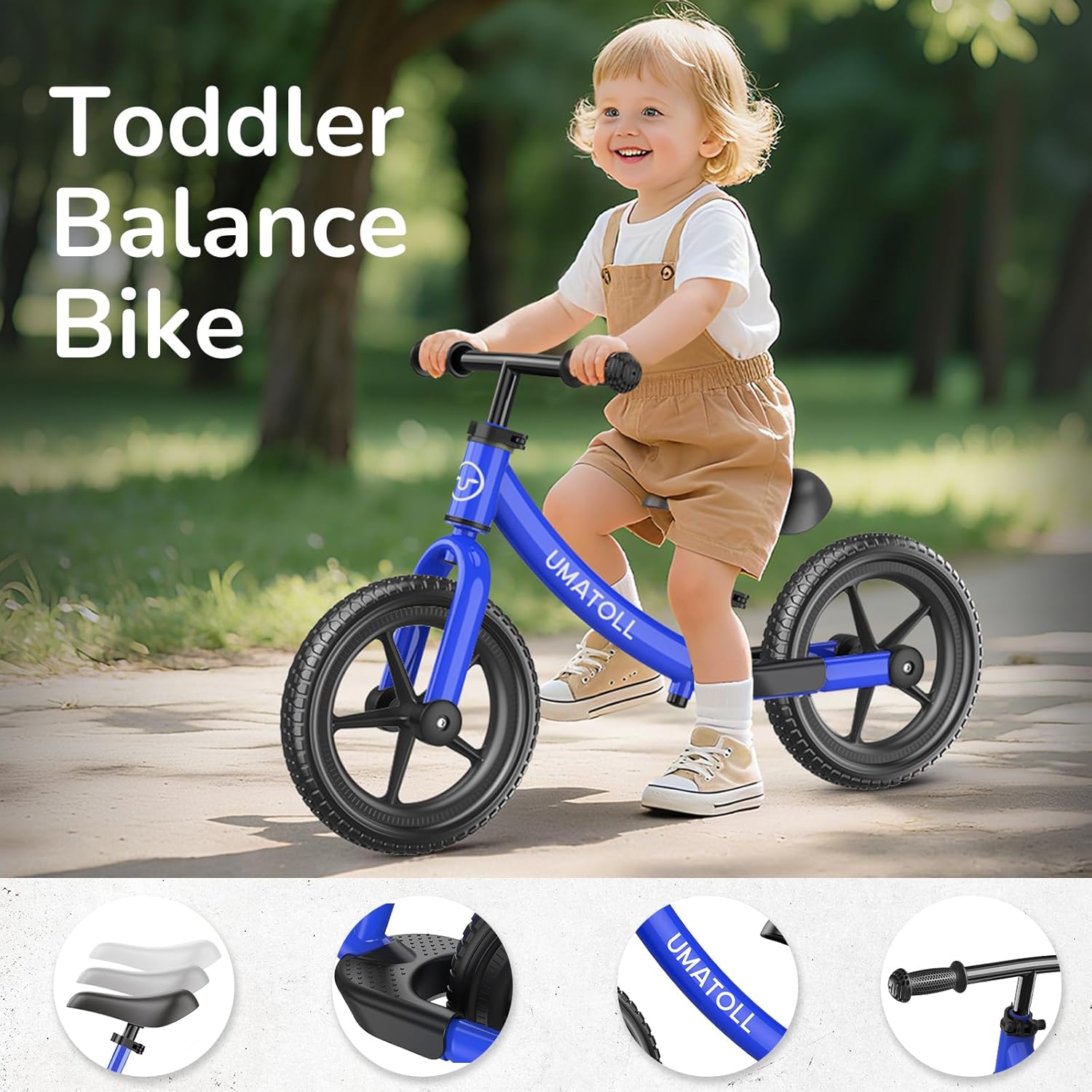
Umatoll Toddler Balance Bike (No-Pedal) for Ages 18 Months–5 Years with Tool-Free Adjustment
Product description
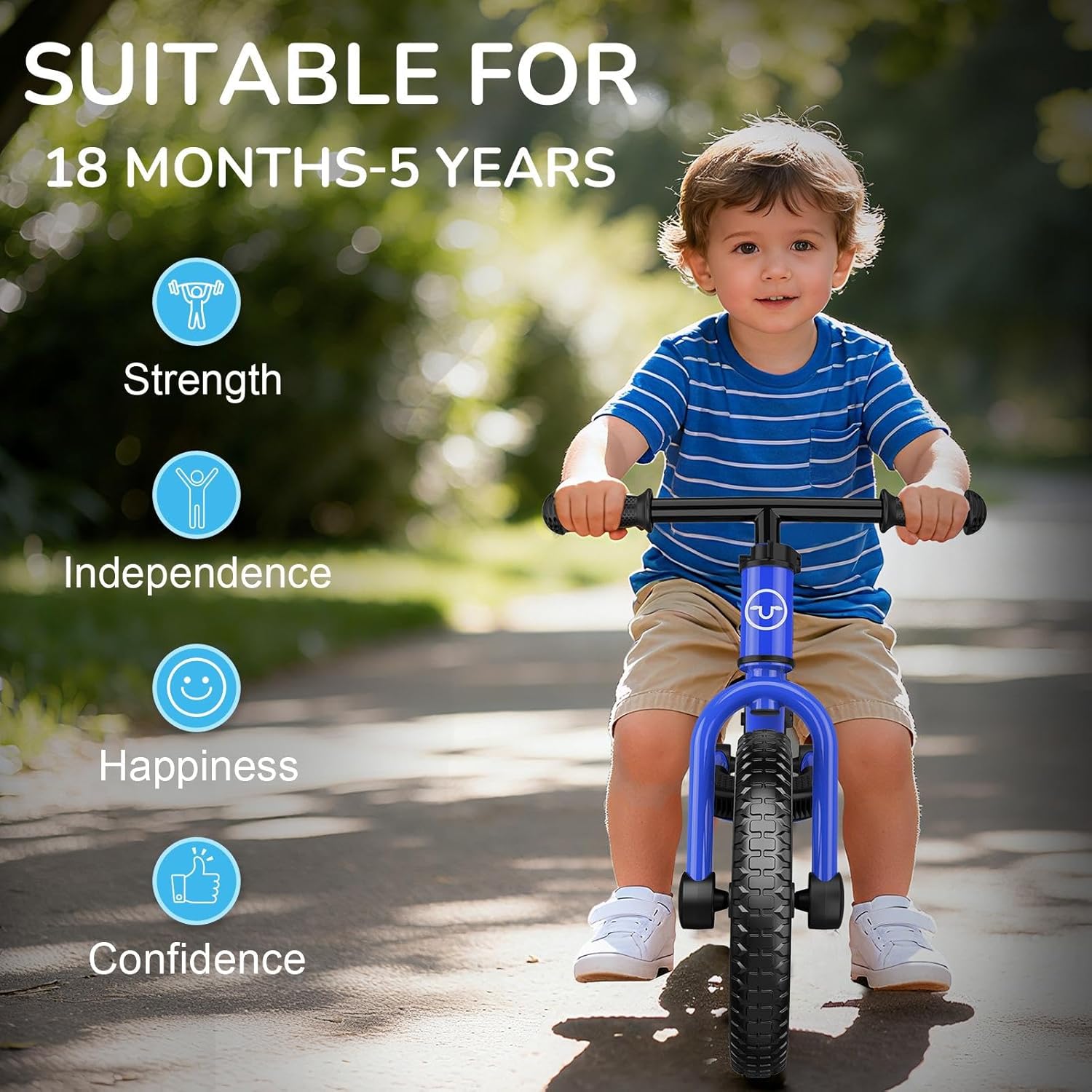
A toddler balance bike can be one of those purchases that either clicks fast—or just becomes another toy. The Umatoll Toddler Balance Bike is built around stability and easy setup, aiming to help kids learn balance and steering before they ever touch pedals. It’s designed for toddlers roughly from 18 months up to about 5 years, with a frame and fit that are meant to “grow with them.”
The essentials
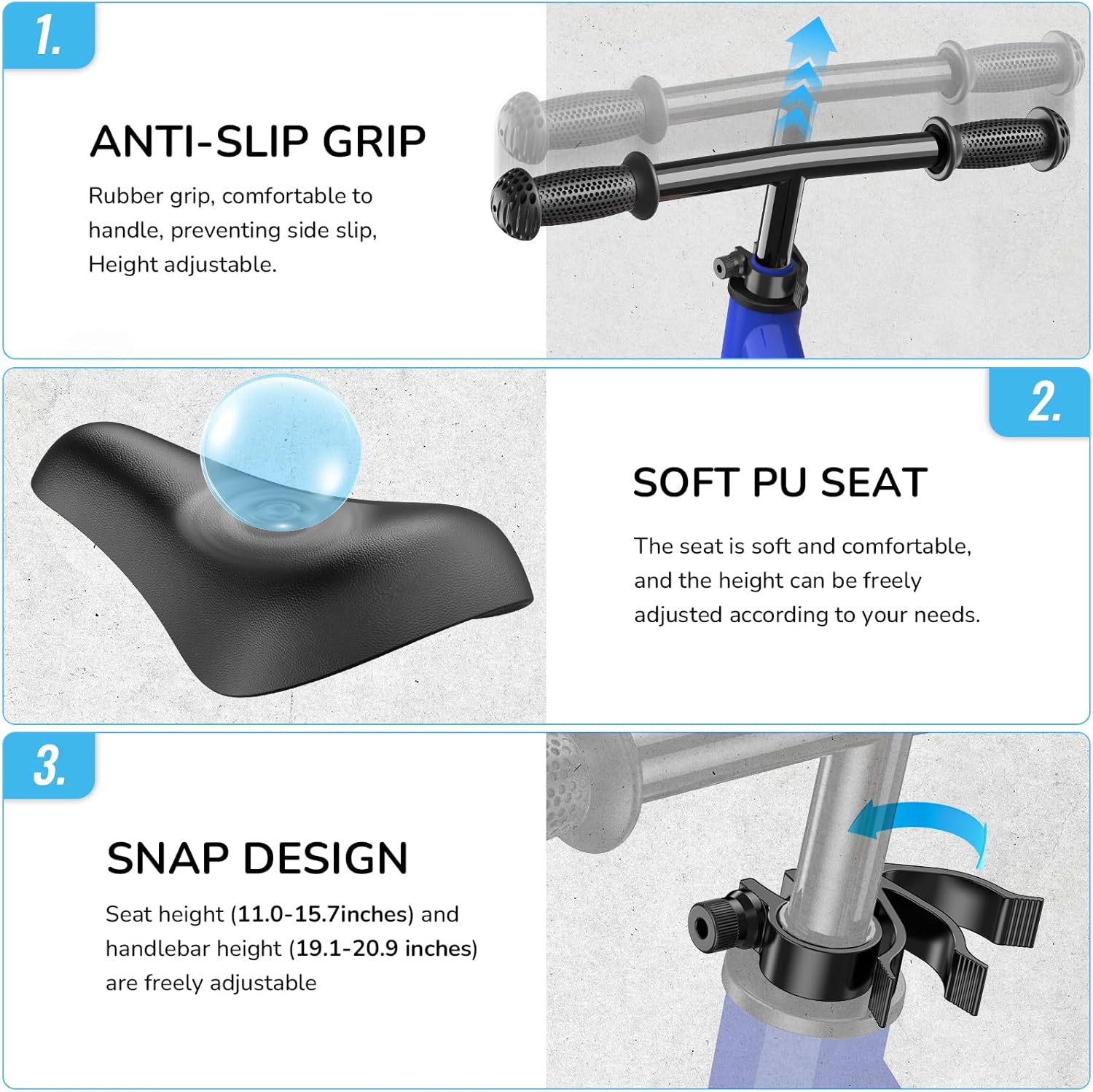
This is a no-pedal balance bike, so kids propel themselves by pushing off the ground and gliding. Over time, they build the kind of control that makes moving to a regular bike feel less like a leap. The brand highlights a durable carbon steel frame for stability, plus a comfortable PU seat. For grip and steering confidence, it uses non-slip TPE handlebars.
It also includes all-terrain tires described as puncture-resistant and not requiring inflation, which matters for parents who don’t want to deal with flats or ongoing tire maintenance.
What it’s good for (and what you’ll notice day to day)
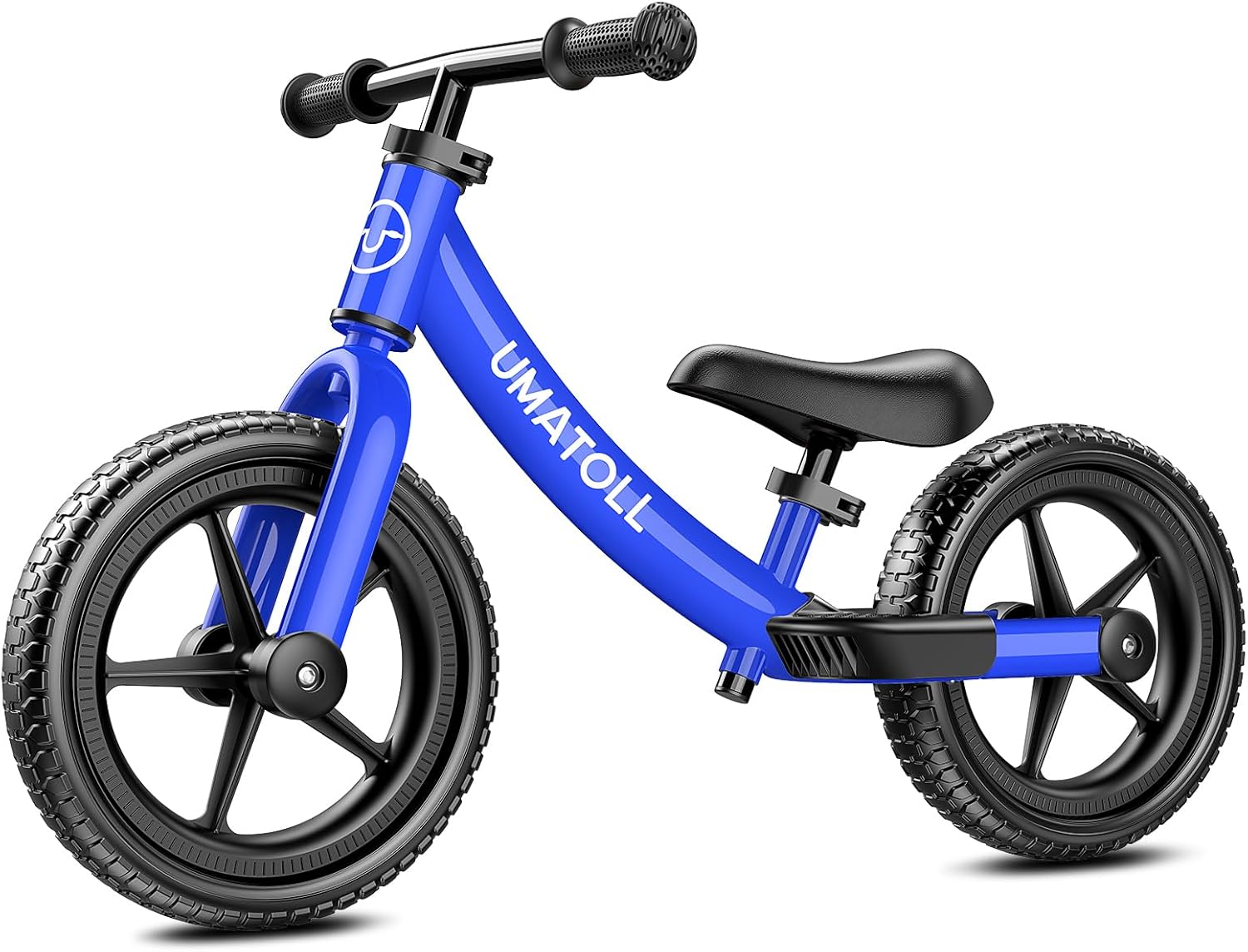
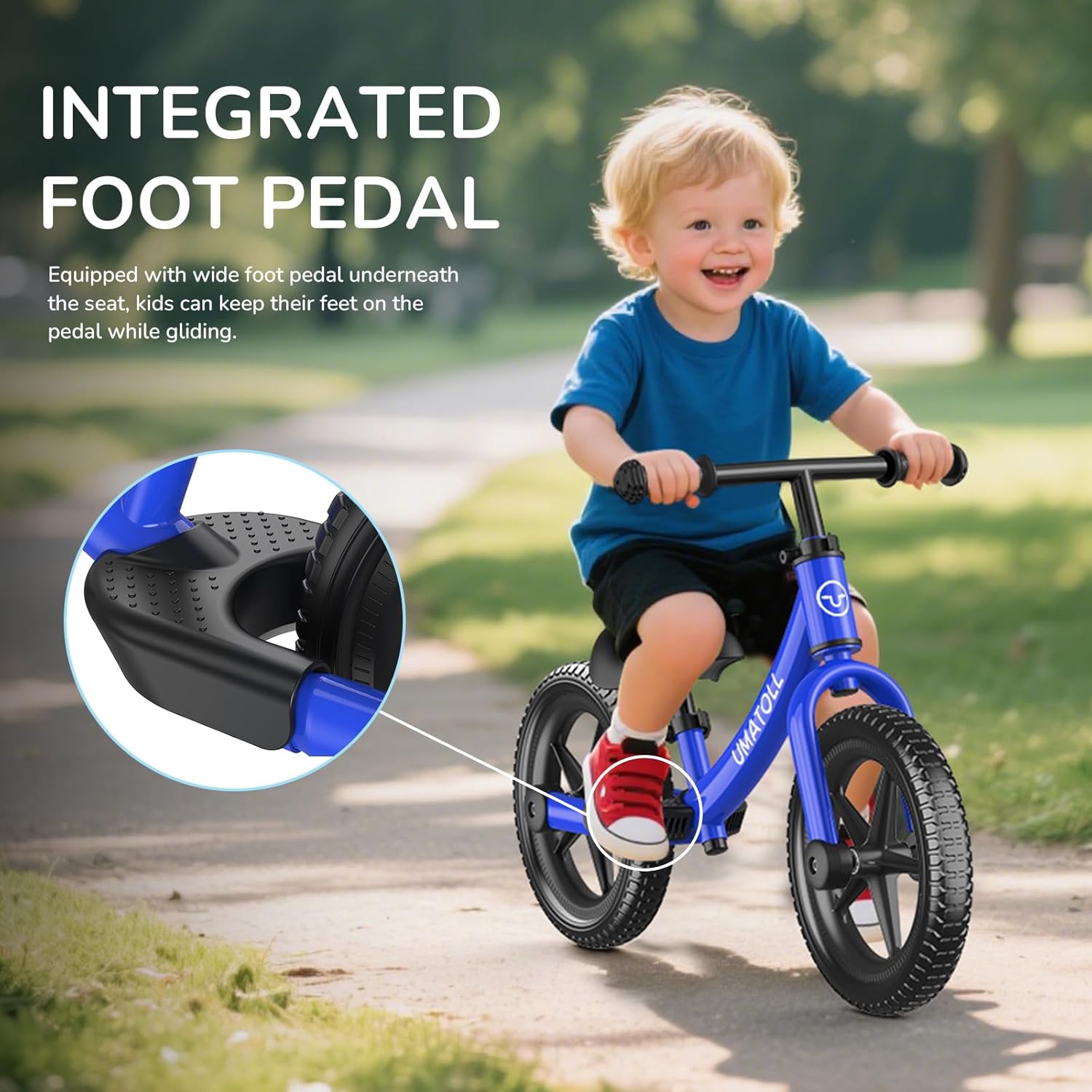
In use, a balance bike like this tends to be most helpful in two moments: when your child is learning to stay upright, and when they start experimenting with direction. The footrest design under the seat is meant for smaller toddlers, giving them somewhere to put their feet while they get the motion down. It’s also meant to support balance by encouraging kids to lift their feet as they glide.
If you’re thinking about an outdoor routine—driveway cruising, park loops, or learning sessions in a safe open area—this bike’s setup goal is pretty clear: less fuss for you, more confidence for them.
Key points
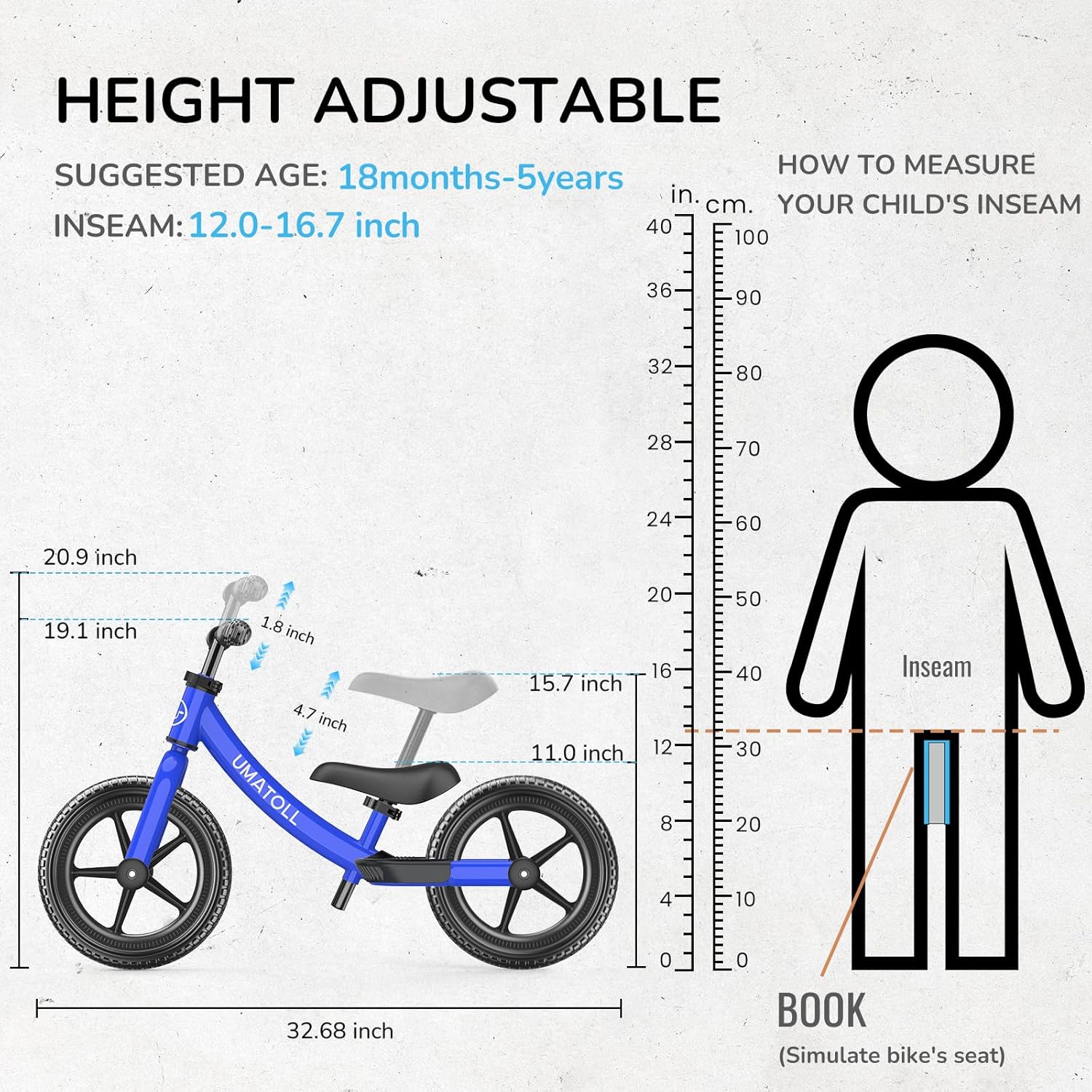
On paper, the strongest draw here is the combination of stability + fit adjustability. The frame uses a carbon steel build, and the seat and handlebar are adjustable via a quick-release mechanism. The listed adjustment ranges are handlebar 19–20.9 inches and seat 11–15.7 inches, which should cover a good span for a growing rider.
The tires are another big deal in practical terms. Puncture-resistant tires with no inflation requirement can reduce the annoying “maintenance tax” that sometimes comes with air-filled tires. The tires are also described as anti-slip, shock-absorbing, and wear-resistant, which suggests the bike is intended for mixed ground rather than only smooth sidewalks.
That said, it’s not perfect for every situation. If you’re looking for a more premium feel with heavy-duty components beyond the essentials, this is more in the family of learning bikes than a performance-focused machine. And as with any balance bike, your child’s progress still depends on comfort, space to practice, and whether they’re truly ready for the glide-and-push concept.
Tech specs
- Material: Durable carbon steel frame
- Adjustment method: Quick-release mechanism (tool-free adjustment)
- Handlebar adjust range: 19–20.9 inches
- Seat adjust range: 11–15.7 inches
- Tires: All-terrain, puncture-resistant, no inflation required
Where it shines vs. typical alternatives
If you’re comparing this to either (1) older pedal bikes that are harder to control early on, or (2) very basic push scooters/ride-ons, a balance bike usually makes more sense once your kid can sit upright and is ready to experiment with steering. The “no-pedal” approach keeps the learning curve focused on balance first.
Where this particular model may stand out is its tool-free adjustment and the puncture-resistant, no-inflation tire concept. Those details target two common friction points: parents who don’t want to fuss with setup, and kids who ride in real-world conditions that include bumps and rougher surfaces.
Who should buy it (and who should skip it)
It makes sense if you want one learning bike that can cover multiple stages—from early balance practice through the “almost ready for pedals” phase. It also fits well if you prefer tires that don’t need air and you’d rather avoid flat-related interruptions.
It may not suit you if your priority is a super-light bike for tight carrying, or if you already know your child will need something beyond beginner balance training. Also, if your practice space is extremely limited, a balance bike can still work, but progress may feel slower because kids need room to glide and regain control.
Getting the most from it
Start with short sessions and focus on posture: feet planted, gentle pushes, then longer glides as confidence grows. Use the footrest area early on if your toddler needs a stable place for their feet. As they improve, encourage them to lift their feet and glide longer—this is exactly the learning behavior the footrest design is trying to support.
Then, adjust the handlebar and seat as your child grows. The quick-release system is meant to make those changes easier, but it still helps to check fit before each practice window.
Final verdict
Buy the Umatoll Toddler Balance Bike if you’re specifically shopping for a no-pedal learning bike for a child in the 18 months–5 years range, and you care about stable handling plus tool-free height adjustments. The puncture-resistant, no-inflation tire approach is a practical win for everyday use.
Skip it if you want a more specialized “next level” rider setup, or if you’re trying to replace a true pedal bike right away without considering that balance-first learning takes time.
Mini FAQ
Is this balance bike actually meant for toddlers, not just older kids?
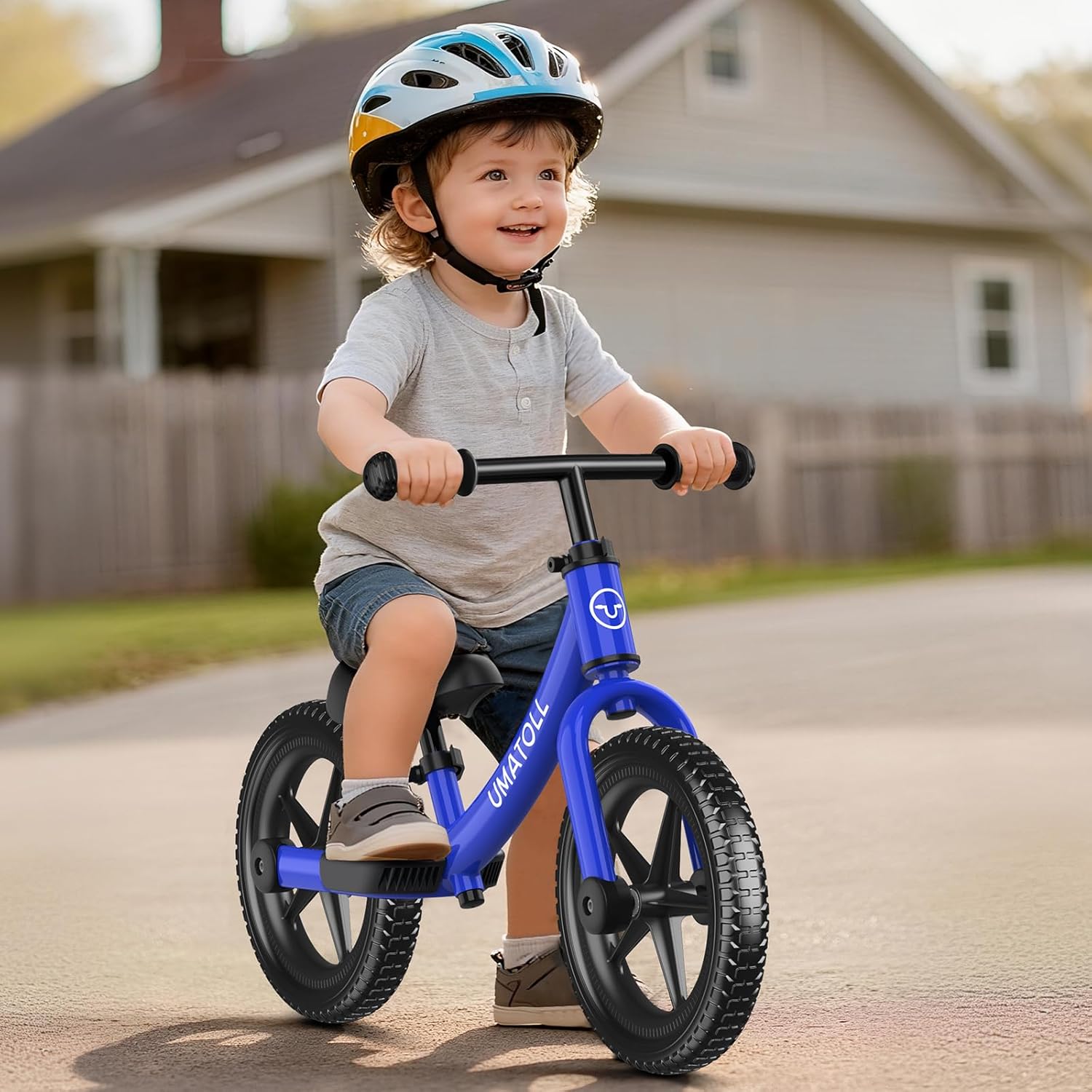
The product description frames it for toddlers and young riders, covering roughly 18 months to 5 years, with adjustable seat and handlebar ranges.
Do the tires require inflation?
No—these tires are described as not requiring inflation.
How do you adjust the bike height?
Adjustment is described as tool-free using a quick-release mechanism for both the handlebar and seat.
Does it include a footrest?
Yes. There’s a footrest design under the seat intended to help toddlers keep their feet supported while they learn balance.
What’s the main benefit of a no-pedal bike?
It helps kids learn balance and steering through gliding and pushing off the ground, which can make the move to a standard bicycle feel smoother later on.