


Tymate TM2 RV Tire Pressure Monitor 0-87 PSI 🚚
Product description
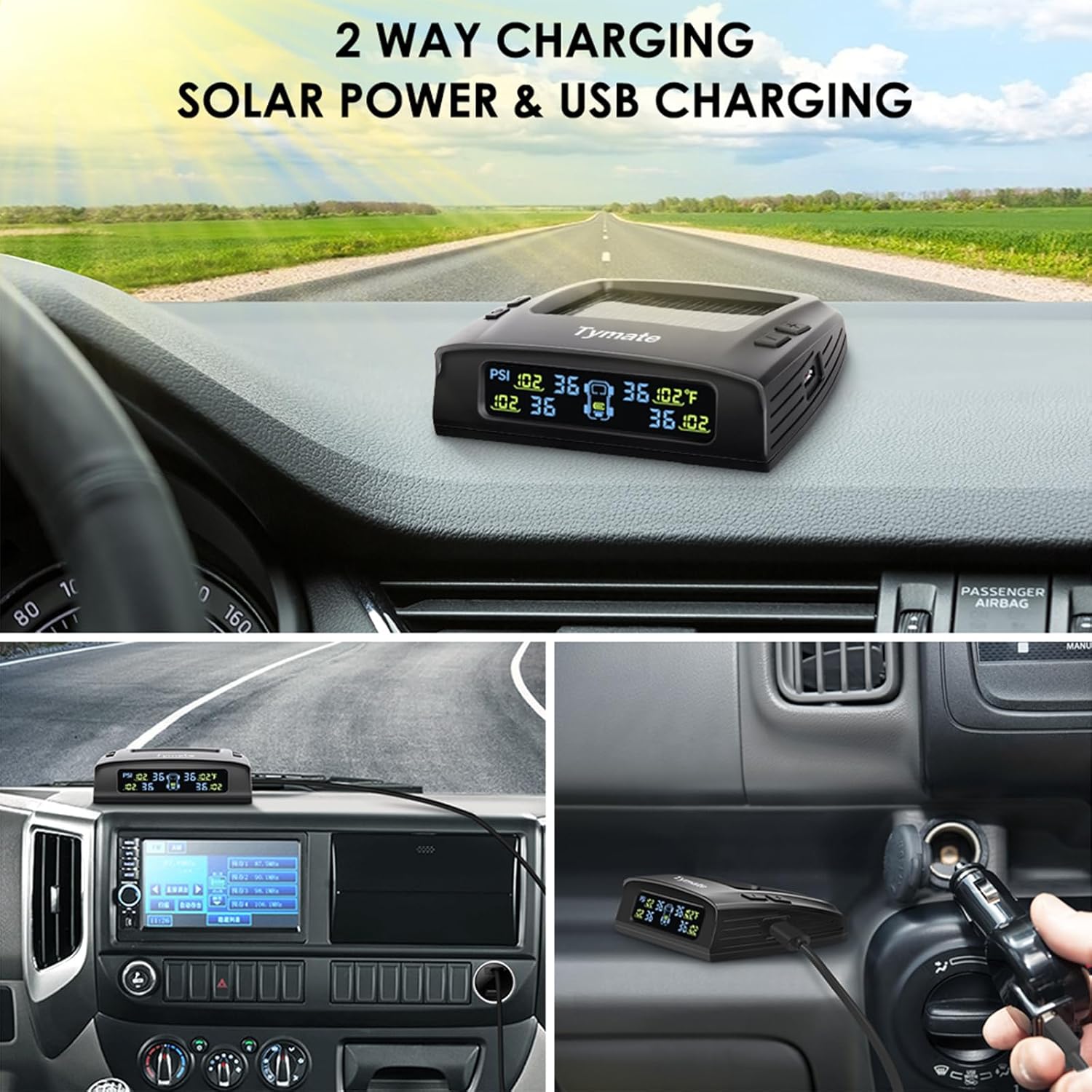
This RV tire pressure monitoring system from Tymate combines solar charging and a color LCD display to help drivers keep trailers and trucks under safer tire conditions. It monitors pressure and temperature in real time and alerts you to sudden leaks or overheating, making it useful for longer trips with trailers, RVs, SUVs and trucks.
Key Points
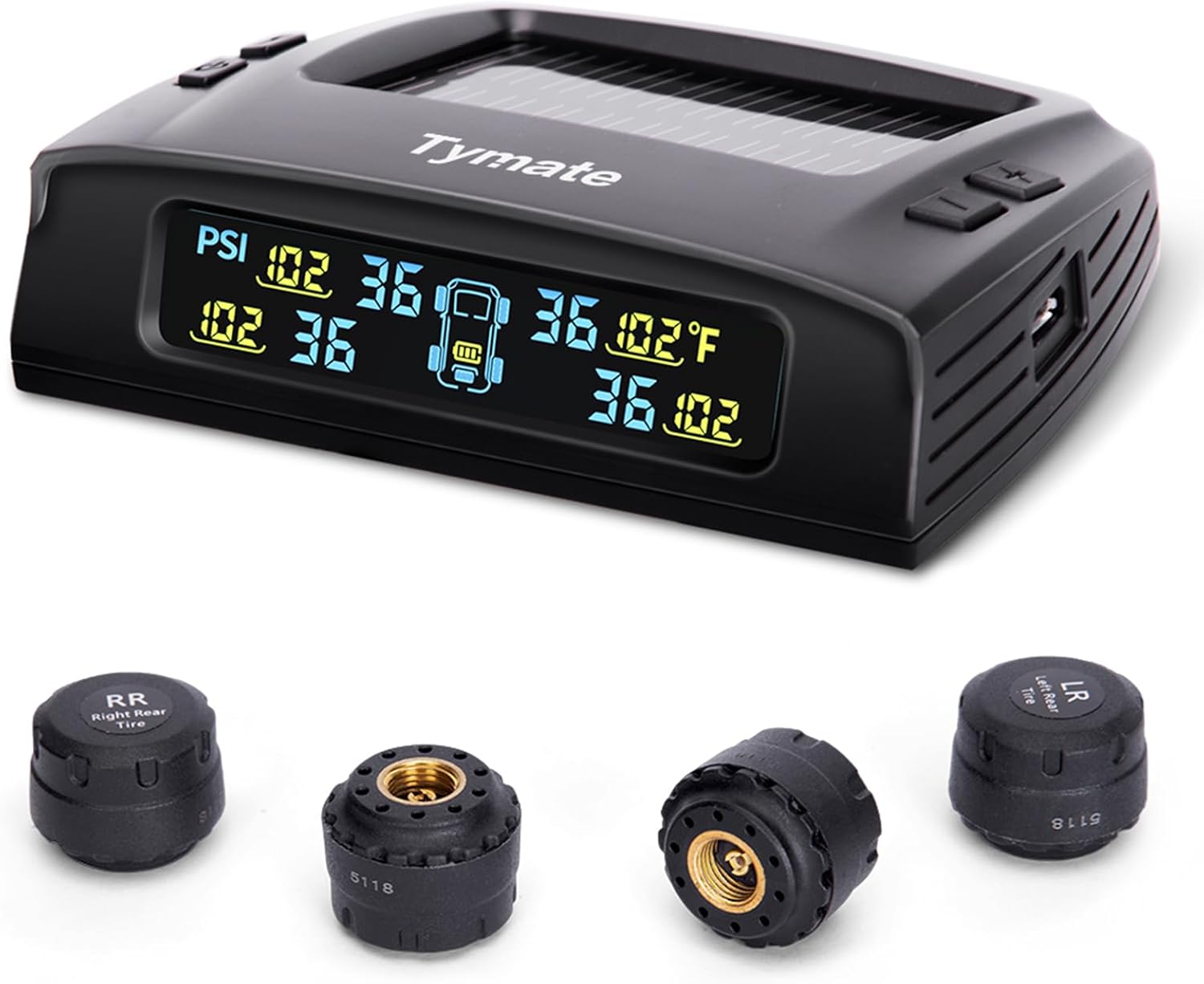
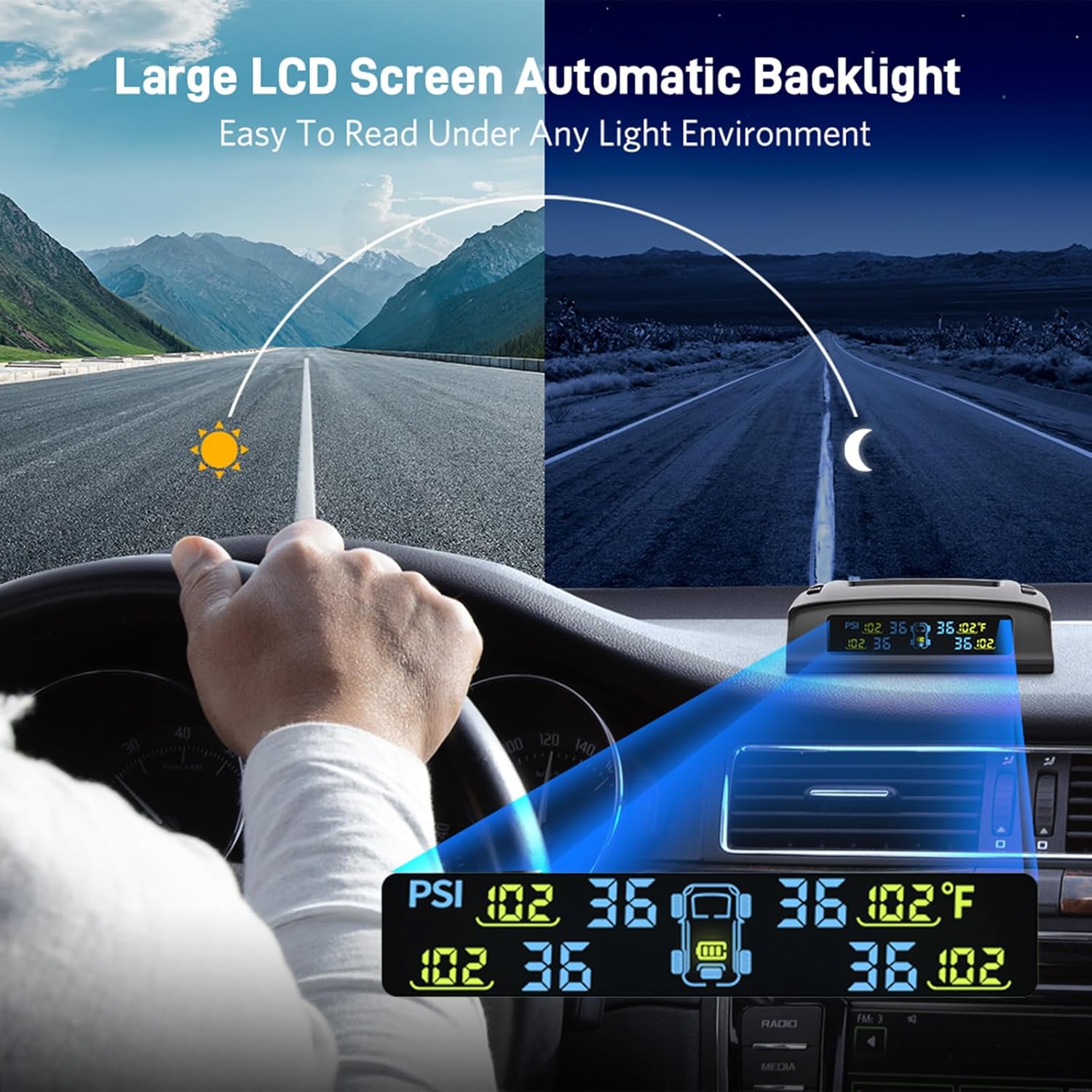
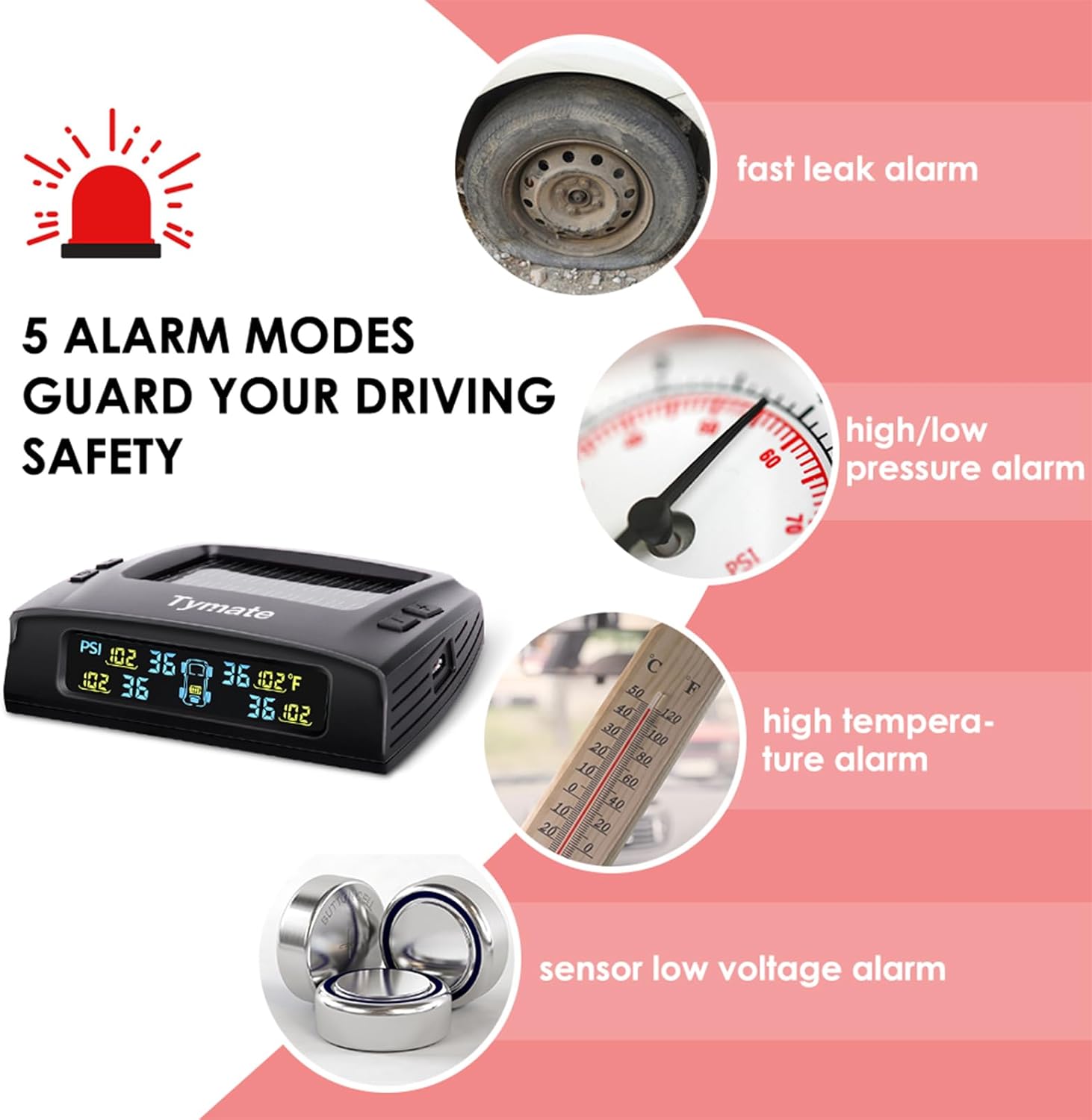
The unit supports up to 10 sensors while shipping with four external sensors that attach to tire valves. The display adapts its backlight automatically for better daytime and nighttime visibility, and the system reports pressure readings from 0 to 87 PSI according to the manufacturer. It includes multiple alarm modes so you can receive notifications for rapid leaks, high pressure, high temperature, and low sensor battery. Solar charging extends runtime while USB or 12V cigarette-lighter charging provides backup power when sunlight is limited. ⚡🌤️

Technical Specifications
- Name: Tymate TM2 RV Tire Pressure Monitoring System
- Pressure range: 0-87 PSI
- Sensor power: CR1632 batteries, up to six months operation per sensor (manufacturer claim)
- Transmission frequency: 433.92 MHz
- Sensors included: 4 external sensors, expandable to 10 sensors
Usage Recommendations
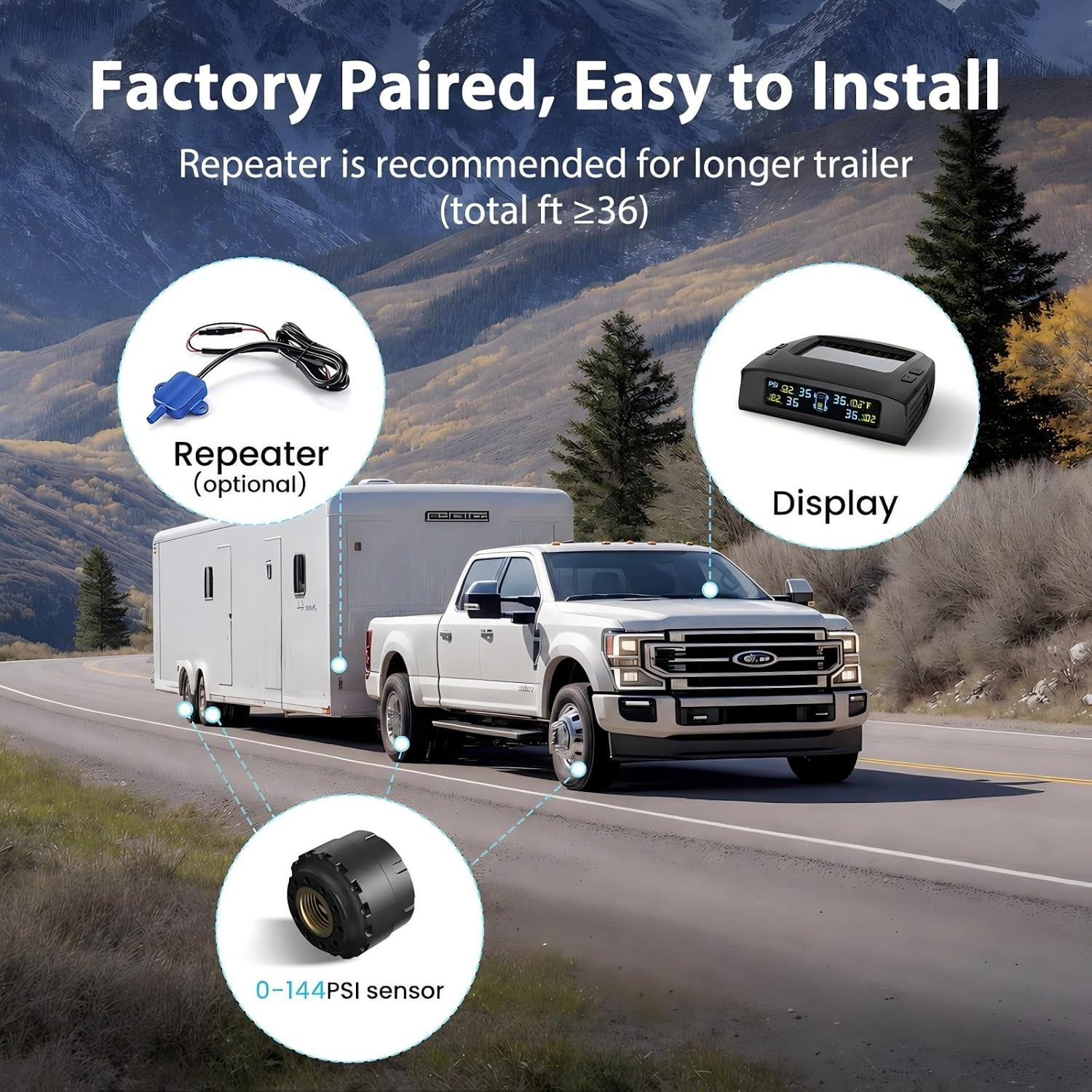
Install the external sensors on the tire valve stems and pair them with the display unit so the system records the current pressure as a reference baseline during setup. For long trailers or extended rigs, consider adding a signal repeater to maintain robust communication between distant wheels and the display, especially when towing multiple axles. Also, keep replacement CR1632 batteries on hand since sensor life may vary with usage and temperature.
Why This May Interest You
The combination of a bright color LCD and automatic backlight adjustment makes monitoring easier while driving at night or under bright sun. The solar-charge capability reduces reliance on vehicle power for everyday use, and the option to charge by USB or the vehicle outlet increases flexibility when solar exposure is limited. Note that pressure accuracy can vary slightly, with a typical margin of error around a few PSI according to the manufacturer, so use the readings as a close monitoring tool rather than a laboratory measurement. 🛞🌙