

TP-Link Tapo H100 Smart Hub with 64‑device Support 🏠
Product description
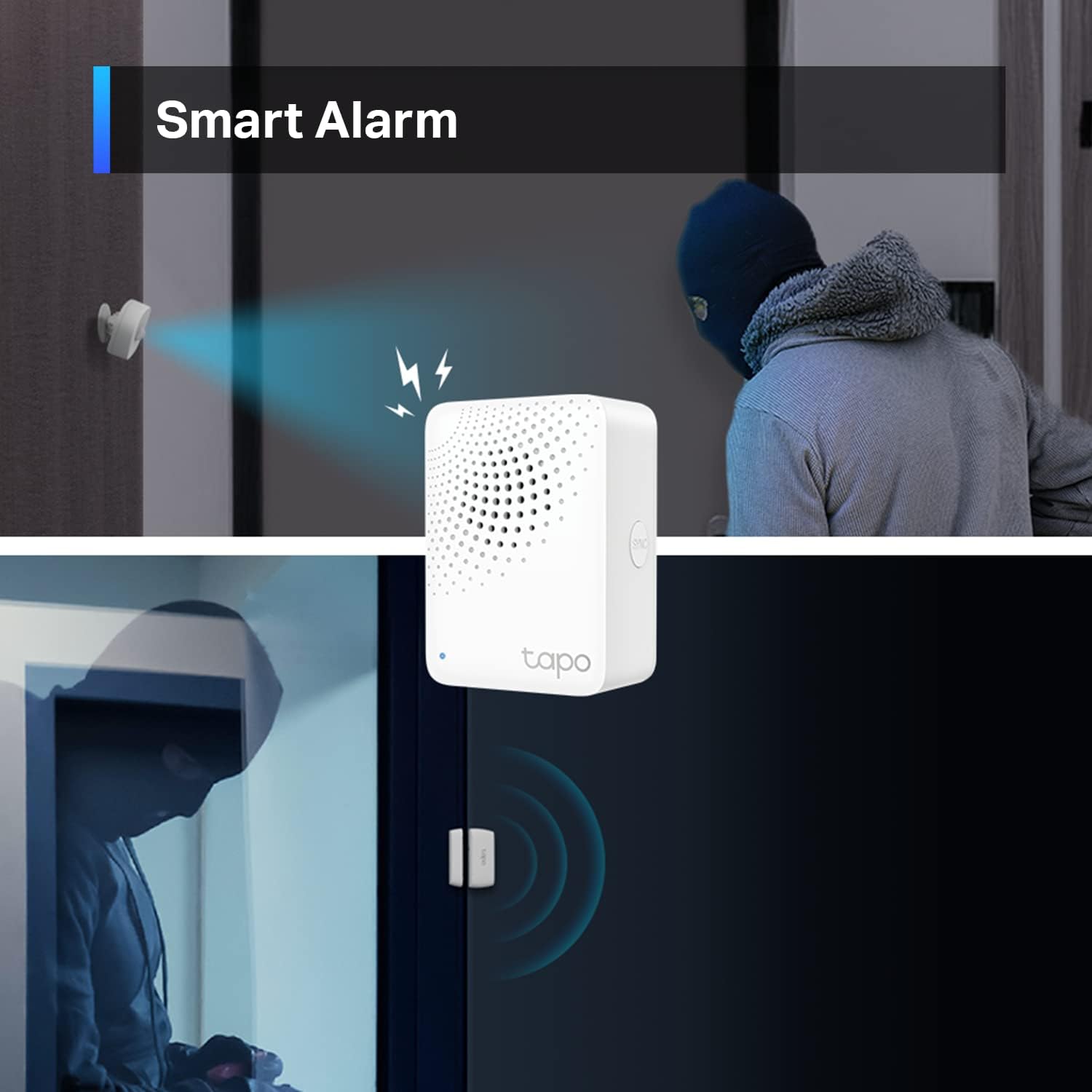
This smart home hub with built-in chime centralizes sensor alerts and low-power device connections to keep a Tapo ecosystem coordinated around the house. It is designed to extend battery life for compatible sensors and to trigger a loud local alarm when motion or door/window sensors detect activity, making it suitable for basic home monitoring and local alerts.
Key Points
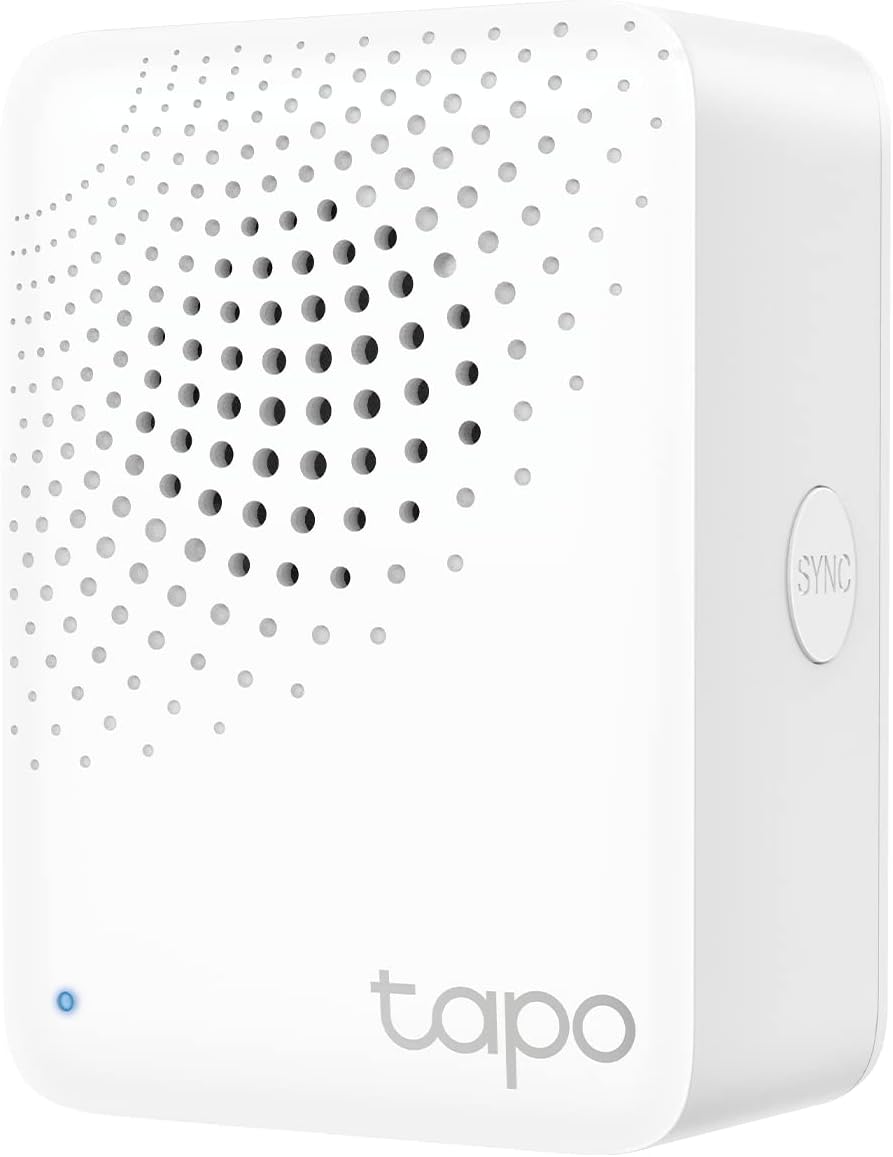
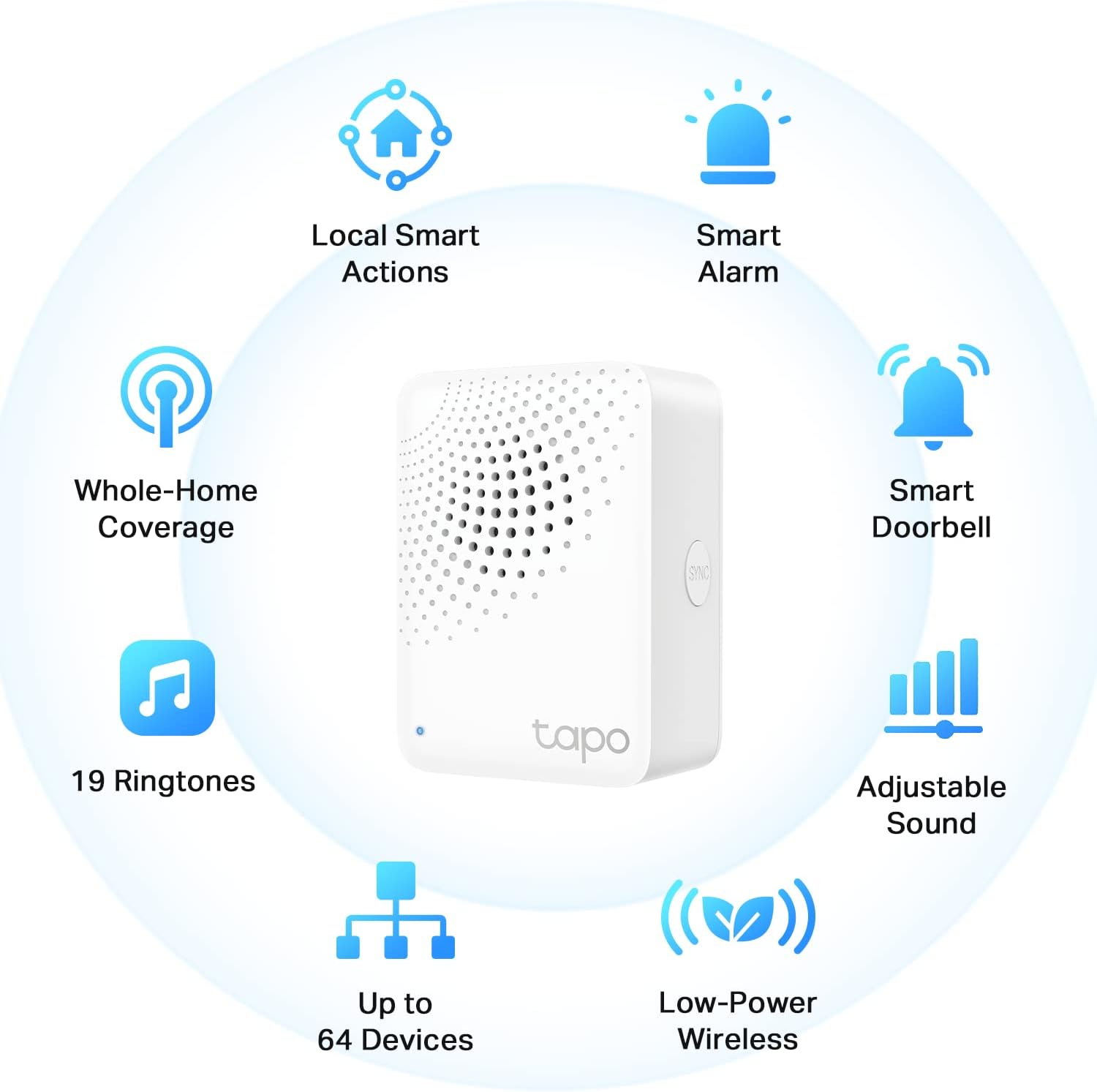
The hub operates on a Sub-1G low-power wireless protocol to reduce interference and extend wireless range compared with typical 2.4 GHz networks. According to the manufacturer, the maximum connection distance can reach about 30 m in optimal conditions, though real-world performance may vary with walls and interference. It requires a 2.4 GHz Wi-Fi network to communicate with Tapo cloud services and to link Wi-Fi devices indirectly through automation rules. A built-in chime and alarm capability can reach up to 90 dB for audible alerts, useful for drawing immediate attention to triggered sensors. 🔔
Technical Specifications
- Name: Tapo Smart Hub H100
- Wireless protocol: Sub-1G low-power wireless
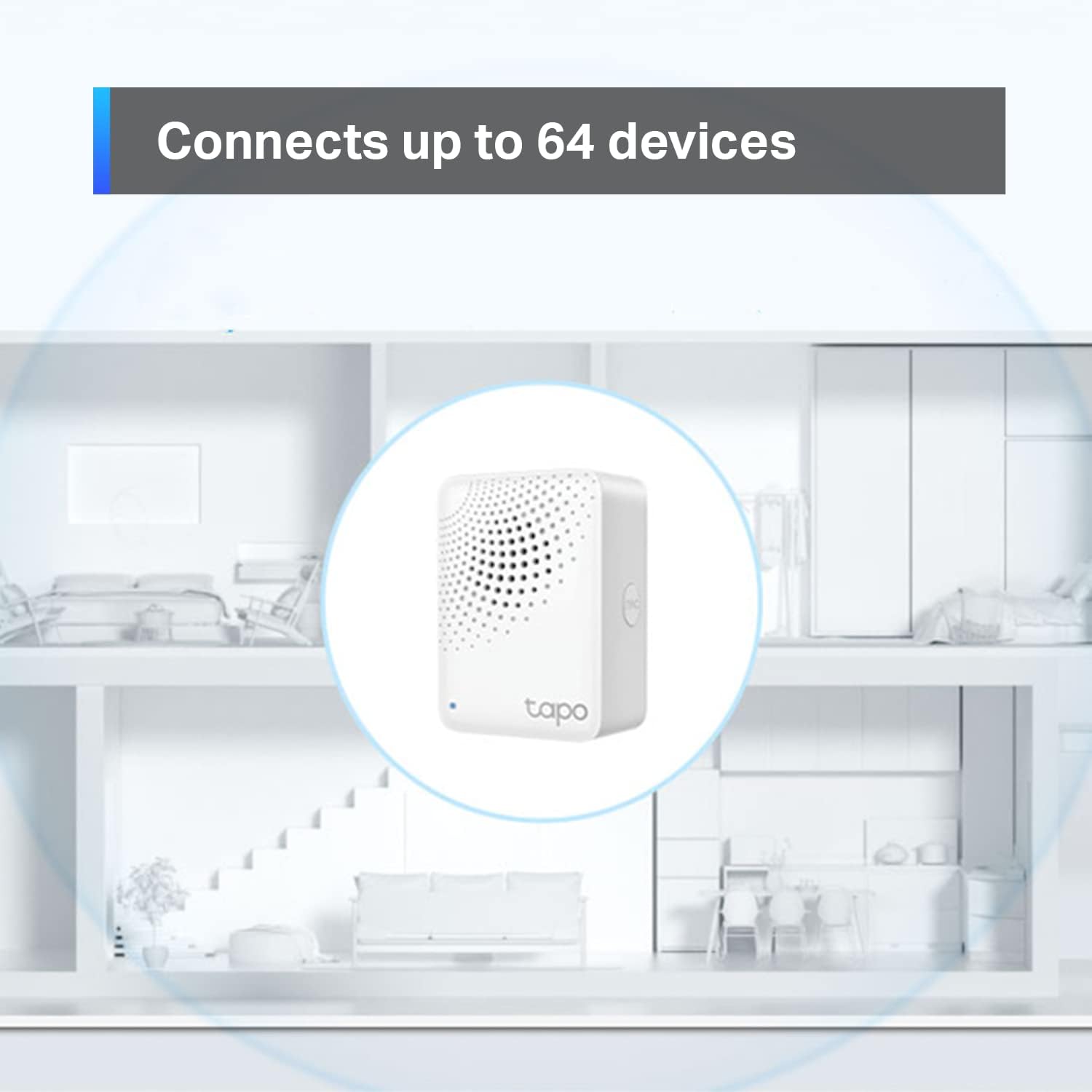
- Maximum device connections: up to 64 devices
- Wi-Fi requirement: 2.4 GHz only
- Maximum reported connection range: 30 m (manufacturer tests)
- Built-in alarm volume: up to 90 dB
Usage Recommendations
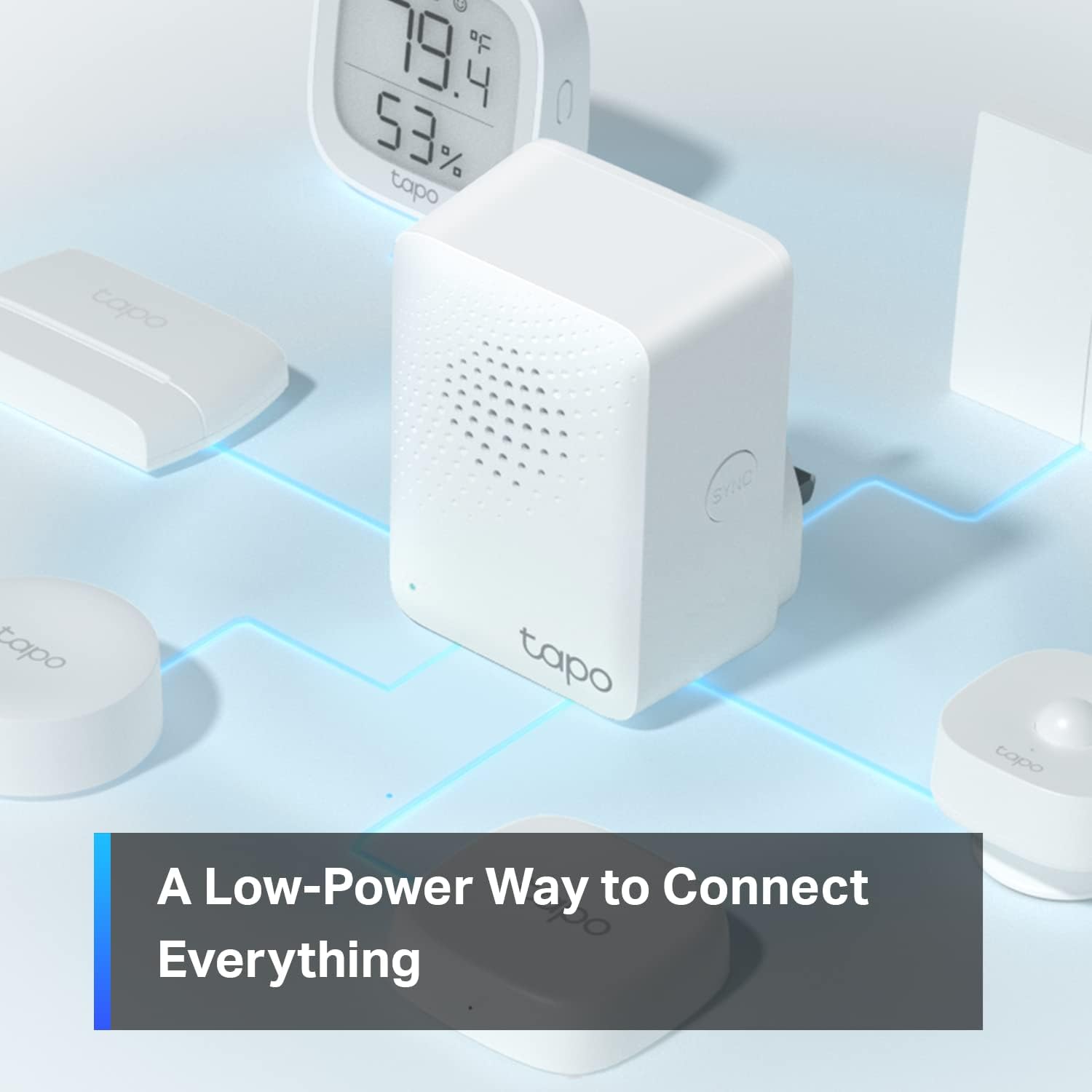
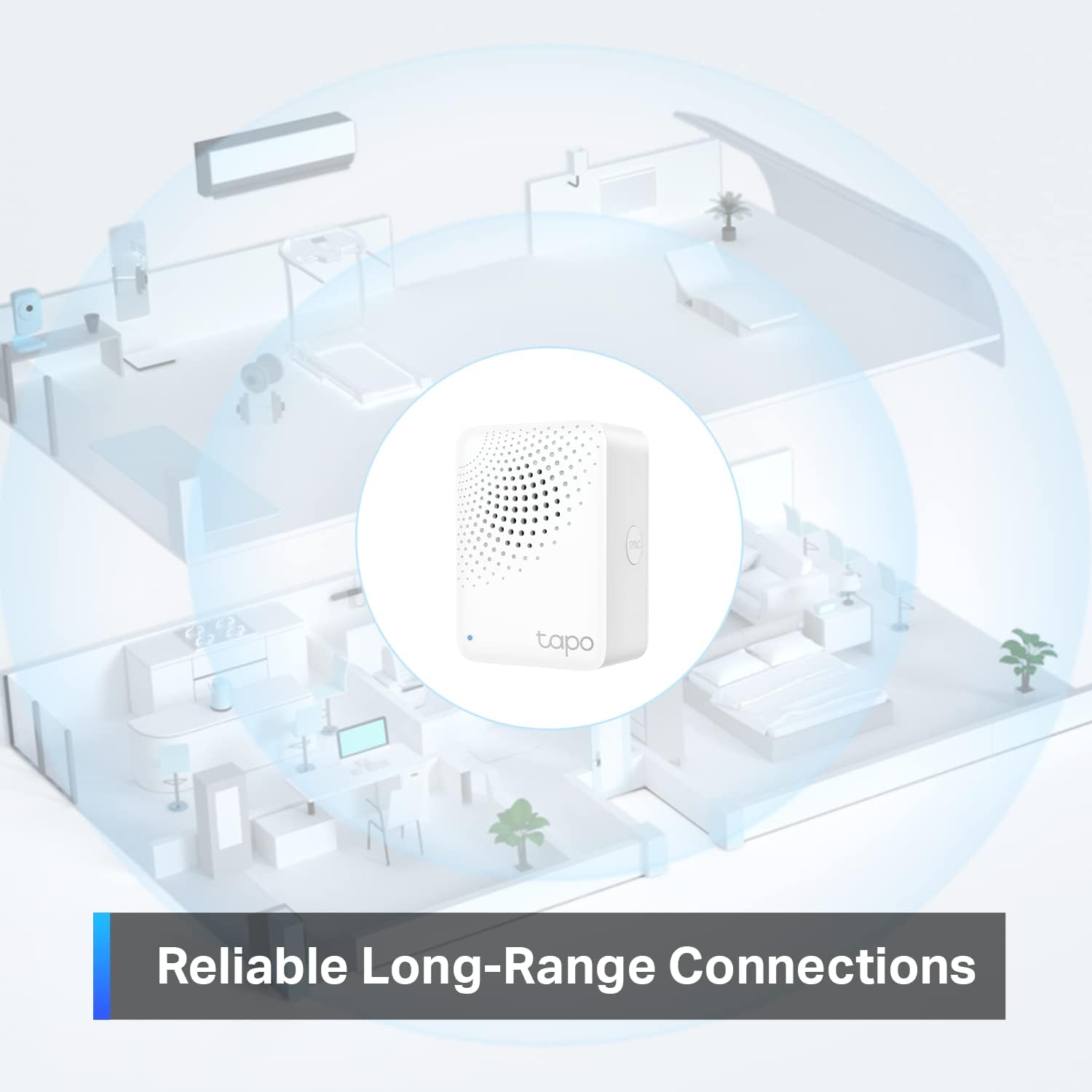
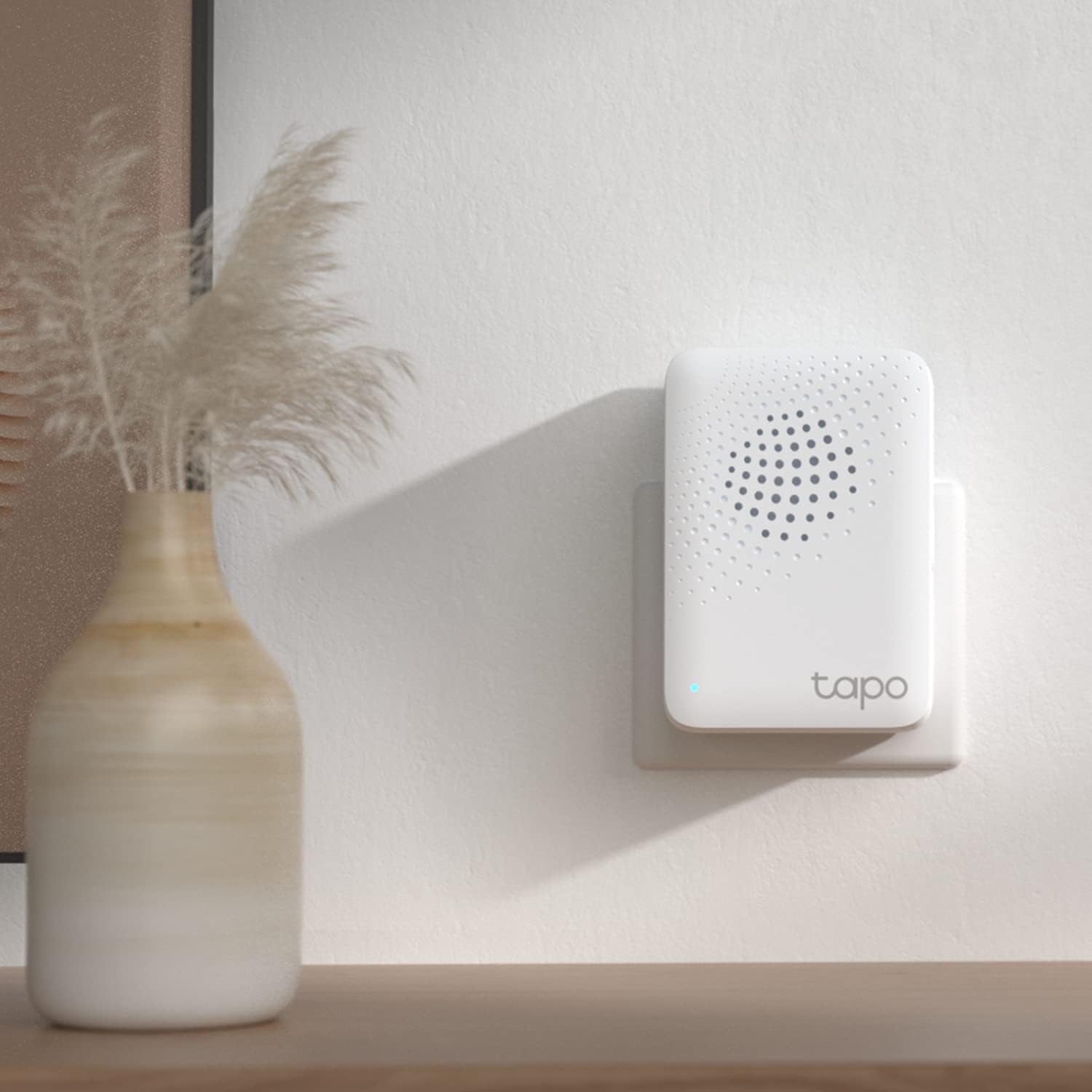
Place the hub in a central location to maximize coverage for battery-powered sensors and buttons. For best results, keep the unit away from large metal objects and thick concrete walls that can reduce Sub-1G range. Use the hub to link sensor actions to other Tapo products through shortcuts or automations, for example triggering smart plugs or lights after a motion event, while noting the hub does not directly power Wi-Fi devices. Also consider that actual battery life extension for sensors depends on usage patterns and environmental factors. 📶
Benefits
Because the hub uses a lower-frequency, low-power protocol, connected sensors are likely to spend far less energy transmitting data compared with Wi-Fi sensors. This can extend device autonomy by several times according to the manufacturer, which reduces the need for frequent battery replacements. The ability to manage up to 64 nodes from a single hub simplifies scaling an entry-level smart home setup. The local audible alarm adds an immediate deterrent or alert option independent of phone notifications, which can be helpful if mobile reachability is limited.