

Taylor 5924 Large Dial Refrigerator Thermometer 3"
Product description
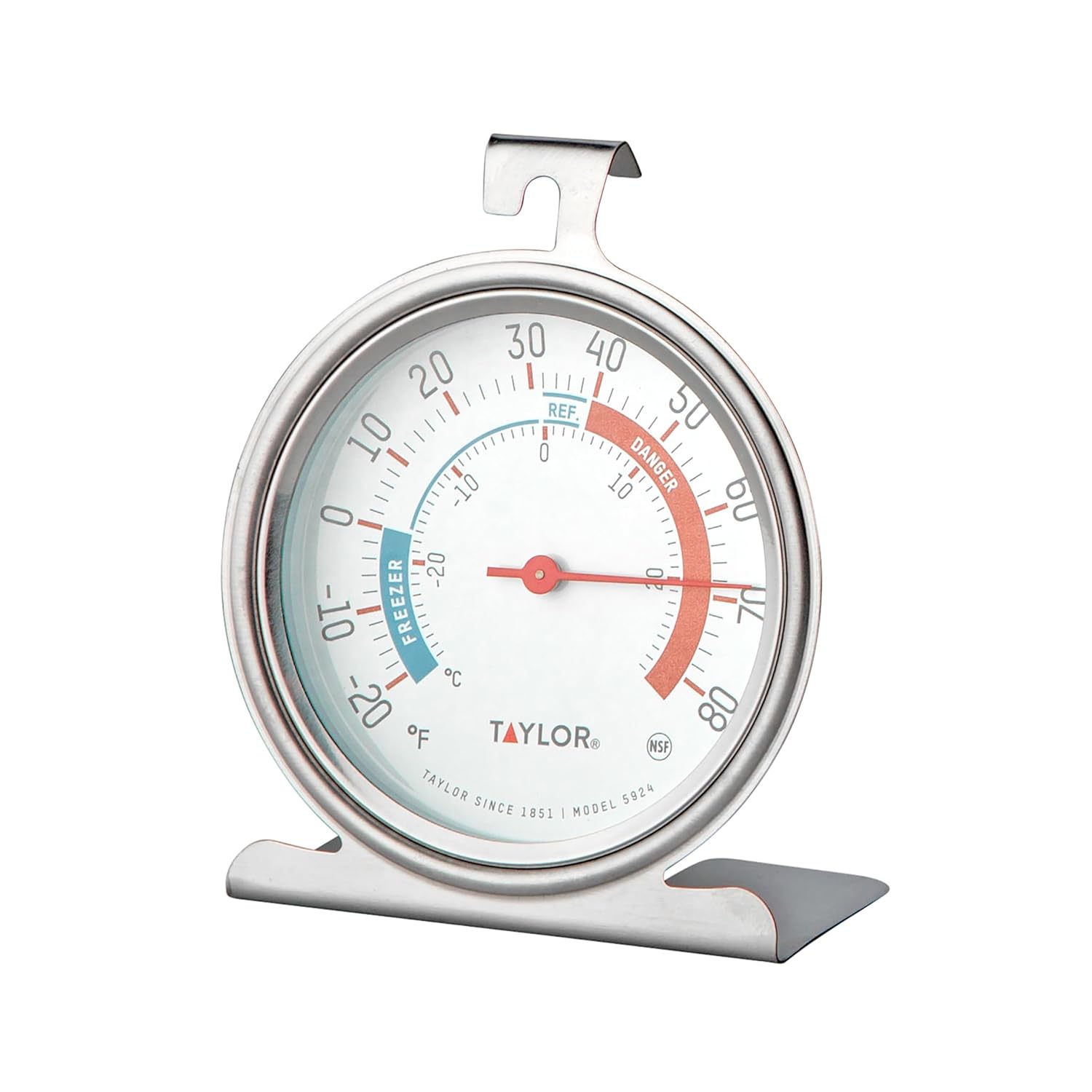
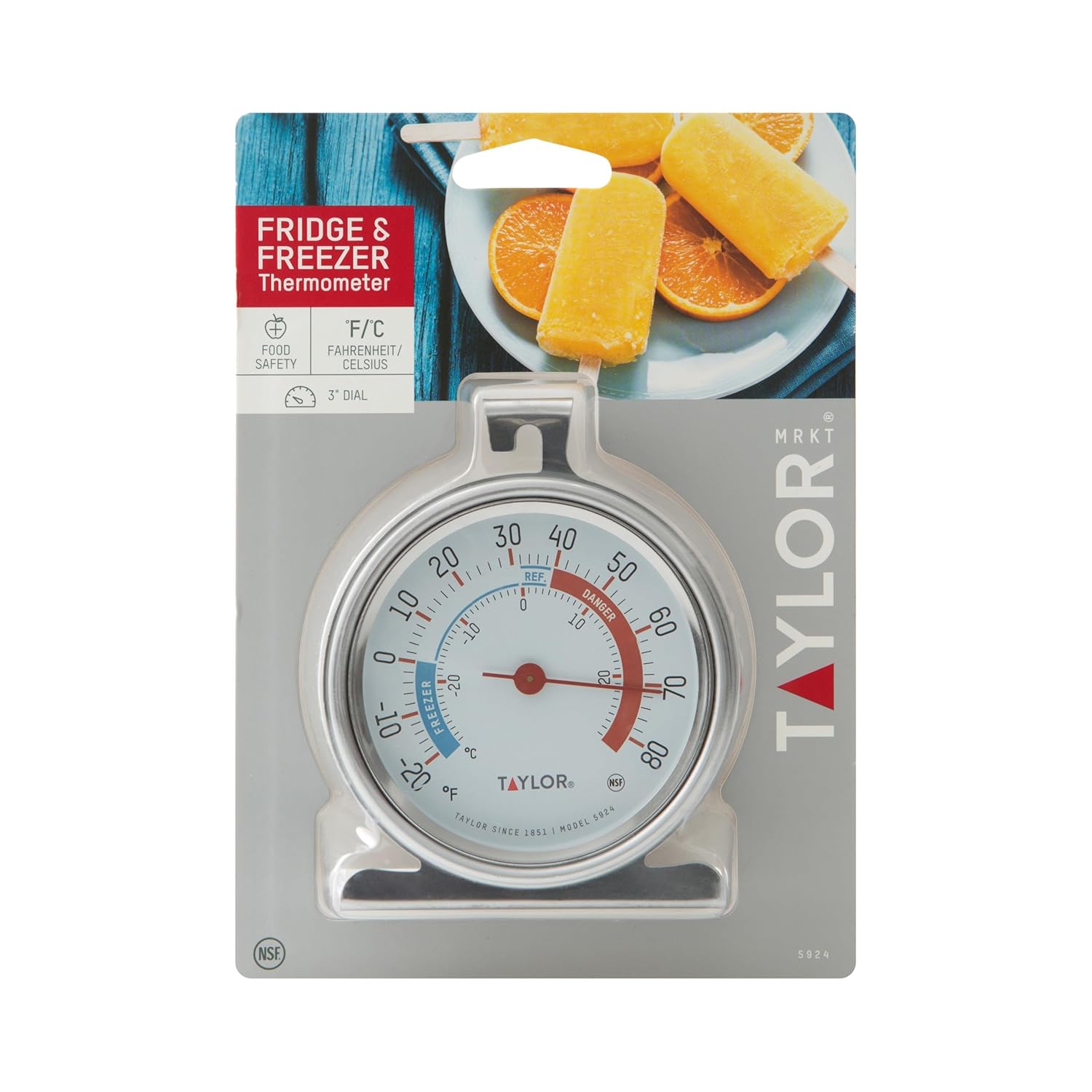
This stainless steel analog thermometer makes it simple to monitor fridge and freezer temperatures at a glance, thanks to its extra-large 3-inch dial and color-coded zones. The Taylor model is intended for everyday kitchen use and helps keep perishable food within safe temperature ranges, according to the manufacturer.
Key Points
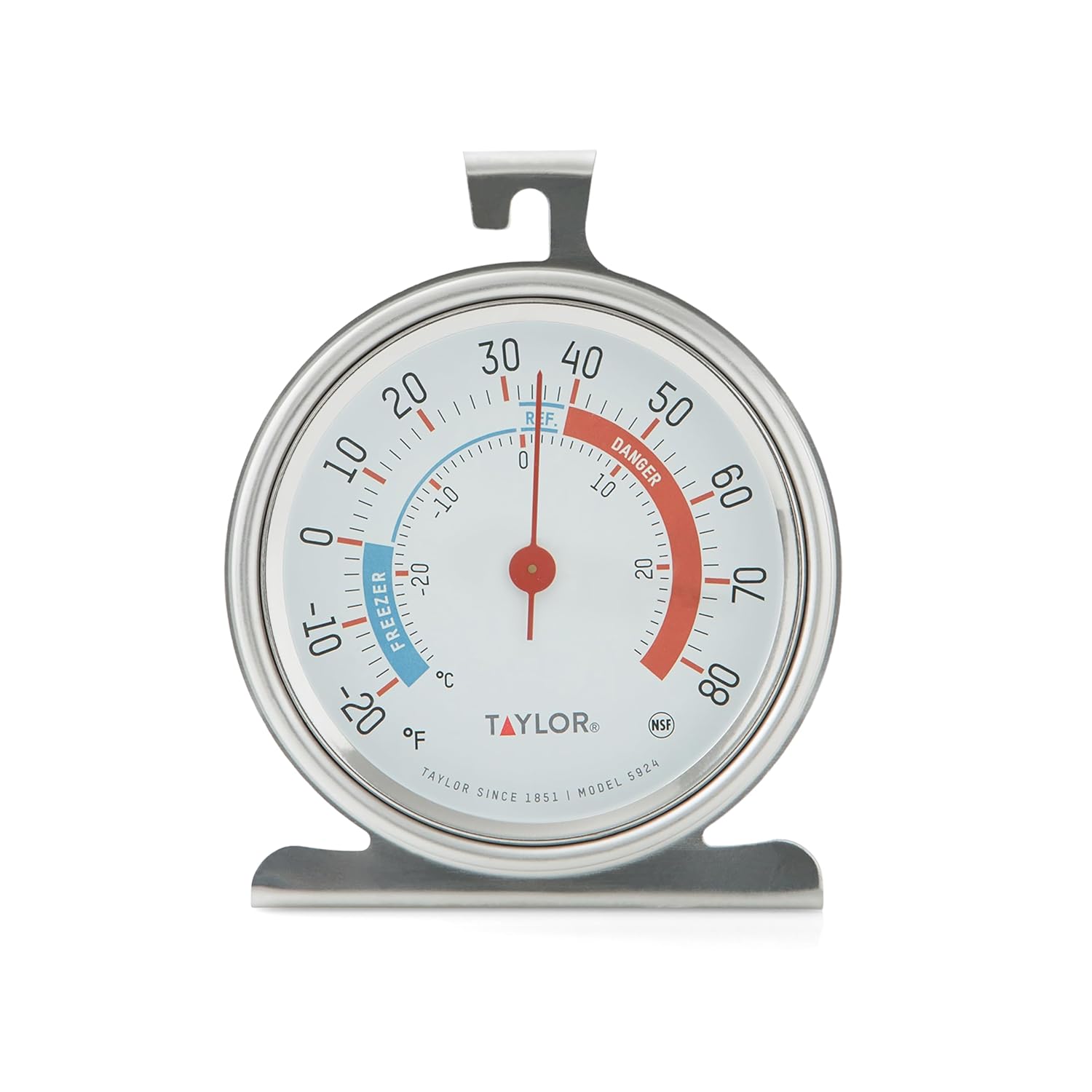
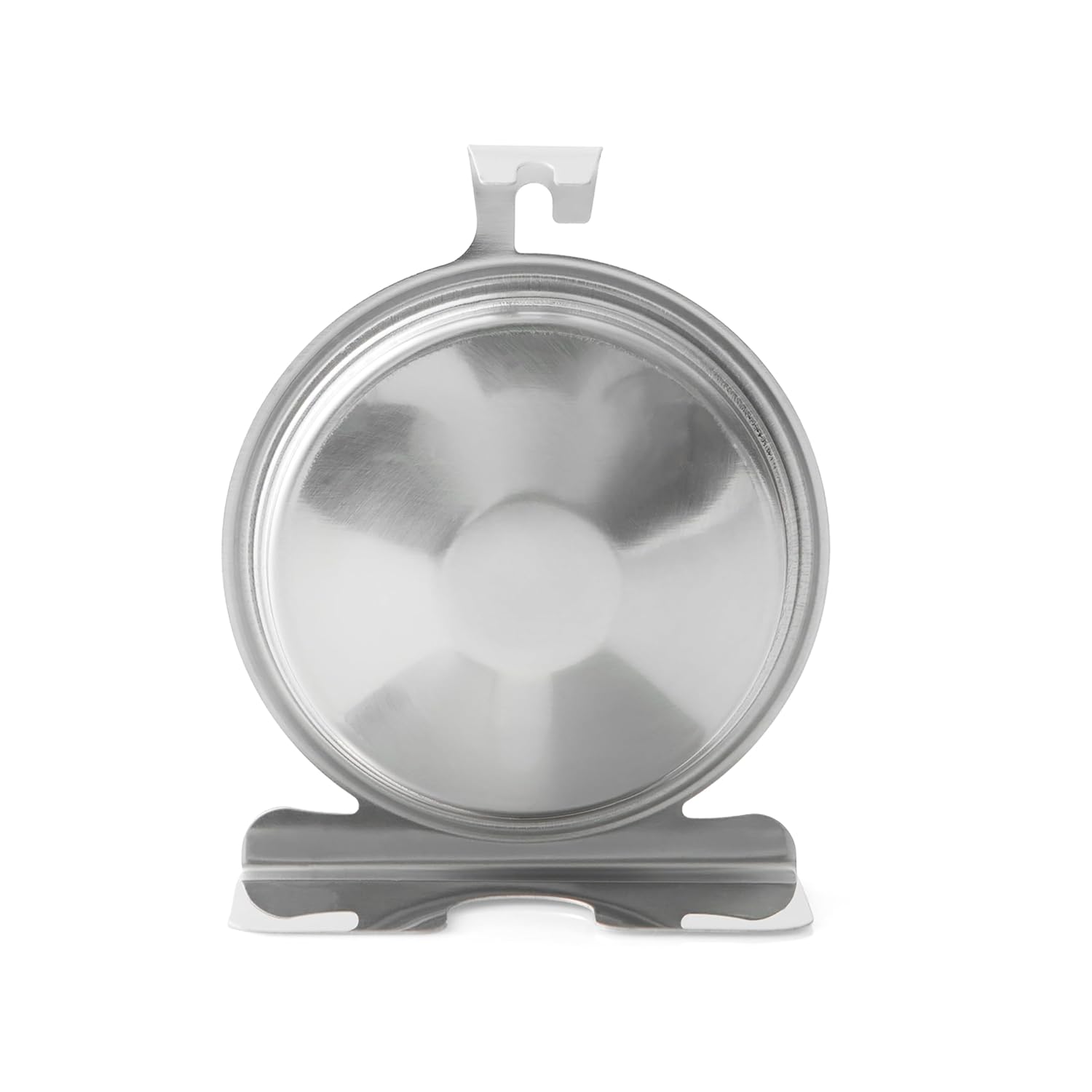
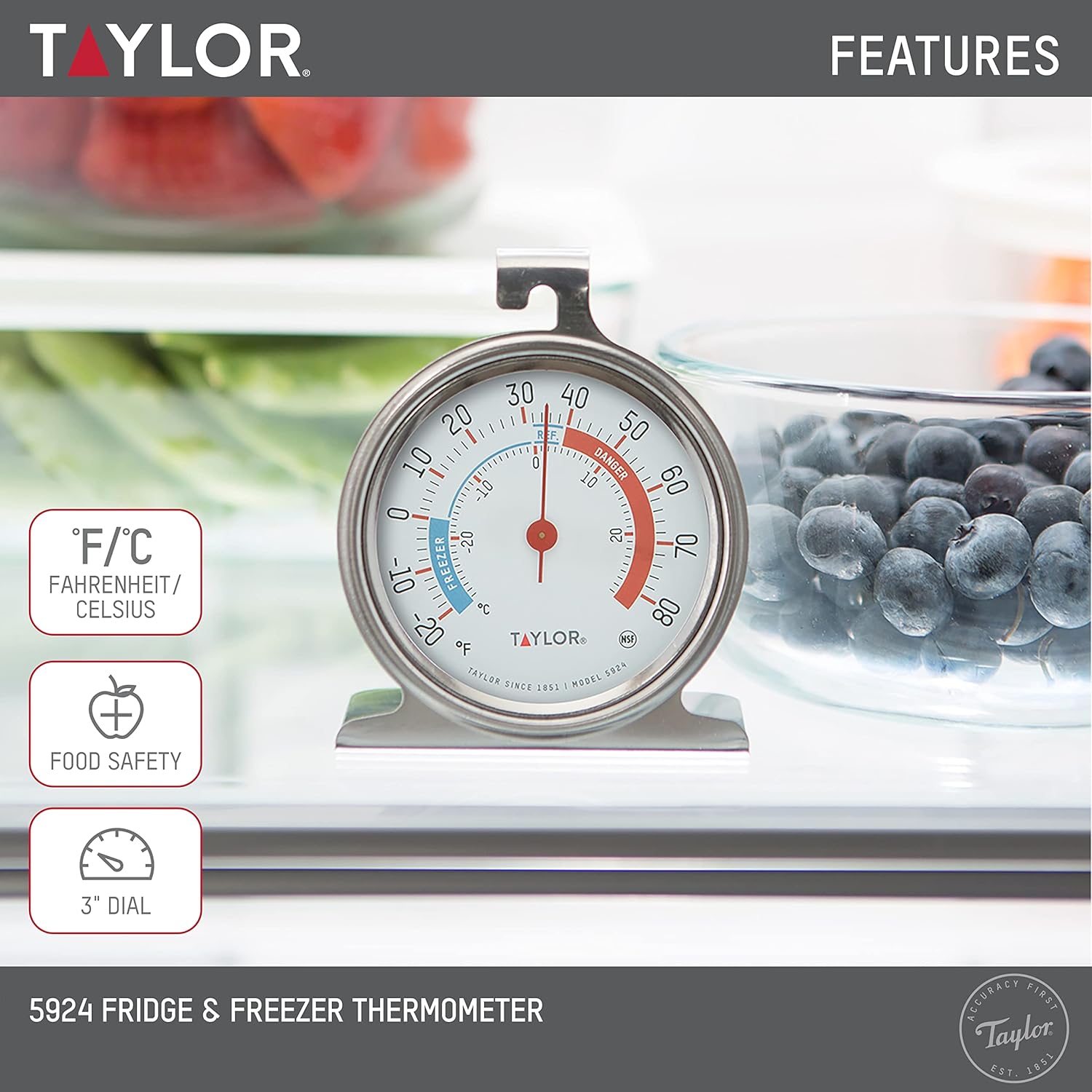
The oversized dial features clear markings and distinct freezer, refrigerator, and danger zones so you can assess conditions quickly. It is made with a durable stainless steel casing that adds corrosion resistance and gives the unit a clean, professional look. The thermometer can hang from a rack or stand upright on a shelf, offering flexible placement in both refrigerators and freezers. For safety and quality, the unit is NSF certified, confirming compliance with sanitation and durability standards.
Technical Specifications
- Name: Taylor 5924 Large Dial Kitchen Refrigerator and Freezer Analog Thermometer
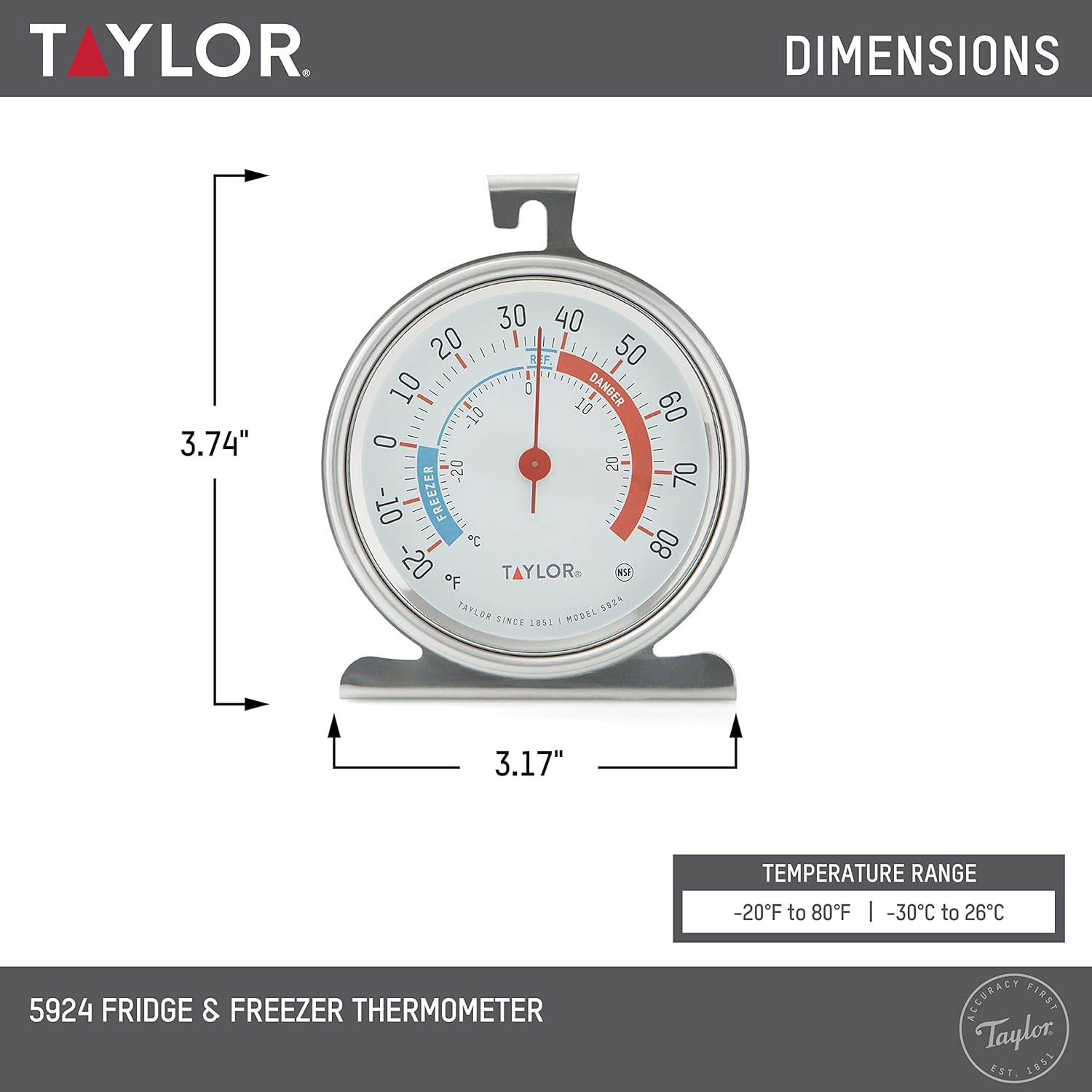
- Dial size: 3 inches
- Temperature range: -20°F to 80°F
- Case material: stainless steel
- Certification: NSF certified
- Warranty: 1 year limited
Advantages
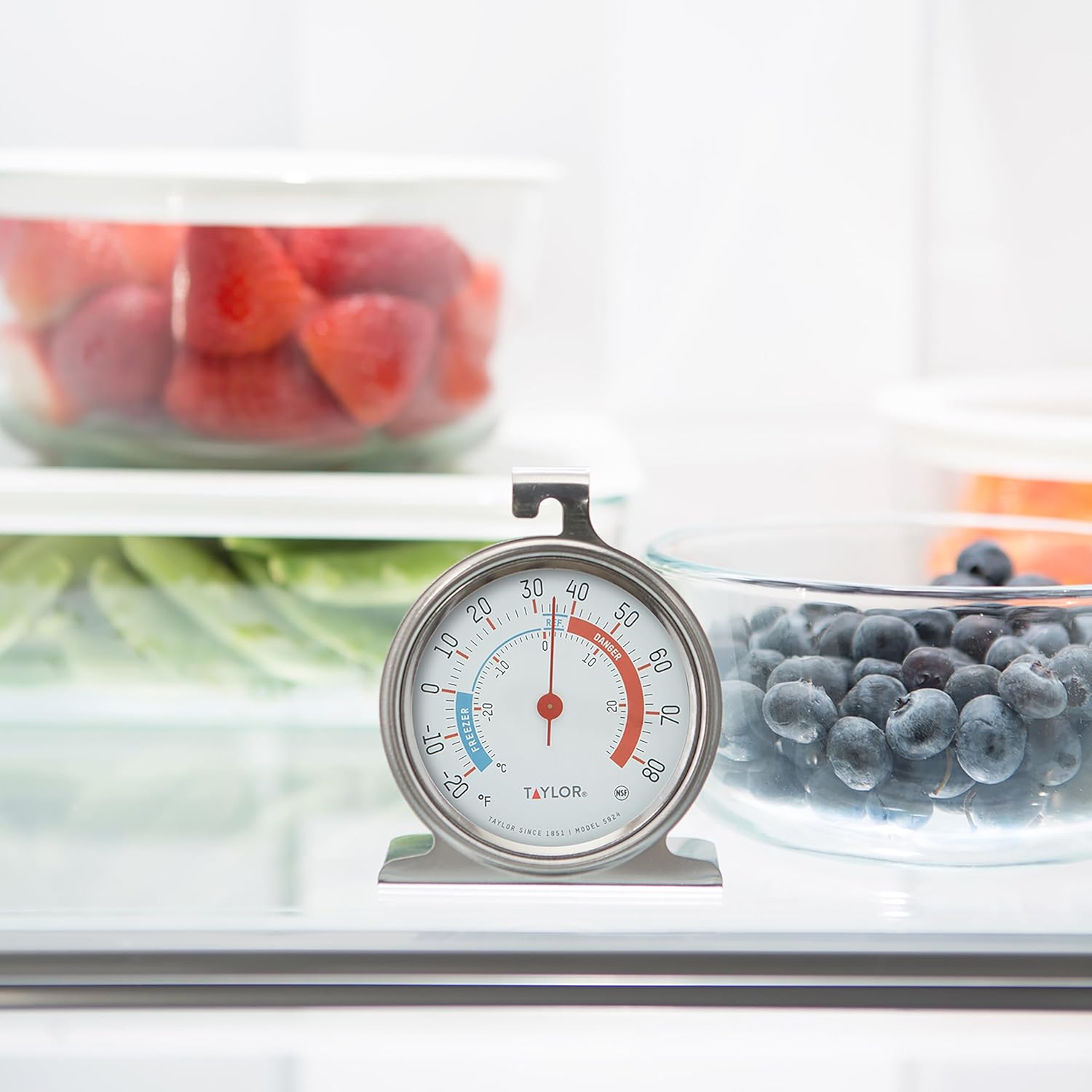
Readability is the standout attribute, with a colorful, easy-to-read face that reduces the need to bend or move items to check a temperature. Accuracy across a wide range allows use in both freezing and chilled environments, and the printed reference zones make it straightforward to interpret results without consulting a manual. The metal case improves longevity compared with many plastic alternatives, and the simple analog mechanism means there are no batteries to replace.
Usage Recommendations
Place the thermometer in the center of the compartment for the most representative reading, and allow several minutes for the dial to stabilize after repositioning. Hand wash only and avoid dishwashers to protect the stainless steel finish and the instrument’s calibration. Consider checking readings periodically against another calibrated thermometer if exact precision is critical for specific food safety tasks, as minor variance can occur between instruments.