

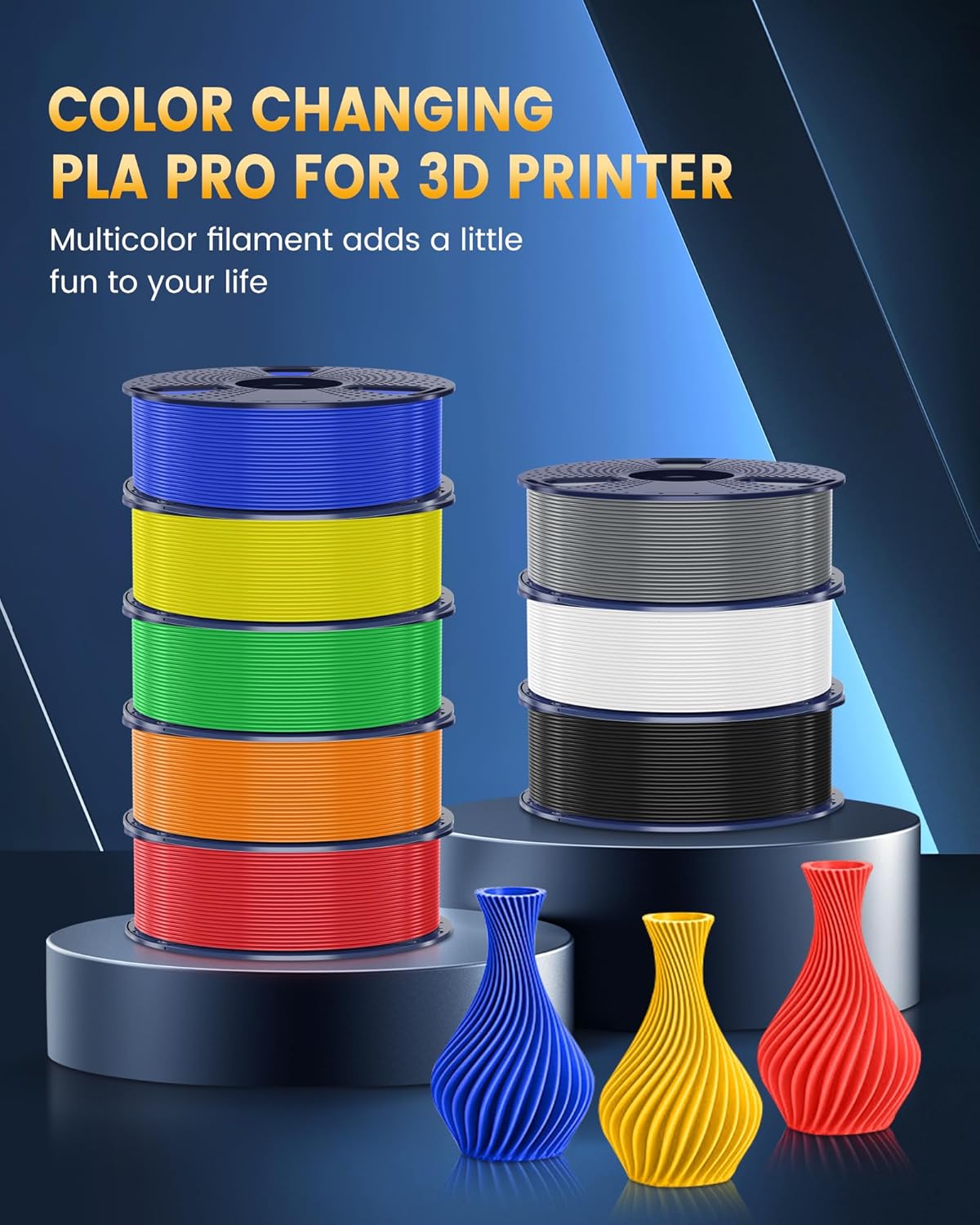
SUNLU PLA+ 2.0 3D Printer Filament (0.069 in) — improved strength PLA Plus
Reviews
Price
Product description
The essentials: what this SUNLU PLA+ 2.0 is for
SUNLU PLA+ 2.0 is a PLA Plus style filament aimed at people who want prints that feel less brittle than standard PLA, without jumping into harder-to-tune materials. On paper, the pitch is straightforward: improved strength and better resistance to cracking, plus reliable layer adhesion so your parts hold together instead of delaminating.
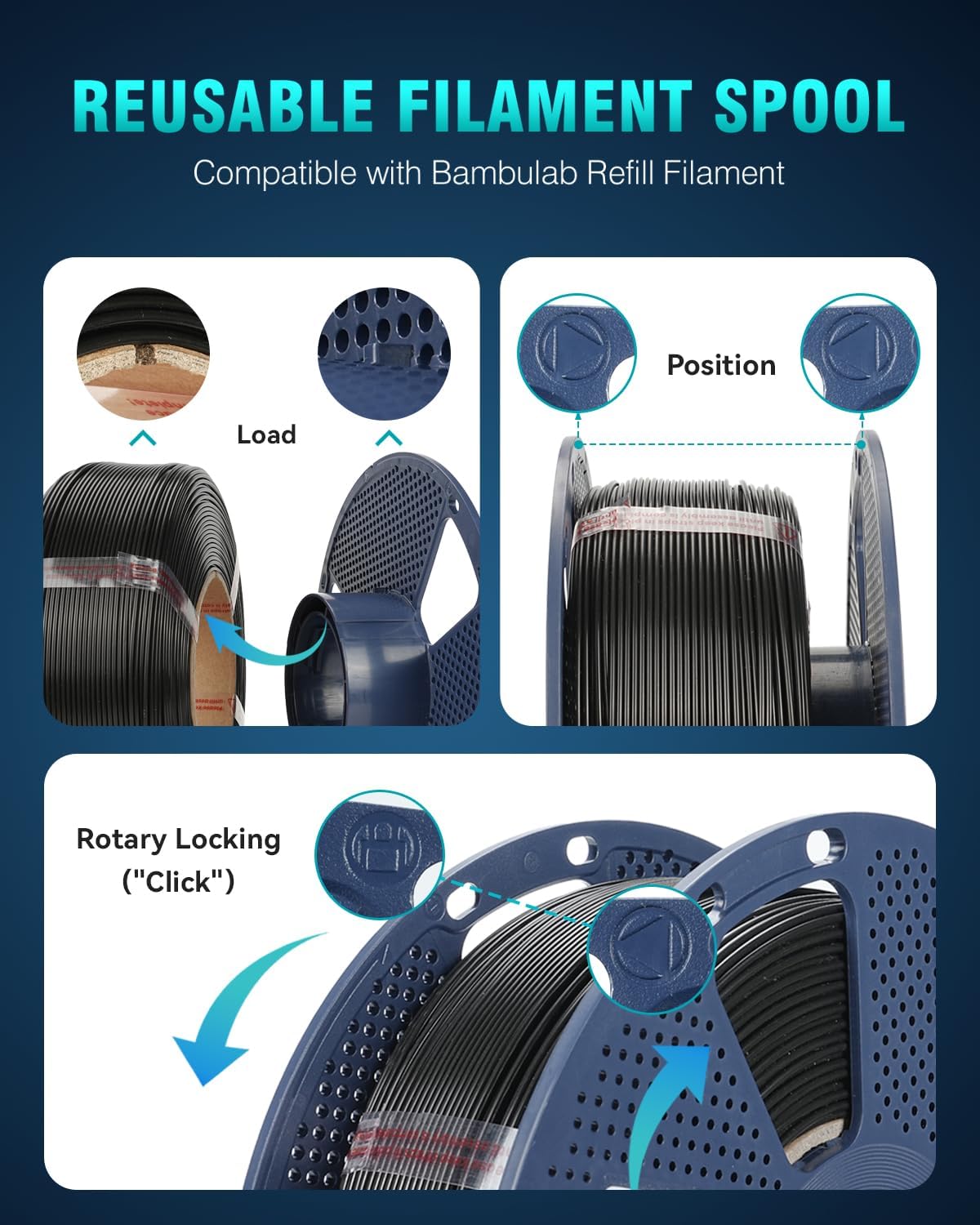
It’s also built for everyday printing workflows. The filament is described as tightly wound to help reduce tangles and feed issues, and it lists a practical speed range for faster runs. If you’re printing functional parts, precision models, or decorations that still need to survive handling, this is the kind of PLA+ you’d consider.
That said, it’s not perfect for every scenario—PLA-based materials generally aren’t the choice when you need high heat resistance or extreme durability. If your project expects that kind of stress, you may want to look beyond PLA+.
Key features that matter in real prints
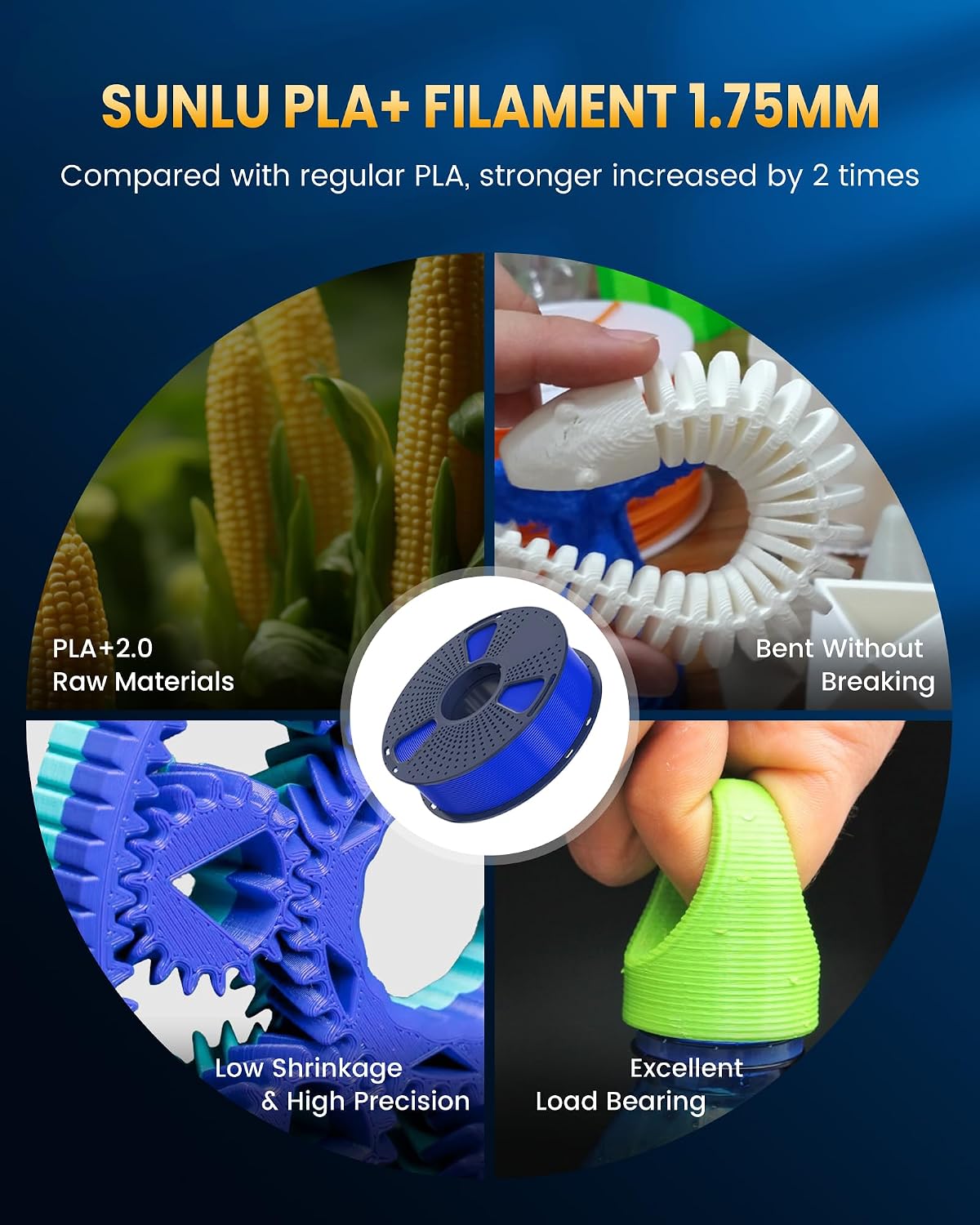
The biggest differentiator here is the “PLA+ 2.0” formulation positioning: SUNLU claims it’s less prone to fragility and cracks compared with PLA+. For buyers, that usually translates into fewer heartbreak moments when a part is bumped, flexed a bit, or printed with thinner features.
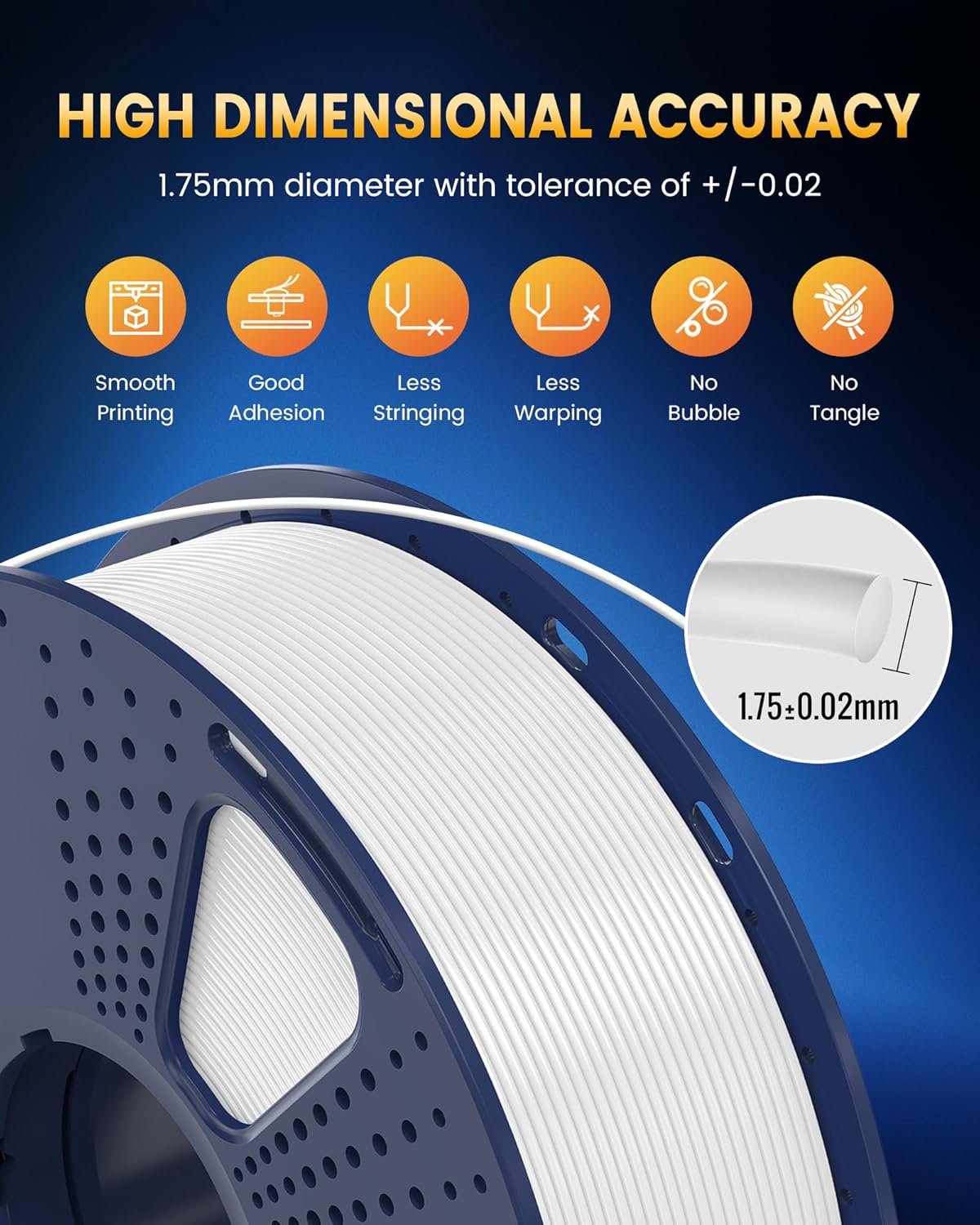
Layer adhesion is another focus. The description highlights a smooth surface and claims no delamination, with low shrinkage intended to help the bond to the print bed and reduce warping and peeling. That’s exactly the type of benefit you notice early—first layer behavior and how stable the part stays during the print.
There’s also a practical usability angle. The filament is described as easy to use and well wound, which matters because even good slicing settings can’t fully compensate for inconsistent feeding.
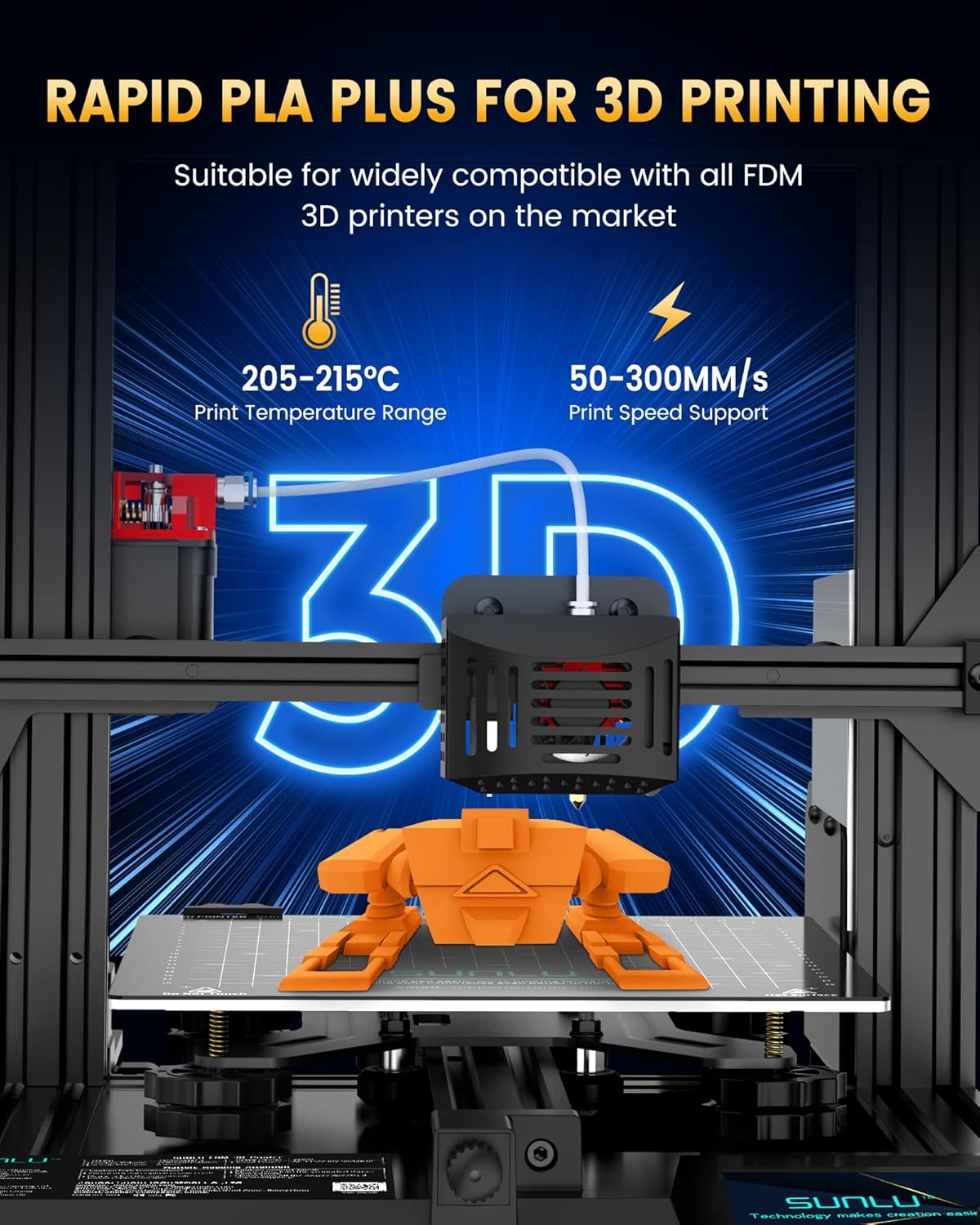
And if you like to print at speed, the stated support for printing up to 0-300 mm/s is a clue that this filament is meant for higher throughput—though you still need to match your printer, hot end, and setup to actually hit those speeds comfortably.
Tech specs that can help you set expectations
From the information provided, here are the specs worth checking before you buy: - Diameter: 0.069 in (PLA+ improved) - Dimensional precision: +/-0.001 in - Recommended nozzle temperature: 205-220 °C - Recommended bed temperature: 50-60 °C - Print speed range: 100-300 mm/s - Compatibility: compatible with the “99%” of other FDM 3D printer brands, with SUNLU’s own spool size/axis support
If you’re the type who tunes for consistency, the listed dimensional precision is a reassuring detail—consistent diameter usually helps with predictable extrusion.
What you’ll notice day to day (and the limitation to keep in mind)
When this PLA+ 2.0 goes well, the experience is pretty tangible: smoother layer bonding, less warping risk (thanks to low shrinkage claims), and fewer printing interruptions from tangled filament. The “first PLA with clean winding” statement is exactly the sort of thing that can reduce frustration, especially if you’ve dealt with rough spool wrapping before.
It also seems aimed at higher-speed workflows. If you already slice for speed and your printer’s capable, this filament’s stated 100-300 mm/s range is designed to fit that style.
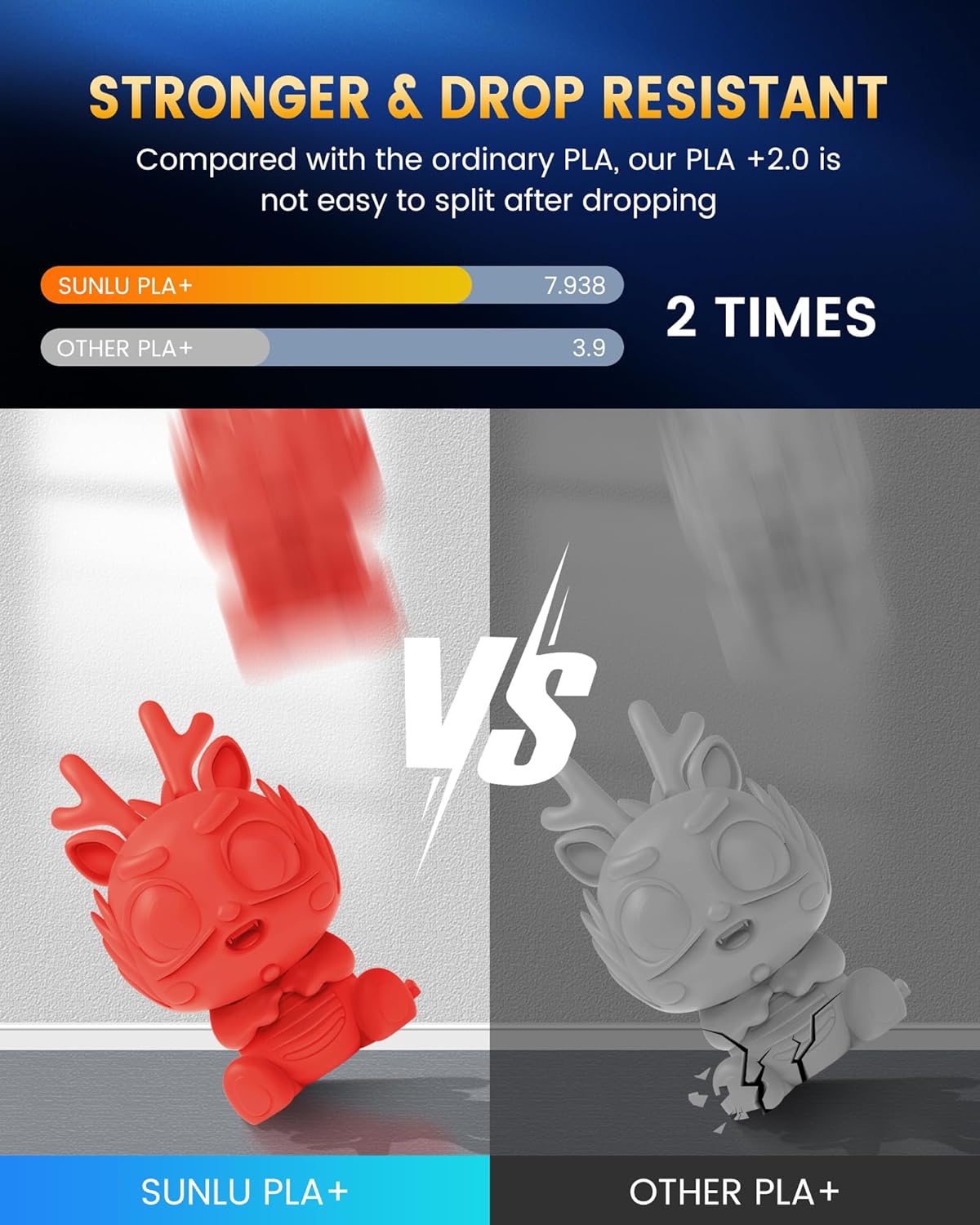
Where to be careful: the description leans heavily toward strength versus standard PLA, but it doesn’t claim it replaces engineering plastics or performs like high-temperature filament. So if your parts will be exposed to heat, or you expect serious impact resistance, PLA+ may still be limiting.
Best use cases (and when to skip it)
Worth considering if you want: - Prints that are less brittle than basic PLA - Better layer bonding for functional parts and precision models - A filament you can run at a decent speed for faster output - Reliable feeding thanks to clean spool winding
You may want to skip it if: - You need high-heat performance or extreme toughness beyond PLA-family expectations - Your project depends on a specific advanced material behavior that isn’t discussed here - You’re not using FDM setups, since this is explicitly for 3D printer PLA+ (FDM context)
A quick example: imagine printing a small enclosure component or a bracket-style decoration that you’ll handle regularly. With PLA+ 2.0’s “stronger than PLA” positioning and focus on crack resistance, it makes sense to choose it over standard PLA when you want the part to survive normal bumps.
Final verdict: Should you buy it?
It’s a solid pick if you’re shopping for PLA+ and care about stronger, less crack-prone prints with reliable layer adhesion. The combination of dimensional precision, a clear temperature/speed window, and the emphasis on reduced tangling gives it a practical edge for day-to-day FDM printing.
Should you buy it? Yes—if your projects match PLA+ goals like functional models, precision parts, and decorations that need to hold up better than basic PLA.
Skip it if you’re expecting engineering-grade heat resistance or “bulletproof” toughness. In that case, PLA+ may feel like a mid-step rather than the right solution.
Mini FAQ
Is SUNLU PLA+ 2.0 good for fast printing?
It’s described as supporting printing speeds up to 300 mm/s, and the recommended speed range is listed as 100-300 mm/s. If your printer and cooling setup are tuned for speed, it fits that workflow.
What temperatures should I start with?
The recommended starting window is 205-220 °C for the nozzle and 50-60 °C for the bed.
Does it help reduce warping?
The listing mentions low shrinkage and good bed bonding intended to help avoid warping and peeling, but your results still depend on your printer setup and environment.
Will it work with most FDM printers?
The description claims compatibility with the “99%” of other FDM 3D printer brands, assuming your machine supports the spool size/axis. That said, “99%” is still a broad claim—if your printer uses a very specific spool mount, it’s worth double-checking.
Is the filament well wound enough to prevent tangles?
SUNLU specifically calls out clean winding and consistency to help avoid entanglements, strings, or clogs, but any spool can behave differently depending on storage and handling.