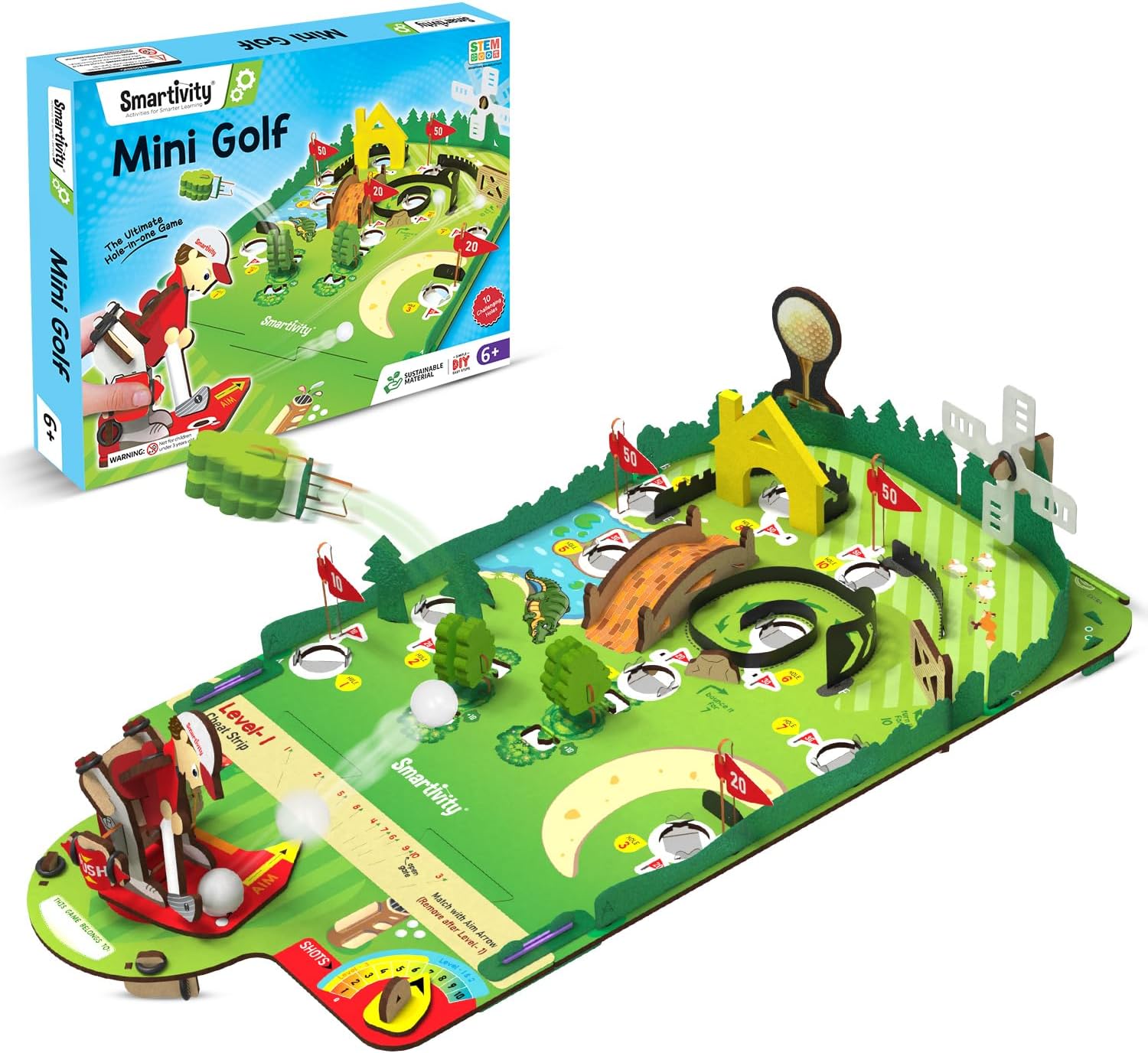
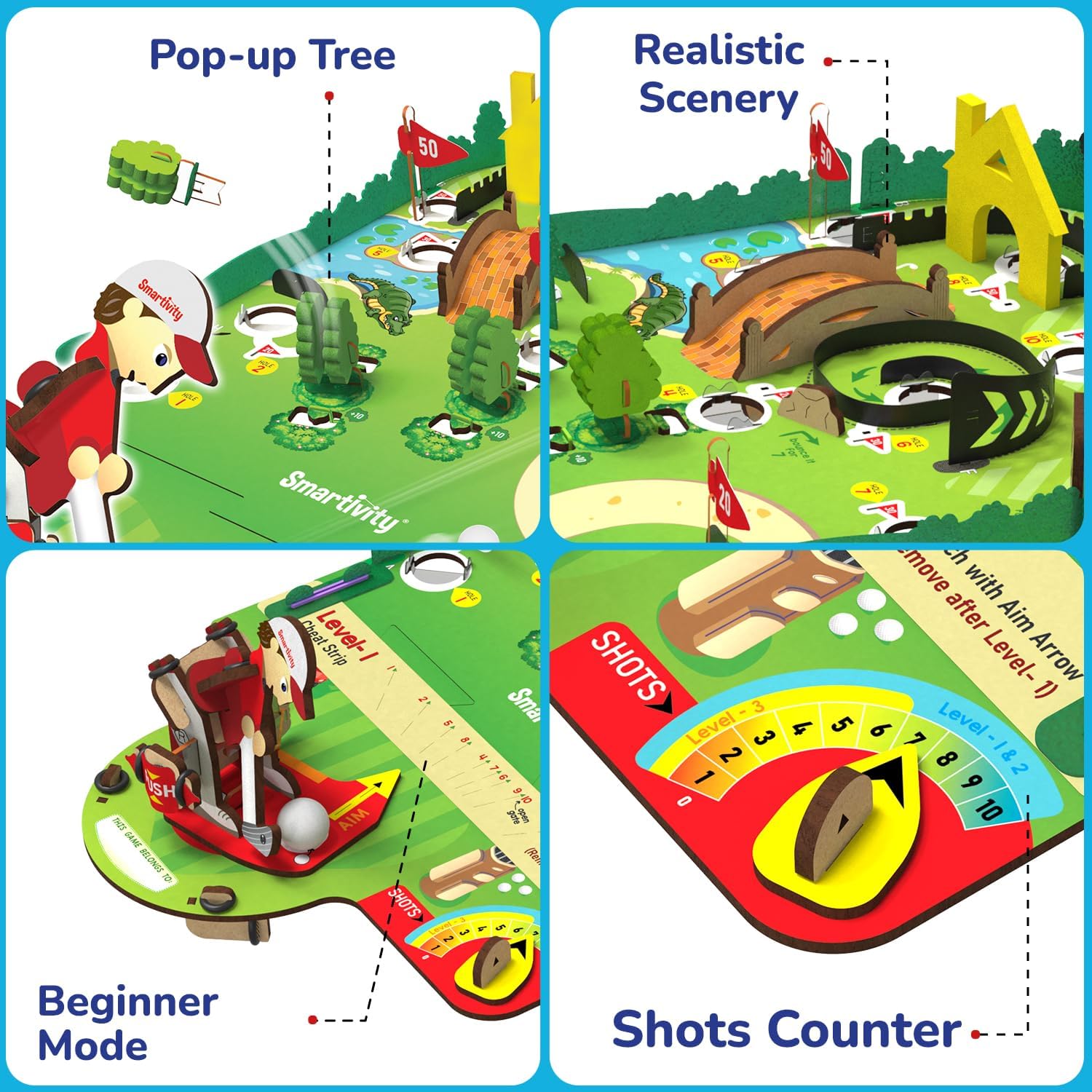
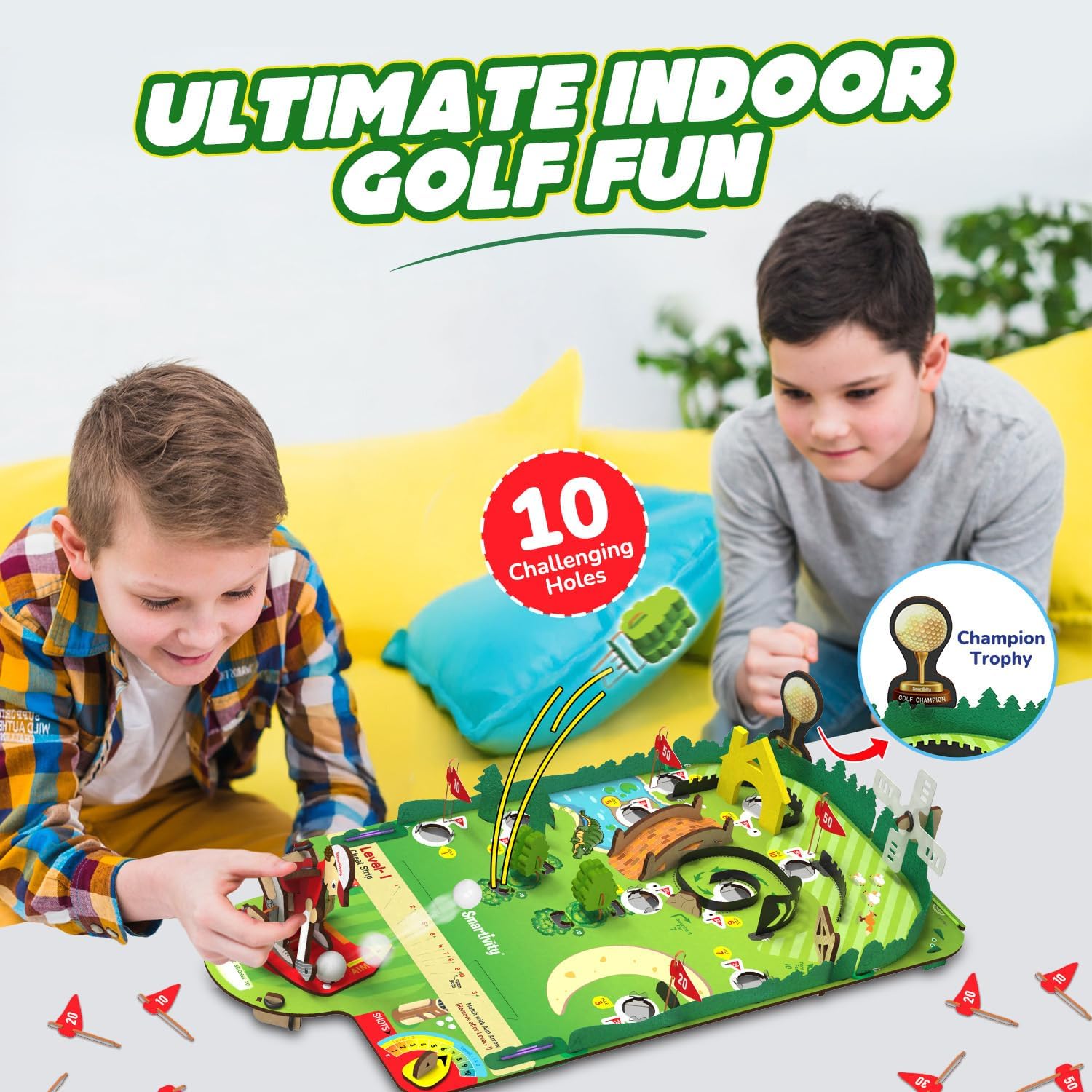
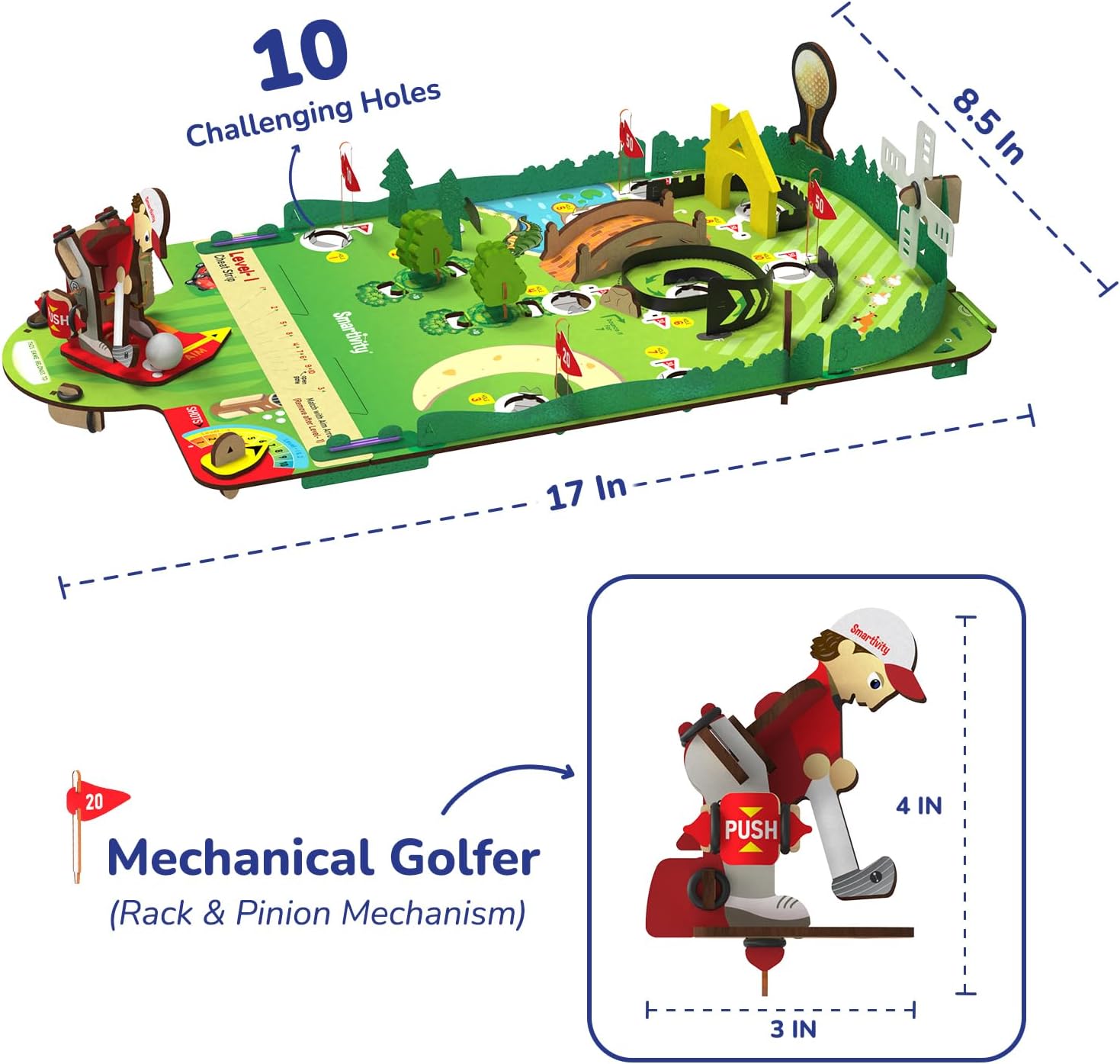
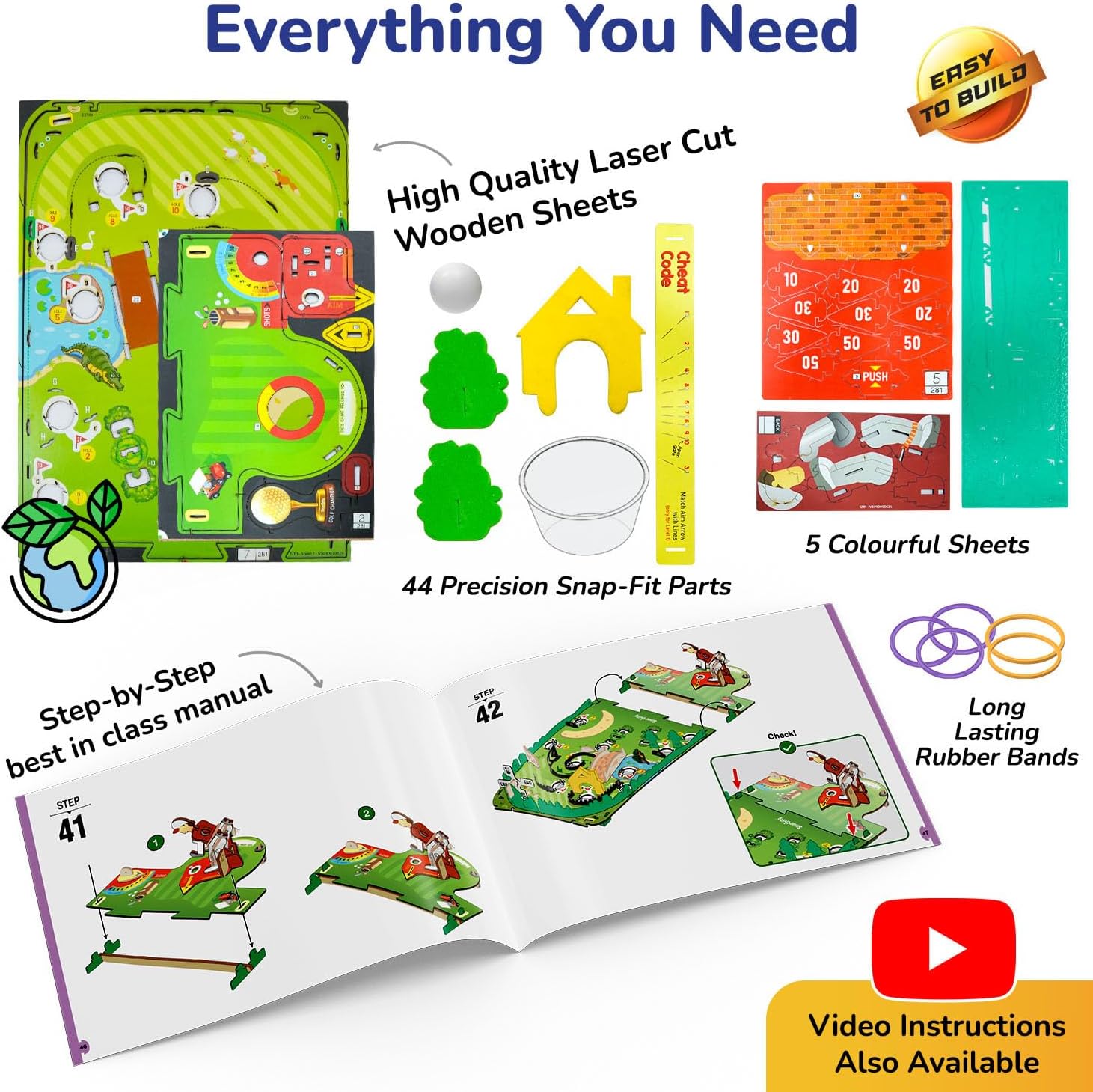
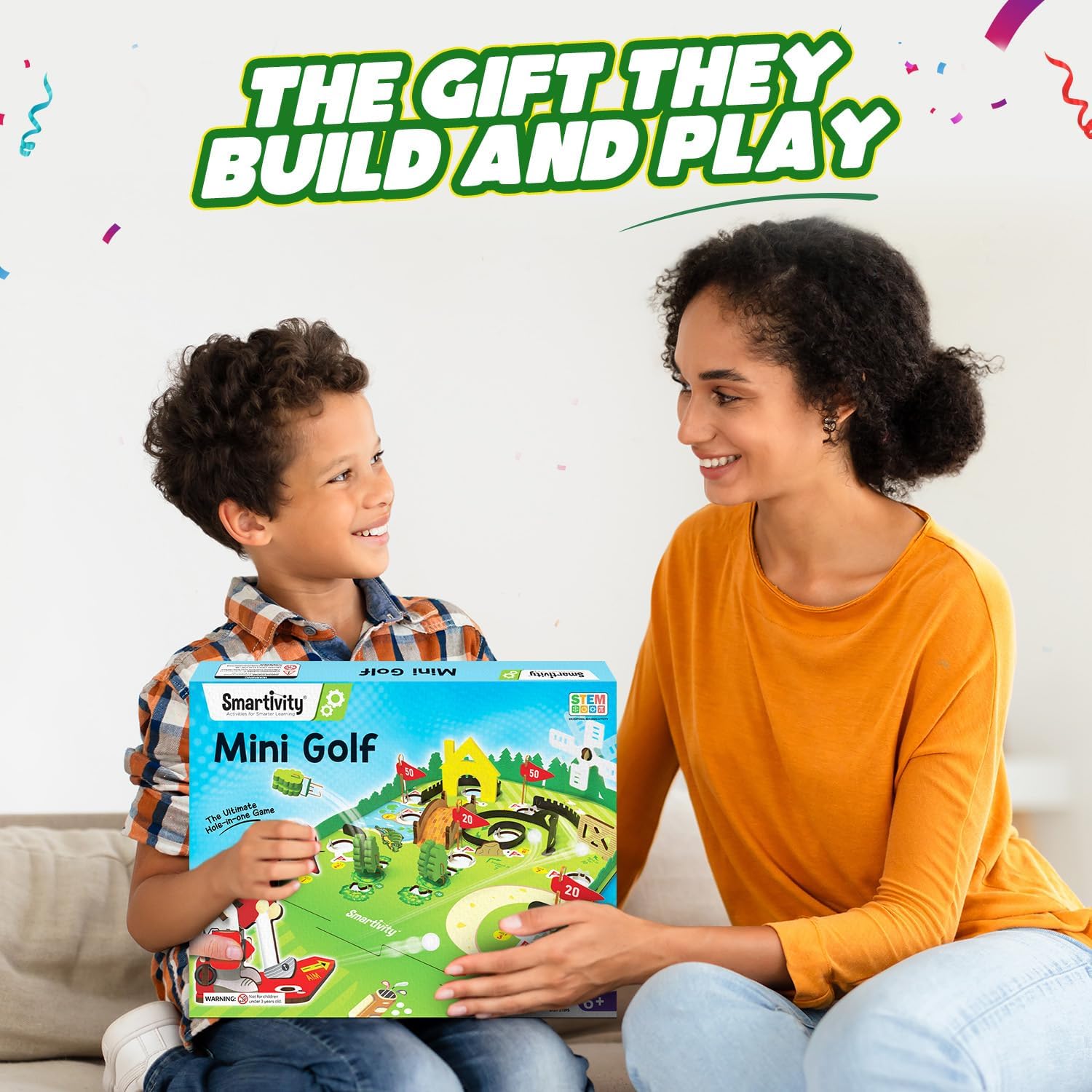
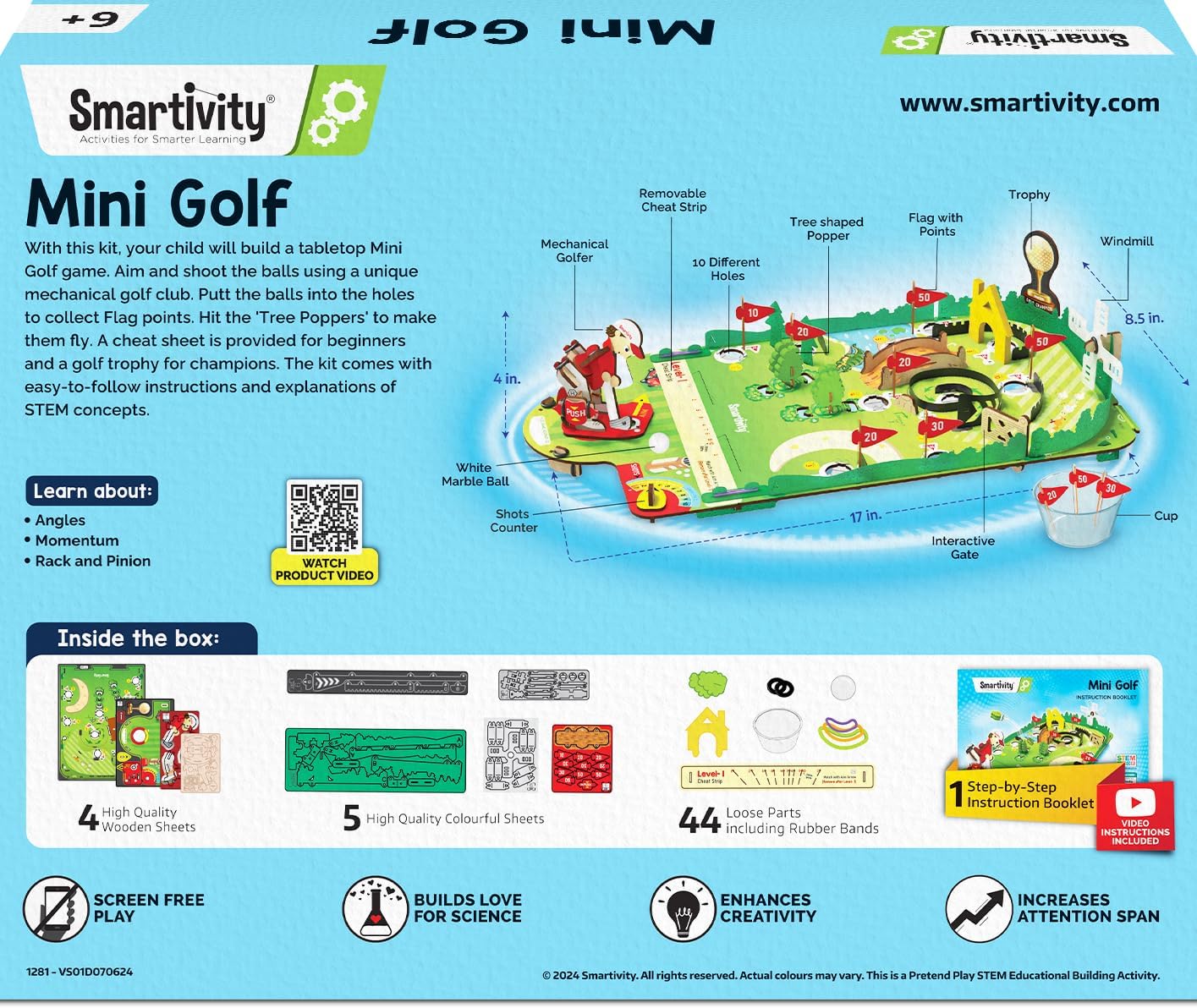
What it is and why it matters\nSmartivity’s DIY Mini Golf STEM Kit is a screen-free, hands-on project designed for kids ages 6–12. The assembled 10-hole course features a mechanical golfer, pop-up trees, a windmill, a shots counter, and a trophy, offering a complete mini golf world built from laser-cut engineered wood. It’s designed to spark curiosity about basic engineering and physical concepts without batteries or screens, making it a tangible alternative to passive play.\n\n## How it works: a simple yet meaningful mechanism\nThe core of the kit is a rack-and-pinion mechanism—the same principle behind car steering. Each shot invites kids to think about angles and momentum, turning a casual game into a small engineering lesson. The care in the design aims to show cause-and-effect: adjust the aim, consider the force, and watch the ball roll toward the target.\n\n## What stands out\nThree difficulty levels let the set grow with your child: Level 1 helps ages 6–7 with aiming basics, Level 2 suits ages 8–10, and Expert Mode challenges ages 11–12. A shots counter tracks attempts across all holes, adding a light competition element. The course measures 17 x 8.5 inches when assembled, and the kit uses sustainable wood and non-electronic components, keeping play simple and low-tech.\n\n## Who it’s for\nIt’s a solid fit for curious kids who like building, puzzles, and hands-on learning. It can be enjoyed solo or with a partner in a light, friendly competition. Parents and educators may appreciate the STEM.org authentication and the real-world engineering concepts woven into play.\n\n## Pros and potential cons\n- Pros: screen-free, multi-level learning, tangible engineering with a real mechanism, portable size, reusable and sharable play value.\n- Cons to consider: assembly time is not instant and may stretch to around 45 minutes, the play value leans more toward problem-solving and setup than high-speed play.\n\n## When it makes sense to buy\nIf you want a hands-on activity that combines building with measurable learning about angles and momentum, this kit offers a structured path that adapts as kids grow. It’s especially suitable for families seeking a thoughtful birthday gift or an educational activity that goes beyond basic toys.\n\n## What to check before buying\nEnsure you’re ready for a screen-free project that requires patience during assembly. Note the 10-hole course and the included components (wood sheets, colored sheets, precise parts, rubber bands, marble ball, illustrated manual) to confirm it matches what you want in a STEM setup.\n\n## Practical use example\nImagine a rainy weekend where kids still crave a challenge. They build the course together, then compete in a mini-tournament, adjusting shots to land near the trophy while discussing how each hit changes the ball’s trajectory. It’s not just a game, it’s a mini engineering lab you can fit on a coffee table.\n\n## FAQ\n- How long does it take to assemble? Typically about 45 minutes, depending on pace and prior hands-on experience.\n- Is it suitable for two players? Yes, it supports solo play or a two-player format.\n- Does this require any tools? No tools are needed for assembly.\n\n## Is it worth it?\nWorth considering if you value screen-free, educational play that scales with age and offers a concrete introduction to basic mechanics and geometry.