


RunningSnail Emergency Hand Crank Radio with LED Flashlight, AM/FM NOAA Weather Radio & 2000mAh Power Bank
Product description
What it is and why people buy it
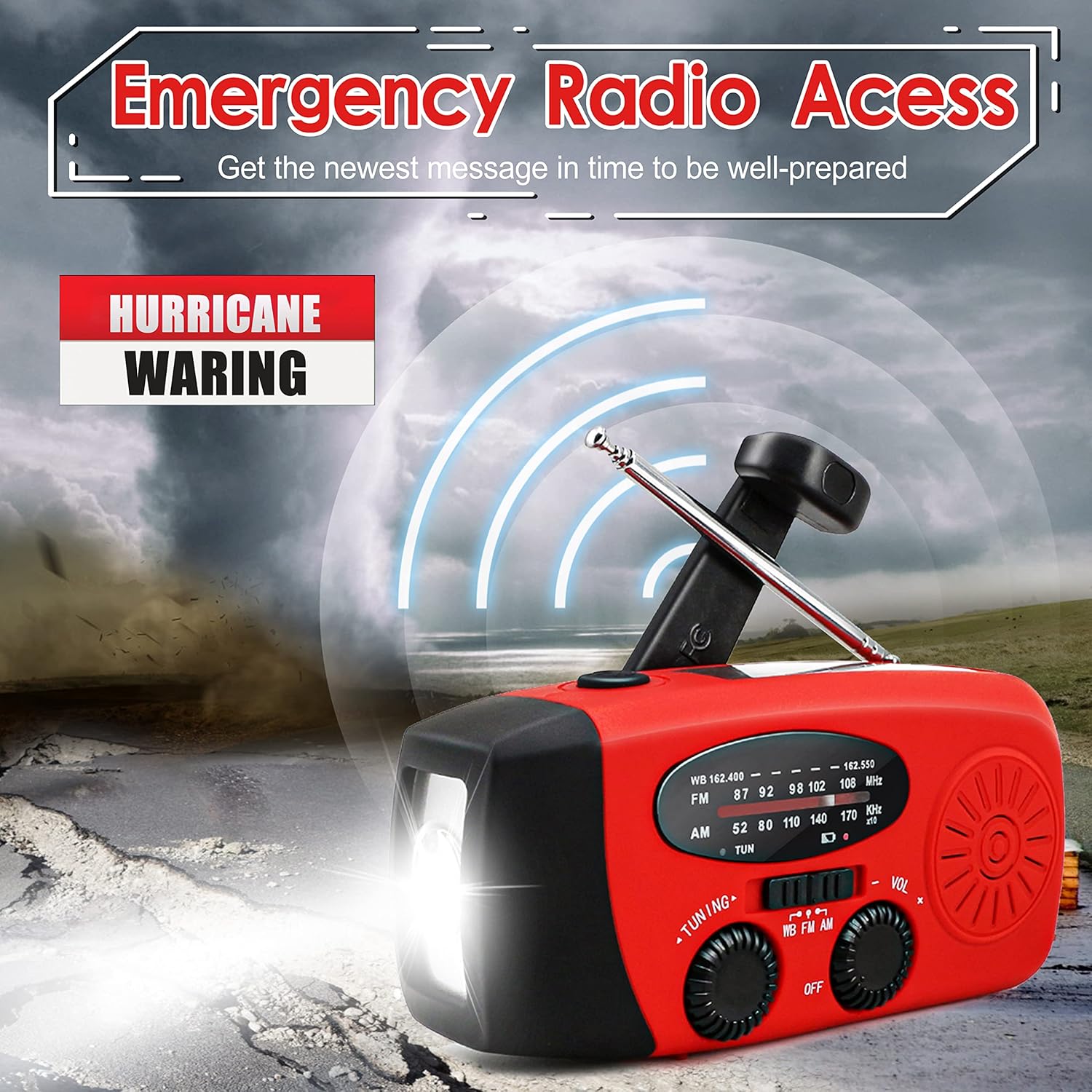
RunningSnail’s emergency hand crank radio is designed for one job: keeping you informed when the usual power situation (and communication) gets messy. It’s a portable NOAA weather radio with AM/FM, plus an LED flashlight and a built-in 2000mAh battery that can act like an emergency power bank for USB-charged devices.
On paper, it’s aimed at households or campers who want an “always there” alert tool. You’re not relying on a wall outlet. You’re also not betting everything on one battery. The overall approach is redundancy: power can come from hand crank, solar, or its rechargeable Li-ion battery.
What you’ll notice day to day
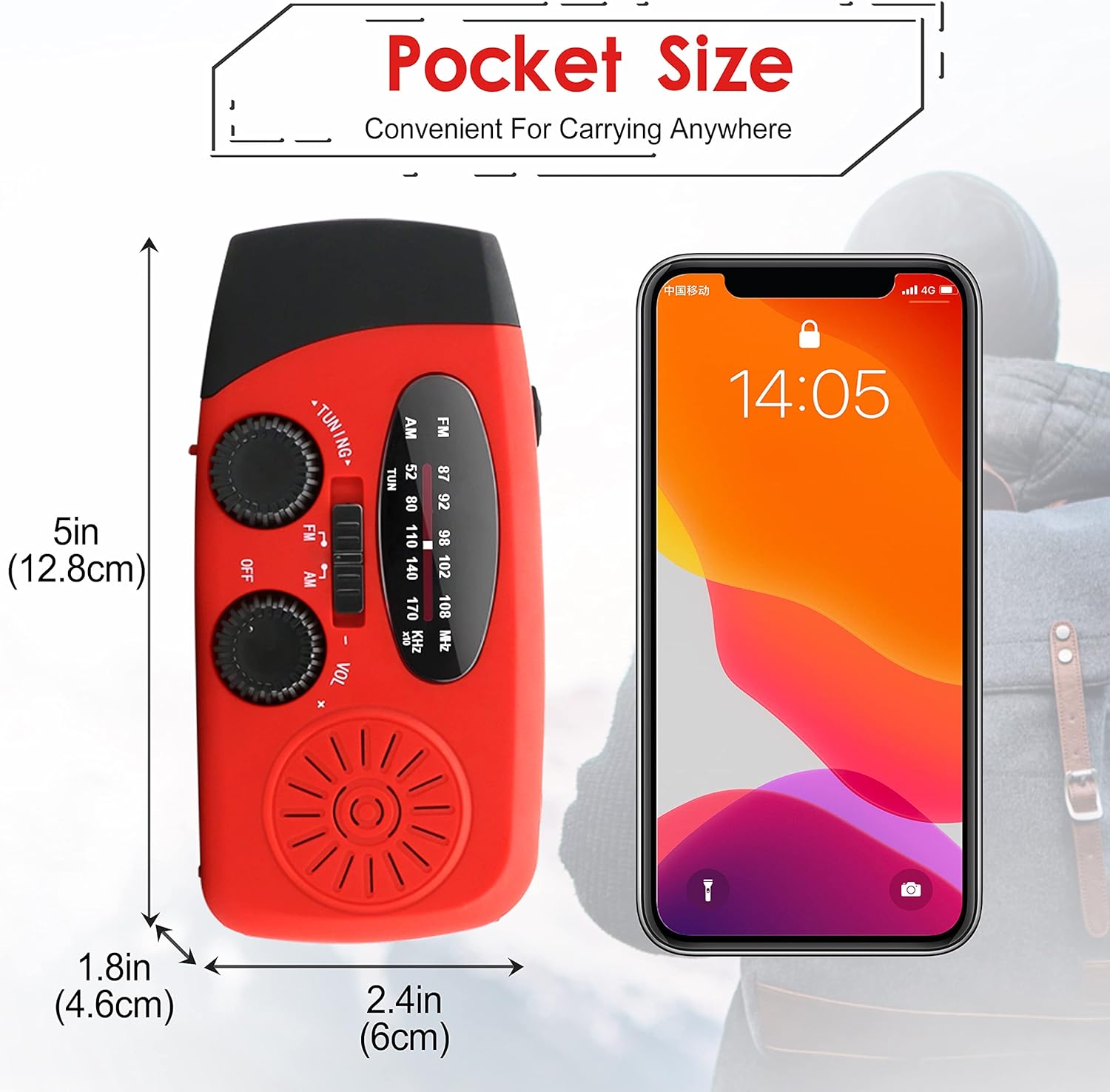
The most practical part is the radio + flashlight combo in a compact form. It’s described as pocket-sized (51.82.4 inch) and lightweight (0.5 lb), which matters when you’re trying to move around during an incident instead of lugging a larger unit.
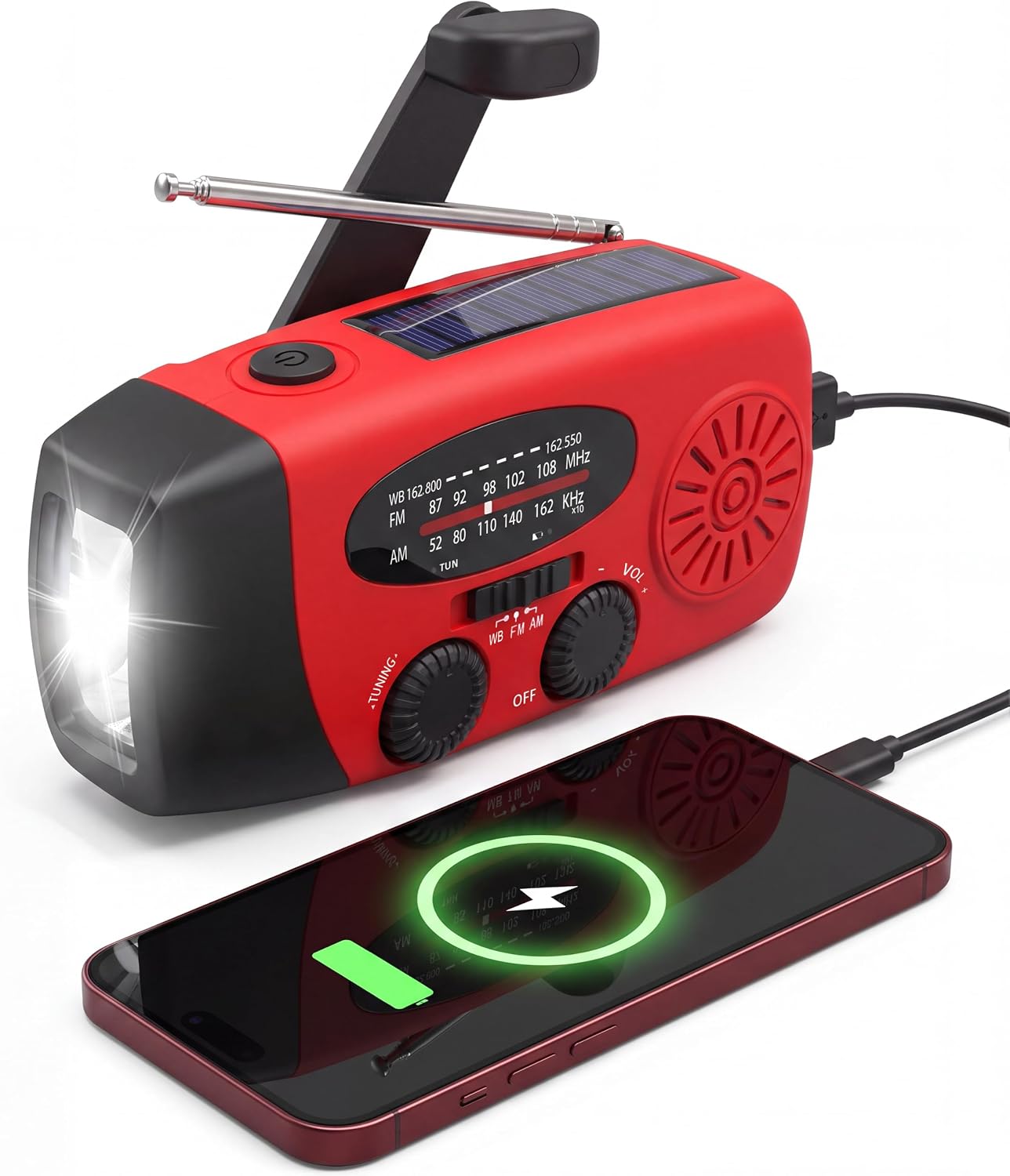
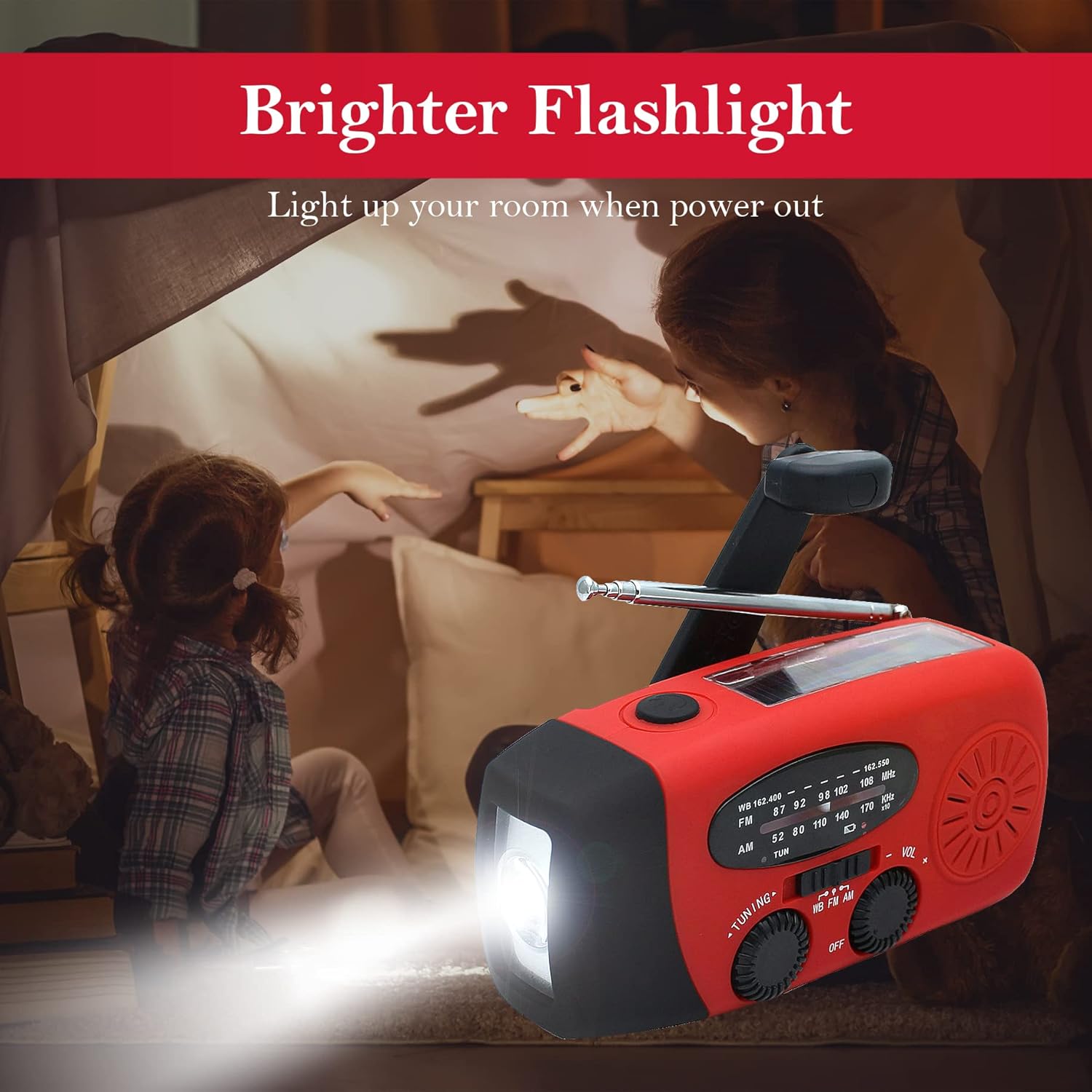
The LED flashlight (1W) is meant to help you see in low light, and it’s paired with a rugged cover design. In real-world emergency kits, lighting is one of those “you only notice when you don’t have it” features—so bundling it here reduces the number of separate items you have to pack.
And then there’s the power bank angle. The radio includes a 2000mAh built-in Li-ion battery intended to charge most USB-powered devices until power returns. The intent is clear: enough to support important calls to family or emergency services, or at least keep your phone functional when it matters.
Power options: the good news (and one limitation)
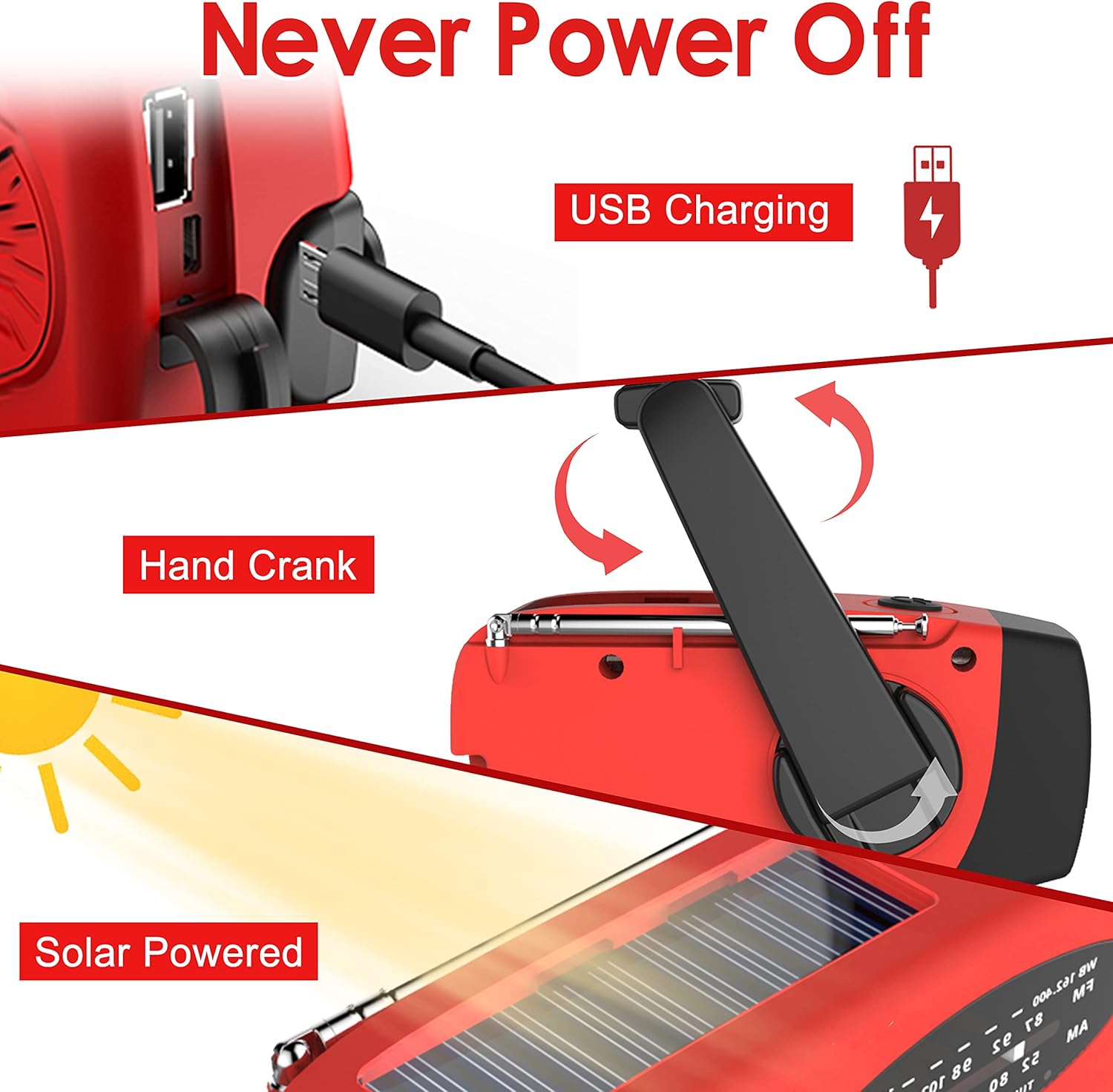
This model leans heavily into “multiple power sources,” listing three: hand crank, solar panel, and its built-in rechargeable battery.
- Hand crank is the most dependable when the power is out.
- Solar is included as a backup, but the brand notes that solar energy conversion current is small. It’s positioned for urgent situations or to protect the rechargeable battery—not as a normal everyday charging method.
That’s the key limitation to keep in mind. If you expect solar to fully replace wall charging, you may be disappointed. It can work as a safeguard, but it’s not marketed as a high-output charger.
Also, the included note is practical: in prolonged outages where batteries are used up, crank + rechargeable battery + solar are meant to keep the radio running. Still, how much you get out of solar will depend a lot on conditions (light, duration), so it’s smarter to treat solar as “backup,” not your main plan.
For what use cases it makes sense
This is the kind of emergency radio you buy when you want:
A compact NOAA alert receiver you can take outdoors or keep in a household kit, plus lighting, plus a basic USB power boost.
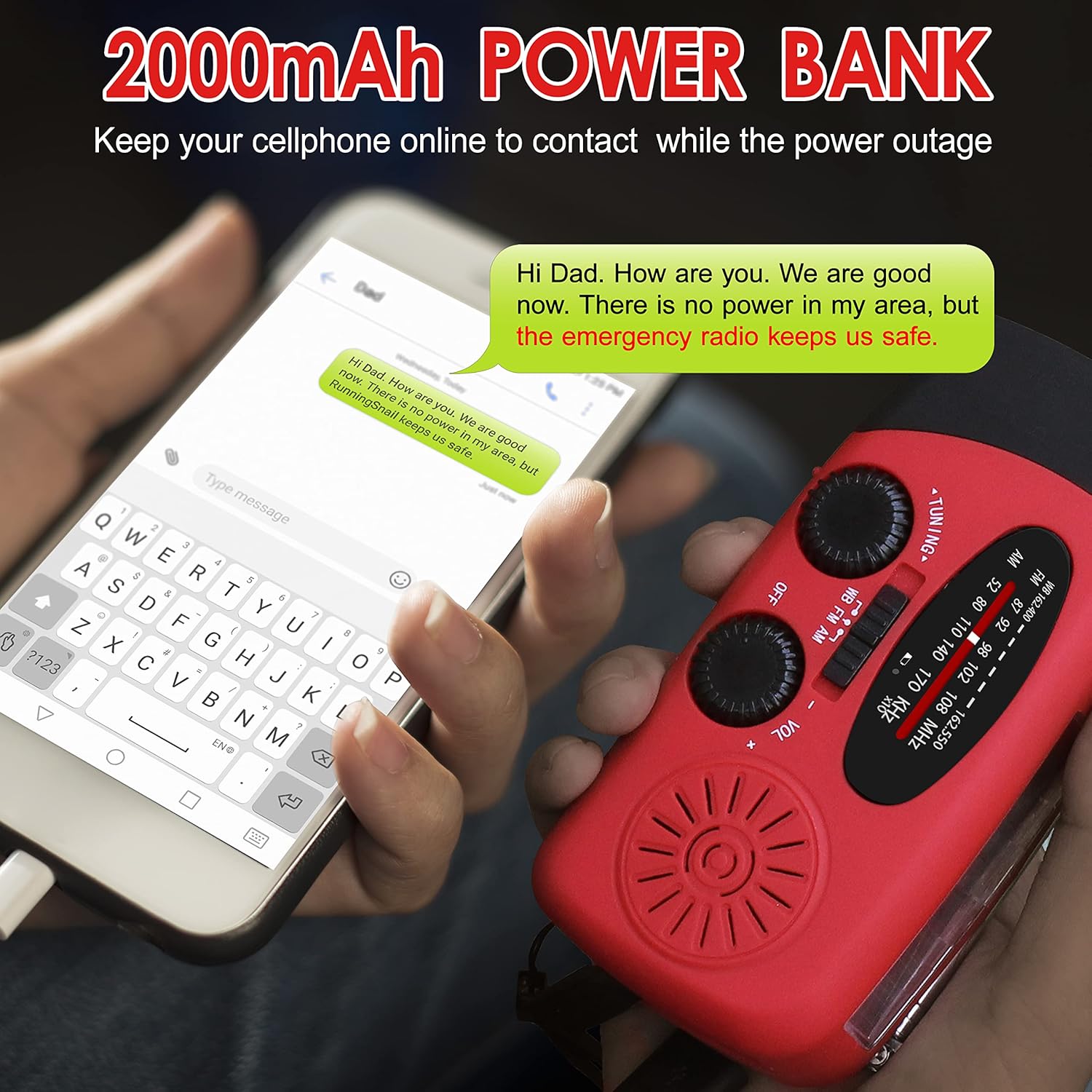
A micro example: imagine a late-day severe weather event—phones start dropping battery fast, and cell service gets unreliable. You grab the emergency radio to catch weather alerts, then use the included 2000mAh power bank capability to keep your cell phone alive just long enough to check in or contact help.
Where it shines most is in “time-sensitive information + basic survival support.” It’s not trying to replace a full electronics setup, it’s trying to cover the essentials when things go wrong.
Where it may not be the best match
Not every emergency plan needs (or benefits from) a crank-and-solar approach. You may want to skip this type of radio if:
- You primarily want something for entertainment or everyday listening—its value is in emergency preparedness.
- You expect solar to behave like a regular charger. The product specifically suggests solar is for urgent situations or battery protection due to small conversion current.
- You need high-capacity charging for power-hungry devices. The described power bank is 2000mAh, which can help, but it’s not positioned as a replacement for larger power stations.
It’s also worth noting that solar crank radios can be slower and more effort-based than plug-in charging—so if you hate the idea of cranking, you’ll want to plan around the rechargeable battery as your first line.
The essentials: specs you should care about
From the available details, here’s what matters most before you buy.
Tech specs
- Type: Emergency hand crank AM/FM NOAA portable weather radio
- Power bank capacity: 2000mAh built-in Li-ion battery
- Flashlight: 1W LED flashlight with rugged cover design
- Dimensions: 51.82.4 inch
- Weight: 0.5 lb
- Power sources: hand crank, solar panel, and built-in rechargeable battery
- Solar charging note: solar conversion current is small, intended for very urgent situations or to protect the rechargeable battery, not usual charging
- Warranty: 18-month warranty
Is it worth it?
Worth considering if you’re building an emergency kit that needs NOAA weather alert capability plus a flashlight, and you want at least a small, built-in way to top off USB devices during outages. The 3-way power concept (crank, solar, rechargeable battery) is the main “why,” because it reduces single-point failure.
It might not be for you if you’re counting on solar to do the heavy lifting like a standard charger, or if you expect the power bank to run demanding devices for long periods. In that case, you may need a different charging setup alongside—or instead of—this kind of compact emergency radio.
A practical way to decide: if your priority is quick access to alerts and basic phone support when power is out, this fits the role. If your priority is long-duration charging from solar, the included solar limitation is a sign to adjust expectations.
Quick answers
What’s the main purpose of this radio?
It’s built to deliver emergency weather alerts via NOAA weather radio, with added flashlight and emergency USB charging support.
Does it rely on wall power?
No. It’s designed with multiple power options, including hand crank, solar, and a built-in rechargeable battery.
Can it charge a cell phone?
The description says it can work with most USB-powered devices and provide emergency power for important calls, using the built-in 2000mAh battery.
Is solar meant to be the normal charging method?
No. The brand notes solar conversion current is small, so it’s for very urgent situations or to protect the rechargeable battery rather than usual charging.
Buying verdict
If you want a compact, redundancy-focused emergency weather radio with flashlight support and an emergency USB power bank, RunningSnail’s hand crank NOAA radio is a sensible preparedness tool—just treat solar as backup, and don’t expect it to replace regular charging.