



Rubbermaid Commercial Stainless Steel Monitoring Thermometer 60–580°F 🍽
Product description
This stainless steel oven and grill thermometer gives a quick visual check of cooking temperatures, helping ensure food is cooked safely and consistently. It reads a wide heat span and installs hanging or standing, making it useful for busy kitchens and weekend barbecues.
Key Points

The thermometer shows true oven temperature instantly so cooks can monitor internal appliance conditions without relying on guesswork. It operates mechanically and requires no batteries, which removes downtime and ongoing maintenance. The shatter proof lens and full stainless steel body make it sturdy enough for commercial kitchens while remaining simple to use at home. 🍖

Benefits
Because it covers a broad range from low roasting to high-heat searing, this gauge helps with multiple cooking methods including ovens, toaster ovens, grills, and smokers. The instant needle response gives immediate feedback, so adjustments to heat are faster and less disruptive. For users who prefer analog tools the lack of electronics can be an advantage during long shifts or outdoor use. Note that it reads oven temperature rather than internal food temperature, according to the manufacturer, so you may still want a probe thermometer for precise doneness checks. 🔥
Technical Specifications
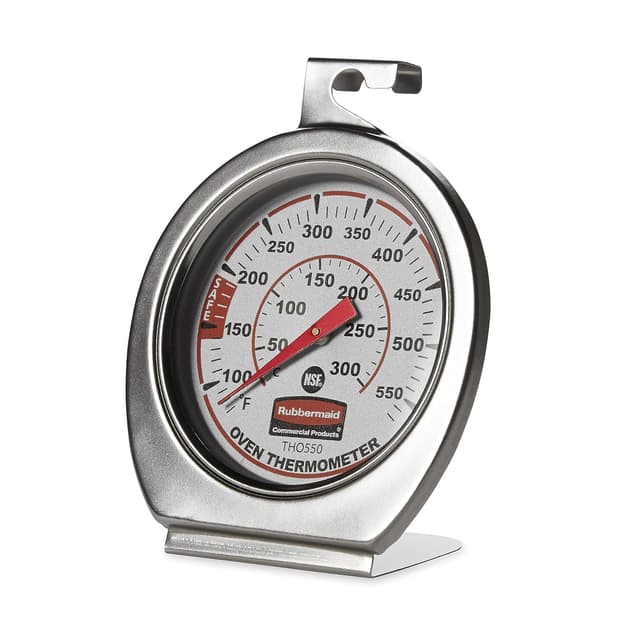

- Name: Rubbermaid Commercial Products Stainless Steel Monitoring Thermometer
- Temperature range: 60-580°F (20-300°C)
- Construction: Stainless steel body with shatter proof lens
- Power: Mechanical operation, battery free
- Certification: NSF certified for food and kitchen use
- Mounting: Can be installed hanging or standing
Usage Recommendations
Place the thermometer where it can be seen through the oven or grill window without obstructing food placement. For ovens install it on an oven rack or hang from a rack hook so the probe faces the oven cavity, which helps reflect true ambient cooking temperature. When using on a grill or smoker avoid direct flame contact with the dial to preserve the lens and reading accuracy. Also, allow a few minutes for the gauge to stabilize after major temperature changes to get the best reading. 🧰
Consider that analog gauges may drift over many years or after heavy impacts. Calibrate occasionally by comparing with a reliable digital thermometer at a known temperature point, and replace if needle movement becomes inconsistent.