

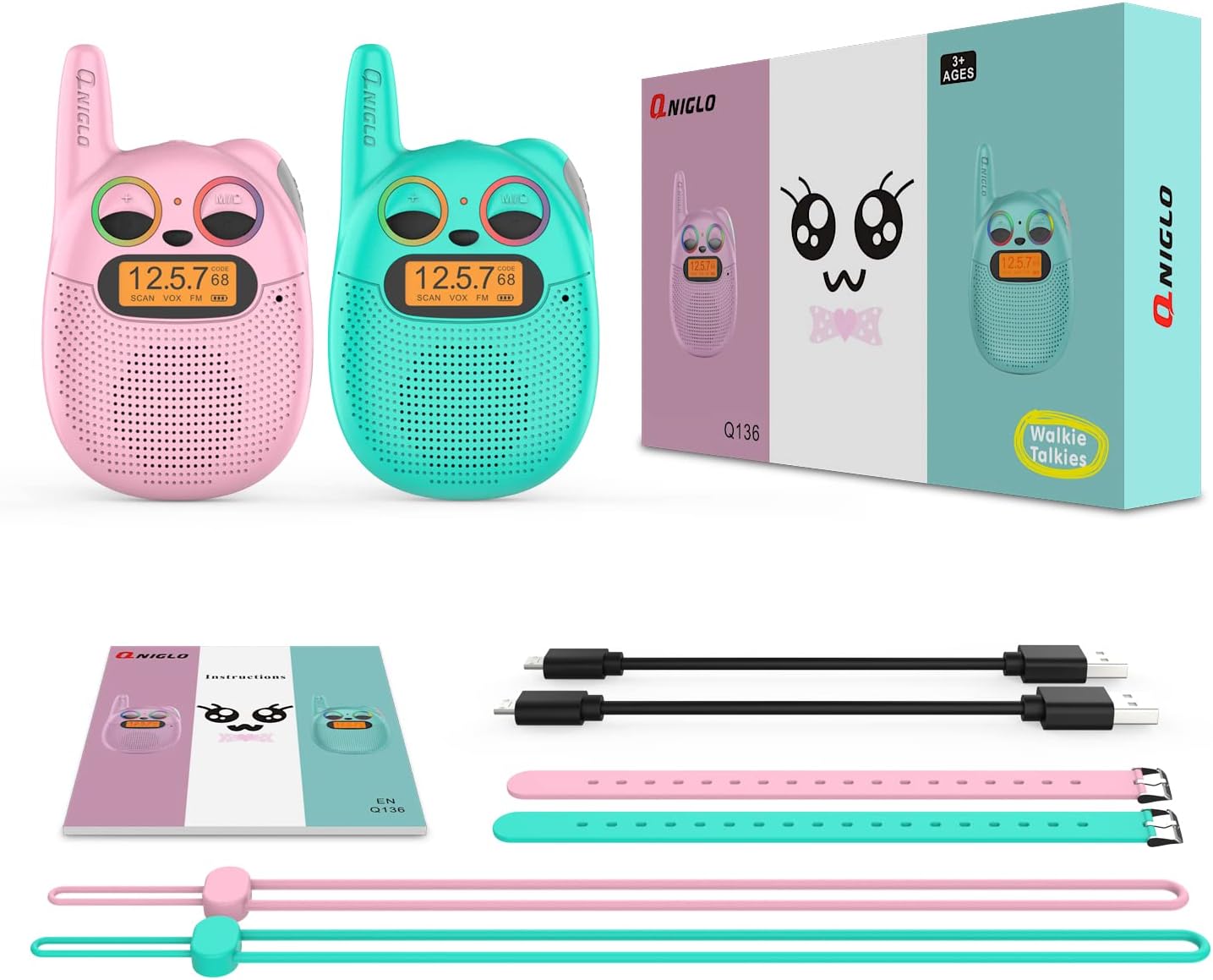
QNIGLO Walkie Talkies for Kids (Ages 3–12) with 3-Mile Range, 22 Channels & Rechargeable Battery
Reviews
Price
Product description
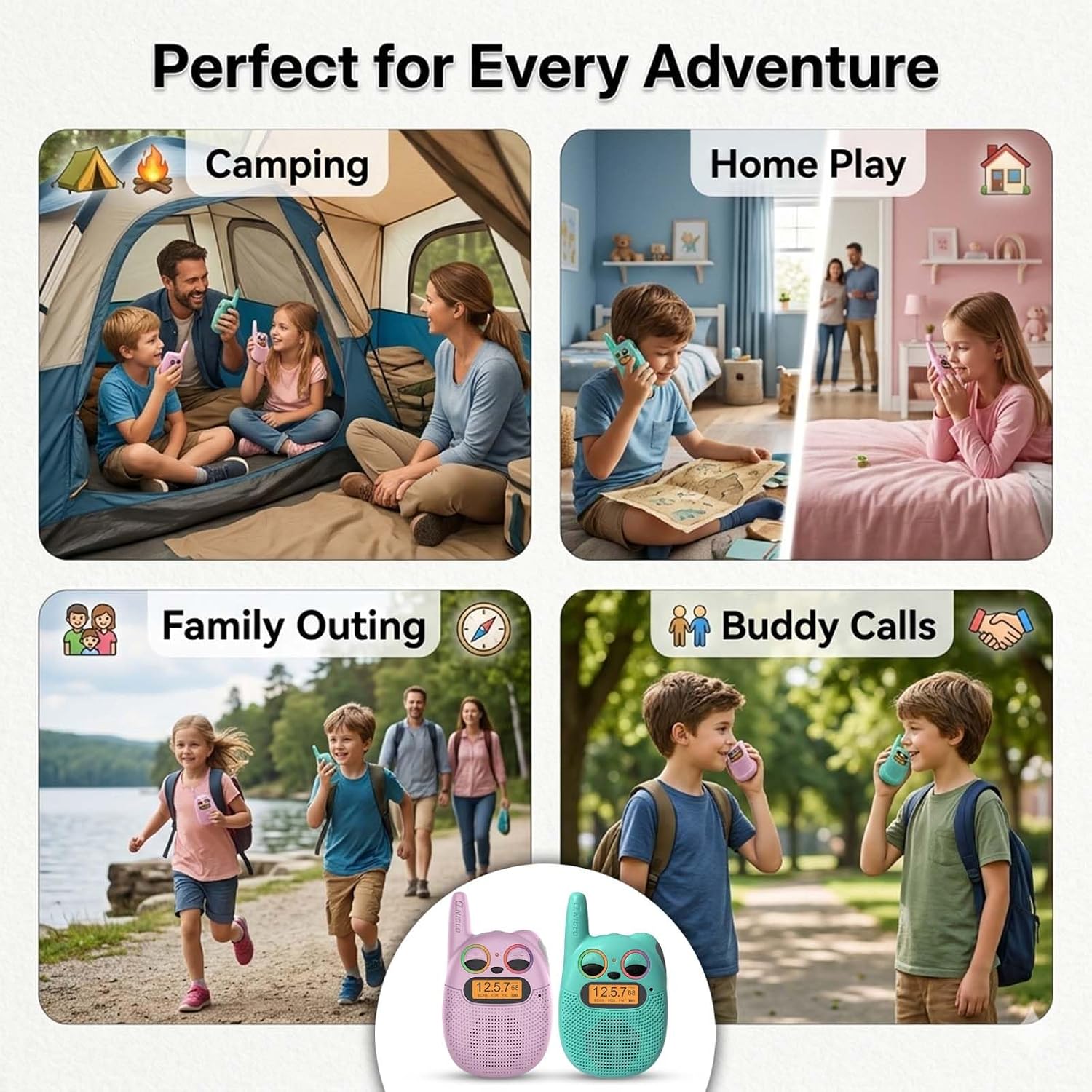
If your goal is to get kids outside and talking to each other, these walkie talkies are built for that moment: you’re on a camping trip, a neighborhood hike, or just exploring the yard, and they can stay in contact without relying on a phone. On paper, the appeal is pretty clear—3-mile long-range communication in open areas, 22 channels for variety, and kid-focused controls that aim to prevent accidental button chaos.
That said, it’s not perfect for every scenario. Long range depends a lot on the environment (open areas vs. trees/buildings), and while the volume/noise features sound helpful, real-world clarity can still vary by distance and interference.
What they’re for (and why parents actually buy them)
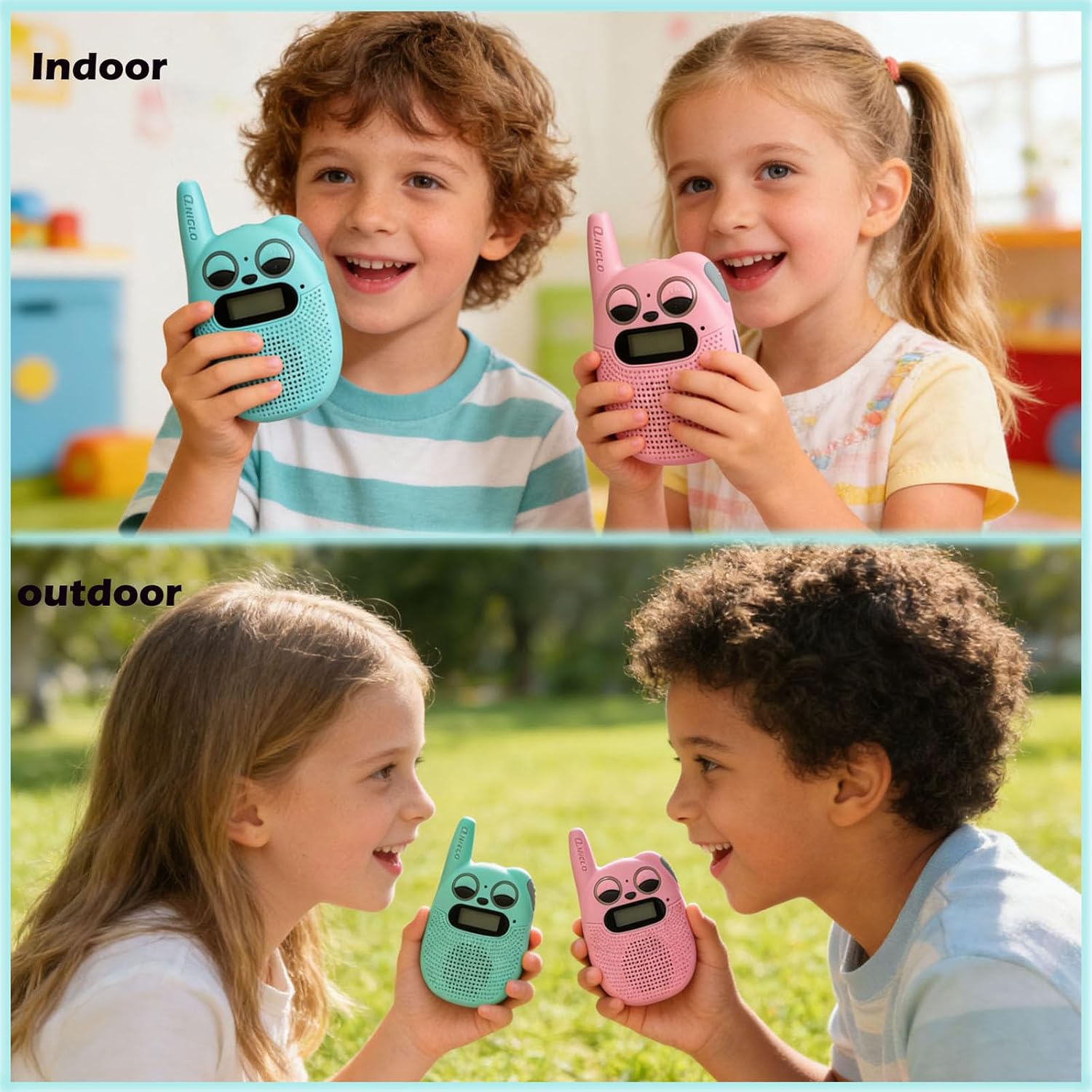
These walkie talkies for kids are meant to turn “come find me” into a fun back-and-forth during outdoor play. The included cues in the description—camping, hiking, exploring—match how kids tend to use radios: short messages while moving around, coordinating hide-and-seek, or checking in during an outdoor “mission.” The 22 channels also help with group play when kids want different conversations or when multiple pairs may be in use.
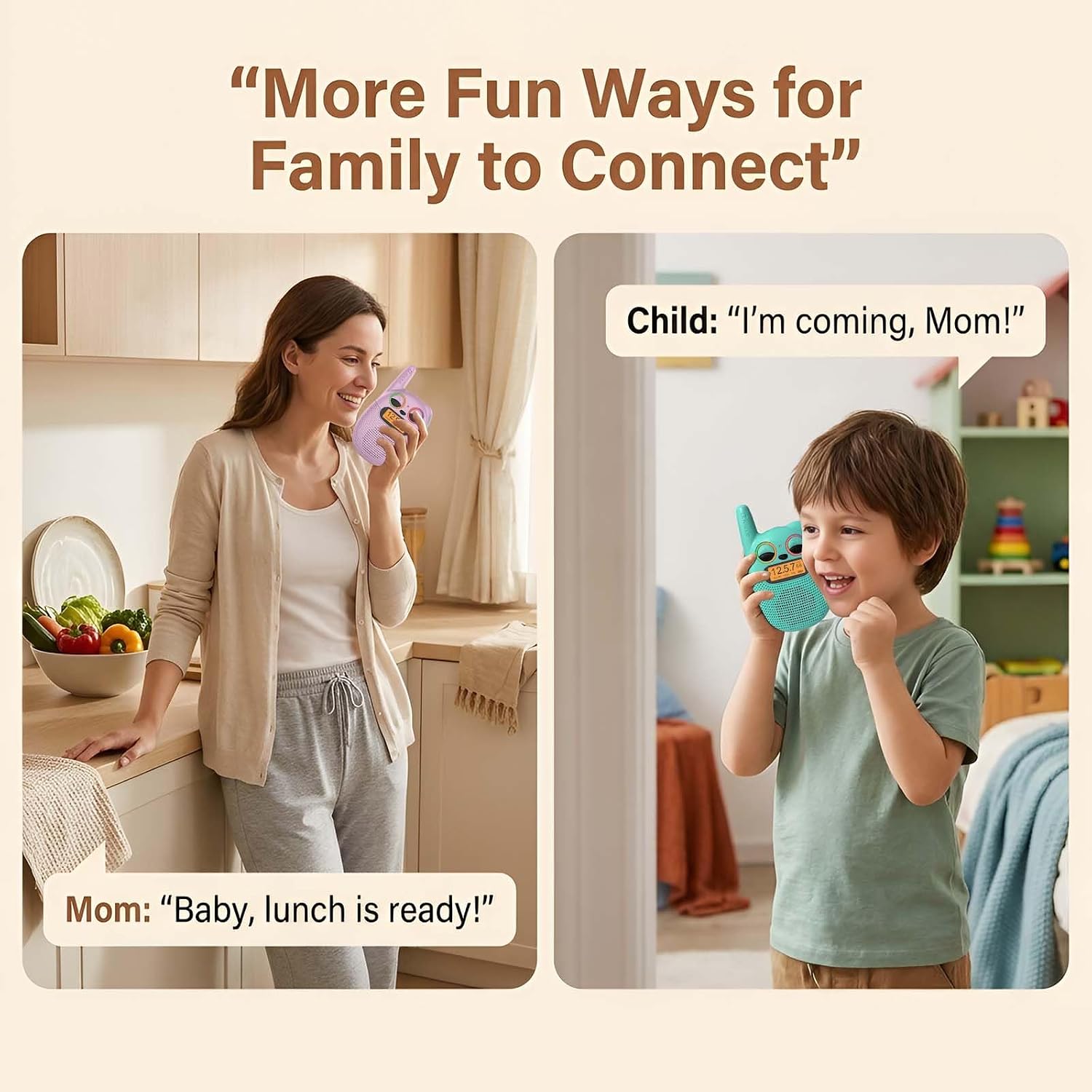
If you’re trying to reduce screen time but still keep kids connected, it’s the kind of gadget that can replace a lot of “Where are you?” from adults. It encourages communication and social skills, but in a way that feels like a game instead of a lesson.
Where the range claim fits in real life
The product positioning is long-range communication up to 3 miles in open areas. That’s a big promise, and the honest way to read it is: this is at its best when you have clear line-of-sight and fewer obstacles. If your setup is more urban, wooded, or full of buildings, the effective range can drop—often noticeably.
One practical way to think about it: if you can see across the area you’re playing in (like open fields or wide paths), you’re more likely to enjoy the full potential. If you’re mostly moving through dense areas, expect more limits.
The controls kids will use (and the features meant to prevent mistakes)
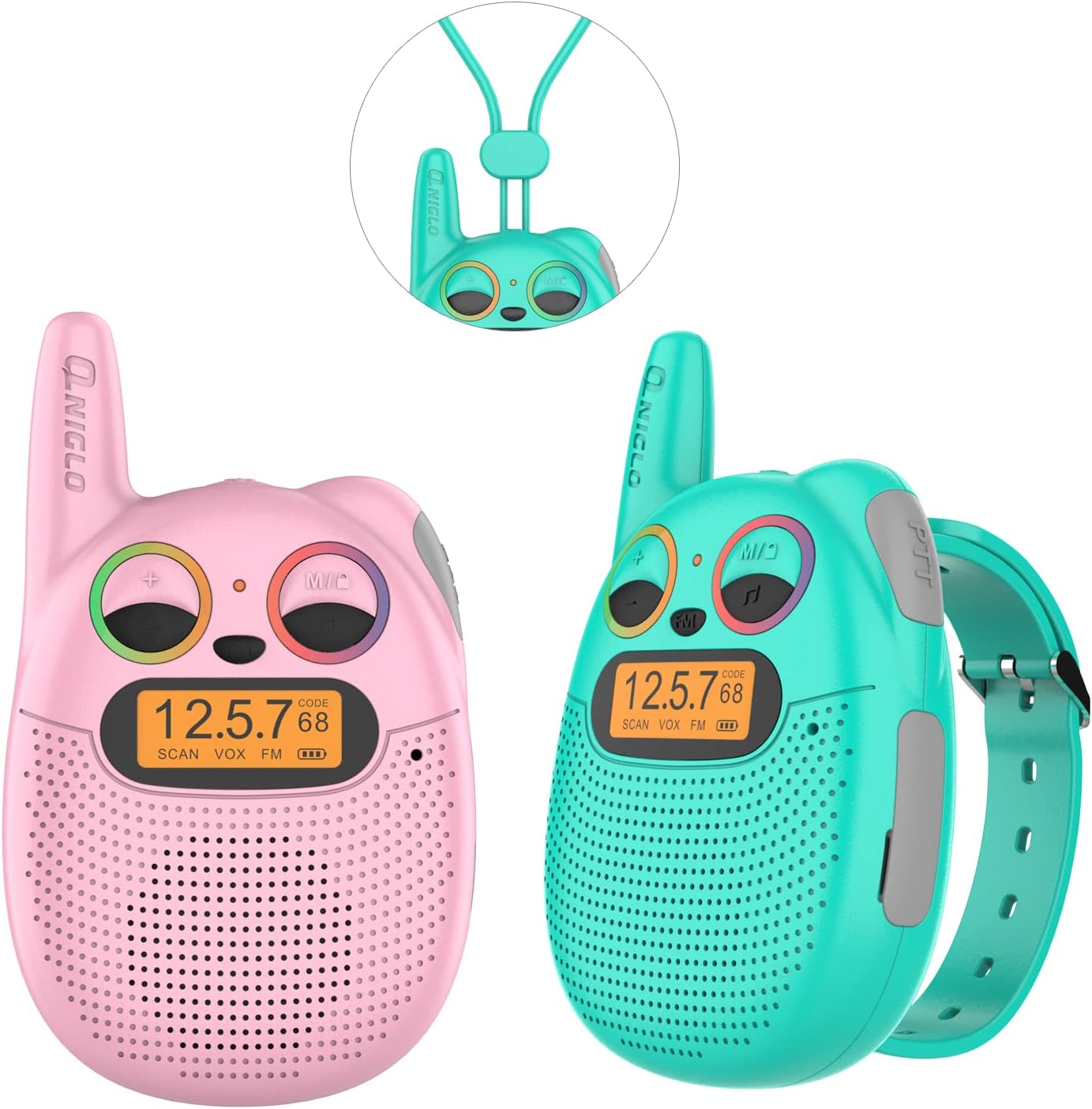
What stands out for daily use is the kid-friendly design approach: the devices are described as lightweight (as little as 58 grams) and sized for small hands. That matters, because a walkie talkie that feels awkward quickly becomes a toy that sits in a backpack.
There’s also mention of an adjustable volume and automatic noise reduction, which is a nice combination for outdoor conditions where background noise can be an issue. The side-mounted push-to-talk button is meant to be easy to reach, and the keypad lock helps prevent accidental channel changes. That lock detail sounds small, but it can save a lot of frustration when kids are excited and tapping everything.
Is it going to be as foolproof as an adult-run radio setup? Probably not. But for ages 3–12, the focus on avoiding accidental changes and supporting clear audio is exactly what you’d want.
Power and playtime: the rechargeable angle
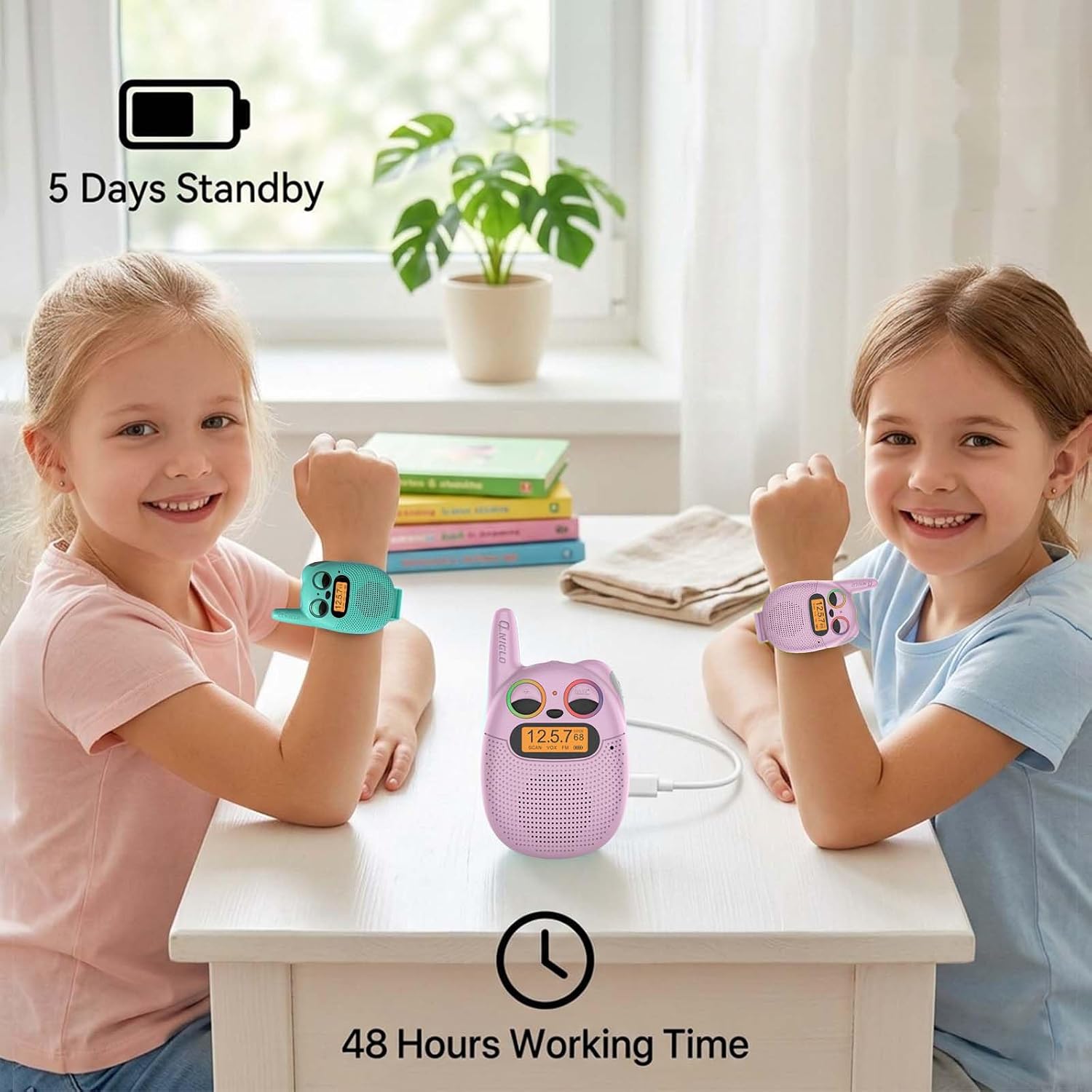
Instead of replacing batteries constantly, these include a built-in lithium-polymer rechargeable battery. The description claims up to 48 hours of playtime and up to 7 days of standby on a single charge.
That’s the kind of feature that makes a real difference if you plan weekend trips, day-long camping, or frequent outdoor outings. In practice, the battery life will still depend on how often kids are transmitting (push-to-talk usage) and how the devices are used, but rechargeable is usually the more convenient setup for families.
Key specs at a glance
- Long-range communication up to 3 miles in open areas
- 22 channels for more variety during play
- Adjustable volume and automatic noise reduction
- Keypad lock to help prevent accidental channel changes
- Ergonomic, lightweight design (as little as 58 grams)
- Rechargeable lithium-polymer battery (up to 48 hours playtime / 7 days standby claimed)
Who it suits best (and who should be cautious)
It’s a solid fit if you want a kid-friendly, outdoor-focused walkie talkie system for ages 3–12—especially for camping, hiking, and neighborhood exploration—where staying in contact without phones adds to the fun.
It might not be the best choice if your kids mostly play indoors, in very obstacle-heavy areas, or if you need consistent long-distance performance regardless of terrain. Also, if you’re expecting “set it once and forget it” performance at extreme distance, it’s worth tempering expectations since the range is specifically described for open areas.
Mini FAQ
Are these meant for ages 3–12?
Yes, the description targets kids ages 3–12 and highlights an ergonomic, easy-to-use design for small hands.
How far can they really talk?

The claim is up to 3 miles in open areas. Real results can vary depending on obstacles and the environment.
Do the radios use disposable batteries?
No—these are described as having a built-in lithium-polymer rechargeable battery.
Can kids accidentally change channels?
The keypad lock is specifically mentioned to reduce accidental channel changes.
Should you buy it?
Worth considering if you’re buying for outdoor adventures where kids can communicate during play—camping, hiking, exploring—and you want rechargeable convenience plus kid-safe controls like a keypad lock and adjustable volume. You’ll likely feel the most “it works” payoff when you’re in open areas and kids are using them as intended (short, interactive check-ins).
Skip or reconsider if you primarily need indoor performance, or if your environment is full of obstacles where long-range claims may not hold up. In short: it’s a fun, practical outdoor communication toy, but the best results depend on the setting and how far apart kids are playing.