

QAUYYW Emergency Radio 37000 mAh with Crank 🔦
Reviews
Price
Product description
This compact emergency crank radio from QAUYYW combines a high-capacity battery with multiple charging options to keep communications and lighting available during outages and outdoor trips. It offers NOAA weather band reception, a bright LED reading light, and a USB output for charging phones, making it useful for camping, storm preparedness, and roadside emergencies.
Key Points
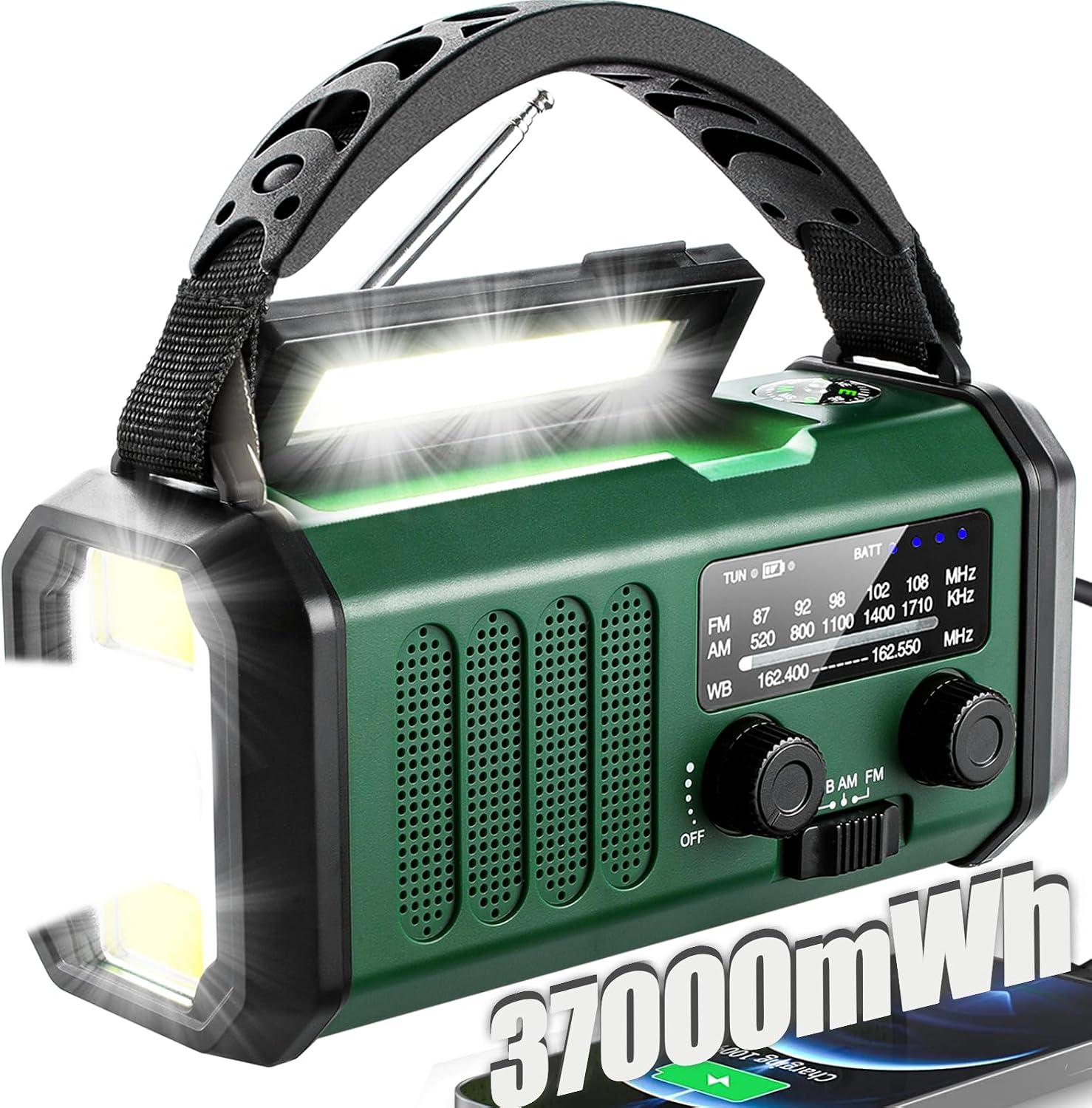
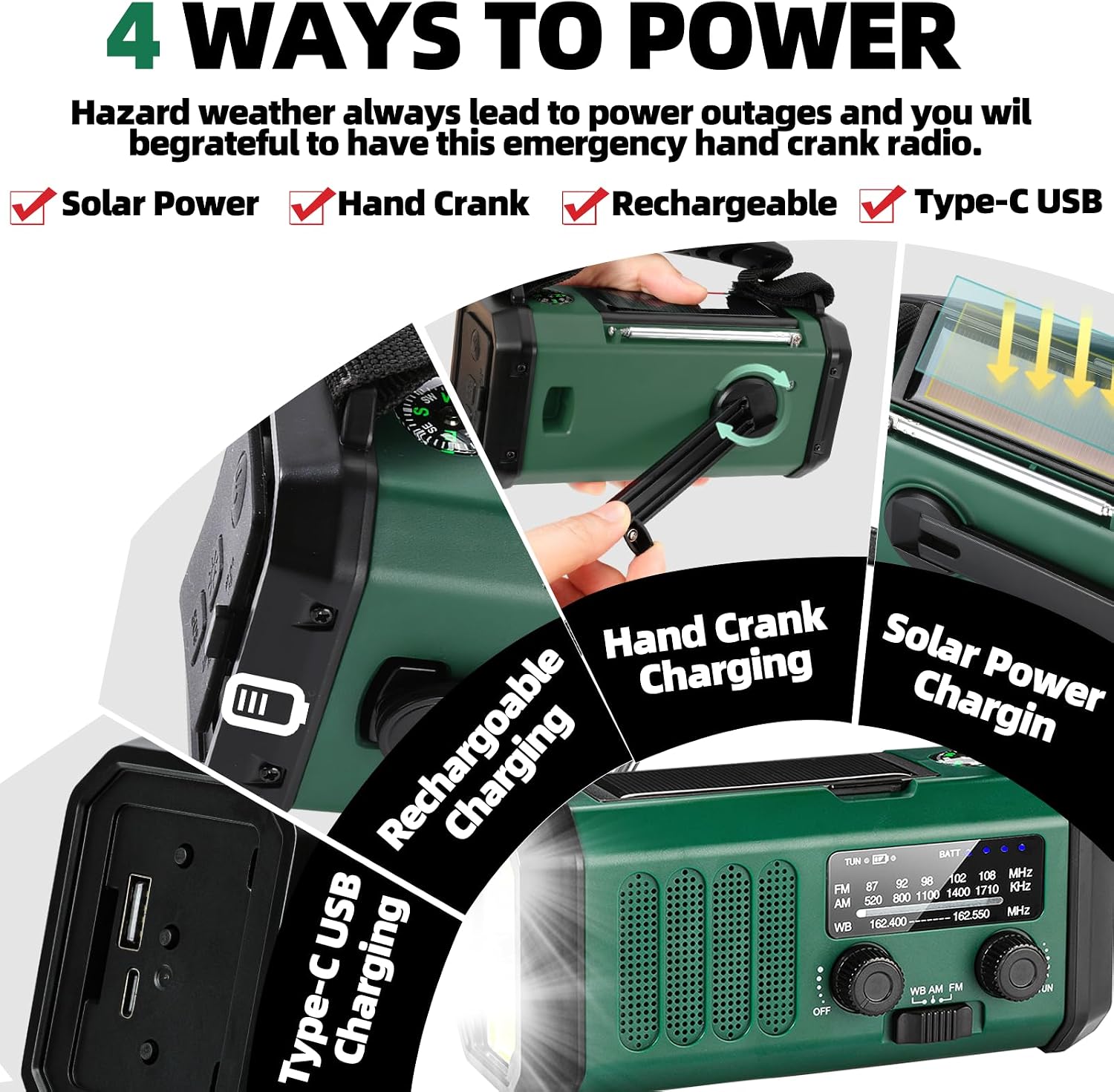
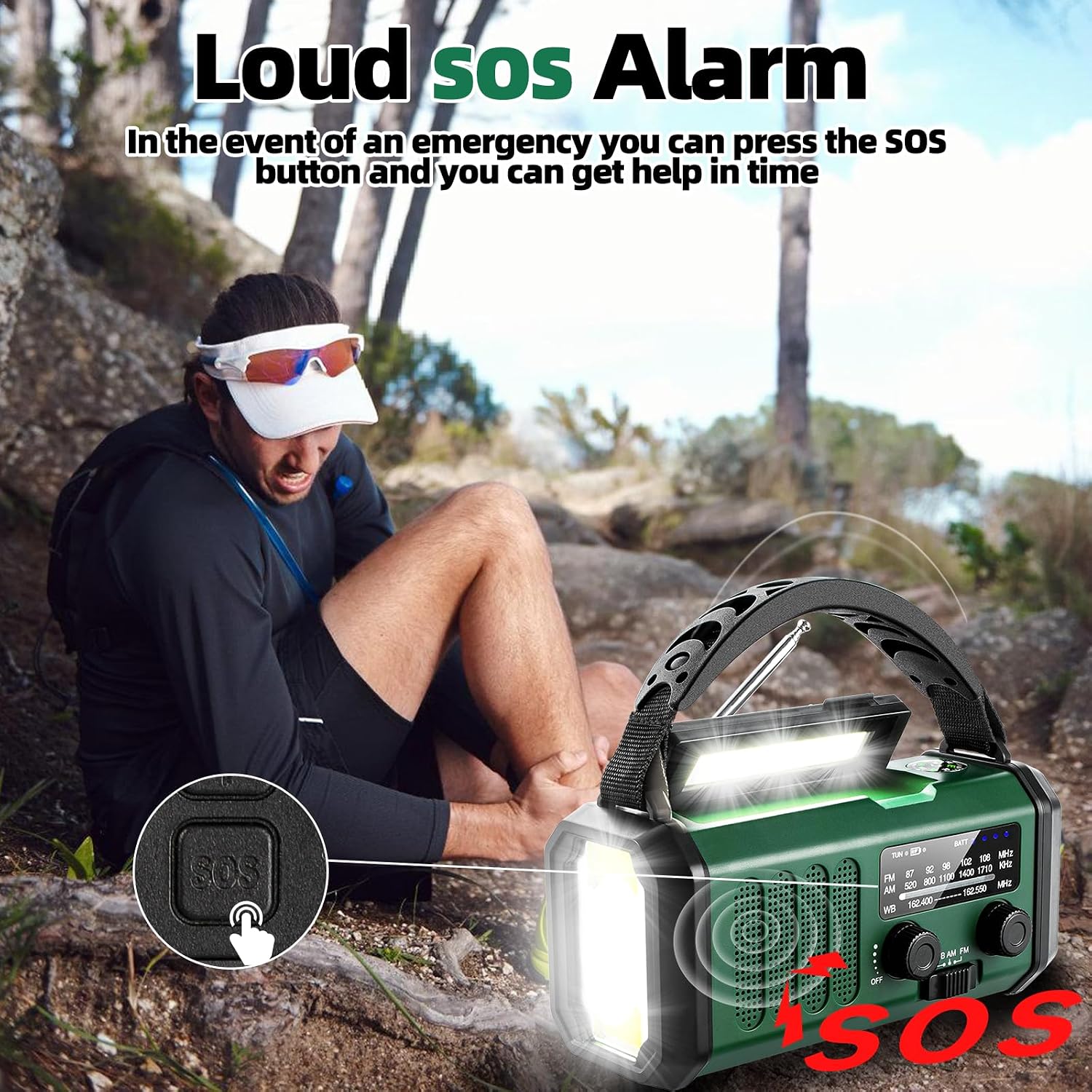
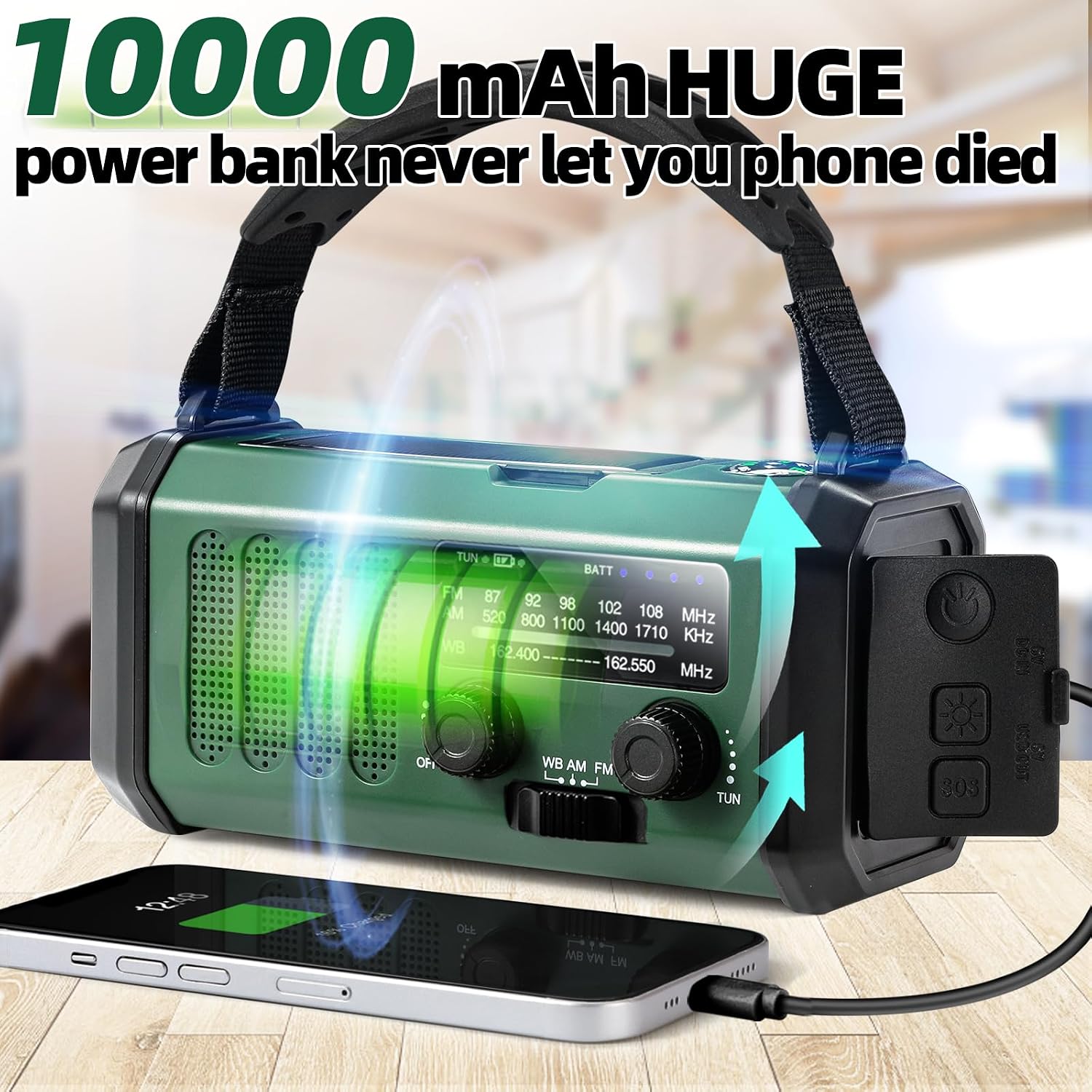
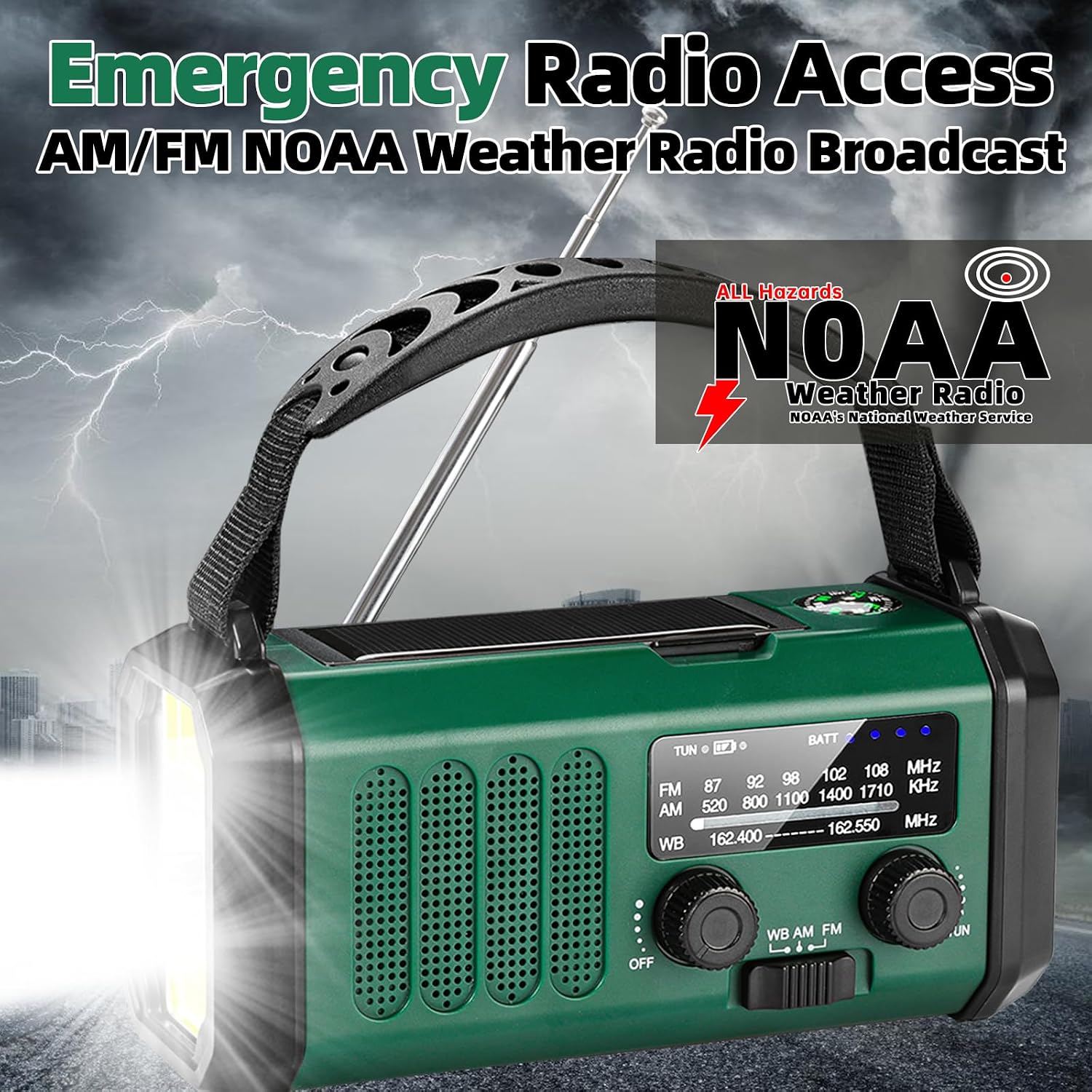
The unit is built around a rechargeable 37000 mWh battery that the manufacturer reports can power up to 25 hours of radio playback, 30 hours of reading light use, or 40 hours of flashlight operation at medium volume. It receives AM, FM, and NOAA weather broadcasts so you can stay informed about local alerts and forecasts. A built-in SOS alarm and flashing light help signal for help in low-visibility situations. The radio can be powered by USB-C charging, hand crank, or solar input, which adds redundancy when mains power is unavailable. ⚡🌤️
Technical Specifications
- Name: QAUYYW emergency crank radio
- Battery capacity: 37000 mWh
- Radio bands: AM 520-1710 kHz, FM 87-108 MHz, NOAA 162.400-162.550 MHz
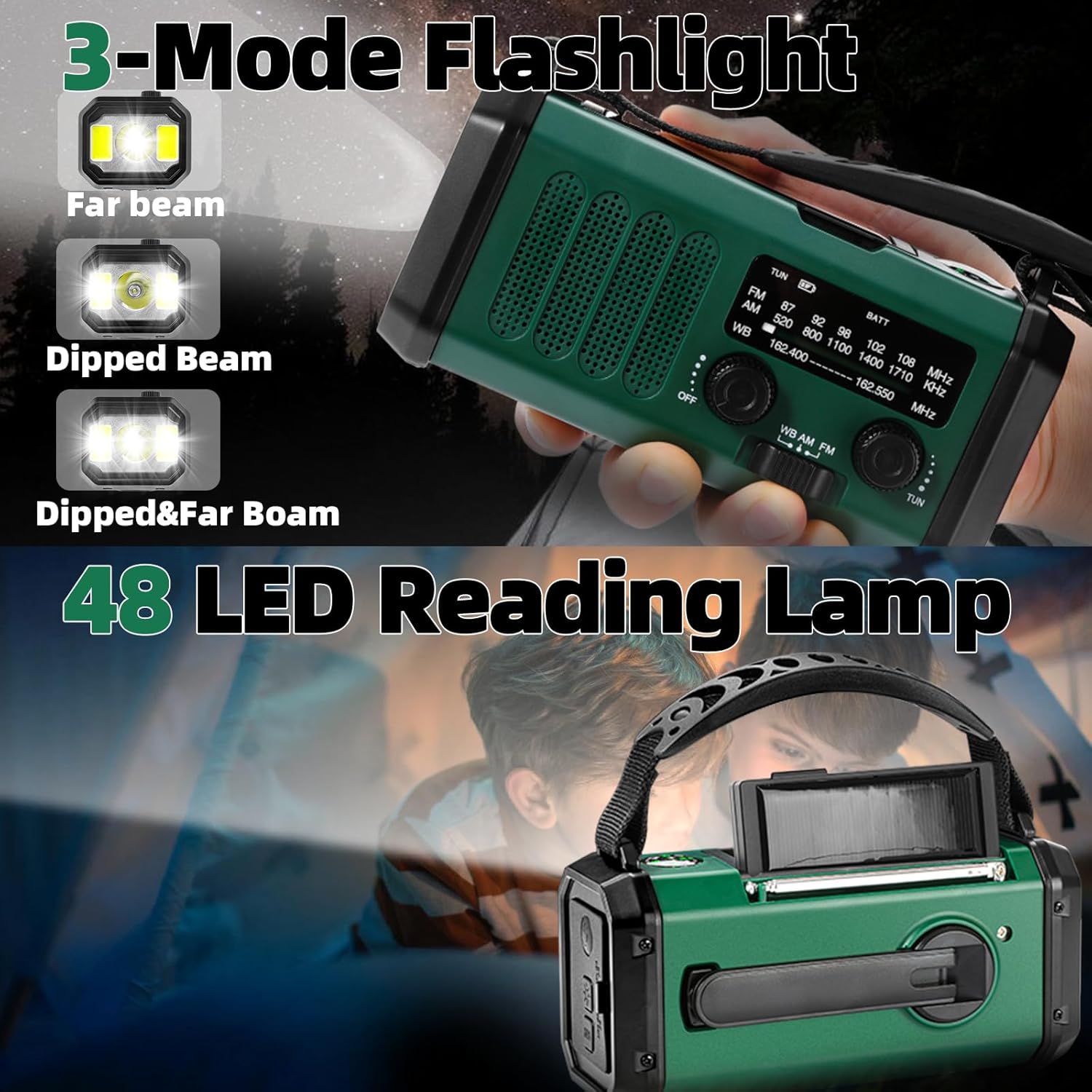
- Lighting: 3 W flashlight and LED reading light with 48 LEDs
- Charging options: USB-C, hand crank, solar panel input
Usage Recommendations
Carry the radio in a go-bag or vehicle glovebox so it is ready when needed. For routine use, keep the battery topped up via USB-C and top off from solar when convenient, because the hand crank is best reserved for true emergencies and short-term use. When camping, use the reading light for close tasks and the 3 W flashlight to illuminate larger areas. The SOS mode should be activated only for real distress situations since the siren and strobe are loud and attention-grabbing. 🏕️
Consider that real-world runtimes can vary according to volume settings, light intensity, and device age, so manufacturer figures may differ from actual performance. The radio is relatively compact and includes a wrist strap and compass for basic navigation support, though the compass is meant for rough orientation rather than precise surveying. Also note that reception quality depends on local signal conditions and antenna positioning, so try extending the antenna or moving to higher ground for better NOAA or FM reception. 📻