

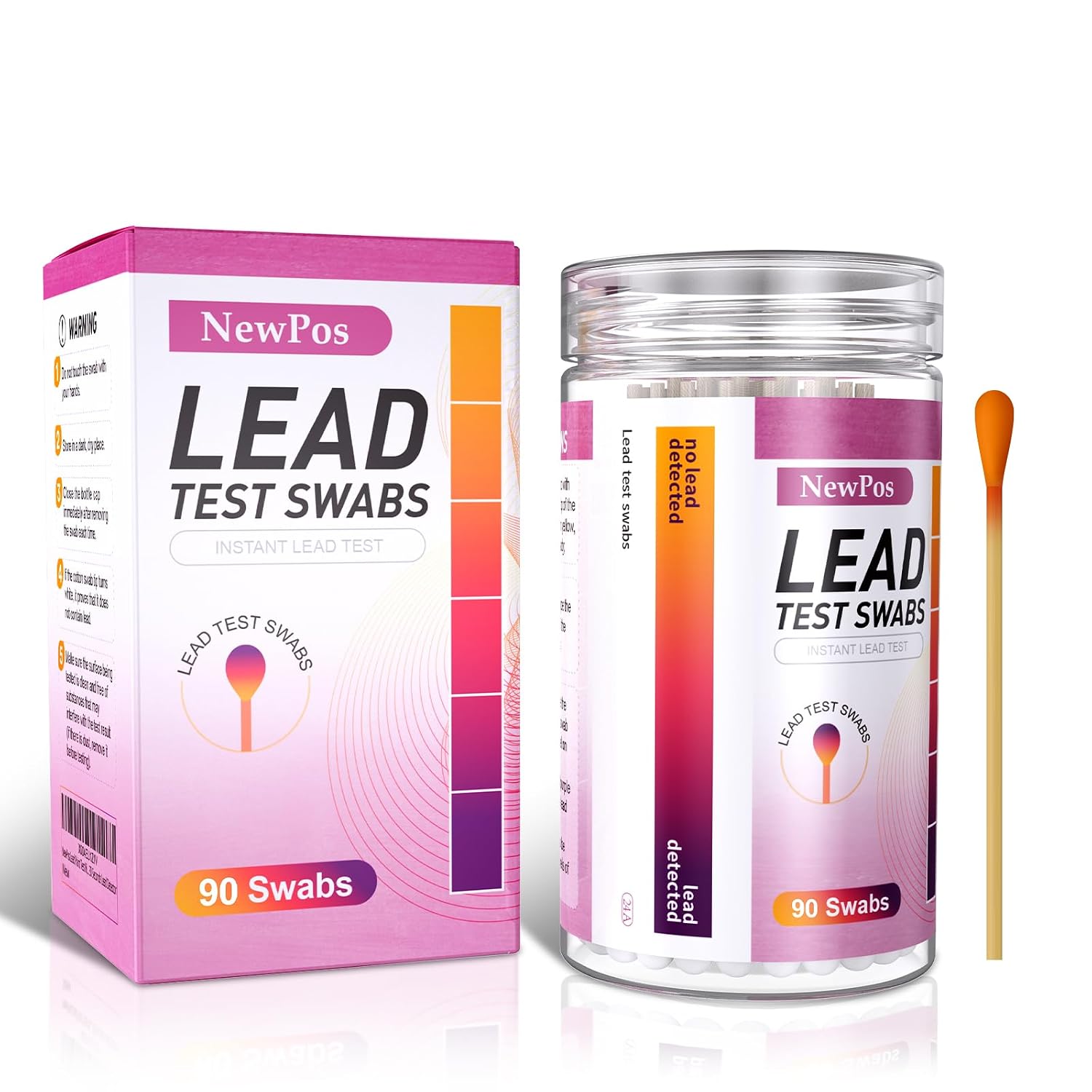
NewPos Lead Test Kit, 30 Swabs
Product description
What matters most
The vinegar-activated test is the standout feature: the swabs are designed to be dipped in white vinegar before use, rather than water. That gives you a simple way to screen certain household surfaces with an item already found in many kitchens.
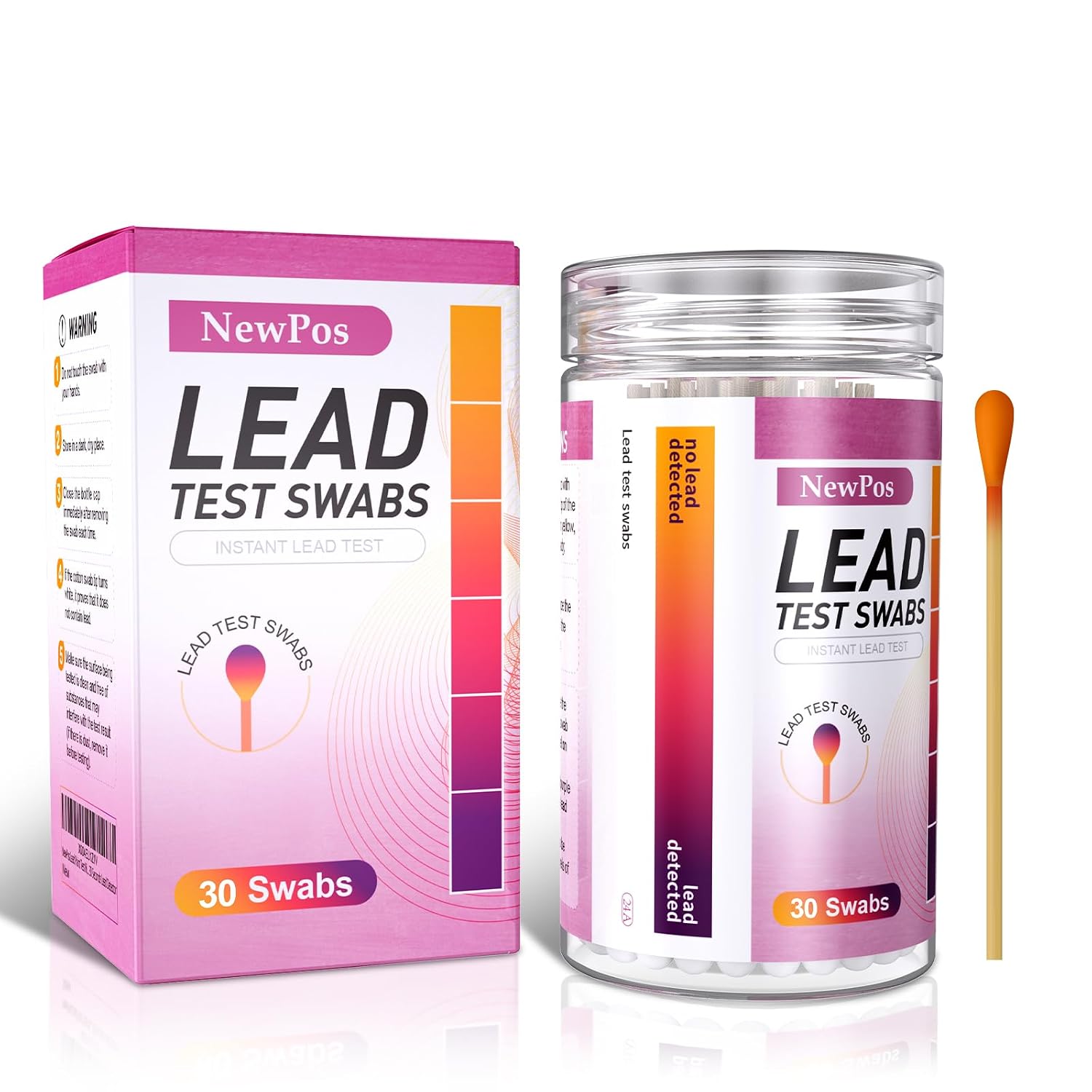
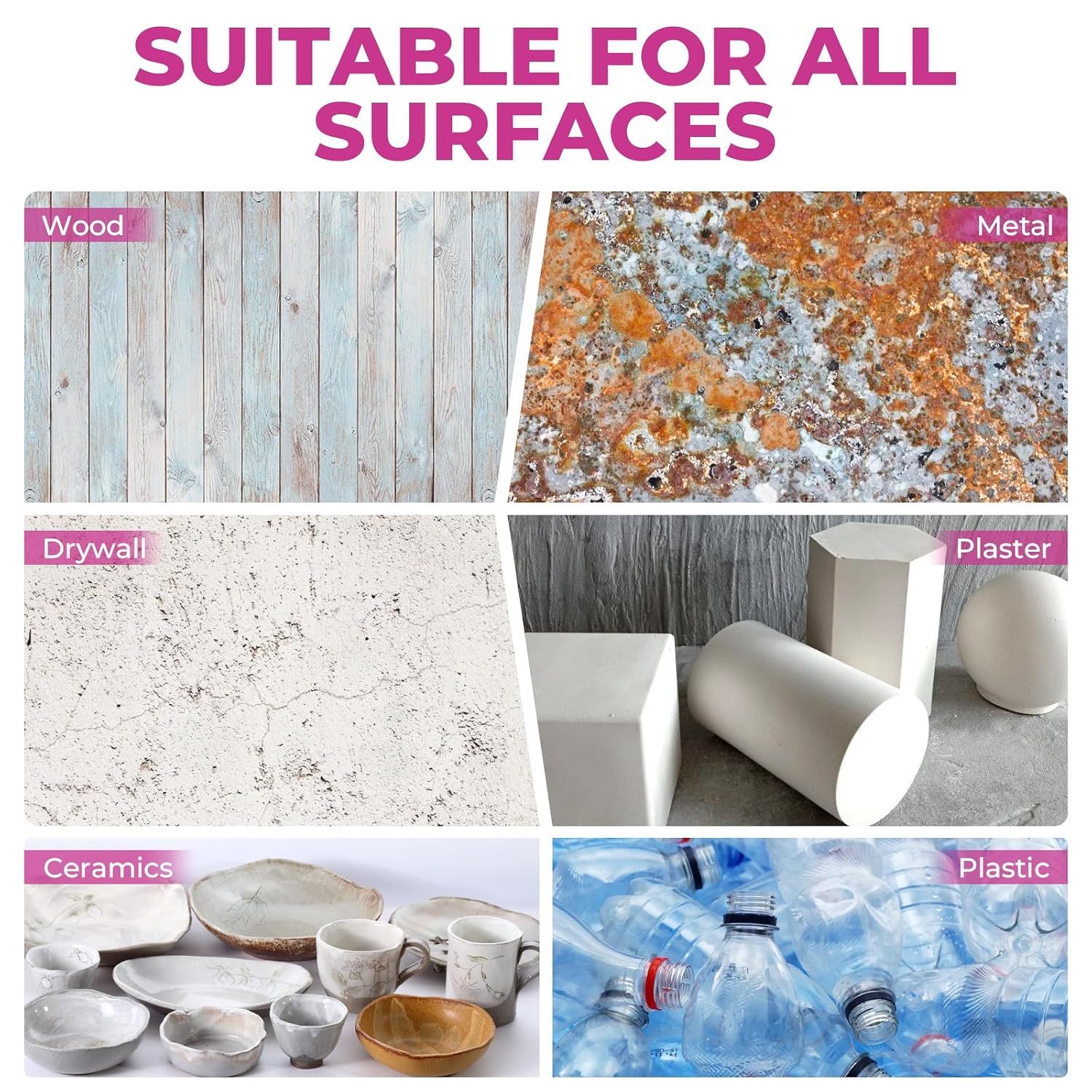
The kit includes 30 swabs and is intended for painted metal and ceramic surfaces, including dishes, cups, pottery, toys, jewelry, woodwork, glazes, and plumbing. That range may be useful when you want to check more than one kind of object around the home.
It makes sense if you want a straightforward, color-based check on a surface. Keep in mind that the instructions describe a result for the area you wipe, they do not provide a lead concentration or a broader assessment of an entire item.

How to use it
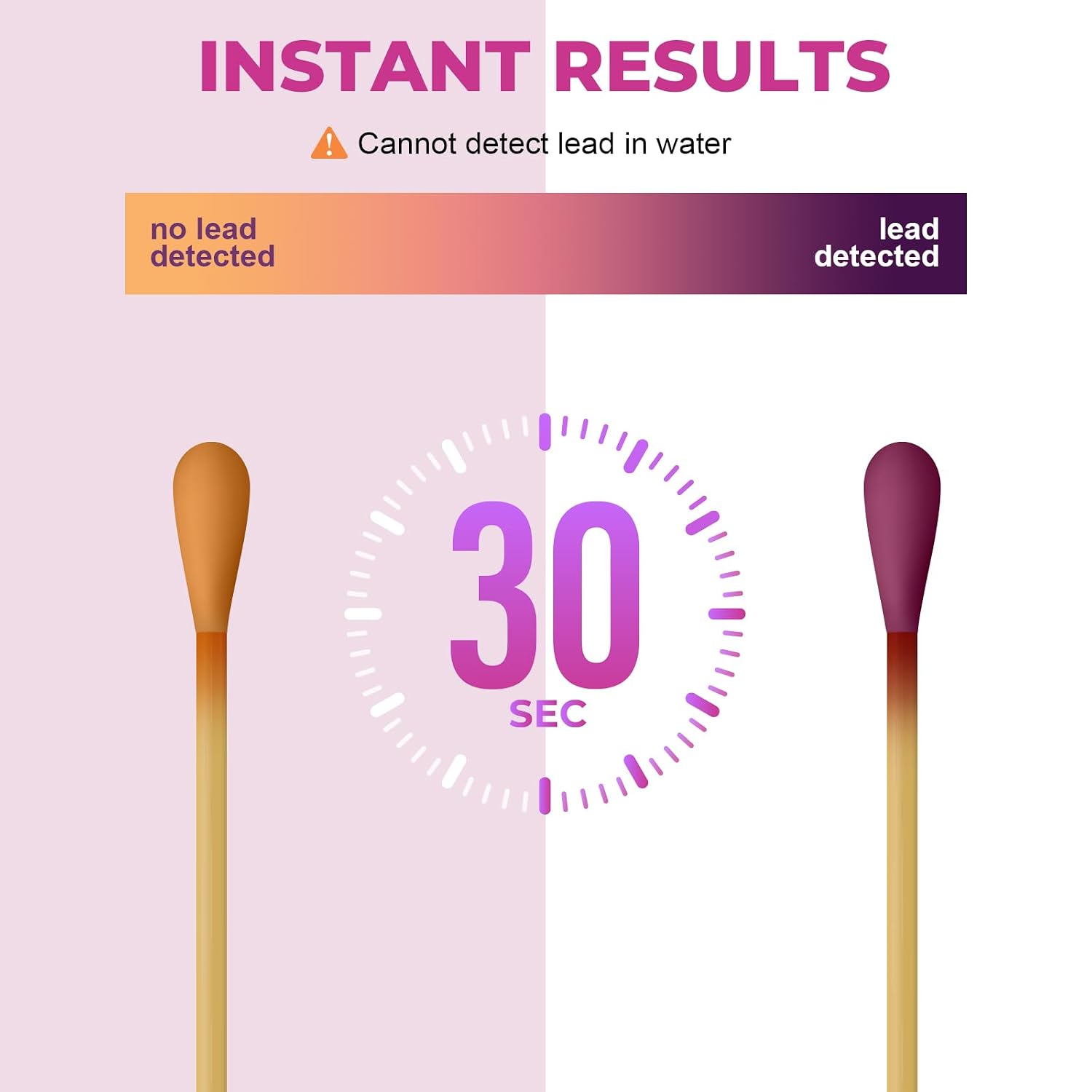
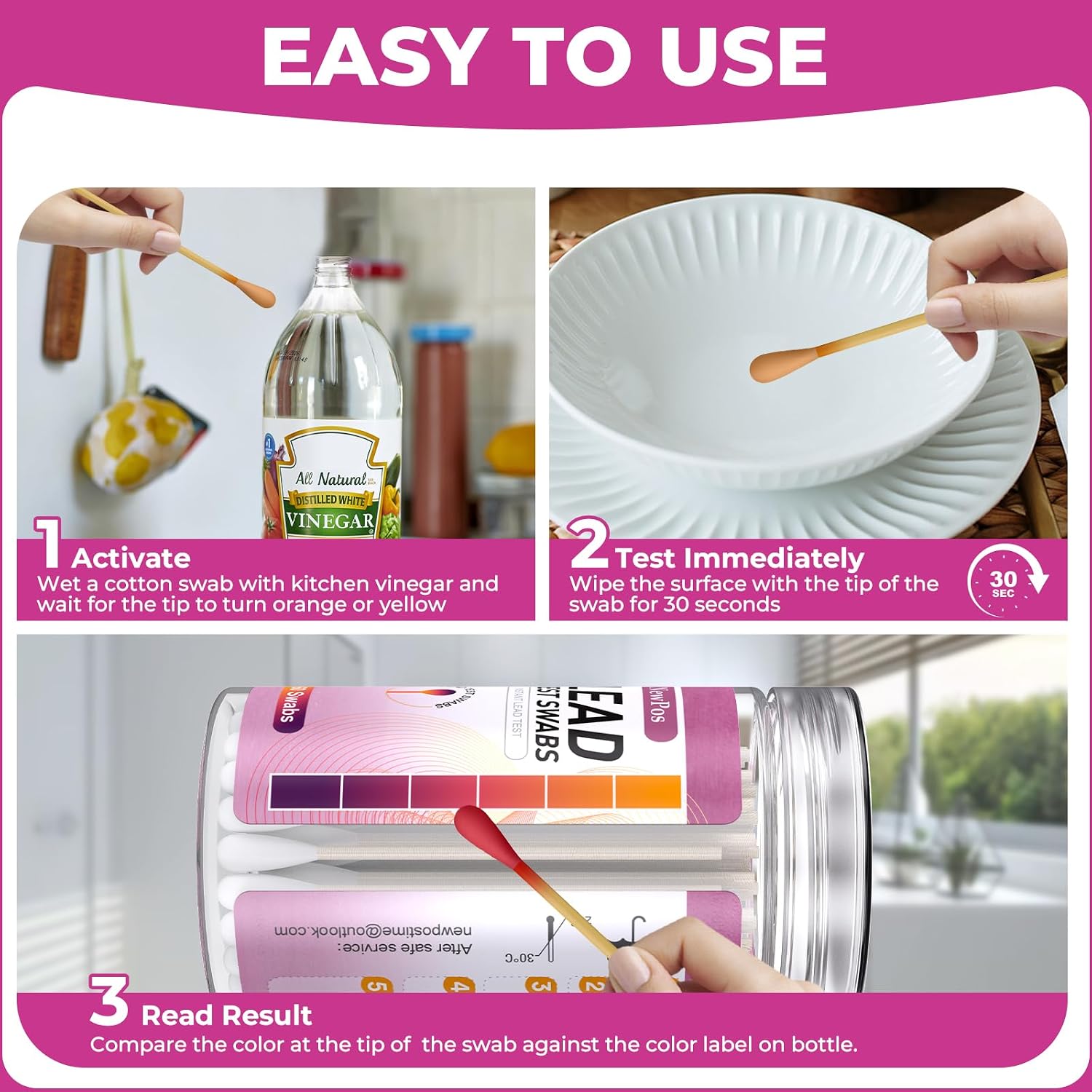
First, dip a swab in white vinegar and wet the tip. The instructions say the tip may turn orange-yellow at this stage. Then wipe the surface with it for 30 seconds. A red, purple, or pink color indicates lead, yellow means no lead was detected by the swab.
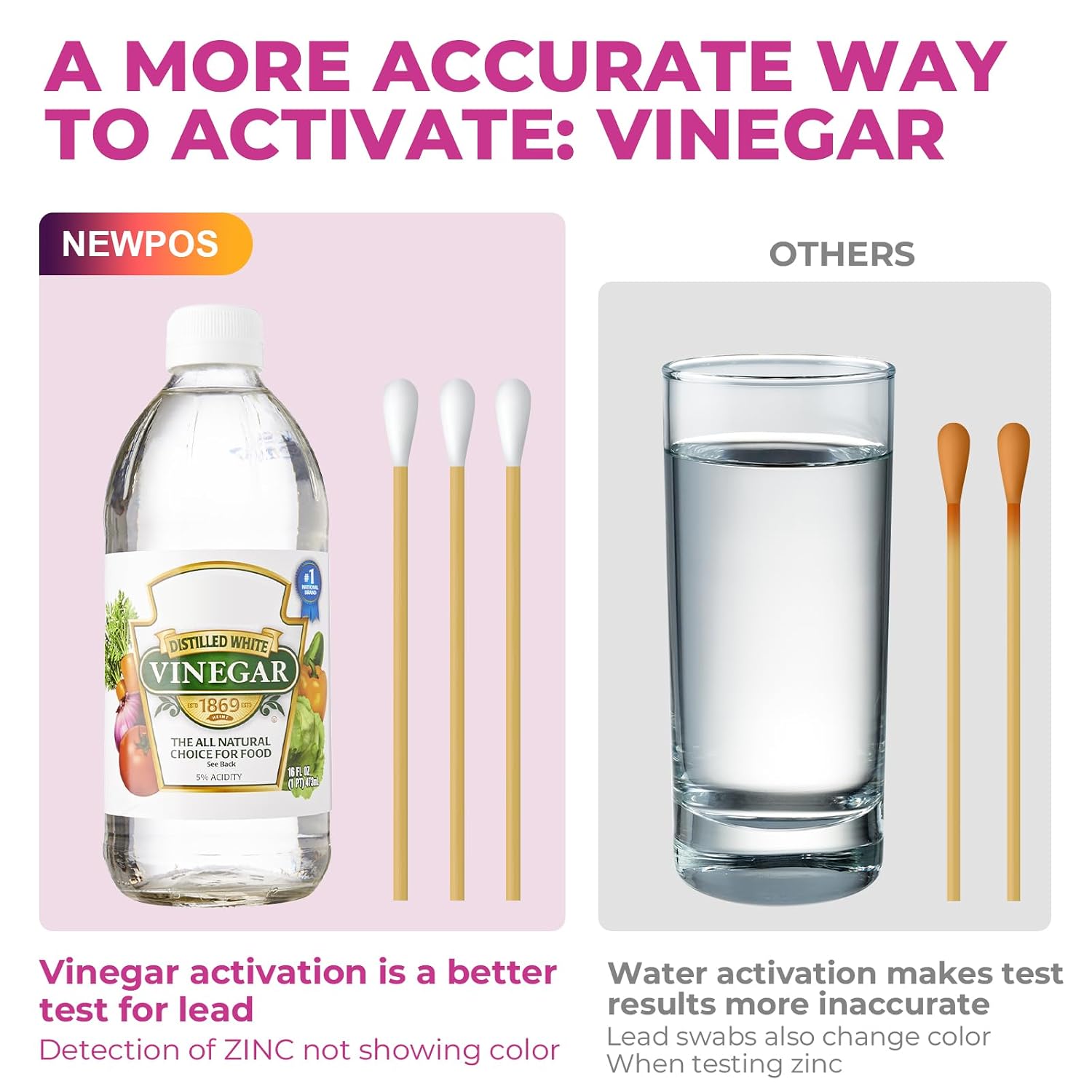
For example, if you want to screen a ceramic cup, you would wet the swab with vinegar, wipe the area you intend to test, and watch for the stated color change. The sequence matters here: vinegar is part of the specified method, not an optional substitute for water.
Not the best choice if you need a numerical reading or want an assessment that goes beyond the specific spot tested, neither is described for this kit.
Practical tips
Use the result as a screen of the area you actually wiped, and follow the stated timing rather than judging the color before the 30-second wipe is complete. The color guide is simple, but it still depends on being able to see whether the tip stays yellow or changes to red, purple, or pink.
The main surface-related drawback is the vinegar. It is acidic, so the instructions warn that it may affect solid surfaces on valuable objects such as antiques. If an item is delicate or hard to replace, this test method may not be a good fit for it. A less acidic approach would avoid that particular concern, but it would not be the vinegar-based method specified here.
Questions before you buy
Do I need vinegar to use the swabs?
Yes. The directions specify white vinegar and say the swabs should be dipped in it for accurate results, water is not the recommended activation method.
What do the colors mean?
Red, purple, or pink indicates lead according to the instructions. Yellow means no lead was detected by the swab.
Can I use the kit on dishes or ceramics?
Those surfaces are included among the stated uses. However, the vinegar warning matters for valuable or antique items, since the acidic liquid may affect their surfaces.
Final verdict
NewPos’s 30-swab kit is most useful for someone who wants to screen a variety of household painted or ceramic surfaces using a vinegar-activated, color-change method. Its practical appeal is the broad list of intended surfaces and a result that is easy to interpret by color. The tradeoff is equally clear: you need white vinegar, and that acidity may make testing valuable antiques unwise. Choose it for routine spot checks where the tested area can tolerate the method, look for a different approach if you need a measured reading or cannot risk altering the surface.