


National Geographic Rock Collection Box 300-piece rock kit 🪨
Product description
This hands-on geology set brings more than 300 real rocks, minerals, and crystals together in one box for curious kids who enjoy exploring the natural world. The National Geographic Rock Collection Box for Kids offers a tactile way to discover geodes, crystals, and polished specimens while learning identification skills and basic geology concepts.
Key Points
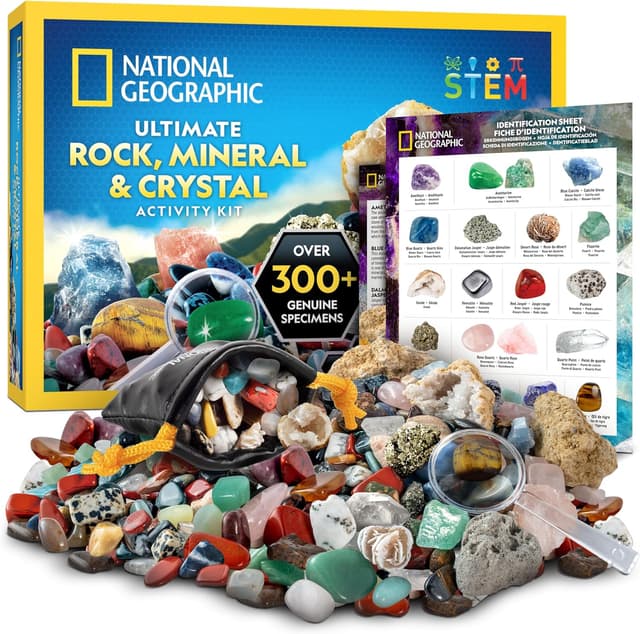
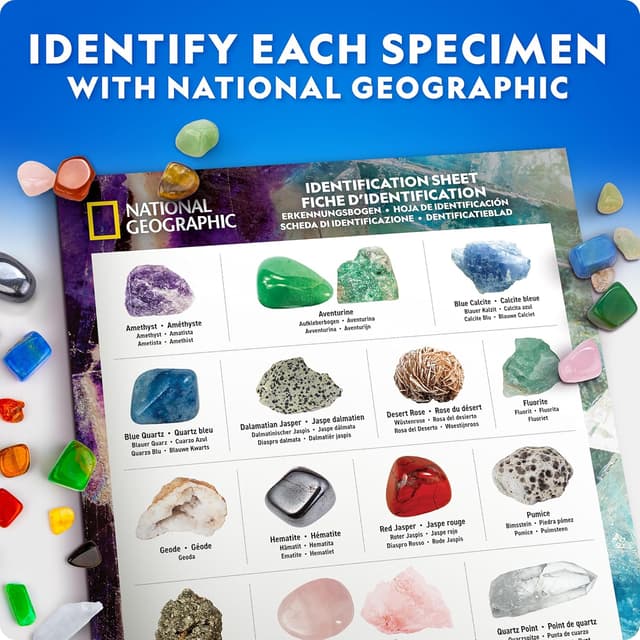
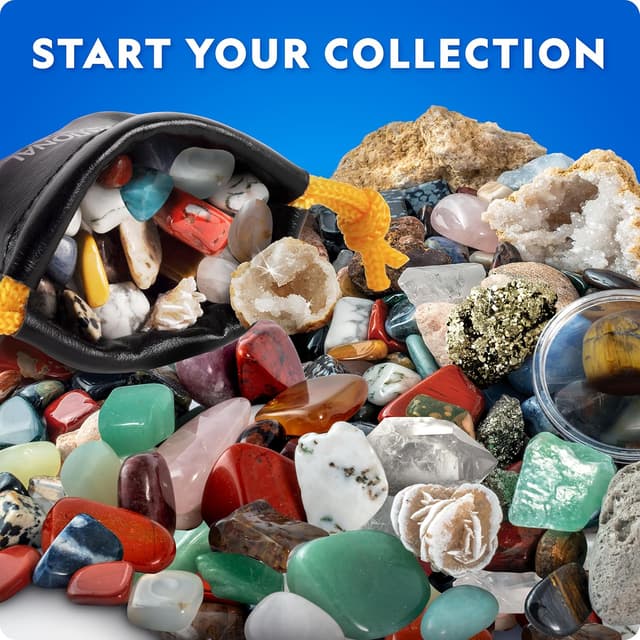
The collection includes over 300 genuine specimens from around the world, giving children a wide variety of textures, colors, and crystal forms to examine. Two premium geodes are included so kids can crack them open and see crystalline interiors, creating a memorable moment of discovery. A full-color Learning Guide and a magnifying glass help young explorers identify common specimens such as amethyst, pyrite, rose quartz, and tiger’s eye, adding educational value to the play experience.
Technical Specifications
- Name: National Geographic Rock Collection Box for Kids
- Number of pieces: 300+ specimens
- Included tools: magnifying glass and full-color Learning Guide
- Notable specimens: amethyst, pyrite, rose quartz, tiger’s eye, selenite
- Packaging: storage bag for keeping the collection organized
Benefits


This boxed set encourages observational skills and curiosity about Earth science through direct handling and study of real samples. Examining different minerals helps kids learn about color, luster, hardness, and crystal structure in a practical way. The included Learning Guide supports self-directed discovery by providing names and brief descriptions so children can match what they see under the magnifying glass. The variety of specimens also makes the kit useful as a teaching aid for classroom projects or home science time.
Usage Recommendations
For safe exploration, supervise younger children when handling small pieces and when cracking geodes. Use the magnifying glass to inspect features like striations and crystal faces, and record findings in a notebook to track observations. Store specimens in the provided bag between sessions to prevent loss and keep the collection tidy. Consider grouping similar types together when displaying the set to make identification exercises easier, and rotate which specimens are examined to keep interest high.