

Lehoo Castle Doctor Kit for Toddlers 3-5
Reviews
Price
Product description
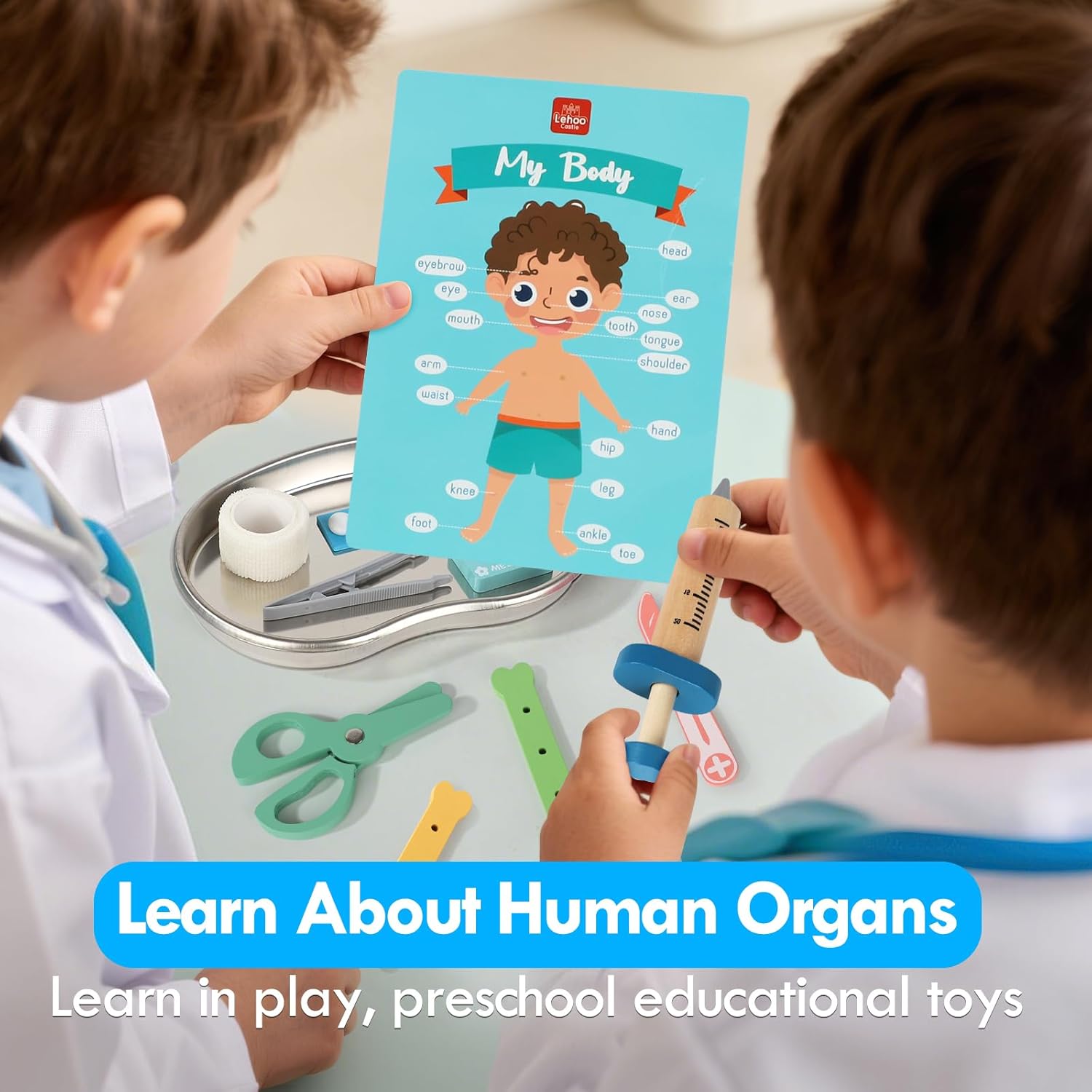
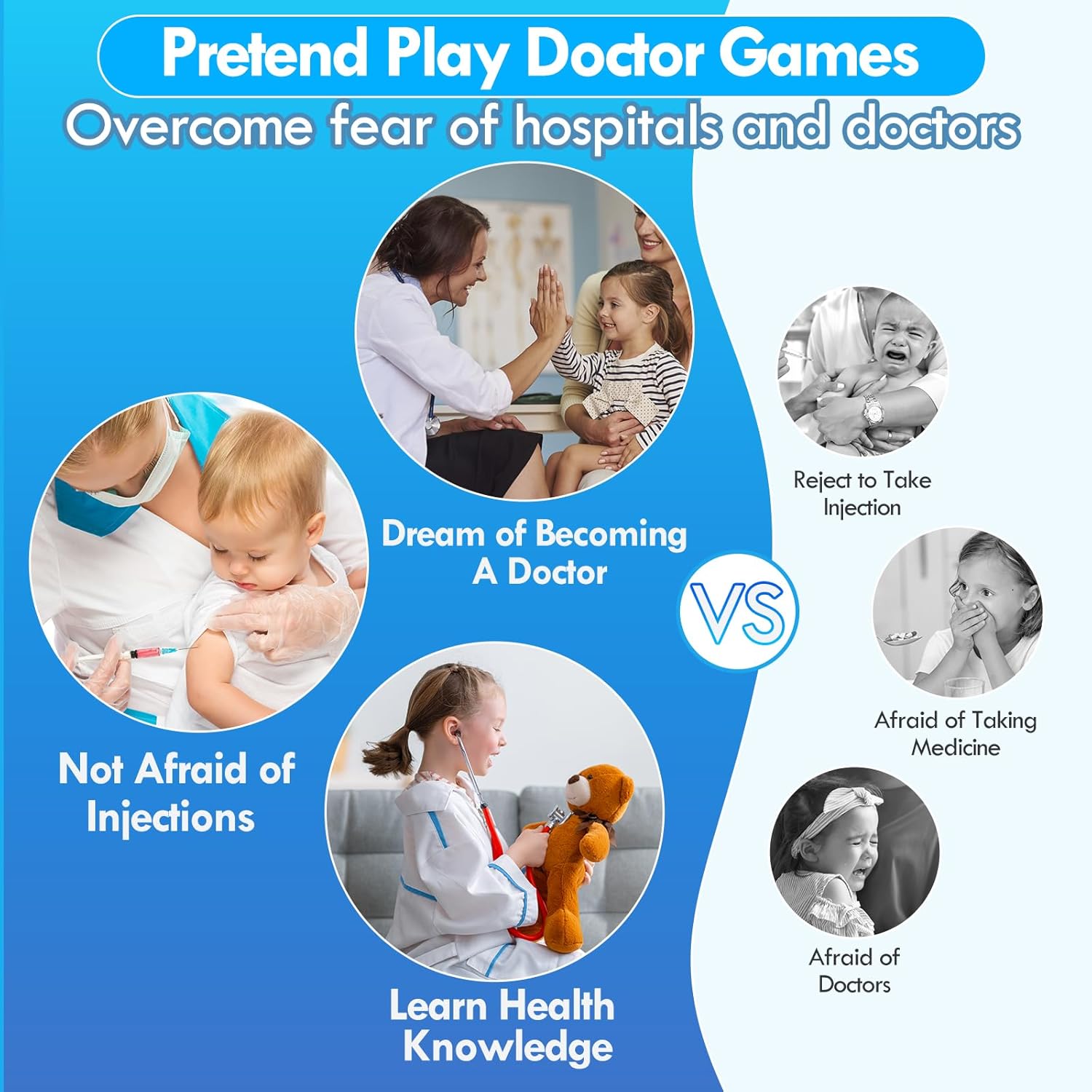
This wooden and plastic doctor playset helps toddlers explore medical tools through imaginative role play, combining learning about body parts with hands-on activity. It includes a child-friendly stethoscope and organ identification cards so young kids can pretend to examine patients while reducing anxiety about real doctor visits.
Key Points
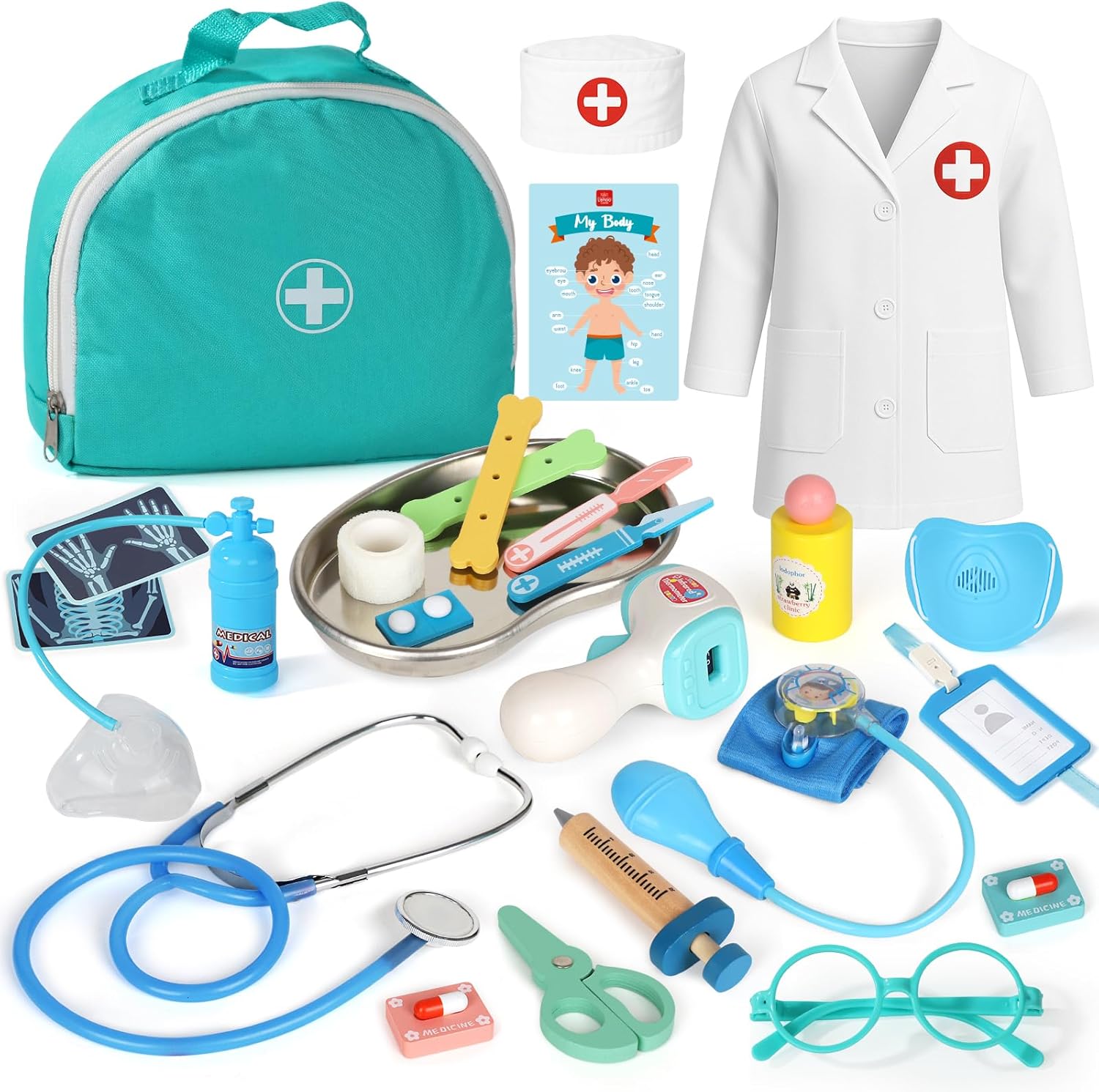
The set replaces small toy organs with illustrated human organ identification cards that are better suited to children aged 3 and up, according to the manufacturer. Materials combine smooth wood and BPA-free ABS plastic with rounded edges to minimize risk during play. The kit includes a variety of props such as a stethoscope, wooden syringe, stainless steel tray, mask, scalpel replica, capsules, and flashcards so several children can play together and practice taking turns. This makes the set useful for social and emotional development as well as early science curiosity. 😊

Technical Specifications
- Name: Lehoo Castle Doctor Kit for Toddlers 3-5
- Recommended age: 3-8 years.
- Materials: wood and BPA-free ABS plastic.
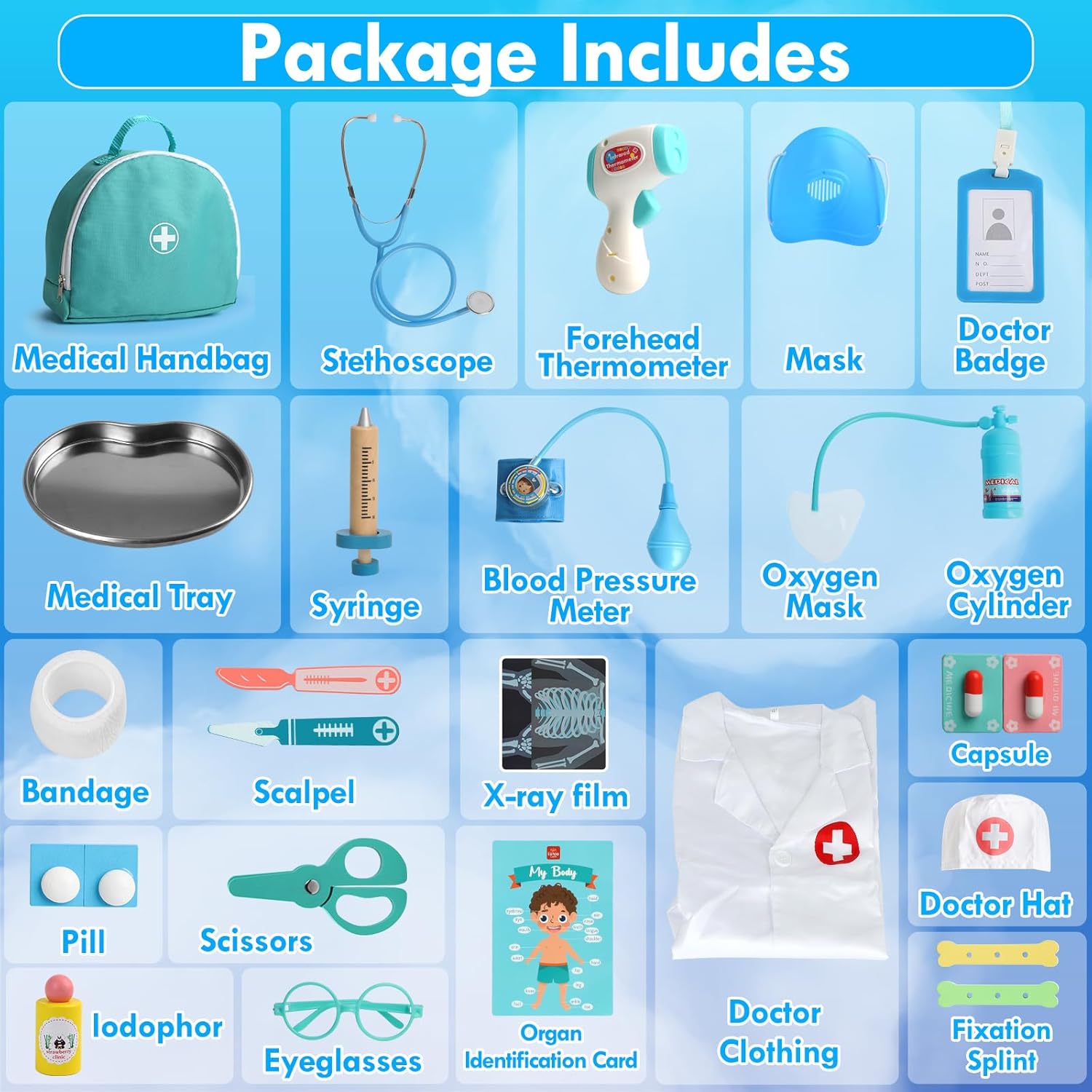
- Contents: stethoscope, organ identification cards, wooden syringe, stainless steel tray, mask, scalpel replica, capsules, flashcards.
- Safety features: rounded edges and non-toxic finish.
Benefits
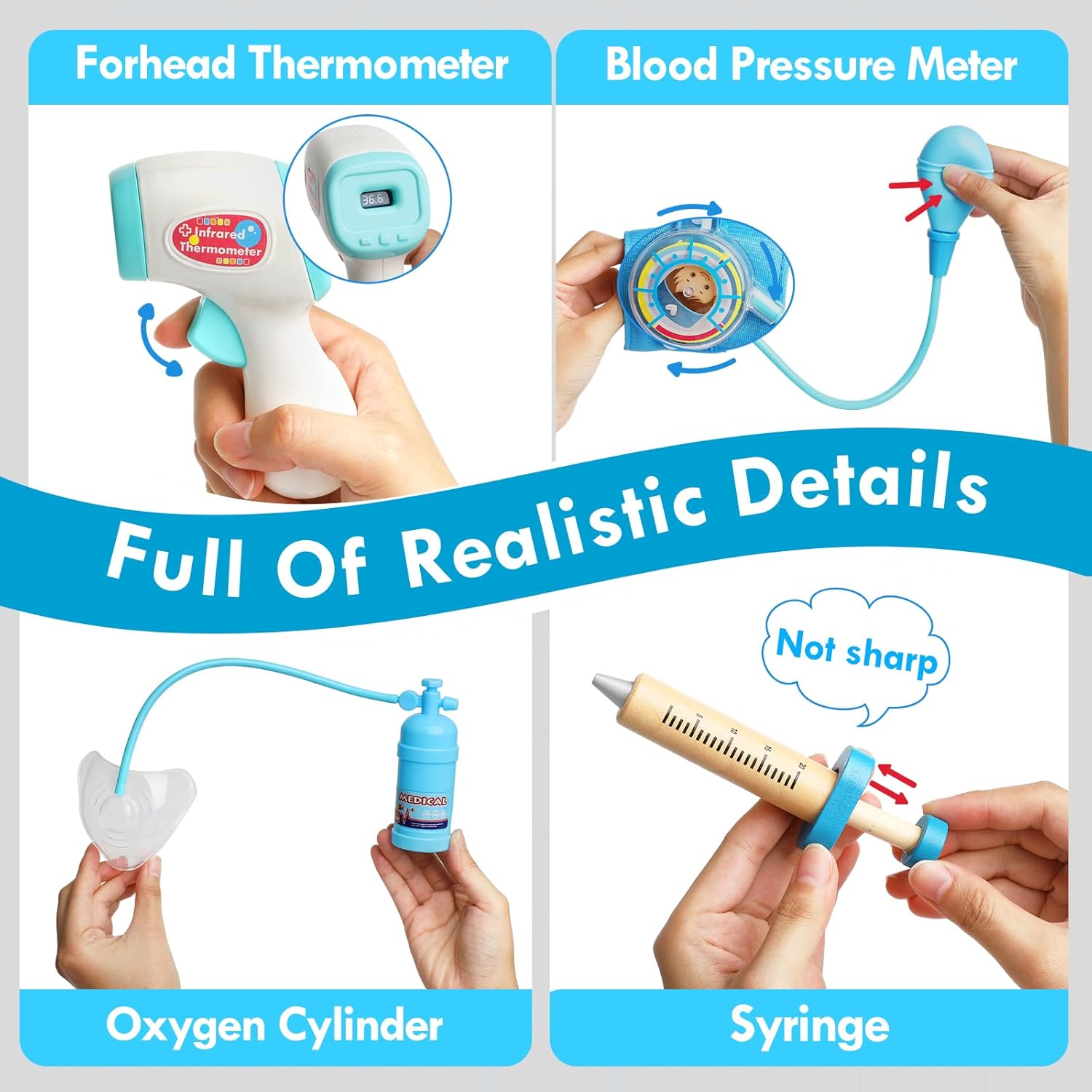
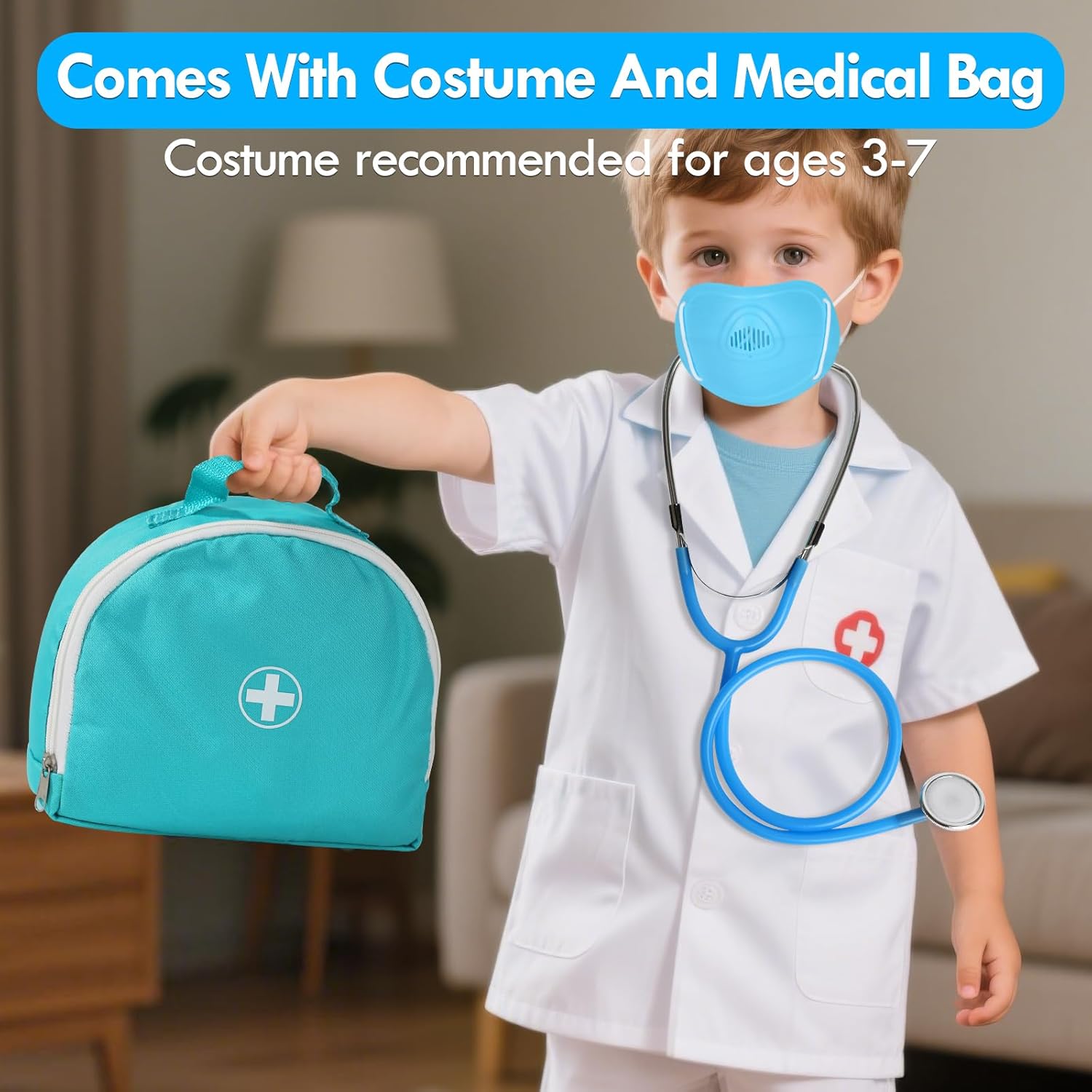
Playing doctor with this kit encourages vocabulary around body parts and basic medical tools, which can help children feel more comfortable with checkups and treatments. The organ identification cards promote recognition of organs and their names without using tiny pieces that could be a choking concern. Role play like this also supports fine motor skills when manipulating the wooden and plastic items, and it fosters empathy when kids take turns "caring" for dolls or friends. 🩺
Usage Recommendations
Allow supervised play for younger toddlers while keeping small items out of reach when not in use. Rotate the flashcards and organ cards during sessions to maintain interest and reinforce learning over multiple short activities. If the set is shared among several children, encourage cooperative scenarios where one child reads a flashcard and another performs a mock examination to build communication skills. 🤝