

KMTJT Montessori Wooden Toddler Shape Sorting Farm Cart (Ages 1–3)
Product description
What it is (and why parents buy it)
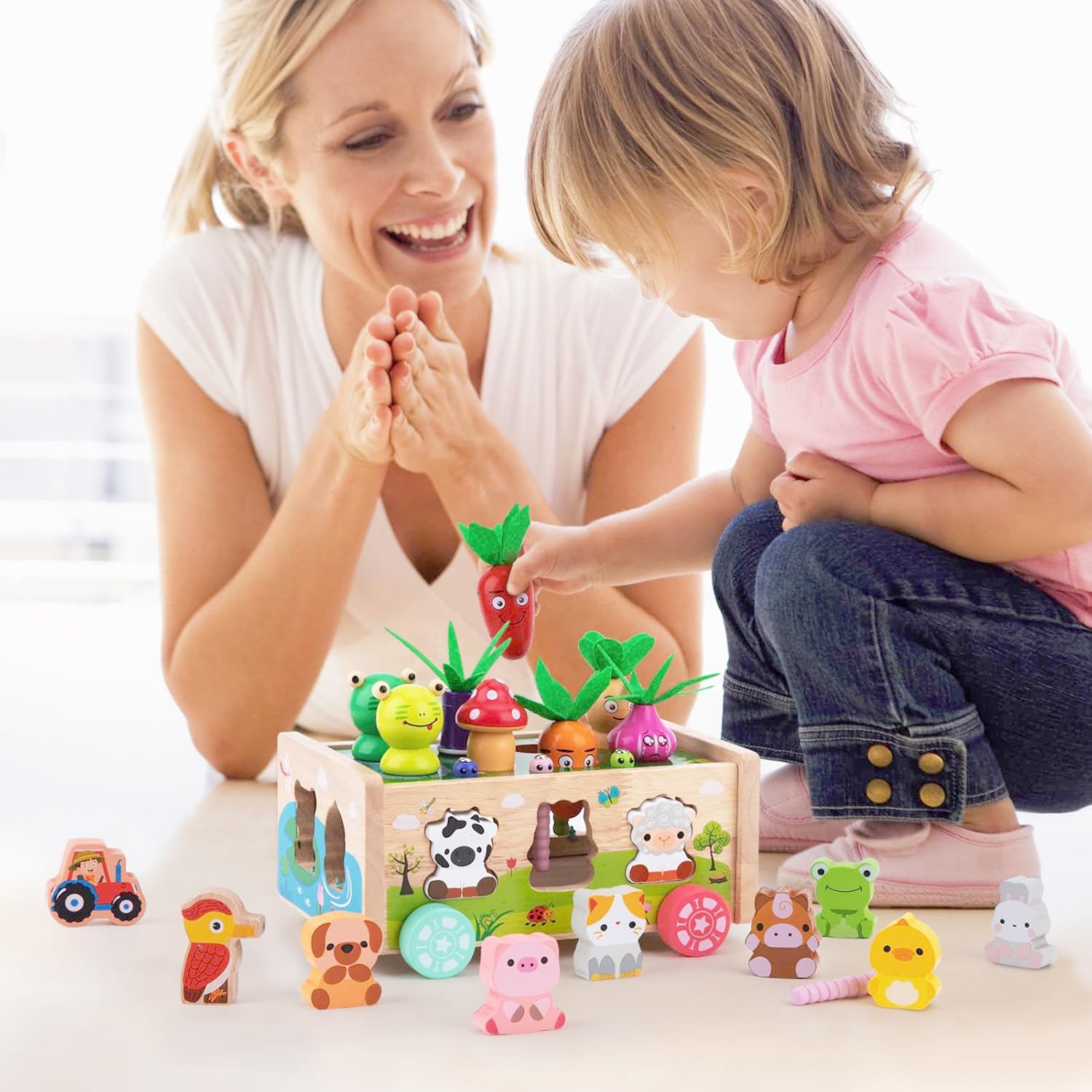
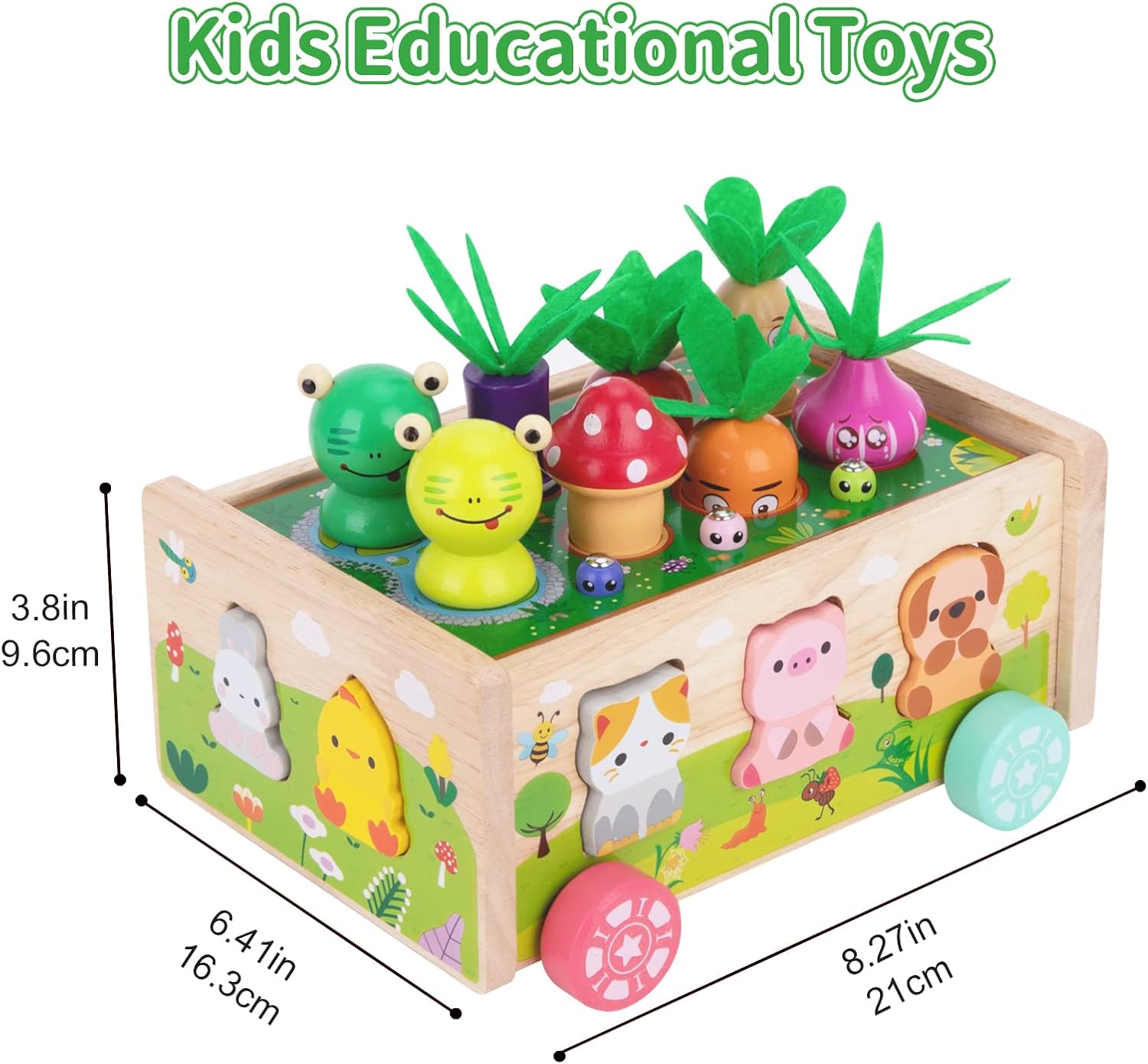
The KMTJT Montessori Wooden Toddler Toys set is a wooden shape-sorting and matching activity built around a farm theme—complete with vegetables, farm animals, worms, and a small car/cart concept. On paper, it hits a very common toddler-training goal: get kids to sort, match, and place pieces into the right openings while using their hands. If you’re shopping for screen-free play that also supports early learning, this one is designed to do exactly that kind of busywork—drop pieces in, feel the response, and try again.
There’s something straightforward here: toddlers can identify colors and shapes to classify and match pieces. The farm cart format also makes the activity feel more like “play with stuff” than “learning game,” which matters a lot at ages 1–3 when attention span is… flexible.
Key features you can expect during play
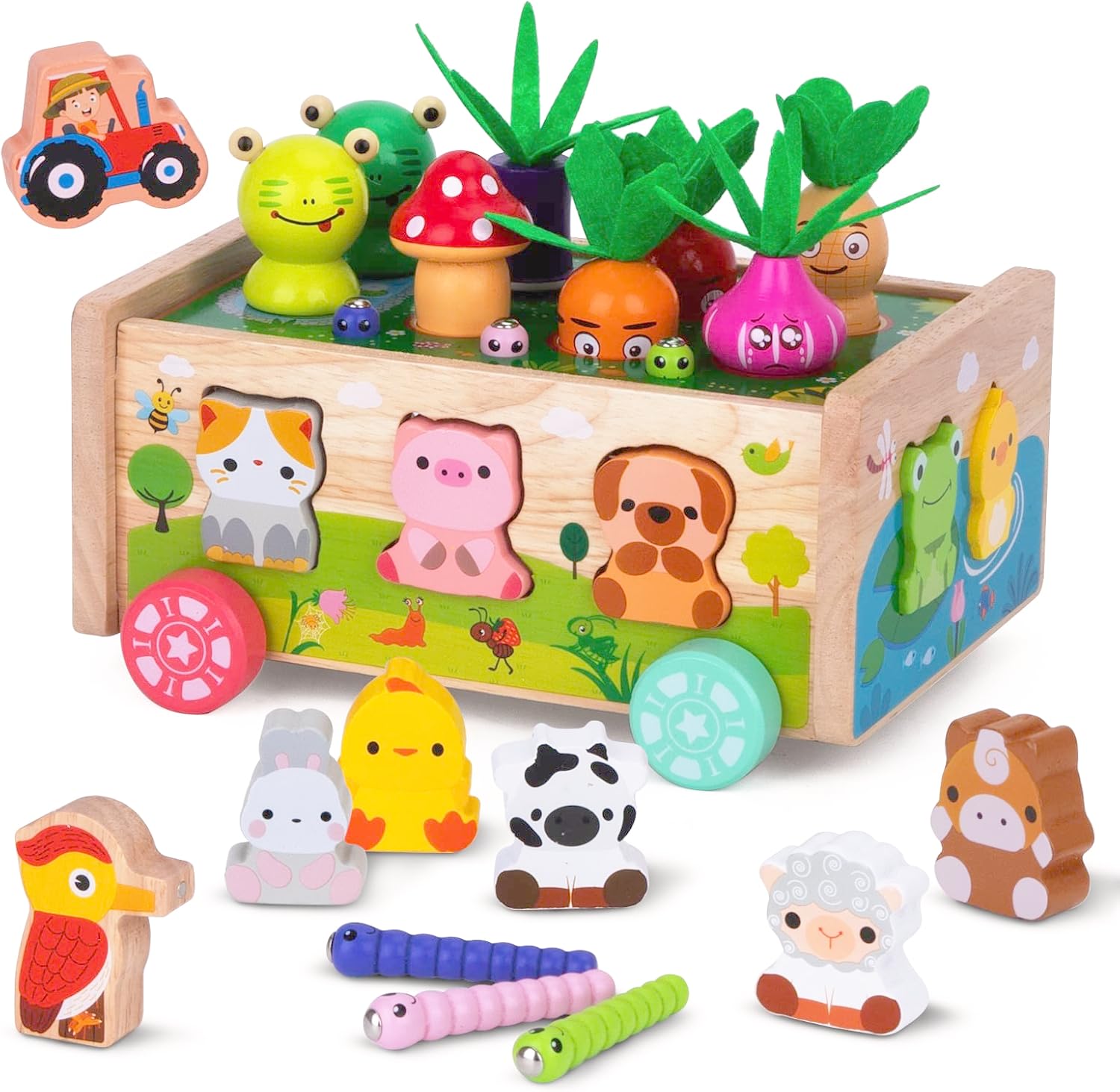
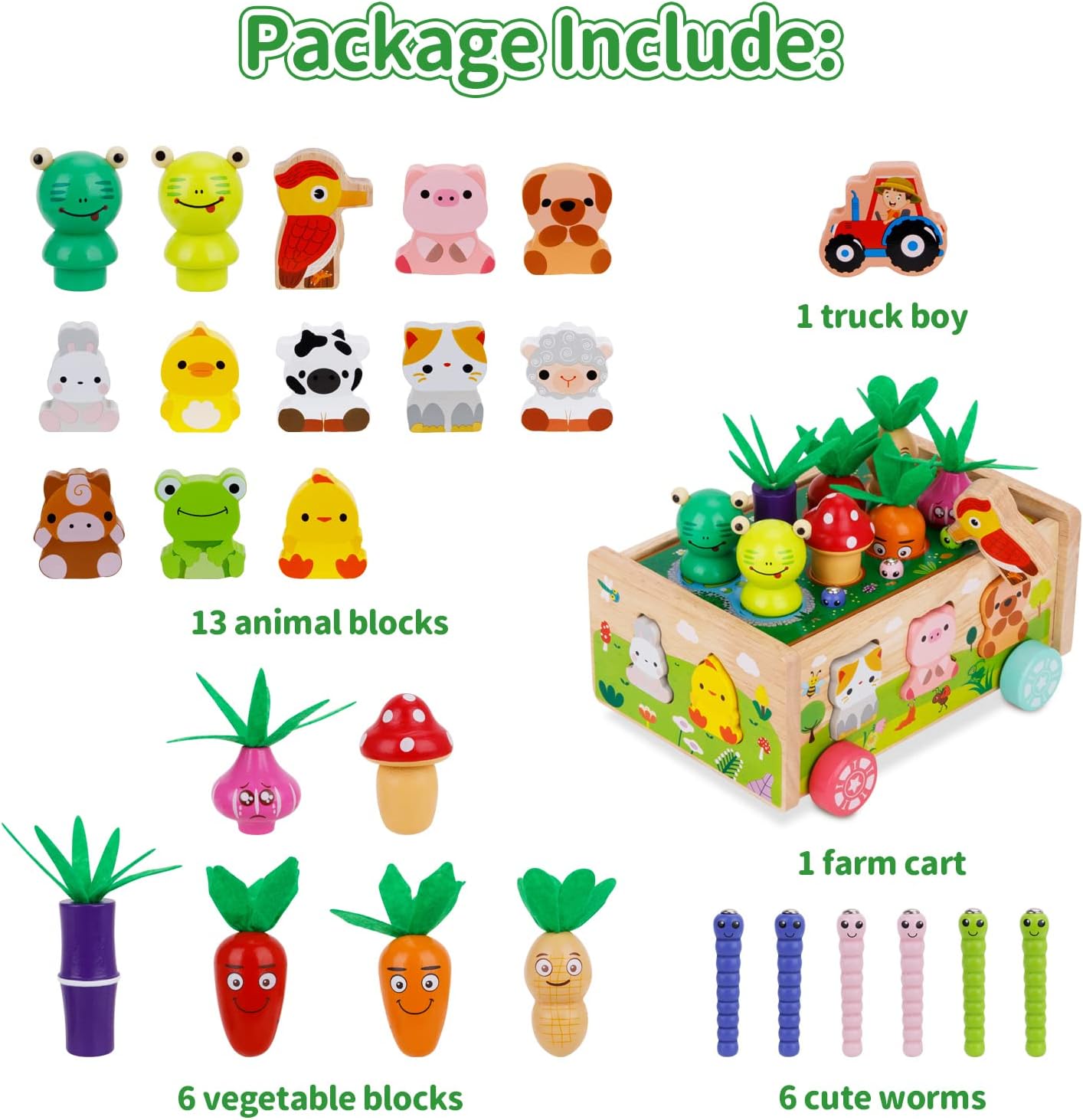
The set includes multiple farms-themed pieces: vegetables (carrots, onions, and peanuts are mentioned), farm animals (10 animal building blocks are referenced), worms, and additional characters like a woodpecker plus frogs. The main play mechanic is a sorting cart with holes designed for matching and placing pieces. There’s also a wheelbarrow/carrot harvest style game idea, plus catching worms and shape matching.
From a parent’s perspective, the value is less about a single “super feature” and more about variety inside one toy. Instead of only sorting shapes, the set also leans toward color recognition, animal recognition, and a couple of hand-and-eye activities (like putting items into holes and handling small pieces). The description also calls out polished edges and large wooden parts, which is helpful when you’re thinking about day-to-day toddler safety.
The fine-motor payoff (and a realistic limitation)
This toy is clearly aimed at fine motor skills. The way it’s described—placing animal pieces, vegetables, and worms into the wooden cart holes—means your toddler is repeatedly practicing pinch/grip and controlled movement. It also nudges early concept learning: naming or recognizing animals, associating colors, and learning shapes through repetition.
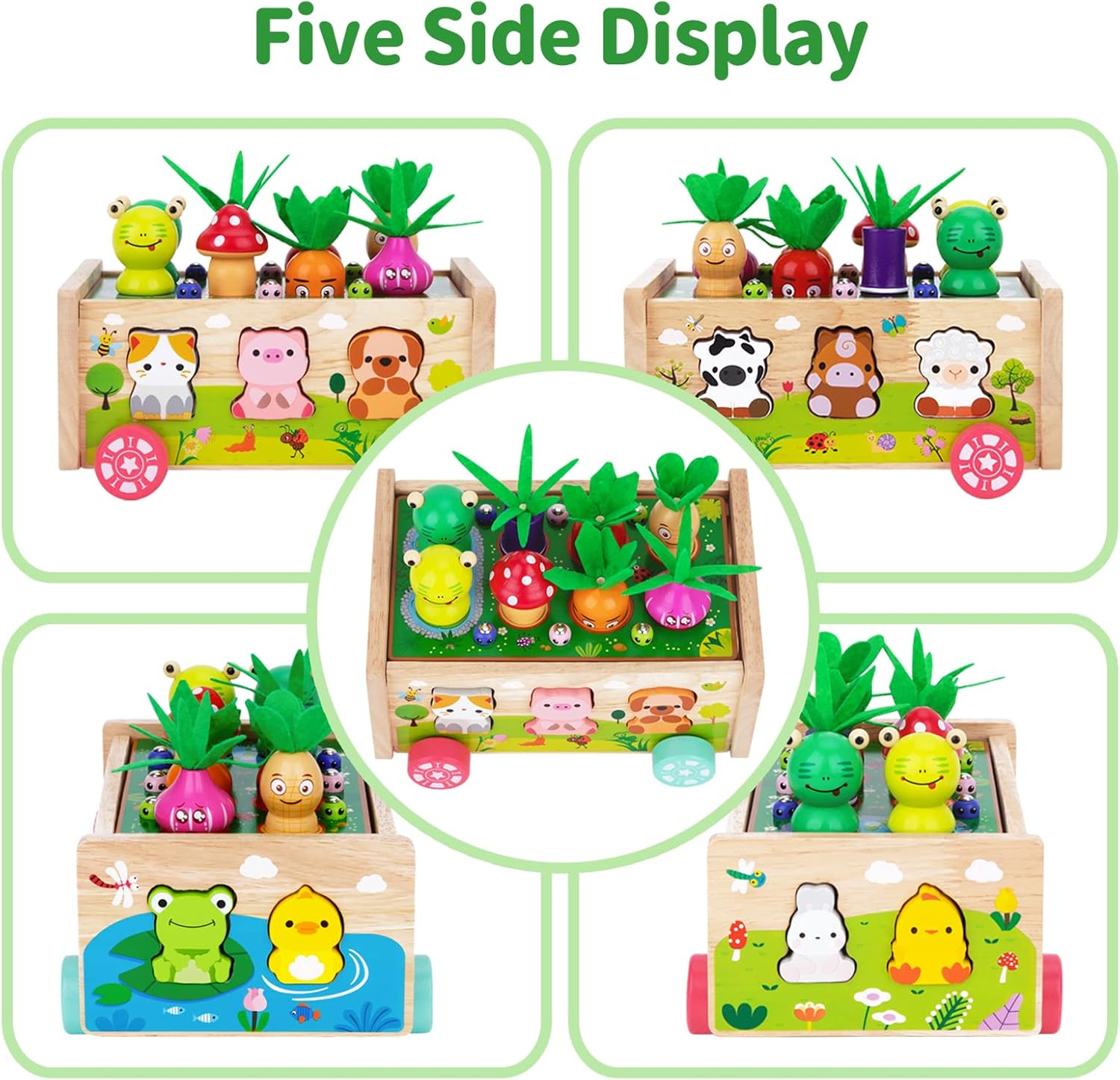
But keep one limitation in mind: this is still a small-pieces sorting activity. Even though the edges are described as polished and the materials are rubberwood, toddlers vary a lot in how ready they are for piece manipulation. If your child is still putting everything in their mouth or struggles with small object handling, you may want to supervise closely and consider whether a larger, simpler toy would be the better first step.
Safety and materials: what matters most
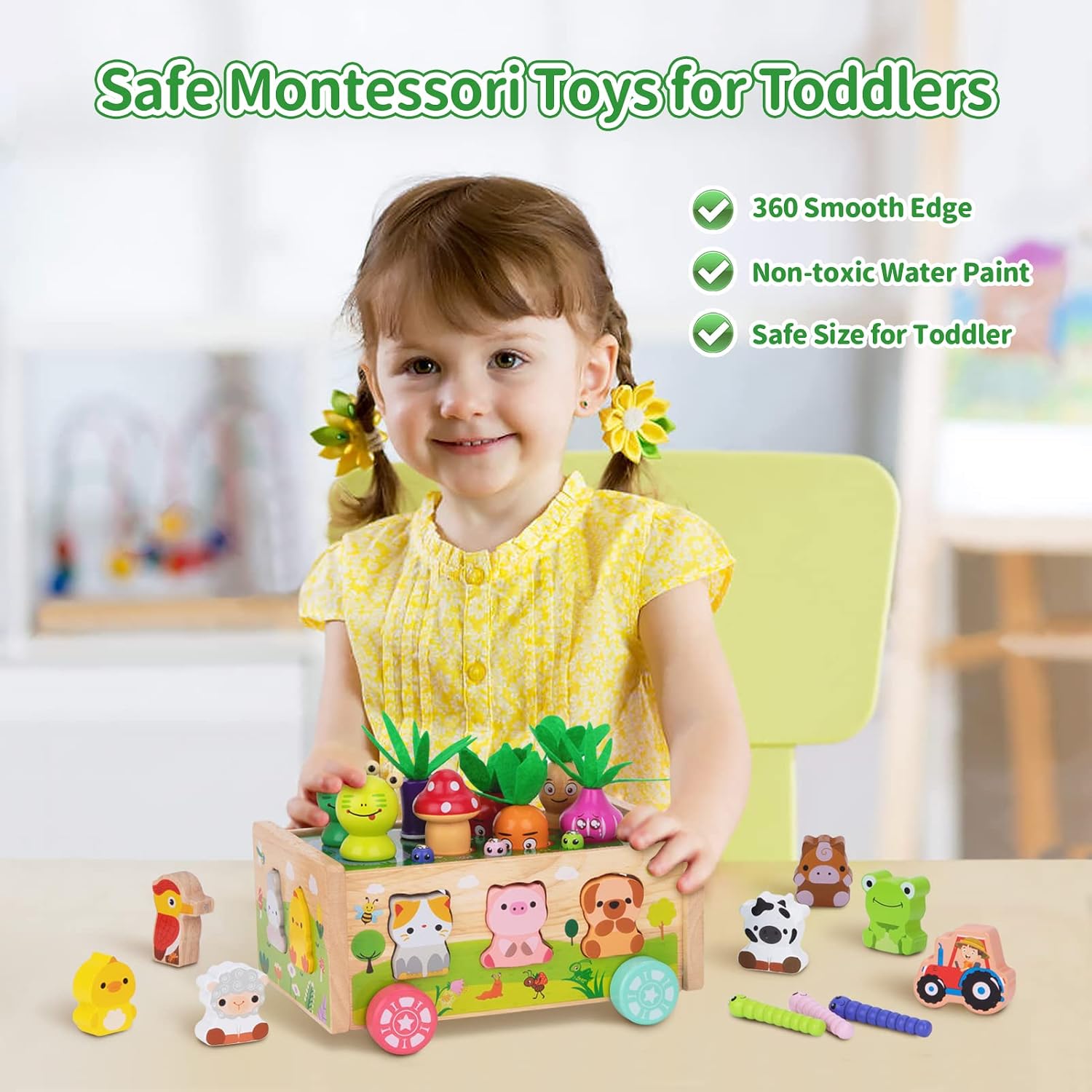
The listing emphasizes “Baby Safety First” and states it’s made from strong, high-quality rubberwood with polished edges and bright colors. It also describes the pieces as “large wooden toys,” which generally plays nicer than tiny parts for toddler handling.
That said, the description doesn’t spell out every safety detail (like age grading specifics beyond the general suitability for 1–3). So the sensible move is to rely on the on-label guidance, supervise during play, and check for wear over time—wood toys can last, but they’re still toys that get dropped, chewed on, and handled constantly.
Where it fits in your shopping list
This is best viewed as a Montessori-inspired, wooden early education toy for toddlers who are ready for sorting and matching games. It makes sense if you want something that:
- Encourages hands-on learning without screens
- Lets a toddler repeat the same action (place pieces, match shapes/colors) until it clicks
- Adds themed variety (farm animals, vegetables, worms) to keep play from getting stale
It may not be the best match if you’re looking for a toy that’s purely for gross motor movement, or if you need something extremely minimal for very young toddlers who are not yet ready for small-piece sorting.
Everyday use idea (what a play session can look like)
Imagine a simple 10-minute routine: you sit with your toddler, open the cart pieces, and start with one item type—say, a vegetable—then guide them to place it into the matching hole. After a couple tries, switch to an animal block and let your child “drive” the moment with the car/cart theme. Then try a quick “catch the worms/harvest time” mini-game. The point isn’t speed, it’s repetition with different piece categories so your toddler stays engaged while practicing the same core hand movements.
FAQ
Is it aimed at 1, 2, or 3 year olds?
The description says it’s suitable for toddlers 1–3. In practice, expect early learners around 12–18 months to need supervision and lots of guided repetition, while older toddlers may run the sorting routine more independently.
What skills does it focus on?
It’s designed to support fine motor skills, early intelligence development, and early recognition (shapes/colors, animals, and colors/objects). It also includes game concepts like catching worms and shape matching.
Is it safe for toddlers?

It states it’s made from rubberwood with polished edges and features “large wooden toys.” Still, because it’s a sorting set with pieces, supervision is the smart call—especially for younger toddlers who may mouth objects.
Does it include farm animals and vegetables?
Yes. The listing specifically mentions farm animals (10 building blocks), vegetables (including carrots, onions, and peanuts), worms, and other farm-themed elements like a woodpecker and frogs.
Should you buy it?
Is it worth it?
Worth considering if you want a Montessori-inspired wooden shape-sorting farm toy that keeps toddlers busy with multiple piece types—animals, vegetables, and worms—and focuses on fine motor practice through repeatable placement and matching.
Skip it (or rethink your choice) if your toddler isn’t ready for small-piece sorting, you’re looking for a purely construction-style toy without matching, or you prefer something simpler for very early stages of independent play.
A solid buy for families who like screen-free learning and want a theme-driven activity your child can return to again and again—just plan to supervise early, especially while your child figures out how the holes and pieces work.