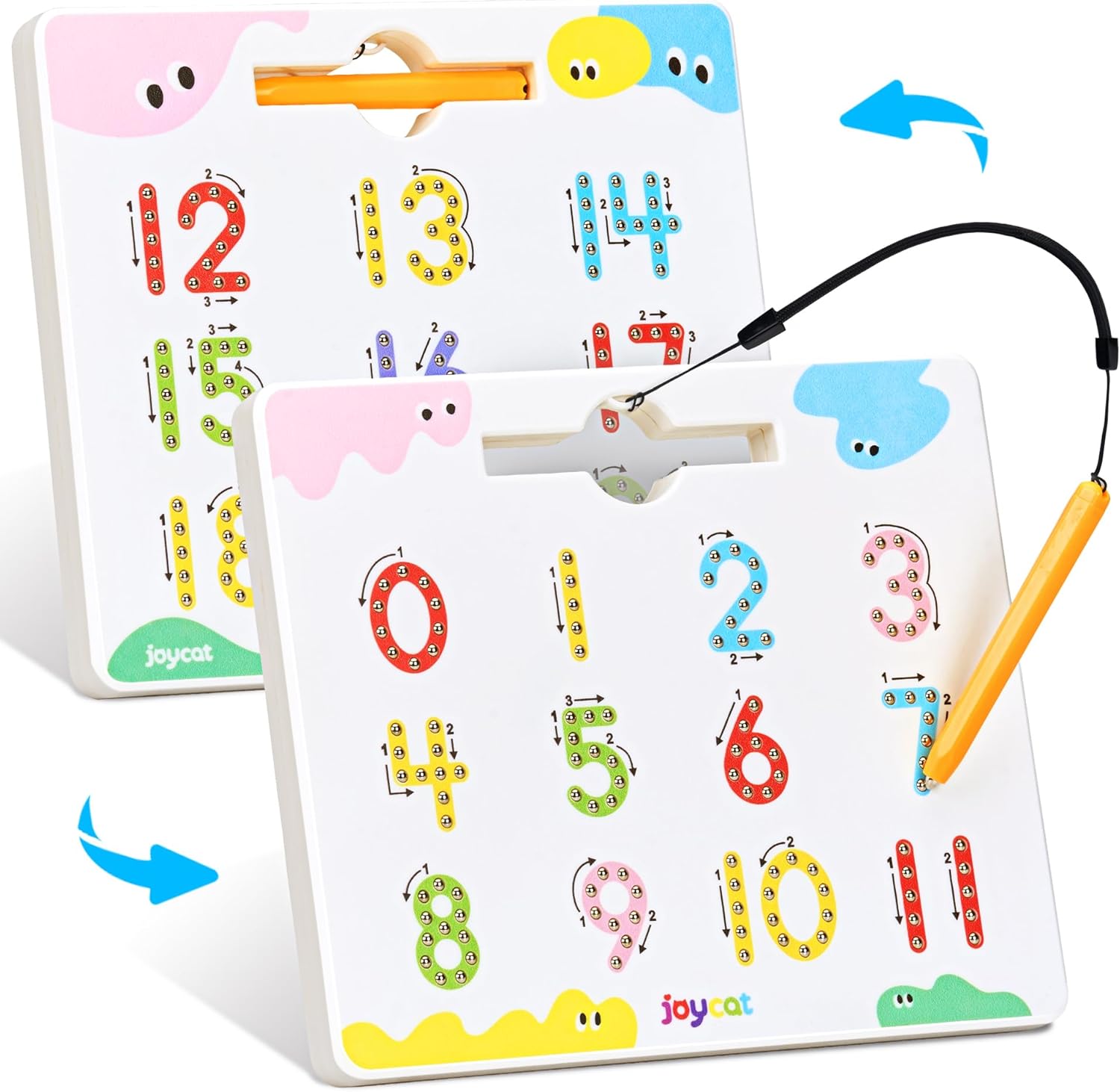
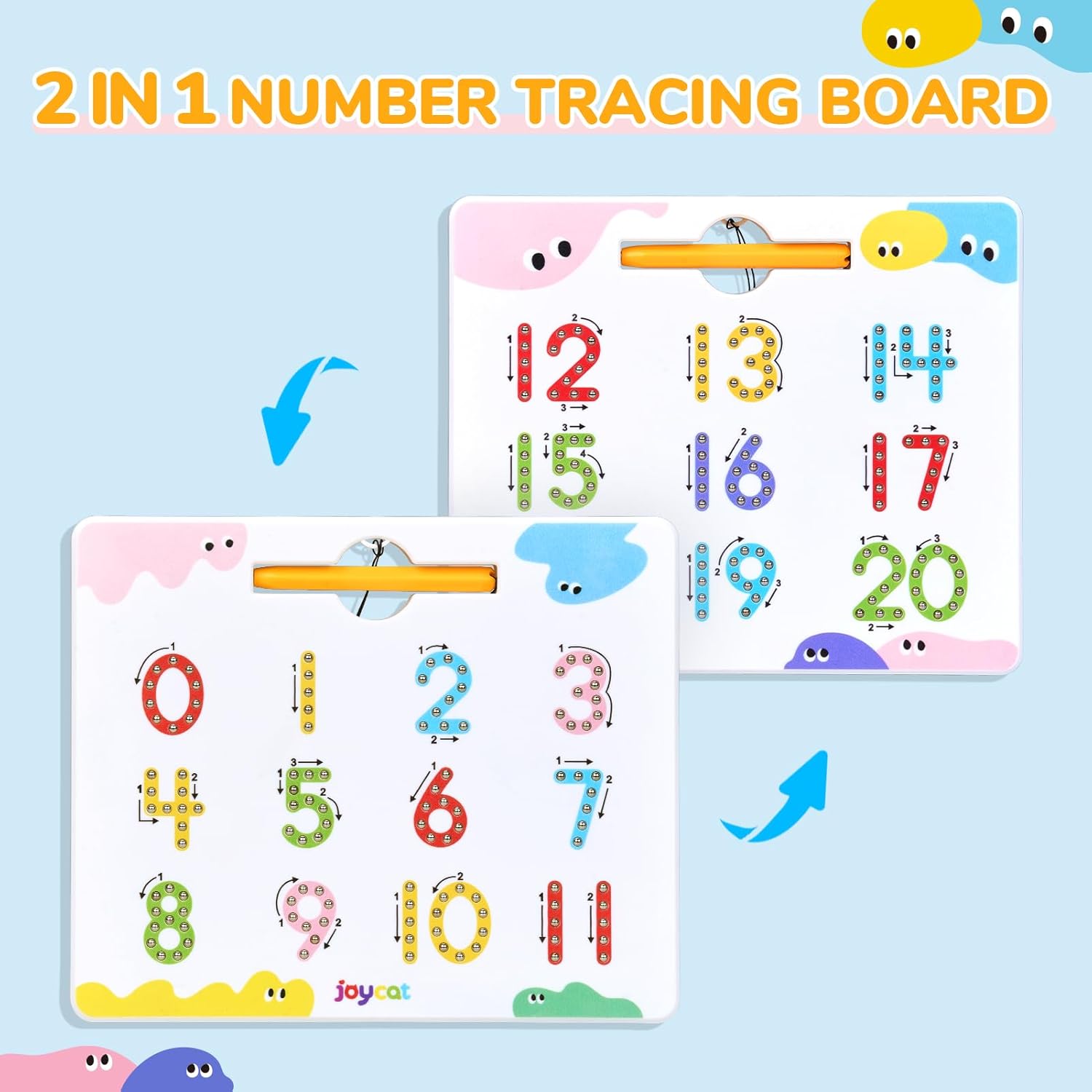
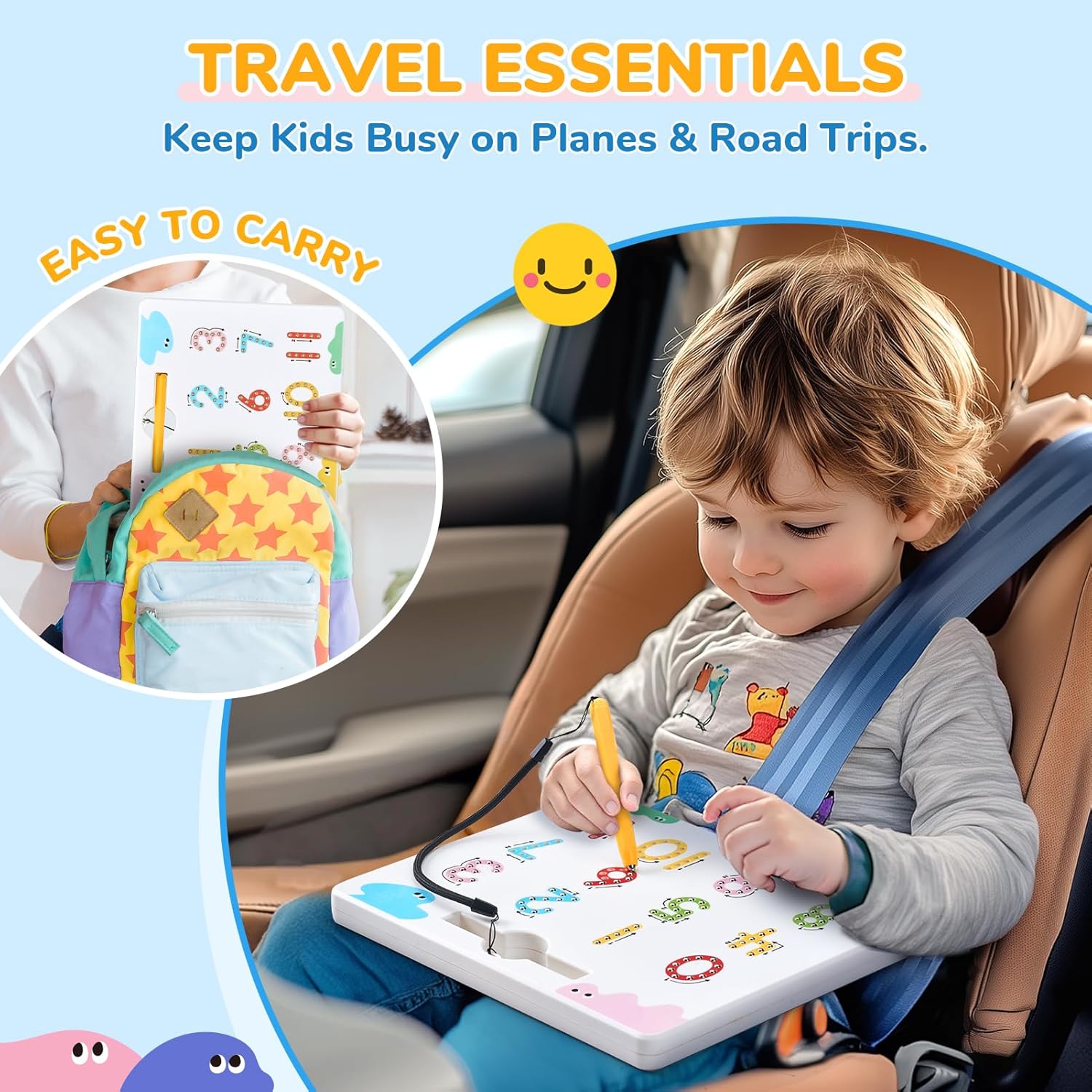
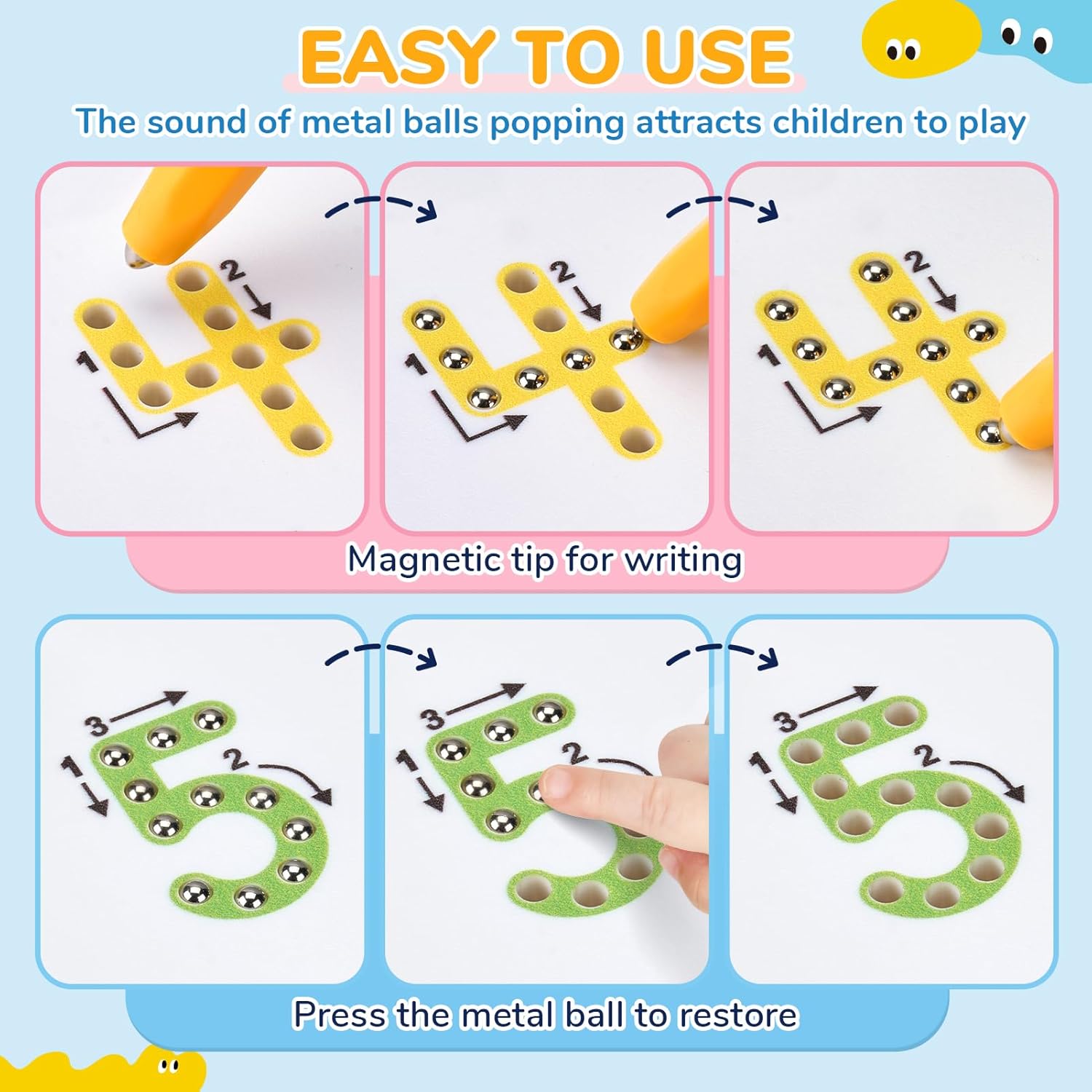
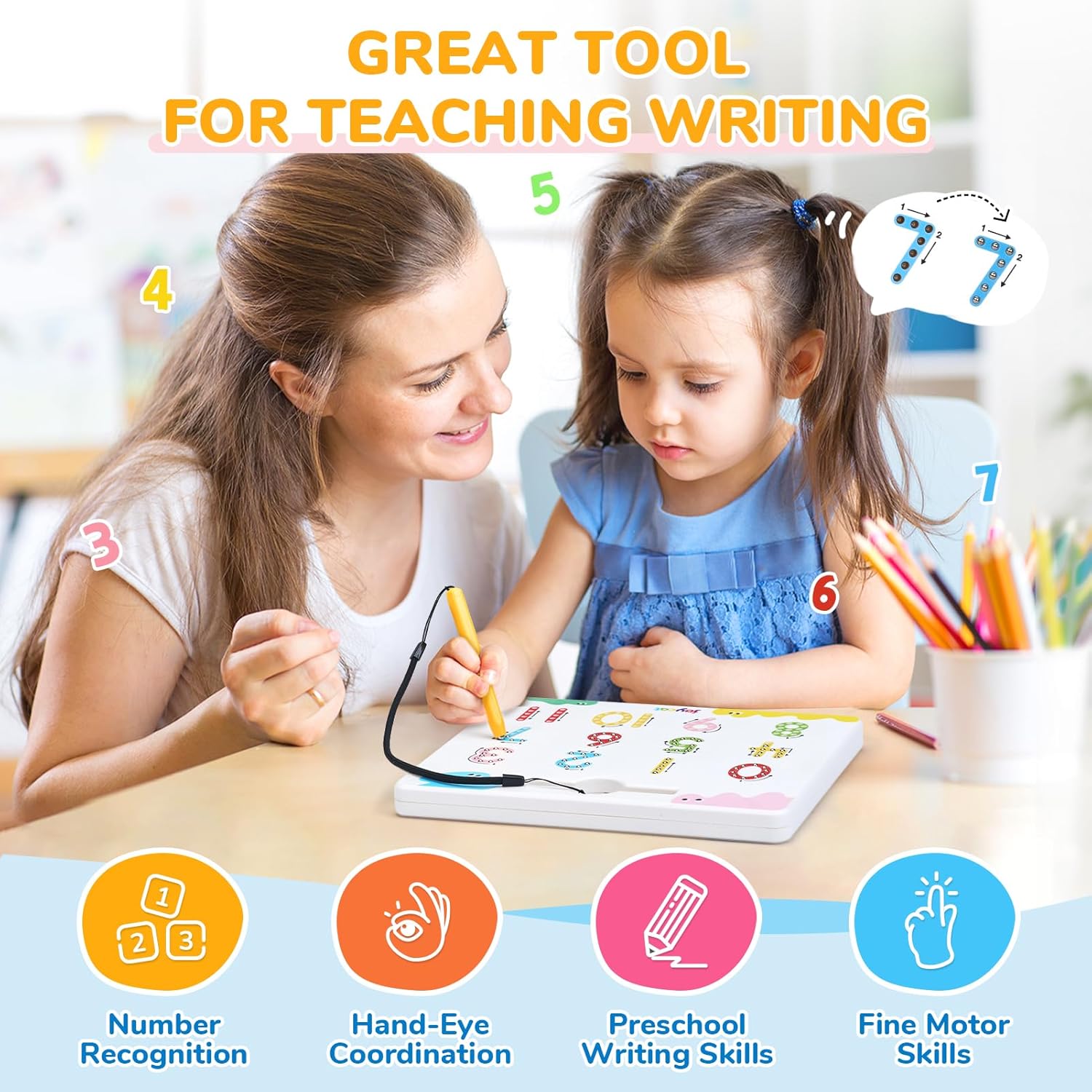
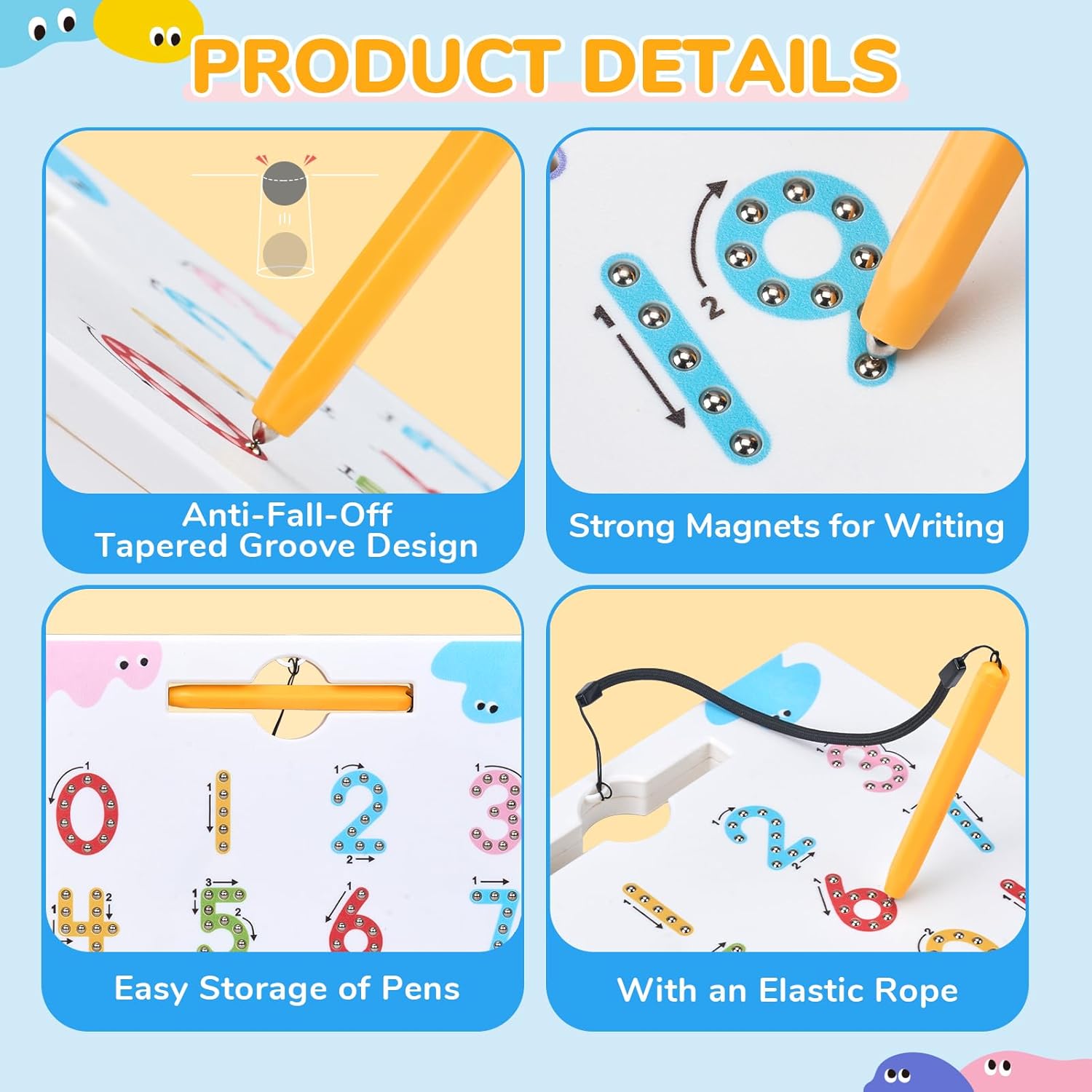
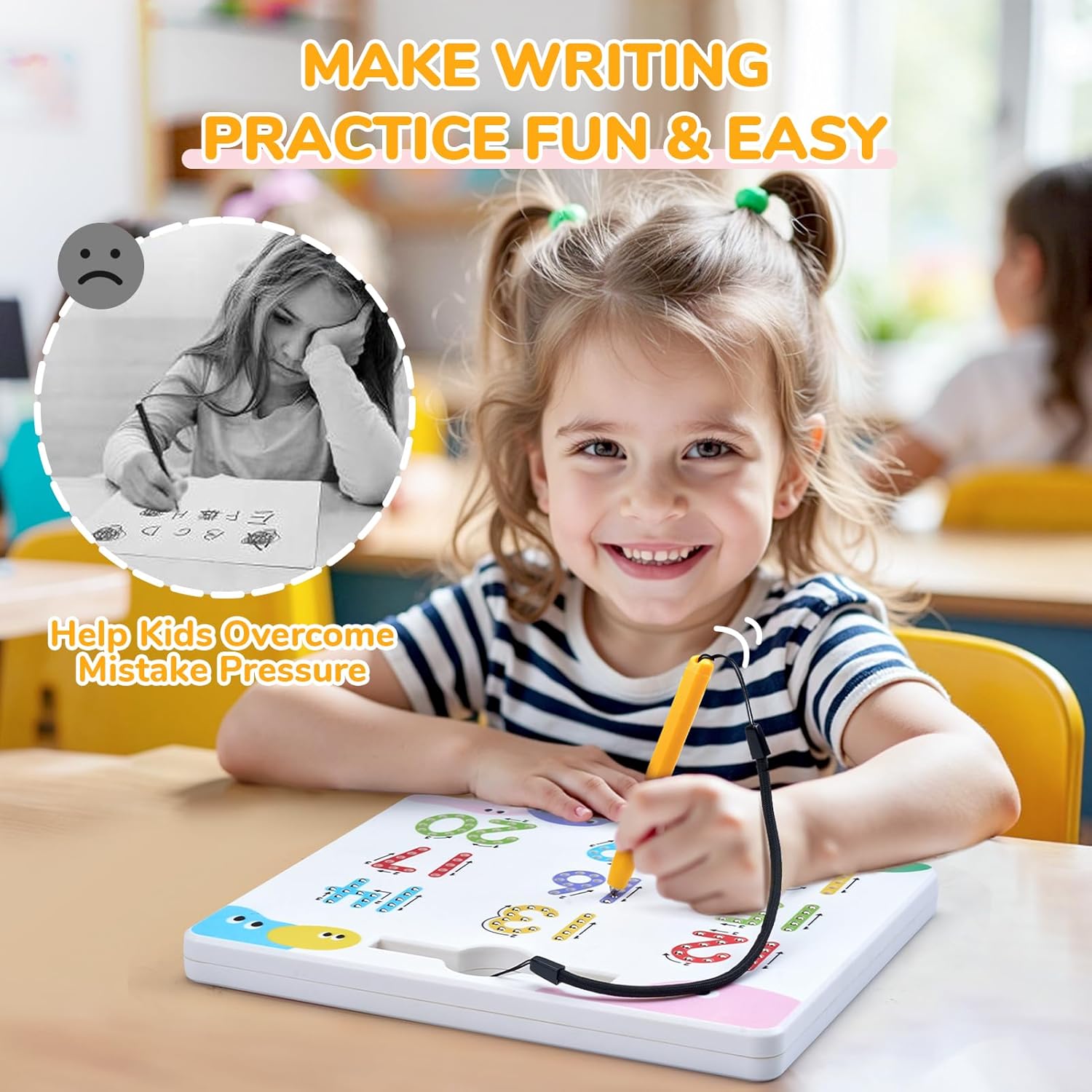
What it is and what need it meets\nThe JoyCat Double-Sided Magnetic Number Tracing Board is a compact, kid-friendly handwriting aid designed for early numeracy. One side features numbers 1–11 and the other side covers 12–20, with stroke order and direction clearly marked to support number recognition and proper writing form. It targets young learners who are building foundational math skills and fine motor control, making it a practical choice for both home practice and on-the-go learning.\n\n## How it works and what makes it interactive\nAs little hands trace the numbers with a stylus, metal beads rise to create audible feedback. This simple sound and visual cue can help kids stay engaged and reinforce correct stroke sequences. Erasing is possible with a finger, allowing for quick resets between practice rounds. The design relies on ABS plastic with smooth edges and a safety feature to keep beads contained, which helps reduce accidental spills during play.\n\n## Why it stands out (pros) and where it may fall short (cons)\nWhat stands out: a hands-on approach to learning numbers that combines writing practice with instant feedback, all in a compact, travel-friendly package. The two-sided layout consolidates early math work into a single tool, which is handy for small spaces or car trips. The safety-minded construction adds peace of mind for parents.\nPotential limits: it focuses specifically on numbers 1–20, so kids needing broader math concepts may need supplementary tools. The writing experience is ideal for beginners, but advanced learners might outgrow it quickly.\n\n## Who it’s for\nThis board is well-suited for toddlers, preschoolers, and kindergarteners who are just starting to recognize digits and learn to write them. It can be a helpful addition for families or classrooms looking for a tactile, audible way to practice basic counting and number formation.\n\n## Who it isn’t the best fit for\nIf your child already writes numbers confidently or needs more advanced math concepts (like number lines, addition, or regrouping), this board may feel limited. It’s also not a standalone system for broader curriculum—think of it as a focused skill drill rather than a full math station.\n\n## When it makes sense to buy\nConsider this tool if you want discrete, short practice sessions that combine writing with sensory feedback, especially during travel or quiet time. It’s also appealing as a gift for early learners who respond well to hands-on activities and sound cues.\n\n## What to check before buying\nEnsure your child enjoys tactile learning and audible feedback, and confirm that the two-sided digits cover the core 1–20 range you want to reinforce. While on the go, the board should be light enough for small hands to carry and easy to wipe clean after use.\n\n## How it compares to other learning approaches\nCompared to generic writing practice sheets, this board adds a motor component and immediate sound feedback, which can aid memory. It’s less about memorization and more about forming correct strokes and number shapes. If you prefer screen-based learning, this is a low-tech but effective counterpoint that can reduce screen time while still delivering engagement.\n\n## Final verdict\nIs it worth it? If your goal is simple, practical number writing practice with immediate feedback that travels well, this board is a solid option for early learners. It won’t replace a full math curriculum, but it does a good job of turning number formation into a tactile moment your child can enjoy.\n\n## Frequently asked questions\n- How durable is the board for daily use? It’s designed with smooth edges and beads contained by a safety design, but like any small toy, gentle handling is advised.\n- Can the beads spill out during play? The product uses a design to prevent beads from falling out, though some light shaking shouldn’t cause issues.\n- Is it suitable for a classroom setting? Yes, as a compact handwriting practice tool, it can fit inside a learning center or small group activity.\n- What age is ideal? It’s targeted at 3–5 year olds, aligning with preschool math foundations.\n- Does it support number recognition beyond 20? No, the front and back are limited to 1–20, additional tools would be needed for extended practice.