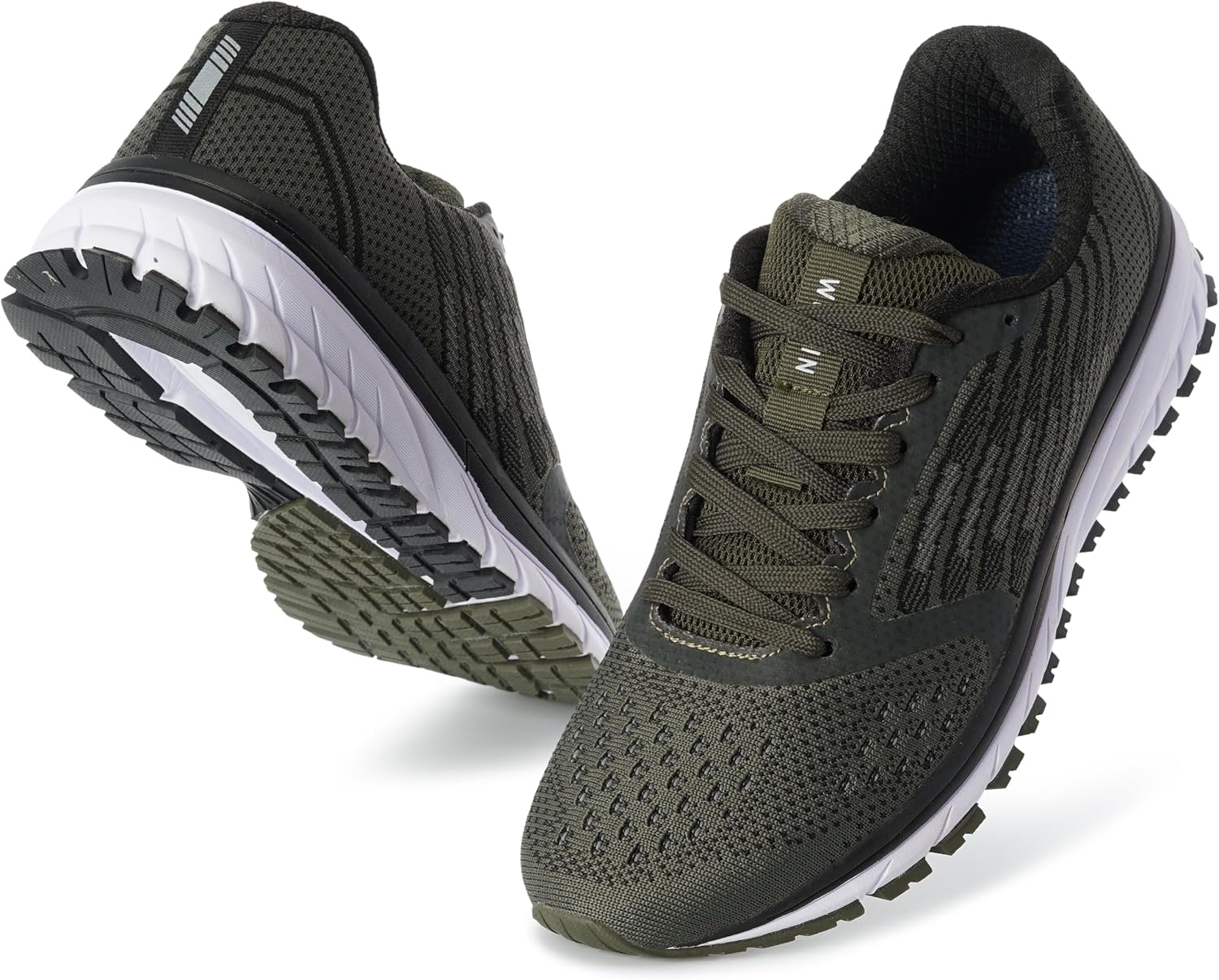
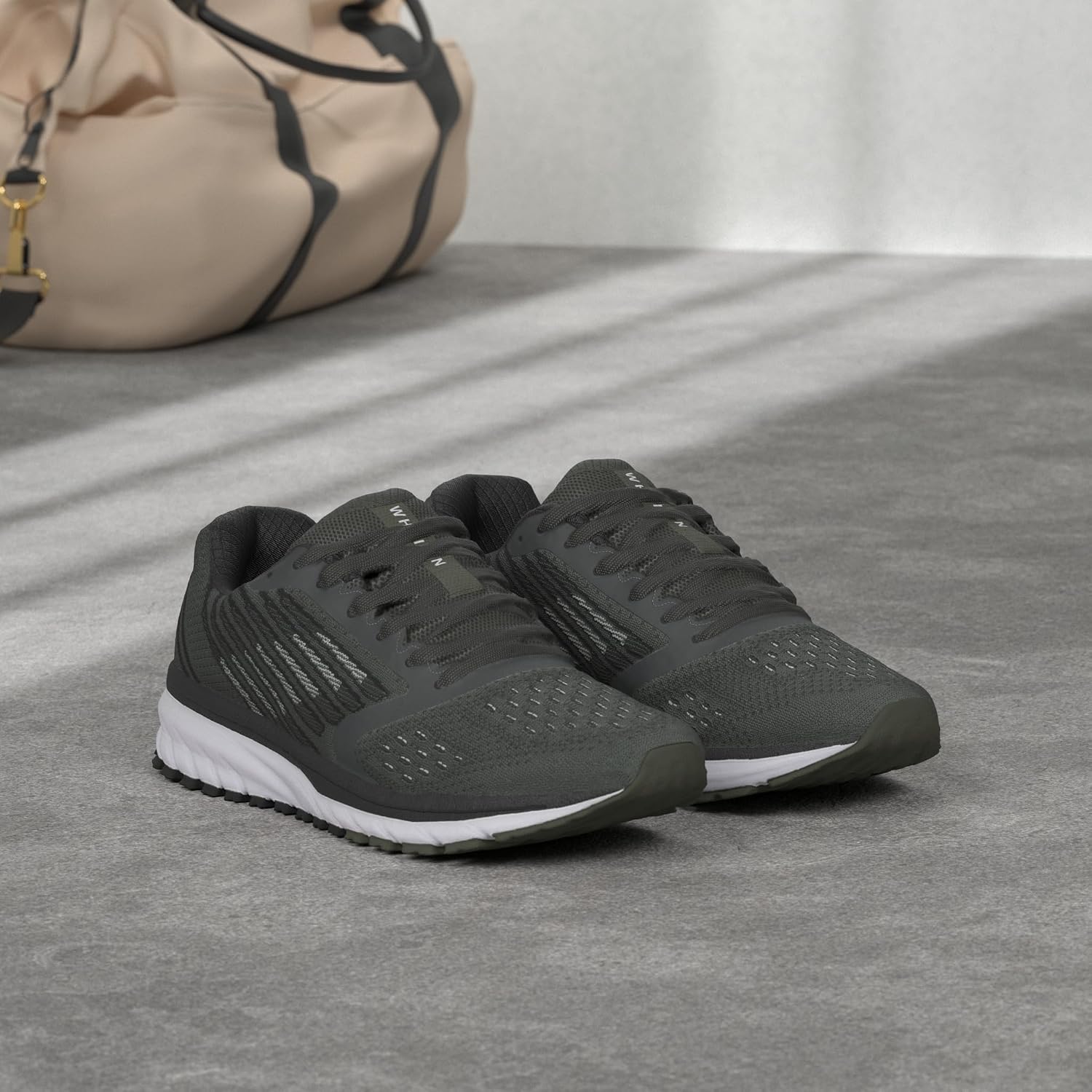
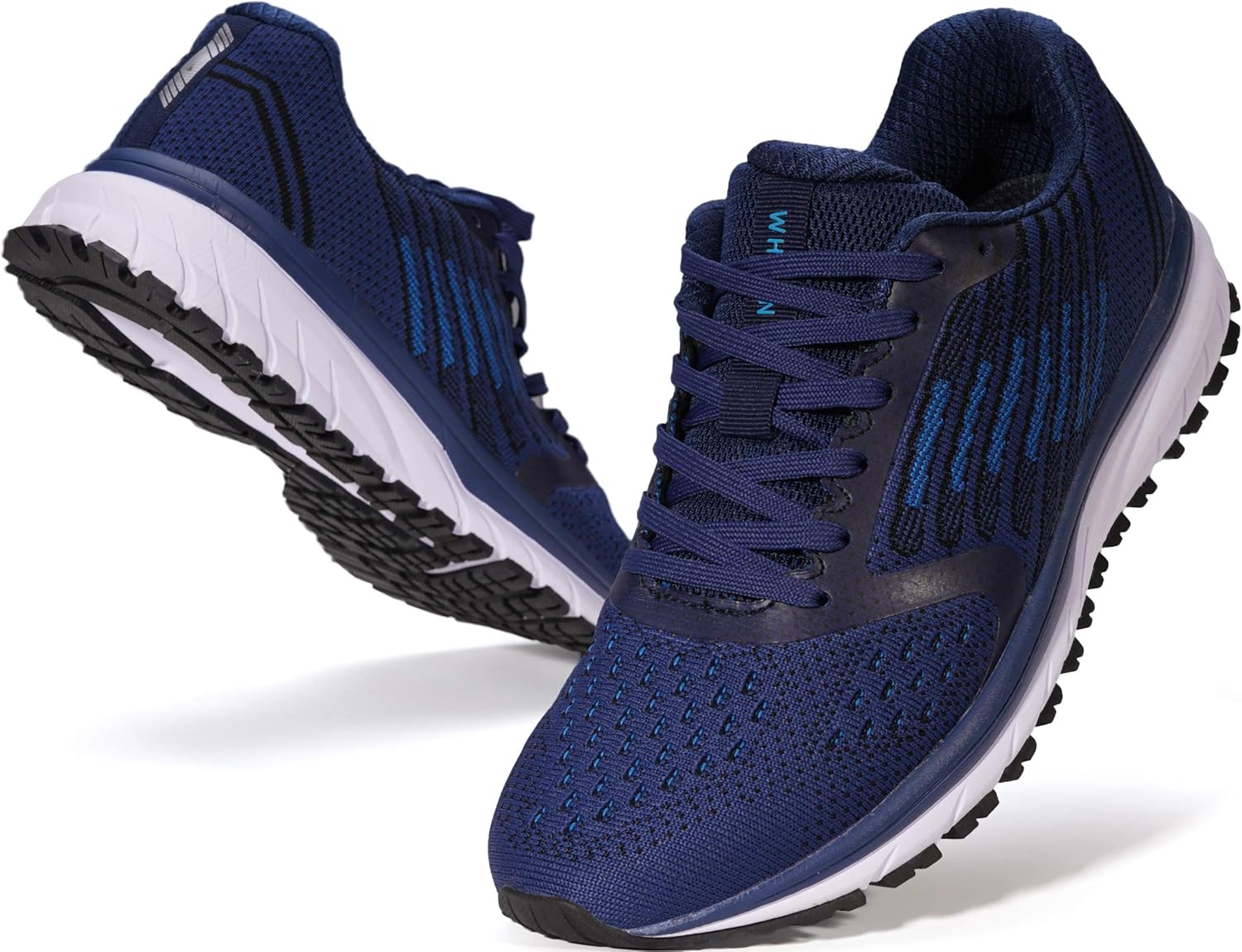
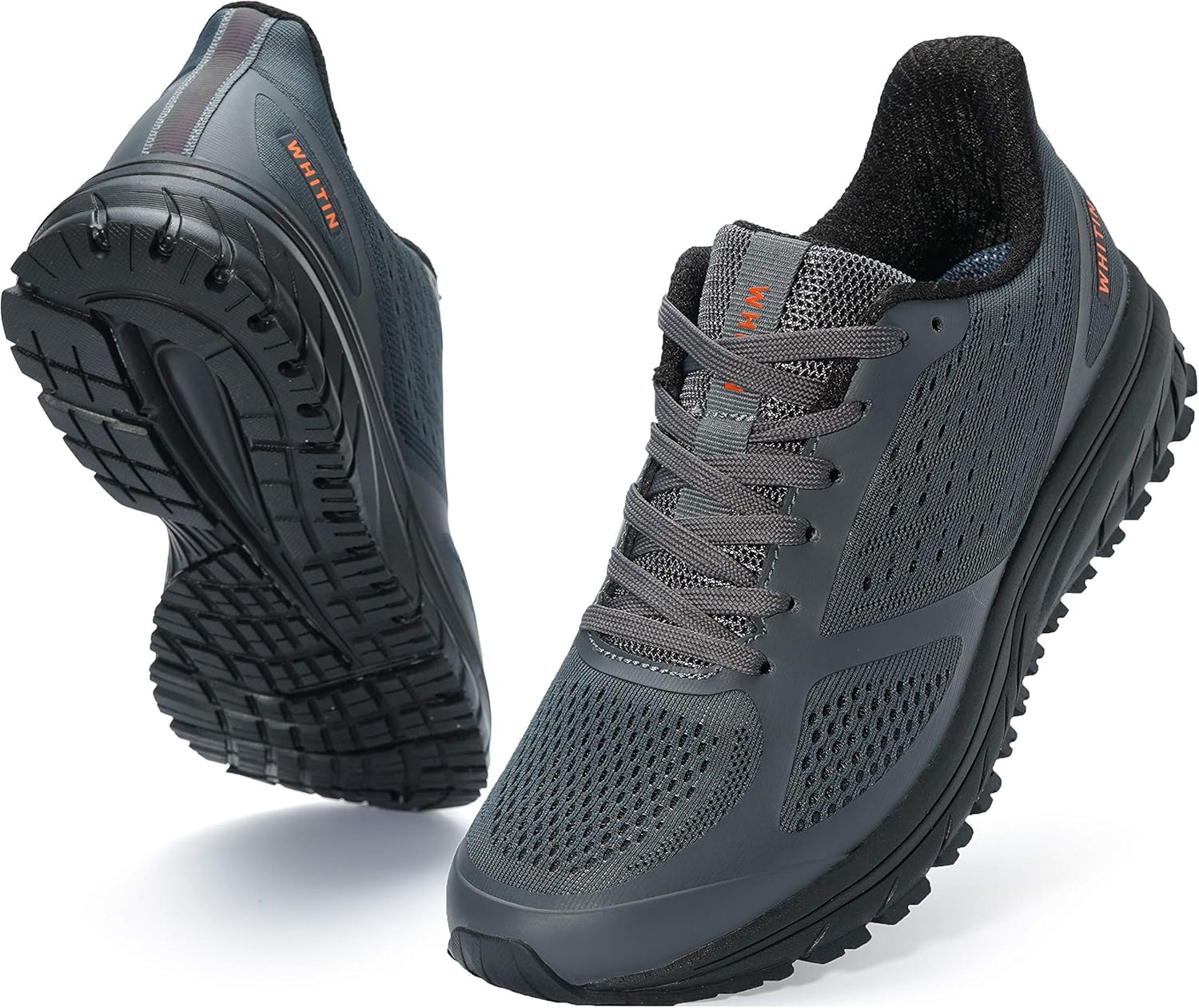
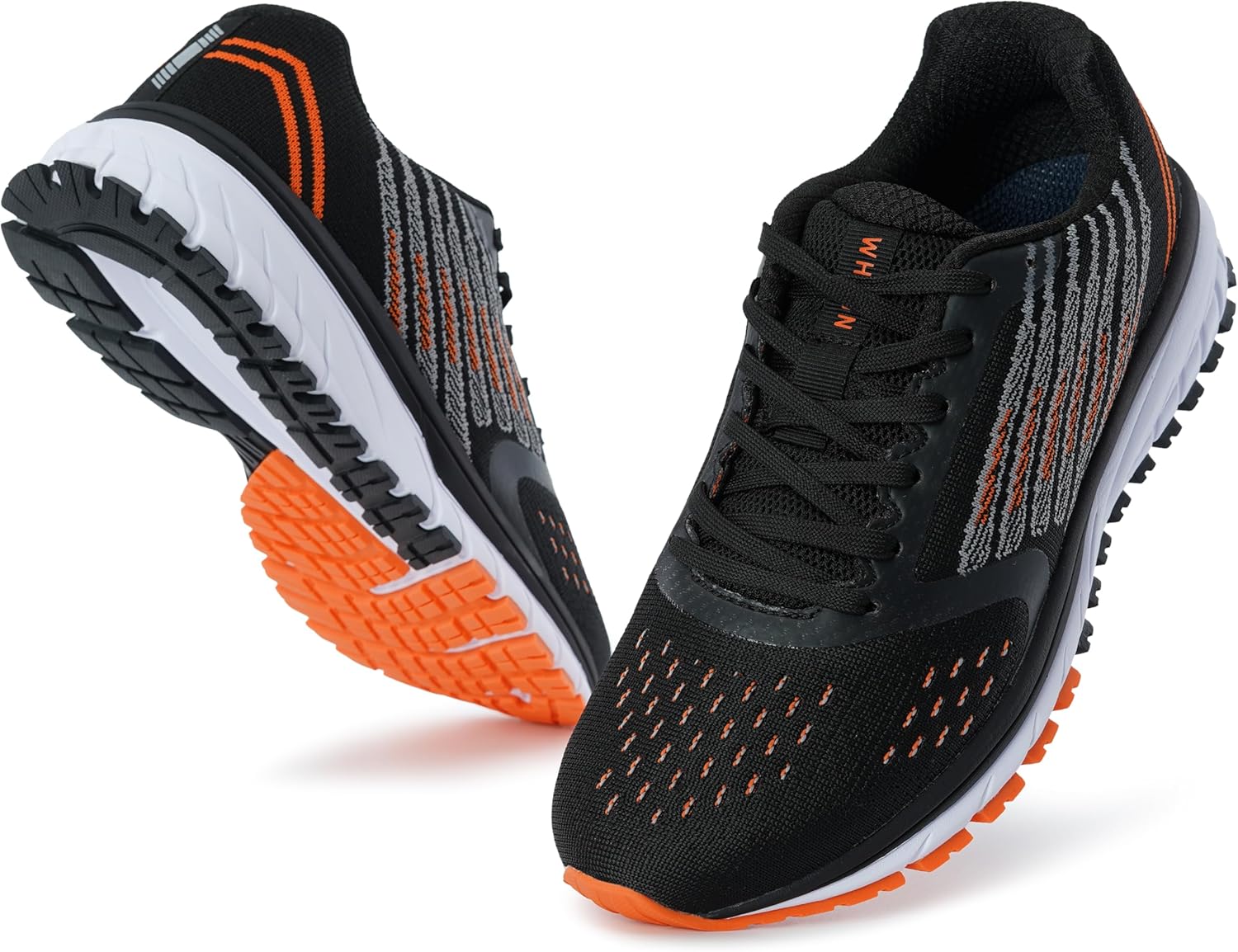
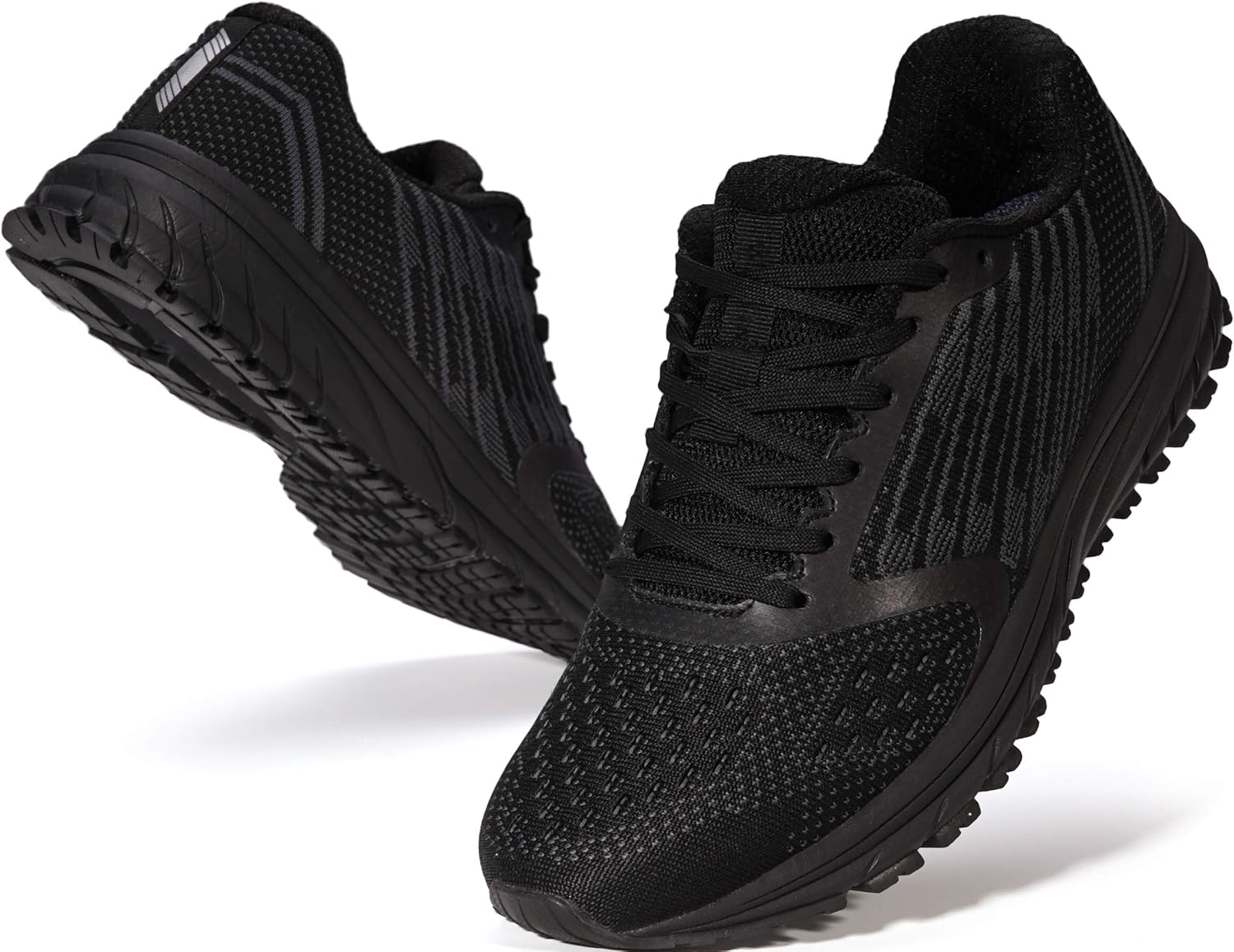
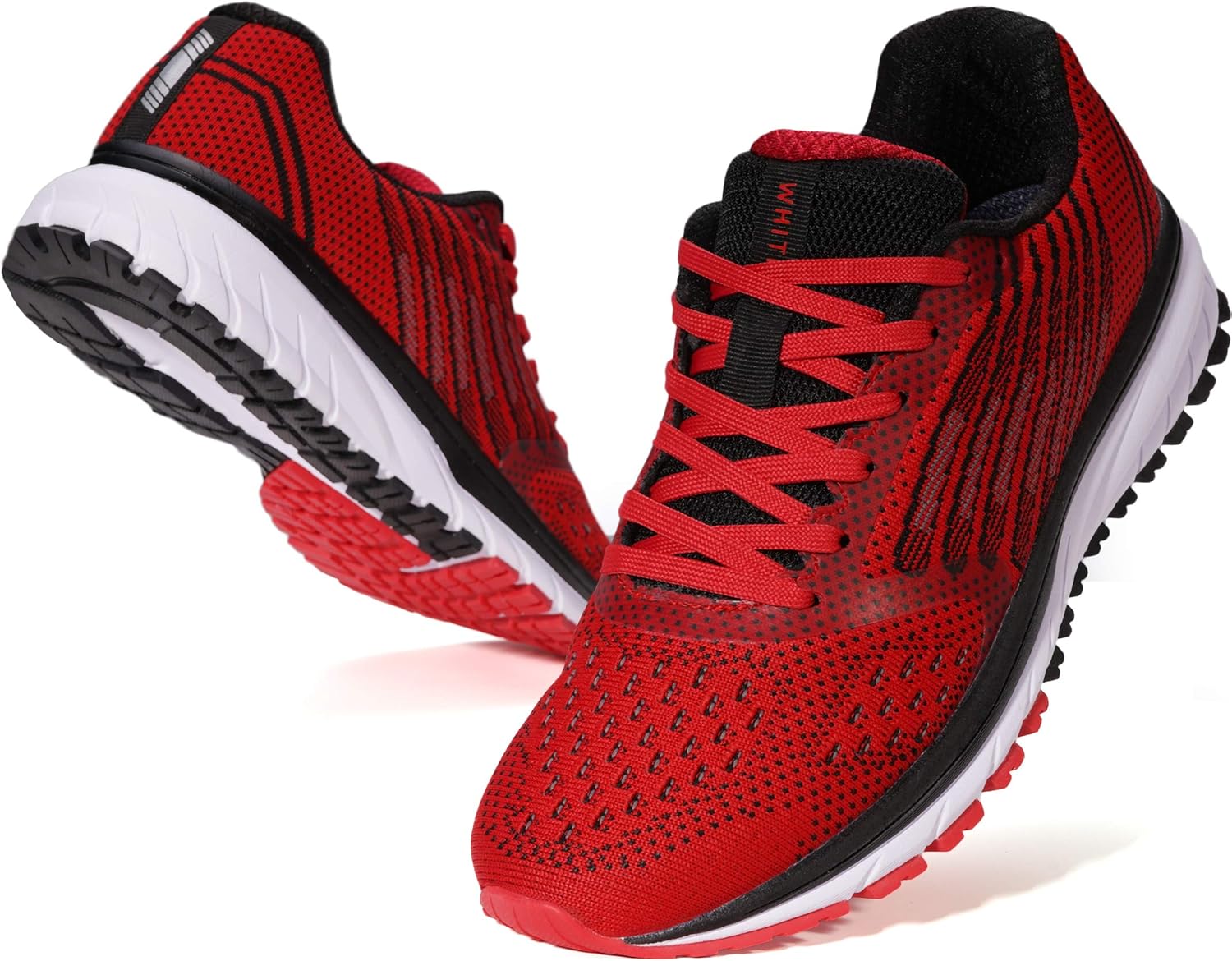
What it is and who it’s for\nThese are the Joomra Whitin men’s running shoes designed to deliver a supportive fit with a cushioned ride. If you’re after a lightweight daily trainer that can handle easy runs or tempo miles, these sneakers aim to provide a balanced blend of comfort and responsiveness for everyday runners. The slightly structured engineered knit upper offers breathability while a padded collar adds a touch of plushness around the ankle.\n\n## How they’re built\nThe upper features a specialized patch to help prevent lace tearing, paired with a traditional lace-up closure for a customizable fit. The midsole uses durable density foam to keep the ride light yet responsive, while the rubber outsole is designed to deliver reliable traction on a variety of surfaces. A level platform design with a lower heel-to-toe drop promotes a more natural running position, which can be beneficial if you’re trying to improve form or reduce strain over longer workouts.\n\n## Fit and comfort in use\nExpect a snug yet breathable feel thanks to the knit upper. The padded collar reduces fuss at the ankle, and the lace system lets you dial in tension. The foam midsole isn’t overly soft, which helps with energy return without sacrificing stability. If you’re sensitive to how a shoe’s drop affects your stride, the lower heel-to-toe difference may feel more natural from the first miles.\n\n## Performance and day-to-day use\nFor casual runners, these shoes aim to strike a balance between cushioning and stability. They’re not marketed as a maximalist ride, but the combination of lightweight foam and solid outsole grip can help with steady, consistent training. They’re likely to perform well on paved paths, light trails, and gym workouts where a reliable, everyday trainer is preferred.\n\n## Pros and cons at a glance\n- Pros: breathable upper, supportive fit, lace-tear protection patch, lightweight midsole, reliable outsole traction, natural-feeling drop.\n- Cons: not described as a high-cushion or race-day shoe, so if you need extra plushness or speed-specific geometry, this may fall short. If you prioritize a very aggressive ride or specialized support (e.g., for overpronation), you might want to compare options with targeted guidance.\n\n## Before you buy: what to check\nConsider your typical running surface and mileage. If you run on smoother roads and want a versatile trainer for daily runs, these could be a good match. Check your usual lace tension to avoid any rubbing on longer sessions. Keep expectations reasonable: the cushioning is balanced for everyday use, not a max-cushion experience for ultra-mileage days.\n\n## How it compares to other approaches\nThis shoe aligns with a practical, mid-range trainer philosophy: it’s not the lightest or most cushioned option, but it offers a solid blend of fit, durability, and traction. If you typically buy entry-to-mid tier trainers, this could be a sensible upgrade for consistency and comfort without pushing into premium pricing.\n\n## Final verdict\nIs it worth it? It makes sense if you want a practical, supportive daily trainer with a natural feel underfoot and dependable grip. It may not be the best pick if you need maximal cushioning or aggressive racing geometry.\n\n## FAQ\n- How does the drop affect my stride? The design emphasizes a lower heel-to-toe drop for a more natural running position, which may feel more intuitive if you’re used to traditional trainers.\n- Can I use these for longer runs? They’re geared toward everyday training and lighter workouts, for ultra-distance days, you might want additional cushioning options.\n- Are they suitable for wide feet? The upper is knitted and moderately structured, if you need a noticeably wider fit, confirm the specific width option before purchasing.