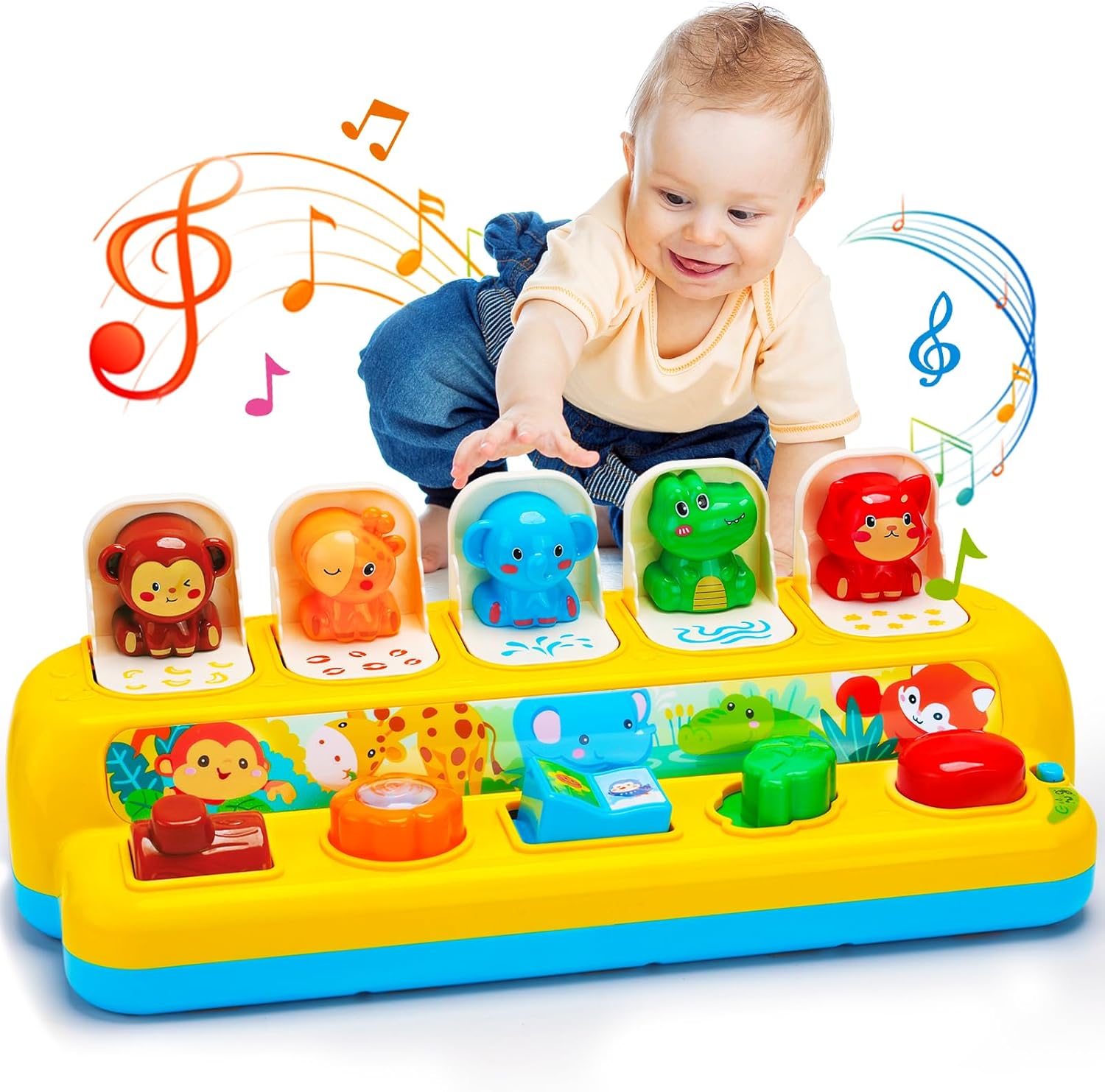
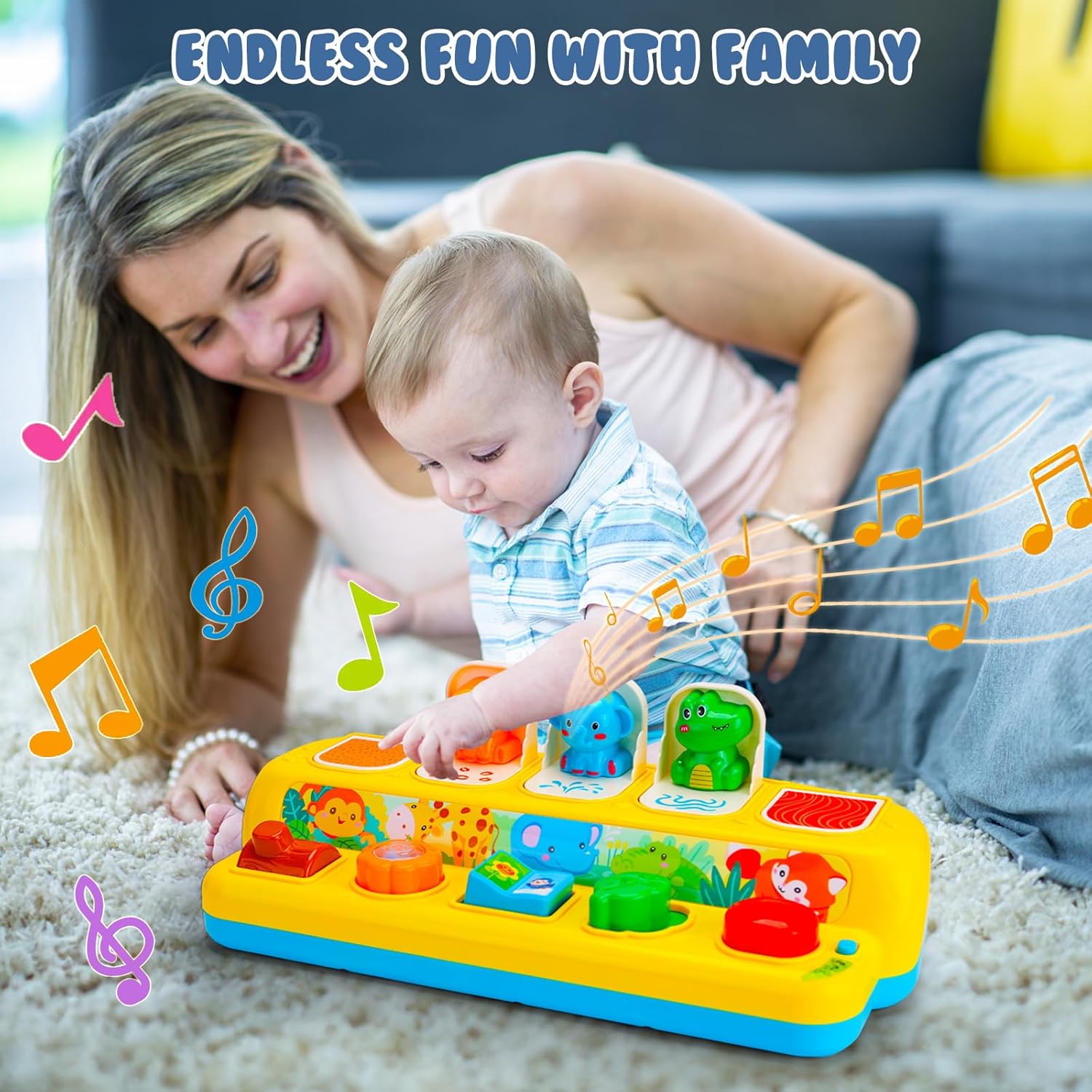
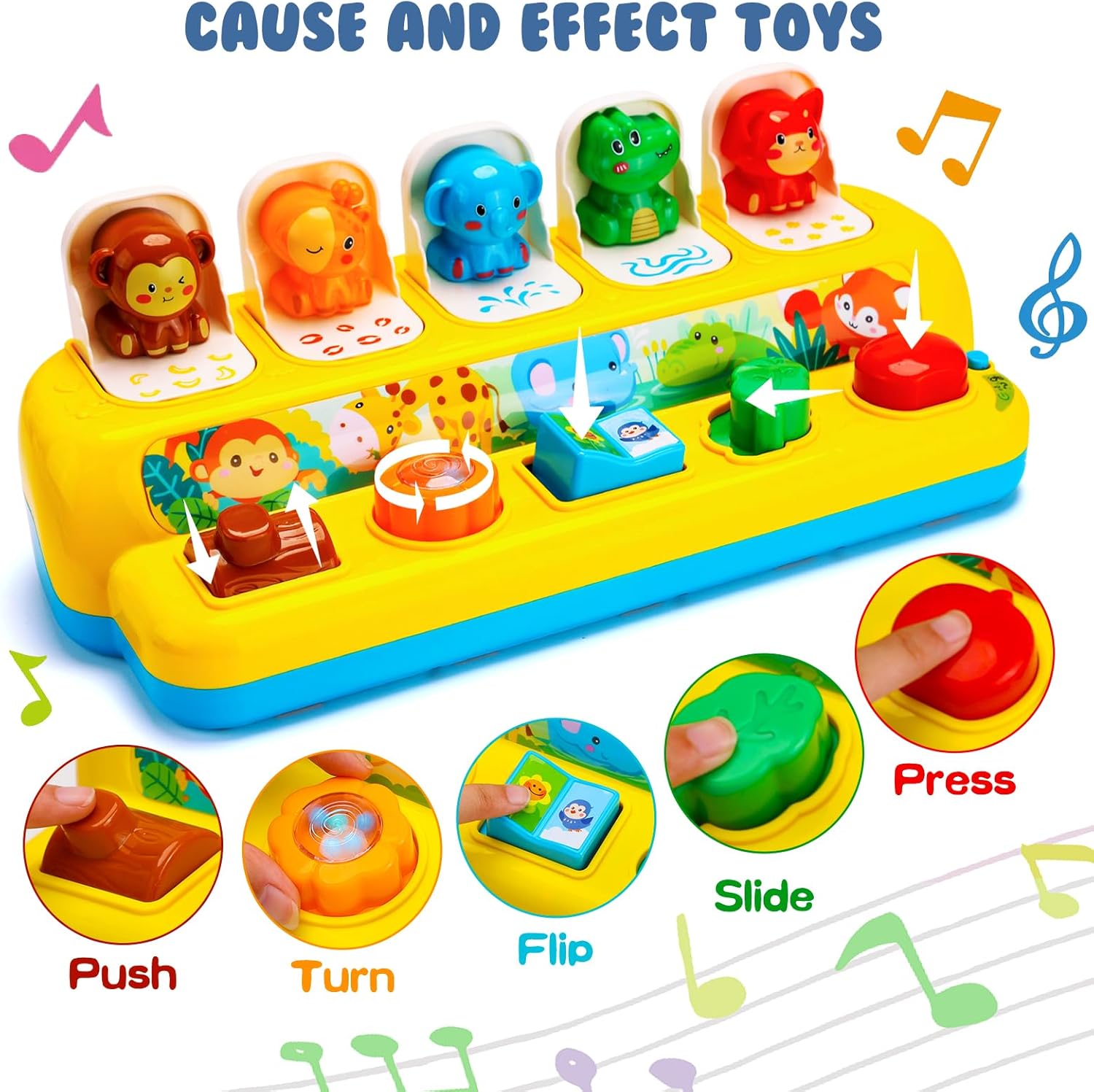
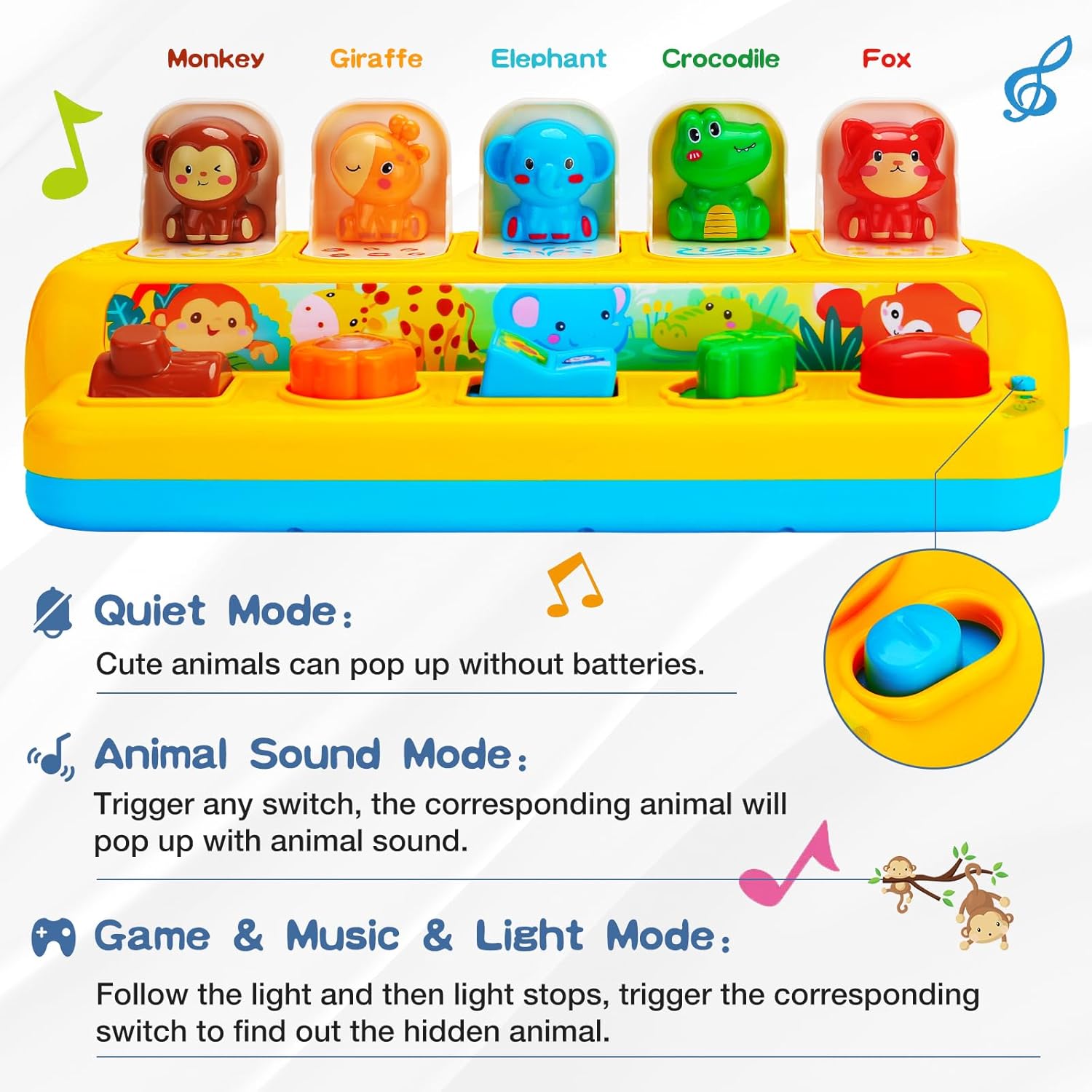
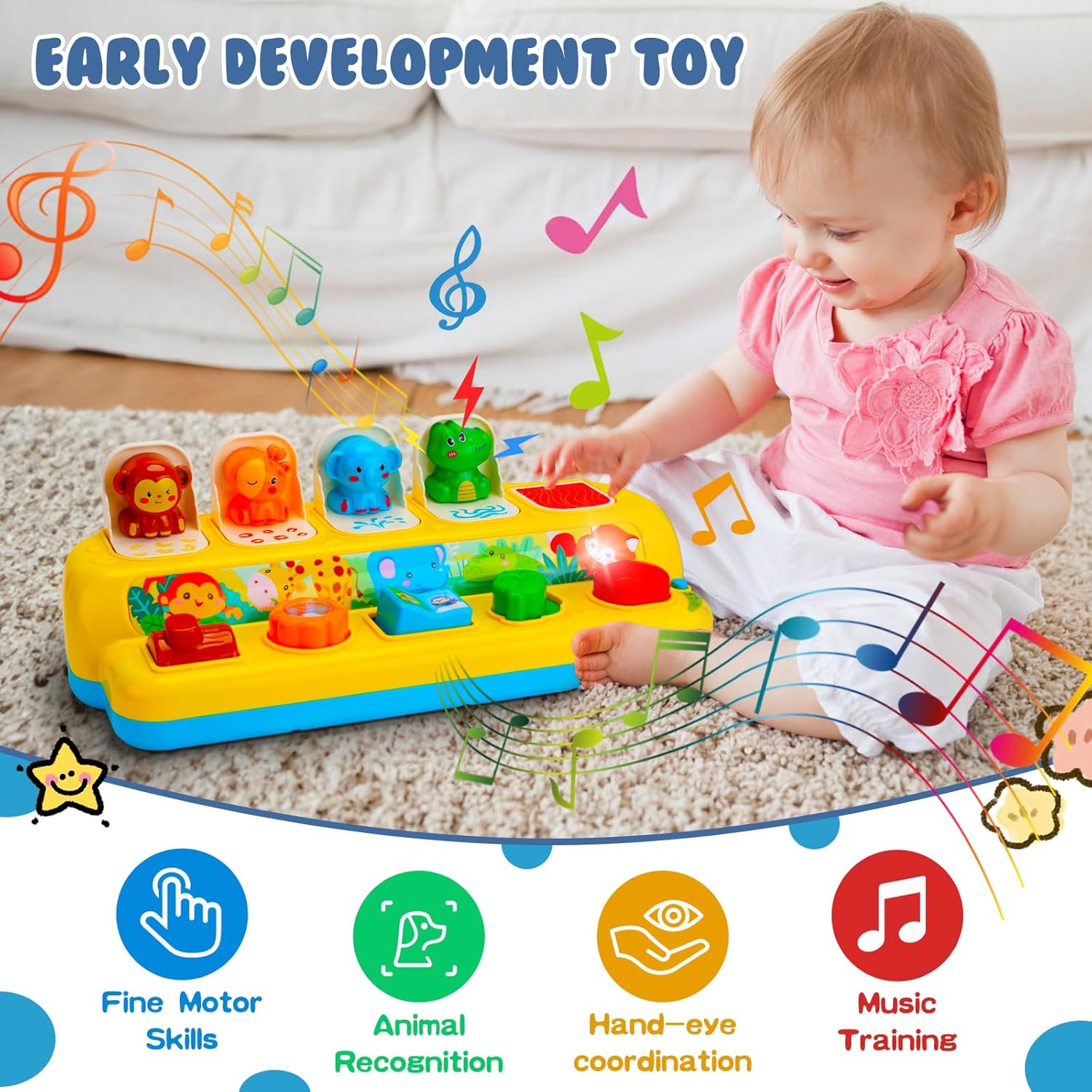
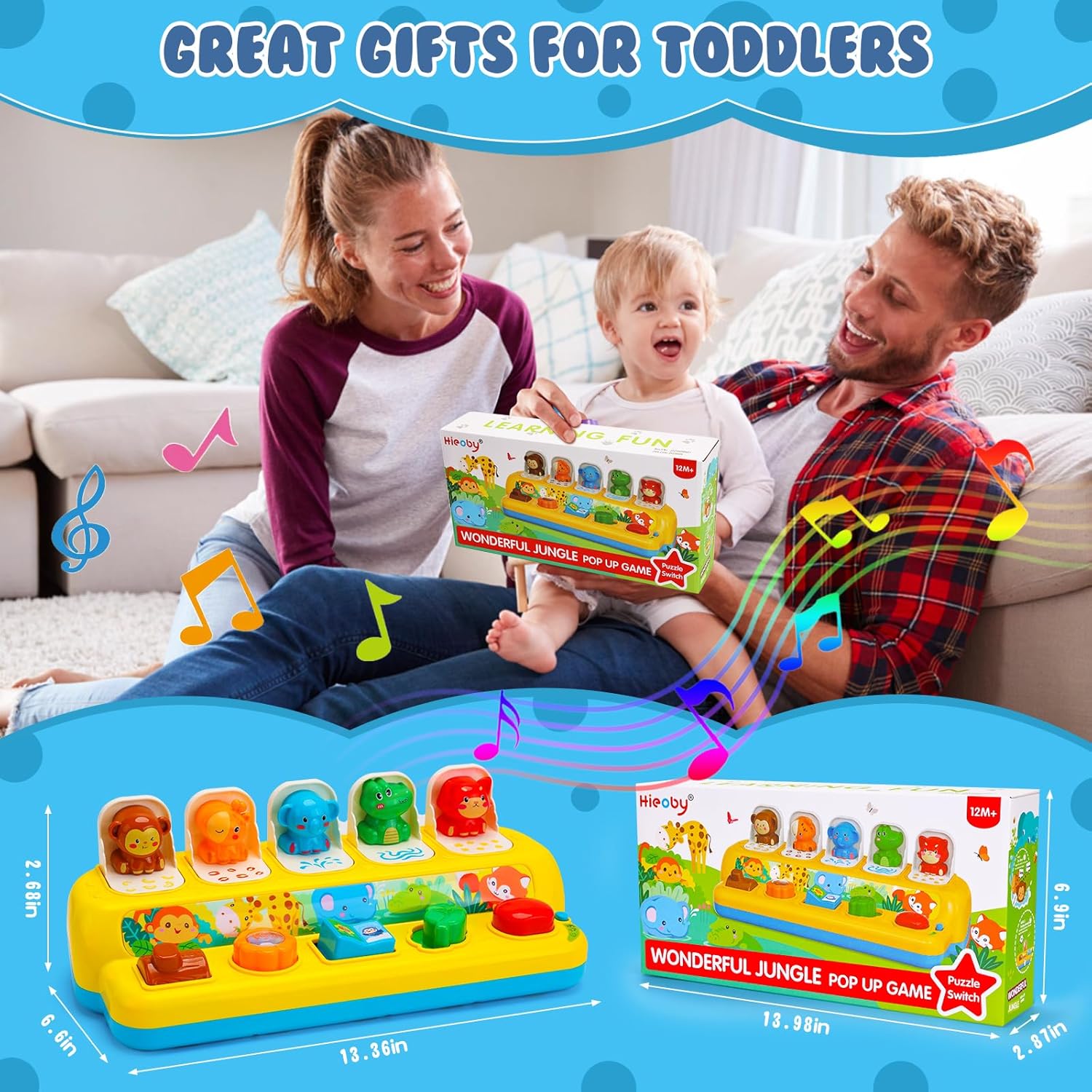
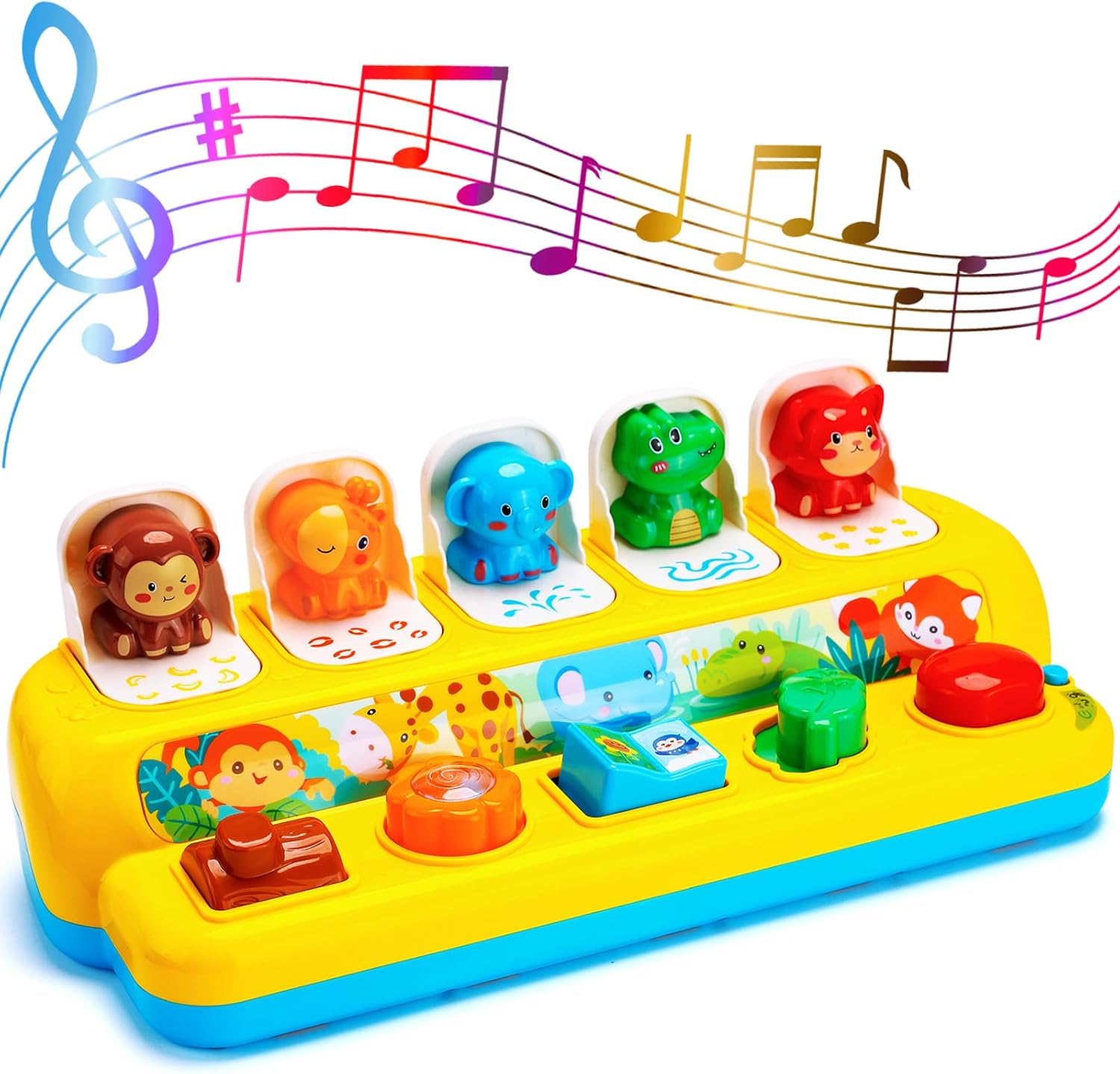
What this toy is and what it’s for\nThis is an interactive pop-up toy featuring 5 cute animals and 5 colorful buttons. Designed for early development, it encourages cause-and-effect learning, fine motor skills, color and animal recognition, and auditory/visual engagement. It’s positioned as a Montessori-style toy for babies and toddlers who are exploring how their actions trigger outcomes.\n\n## How it works and what makes it engaging\nThe toy offers multiple play modes to grow with a child. In Quiet Mode, animals pop up without batteries for simple visual cause-and-effect. Learning Mode prompts a corresponding animal sound when a button is pressed, reinforcing associations. Game Mode adds music and light, the light guides the child to find the hidden animal, adding a playful challenge. The design emphasizes safe handling: rounded edges, non-toxic ABS material, and lightweight construction that small hands can manage.\n\n## What stands out and what may fall short\nOn the positive side, the toy provides varied interactions—push, turn, flip, press, and slide—so it can adapt as a child’s fine motor skills develop. The three modes offer both free exploration and guided learning, which can help sustain interest across months. A potential limitation is that the most dynamic play relies on button interactions, if a child isn’t drawn to the mode with lights and music, the exercise in cause-and-effect may feel repetitive over time.\n\n## Ideal audience and who it isn’t for\nIt’s well suited for babies and toddlers around 9–24 months who enjoy playful animals and simple puzzles. It may not be ideal for kids who require more complex STEM challenges or for households that prefer screen-free, quieter activities all the time.\n\n## When it makes sense to buy\nIf you’re seeking a beginner-friendly toy that supports hand-eye coordination, object recognition, and early auditory cues, this toy presents a tangible, tactile way to explore cause and effect. It can be especially helpful during tummy time or seated play, as it invites reach-and-grab actions and moments of anticipation with each button press.\n\n## What to check before purchasing\nLook for smooth button action and reliable popping mechanism for consistent feedback. Ensure storage or play areas are free of small parts that could pose a choking risk for younger infants, and note that battery-dependent modes require a source of power for longer sessions. Consider your child’s interests: if they love animals and bright lights, this toy is more likely to capture their attention.\n\n## Practical use example\nDuring a calm play period, a caregiver can guide the child to press different buttons to hear animal sounds, then switch to Quiet Mode for a moment of silent exploration where the animals pop up without noise. Later, in Game Mode, the kid follows the light to uncover the hidden animal, turning a simple activity into a short, engaging hunt.\n\n## Quick comparison to alternatives\nThis toy sits between basic cause-and-effect shake-and-play toys and more advanced STEM toys. It’s a practical pick if you want a budget-friendly, versatile option that accommodates growing curiosity without introducing screens. If you’re seeking a toy with more complex mechanical puzzles or longer battery-free play, you might explore other Montessori-inspired options.\n\n## FAQ (based on available data)\n- How many animals are included? Five animals with five corresponding buttons.\n- What ages is it suitable for? Marked for 9–24 months, extending into early toddler years.\n- Are there different play modes? Yes: Quiet Mode, Learning Mode, and Game Mode with Music & Light.\n- Is it safe for babies? Made from non-toxic ABS with rounded edges, designed for small hands.\n- Does it require batteries? Game Mode uses music and light, Quiet and Learning modes do not require batteries for the action.\n\n## Is it worth it?\nWorth considering if you want a compact, multi-mode early-learning toy that builds fine motor skills and cause-and-effect understanding while keeping a child entertained with music and lights.