

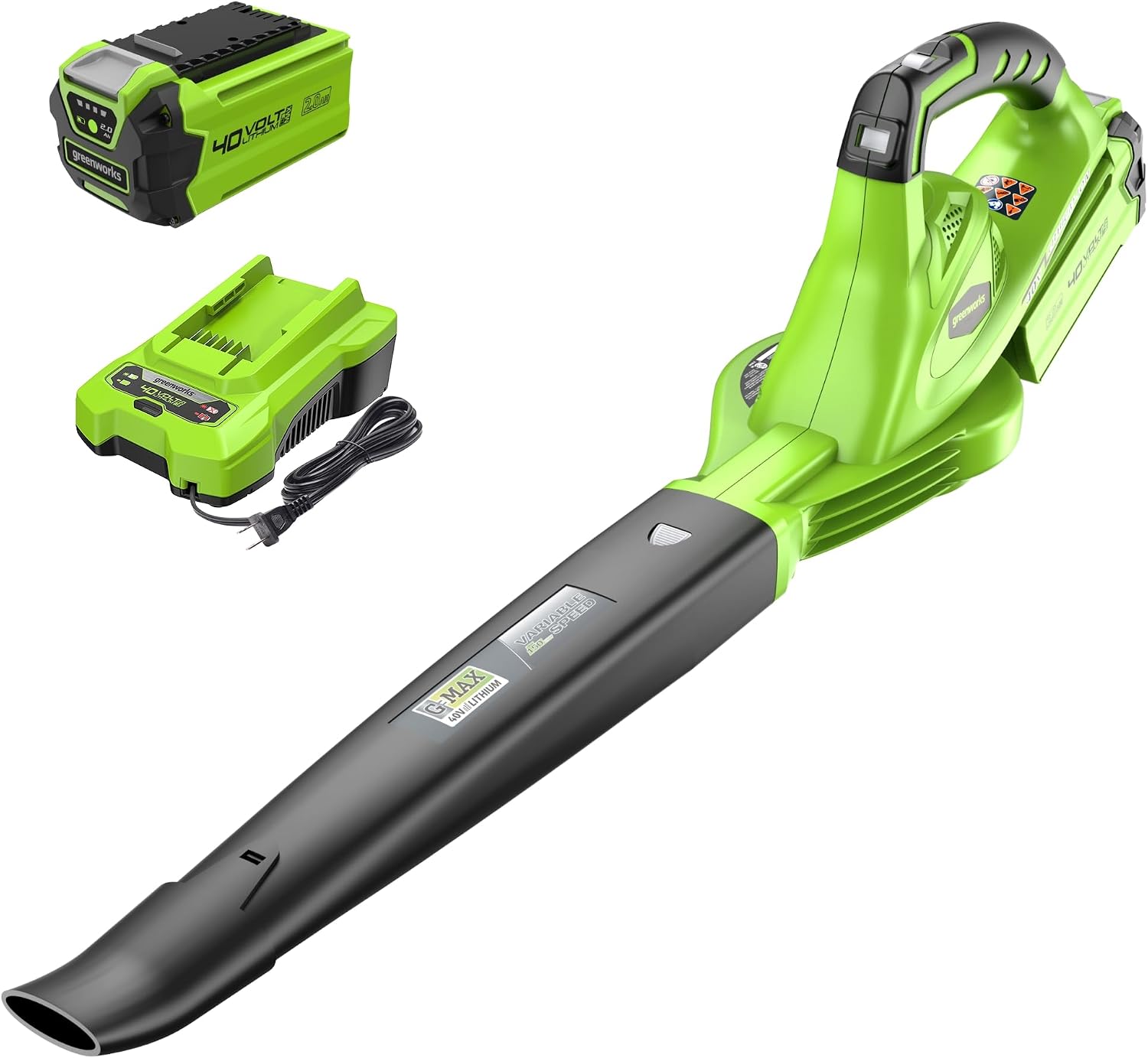
Greenworks Cordless Leaf Blower 40V
Product description
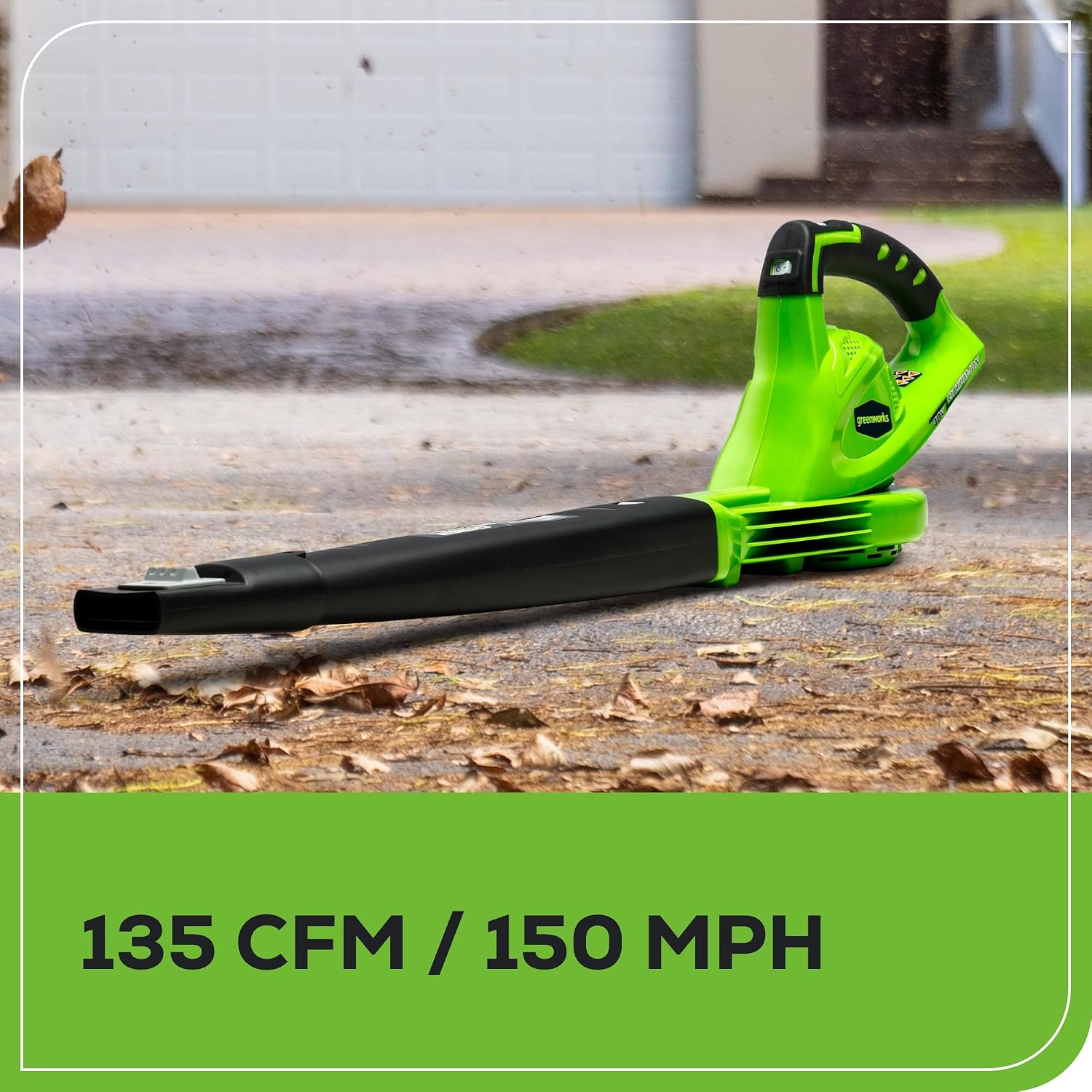
If you want a quick way to clear loose yard debris without dragging out a cord, this Greenworks blower is built for that kind of cleanup. Its 40V cordless setup comes with a 2.0 Ah battery and charger, while a variable speed dial lets you adjust the airflow for different tasks. It’s aimed at patios, decks, porches, garage floors, and driveways—not a substitute for a more demanding tool when debris is packed or the cleanup area is extensive. The listed 135 CFM airflow and 150 MPH wind speed give you useful performance details, but there’s no runtime figure to help estimate how long a charge will last.
What to know
The blower moves air at up to 150 MPH, with 135 CFM of airflow, and includes a concentrator nozzle for directing it into tighter spaces. That combination is intended for leaves, everyday debris, and light snow on hard surfaces. A variable speed dial gives you some control over how much air you use: lower airflow can suit a small porch cleanup, while more power may help gather scattered leaves across a driveway. The included 2.0 Ah battery and charger mean the listed package is ready to run without selecting those separately.
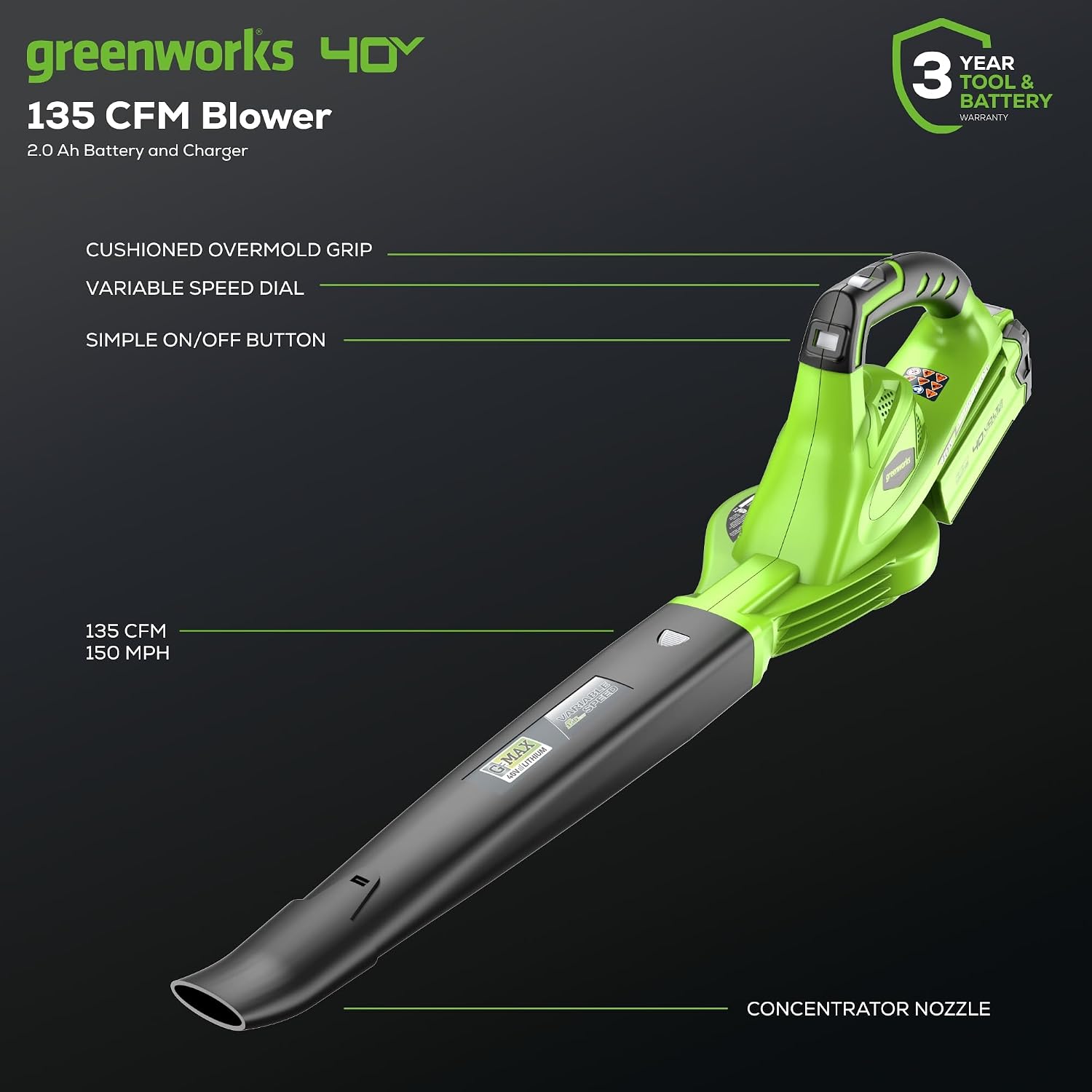
The ergonomic comfort grip and lightweight design are intended to make the tool easier to steer and less tiring to hold. Keep in mind that the product details don’t give a runtime or weight, so you can’t tell from the listing how much ground it will cover per charge or how it will feel during a longer session. Its stated use for light snow also shouldn’t be read as a promise for deep or heavy snow removal.
Best use cases
This setup makes most sense for short, routine clearing jobs around a home: pushing leaves off a deck, moving debris from a garage floor, or tidying a porch after the wind has scattered dry leaves. The concentrator nozzle is useful when you want to guide debris away from corners or along an edge rather than simply blowing across an open area. For broad lawns, wet piles, or heavy debris, a buyer may prefer a tool chosen specifically for more demanding cleanup, this model’s stated strengths are convenience and control on smaller hard-surface areas.
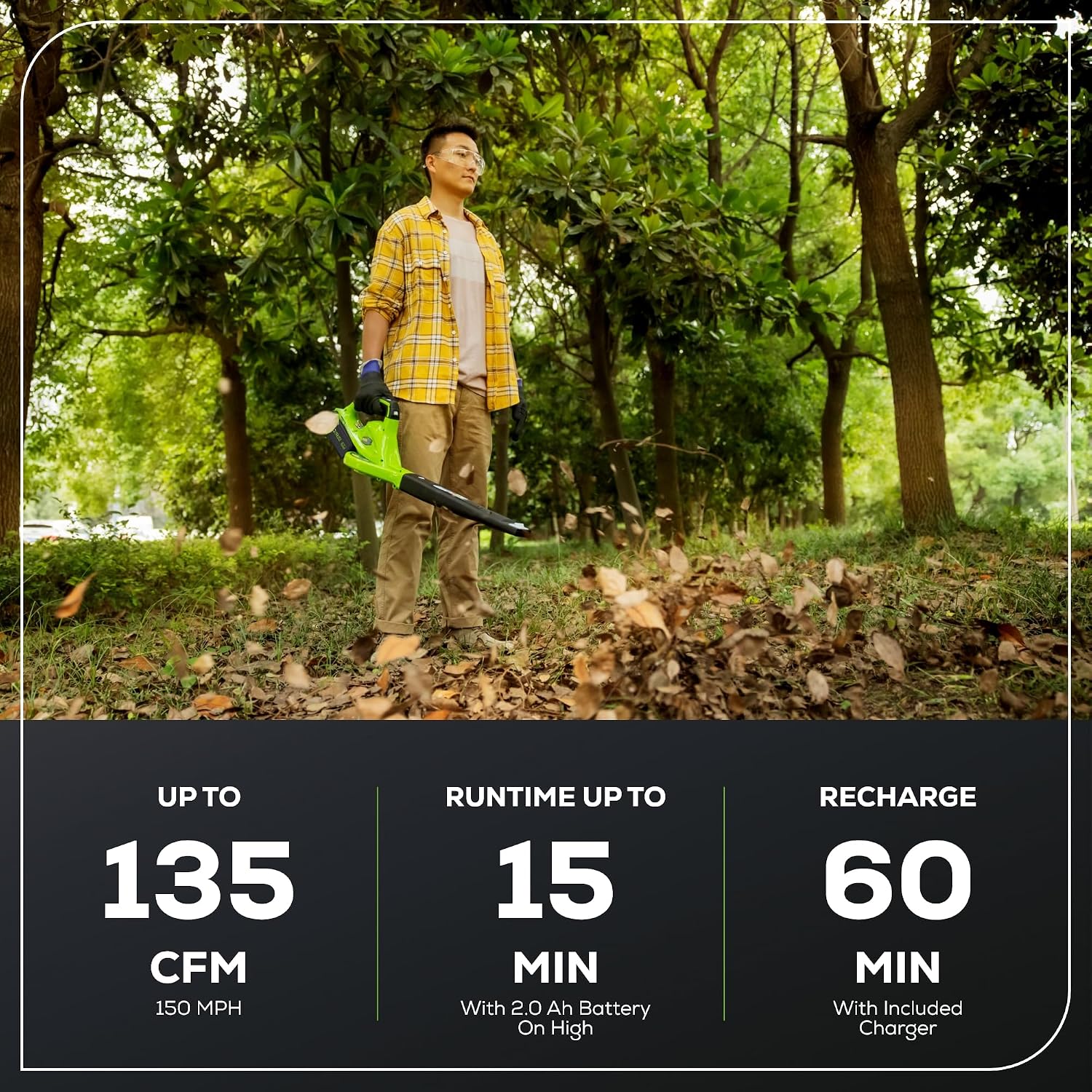

It suits you if you want cordless cleanup for several everyday spots and value being able to adjust the airflow. You may want to skip it if you need a stated runtime to plan long sessions or are shopping primarily for heavy-duty debris removal. The maker describes the blower as handling light or heavy debris, but the available figures don’t specify how it performs in those more demanding conditions.
Tips for day-to-day use
Start with a lower speed when clearing a porch or garage floor, then turn the dial up if leaves are spread farther apart or need more force to move. Aim the concentrator nozzle toward the area where you want debris to collect, rather than chasing leaves in random directions. On a driveway, working in a consistent line toward one edge can make the cleanup less scattered. For light snow, the stated use is clearing surfaces such as patios and driveways, the product information does not give a depth or snow-condition limit, so treat that as a light-duty task.

Questions before you buy
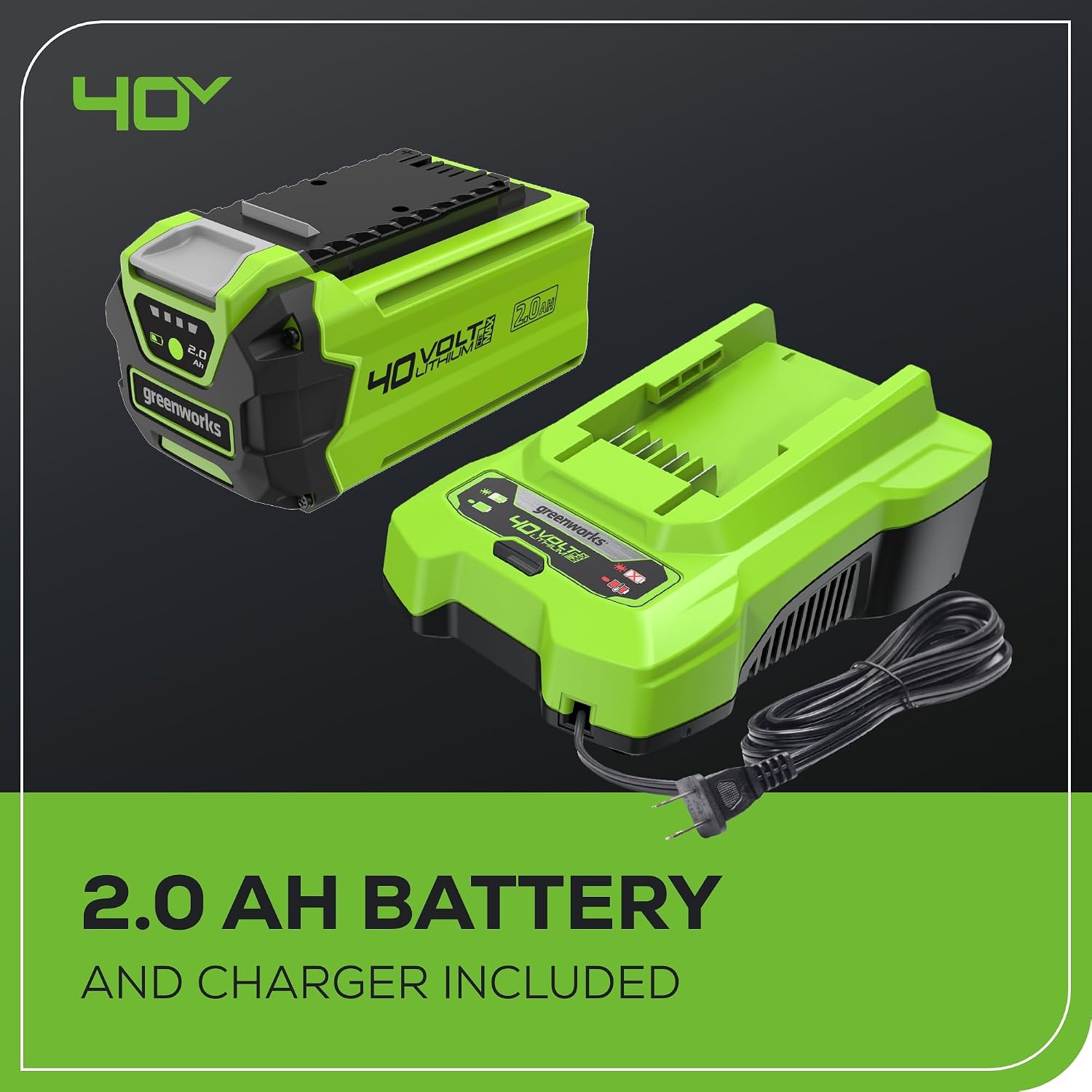
Does it come with a battery and charger? Yes. The product name specifies a 2.0 Ah battery and charger with the 40V blower.
Can you adjust the airflow? Yes. It has a variable speed dial for changing airflow to suit the cleanup task.
What surfaces and debris is it intended for? The listing names patios, decks, porches, garage floors, and driveways, with leaves, debris, and light snow as the cleanup targets.
Buying verdict
Choose this Greenworks blower if your main goal is convenient, cordless cleanup of loose leaves and everyday debris around hard surfaces, and you like having a speed control and focused nozzle. The included battery and charger make the package straightforward to start using, but the missing runtime detail matters if you expect to clear a large area in one session. For occasional, localized yard tidying, its stated use is a close fit, for prolonged work or more demanding debris, look for a tool with performance and runtime information that better matches that workload.