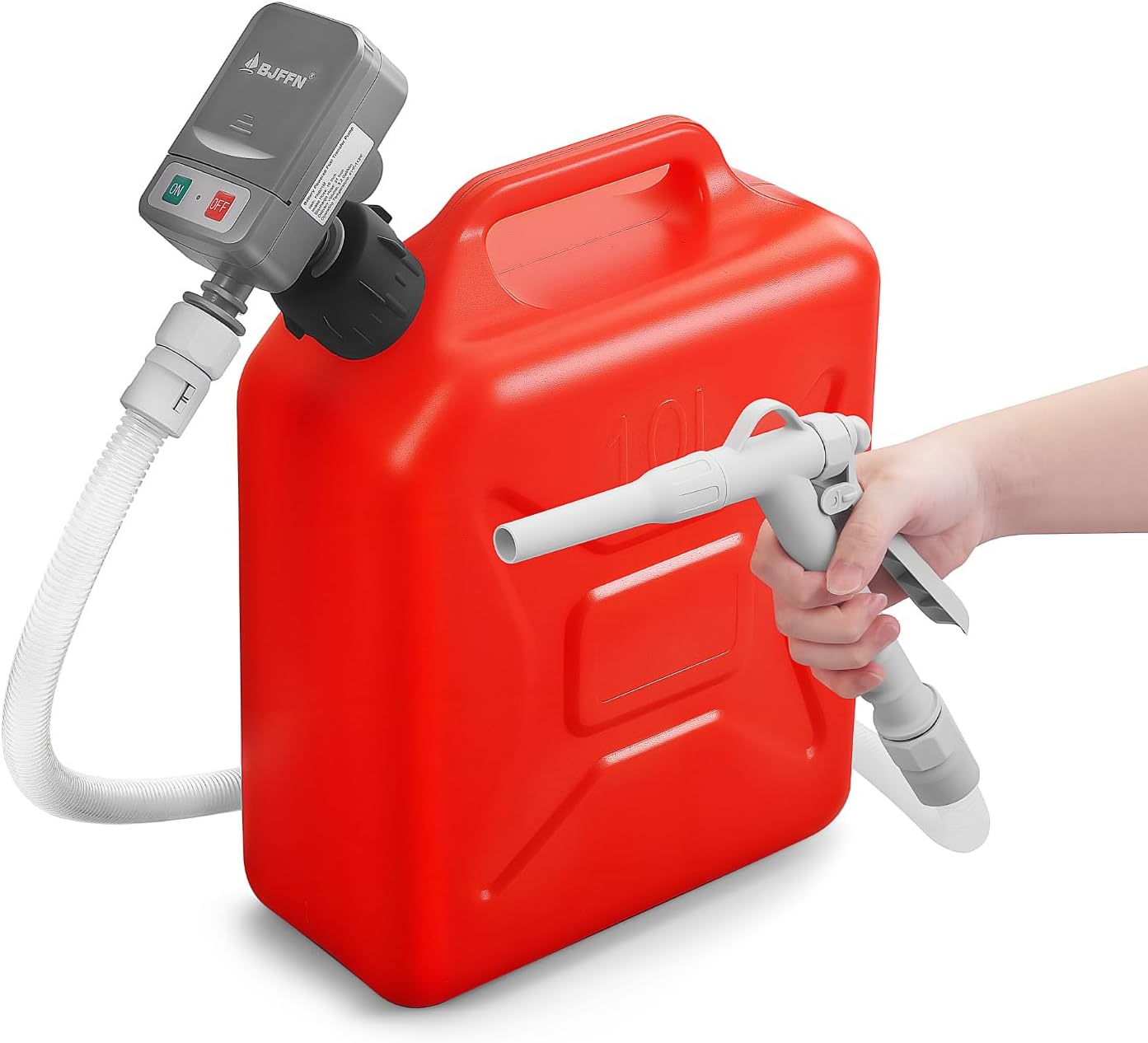
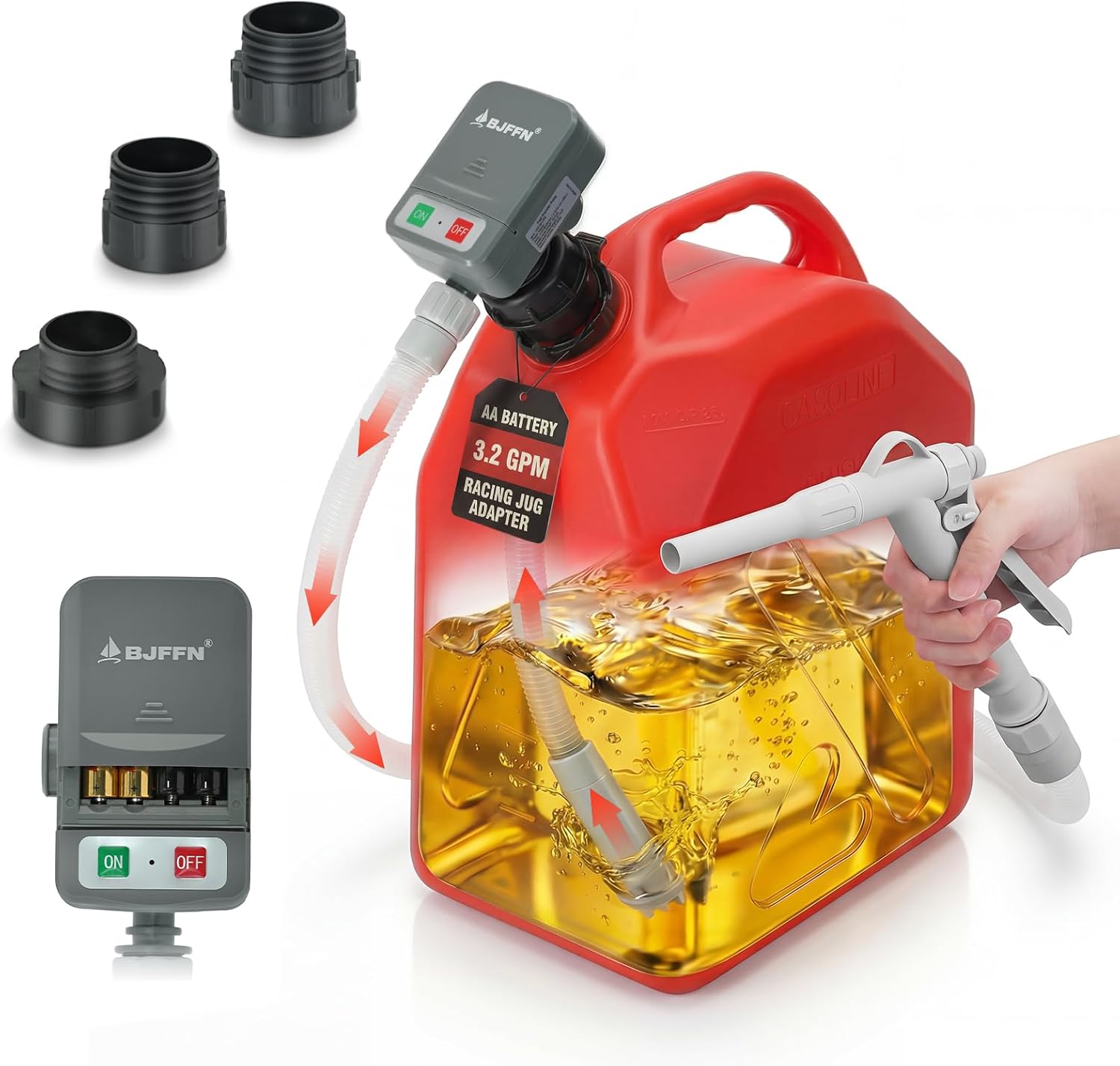
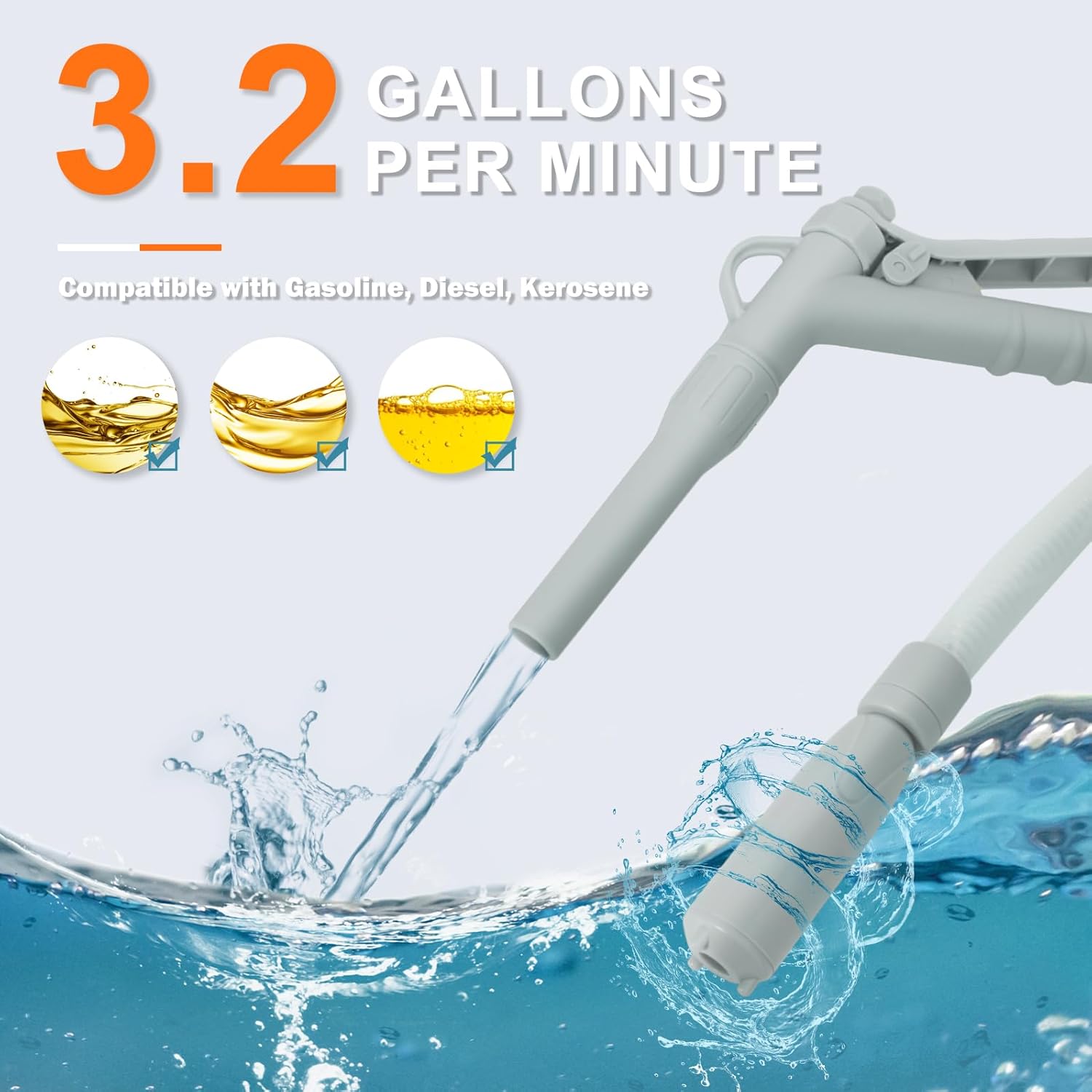
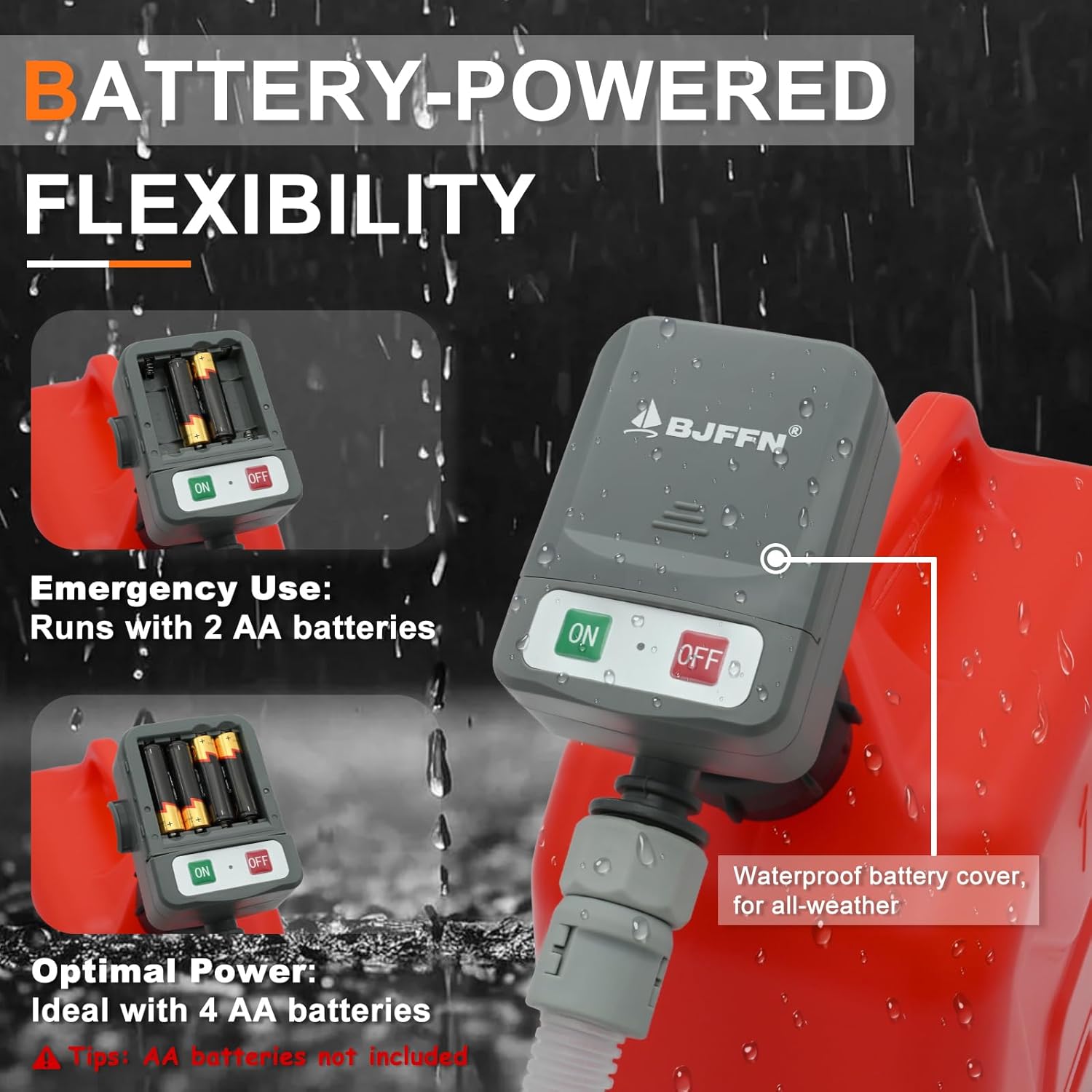
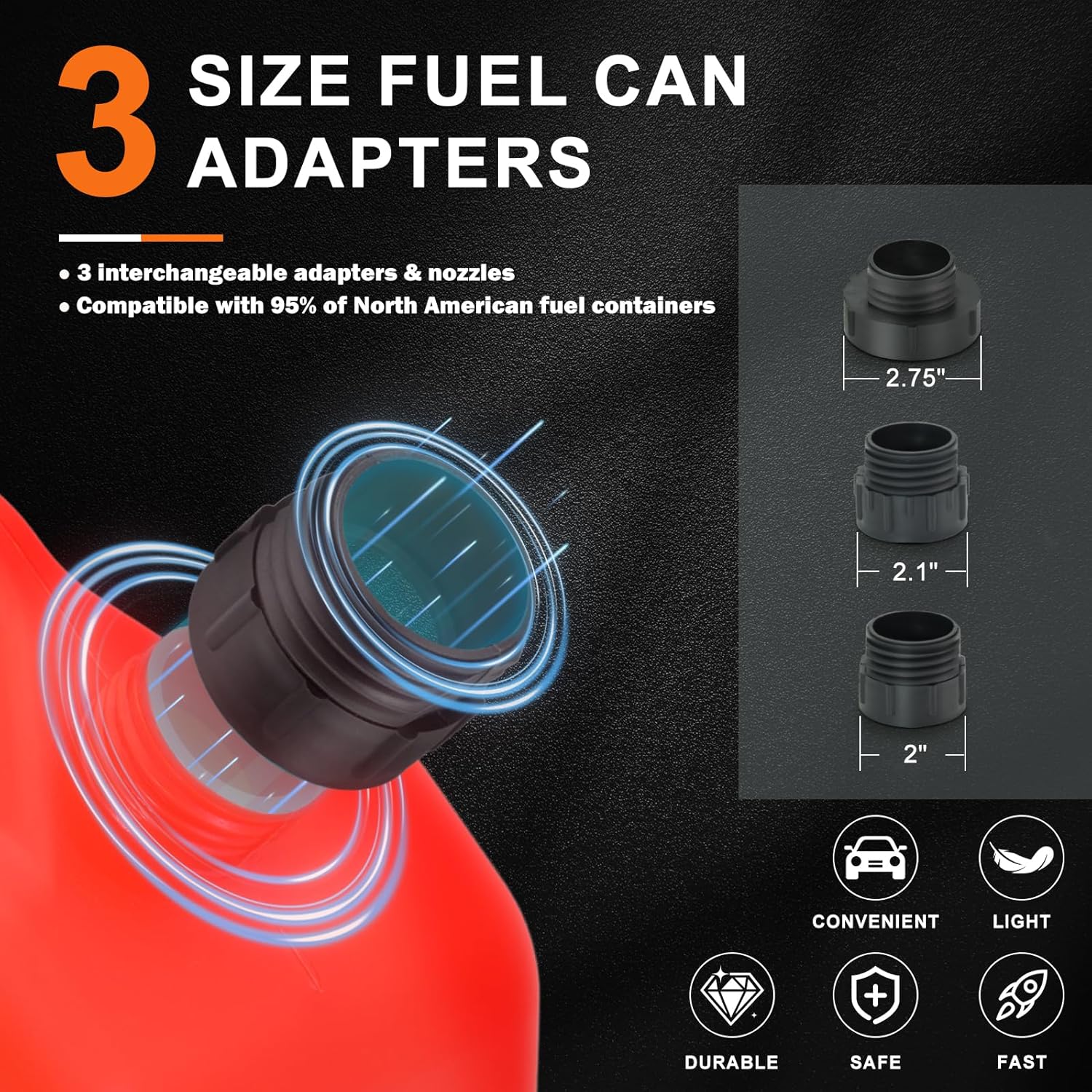
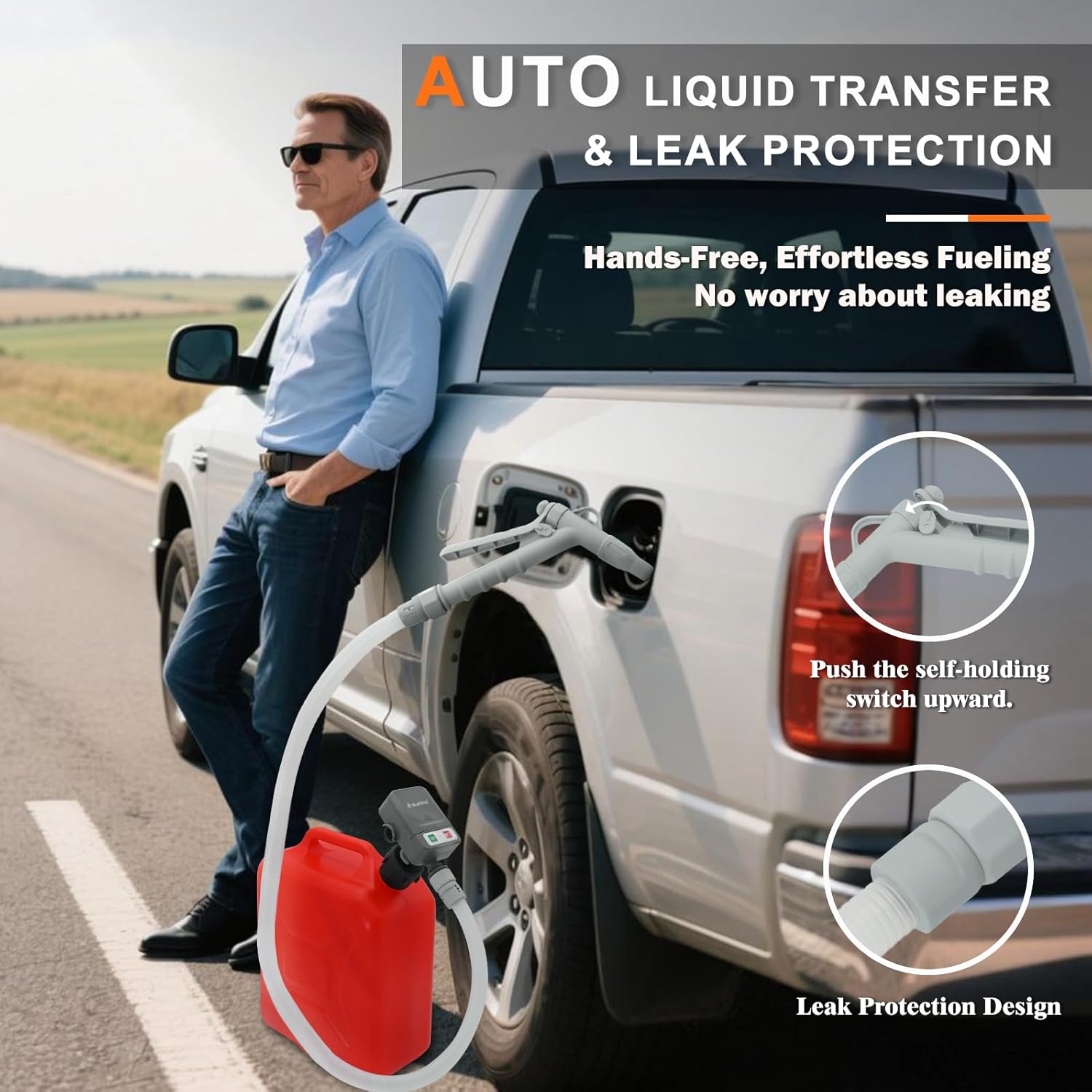
What this is and what it solves\nThis is a portable, battery-powered fuel transfer pump designed to drain and move liquids from a 5-gallon gas can to other containers with minimal effort. With a maximum flow of 3.2 GPM and a 51-inch intake hose, it aims to help you reach distant tanks or fill small containers without heavy lifting or repeatedly maneuvering a bulky can. It’s advertised as a practical tool for quick transfers in garages, sheds, or vehicles, reducing the need to carry heavy objects and reducing spill risk during pour events.\n\n## On-paper strengths and practical limits\nOn paper, the pump offers a fast transfer rate and a long hose, which translates to time savings in routine fueling tasks. It’s described as lightweight, weighing under 2 pounds, and battery powered (uses 4 AA batteries, with 2 AA as a backup in emergencies). In practice, you’ll want to verify battery availability and speed in real-world conditions. The flow control nozzle lets you start and stop flow to minimize spills, a small but meaningful convenience for less-wasteful transfers.\n\n## What stands out in use\nA key advantage is portability: you can stash it in a trunk, garage, or toolbox and deploy it when needed, without plugging into outlets. The included adapters accommodate multiple North American fuel can openings (2", 2.1", 2.75"), which helps with compatibility across common containers. The hose is made from durable polyethylene and is noted as rustproof and corrosion-resistant, which is reassuring for regular use with fuels like gasoline, kerosene, and diesel.\n\n## Who it’s for—and who it isn’t\nThis device seems well-suited for DIYers, boaters, gardeners, and those who frequently refuel small equipment without dragging heavier cans around. It may not be the best choice if you frequently work with extremely large volumes or require professional-grade continuous pumping, since it relies on battery power and a modest 3.2 GPM rate. If you depend on a constant power supply or need higher flow for commercial use, you might look for higher-capacity options.\n\n## When it makes sense to buy\nConsider this pump if you value quick, near-effortless transfers and want to keep fueling tasks tidy and contained. It’s especially useful for reaching awkward tanks or containers that are hard to tip, and for situations where you want to minimize lifting and physical strain.\n\n## What to check before you buy\n- Ensure you have fresh AA batteries on hand, since performance hinges on battery power.\n- Confirm the target container openings match one of the included adapters.\n- Remember that the stated flow rate is a maximum, real-world speed can vary with liquid type and container configuration.\n- If you’re dealing with highly viscous fuels or large-scale transfers, assess whether the 3.2 GPM rate aligns with your needs.\n\n## Practical usage example\nImagine transferring fuel from a 5-gallon can to a small boat tank sitting a few feet away in the garage. With the 51-inch hose, you can reach the boat’s fill point without moving the can or spilling, and you can stop the flow immediately using the nozzle to prevent overflows.\n\n## Quick FAQ\n- Will it work with all fuels? It’s designed for gasoline, kerosene, diesel, and non-potable liquids, verify compatibility for your specific liquid.\n- How long does a 5-gallon transfer take? At up to 3.2 GPM, it can finish in roughly 2 minutes under optimal conditions, though results vary with liquid type and setup.\n- Can it run without being plugged in? Yes, it runs on AA batteries, with better performance using 4 AA cells. In an emergency you can use 2 AA batteries.\n\n## Final thoughts\nIf you prioritize portability, reasonable speed, and ease of use for common fueling tasks, this pump offers a practical balance. It’s not a high-end industrial device, but for everyday maintenance and quick transfers, it can be a sensible addition to a toolbox or vehicle kit.