

EVIQO Level 2 EV Charger 48 Amp 240V
Product description
This Level 2 EV charger delivers faster home charging with up to 48 amps of hardwired power, making overnight and daily top-ups more practical for electric vehicles. It combines a 25-foot charging cable and Wi-Fi smart control so you can schedule charging, adjust current in 1 amp steps, and monitor energy use from the app.
Key Points
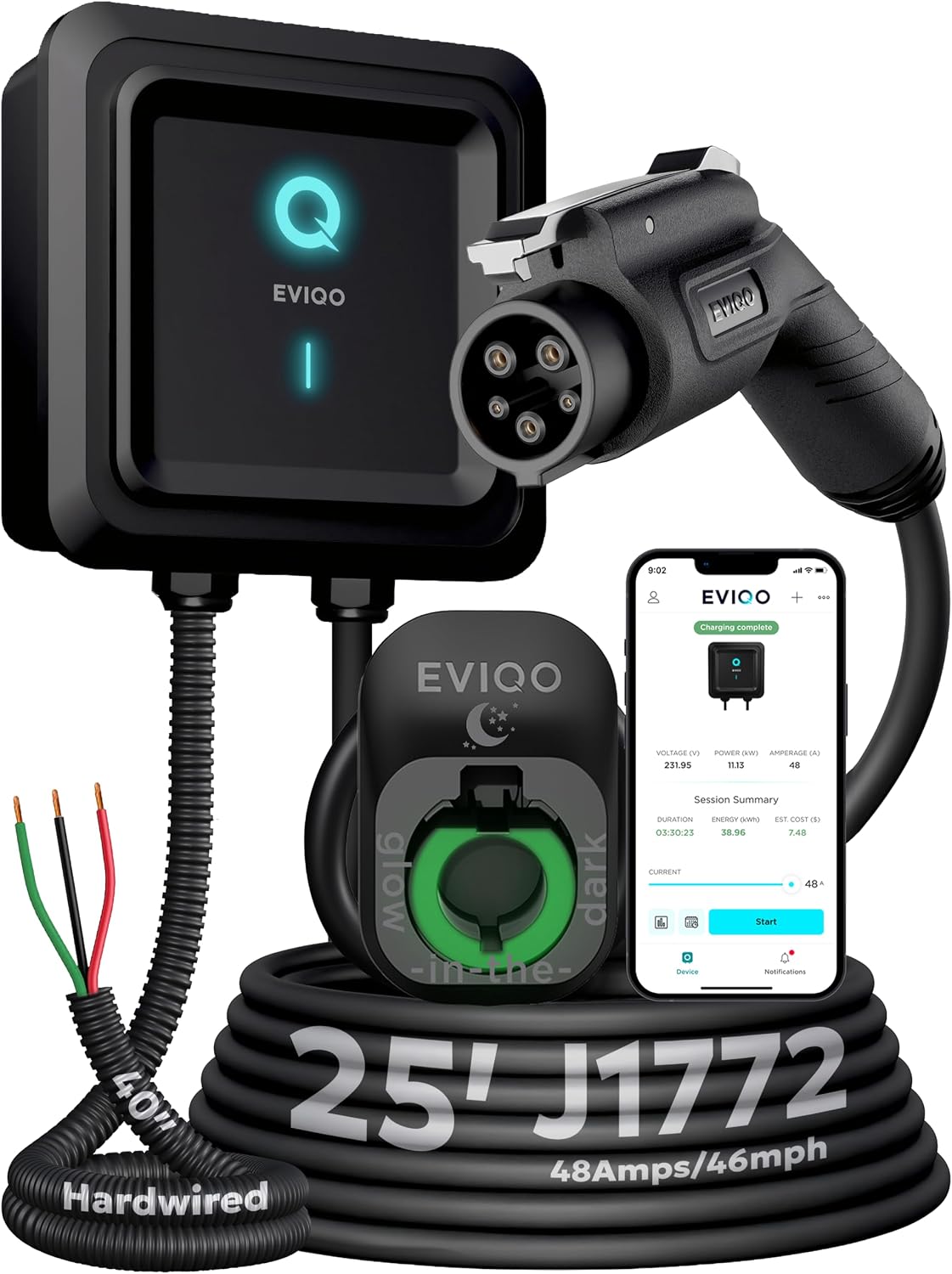
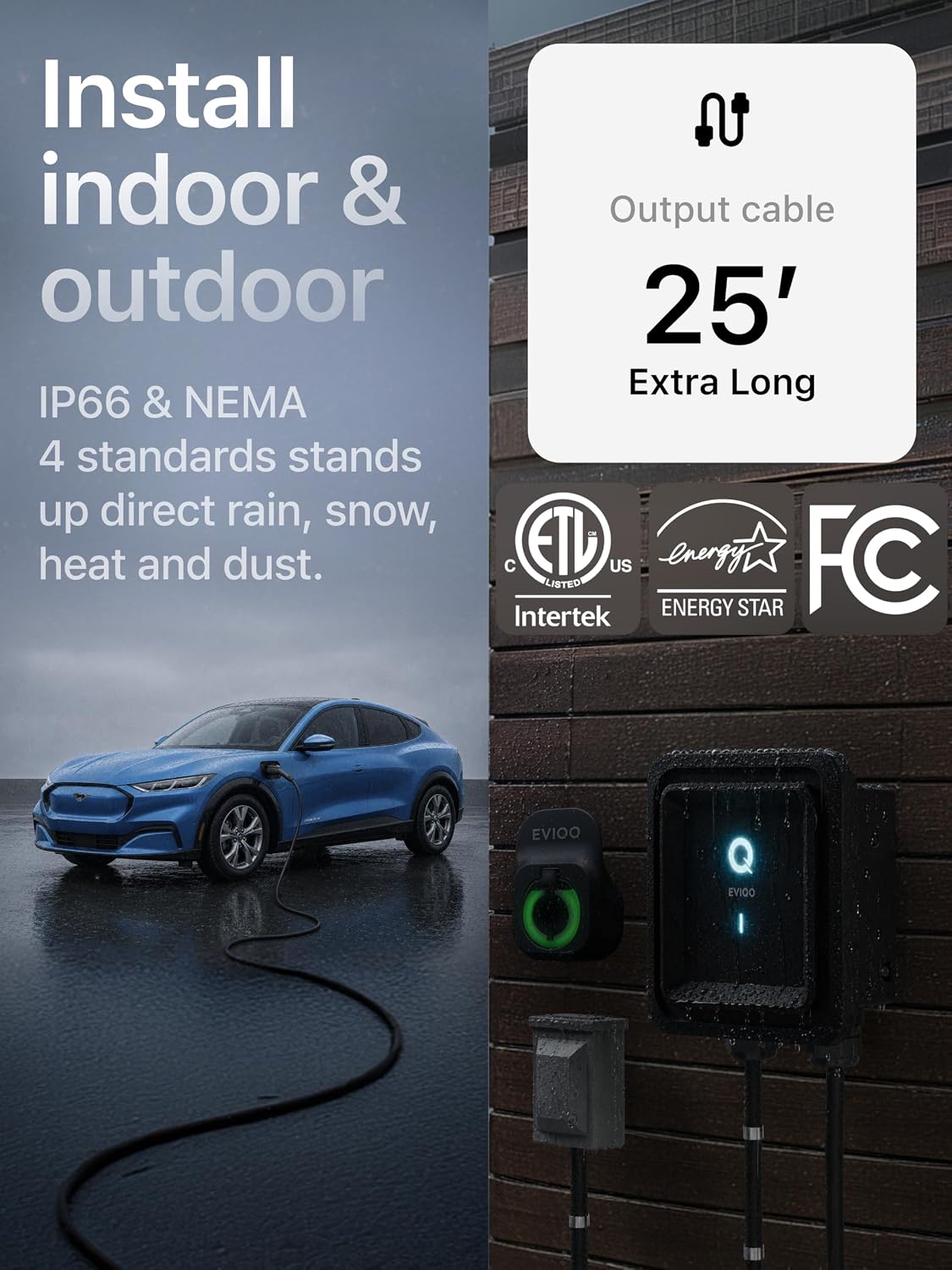
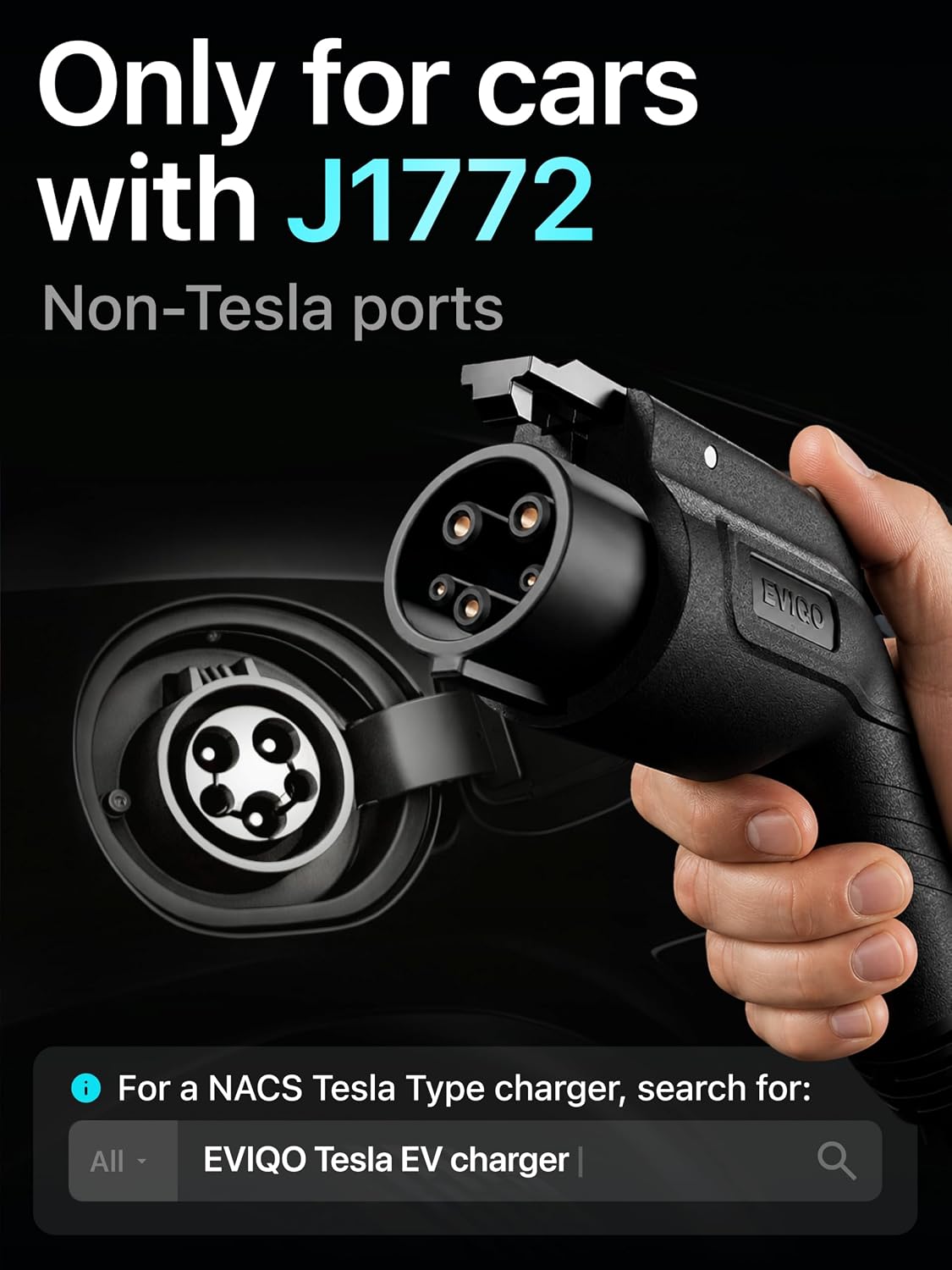
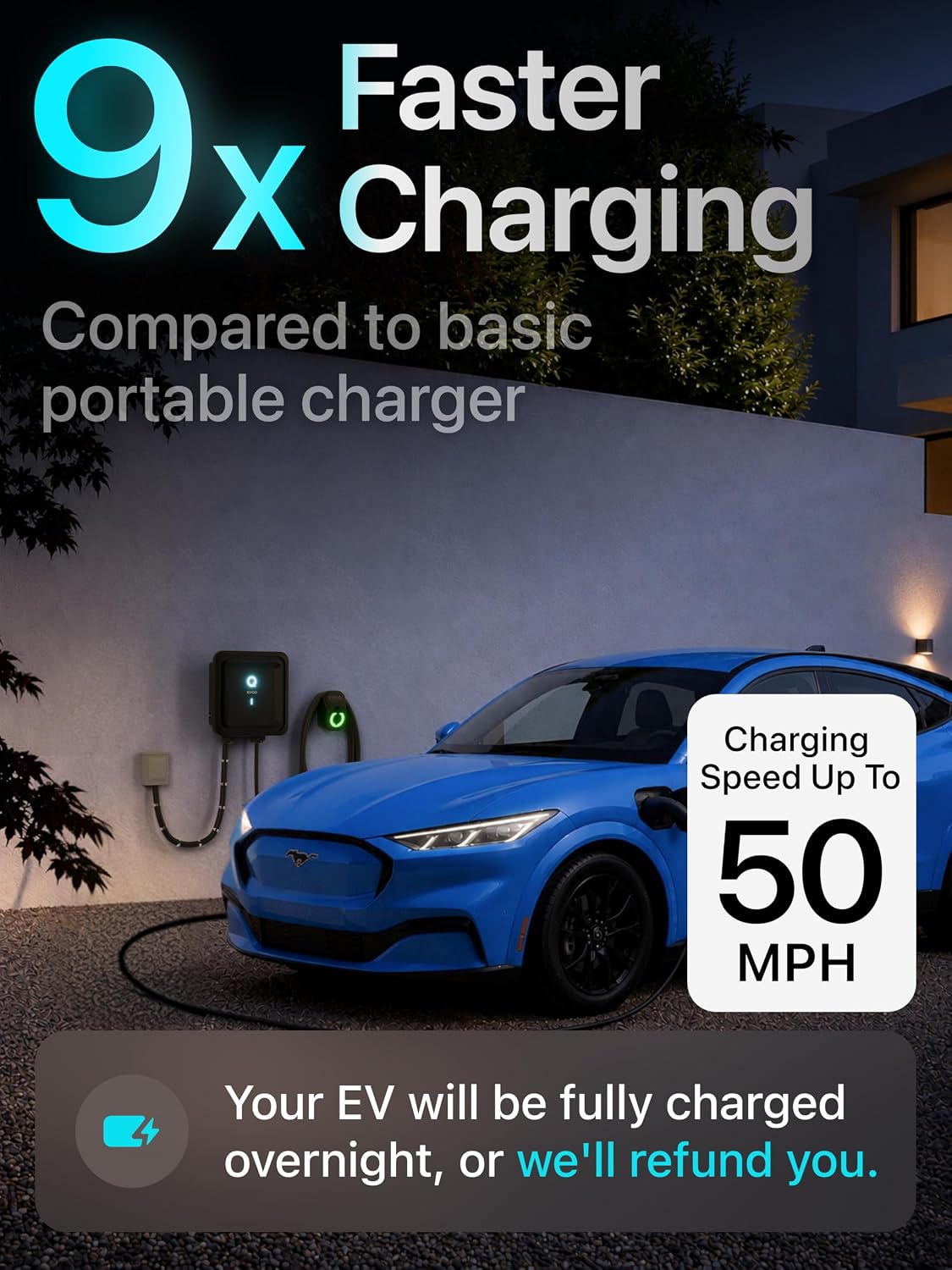
This hardwired 48 amp charger provides up to 11.5 kW charging power, which increases charging speed compared with typical portable Level 1 units. The unit includes a rugged SAE J1772 connector compatible with most North American EVs, and an adapter is required for Tesla vehicles. A reset button on the housing clears faults quickly and the mainboard has steel shielding to protect internal components. According to the manufacturer, the product is UL, ETL, FCC and Energy Star certified and may qualify for rebates and the 30% federal tax credit where applicable. The design features a NEMA 4 IP66-rated enclosure to resist rain, snow, dust and heat.
Technical Specifications
- Name: EVIQO Cargador EV Nivel 2 48 Amp
- Power: 11.5 kW
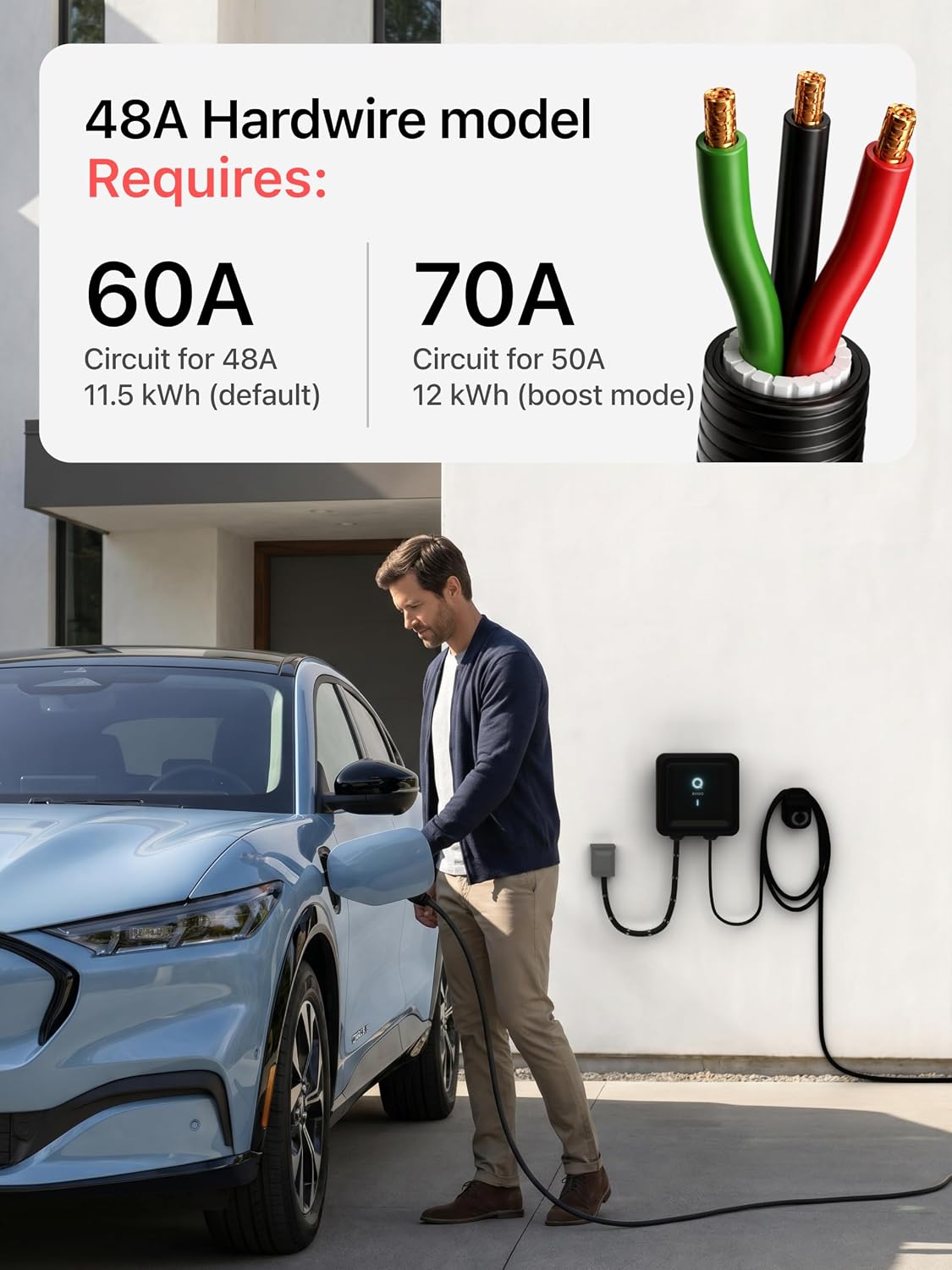
- Current: 48 A (requires minimum 60 A dedicated circuit)
- Voltage: 240 V
- Cable length: 25 ft charging cable, 40 in input cable for hardwiring
- Connector: SAE J1772
- Certifications: UL, ETL, FCC, Energy Star
The Best of This Model
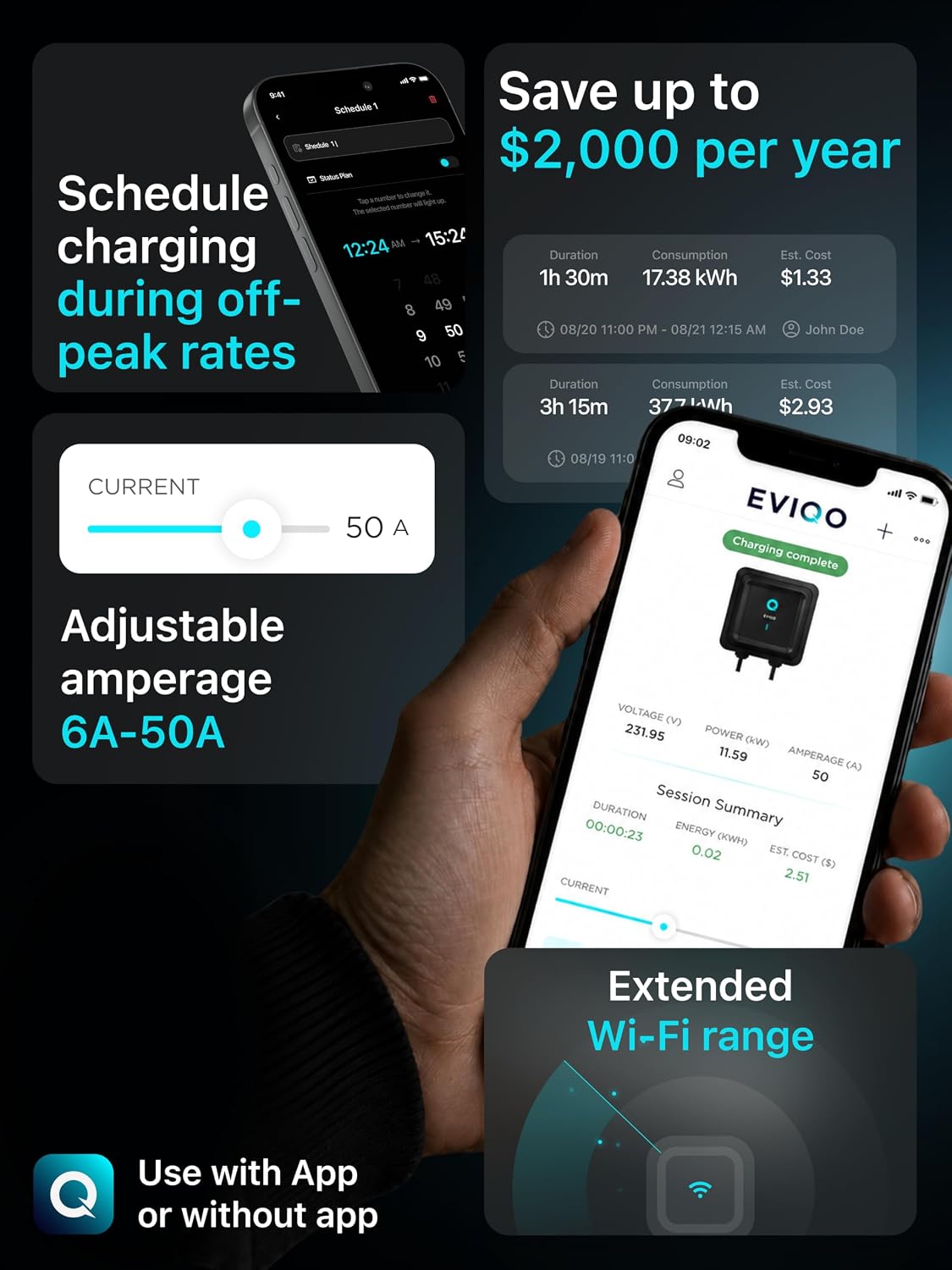
Smart features include a companion app that allows remote start and stop, scheduling to shift charging to off-peak hours, and consumption tracking to estimate charging cost. The app supports 1 amp increments for current adjustment and enables over-the-air firmware updates via 2.4 GHz Wi-Fi. Enhanced antenna design aims to keep the charger online in garages and basements where signal strength can be weaker. US-based customer support is available for troubleshooting and setup assistance.
Usage Recommendations
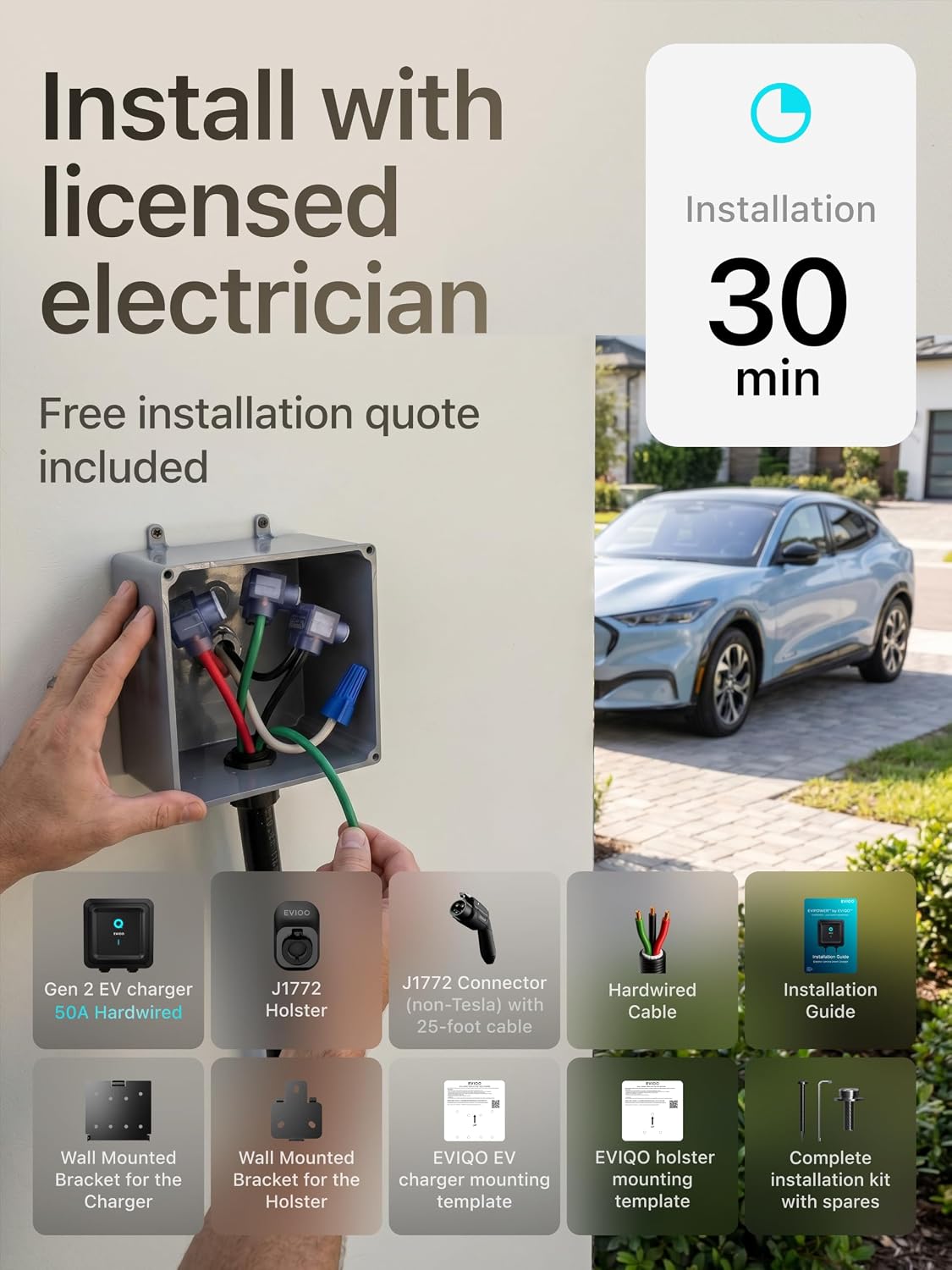
Install the charger on a dedicated 60 amp circuit as recommended to achieve the full 48 amp output and consult a licensed electrician for hardwiring. The J1772 connector works with most plug-in vehicles in North America, and Tesla owners should plan to use a manufacturer-approved adapter. Consider scheduling most charging sessions overnight to take advantage of lower electricity rates and to reduce peak-time load on your home electrical system.
Note a few practical limits: the charger requires hardwiring rather than simple plug-in use, and Wi-Fi setup needs a stable 2.4 GHz network for remote features. Firmware updates and app control depend on that connection, according to the manufacturer.