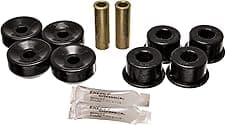
Energy Suspension 16.8108G Rear Shock Bushing for Honda 🚗

Description:
This rear shock bushing for Honda replaces worn rubber mounts with a tougher polyurethane option that aims to extend service life and maintain suspension precision. It improves responsiveness and helps reduce degradation caused by oil, salt, and other contaminants, making it a practical choice for drivers who want more durable rear shock support.
Key Points
This component uses a Hyper-Flex style polyurethane compound that resists common contaminants and compressive wear, which can help the bushing last longer according to the manufacturer. Installation restores tighter rear suspension feel and can reduce play that develops over time in rubber bushings. Expect a firmer ride quality compared with original equipment rubber, and consider that the trade-off is slightly increased road feedback. 🛠️
Polyurethane construction also tends to preserve alignment and handling characteristics under heavier loads or spirited driving. For everyday commuting the difference may be subtle, while for towing, occasional track days, or rough-road use the improved durability becomes more noticeable. ⚙️
Technical Specifications
- Name: Energy Suspension 16.8108G
- Country of Origin: United States
- Material: Polyurethane (Hyper-Flex replacement polyurethane)
- Application: Rear shock bushing for Honda
- Manufacturer part number: 16.8108G
Usage Recommendations
When replacing rear shock bushings, inspect surrounding components such as the shock absorber, mounting hardware, and any seals for wear. Tighten mounting bolts to factory torque specs and recheck after a short test drive to ensure there is no unusual noise. If you prefer a softer, more isolated ride, polyurethane bushings may feel firmer compared with OEM rubber, so factor that into your choice. 🔧
For installers with basic mechanical experience, the swap is usually straightforward with standard tools and a press or suitable driver for removal and installation. Professionals often recommend replacing complementary bushings in pairs to keep suspension behavior balanced across the axle. Also note that initial break-in may include brief creaking or stiffness that typically eases after some mileage according to the manufacturer.