

ELEGOO PETG Filament 1.75mm 1KG for FDM
Reviews
Price
Product description
This PETG filament from ELEGOO delivers a balance of strength and printability for hobbyists and makers working on mechanical parts, enclosures, and functional prototypes. It offers reliable layer adhesion and reduced warping, making it a practical choice for prints that need toughness and dimensional stability.
Key Points
The filament presents a combination of PLA-like ease and ABS-like impact resistance, which helps when producing clamps, supports, or moving parts. Feeding is smooth thanks to consistent winding and the manufacturer's claim of precise diameter control. Consider that PETG can absorb moisture over time, so the spool is vacuum sealed at the factory and should be dried before long-term reuse to avoid bubbling during extrusion. 😊
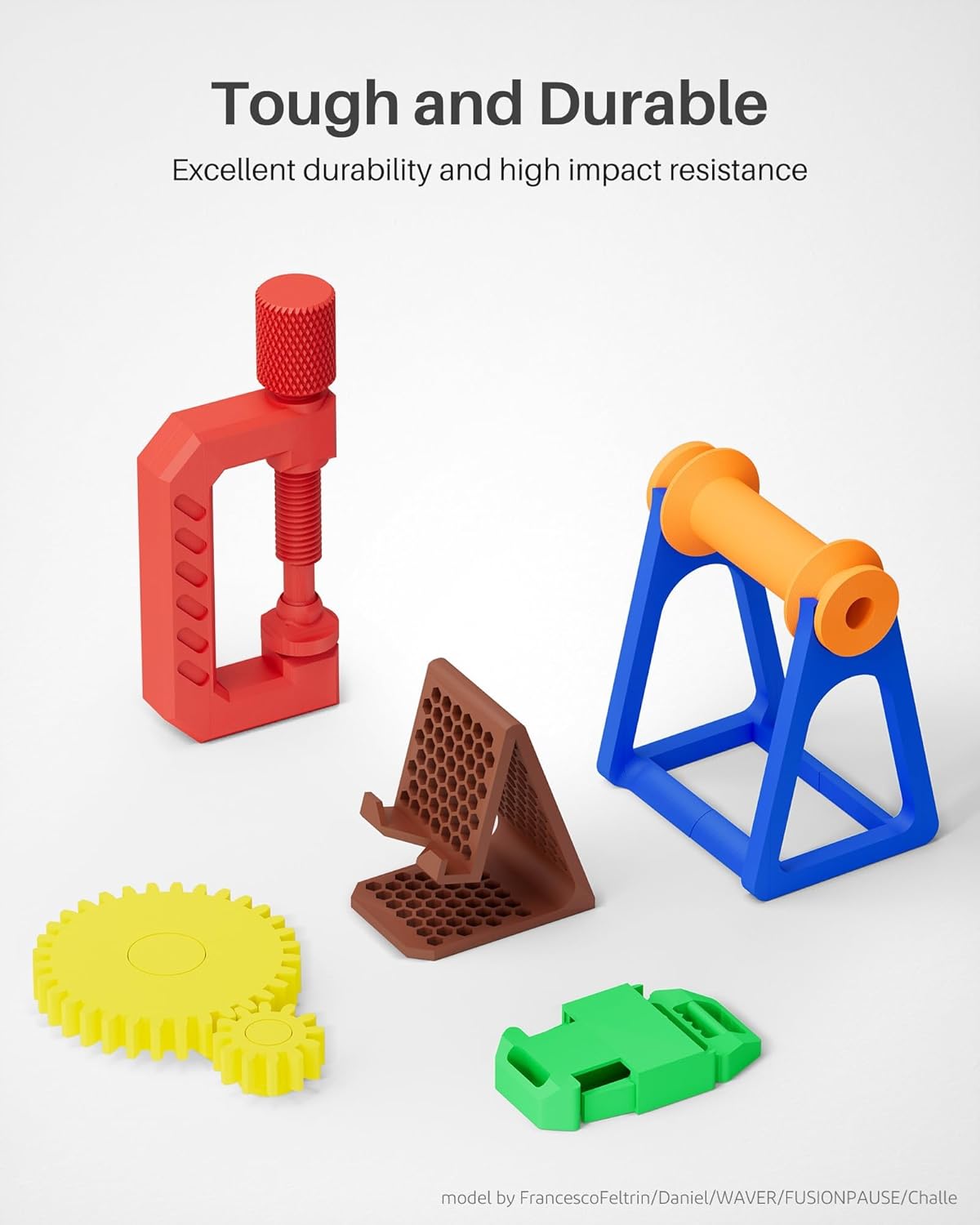
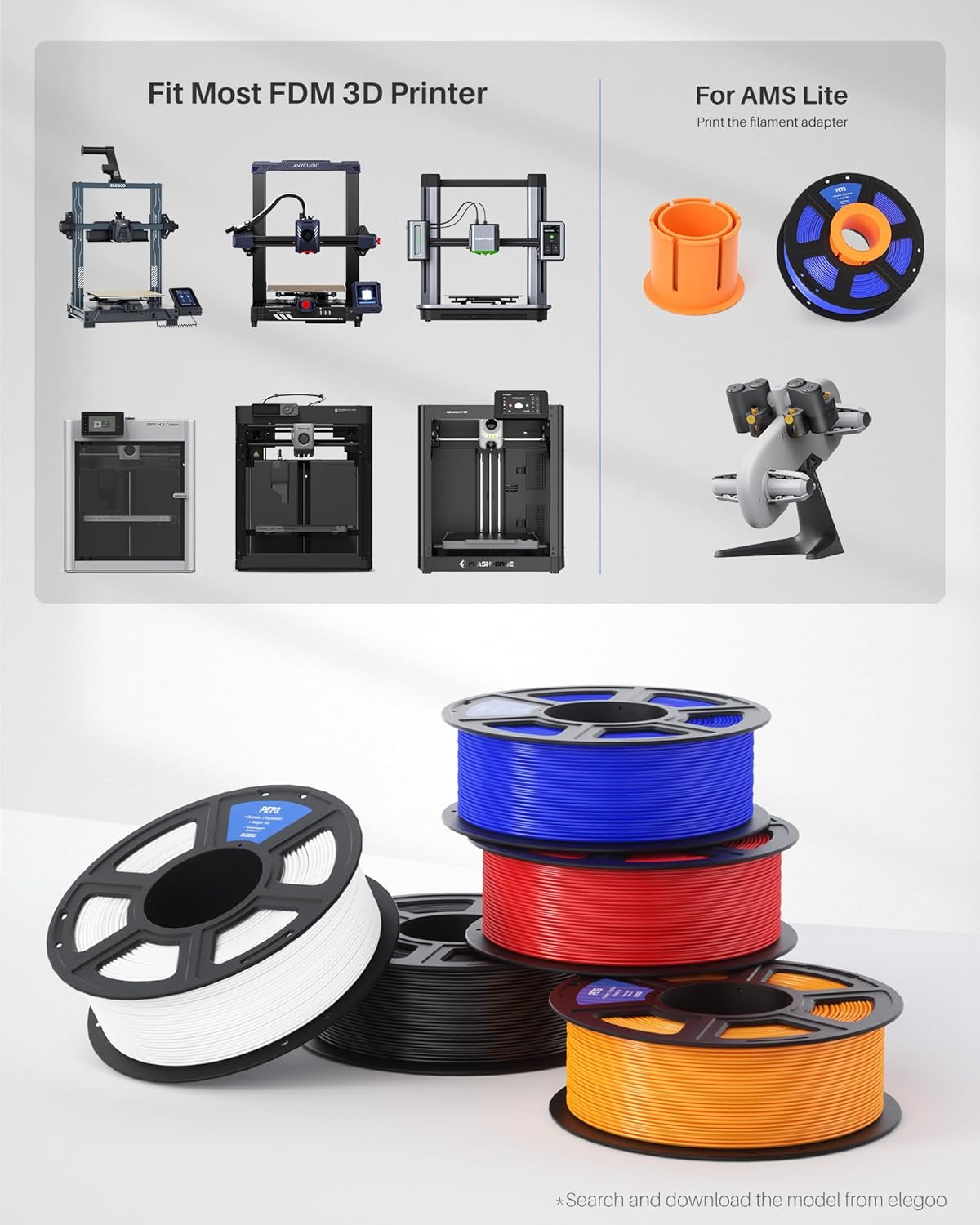
Printing with PETG usually requires slightly higher nozzle temperatures than PLA, and stringing can appear if retraction and temperature are not adjusted. In practice, fine tuning retraction distance and print speed reduces stringing and improves surface finish. This spool is intended to fit most common FDM printers that accept 1.75 mm filament, which keeps setup straightforward for many existing machines. 🔧
Technical Specifications
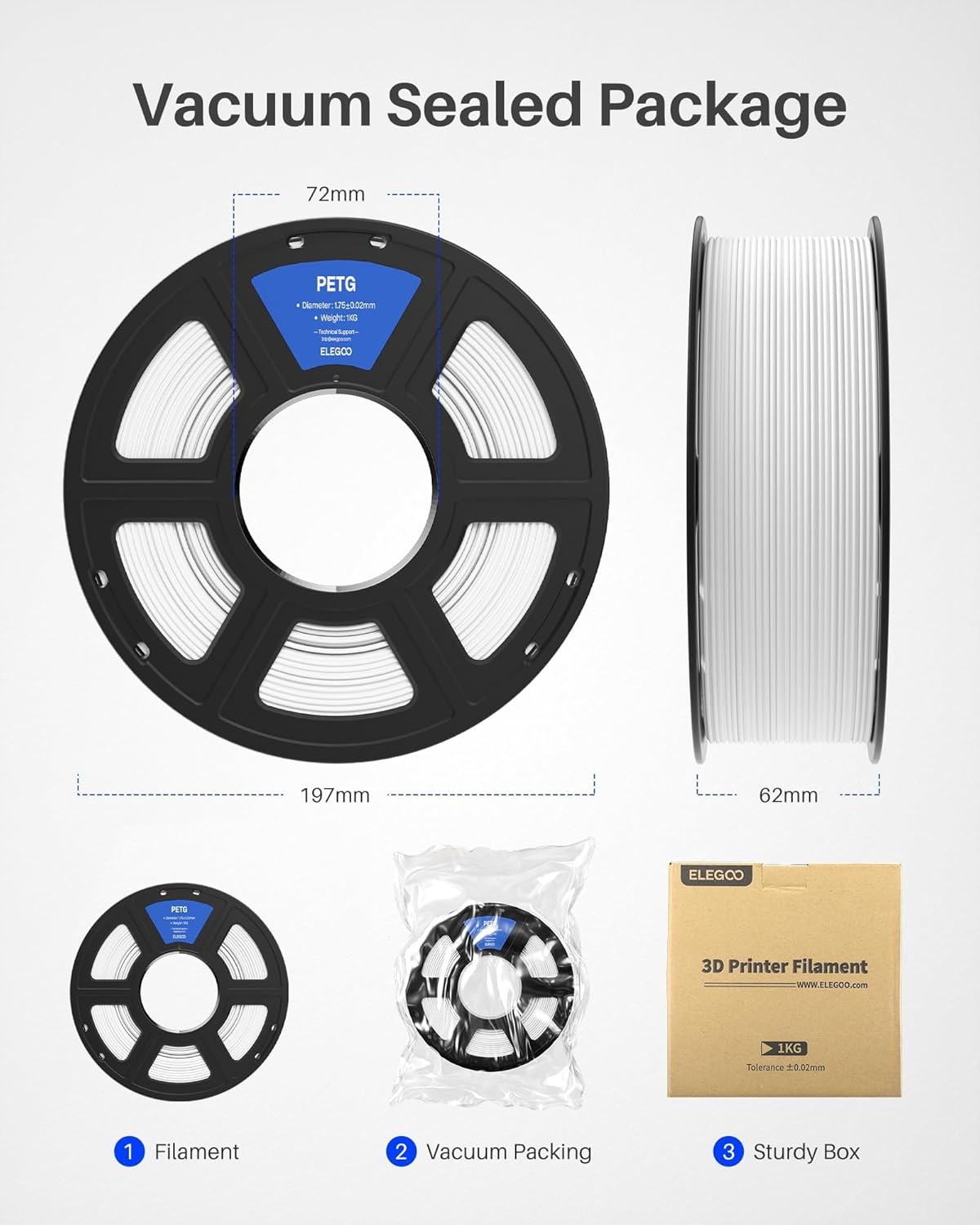
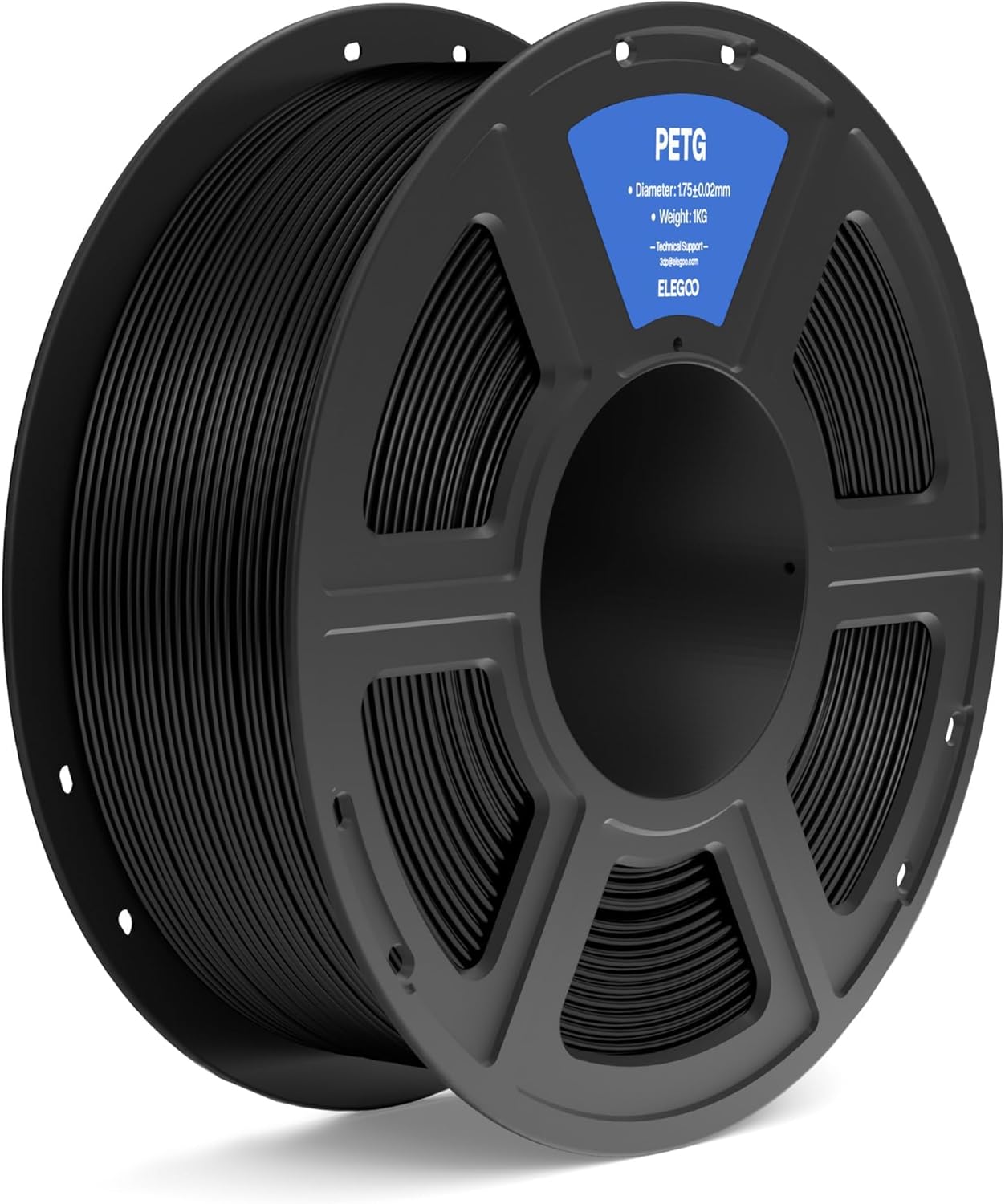
- Name: ELEGOO PETG Filament 1.75mm Black 1KG
- Diameter: 1.75 mm
- Net weight: 1 kg (2.2 lbs)
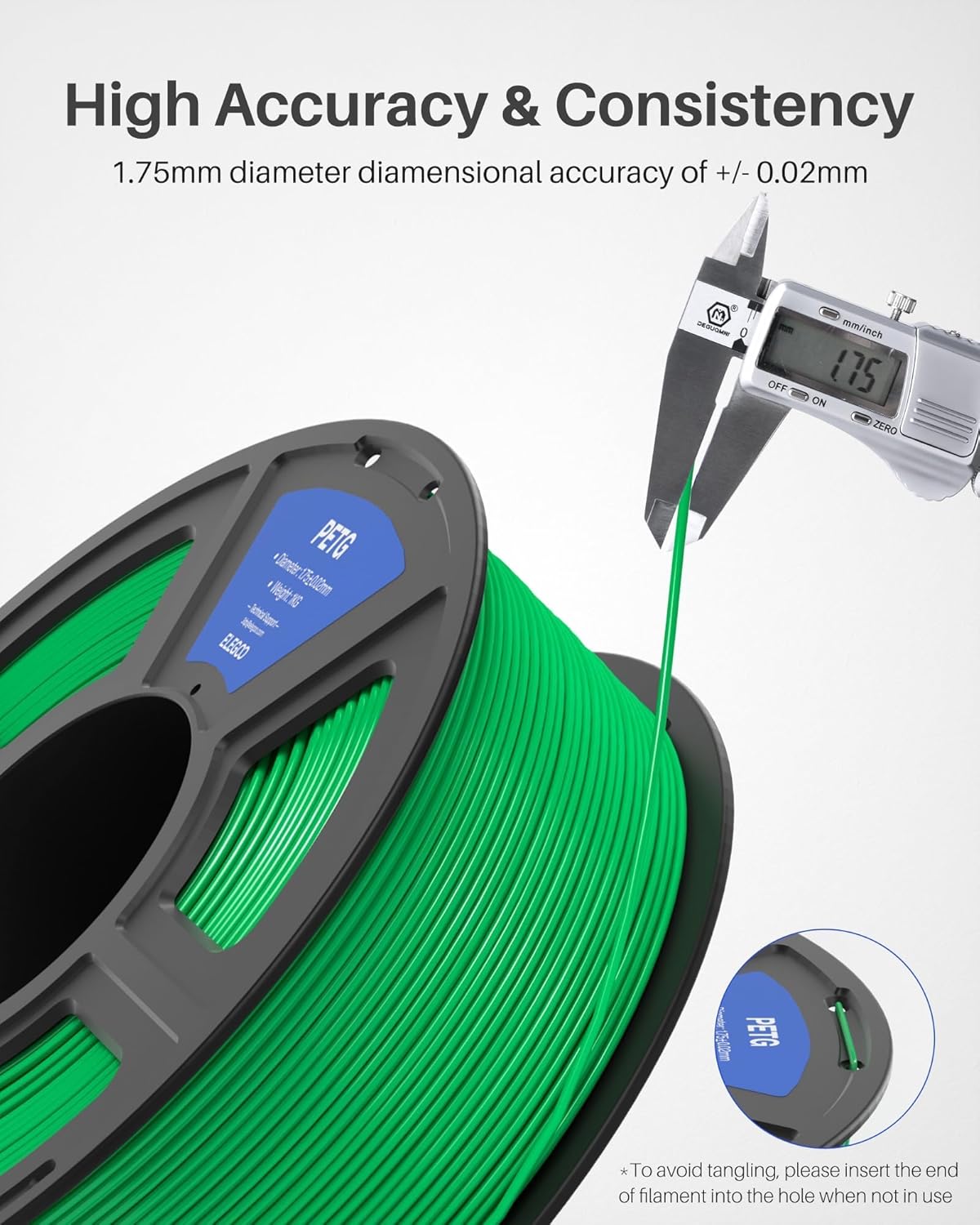
- Dimensional accuracy: ±0.02 mm
- Color: Black
Usage Recommendations
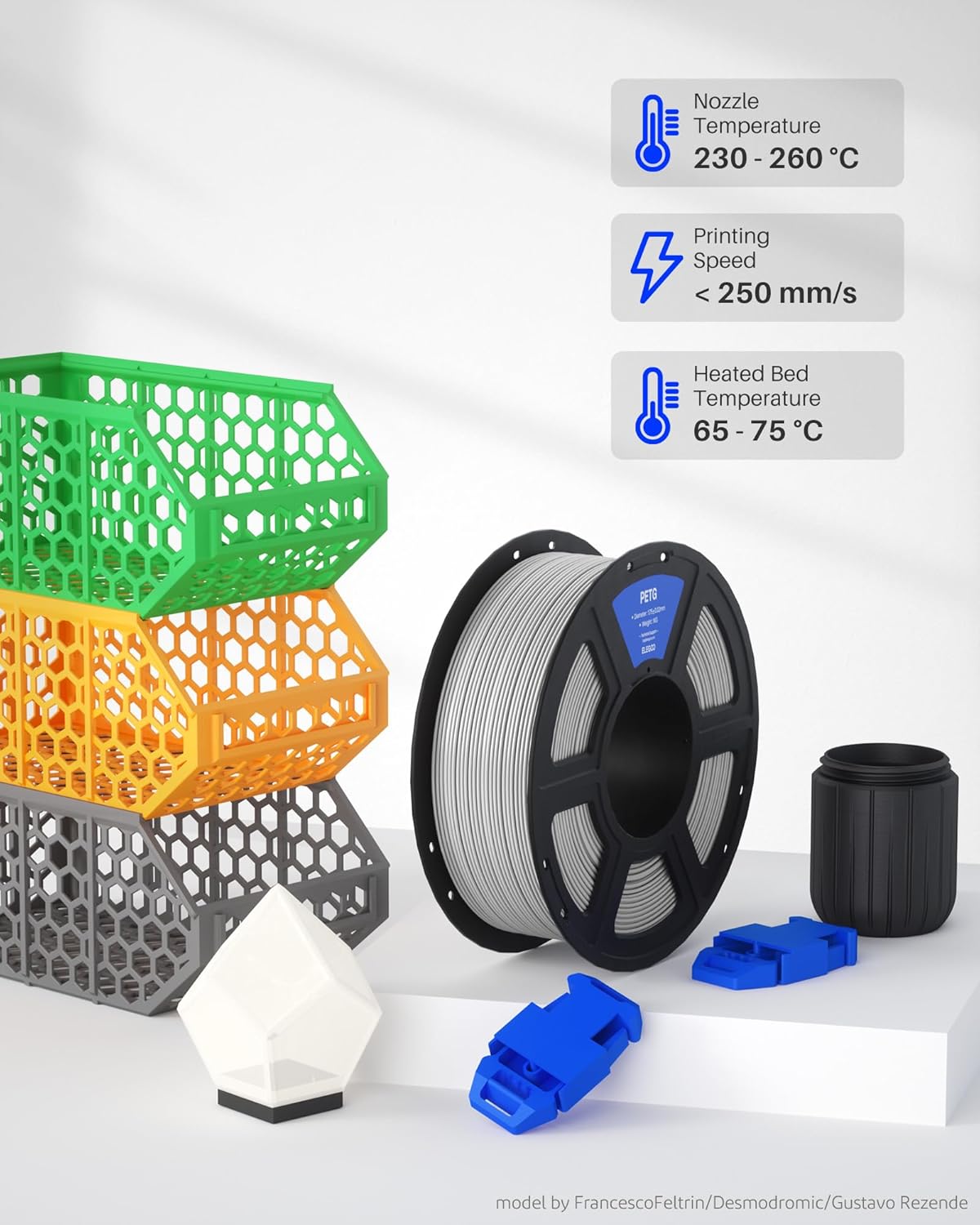
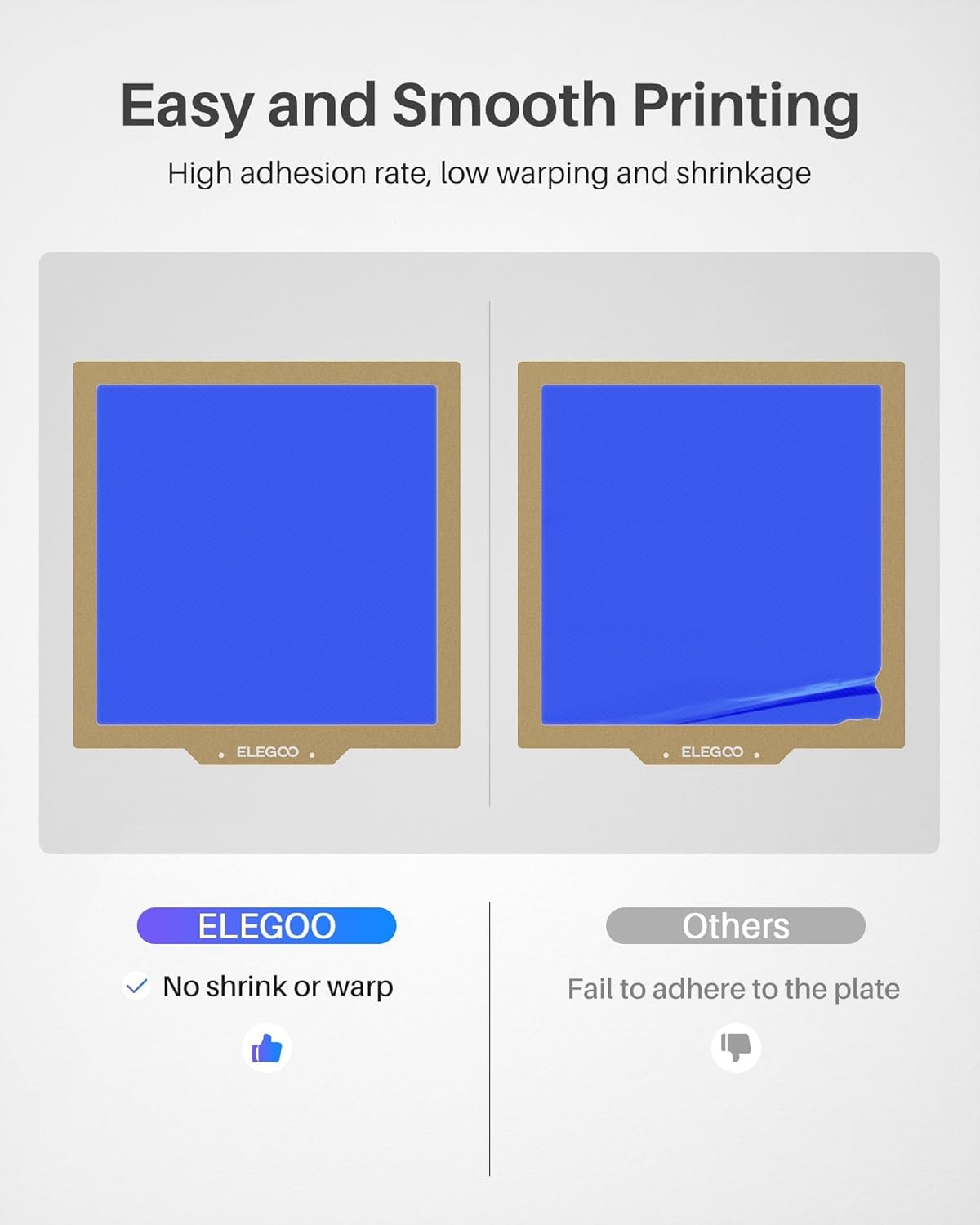
Start with temperatures in the range suggested by the printer profile for PETG and adjust in 5 degree increments if flow or adhesion issues appear. Use a heated bed and a reliable first-layer adhesion method, such as a clean PEI sheet or glue stick, to reduce lift. For printing detailed or tall parts, moderate cooling during bridging and small features helps preserve dimensional accuracy. If you notice bubbles or inconsistent extrusion after storage, dry the spool in a filament dryer or low-temperature oven according to the manufacturer's guidance before printing. 🛠️
Benefits
This filament offers consistent feeding and reduced tangles thanks to mechanical winding and manual inspection at the plant. The combination of toughness and ease of printing allows prototypes and functional parts to be produced with fewer failed attempts. According to the manufacturer, the controlled diameter tolerance contributes to regular flow and predictable extrusion, which reduces nozzle clogs and pressure issues during longer prints.