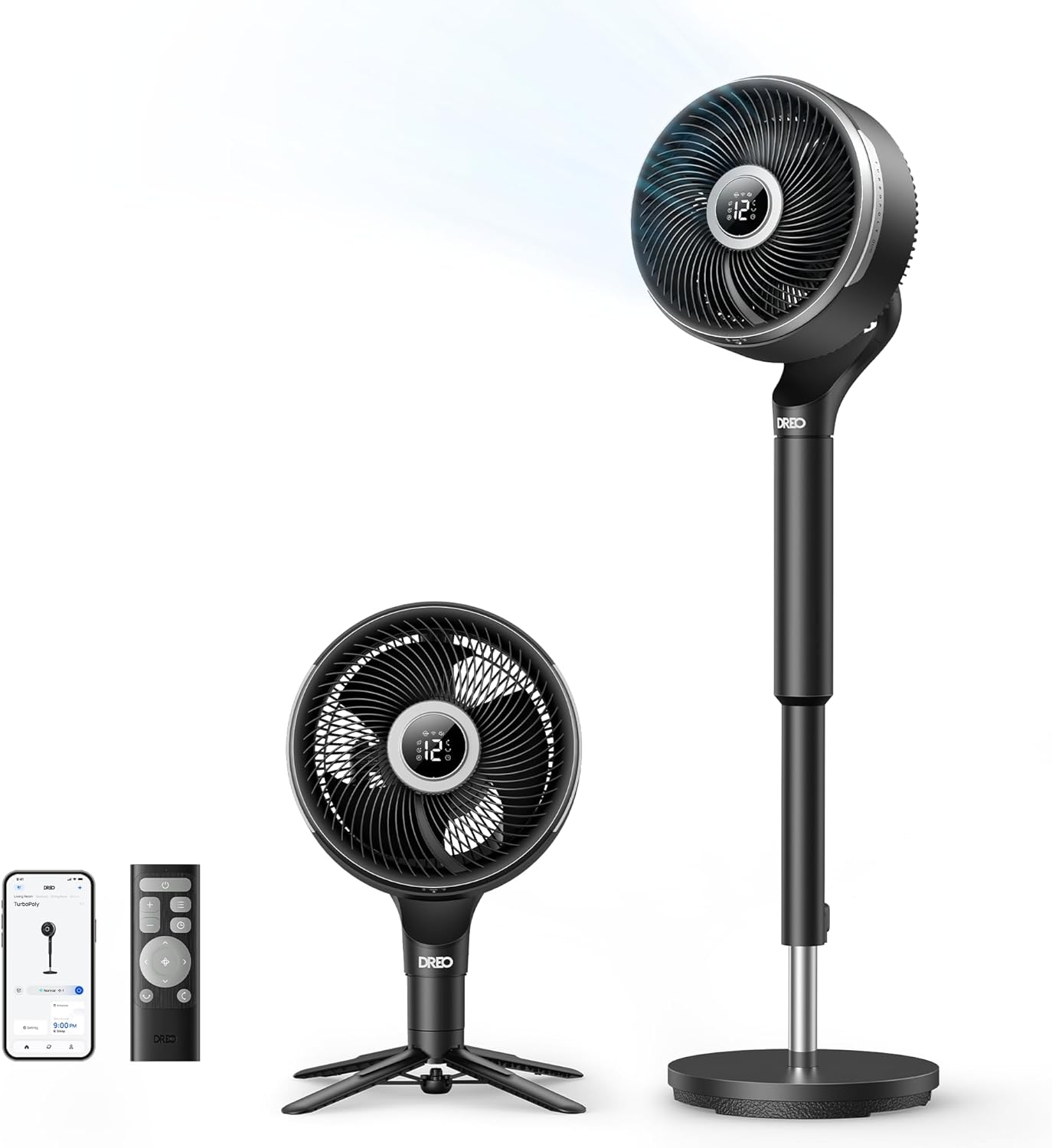
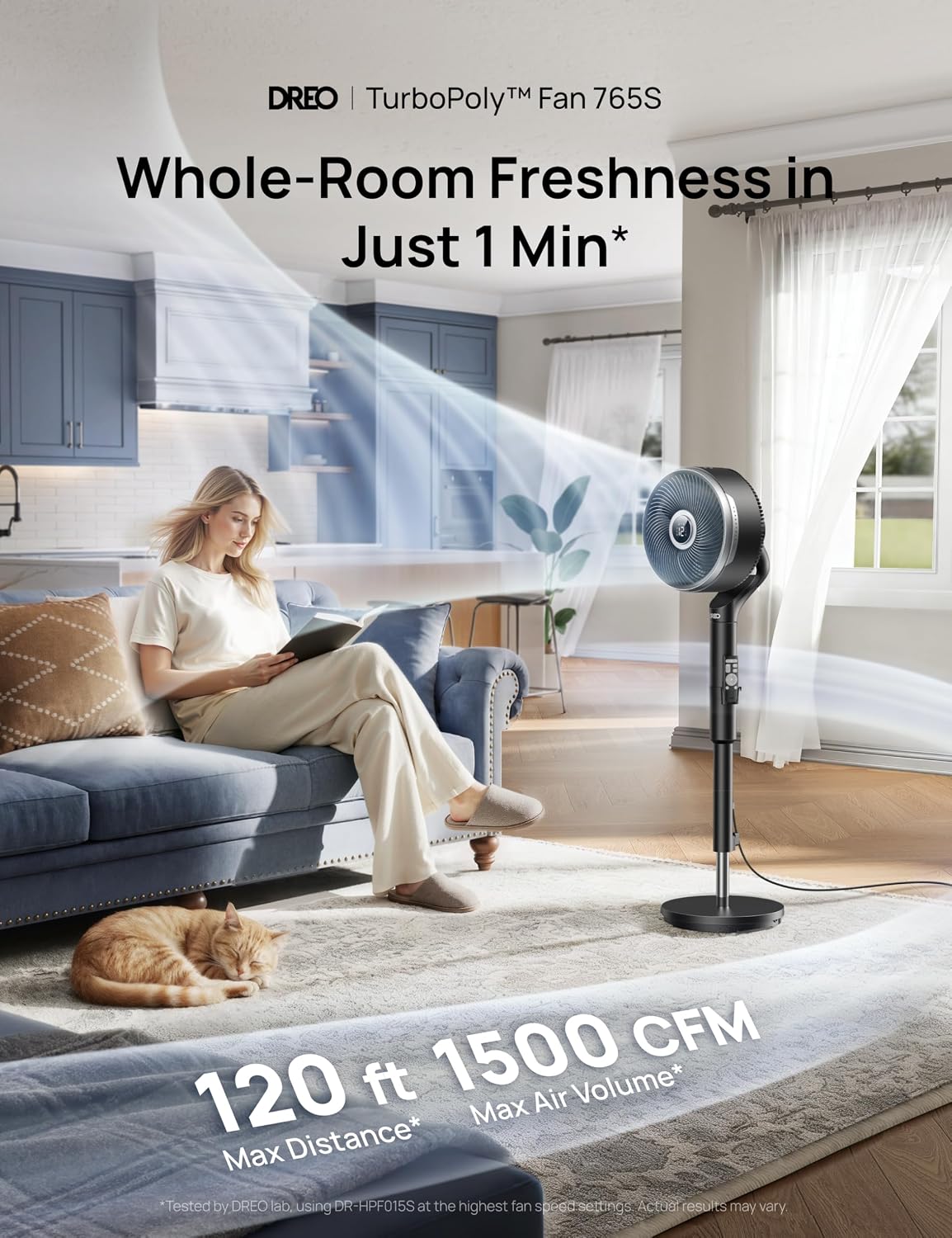
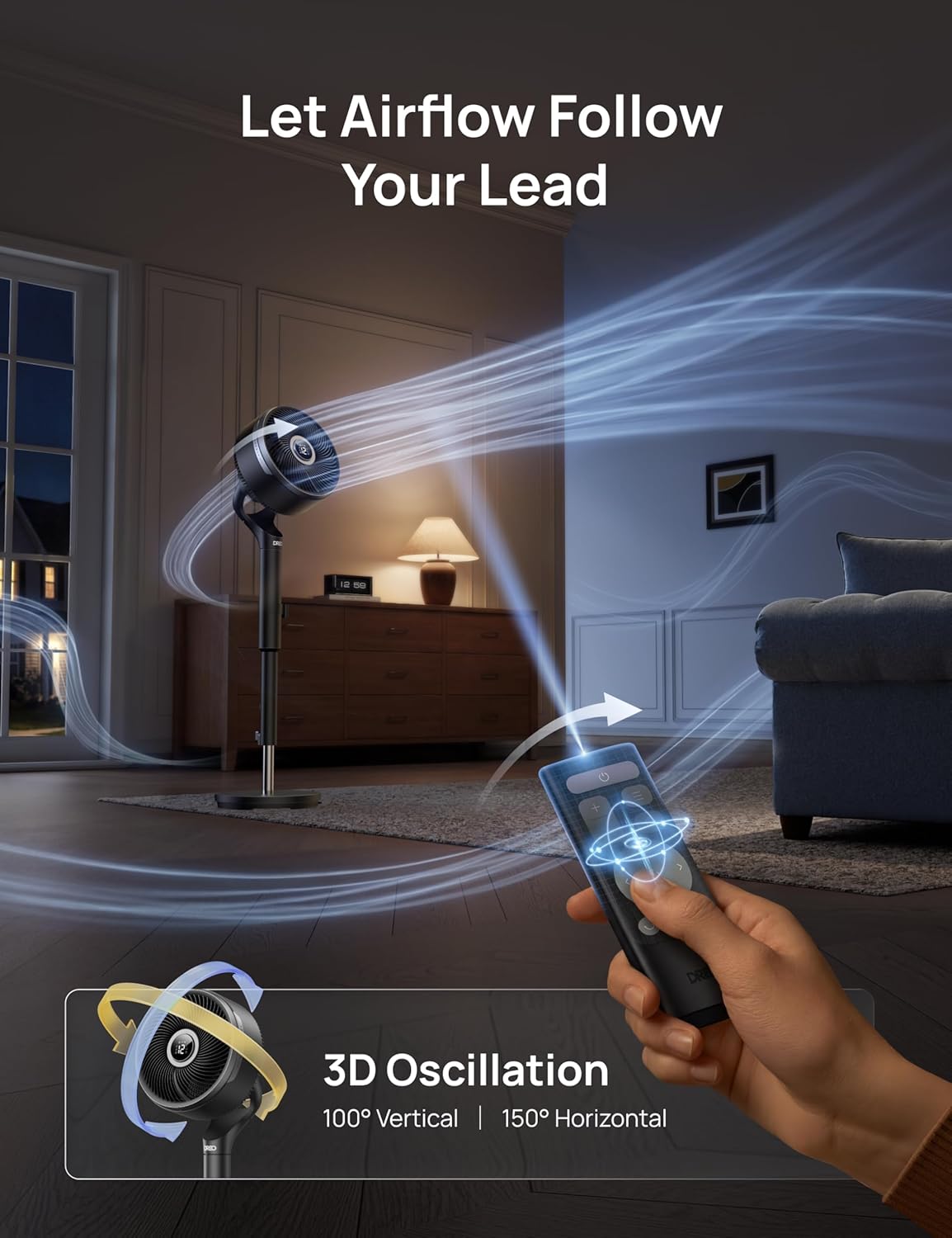
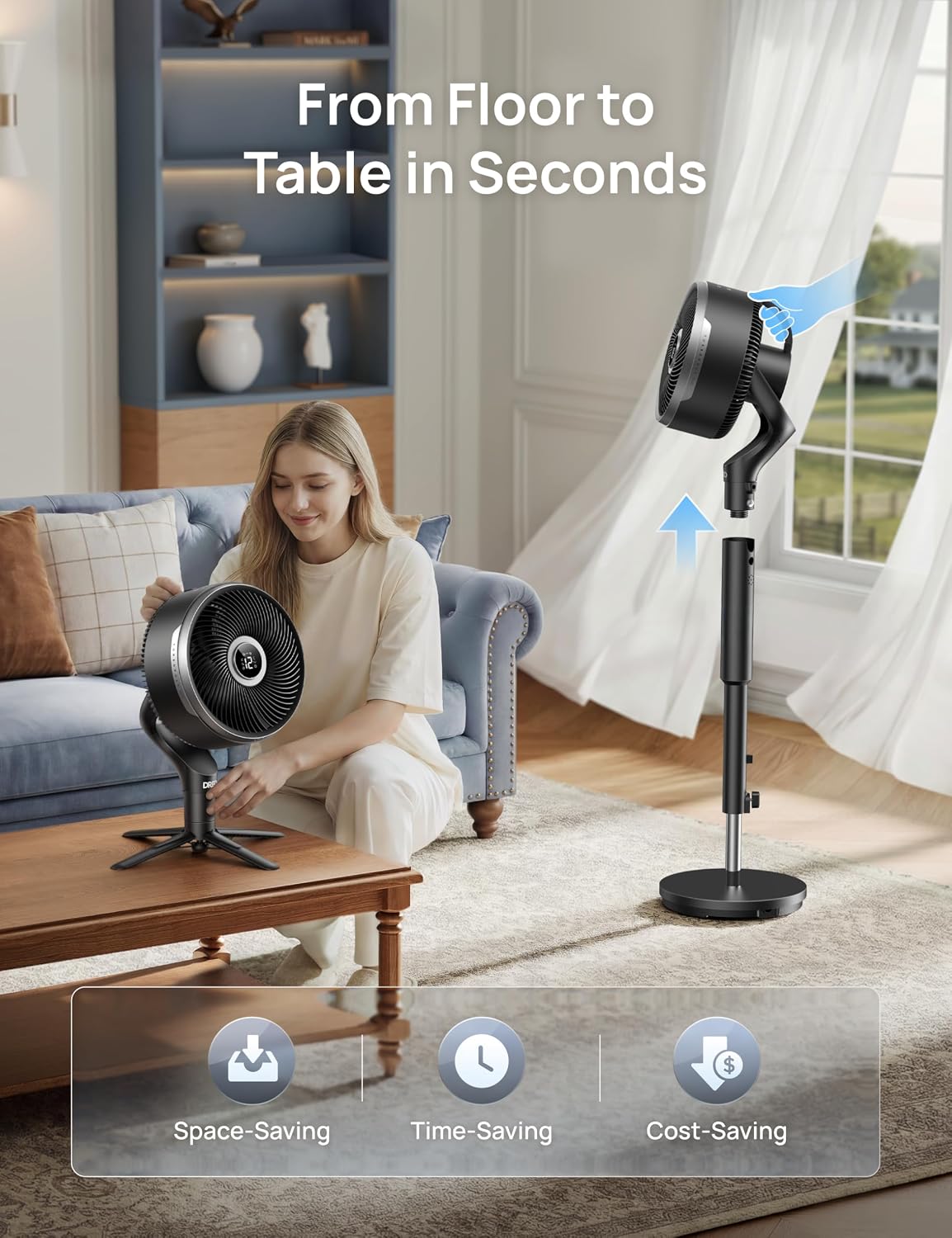
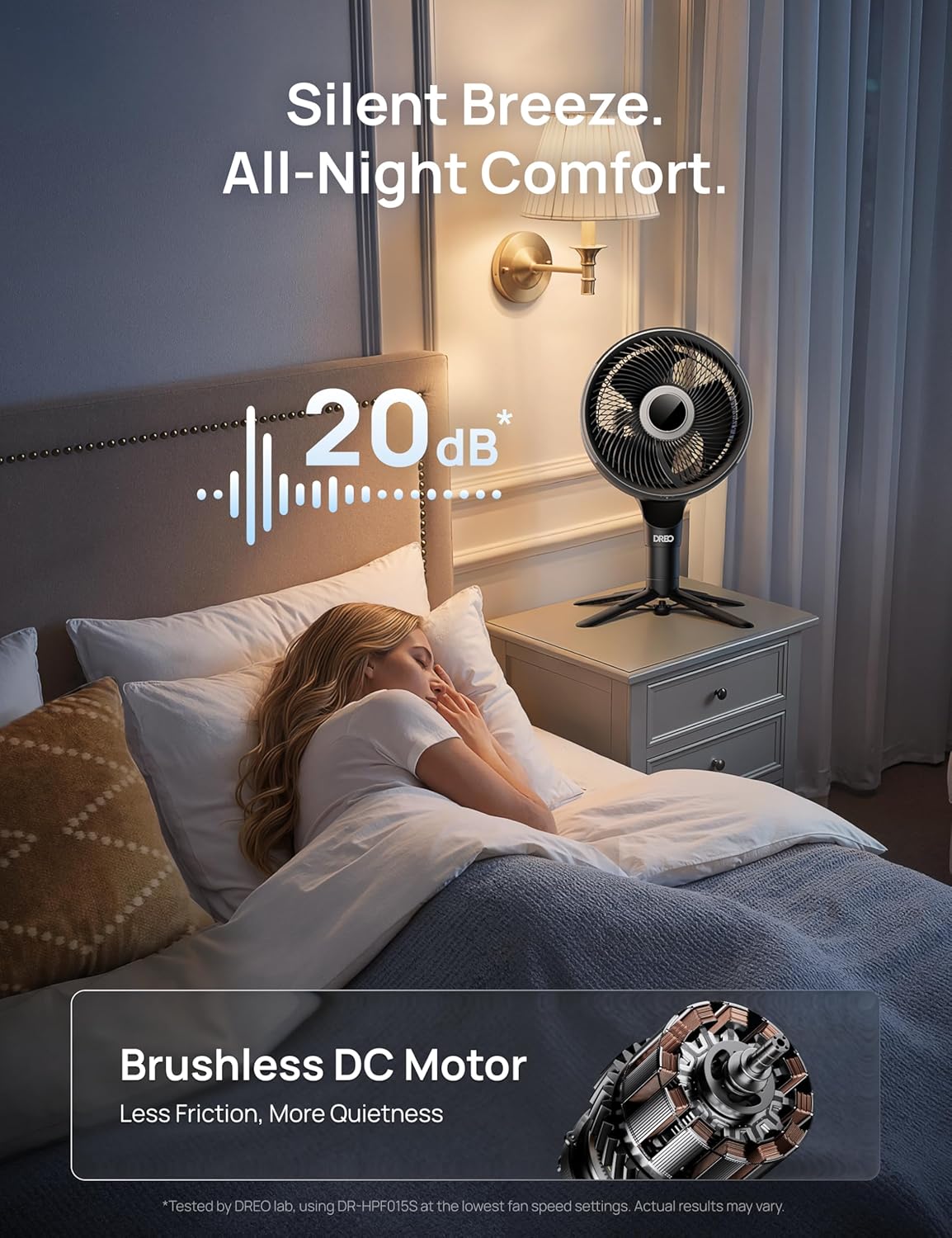
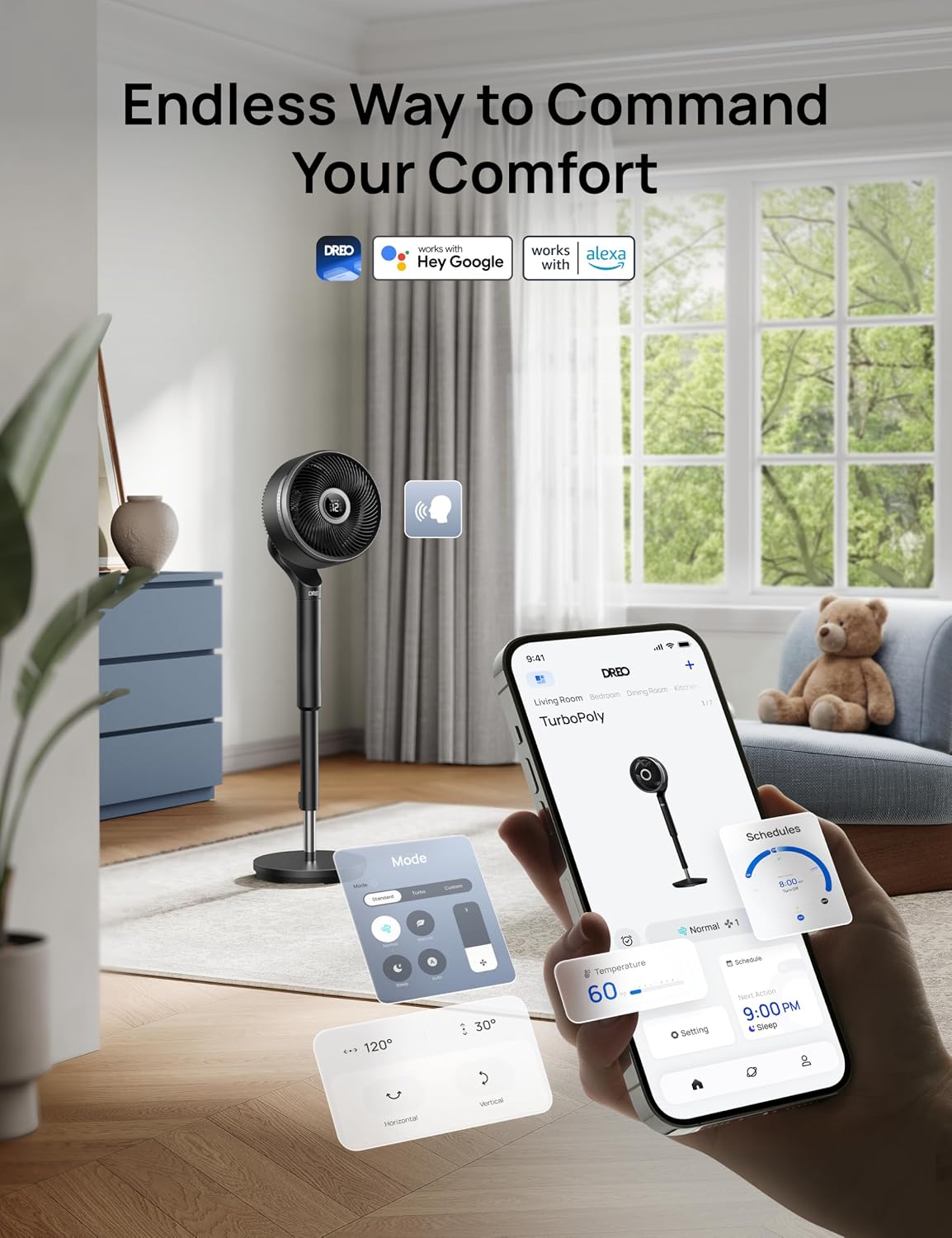
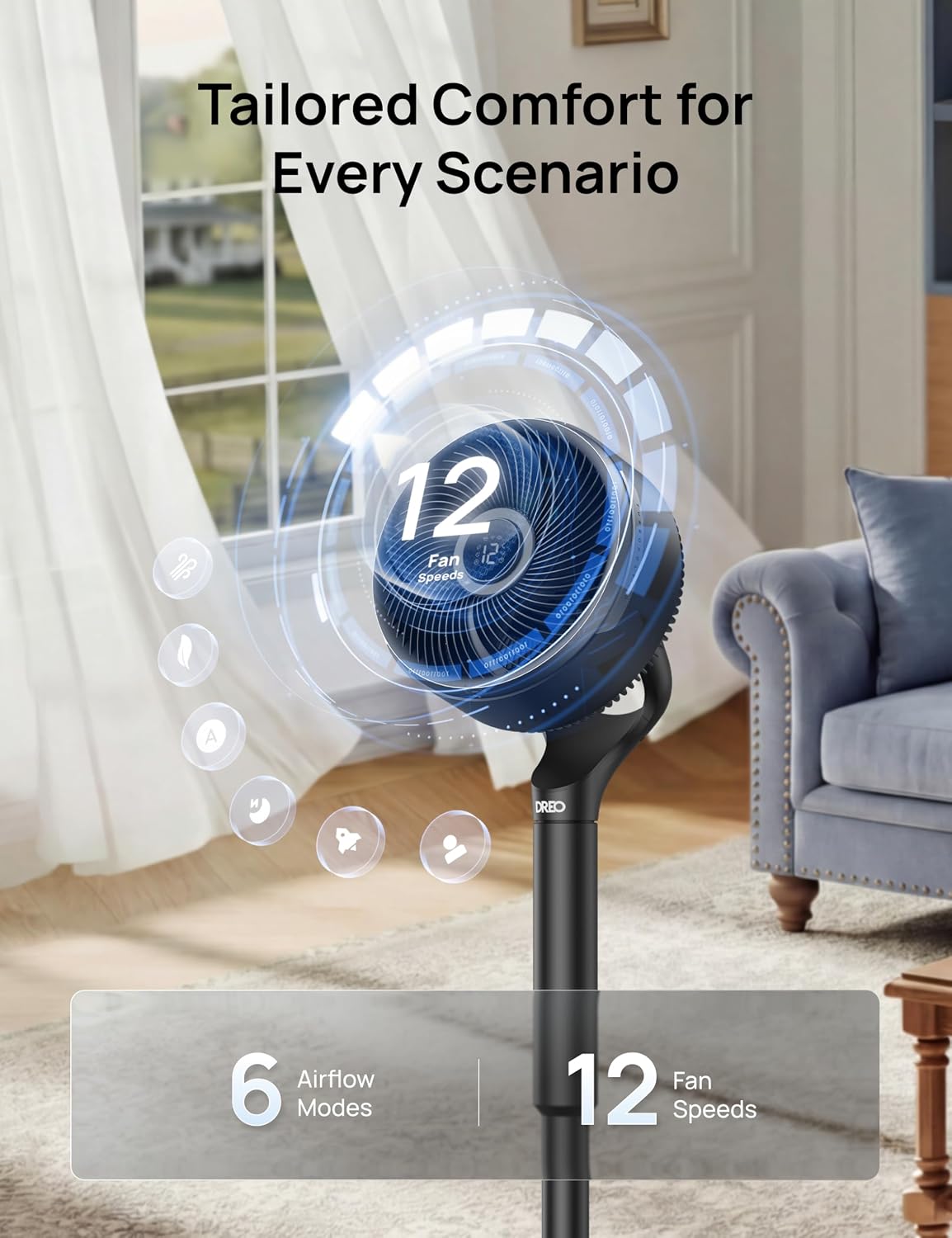
What this is and the need it meets\nThe DREO Smart Fan for Bedroom is designed to flex between a floor fan and a tabletop setup, aiming to deliver broad air circulation for medium to large rooms. If you’ve struggled with uneven cooling or noisy devices, this model promises quiet, customizable airflow across a wide area. It’s built around a DC motor for efficiency and offers a large reach (up to 120 ft) with multi-directional oscillation to help balance temperatures rather than chase spots of breeze.\n\n## How it works and what to expect\nTwo independent motors enable 150° horizontal and 100° vertical oscillation, so you can shape coverage where you need it most. You can control airflow through touch, remote, app, or voice, and there are 6 modes with 12 speed levels plus a memory function to restore last settings after power loss. A natural breeze mode aims to simulate a gentler, varying airflow for sleeping or relaxing. The unit’s 20 dB noise level suggests it stays unobtrusive in a bedroom or study.\n\n## What stands out\nOn paper, the combination of a flexible 2-in-1 design, strong whole-room air circulation (up to 1500 CFM), and smart control options creates a balanced feature set for everyday use. The 12-hour timer adds convenience for overnight use, and the backlit remote improves late-night usability.\n\n## Pros and cons in practical terms\nPros: flexible installation (floor or tabletop), wide coverage, quiet operation, multiple control methods, memory function, and a timer. Cons: the device is described as a single fan with two configurations, so if you need true separate devices for separate rooms, you’ll still manage with one unit but may have to swap modes physically.\n\n## Who it’s for\nIt’s suited for bedrooms or living spaces where you want broad air distribution without a lot of noise. If you prioritize a quiet, configurable airflow that can be controlled from a distance, this model fits well.\n\n## When it makes sense to buy\nIf you’re looking for a versatile fan that can quickly switch between floor and table use, with strong circulation and smart controls, this option could be worth considering. It may be particularly appealing if you need a single device to cover multiple seating or lounging areas and value a compact remote/app interface.\n\n## When to pause or skip\nIf your room is extremely small or you only need localized airflow, a smaller, single-use fan might be more cost-effective. If you require ultra-quiet operation below 20 dB for uninterrupted sleep in a shared space, test the noise level in your setup since perceived quietness can vary by room.\n\n## What to review before buying\nCheck where you’ll place it (floor vs. table), the height adjustments, and how you’ll integrate the control options (remote/app/voice). Consider whether the 120 ft reach matches your room layout and whether you want the auto-off display and backlit remote for night use.\n\n## Practical usage example\nSet the fan on the floor in a living room corner, switch to 150° horizontal and 100° vertical osc, and enable natural breeze mode during a warm afternoon to distribute cooler air evenly without blasting a single spot. For bedtime, activate the quiet mode, set a 6–8 hour timer, and control with the remote from bed.\n\n## FAQ\n- Can I use it in a small desk setup? Yes, but you may prefer the tabletop configuration for close-range airflow.\n- Does it require a hub or smart home bridge? The description mentions app and voice control, but verify if a specific hub is needed in your setup.\n- Will it keep a large room evenly cooled? It aims to, thanks to wide oscillation and high airflow, though results depend on room size and insulation.\n\n## Final buying verdict\nIs it worth it? If you want a flexible, all-in-one fan that doubles as floor and table use with smart control and broad air distribution, this model offers a compelling balance of features for a bedroom or living space. It’s not a niche ultra-quiet model, but it prioritizes practical versatility and convenience for daily cooling needs.