

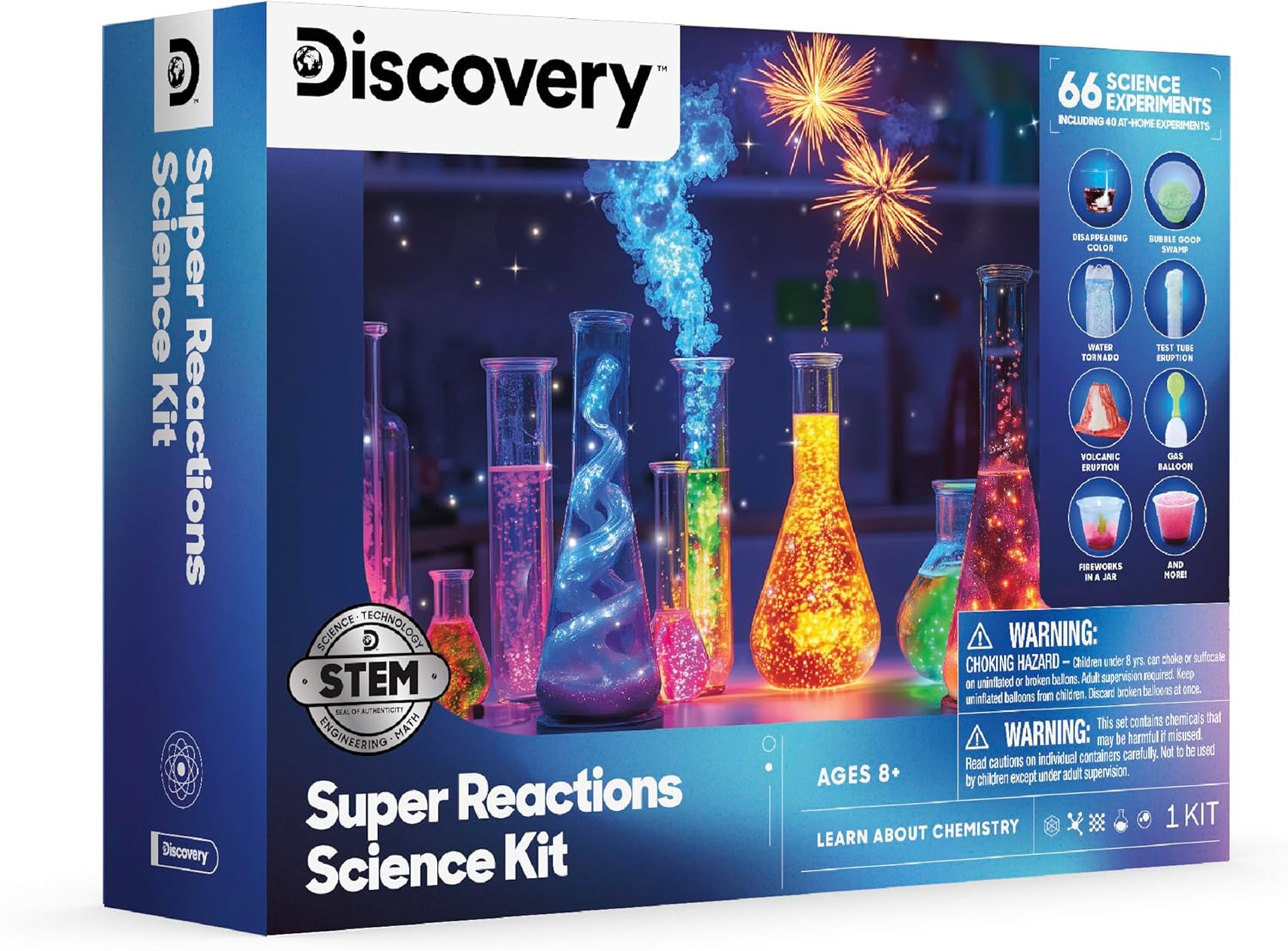
Discovery Super Reactions Science Kit 66 experiments 🔬
Product description
This hands-on science kit turns the kitchen into a mini laboratory for curious kids, combining chemistry experiments and creative projects to teach basic scientific concepts through play. With guided activities that produce fizzy eruptions, color-changing solutions and bubbling potions, the set helps children explore reactions and simple lab techniques while having fun.
Key Points
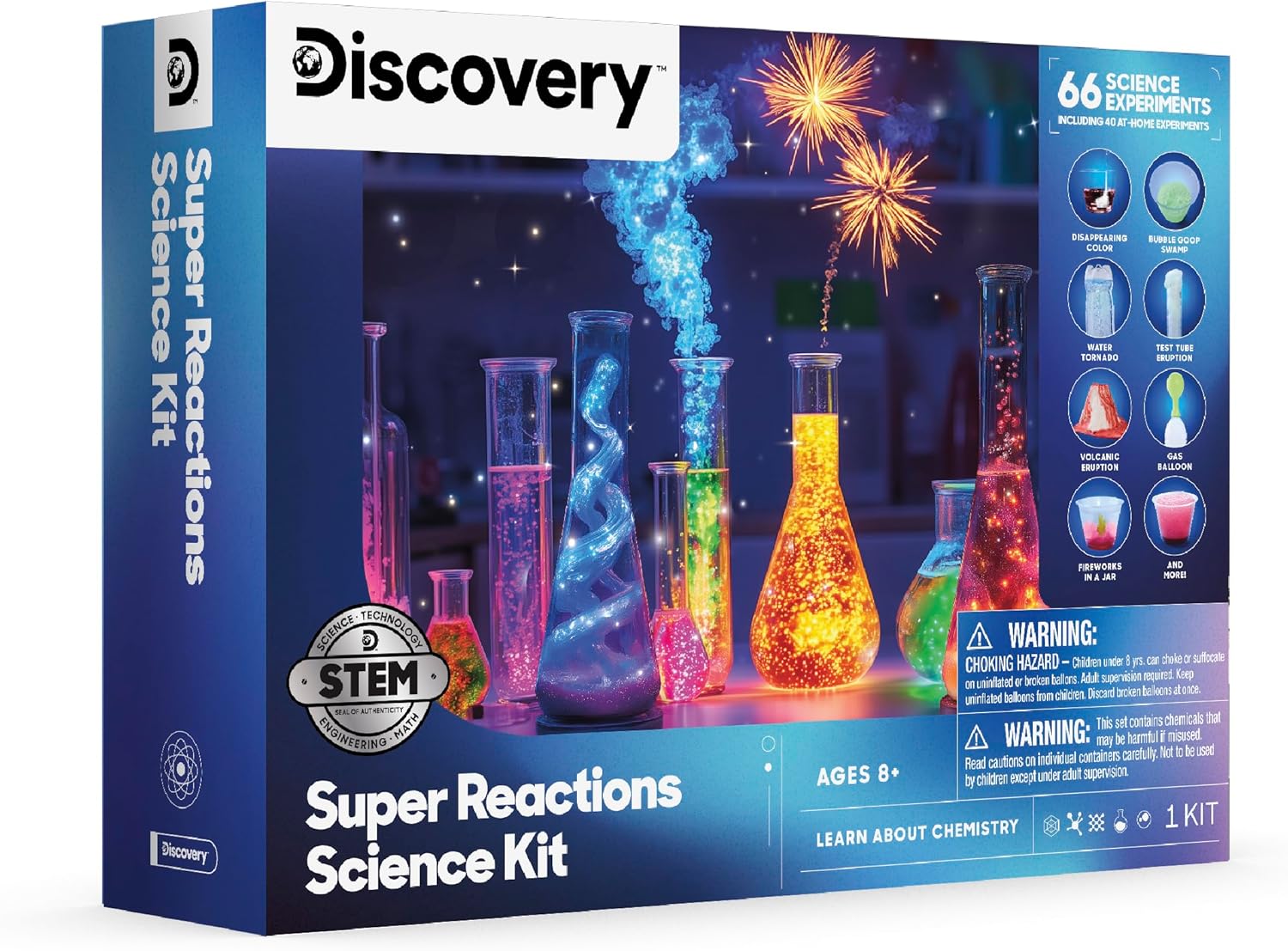
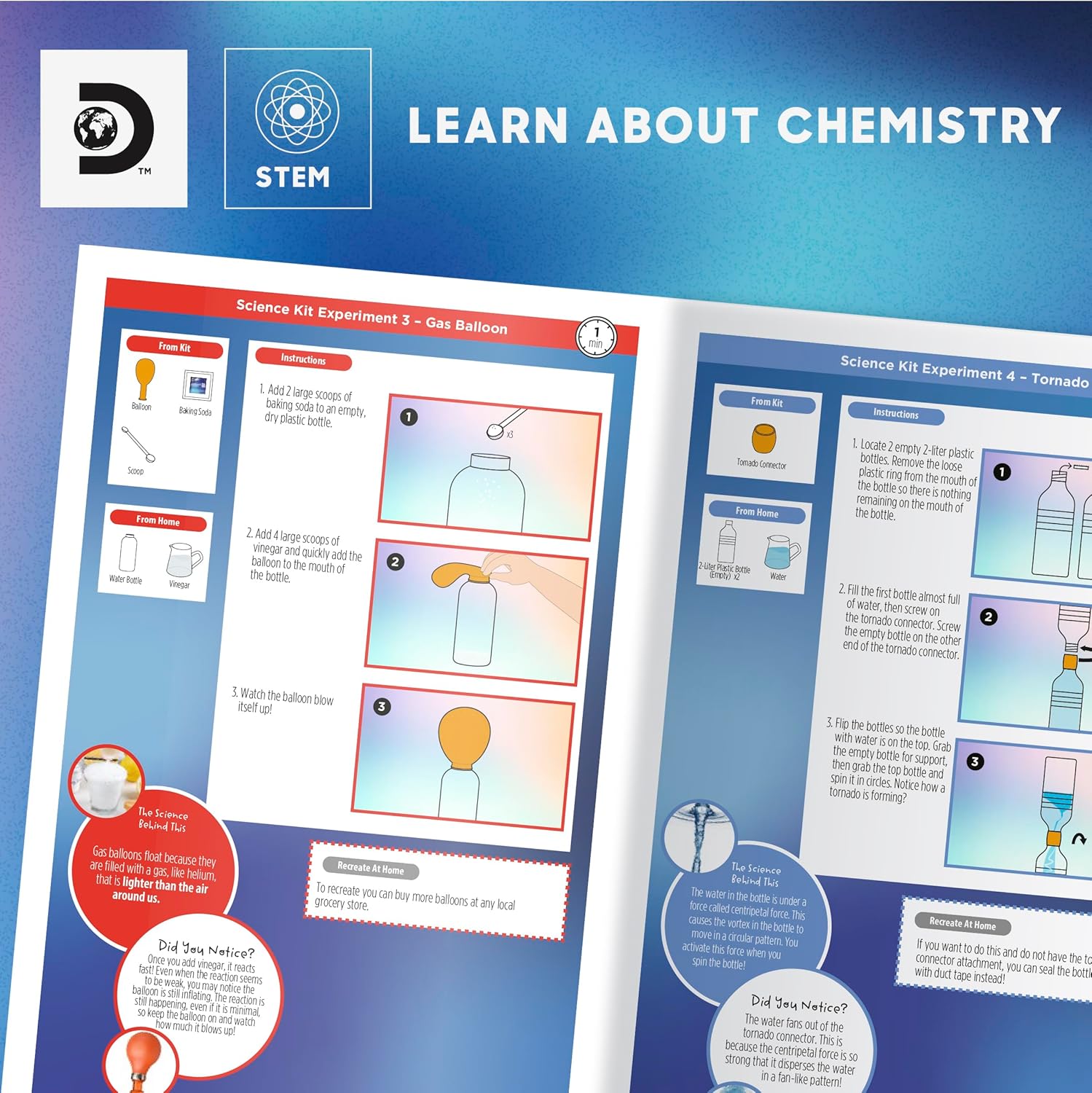
The kit contains materials and step-by-step instructions for 66 experiments, which include 26 guided activities plus 40 bonus DIY ideas using common household items. Experiments cover topics like acid-base reactions, gas expansion, pH indicators and states of matter. The pack is geared toward children ages 8 and up and encourages observation, hypothesis testing and hands-on learning. It requires adult supervision for some reactions that involve powders and liquids. 🔬
Technical Specifications
- Name: Discovery™ Super Reactions Science Kit
- Age range: 8+ years
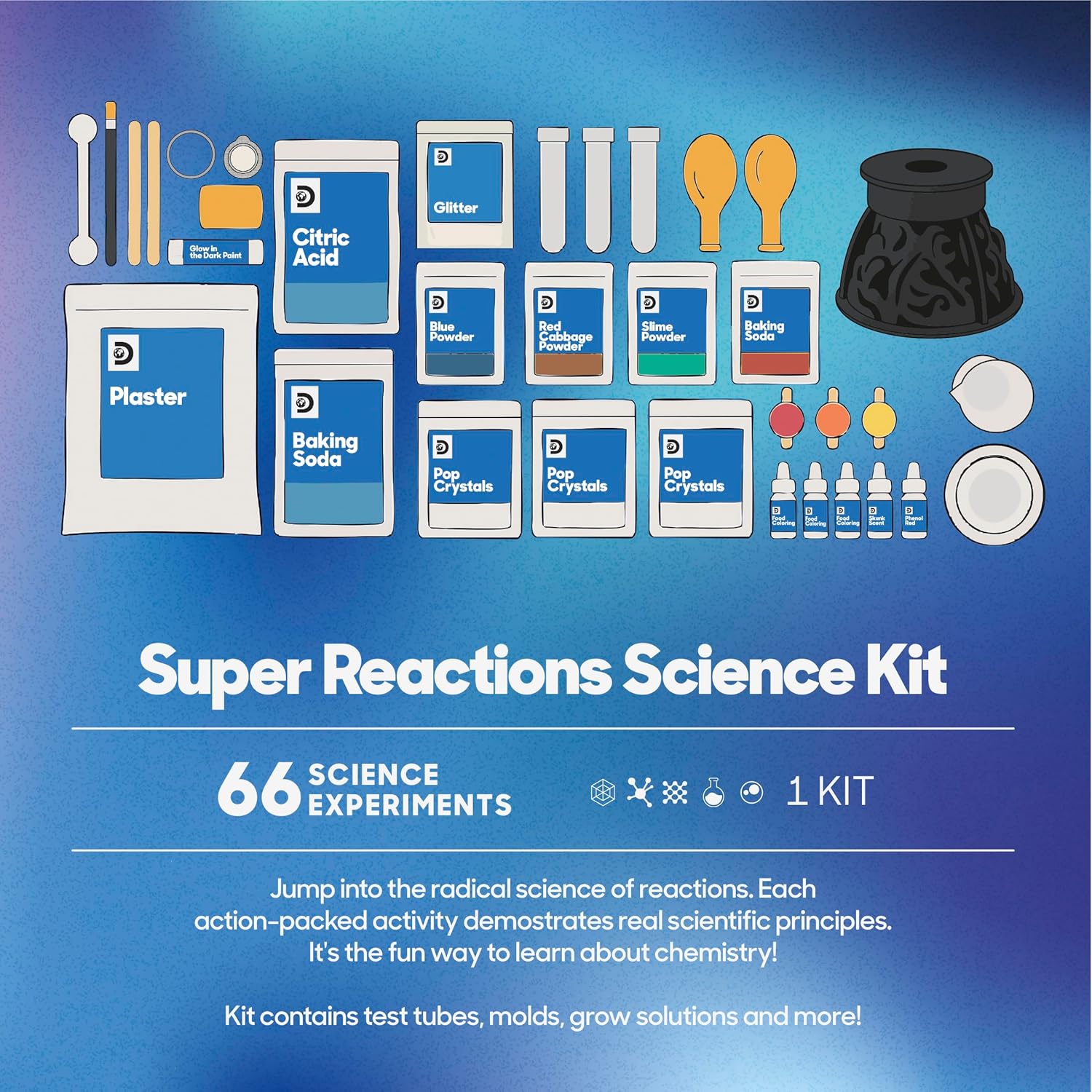
- Number of experiments: 66 (26 guided activities, 40 bonus ideas)
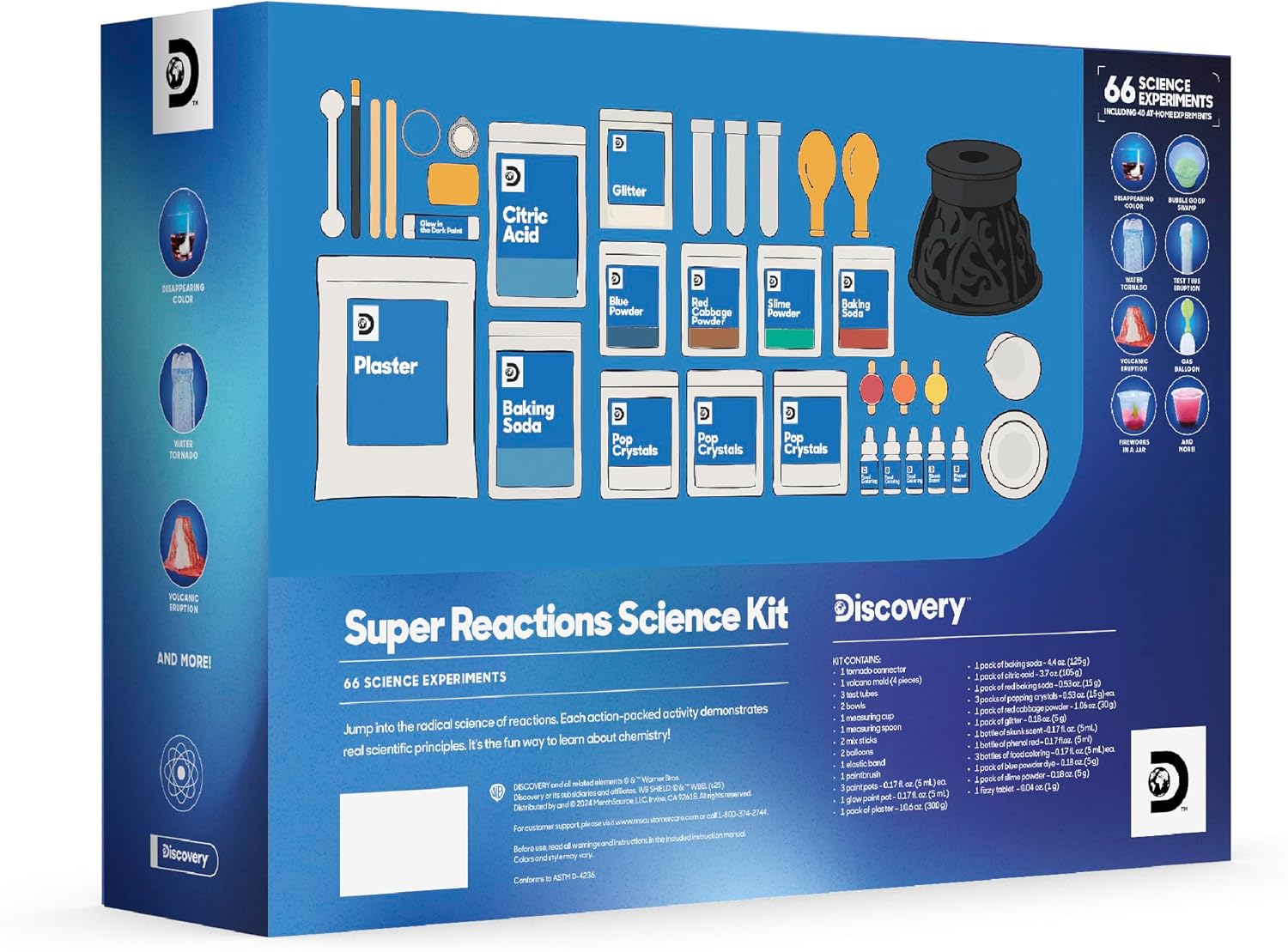
- Included components: test tubes, volcano mold, food coloring, citric acid, slime mix, popping crystals, and other chemistry tools
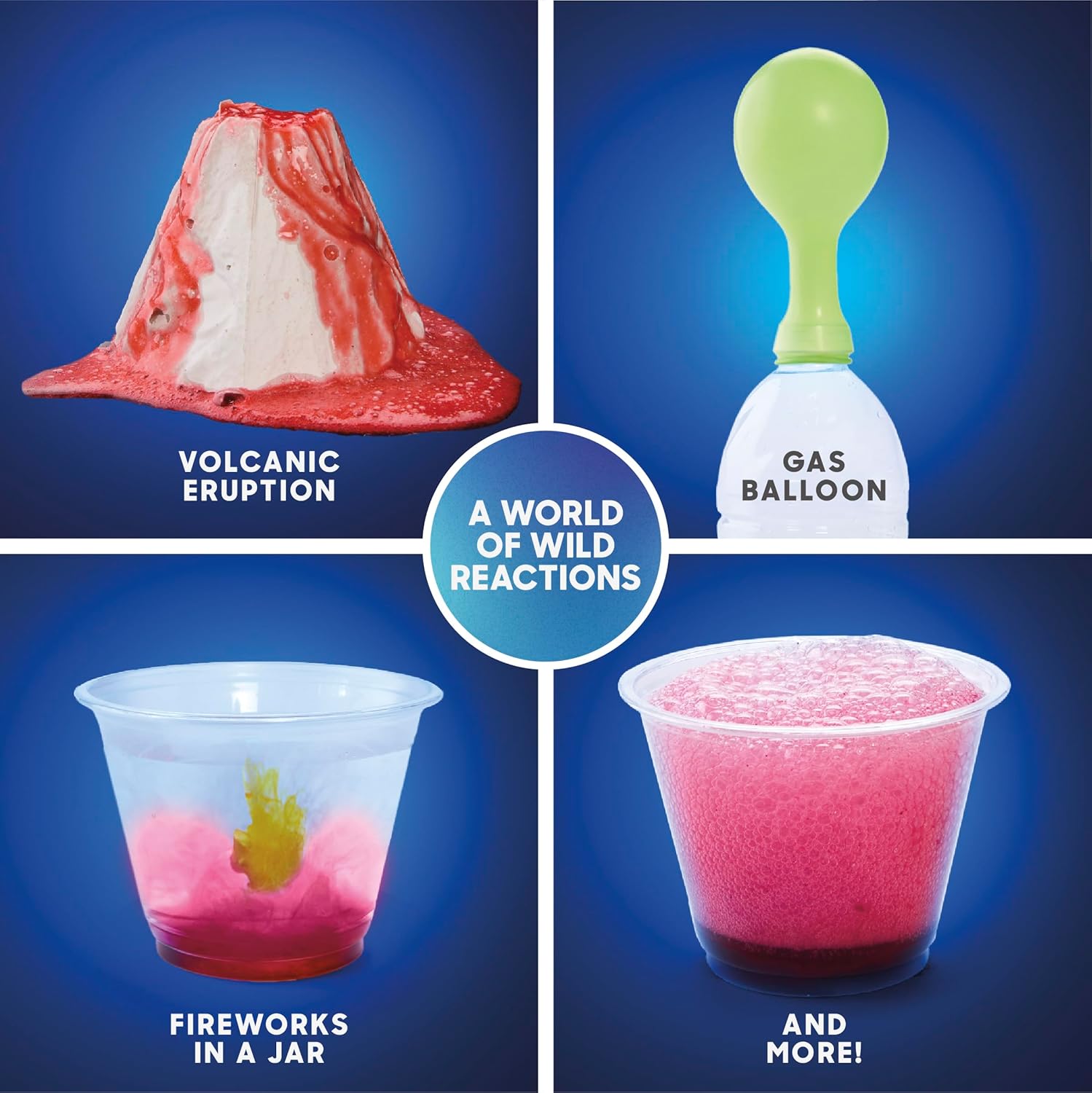
- Main experiment types: volcano eruptions, glowing potions, slime creation, gas balloons
Benefits
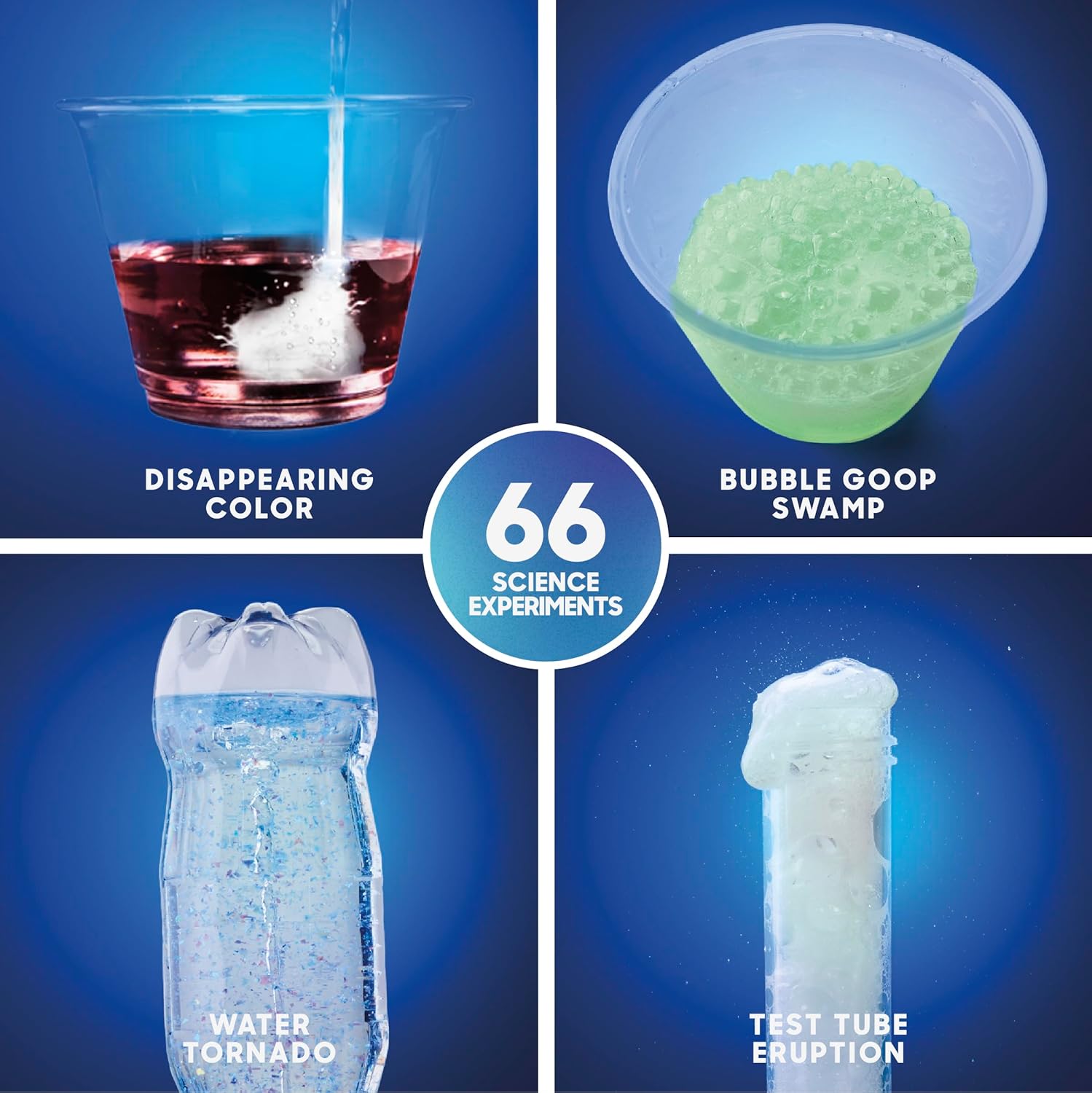
This activity set teaches core STEM ideas in a playful format, allowing children to see scientific principles in action rather than just reading about them. The clear instructions aim to make complex topics approachable, and the inclusion of both kit supplies and household-based extras extends learning beyond the included materials. Also, the variety of activities keeps sessions fresh and allows kids to repeat experiments with slight variations to compare results. 🧪
Usage Recommendations
Set up a protected workspace with a wipeable table covering and have measuring spoons and safety goggles available. Follow the step-by-step guides carefully and perform the more reactive experiments, such as fizzy eruptions and popping crystal demonstrations, with an adult present. Consider spacing sessions over several days so children can experiment, record observations and try adjustments to variables like concentration or temperature. 🎨
Consider that some ingredients, like citric acid and popping crystals, are reactive by design and should be handled according to the included safety notes, according to the manufacturer.