

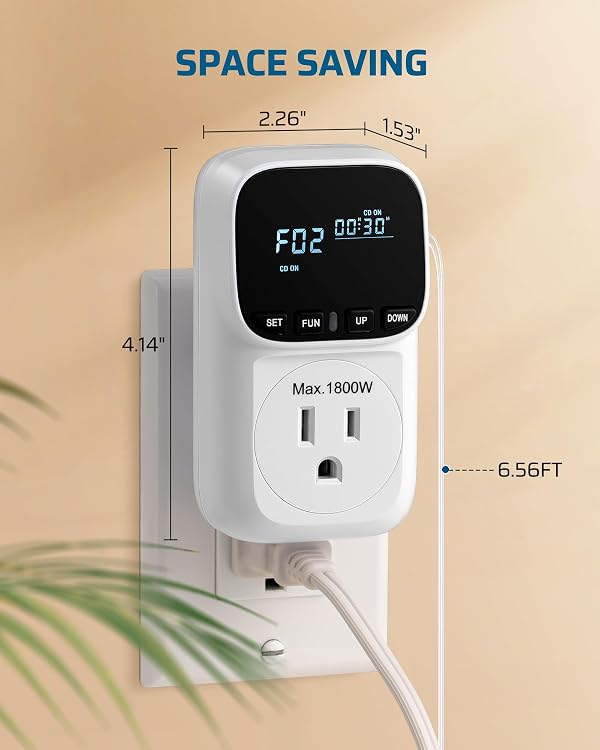
DEWENWILS HTCS02A Temperature Controller Outlet, 15A, -40 to 210°F
Reviews
Price
Product description
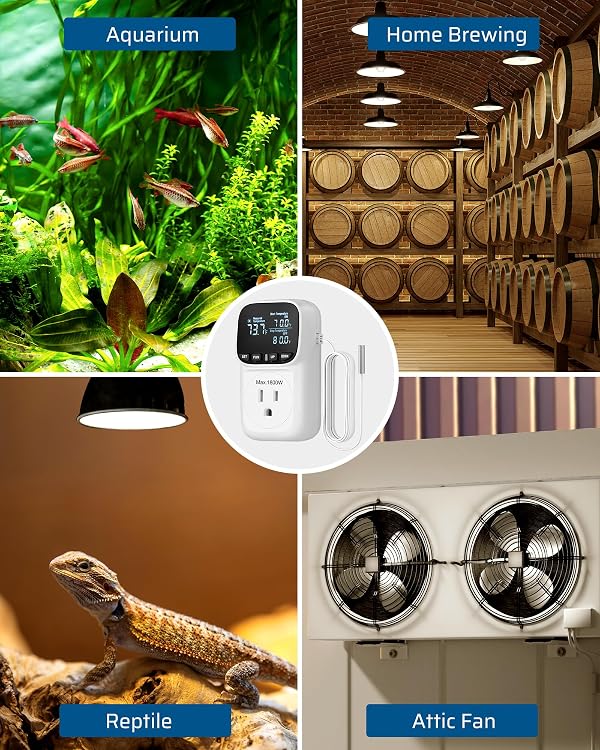
A basic thermostat can suit straightforward temperature control, while timed operation matters when a setup needs scheduled switching. The DEWENWILS HTCS02A combines temperature control with countdown and cyclic timing modes. It is designed for heating and cooling applications, including greenhouses, incubators, reptile enclosures, and home brewing.
Key points
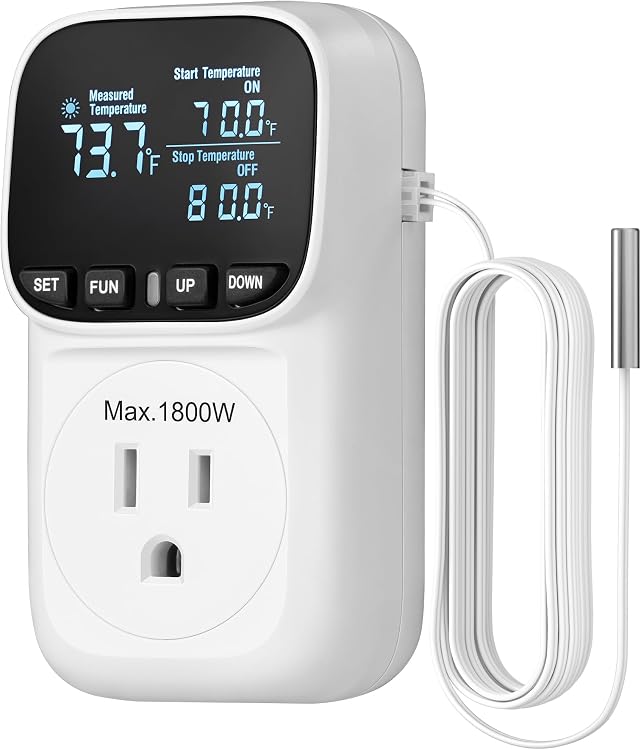
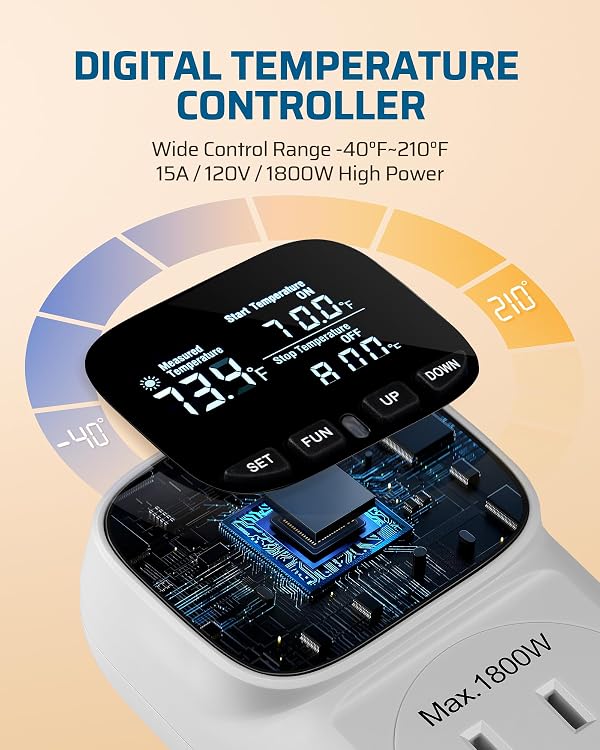
This plug-in controller is rated for a 15A output and up to 1,800W, with a listed voltage of 120 volts. Its temperature range runs from -40°F to 210°F, and the stated adjustment precision is 0.1°F. Those details help assess whether it matches the temperature range and electrical demands of a particular heater or cooling setup, the load should stay within the controller’s stated limits.
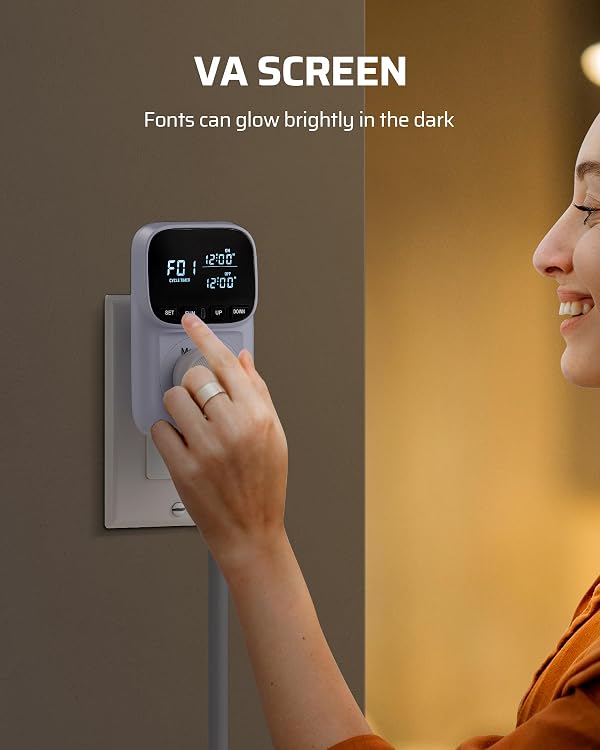
The VA display is described as self-illuminating for visibility in dim or dark conditions. Heating and cooling modes give it a broader role than a heater-only thermostat, while temperature calibration provides a way to adjust for a measured temperature deviation. The included power-memory feature restores previous settings after power returns.
Instead of relying only on a thermostat’s temperature-triggered switching, this model also offers cyclic timing, countdown-on, countdown-off, and countdown on/off modes. That combination may be useful when temperature regulation and scheduled operation both matter. It includes one controller, the listing does not specify additional accessories.
Tips for day-to-day use
Before connecting equipment, compare its voltage, current, and wattage requirements with the controller’s listed 120 volts, 15A, and 1,800W limits. For example, an incubator or greenhouse heat source can be connected to a temperature-control setup, with the desired temperature and an appropriate timing mode selected. The actual suitability depends on the connected equipment and the conditions of the setup.
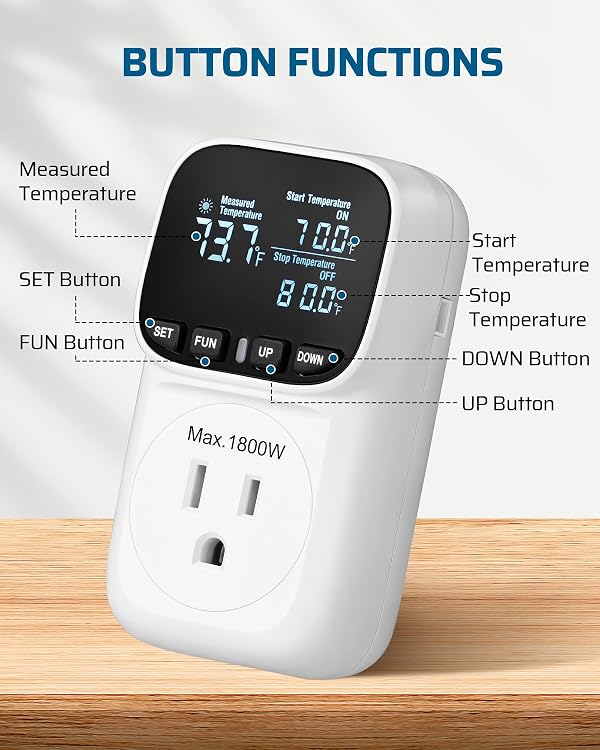
Use temperature calibration only when you have a reason to adjust the displayed reading, such as a measured difference from another temperature reference. The product information does not describe a calibration procedure, so follow the controller’s supplied instructions rather than guessing at button sequences. Its controls are listed as button-operated, and the product description identifies a VA display.
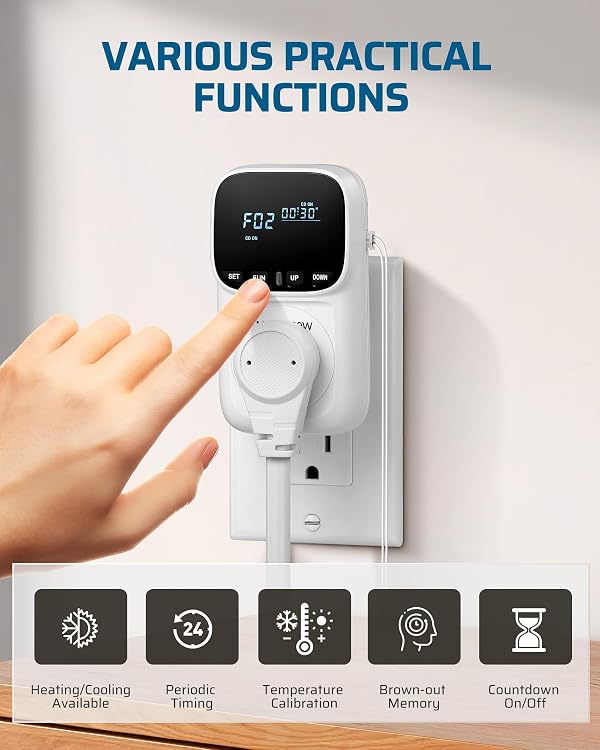
For a simple setup that only needs temperature-triggered operation, the timing functions may not be necessary. They are more relevant when a countdown or repeating cycle is part of the routine, such as managing scheduled equipment operation alongside temperature control.
Usage tips
Choose heating or cooling mode to match the equipment being controlled, then set the target temperature and any timing functions that suit the application. A reptile enclosure, home-brewing area, or greenhouse may call for different target temperatures and schedules, the controller provides the control modes, but the appropriate settings depend on the specific use.
It’s a great fit if you need a plug-in controller with a broad stated temperature range and both temperature and timer functions. Not the best choice if the connected load exceeds 1,800W or 15A, since those are the listed output limits.
Questions before you buy
Can it control cooling as well as heating? Yes. Heating and cooling are both listed as temperature-control modes.
What timing options are included? The listed options include cyclic timing, countdown on, countdown off, and countdown on/off.
Will it retain settings after a power interruption? The product information says its power-memory feature restores previous settings when power returns.
Buying verdict
The HTCS02A is worth considering when a setup needs temperature regulation plus scheduled or repeating operation in one plug-in controller. Its 15A, 1,800W rating and -40°F to 210°F range provide concrete selection criteria, while heating and cooling modes broaden the kinds of applications listed. For a basic thermostat-only need, the extra timing options may not add much, for any setup, confirm the connected load fits the stated limits before choosing it.