

Pro Chaser 400W Power Inverter for Vehicles (DC 12V to 110V AC) with USB-C PD 65W + Dual AC Outlets
Reviews
Price
Product description
What it is and why you’d want it
The Pro Chaser 400W Power Inverter for Vehicles is a car power converter built for people who want more than just phone charging on the road. Plug it into a DC 12V vehicle socket and you get 110V AC power for small appliances—plus two USB charging ports (USB-A with QC 18W and USB-C with PD 65W).
On paper, it’s designed to cover the “most days away from home” gap: you can run compatible devices that need AC power while still keeping your phone/tablet charged. It also has a compact, carry-friendly form factor and a 30-inch (75 cm) cord, which matters when you’re trying to power things from the back seat without constantly repositioning.
Key takeaways (what stands out, and what to watch)
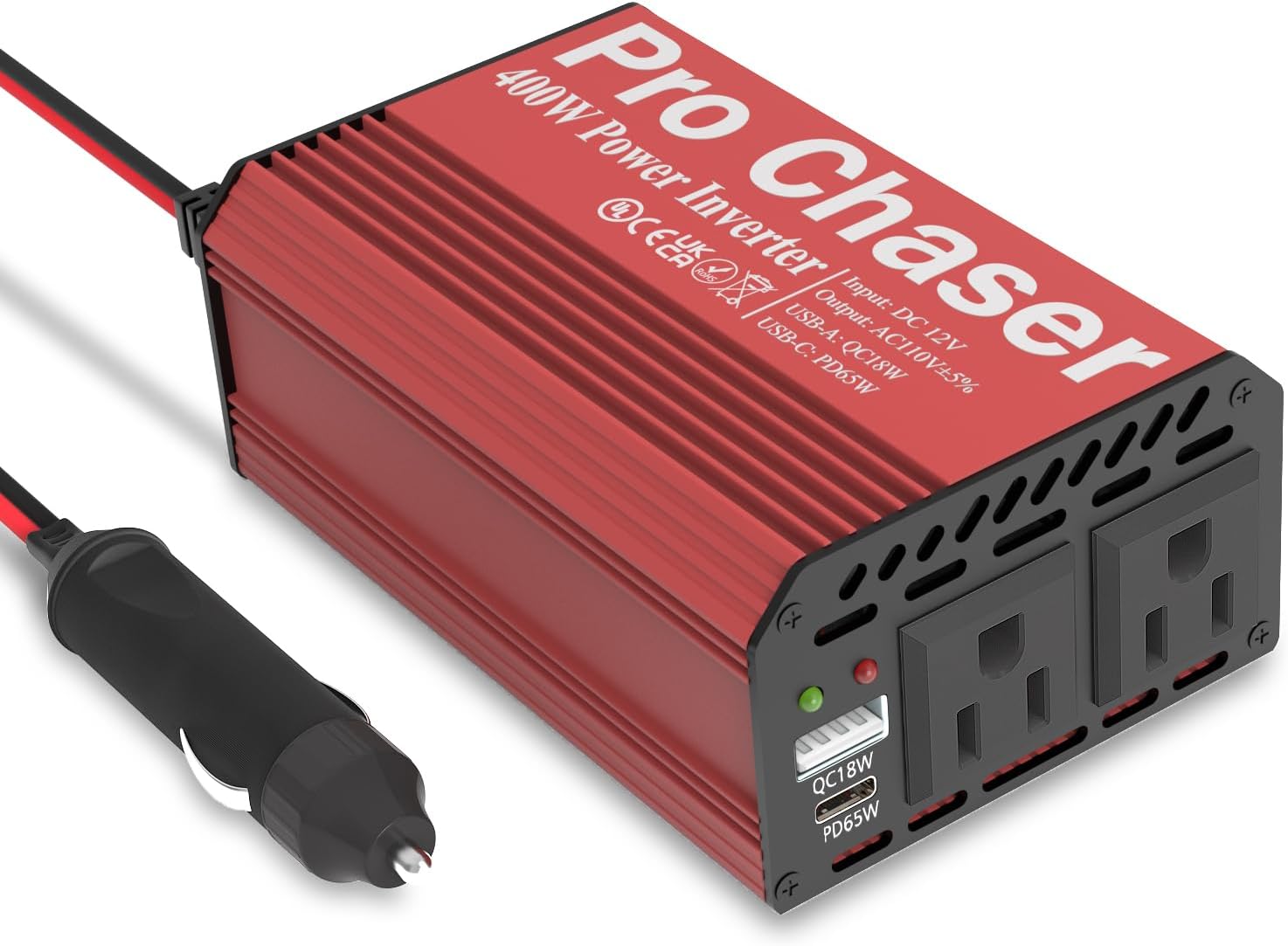
Dual AC outlets are the headline here, along with a serious-enough inverter rating for mid-power electronics. The unit also includes built-in protection features and an automatic cooling fan that turns on at 113°F (45°C). That combination is the main reason this feels more “practical daily-road-trip” than a throw-in gadget.
That said, it’s not a free-for-all power source. The instructions emphasize connecting only one high-power device at a time, and there’s a specific warning that using the PD 65W USB-C port together with the AC socket may exceed the vehicle socket’s limit. So if your plan is “run an appliance and fast-charge at the same time,” you’ll want to plan your load.
Usage experience: how it works for real trips
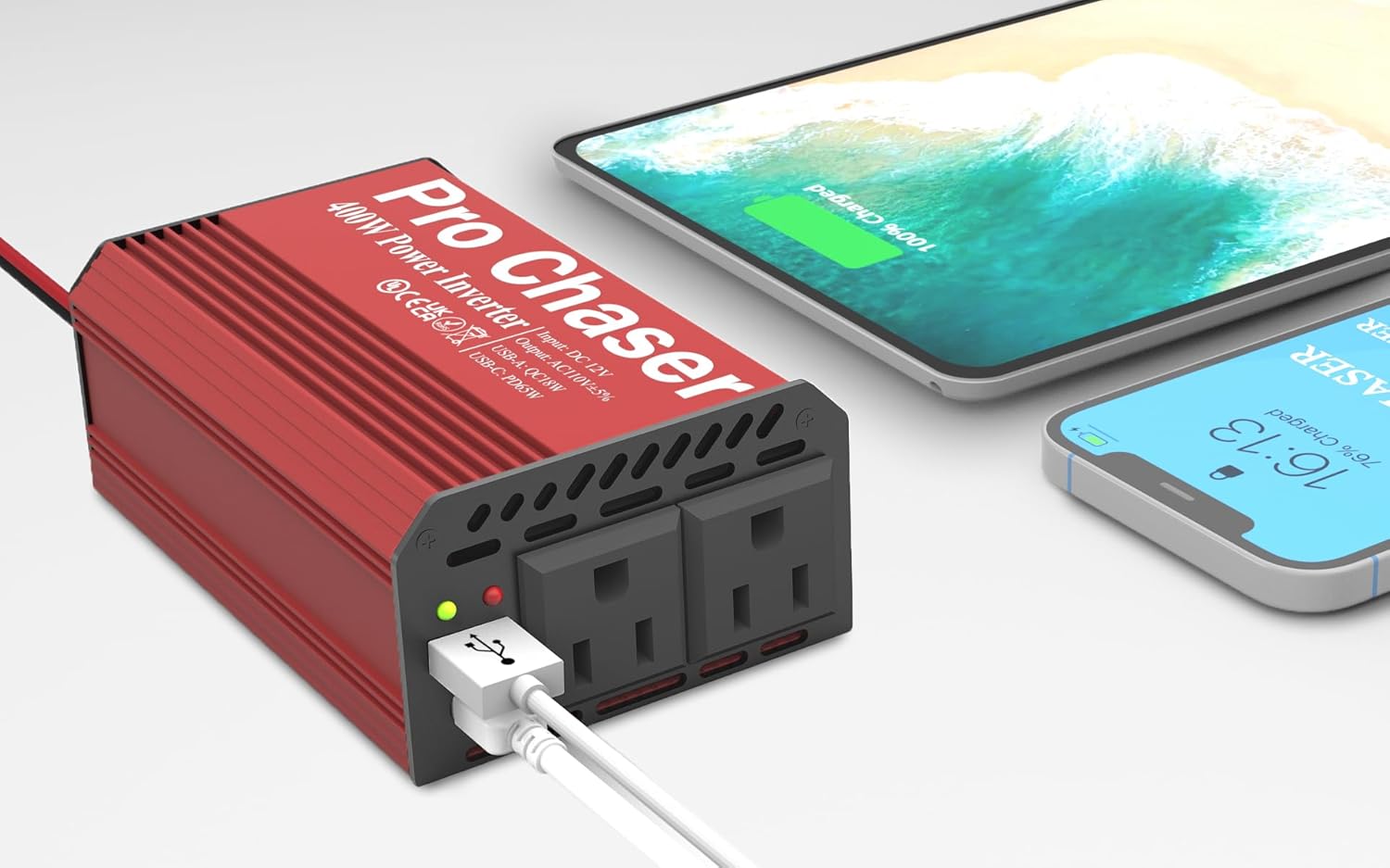
Imagine you’re on a road trip and the kids want tablets charged, while you also pack an AC device like a laptop charger or a small DVD player. With this inverter, you can plug the laptop charger into one of the 110V AC outlets while leaving USB-C (PD 65W) for faster charging on a phone or tablet that supports it, and USB-A (QC 18W) for a second device.
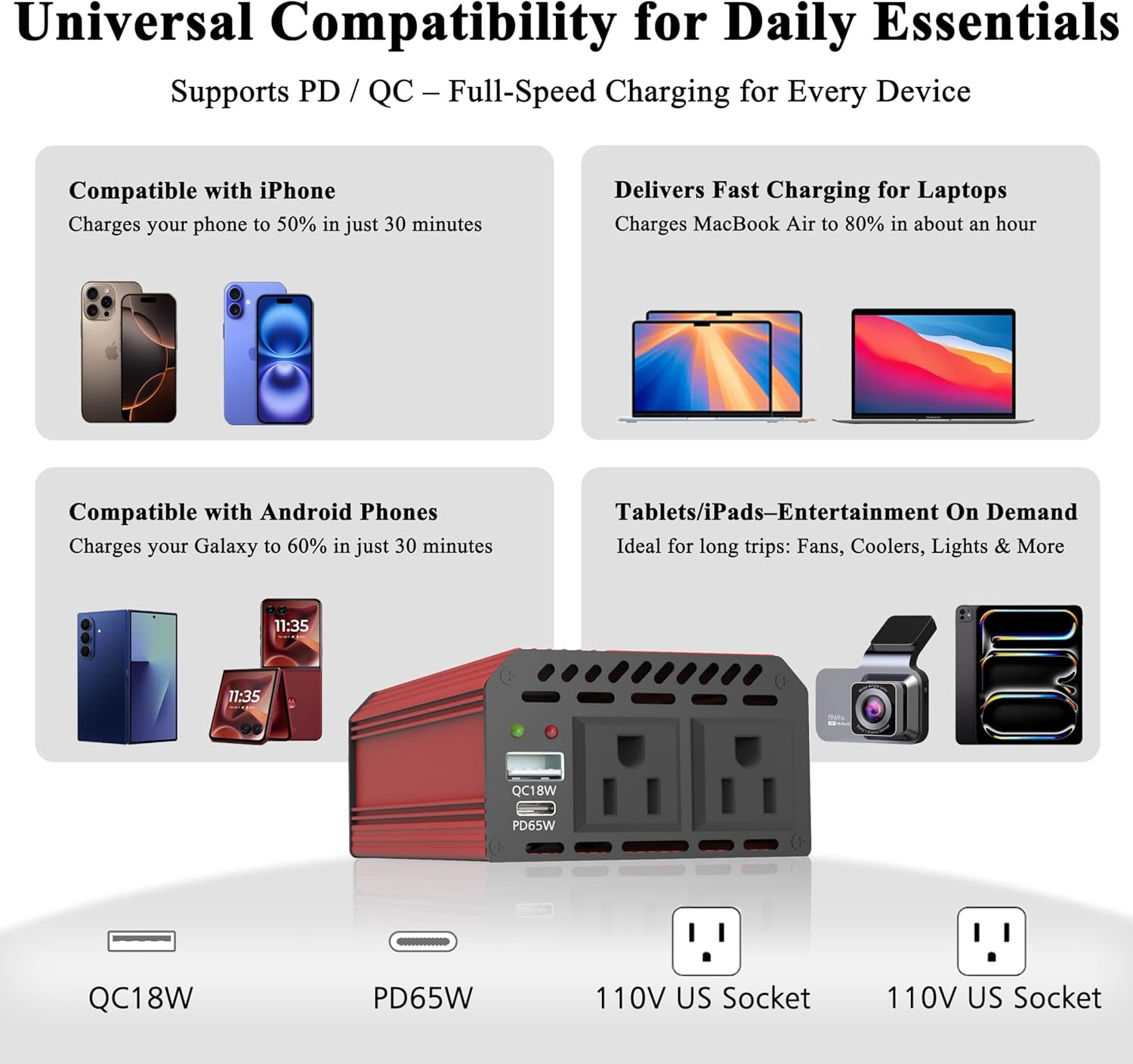
The 30-inch cord gives you some flexibility: it’s long enough to reach comfortably from the front socket area to where passengers are seated, so you’re not stuck with charging cables stretched across the entire vehicle.
Still, it may not be the smoothest fit if you’re powering multiple AC appliances simultaneously. The guidance to use one high-power device at a time is there for a reason.
Tech specs (so you can sanity-check your devices)
- Type: Power inverter / DC to AC car inverter converter
- Input: DC 12V
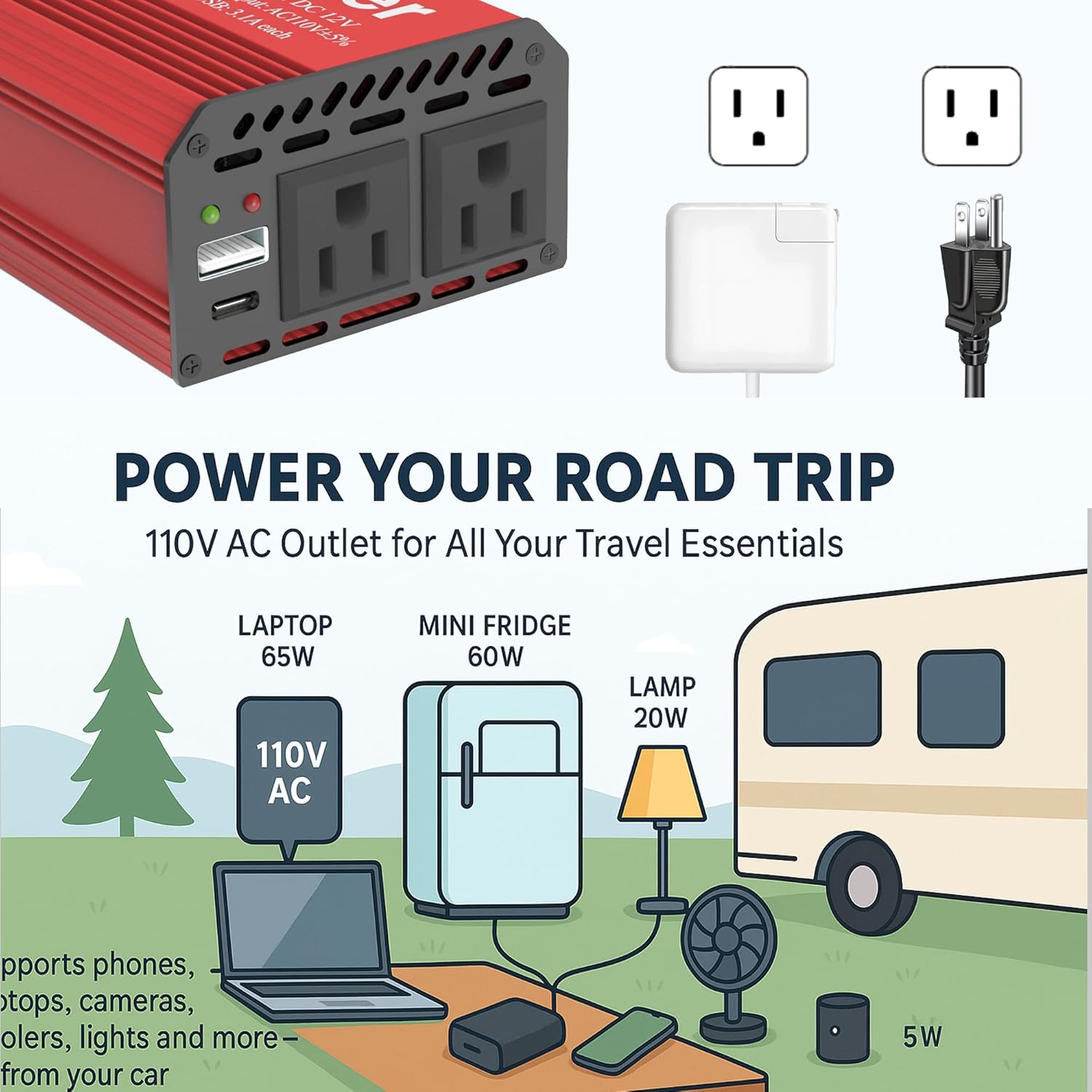
- Output: 110V AC (dual 110V AC outlets)
- Continuous power: 400 watts
- Peak power: up to 800 watts
- USB ports: USB-A QC 18W + USB-C PD 65W
- AC usage guidance: best performance when connecting only one high-power device at a time
- Cord length: 30-inch (75 cm)
- Safety protection: built-in fuse for short circuits, overloads, low voltage, overvoltage, and overheating
- Cooling: fan activates at 113°F (45°C)
- Vehicle connection: cigarette lighter socket charger
Pros, cons, and who it’s best for
What you’ll notice day to day: - A mix of AC + fast USB charging in one compact unit. - Dual AC outlets, which helps when more than one AC accessory is needed. - Safety-minded design cues (fuse protection plus temperature-based fan).
Where it may feel limited: - Power management is the big constraint. If you try to run multiple high-draw devices, you’re likely to run into the “use one high-power device at a time” limitation. - There’s an explicit caution about using the PD 65W USB-C port together with the AC socket potentially exceeding the vehicle socket’s limit, so timing and load matter.
It makes sense if: It’s a solid pick if your goal is powering mid-range AC electronics (the description mentions appliances that need roughly 300W to 400W) while still having fast USB charging for everyday gear.
It might not suit you if: It’s not the best choice if you’re trying to run larger or multiple power-hungry appliances from the same vehicle socket at once. For those setups, you typically need a more carefully matched power solution rather than trying to “split the load” across outlets and ports.
Compatibility & requirements: what to check before you buy
Before you commit, double-check that the device you want to power aligns with the inverter’s capability. The description notes that the AC outlets are meant for devices requiring around 300W to 400W, and it also calls out the vehicle-socket limit when combining PD USB-C charging with the AC connection.
Also, pay attention to cable placement. Since this unit includes a 30-inch (75 cm) cord, think about where your vehicle’s 12V outlet is relative to where the power will be needed.

FAQ
Is this inverter good for road trips and camping?
It’s built with road trips in mind: compact size, a car-socket connection, dual AC outlets, and USB charging. It’s meant to keep common electronics usable while you’re away from home.
Can I charge two USB devices at the same time?
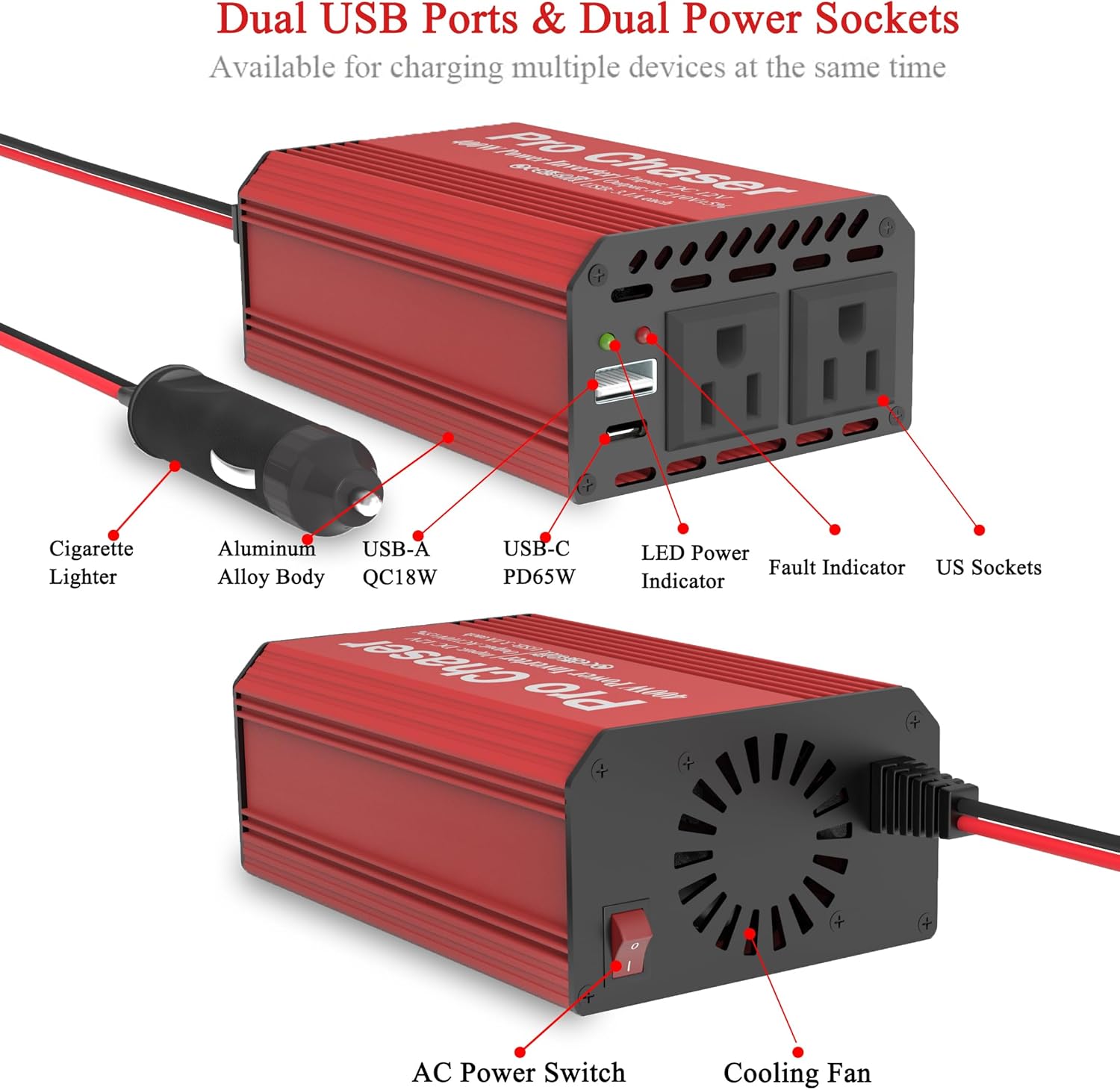
The inverter includes both USB-A (QC 18W) and USB-C PD 65W, so it supports charging multiple devices through the USB ports. The caution is mainly about combining PD 65W USB-C with the AC socket due to potential vehicle socket limits.
What safety features does it have?
It has built-in fuse protection for short circuits, overloads, low voltage, overvoltage, and overheating. There’s also a cooling fan that activates when the internal temperature reaches 113°F (45°C).
Should I use both AC outlets for high-power devices?
The guidance says to connect only one high-power device at a time for best performance. If you’re planning to run heavy loads, treat that as a key rule rather than a suggestion.
Is it worth it?
Final verdict
Worth considering if you want a compact 400W car inverter that can handle everyday AC electronics (around the 300W to 400W range mentioned) and still provide fast USB charging via USB-A QC 18W and USB-C PD 65W. The safety protections and automatic fan behavior are also reassuring for regular use.
It might not be the best match if your plan is to run multiple high-power appliances at once or if you’re hoping to combine PD 65W USB-C charging with an AC load without thinking about vehicle socket limits. If you’re disciplined about power load—one high-draw AC device at a time—it can be a practical “all-in-one” setup for travel days.