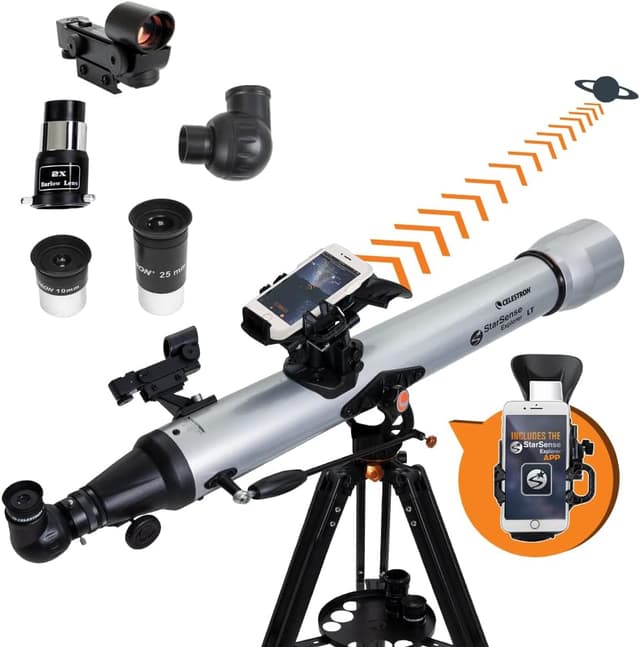
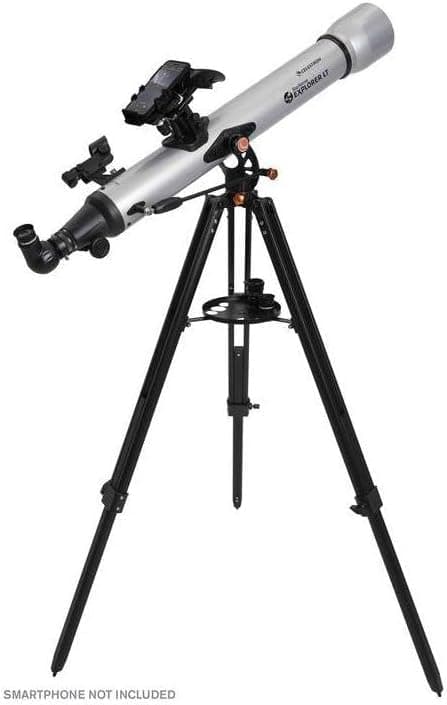
Celestron StarSense Explorer LT 80AZ 80mm telescope

Price evolution
Product description
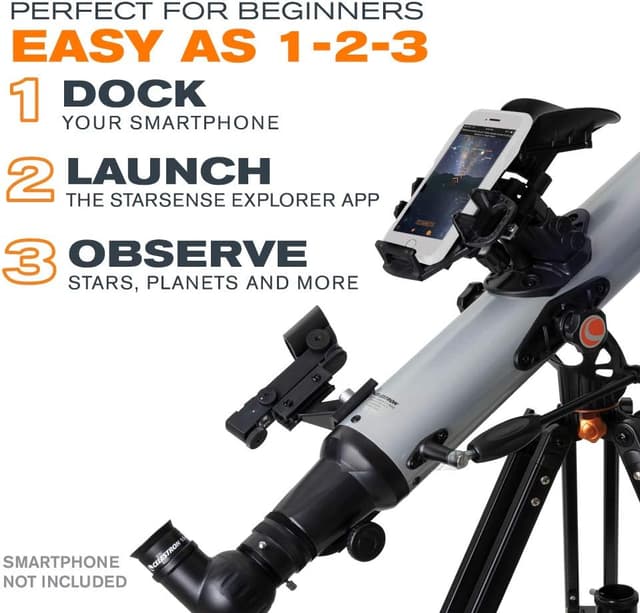
This 80mm refractor telescope from Celestron combines a clear, coated glass objective with an easy smartphone docking workflow to help beginners locate and observe planets, the Moon, and brighter deep-sky objects. It uses an app-driven sky recognition system to guide you to targets, making night sky exploration more accessible for casual stargazing and educational use.
Key Points
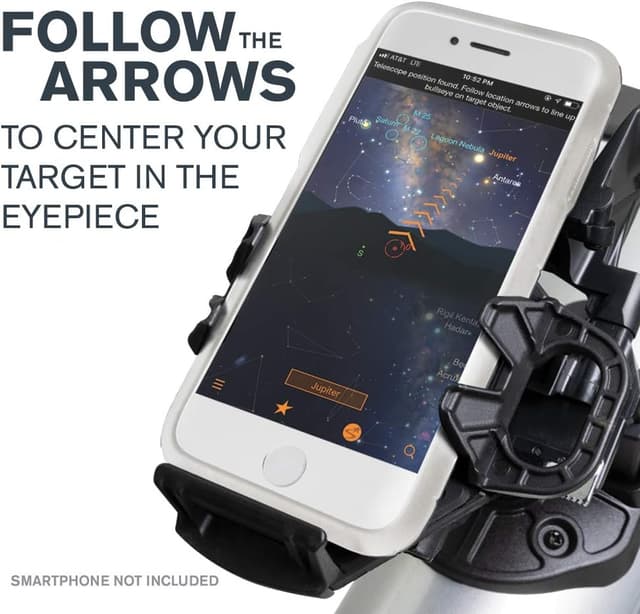
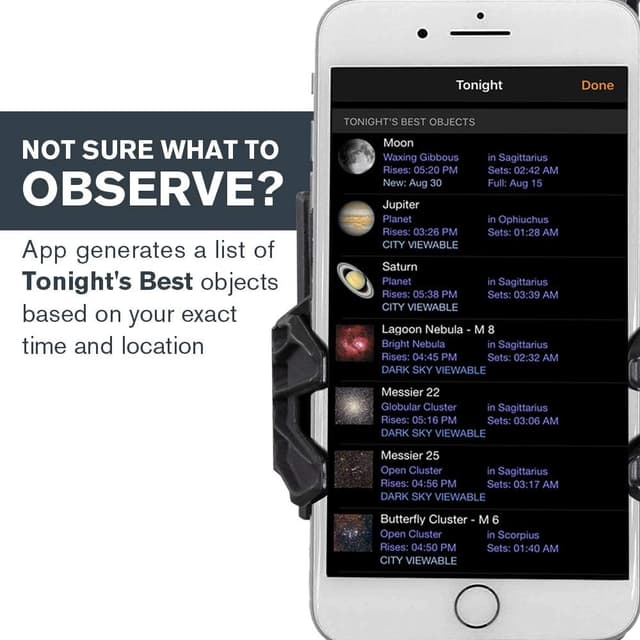
The StarSense system uses your phone’s camera and location to analyze the sky and determine the telescope’s real-time position, then suggests objects to observe based on time and place. The altazimuth manual mount includes a slow-motion control rod that makes following targets straightforward, and the on-screen arrows turn green when alignment is complete. The package includes two eyepieces, a 2x Barlow lens, and a red-dot finderscope so you can use the instrument even without a smartphone. Note that faint deep-sky objects are more visible from darker skies, according to the manufacturer.
Technical Specifications
- Name: Celestron StarSense Explorer LT 80AZ
- Aperture: 80 mm
- Optical design: Refractor, coated glass objective
- Mount: Manual altazimuth with slow-motion control rod
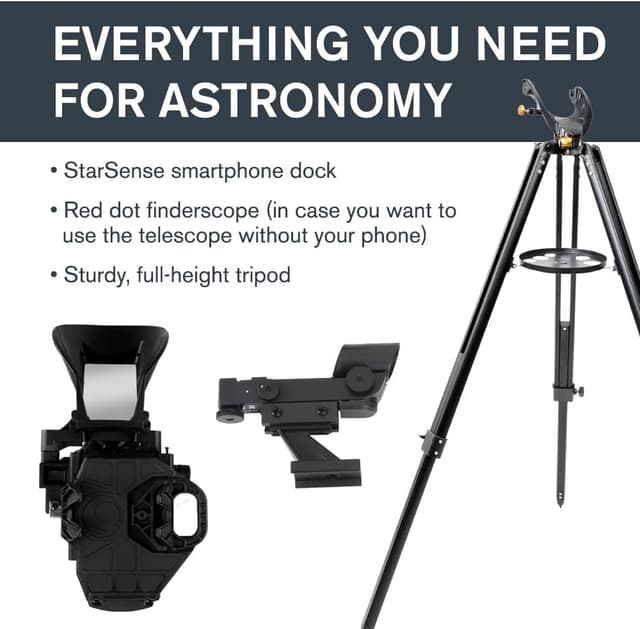
- Accessories: Two eyepieces, 2x Barlow lens, red-dot finder, full-height tripod
Usage Recommendations
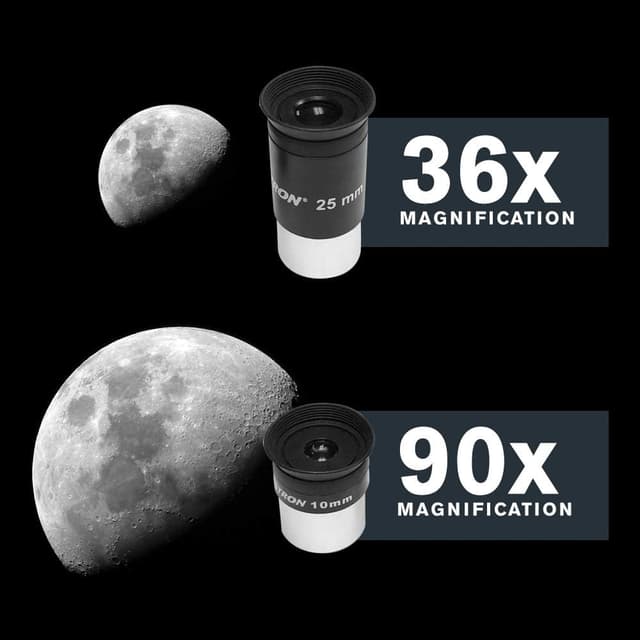
Start by mounting your smartphone in the dock and opening the StarSense Explorer app to let it capture the sky for alignment. Follow the app’s directional arrows to center the target in the eyepiece field, watching for the green confirmation before observing. For planetary and lunar viewing, choose higher-power eyepieces; for open clusters or brighter nebulae pick lower magnification to keep objects in view. Carry a red flashlight and allow your eyes to adapt to the dark for at least 15–20 minutes to improve visibility of dimmer objects.
Advantages
This model offers a simple, guided observing workflow that helps novices learn the night sky without memorizing star charts. The coated optics deliver bright, defined views of the Moon and the major planets in urban or suburban locations. The inclusion of a Barlow lens effectively doubles eyepiece magnifications without additional purchases, and the robust tripod supports steady observation sessions. Some users may find that very faint galaxies and nebulae require darker sites to reveal more detail.