

AWithZ P30C 21.8 KW capacitor spot welder
Product description
This compact capacitor spot welder is built for assembling and repairing battery packs, offering quick readiness and flexible control for shop or hobby use. It reaches working charge rapidly, includes both automatic and foot pedal operation, and supports welding of common battery sizes and thin metal tabs for pack assembly. ⚡🔋
Key Points
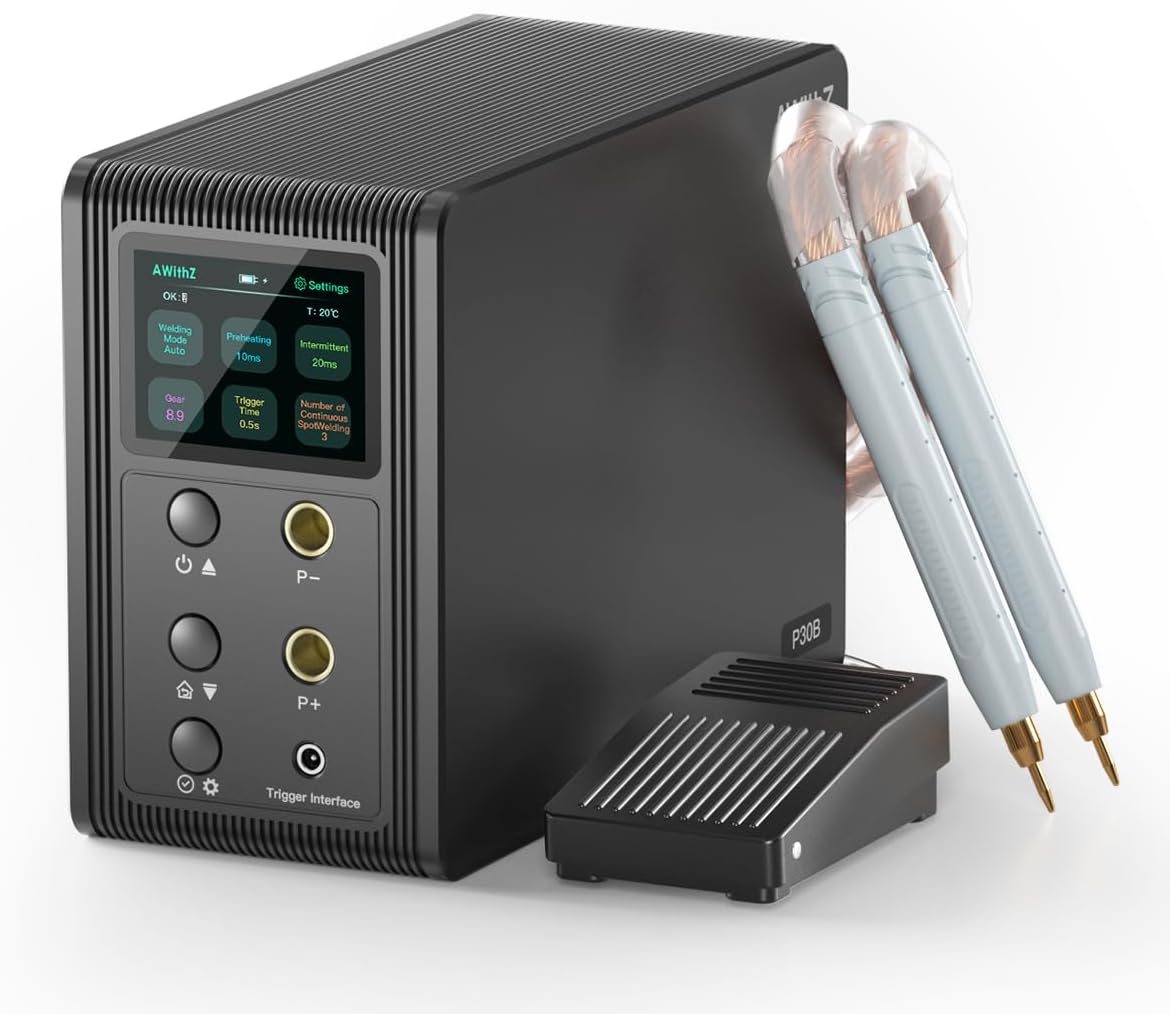
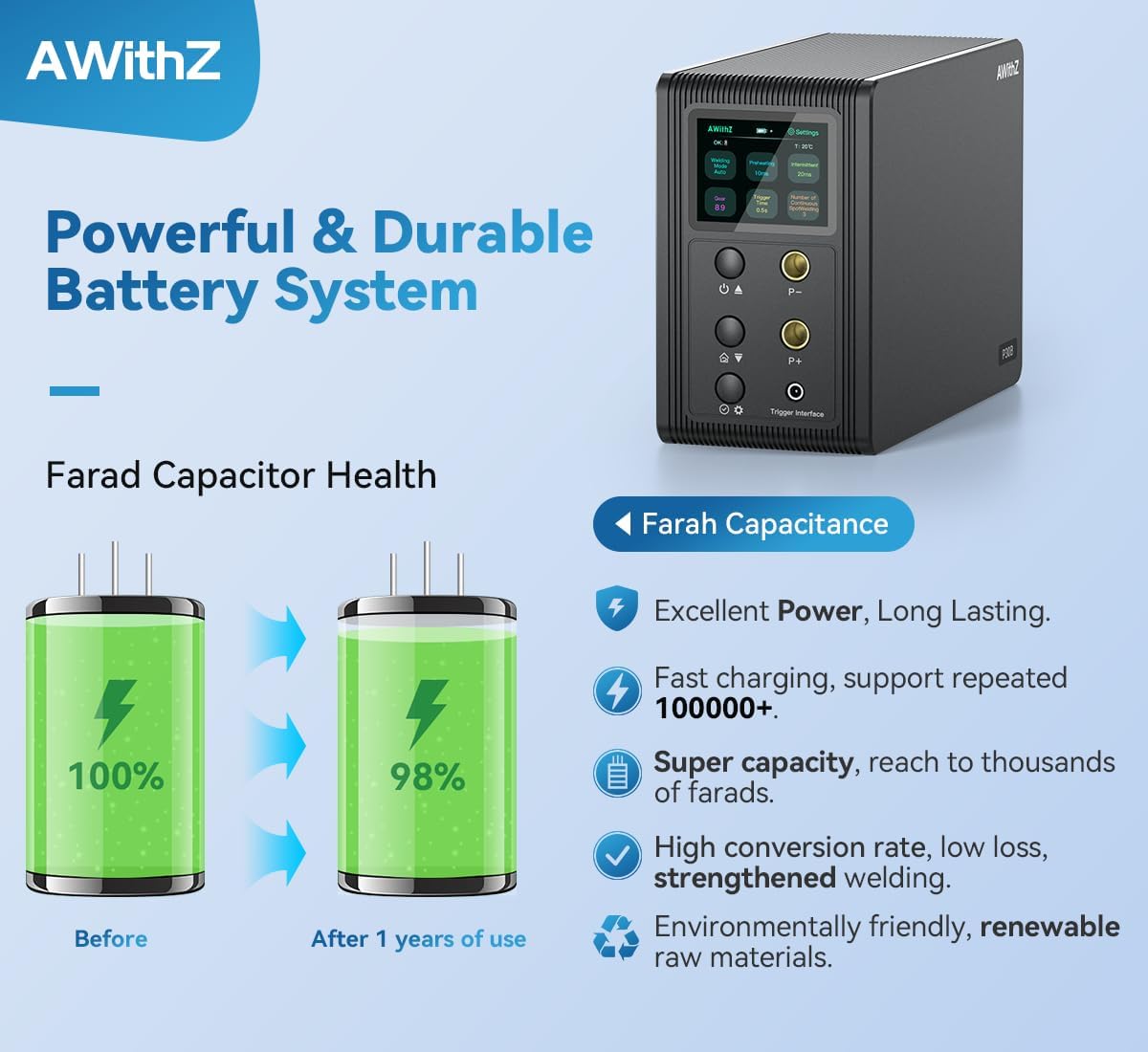
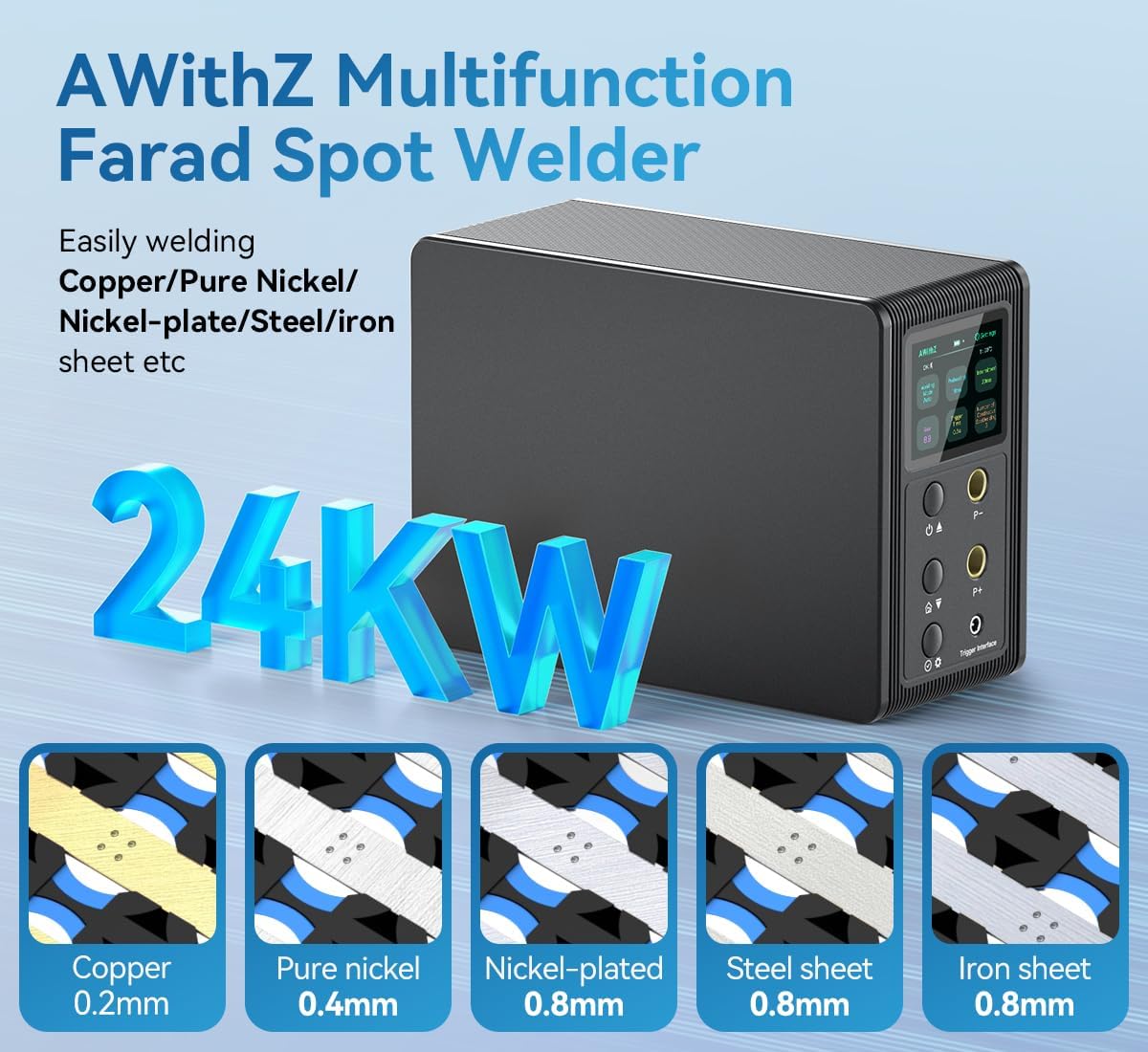
The unit charges its capacitors fast so you can begin welding without long waits, and it is designed to accept 100 to 240 V input with a supplied high-current adapter. Automatic mode lets you set a gear and weld quickly by inserting the pen, while foot pedal mode gives hands-free control and more time to position parts. The tool accommodates cylindrical batteries such as 18650 as well as LiFePO4 cells and industrial formats, and it can weld a variety of tab materials including nickel-plated steel and thin copper. The pen lead is flexible and about 60 centimeters long, making it easier to reach tight spots without stressing the machine.
Technical Specifications
- Name: AWithZ P30C
- Maximum pulse welding power: 21.8KW
- Input voltage: 100-240 V
- Charger: 15 A high-current adapter
- Lead length: 60 cm
Usage Recommendations
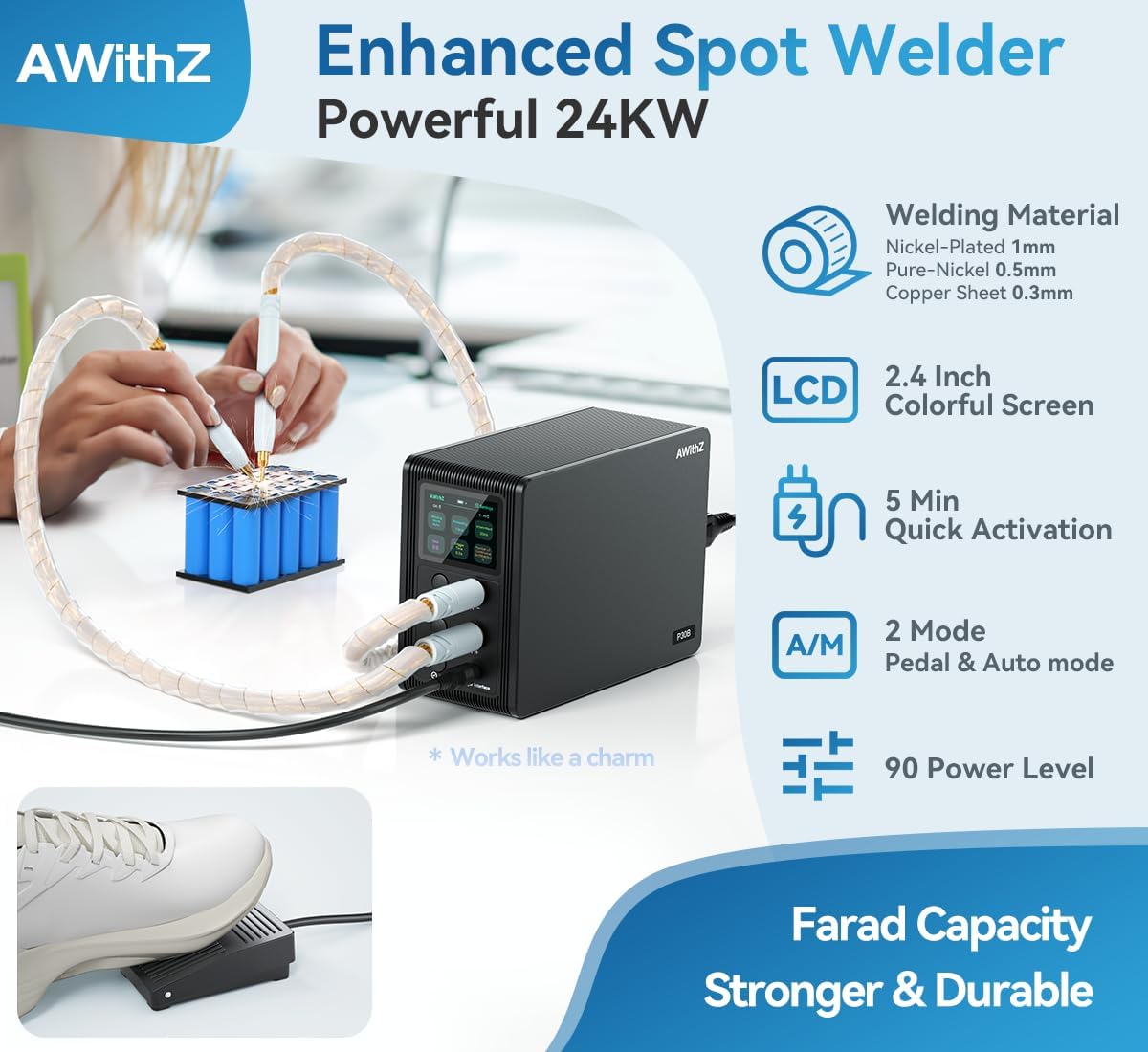
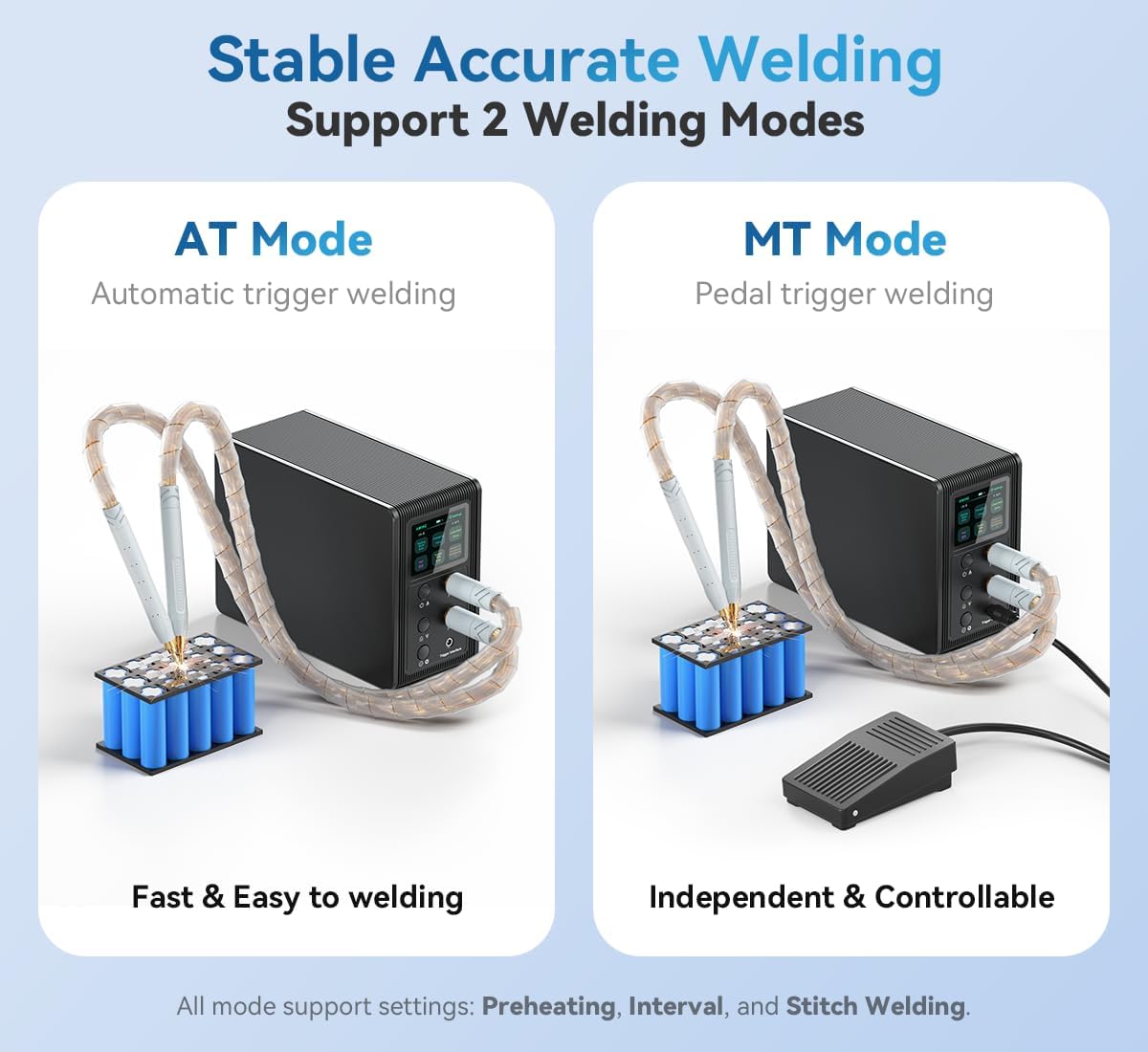
Set the gear according to the thickness and material of the tab you are welding, because there are 999 adjustable power levels to match different needs. For positioning delicate cylindrical cells, use the foot pedal to hold the probes steady and trigger the pulse when alignment is correct. When working with higher gears continuously, expect the probe temperature to rise to near hand warmth, and allow short cooldowns during extended runs to preserve tip life. For routine work, keep spare pins on hand because the lead pins are removable and the kit includes extra pins for faster maintenance. 🛠️
Practical Tips
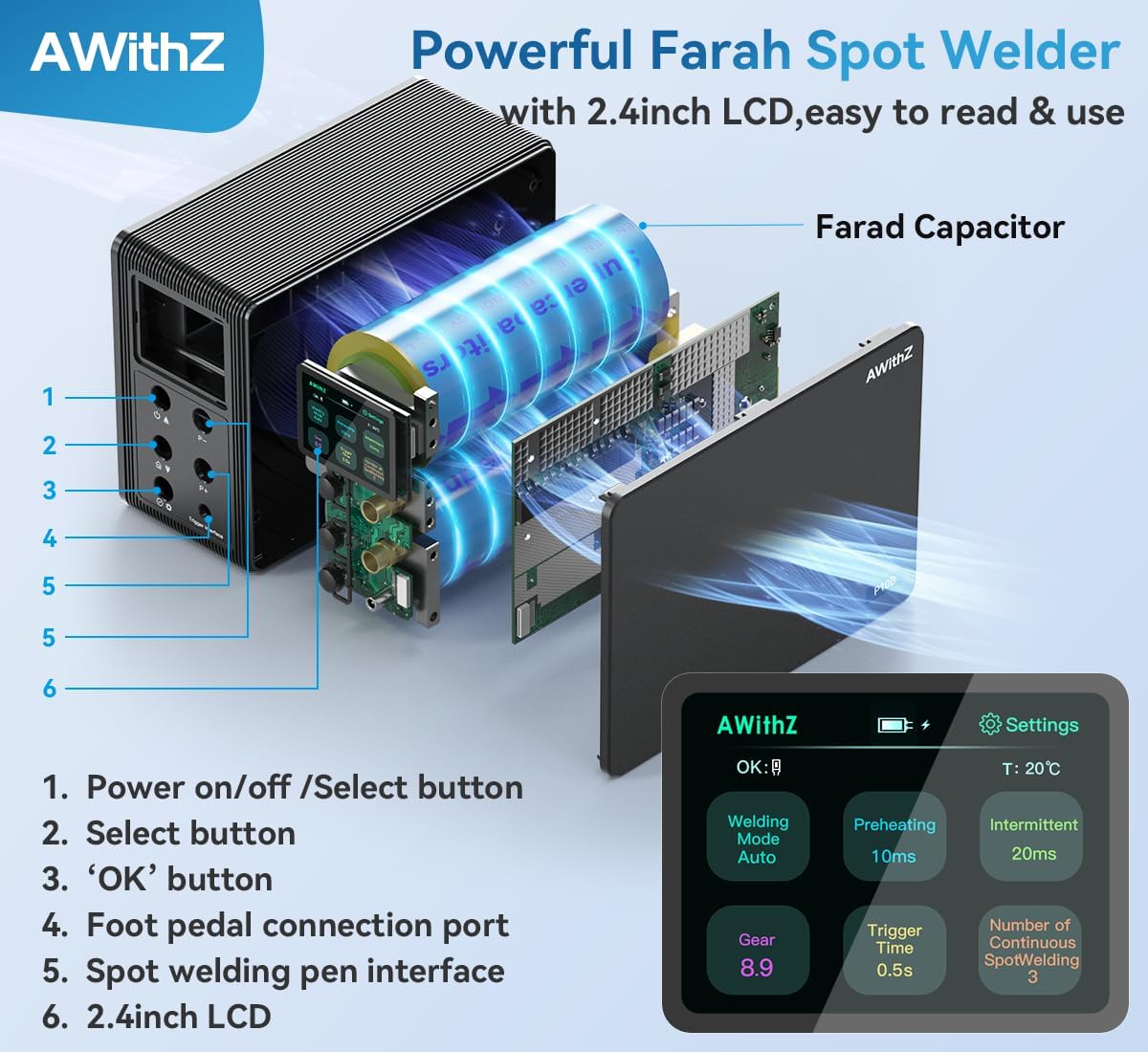
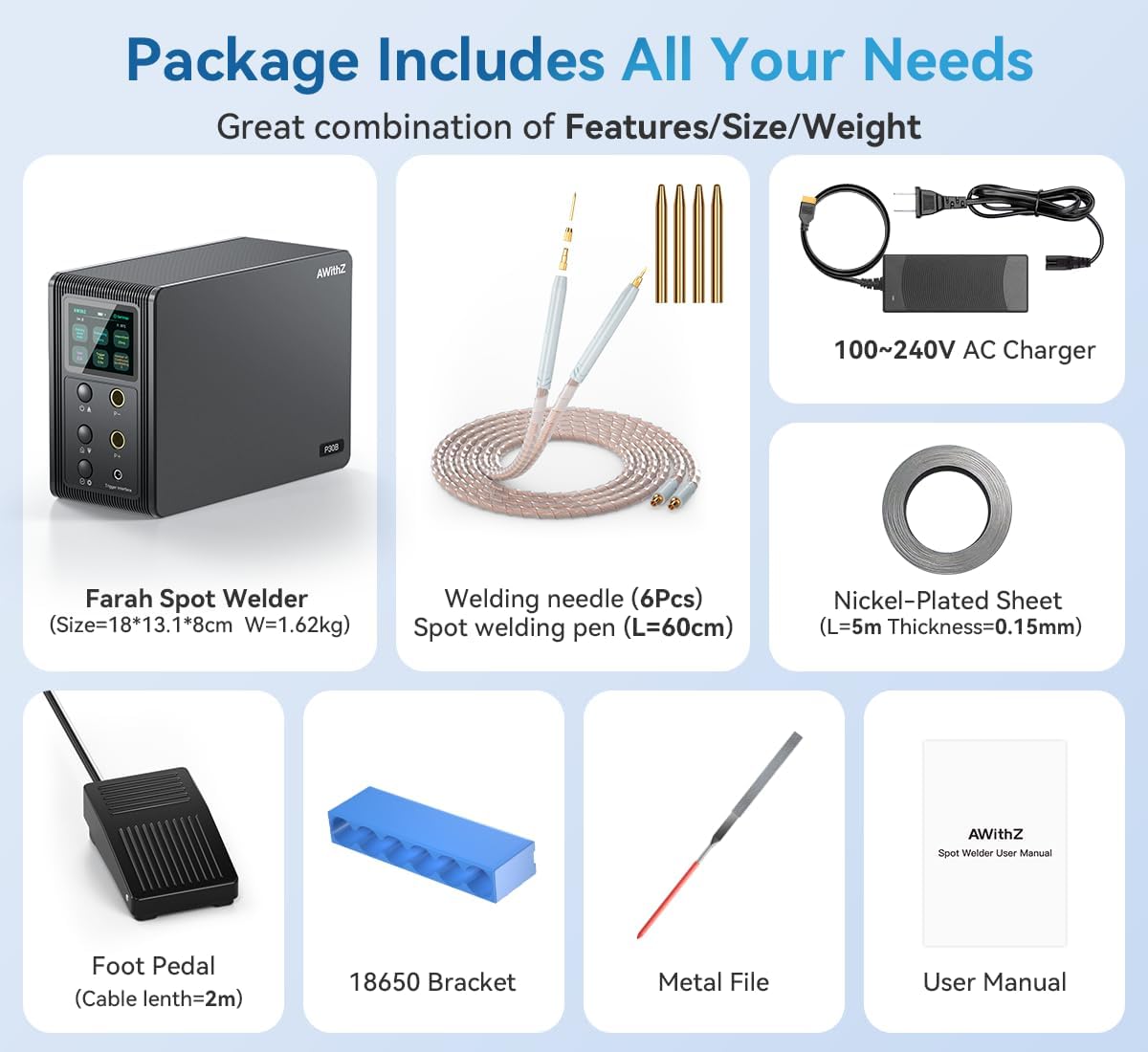
The package ships with a roll of 0.15 mm nickel-plated strip, an 18650 battery holder, a file, a foot pedal, and replacement pins so you can start basic battery pack welding immediately. Because the machine uses energy storage capacitors for rapid pulse delivery, it delivers strong, short bursts of current that are suitable for thin tabs and spot joints. Consider that highly conductive or thicker materials may require multiple passes or lower settings to avoid overheating the substrate. The control panel indicates when the unit is ready for a weld, helping to speed up repetitive assembly tasks while maintaining consistent pulse output.