

AstroAI Tire Inflator 150 PSI Portable Pump ⛽
Product description
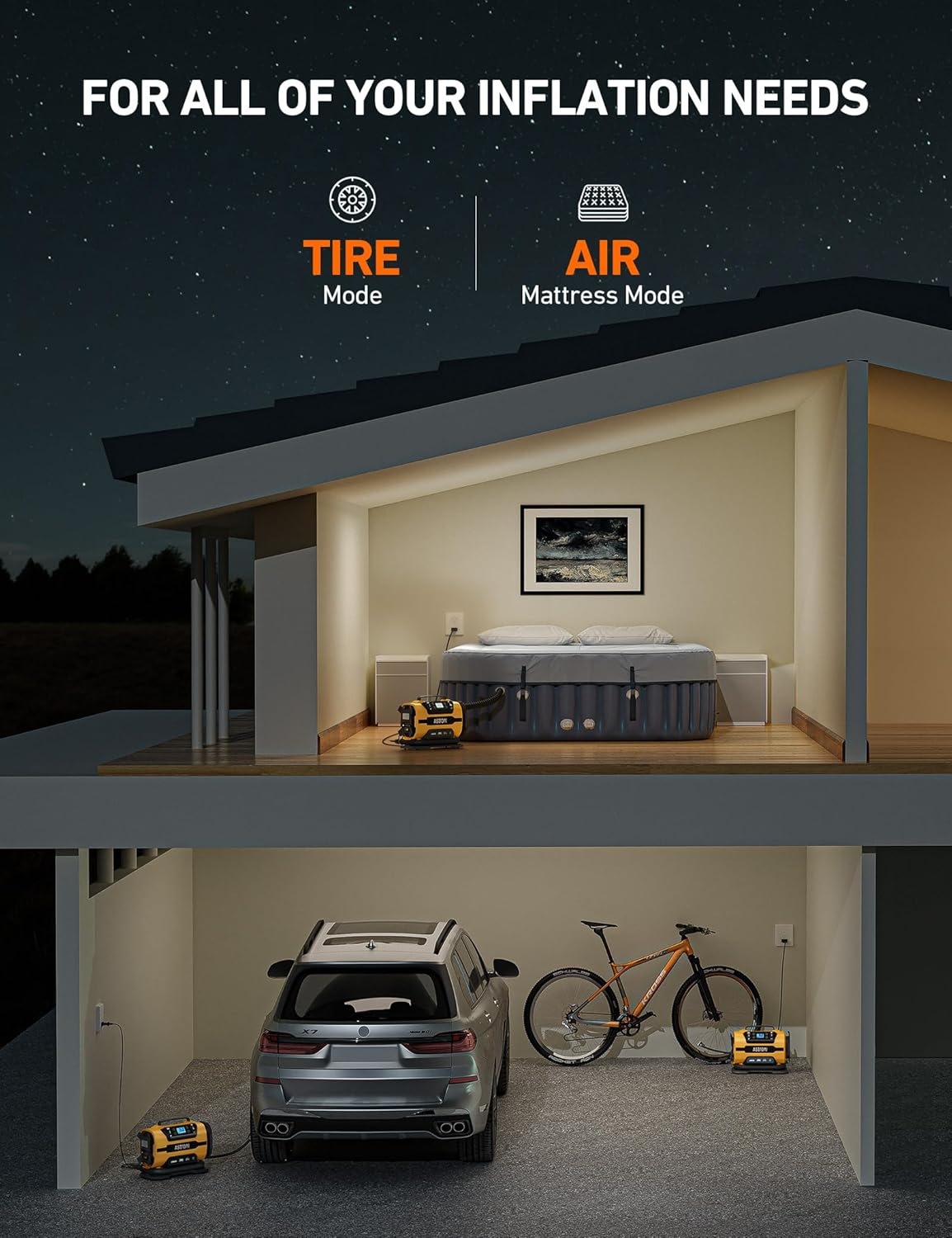
This portable air compressor from AstroAI combines dual power options and a compact design to make inflating car tires, bicycle tires and air mattresses practical at home or on the road. It offers a choice of high-pressure or large-volume modes so you can switch between quick tire fills and faster inflation of low-pressure items.
Key Points
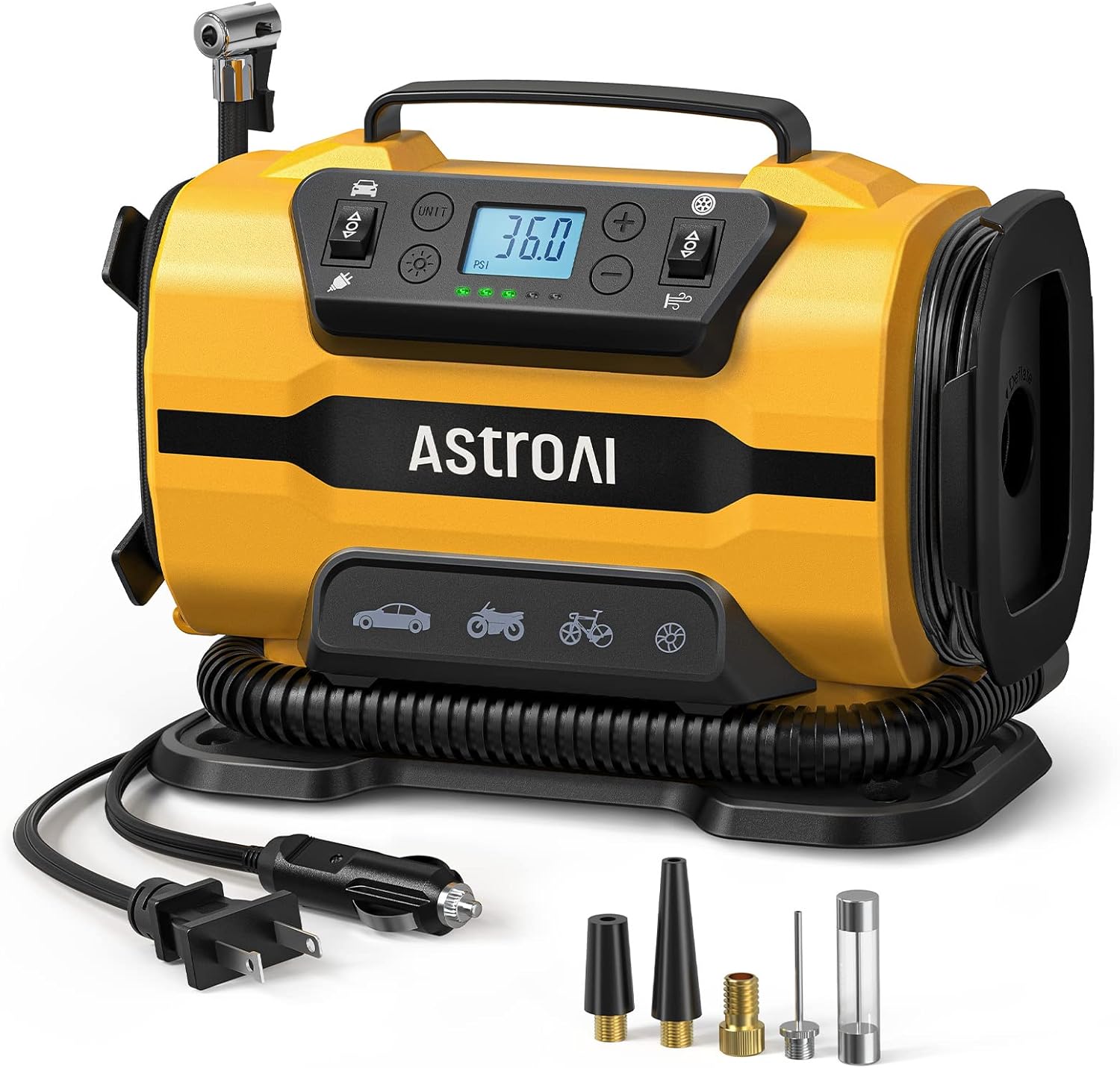
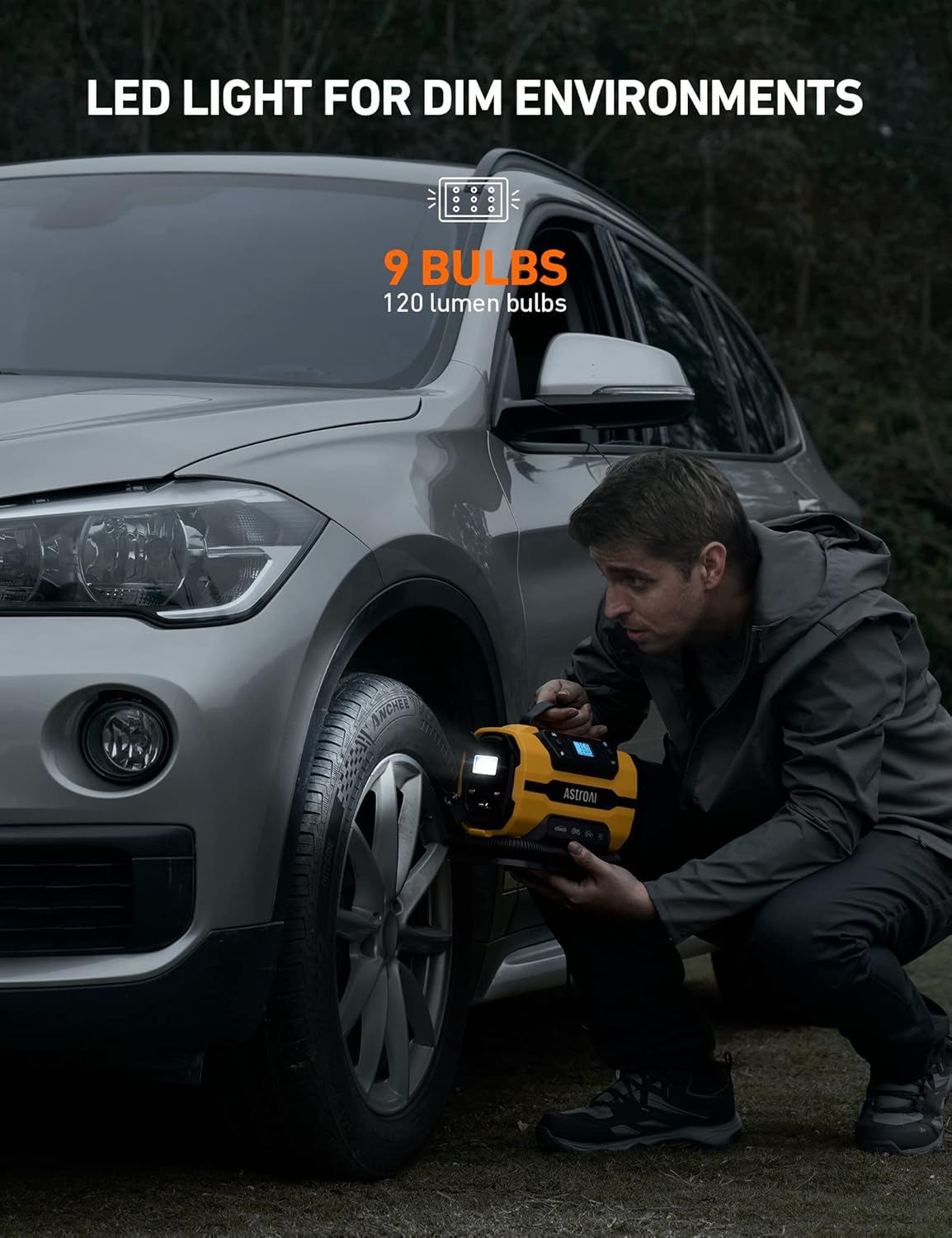
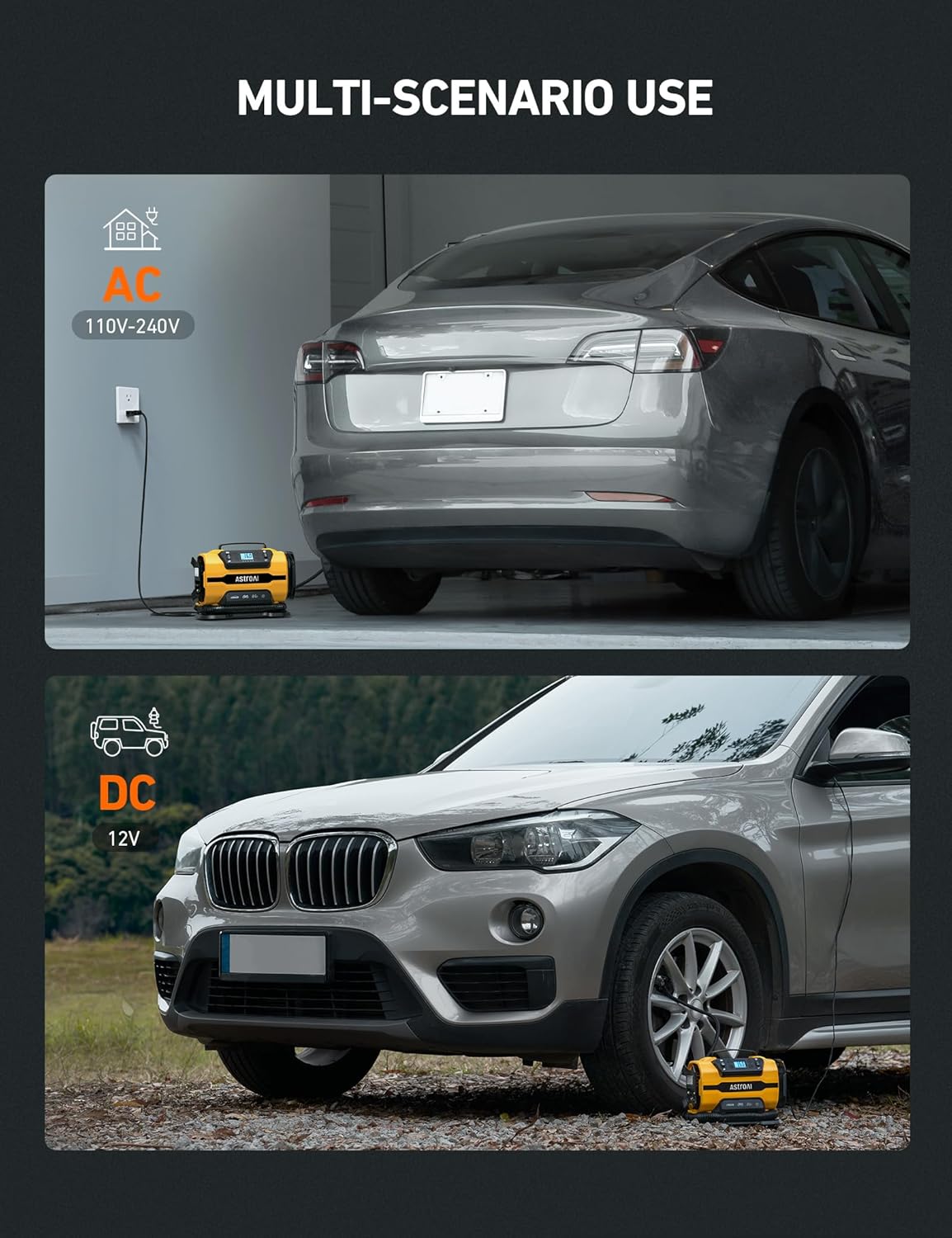
The inflator supports both 12 V DC and 120 V AC power, which means you can use it with a vehicle cigarette lighter or a household outlet. According to the manufacturer, the unit reaches up to 150 PSI in high-pressure mode and can fill a flat tire from 0 PSI to 36 PSI in about six minutes under those conditions. It includes an LED light for night use and a digital display that shows preset and current pressure, with automatic shutoff when the target is reached.
Technical Specifications
- Name: AstroAI Tire Inflator Portable Air Compressor Pump
- Maximum Pressure: 150 PSI
- Power Inputs: 12 V DC and 120 V AC
- Continuous Run Time: up to 15 minutes
- Inflation Rate (large-volume mode): 350 L/min
Benefits
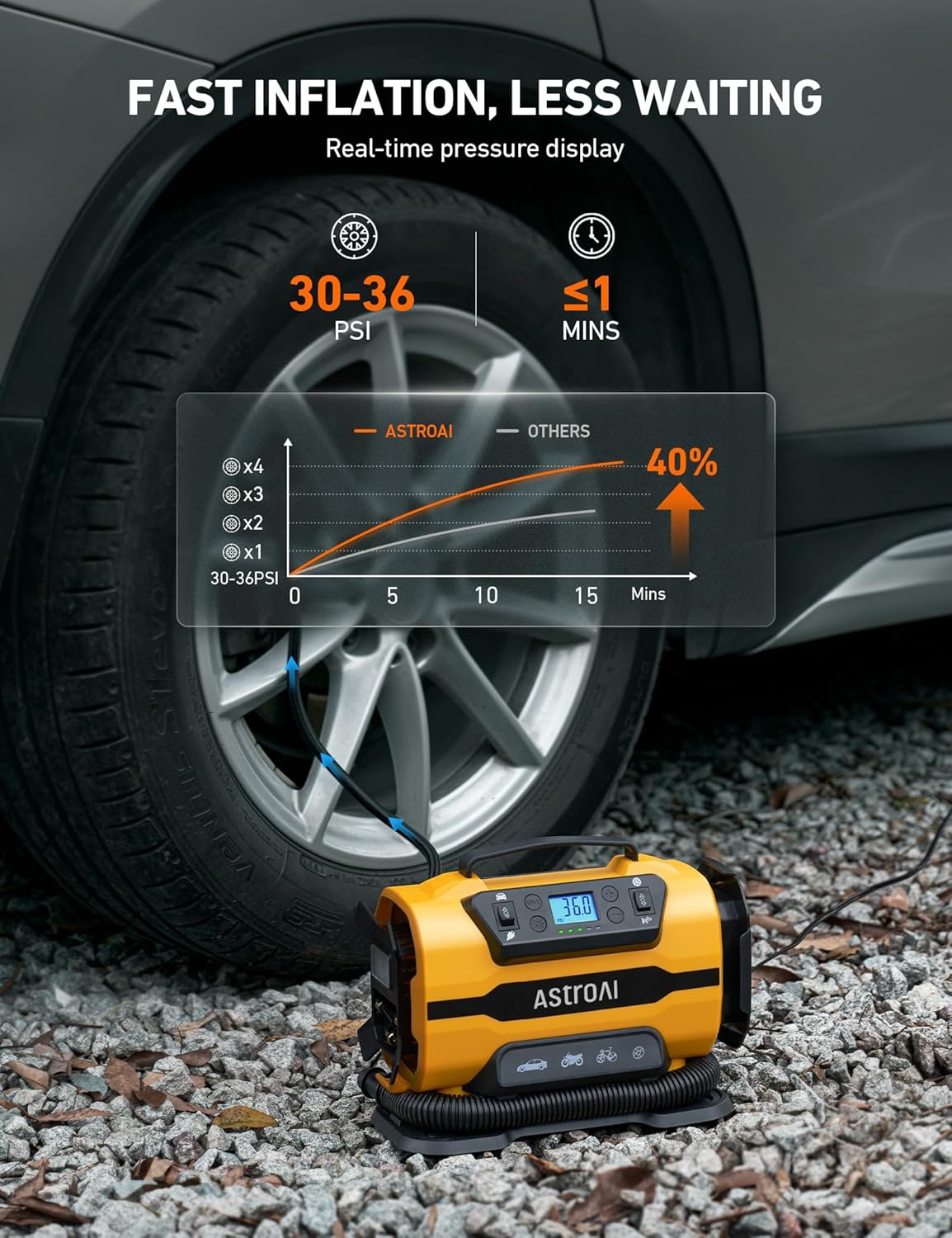
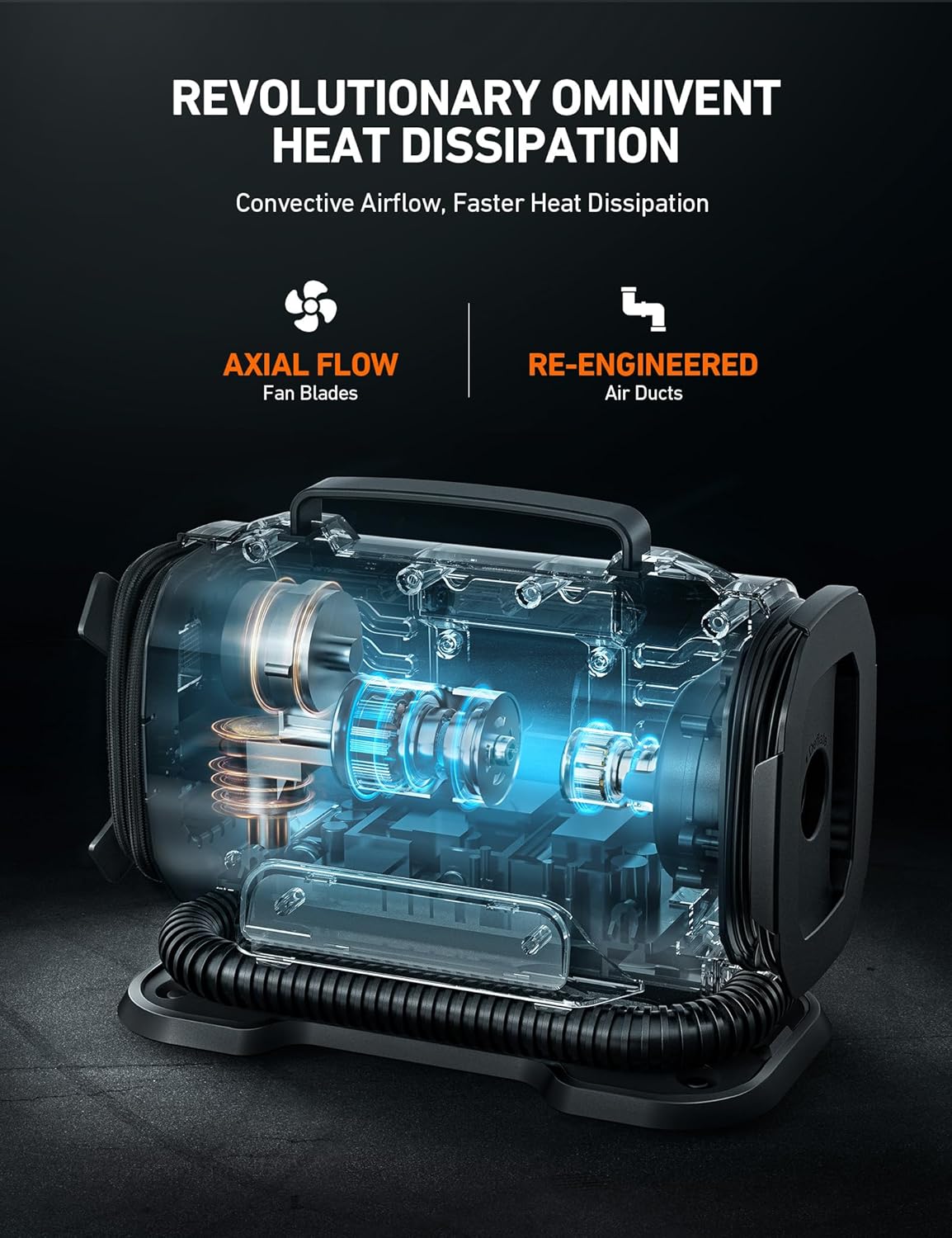
The dual metal motors and a metal cylinder help provide faster inflation and durability, and the OmniVent heat dissipation design reduces thermal buildup for longer continuous operation. The unit’s power cut memory retains the last preset pressure, saving time when inflating multiple items. Multiple nozzle adapters are included so you can use the pump with cars, bicycles, sports balls and inflatables.
Usage Recommendations
Use high-pressure mode for car, motorcycle and bicycle tires and switch to large-volume mode for air mattresses or inflatable pools. Allow the pump to cool for at least 10 minutes after each 15-minute run cycle to prevent overheating. Note that the inflator is not compatible with heavy-duty truck tires, so consider vehicle size before relying on it for larger commercial tires.
Practical Tips
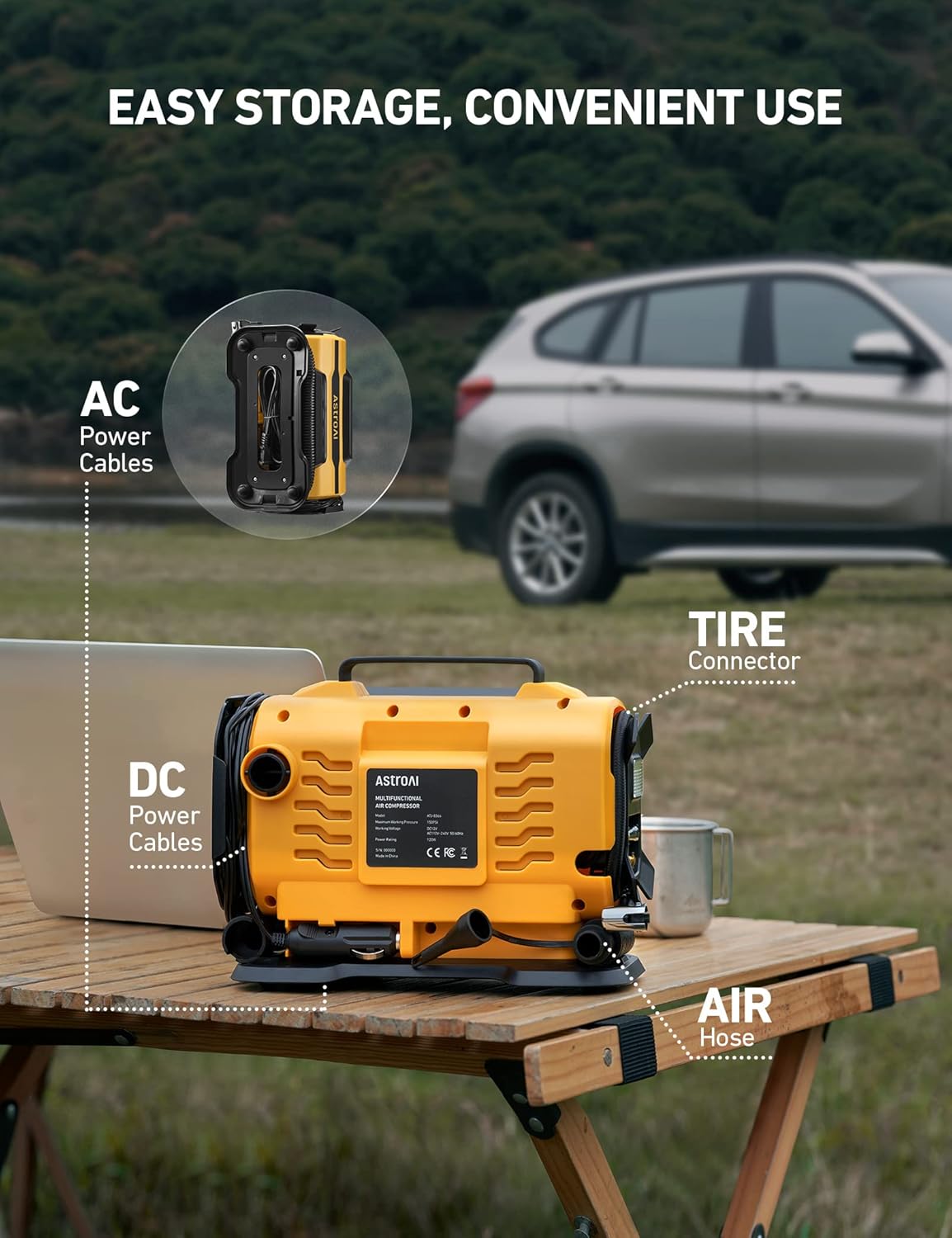
Store the power cords and accessories in the built-in hose compartment to keep everything organized. The silicone buttons make presetting pressure straightforward, and the digital readout can show four pressure units for easier interpretation. Consider setting a slightly higher pressure than the vehicle’s recommended cold PSI when checking tires after a drive, according to the manufacturer’s usage notes.