

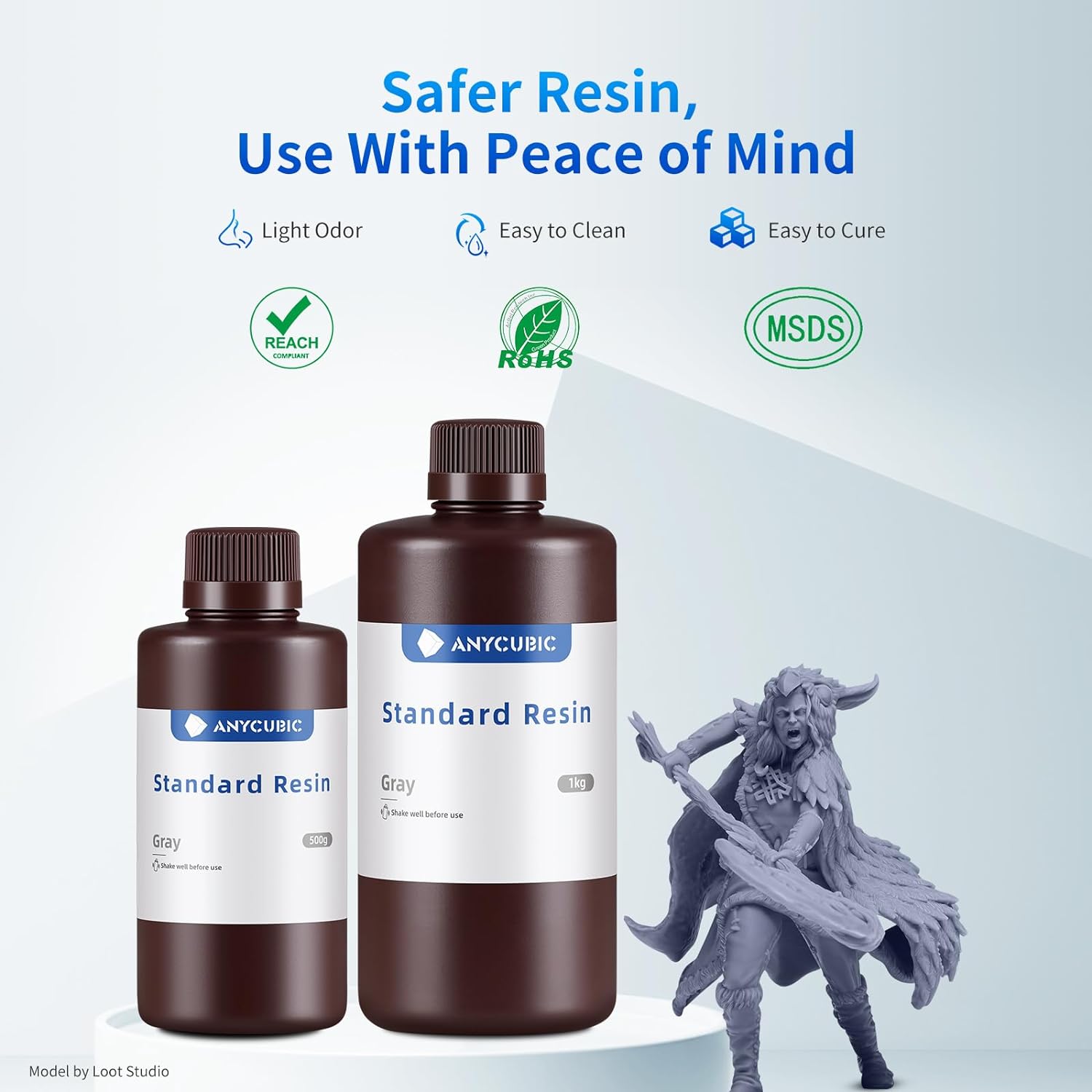
ANYCUBIC 405nm SLA Resin 1kg for LCD 3D Printing 🖨
Product description
This 405 nm UV-curing resin from ANYCUBIC is formulated for SLA/LCD 3D printing and balances fine detail with reliable handling for hobbyists and small workshops. It cures quickly under standard 405 nm light, offers low shrinkage for better dimensional accuracy, and comes in a 1 kg grey bottle that is easy to store and pour.
Key Points
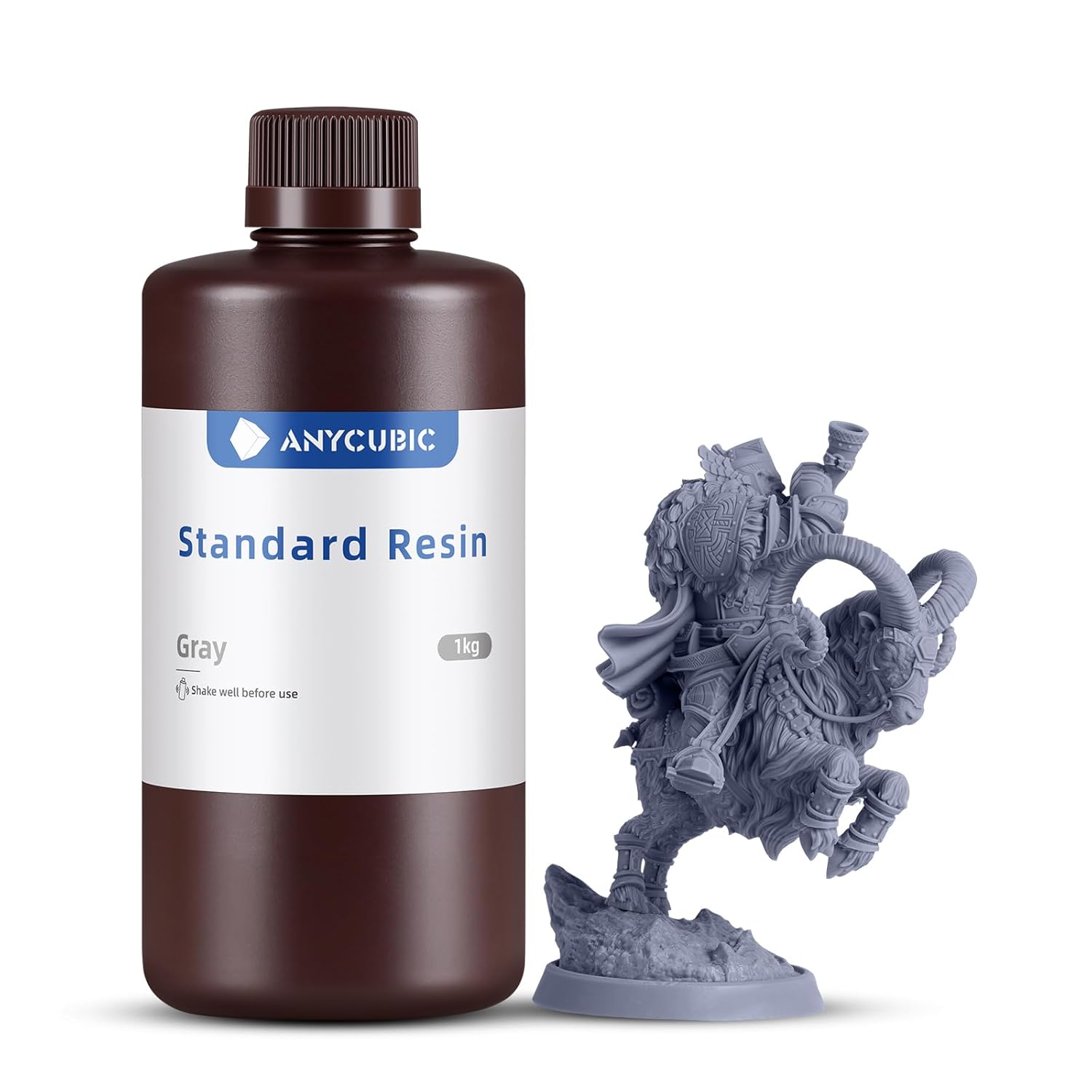
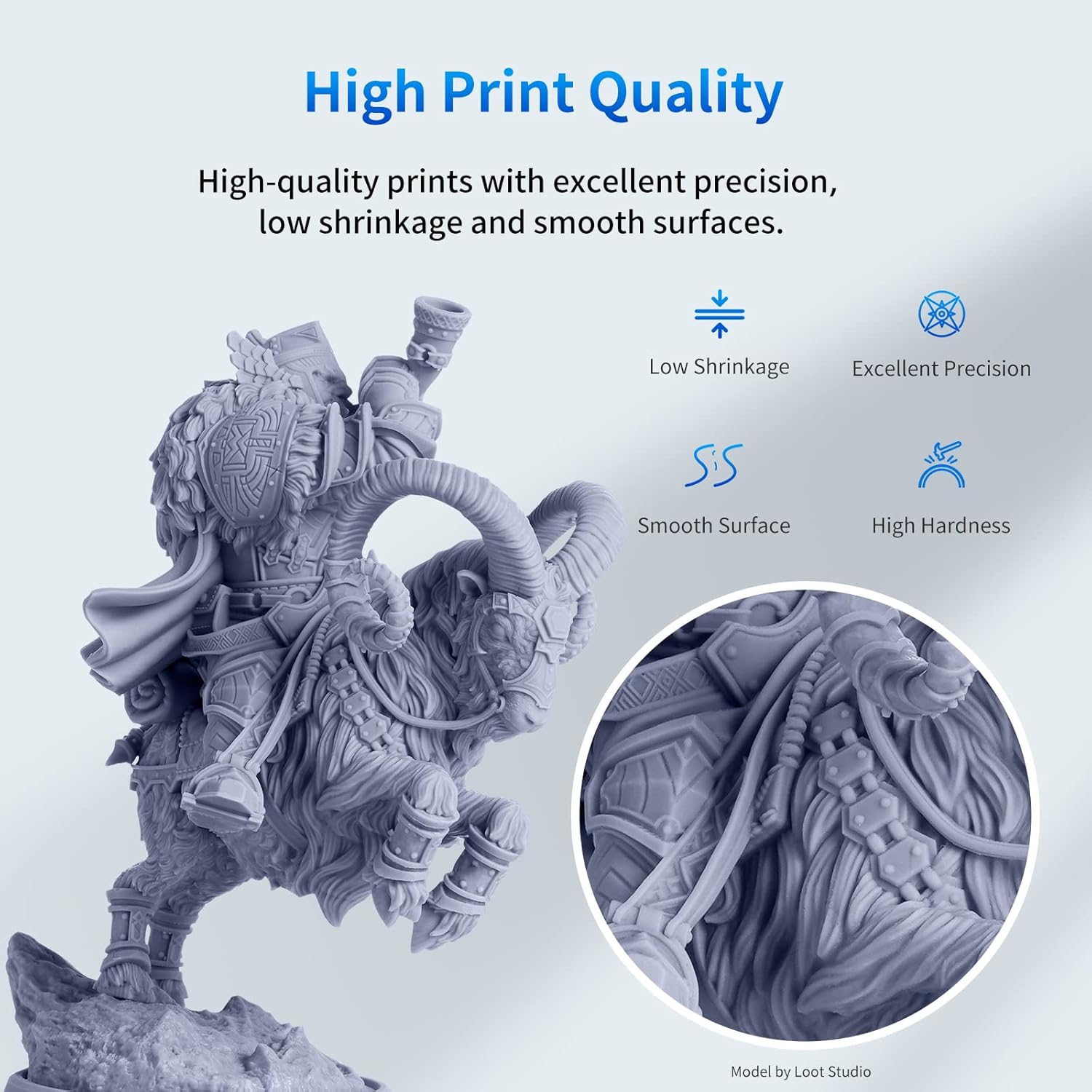
ANYCUBIC’s resin is noted for low shrinkage during photocuring, which helps preserve small features and delivers smoother surfaces on prints. The material combines rigidity with controlled toughness, making supports easier to remove while keeping thin walls and fine details intact. According to the manufacturer, the formula also resists moisture and mild corrosive conditions once fully cured, which can be useful for display pieces and prototypes exposed to ambient humidity. For color consistency, shake the bottle thoroughly before use to mix the pigment evenly.
Technical Specifications
- Name: ANYCUBIC 405nm SLA UV-Curing Resin (Grey, 1 kg)
- Wavelength: 405 nm
- Weight: 1 kg
- Color: Grey
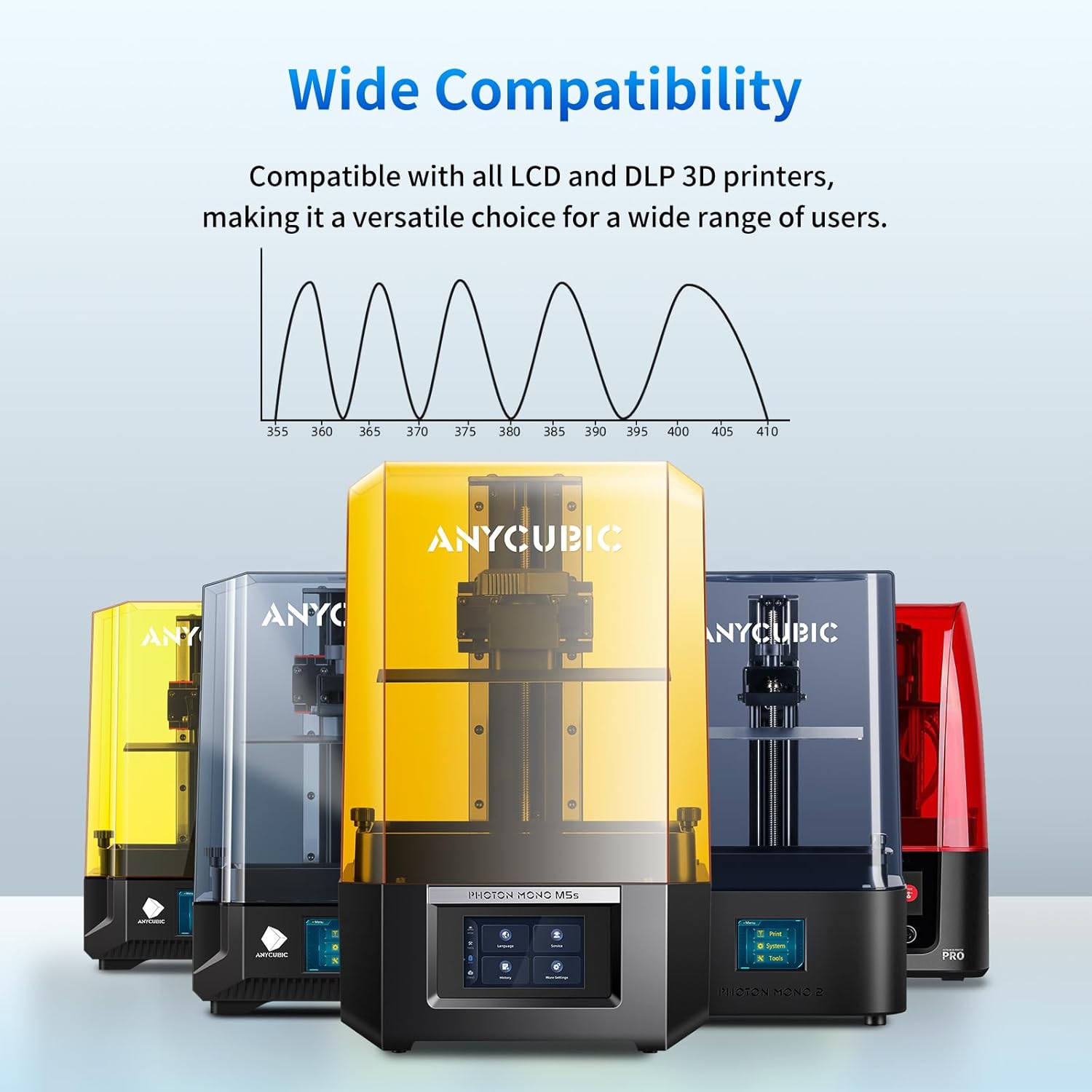
- Compatibility: DLP and LCD 3D printers, best results reported with ANYCUBIC LCD models
Advantages
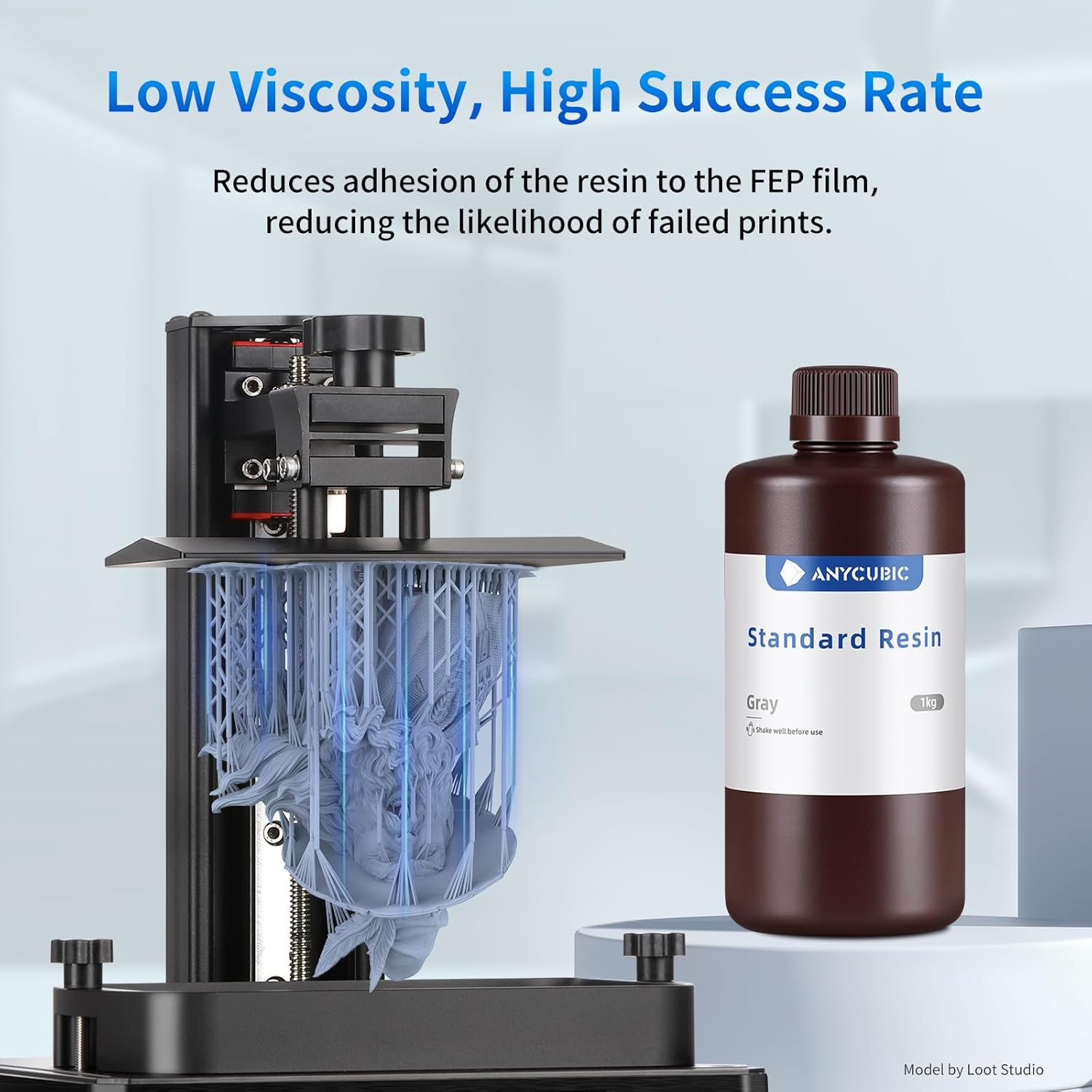
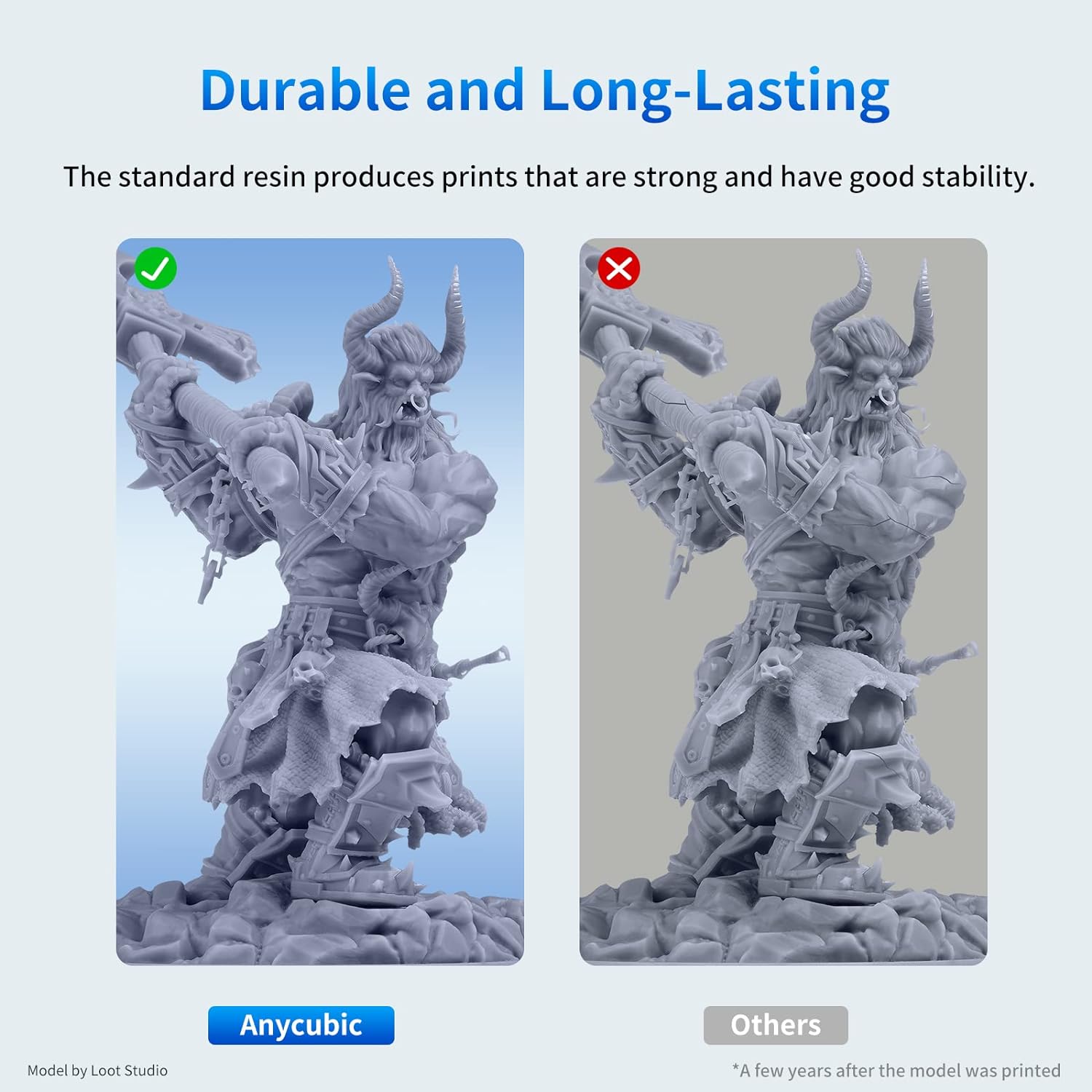
The resin’s quick curing behavior reduces layer exposure time, which can shorten print cycles for iterative prototyping and multi-part jobs. Its fluidity improves resin flow on the build plate and around supports, helping to reduce trapped bubbles and easing wash and post-processing steps. Additionally, the mix of hardness and toughness helps printed parts maintain crisp detail while avoiding excessive brittleness that would cause fragile features to break during handling.
Usage Recommendations
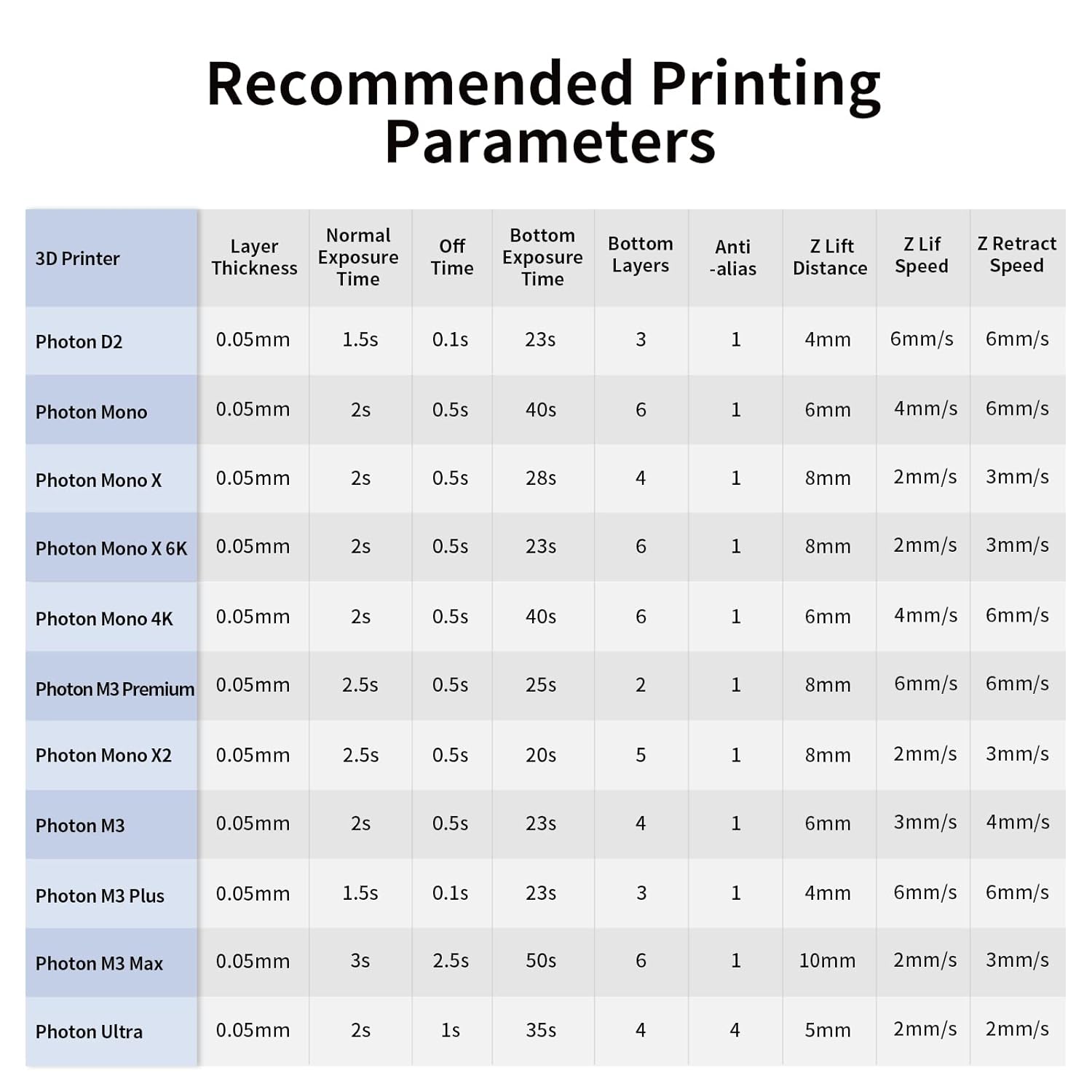
Before pouring, invert and shake the bottle thoroughly to ensure the pigment and reactive components are fully mixed. Print parameters such as exposure time, layer thickness, and lift speeds should be tuned for your specific printer and ambient temperature since curing speed can vary with lamp intensity and environmental conditions. After printing, follow standard post-processing: rinse in isopropyl alcohol or the cleaning agent you prefer, then complete a post-cure under a compatible UV source to achieve the stated stability and mechanical properties. Consider wearing nitrile gloves and eye protection when handling uncured resin, and work in a ventilated area to minimize exposure to fumes.
Notes and limitations: the manufacturer indicates universal compatibility with DLP and LCD machines, but optimal settings will differ between models. Also consider that printed parts can remain sensitive to prolonged UV exposure and certain solvents after curing, so evaluate suitability for any functional use according to your project needs.