

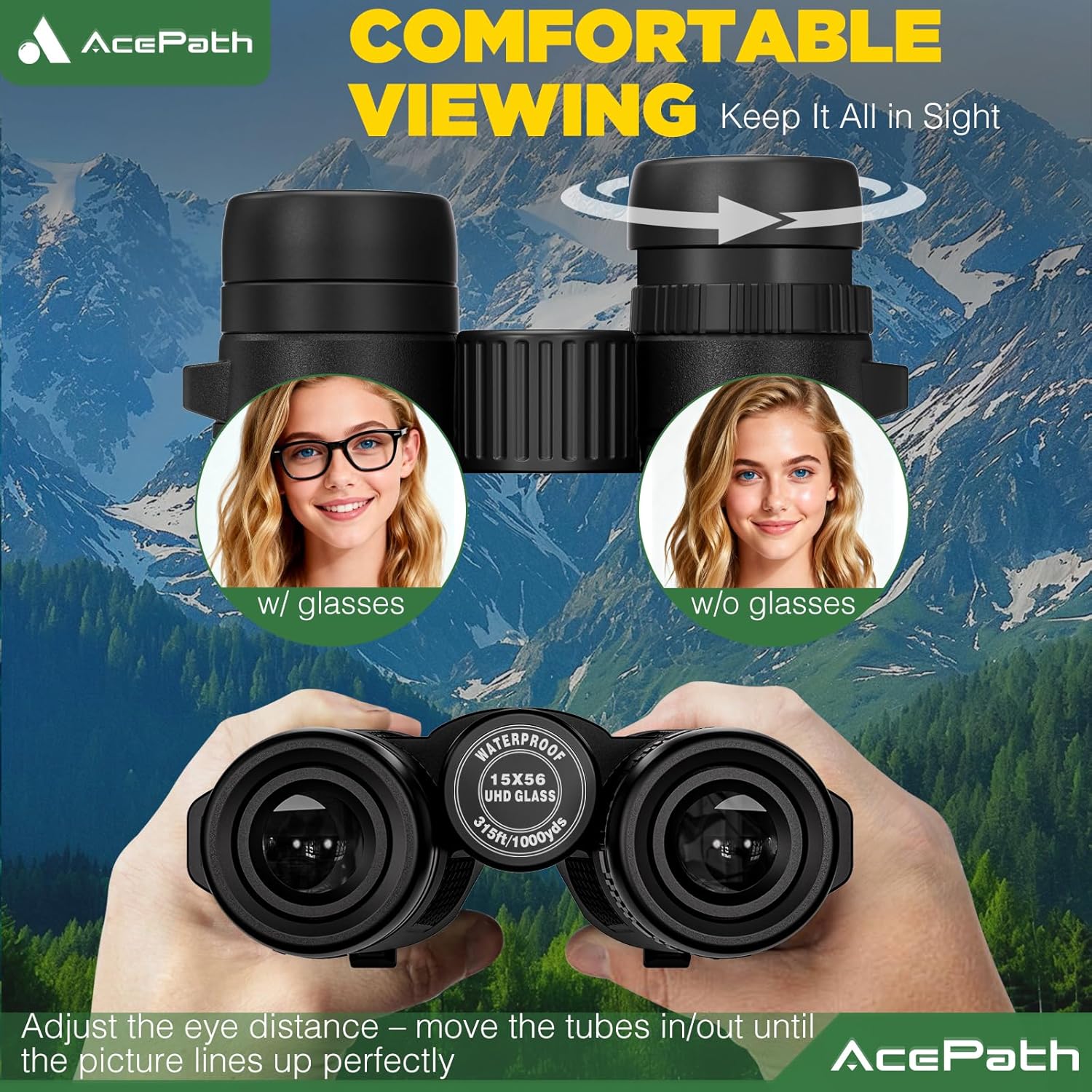
AcePath 15x56 Binoculars for Adults — Compact Waterproof High-Powered Glasses-Friendly Optics
Product description
Where they shine: low-light clarity and “adventure optics”
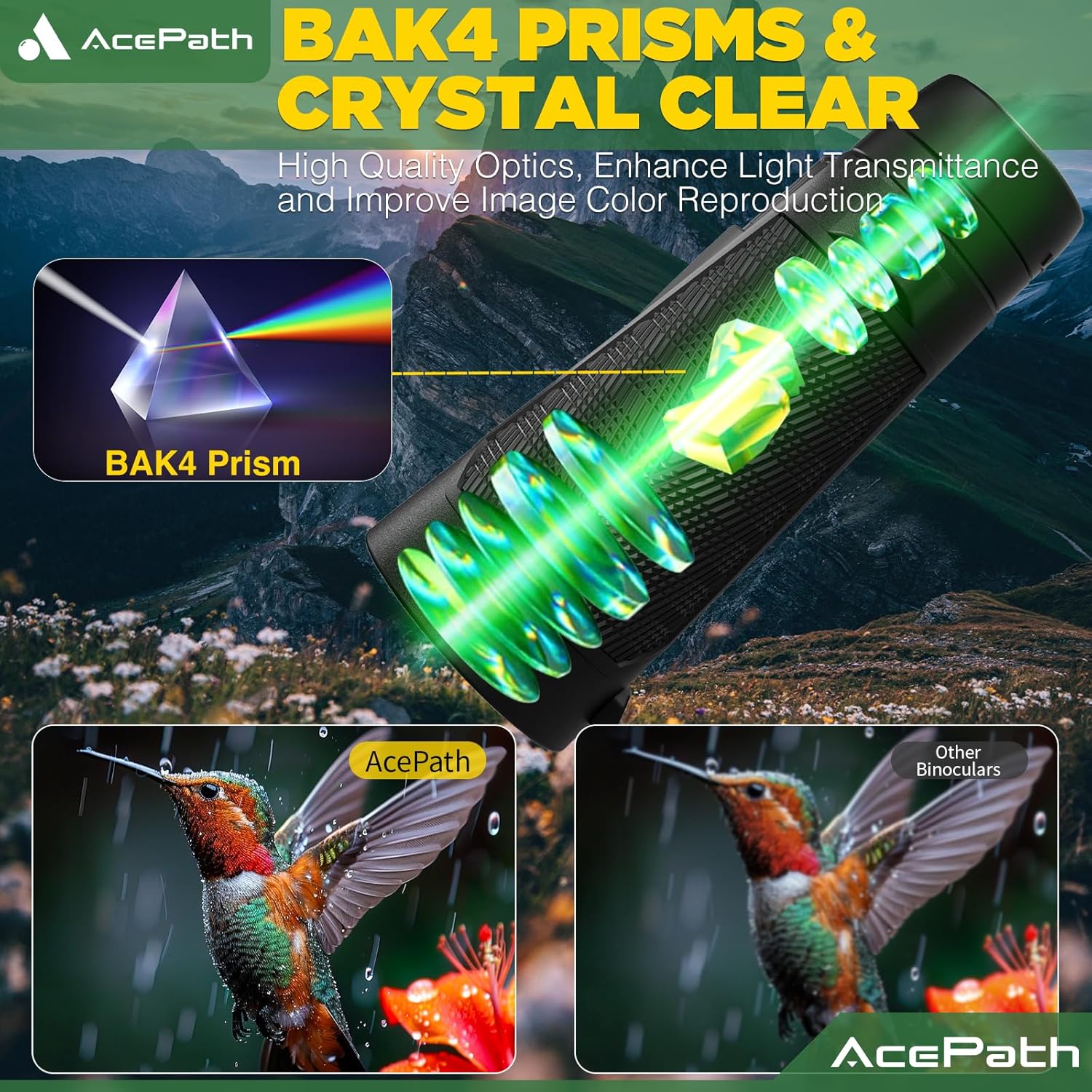
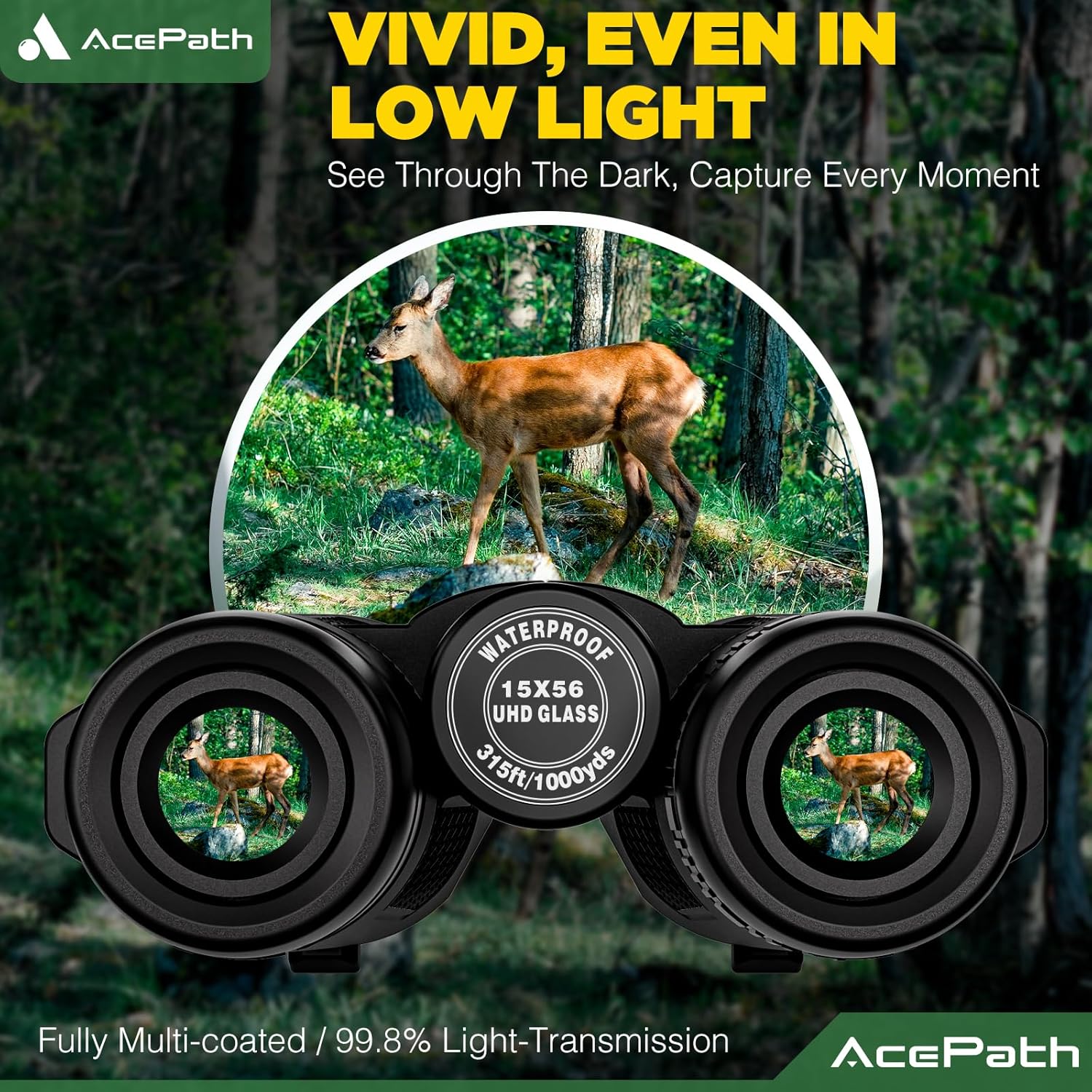
The biggest selling point in the description is the low-light performance. These binoculars are designed around BAK4 prisms and claim maximized light transmission (listed as up to 99.8%), with the goal of avoiding dark edges and keeping the view cleaner when light fades. They also use FMC (Fully Multi-Coated) lenses to reduce glare and keep images sharp.
In practical terms, this is the kind of spec-driven approach that can matter most at dawn and dusk—when you’re hiking, waiting at a campsite, or watching wildlife as the day transitions. You can picture using them for a campground sky: first finding bright outlines, then slowly picking up more detail as conditions get dim.
Keep in mind, though: low-light claims don’t automatically mean “night vision.” If you’re expecting crystal-clear viewing in near-darkness with zero limitations, you might be disappointed. What you’re really buying is improved dim-condition visibility compared with simpler optics—within the realities of binoculars.
Comfort that doesn’t punish your eyes
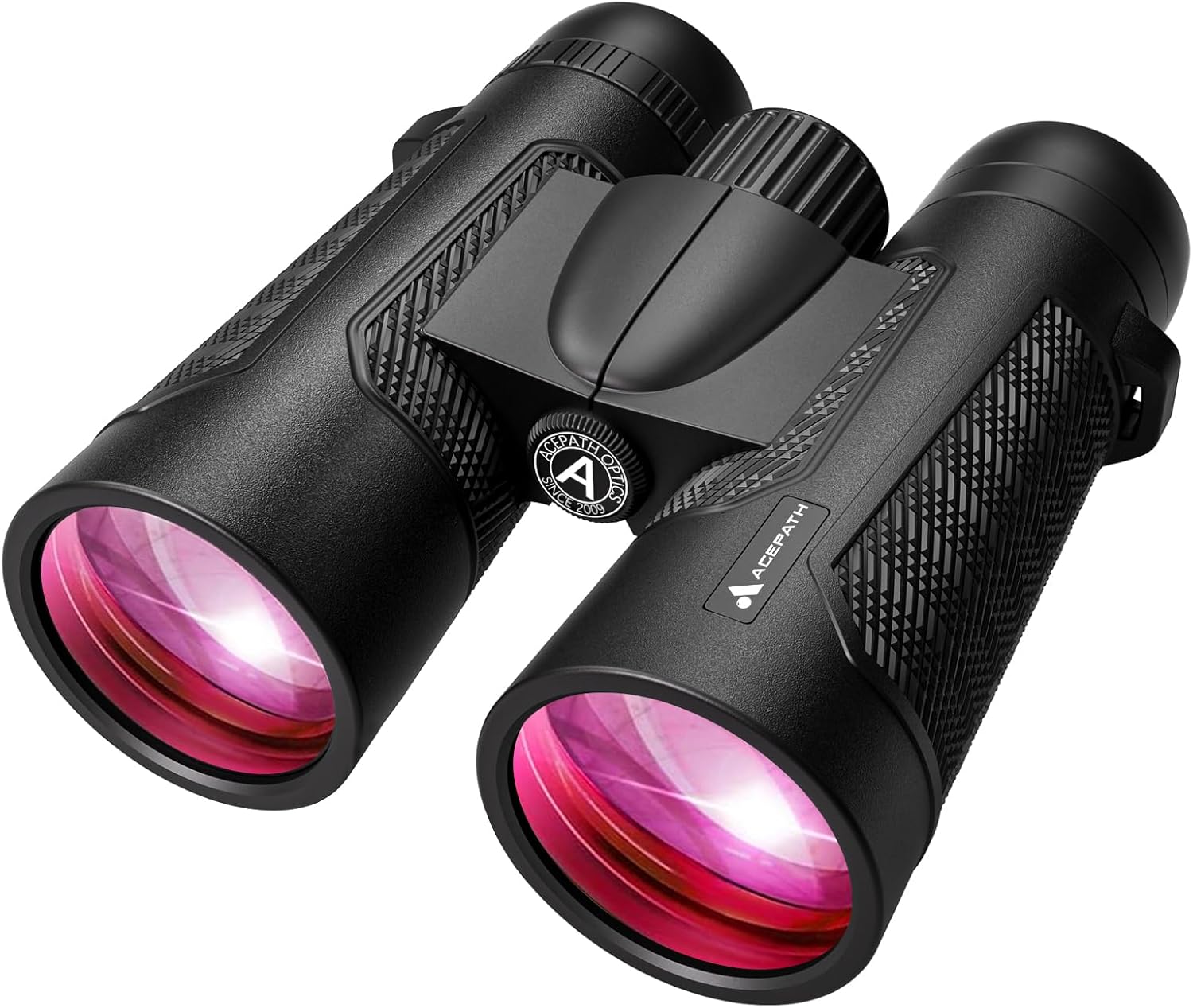
Binoculars can be great on day one and annoying by hour two. AcePath tries to address that with adjustable eyecups that work whether you wear glasses or not. The eyecups are smooth and adjustable (slide up/down) to help you get a full field of view, and the description specifically calls out eliminating vignetting when using them without glasses.
That matters if you switch between different viewing situations—like going from bird watching with glasses to quick field checks without them. It also helps if you’re the type who doesn’t want to keep re-centering and squinting every time you pick the binoculars up.
There’s also a center wheel for fine-tuning clarity, plus a diopter adjustment on the right eyepiece. The intent here is to eliminate double vision and make it easier to get seamless focus from near to infinity. If your eyes aren’t perfectly matched, the diopter can be the difference between “almost sharp” and actually comfortable viewing.
Tough enough for messy outings
The description positions these as rugged and weather-ready, with IPX7-rated waterproofing and shockproof construction. The text also references resistance to saltwater corrosion—important if you’re using them around a coastline, fishing trips, or a boat day where splashes happen.
On top of that, there are dual rubber grips with a 360° ergonomic contour meant to stabilize your hands during hunting, fishing, or travel.
This isn’t a guarantee that you’ll never have issues—water resistance ratings have limits and you still don’t want to dunk things unnecessarily. But for people who actually take gear outside, IPX7 waterproofing is one of those specs that tends to reduce anxiety and increase real-world usability.
Tech specs that matter for buying decisions
Here are the concrete details from the product description that affect how it will feel in use:
Tech specs
- Magnification: 15x
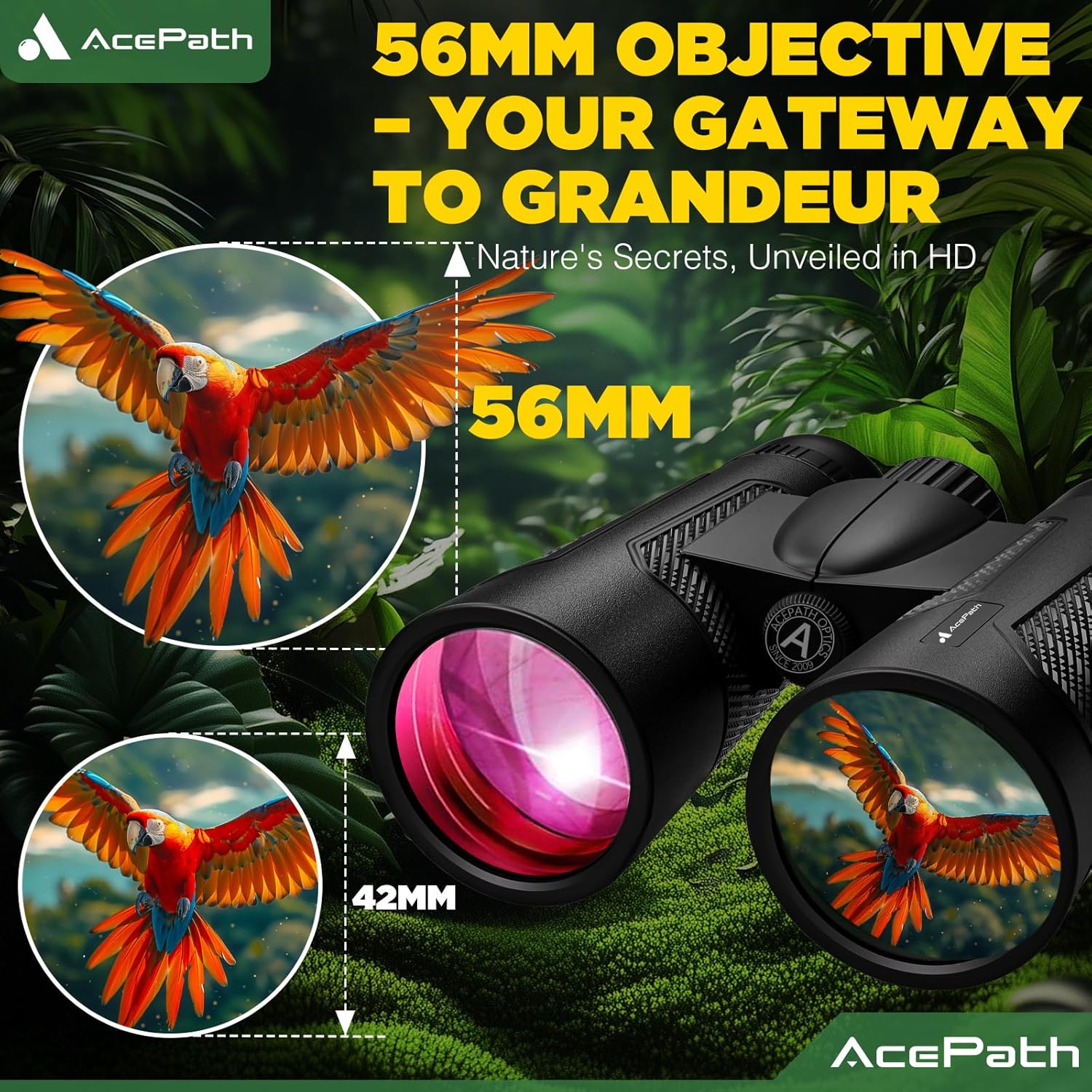
- Objective lens: 56mm
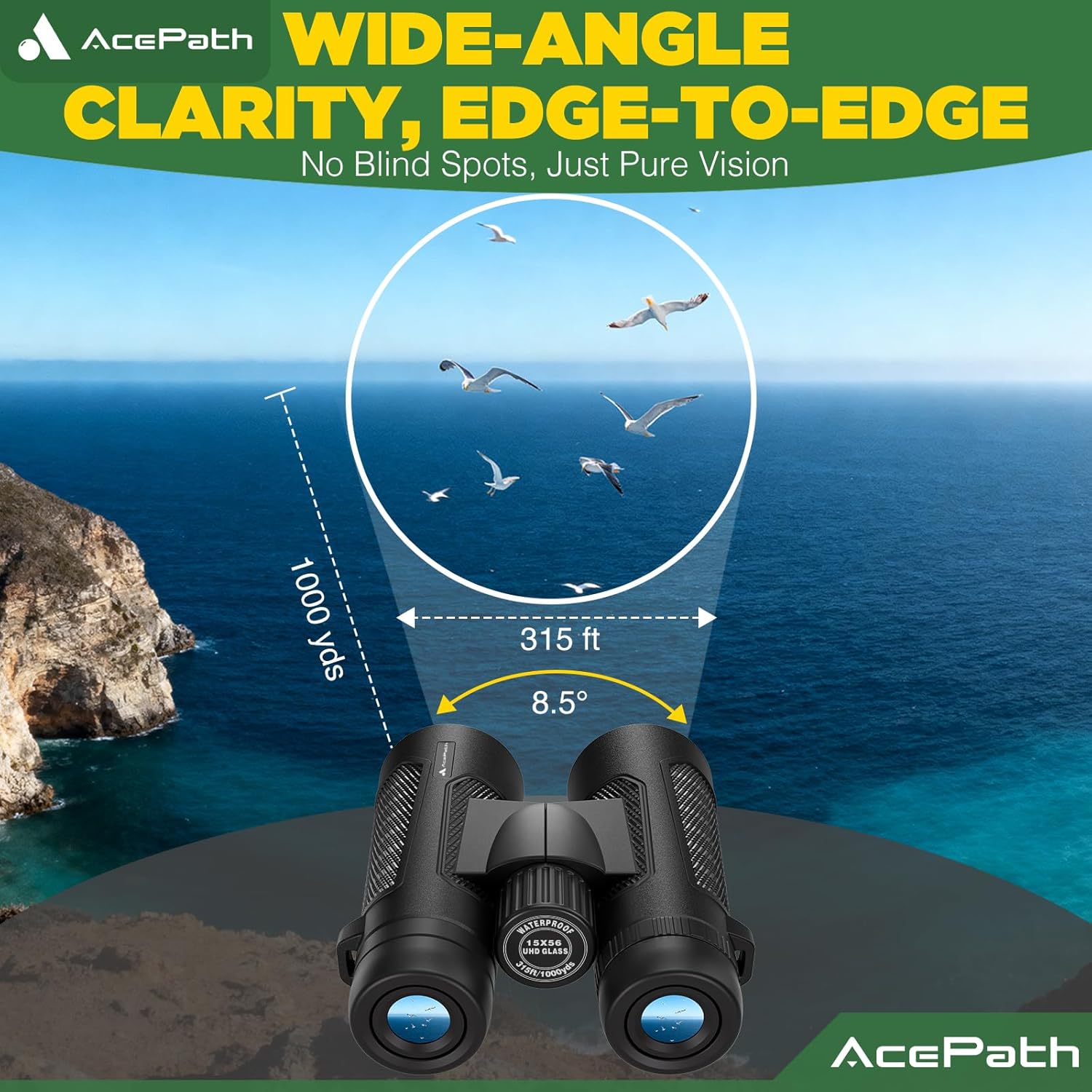
- Claimed field of view: 315ft/1000-yard
- Weight: about 1lb
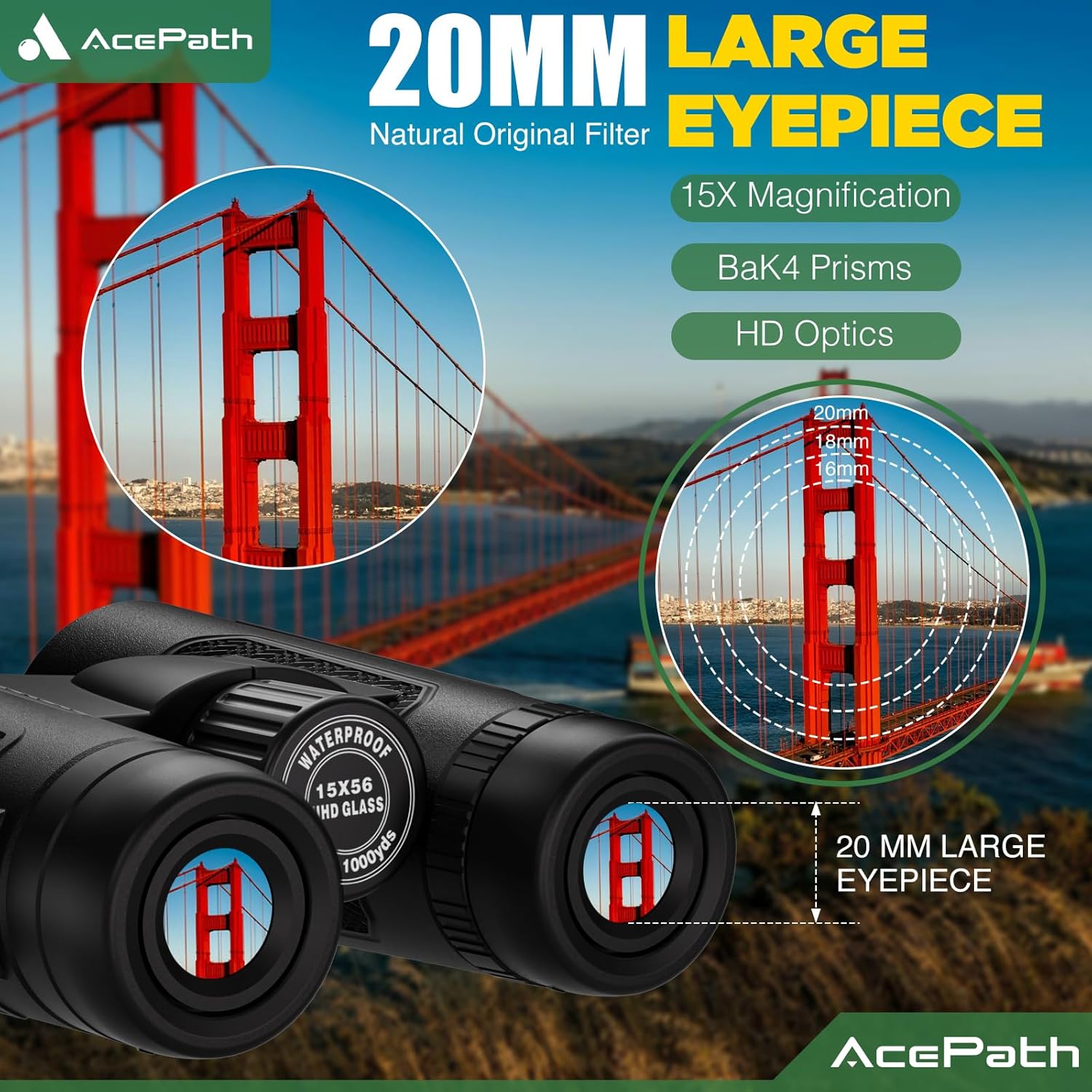
- Eyepiece: 20mm
- Lens coatings: FMC (Fully Multi-Coated)
- Prism type: BAK4
- Waterproof rating: IPX7
Worth noting: the description doesn’t mention things like eye relief length or specific exit pupil size, so if you’re picky about eyeglass fit and long-duration comfort, it’s smart to double-check the product listing details before committing.
How to get the most out of 15x56 (quick setup flow)
If you’re new to binoculars—or just want a faster path to a usable image—here’s a practical way to approach them based on what’s described.
Start with the center focus wheel to bring one side into focus, then use the diopter (right eyepiece) to fine-tune differences between your eyes. After that, you should be able to use the center wheel for near-to-infinity clarity without constantly redoing everything. Then adjust the eyecups so your full field of view is visible—especially if you wear glasses.
A micro example: say you’re at a ball game and want to scan from the field to the stands. You can set your eye alignment first (eyecups + initial diopter adjustment), then use the center wheel to quickly lock in focus when a player moves into your target area.
Who it’s for (and who should think twice)
This is a strong match if you’re after compact, high-magnification binoculars that lean into low-light performance and are built for outdoor conditions. The use cases listed—camping, travel, bird watching, hunting, hiking, stargazing, and even concerts/sports—fit the “versatile day-to-night” idea the specs are going after.
It may not be the best choice if you want the easiest possible handheld viewing in very unstable environments. With 15x magnification, small movements can feel more noticeable, and the description doesn’t promise stabilization features. In those situations, you’ll likely do better with a steadier stance or supportive setup.
Final verdict
If you want a travel-friendly binocular that focuses on 15x power, 56mm objectives for dim conditions, and IPX7 waterproofing, the AcePath 15x56 makes sense on paper. The comfort system (adjustable eyecups for glasses and bare-eye use) and the focus + diopter approach are also practical for real users, not just marketing.
You should probably skip it if your top priority is ultra-easy handheld viewing with minimal effort, or if you need specific eyeglass fit measurements that aren’t covered in the provided details.
Quick FAQ
Are these binoculars good for low light?
They’re designed to improve low-light performance, with BAK4 prisms and FMC lenses highlighted in the description. That said, they’re still binoculars—not a substitute for true night-vision technology.
Do the eyecups work with glasses?
Yes. The description specifically says the eyecups adjust for both glasses wearers and bare-eye use to help maintain the full field of view.
Is the AcePath 15x56 waterproof?
It’s listed as IPX7 waterproof. That’s meant to handle harsh outdoor conditions better than non-rated optics.
How do you adjust focus?
Use the center wheel for fine-tuning clarity, and adjust the diopter on the right eyepiece to account for eye differences.
What’s the main trade-off with 15x magnification?
Higher magnification can amplify hand shake. If you’ll be viewing in shaky conditions, you may want extra steadiness rather than expecting it to feel weightless in hand.