

8500W Diesel Heater 110V All-in-One Parking Heater
Reviews
Product description
This diesel parking heater delivers fast cabin warmth for RVs, trucks, boats and workshops, combining powerful output with adjustable fuel use and quiet operation. It brings heat quickly for cold starts and allows remote control of temperature and timer functions for pre-warming before a trip.
Key Points
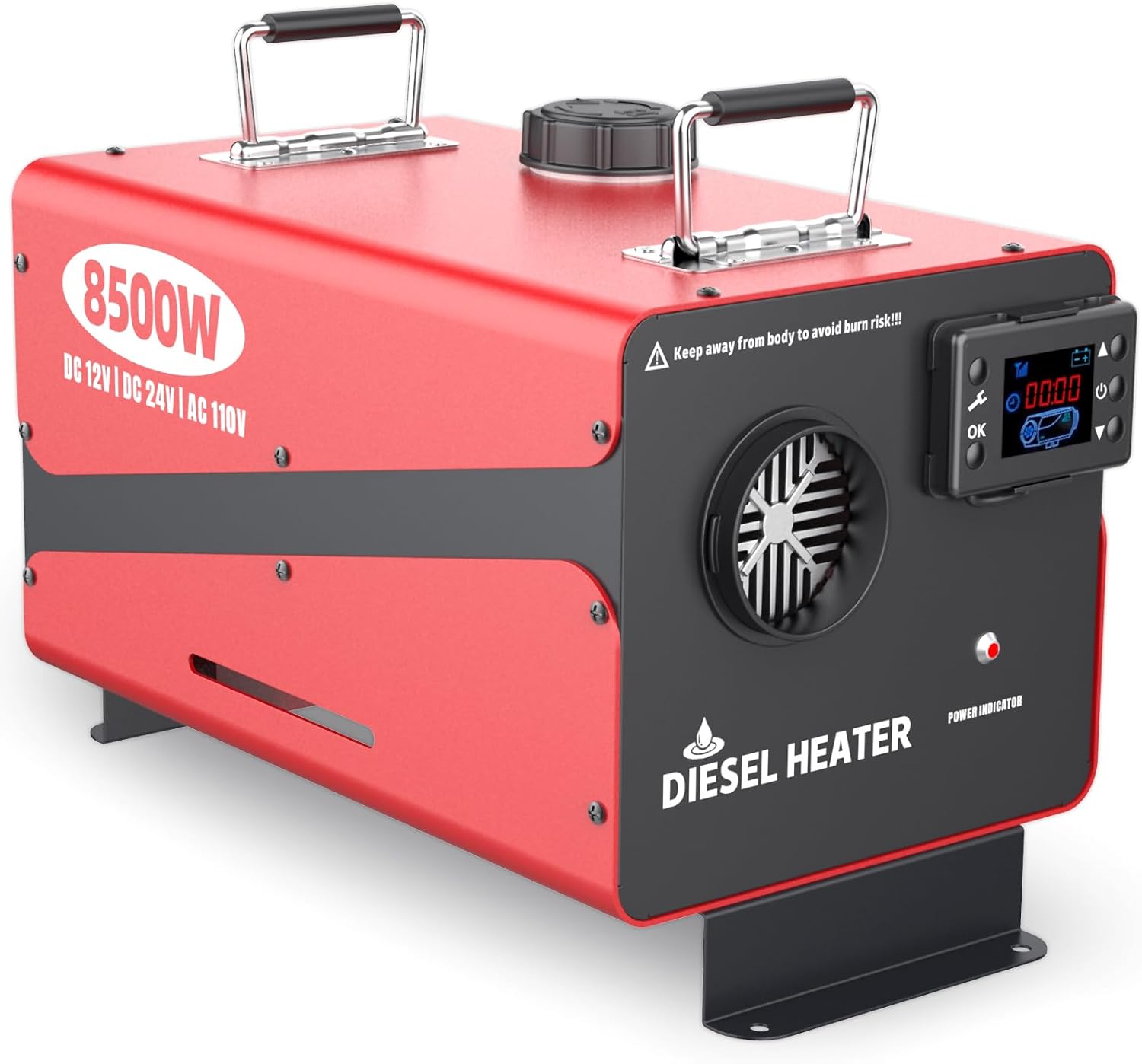
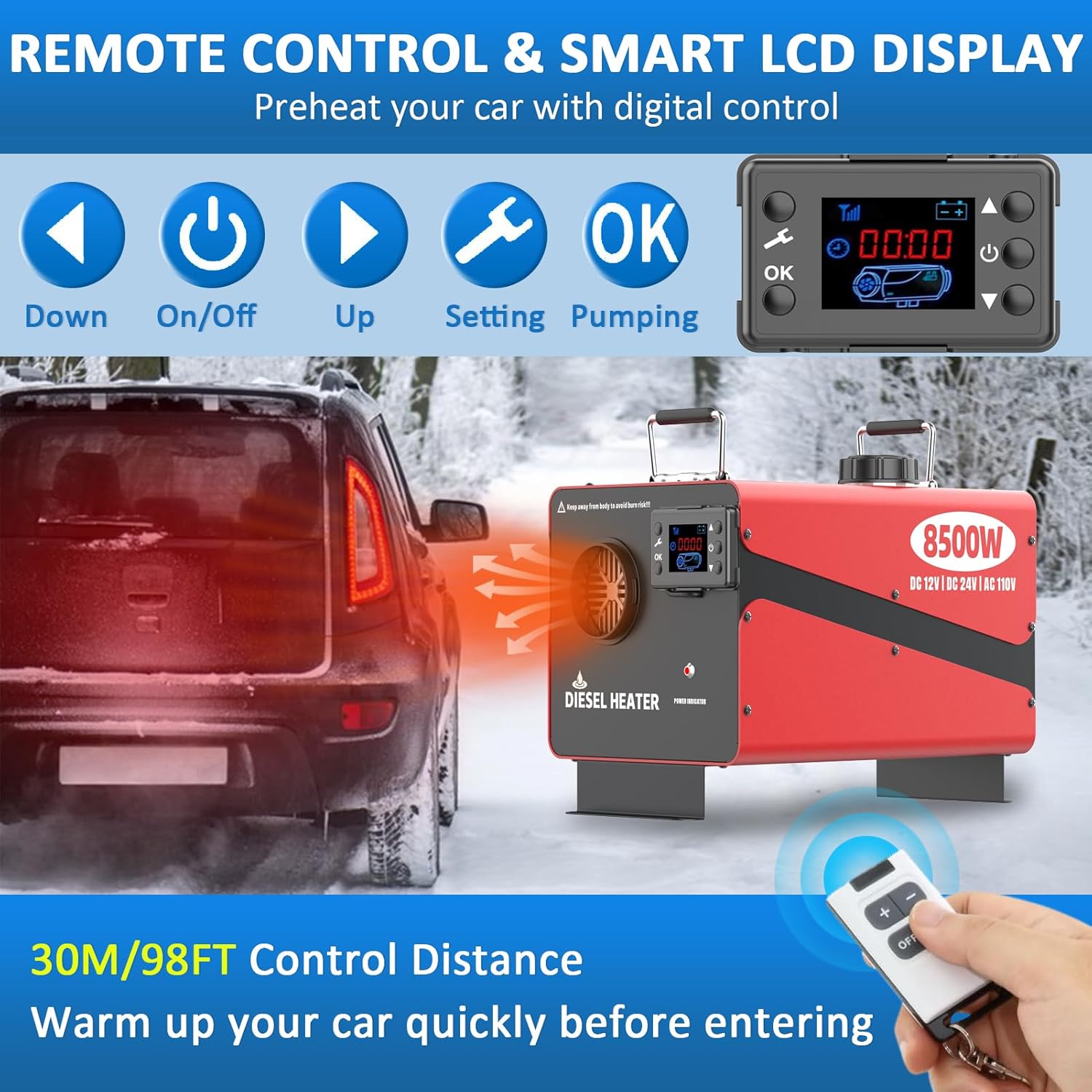
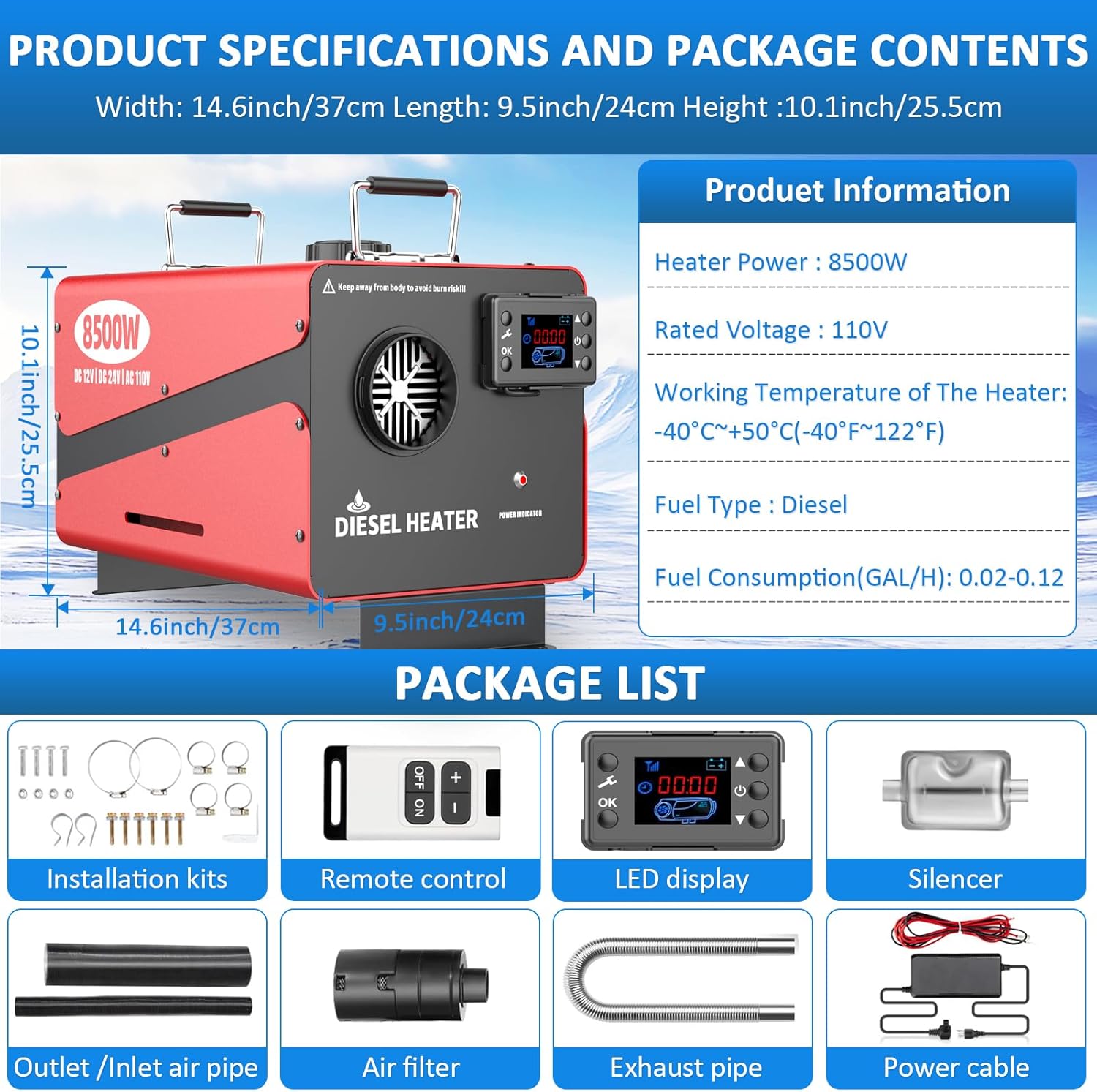
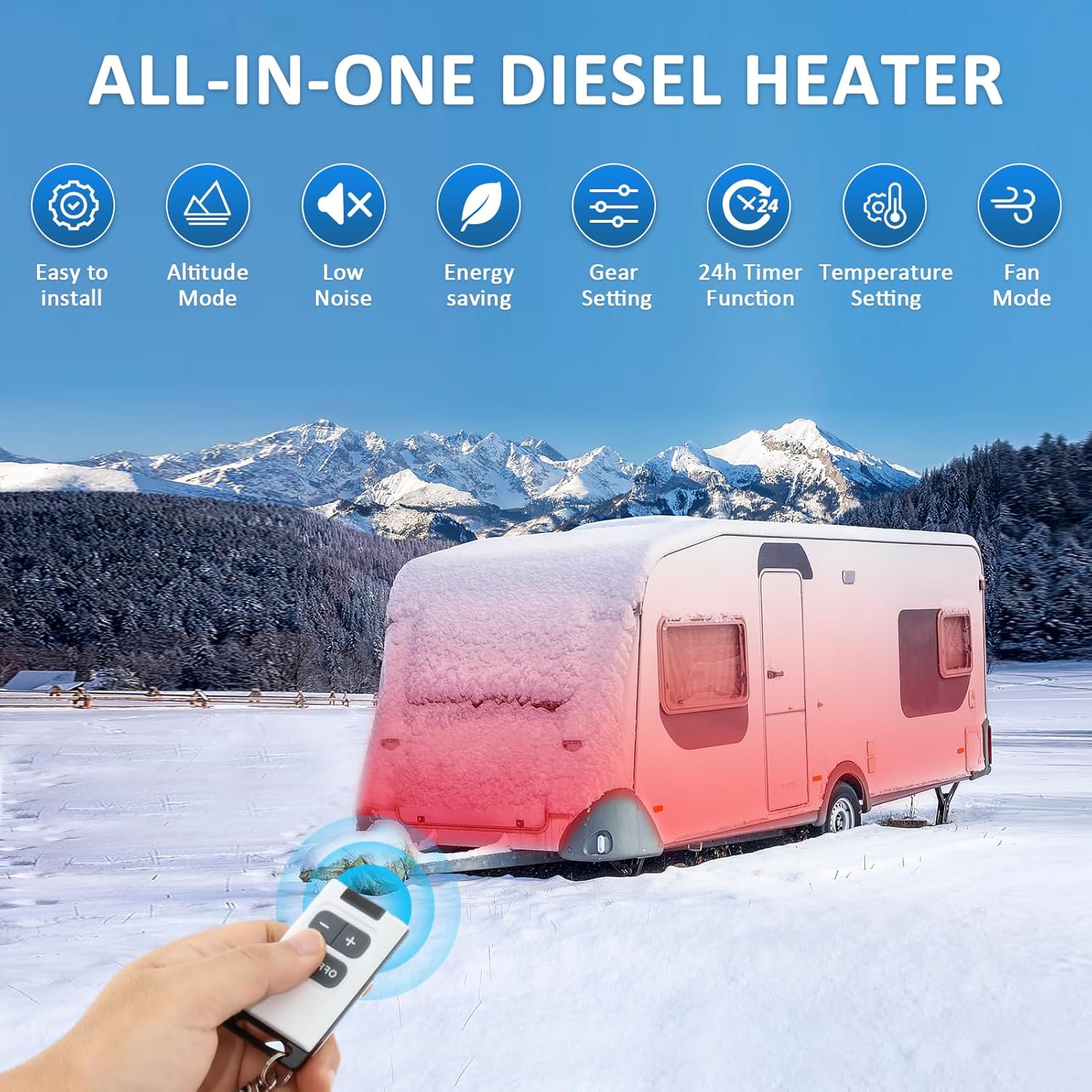
The unit is a compact all-in-one diesel heater rated at 8500 watts that runs on 12V, 24V, or via the included 110V converter for home or shop use. It has an LCD display and a remote control with about 96 feet range, so you can set temperature and timers from a distance. The design emphasizes low noise and reportedly avoids ticking sounds during operation, which helps maintain a calmer cabin atmosphere. 🔥
Benefits
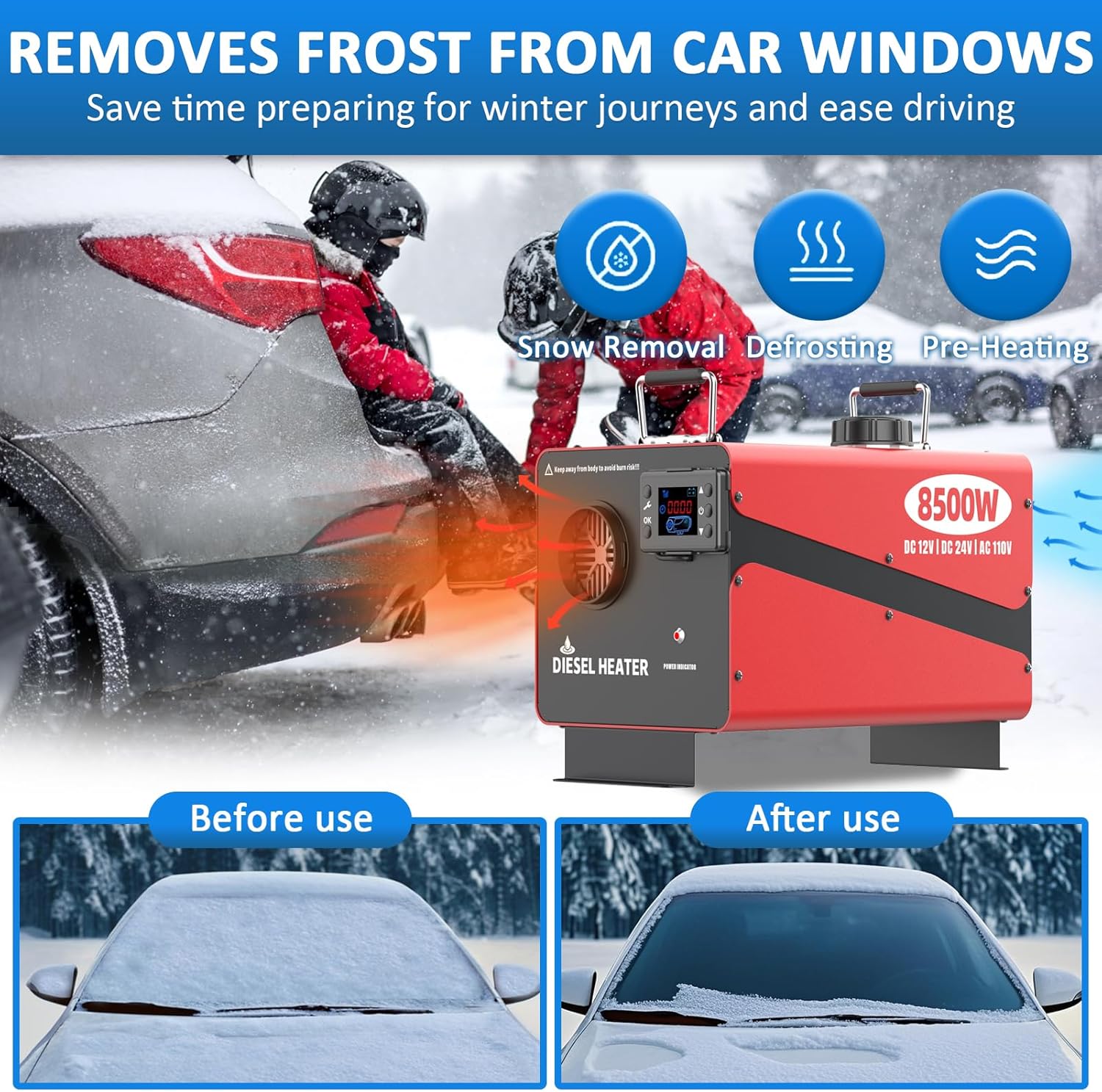
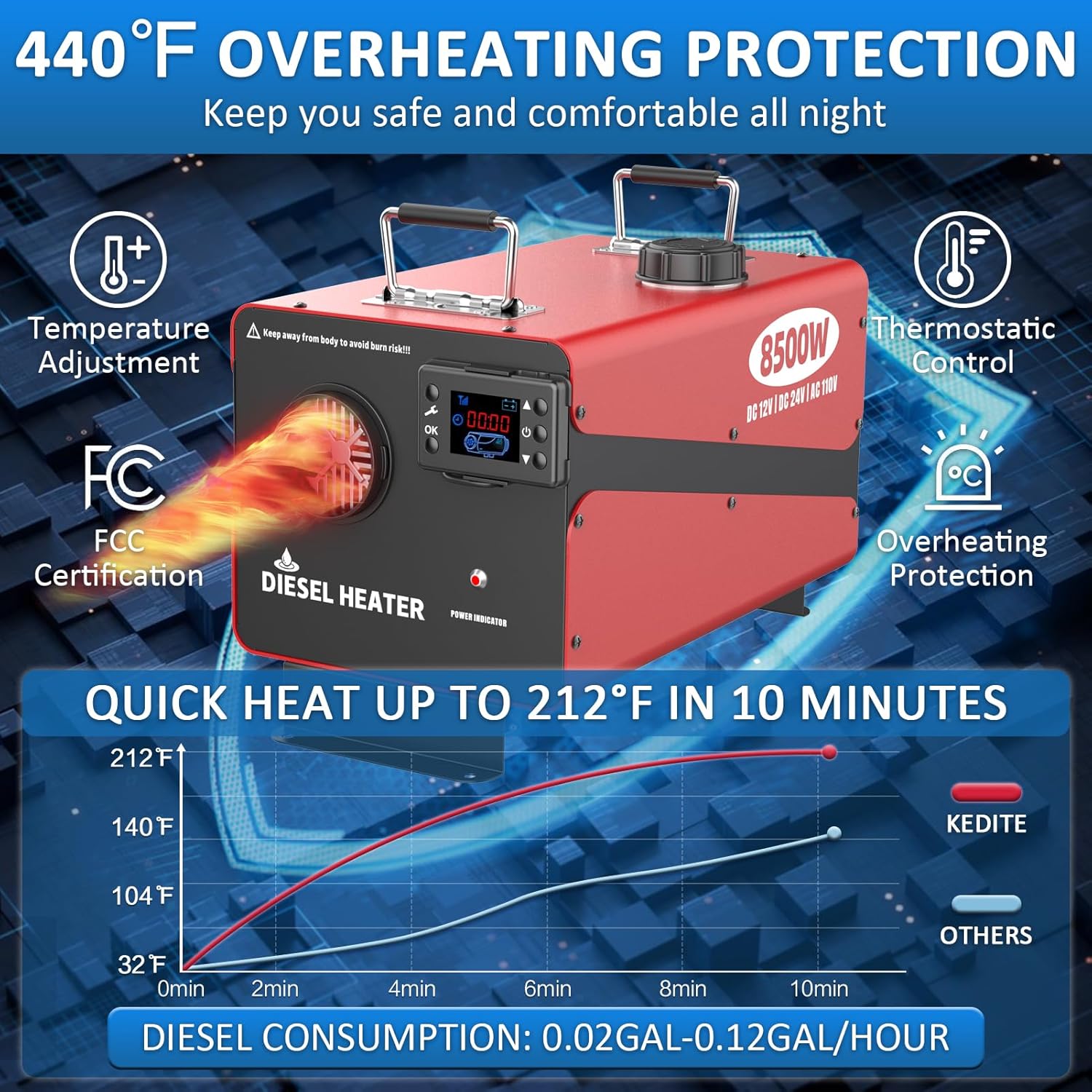
Heat builds up rapidly, with the manufacturer indicating the heater can raise interior surfaces to high temperatures in roughly ten minutes, cutting wait time on freezing mornings. Fuel efficiency is a focus, with consumption adjustable from 0.02 to 0.12 gallons per hour and a nightly estimate near 1 gallon according to the specifications. This supports longer unattended operation while managing fuel use. The thermostat and programmable timer let you maintain a steady cabin climate, and overheat protections are provided for safety. A simple control layout and remote operation make it convenient for pre-heating before driving or for warming a parked rig while you rest. ❄️
Technical Specifications
- Name: Kedite 8500W Diesel Heater
- Power output: 8500 W
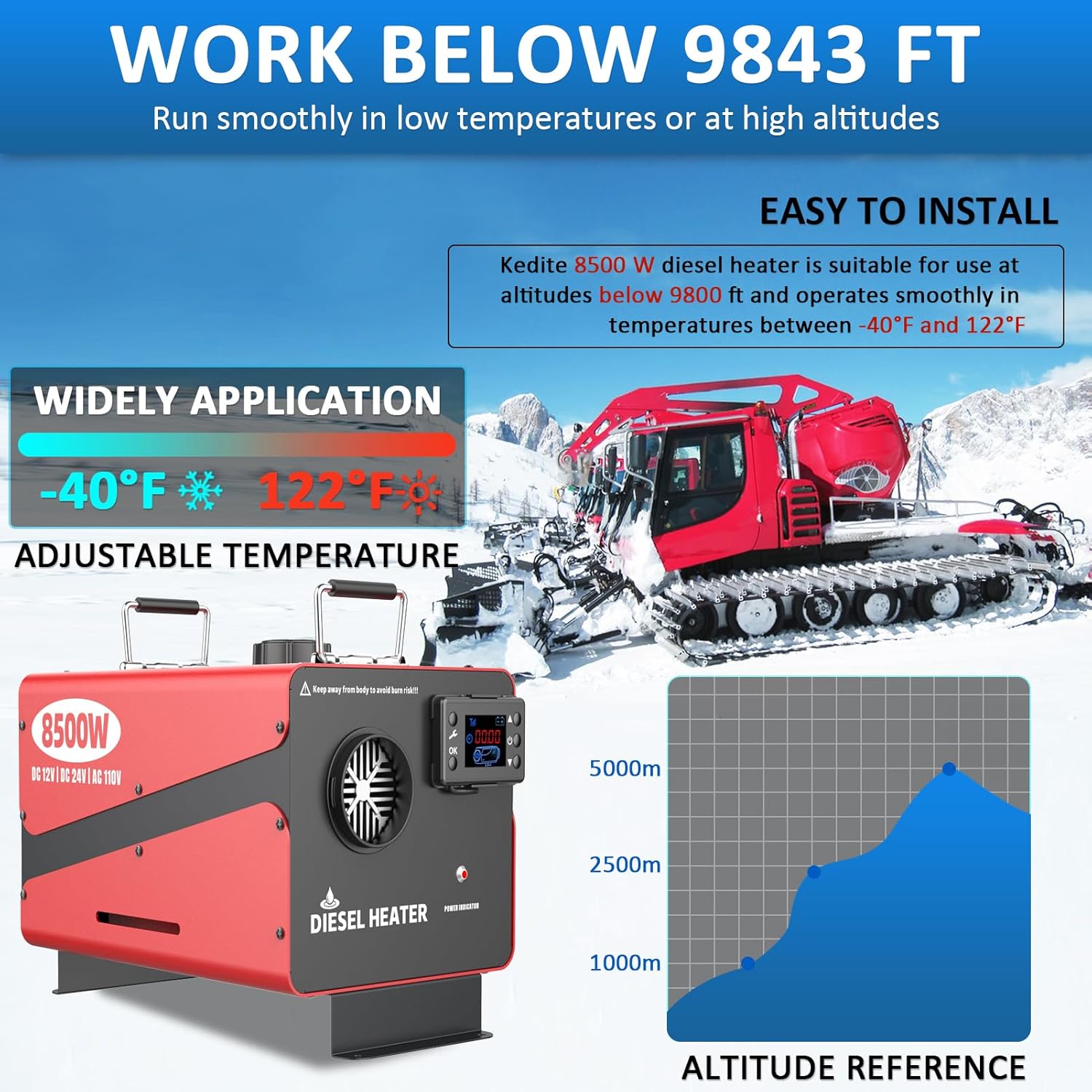
- Voltage compatibility: 12 V, 24 V, 110 V (with converter)
- Fuel consumption: 0.02 GAL/h - 0.12 GAL/h, approx. 1 GAL per night
- Remote range: 96 feet
- Operating temperature range: -7.8 °C to 32.2 °C (user-adjustable)
- Safety cutoff: overheat protection at ≥230 °C / 371.1 °F
Usage Recommendations
Installations in enclosed vehicles or small structures should ensure adequate ventilation for combustion and exhaust routing to the outside. Allow a short run-in period when first using the heater to confirm mounting, fuel feed and exhaust are secure. For overnight parking use, set the timer and thermostat to maintain a lower holding temperature, then raise it before you wake to reduce fuel use. Consider that actual warm-up times and fuel consumption will vary with ambient temperature and vehicle insulation, according to conditions and the manufacturer.