

464-Piece Magnetic Building Blocks (Magnetic Blocks/Magnet Cubes) for Kids Ages 4–8
Product description
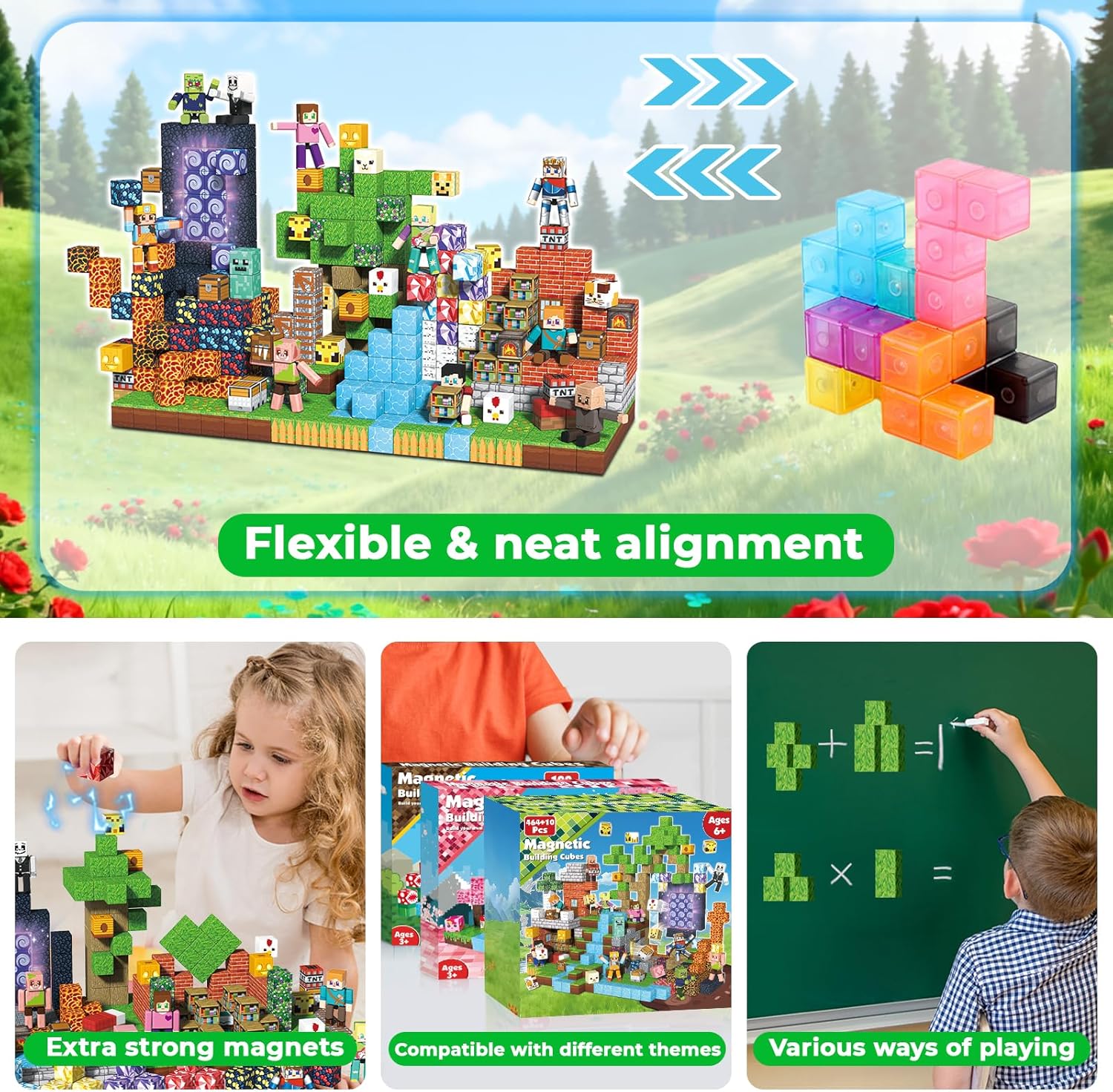
Magnetic blocks are one of those rare toys that can feel simple, but still keep kids busy for a long time. This 464-piece set of magnetic building blocks is built around snap-together magnets, so children can create both 2D patterns and 3D structures without needing tools, complex instructions, or a big setup.
That “click and build” style is the core idea here: magnets grab quickly, pieces connect securely, and kids can take things apart and try again. On paper, it’s a straightforward way to support early learning through play—especially for spatial thinking, fine motor skills, and problem-solving as kids experiment with shapes, colors, and structure.
What it is and why parents usually buy it
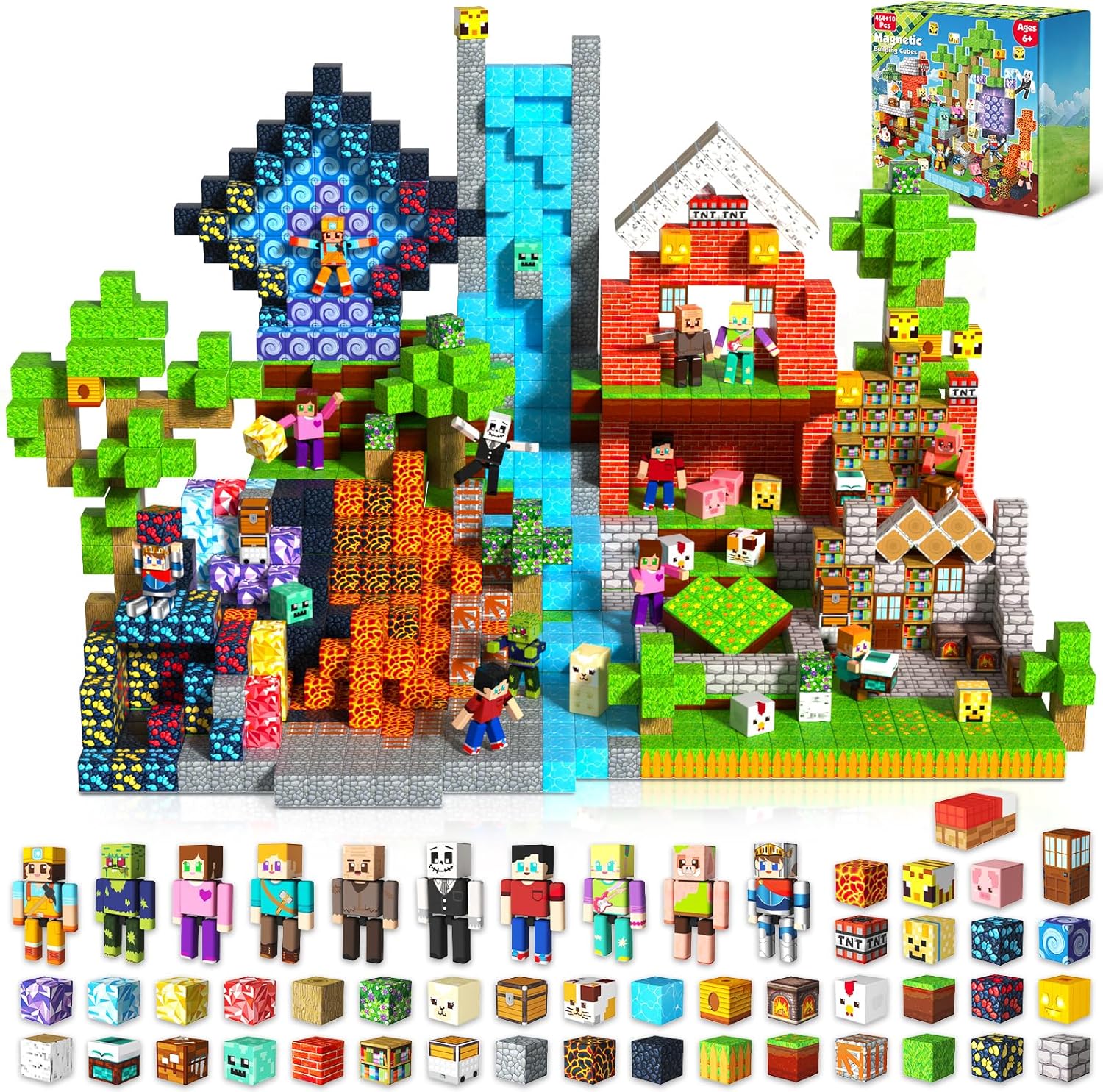
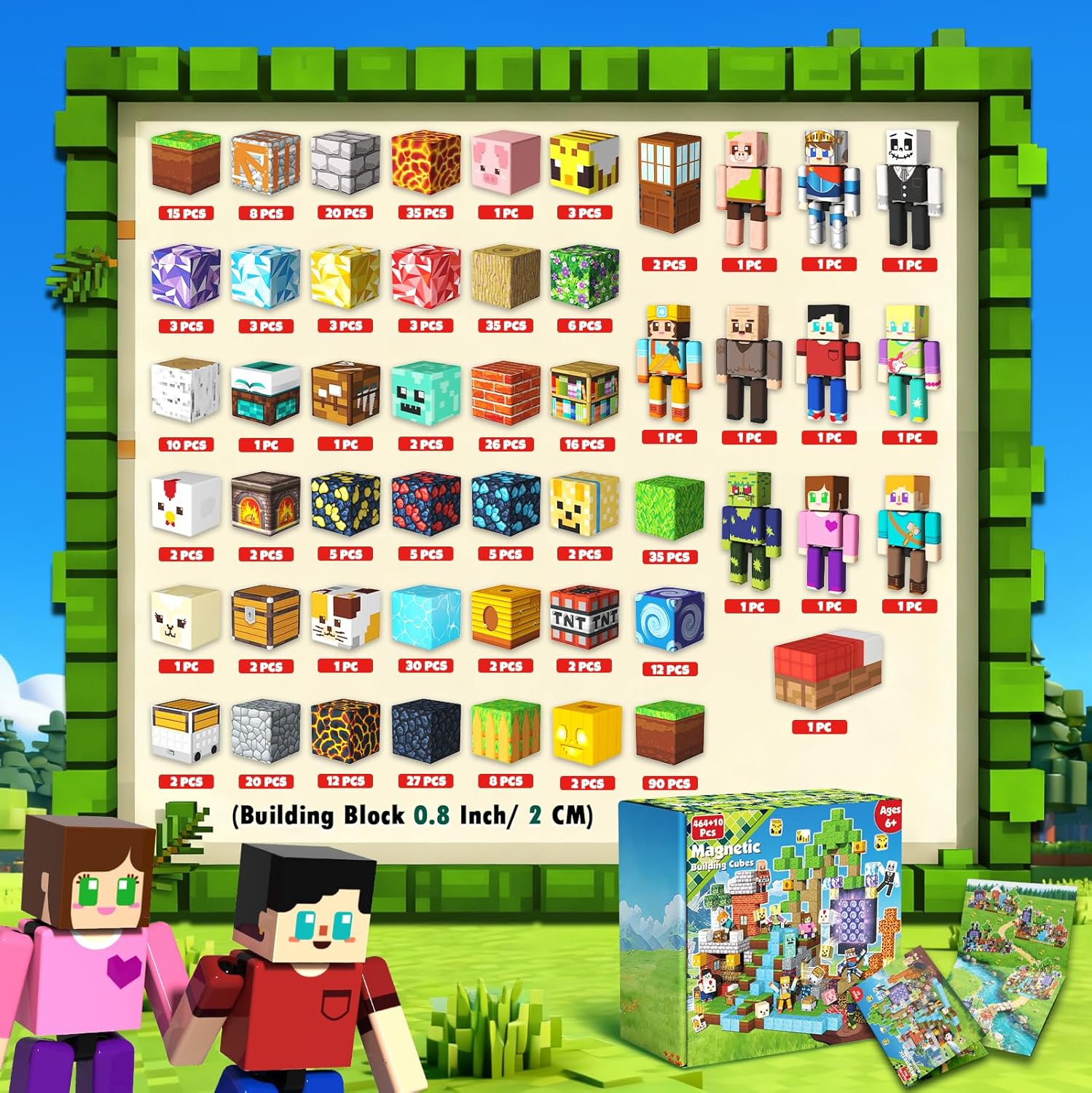
This set is made for kids roughly in the 4–8 age range (and it’s also described as suitable for ages 3+). You get 464 cube-shaped magnetic blocks designed to stack, snap together, and separate with ease.
The “why” is pretty clear from the use case: instead of only copying a finished model, kids can build their own flowers, trees, castles, and treehouses, then rebuild into something different. If you’re looking for screen-free time that still feels like it’s doing something “educational,” this kind of magnetic building toy is often the type of product parents reach for.
The essentials: magnets, creativity, and learning through building
The magnet strength is described as strong enough to snap together securely, while still being manageable for little hands. That matters because the biggest frustration with some magnetic toys is either too weak (pieces won’t hold) or too stubborn (kids can’t build independently).
With a large count of pieces (464 blocks), the set is positioned as a creativity builder. Kids can combine pieces to make unique shapes and structures, rather than running out of options after a couple of builds.
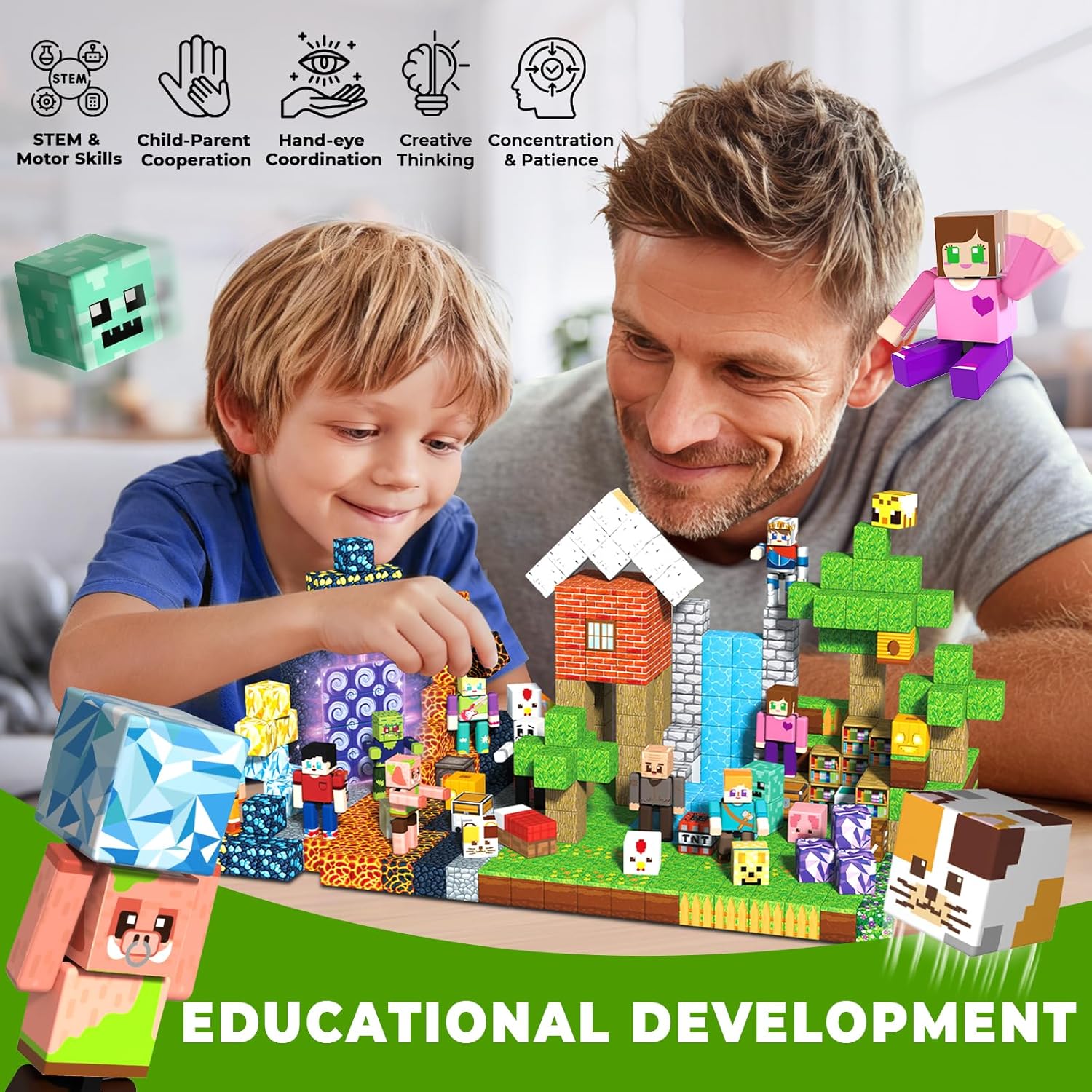
On top of creativity, the manufacturer frames this as STEM enrichment through the building process: - Structural stability and engineering thinking when children change how they stack. - Assembly logic as kids learn how magnets “want” to connect. - Shape recognition and quantities through trial and error.

It’s not a classroom curriculum, but it’s the kind of toy that can naturally turn into a mini challenge: “Can you build a tower that doesn’t fall?” or “How many blocks does your bridge need?”
What you’ll notice in everyday use
There’s a practical angle here beyond the blocks themselves. The set includes a storage box to help keep pieces organized. If you’ve ever dealt with small building parts scattered around the living room, you’ll appreciate anything that makes cleanup faster.
It’s also described as lightweight and portable, so it’s aimed at families who want screen-free entertainment at home, in the park, or during travel.
One small reality check: portability and storage help, but the set is still 464 individual pieces—so it’s best when an adult can help at least with initial organization (and maybe the first few “how do magnets work?” moments).
Durability: built for rough play, but not indestructible
The blocks are marketed as shock-resistant and scratch-proof, with thickened plastic designed to resist cracking. The magnets are also said to maintain their strength over years of use.
That’s reassuring, especially for active kids who build fast, bump tables, and treat toys like toys. Still, no toy is truly invincible—if pieces get dropped repeatedly or used in ways beyond normal building, damage can happen. Treat durability as “made to handle normal kid chaos,” not “bulletproof.”
Who it suits best (and who should pause)

It’s a solid match if you want a hands-on building toy for ages 4–8 that supports spatial thinking and fine motor practice. It also makes sense for siblings or family play, because it’s easy to hand someone a pile of blocks and let them collaborate on a structure.
It may not be the best choice if: - You’re looking for a highly guided learning kit with detailed lessons (this is more open-ended building than step-by-step instruction). - Your child needs a very specific kind of attachment or mechanism beyond magnets. - You want fewer pieces and a simpler setup—464 blocks is a lot, and it can be “too much” if your child prefers smaller, faster projects.
Worth considering if your priority is imaginative building plus early skill development, without needing screens.
Tech specs
- Name: 464 Pcs Magnetic Blocks - Magnetic Building Blocks, Magnet Cubes Stacking Toys for Kids Age 4-8, 8-12
- Type: Magnetic building blocks / magnet cubes
- Format: Cube-shaped magnetic blocks (stacking and connecting)
- Size: 464 pieces
- Material: Thickened plastic casing (as described)
Is it worth it?
Buying this set makes sense if your child enjoys building, experimenting, and repeating until a structure works. The magnet snap-together design, large piece count, and included storage box all point to a toy that can handle everyday use and keep kids engaged through creativity.
Skip it if you want a tightly structured learning product or if your home setup can’t manage 464 small pieces without extra cleanup. Also, if your child struggles with independent assembly, you may need to start with a bit of supervision so they understand how the magnets connect.
Mini FAQ
Mini FAQ
Are these magnetic blocks good for first-time builders?
They’re described as easy for little hands to assemble and disassemble, so they can work for beginners—just expect a short learning curve as kids figure out how the pieces connect.
What can kids build with this set?
The listing mentions 2D patterns like flowers and trees, plus 3D structures such as castles and treehouses.
Does it include storage?
Yes, the set is described as coming with a storage box to keep pieces organized.
How durable are they supposed to be?
They’re marketed as shock-resistant and scratch-proof, with thickened plastic meant to resist cracking, and magnets that maintain strength over years of use (as claimed).
Is this really educational or just for play?
It’s positioned as educational through STEM-style concepts like structure stability, assembly logic, and shape recognition, but it still works primarily as an open-ended building toy.