

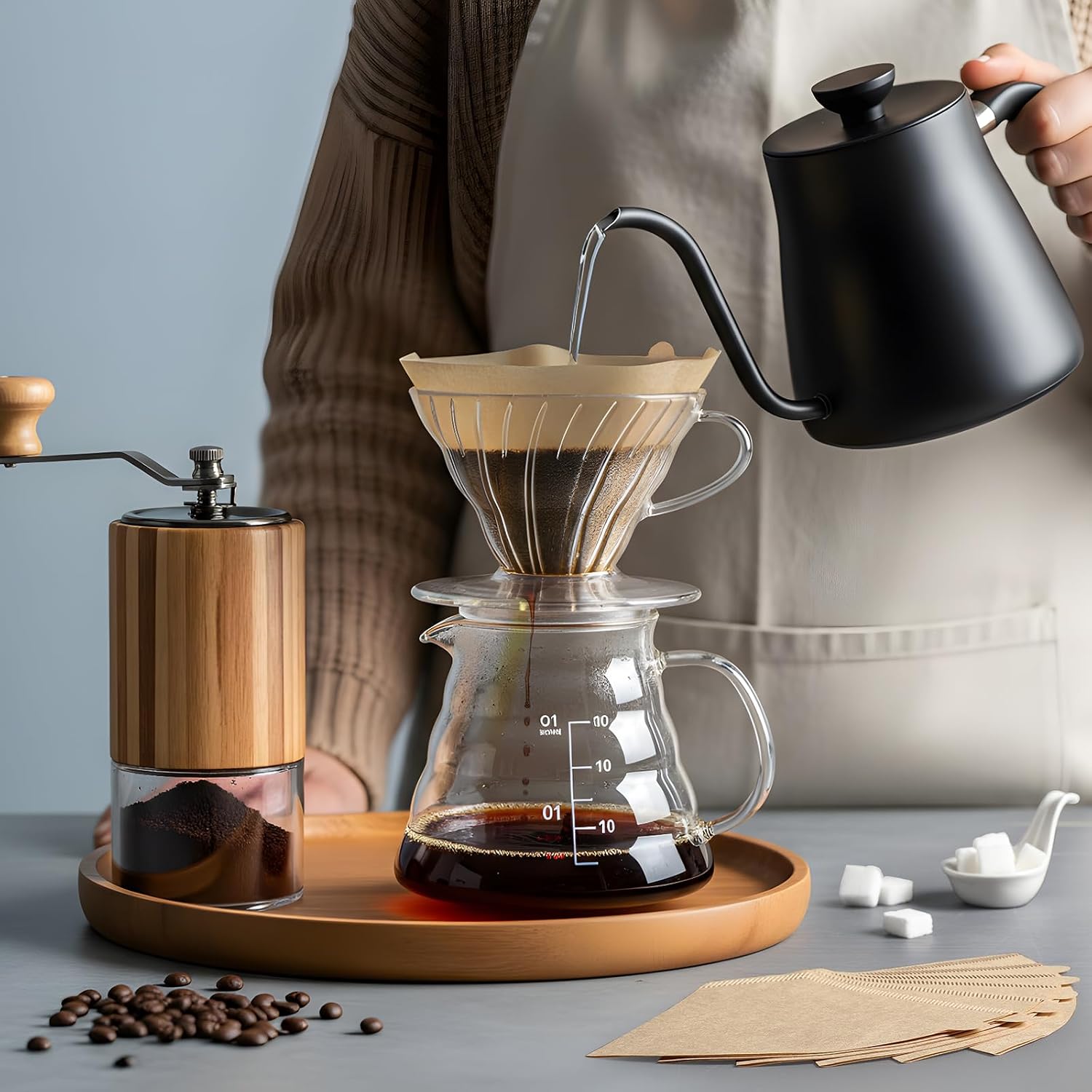
200 Count #4 Cone Coffee Filters for 8–12 Cup Brewers, Unbleached Natural Paper (Disposable)
Reviews
Price
Product description
What they’re for
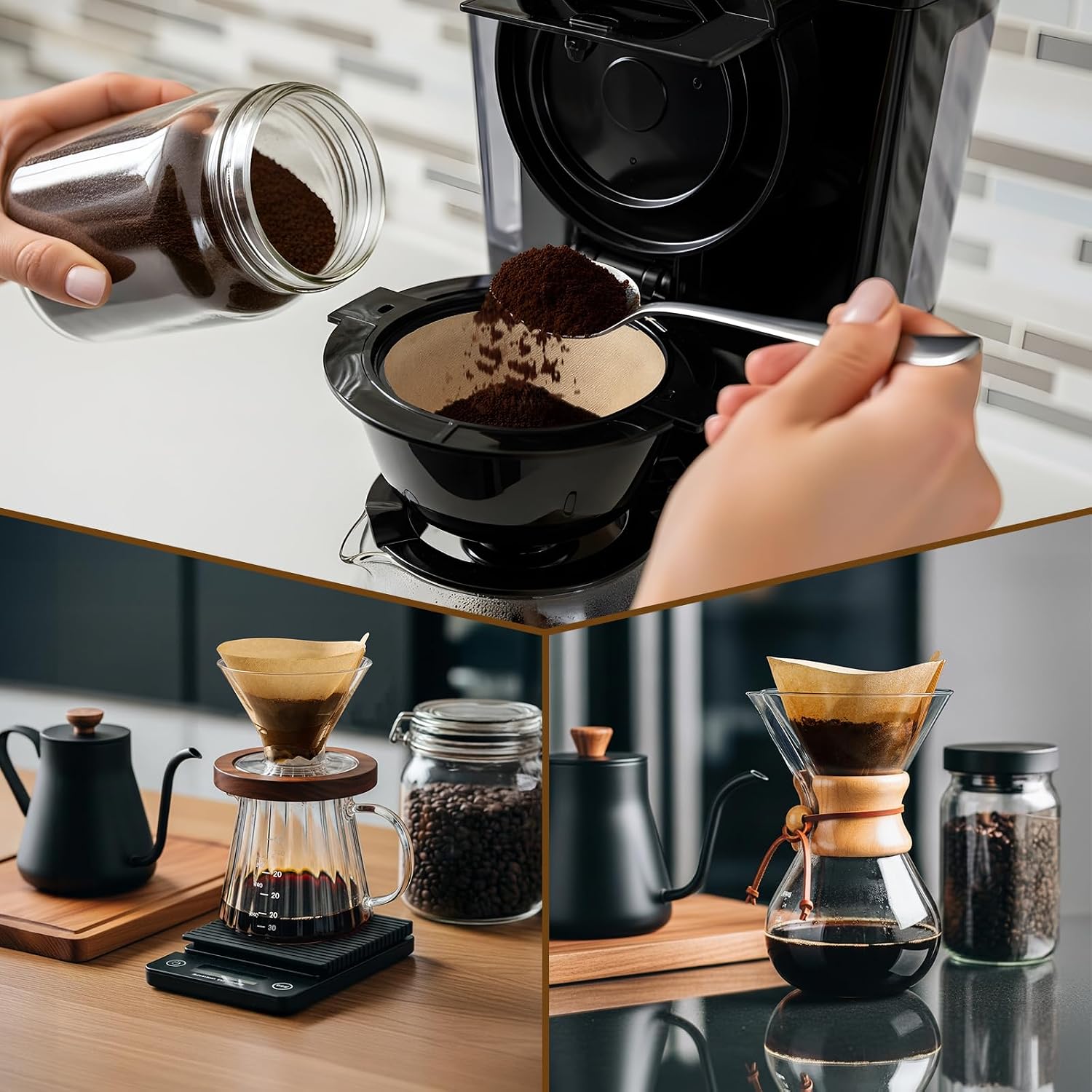
If you brew with a standard #4 cone basket, these disposable coffee filters are built to keep the process simple and the cup cleaner. The pitch here is pretty clear: a precise fit for 8–12 cup drip and pour-over setups, fewer messy overflows, and a flow rate designed to support extraction without turning your coffee bitter.
Key features that affect your cup
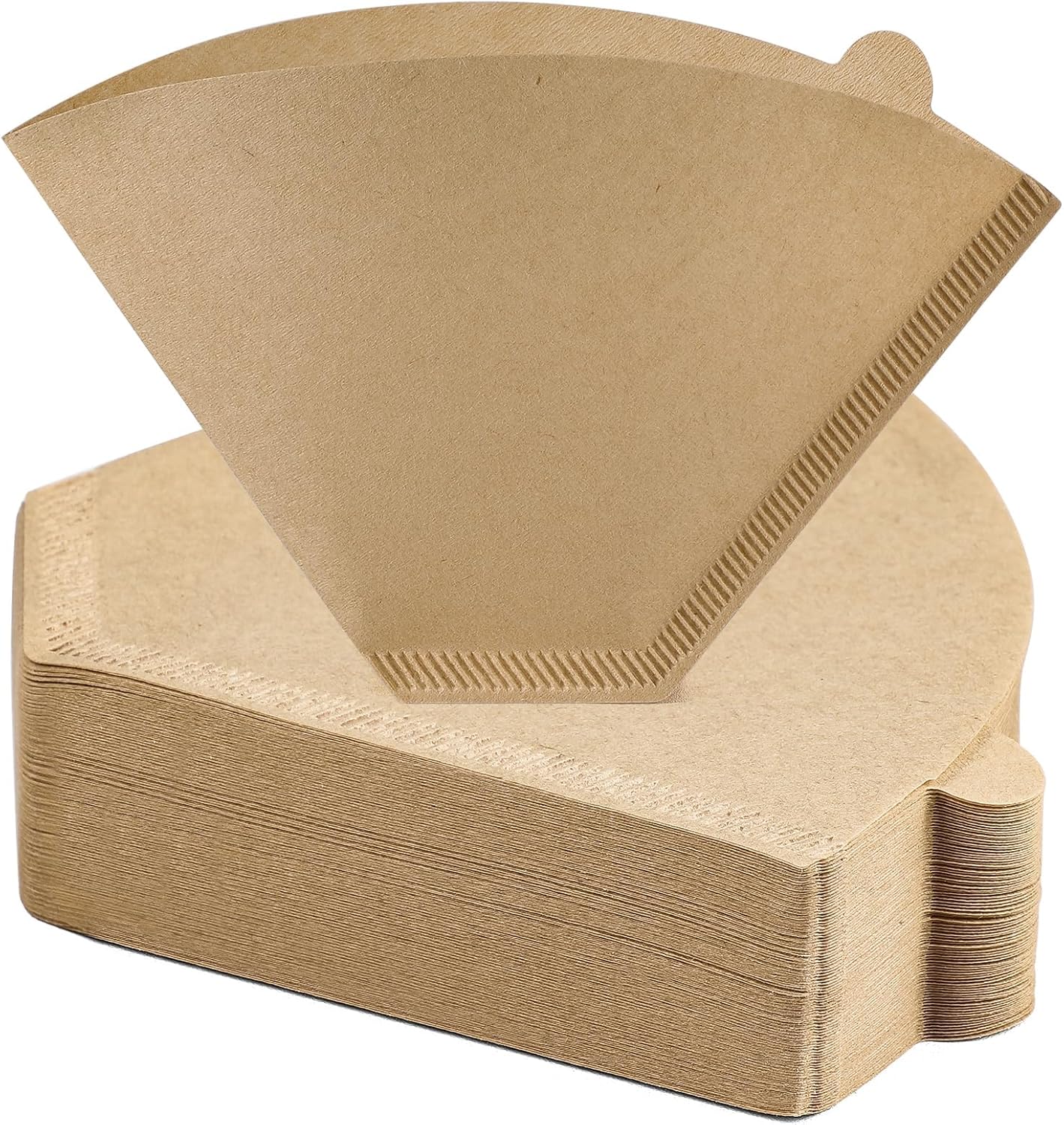
On paper, the biggest win is the combination of fit + filtration. Standard #4 cone paper is usually the deciding factor for whether a basket behaves nicely during brewing. When the filter sits right, you’re less likely to get overflow, bypass, or uneven saturation—things that can make coffee taste “off” even if your beans and grind are solid.
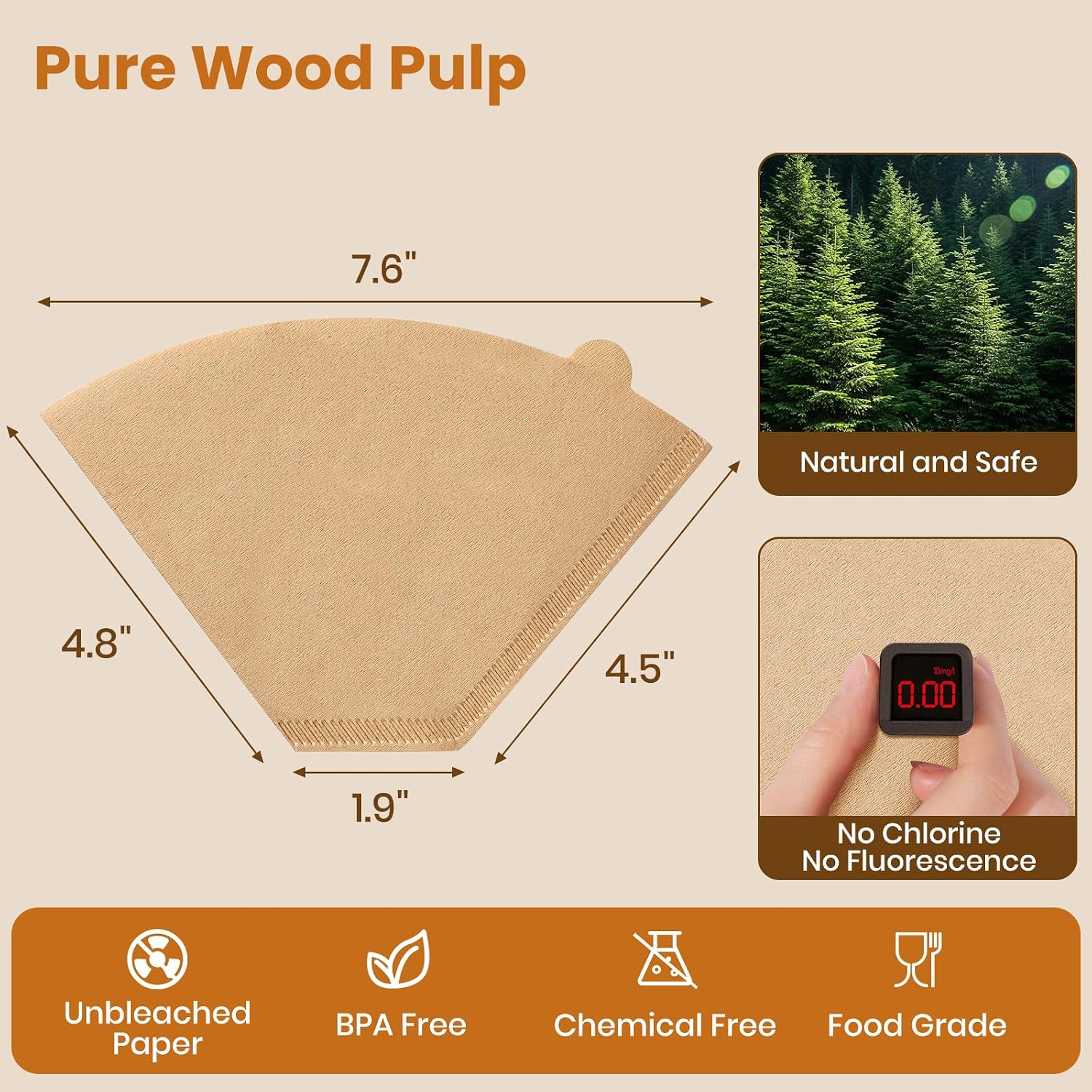
These filters are also described as unbleached natural coffee paper using oxygen-based bleaching (no chlorine). That matters to some people simply because they don’t want any potential chemical aftertaste. The brand’s claim is “zero chemical aftertaste,” so if you’re sensitive to that kind of concern, it’s worth a look.
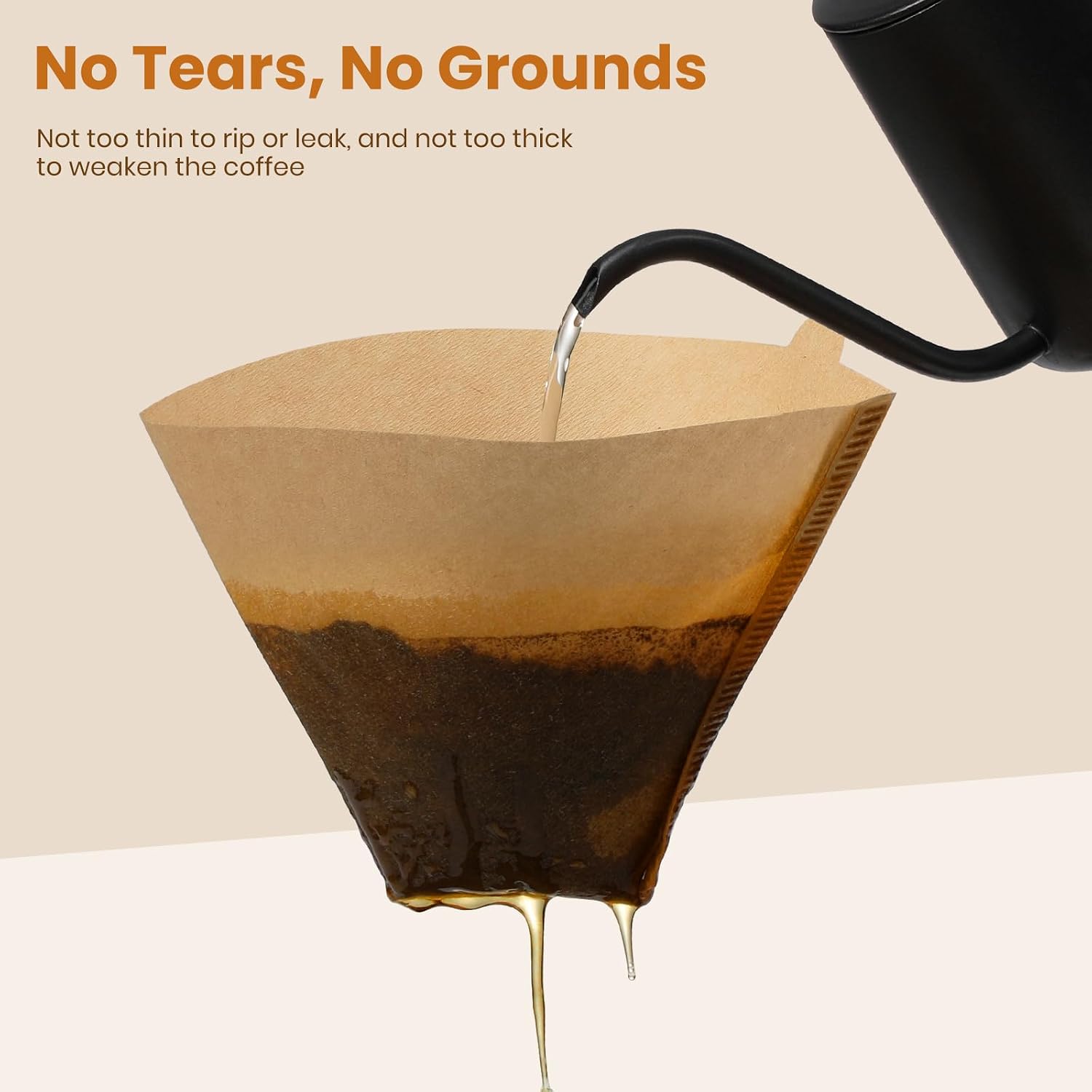
There’s also a focus on flow control. The filters are said to have calibrated micro-pores to maintain water–coffee contact time. The goal is a more balanced extraction: fast enough to avoid bitter over-extraction, but controlled enough to capture aromatic oils. If you’ve ever had coffee that tastes too sharp or too dull depending on the day, this kind of tuning is exactly what you’d want to see.
What you’ll notice during brewing (and what to watch)
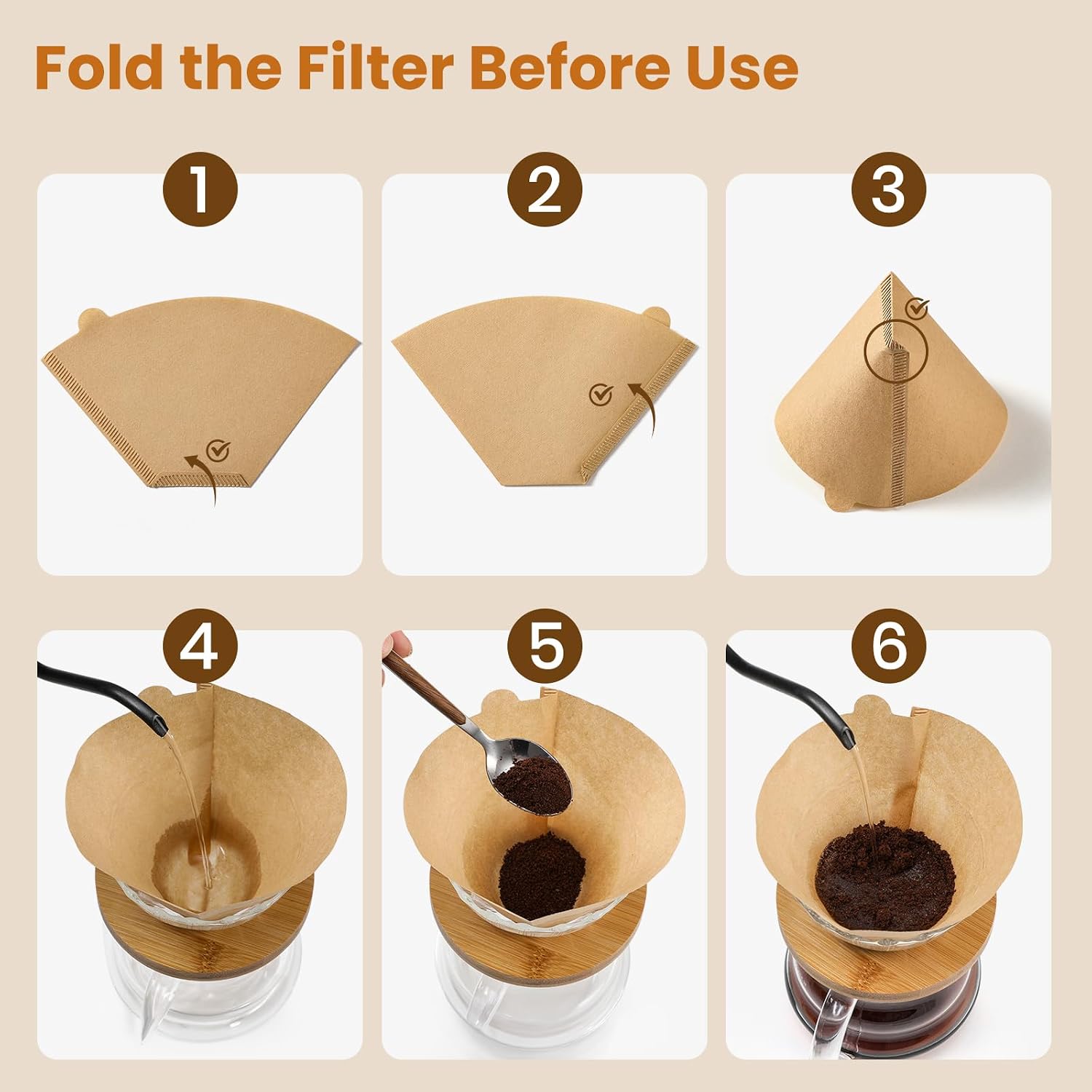
In everyday use, these are the filters you install, pour, and then toss. Reinforced edges and wet-strength technology are meant to prevent bursting mid-brew—especially if you use coarser grounds or pour briskly. That’s one of those features you only notice when it goes wrong, so it’s a solid inclusion.
That said, a couple of practical limitations are worth acknowledging. First, no disposable filter can completely fix grind problems. If your grind is very off, you can still end up with uneven results. Second, the “no blowout” promise depends a lot on the basket and how the filter is seated—so if you force a filter or let it sag, performance may not match expectations.
Eco-conscious angle, without making it complicated
These filters are described as made from sustainably sourced natural fibers and compostable/biodegradable after use. If you want an easier cleanup routine for daily brewing but still prefer something closer to compost-friendly paper, this is the direction they’re aiming for.
Who these fit (and who might skip them)
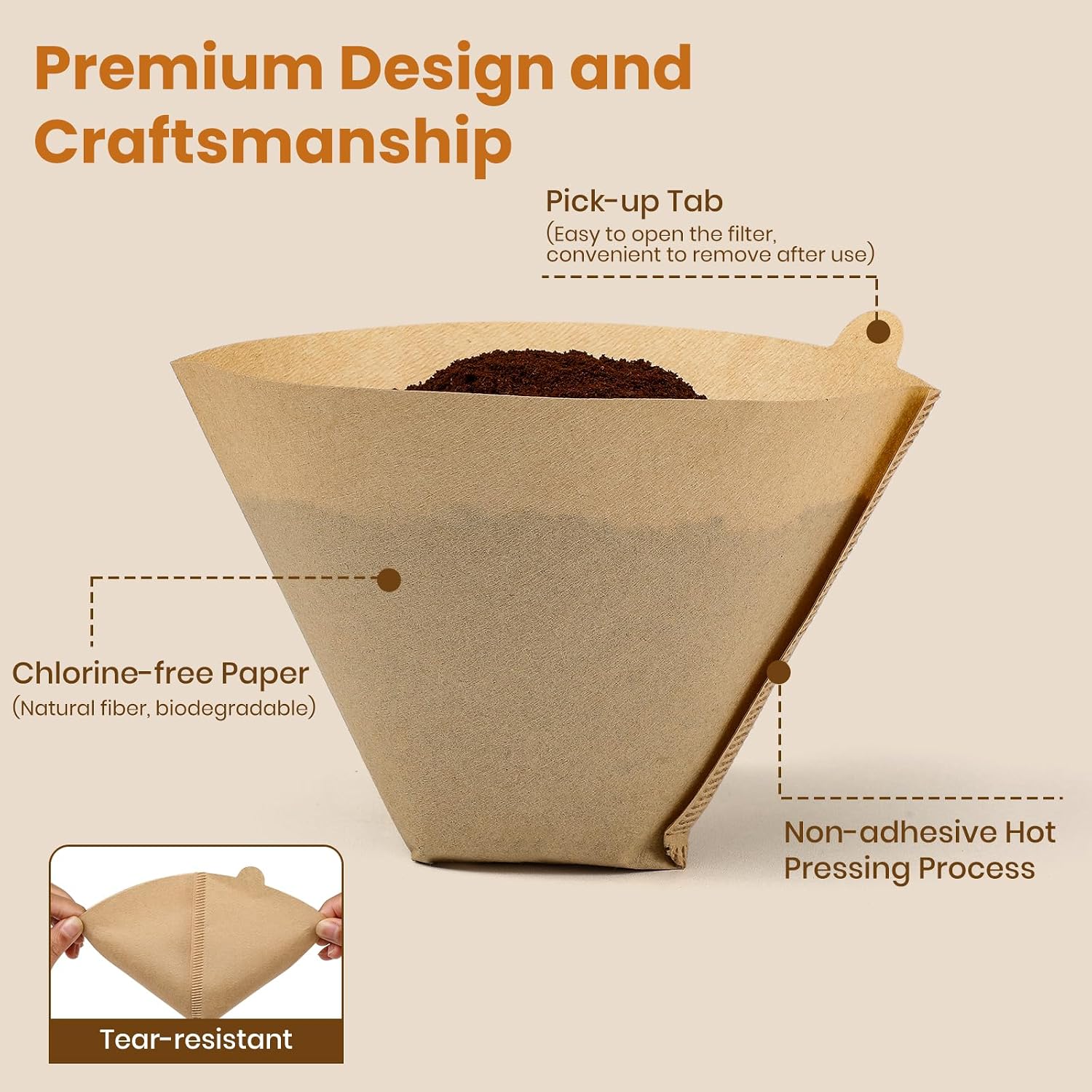
It’s a good match if you regularly brew 8–12 cup coffee with a standard #4 cone basket and you want disposable filters that focus on fit, controlled flow, and reduced risk of tearing.
You may want to skip them if you don’t know your filter size, because #4 cone baskets have to match the paper shape to work well. Also, if you already like your current filters and feel they don’t cause overflow, sediment, or burst issues, you might not gain much by switching.
Mini FAQ
Are these the right size for all coffee makers?
They’re specified for standard #4 cone filters used in many 8–12 cup drip coffee makers and pour-over brewers. If your machine uses a different size or flat-bottom style, you’ll need the matching paper.
Do they claim chlorine-free paper?
Yes. The description says oxygen-based bleaching with no chlorine and positions it as chlorine-free, aiming for no chemical aftertaste.
Will they prevent sediment?
The claim is “zero sediment,” which is the typical goal of well-fitting, well-flowing paper filters. Results still depend on your grind, brew method, and seating.
Do they tear easily?
They’re described as extra-strong with tear resistance, reinforced edges, and wet-strength technology to help prevent bursting mid-brew.
Is it worth it?
Worth considering if you brew with a #4 cone basket and you care about getting a clean, well-balanced cup without overflow or filter mishaps. The combination of fit, controlled flow, and wet-strength reinforcement is the kind of setup that tends to matter on busy mornings.
It’s not the best choice if you’re unsure of your filter size, or if your main problem is really grind consistency and technique rather than filtration. In that case, switching filters won’t fix everything—but for the right brewer and routine, these look like a practical, no-fuss upgrade.