


The Shipping-First Deal Strategy: Save on Fees at Checkout
A practical US guide to reducing shipping costs, avoiding surprise fees, and choosing delivery options that keep online “deals” actually cheap.
A discount isn’t a deal if shipping, taxes, and “protection” add-ons erase it at checkout. The good news: you can usually control those costs—without obsessing over coupon codes.
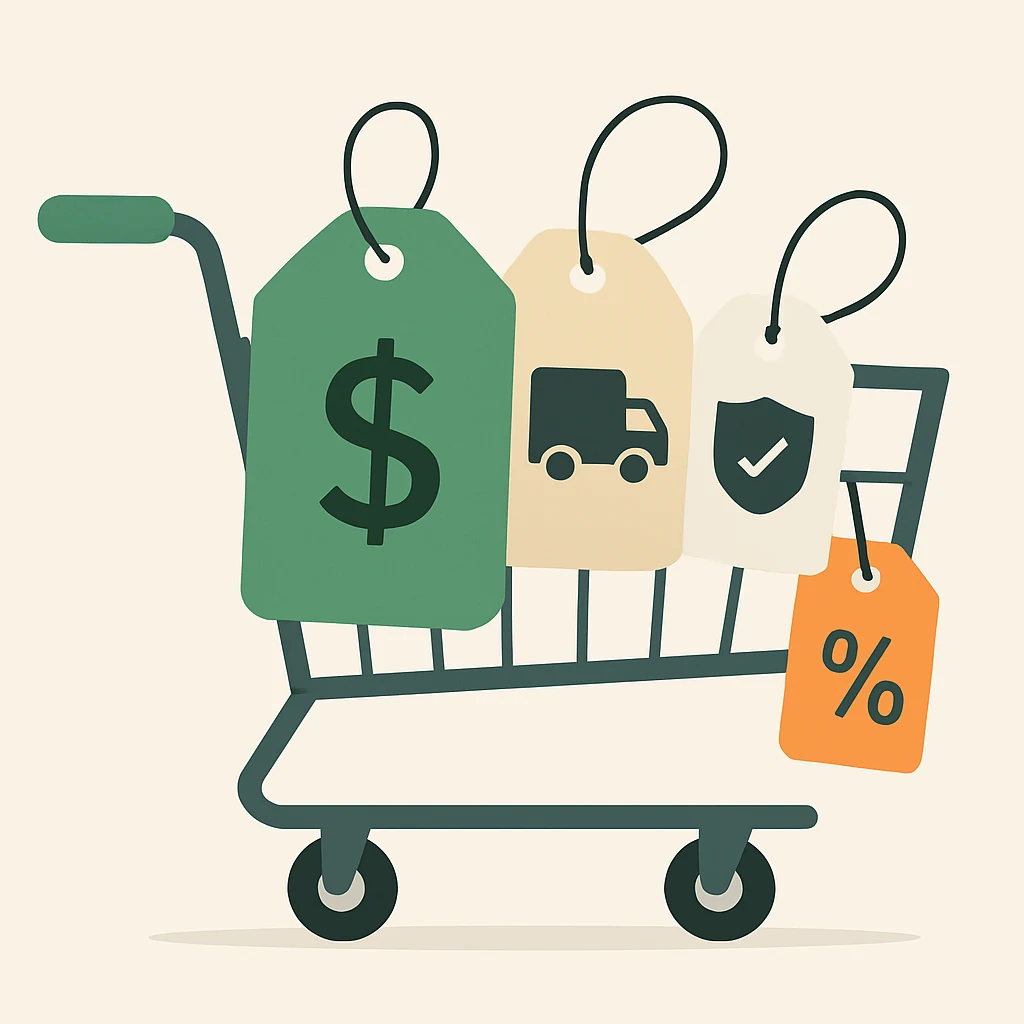
Why start with shipping (instead of the sticker price)?
Because shipping is the part of the price that changes the fastest based on how you buy, not what you buy. Two shoppers can pick the same item at the same advertised price and still pay different totals depending on:
- whether they hit a free-shipping threshold
- whether the item ships from the marketplace seller or the retailer
- the delivery speed they choose (or get nudged into)
- return shipping policies and fees
“Isn’t shipping free everywhere now?”
Not reliably. Free shipping is common, but it’s often conditional: minimum order, membership, specific categories, or slower delivery. And during busy seasons—think back-to-school, Black Friday/Cyber Monday, and the weeks right before Christmas—shipping upgrades can quietly become the biggest line item.
What’s the fastest way to spot a fake deal before checkout?
Ask one question early: What will this cost delivered to my door, with sales tax?
That sounds obvious, but most “deal” browsing happens on product pages, not in the cart. Before you spend time price-matching across tabs, do this quick gut-check:
- Add it to cart
- Enter your ZIP code (or sign in)
- Look at shipping, sales tax, and any default add-ons
“Why does sales tax vary so much online?”
Sales tax depends on where you live and how the order is fulfilled. Different sellers on the same marketplace can trigger different tax handling, and some platforms calculate tax after shipping is selected. The key point: compare totals, not headlines.

How do I use free-shipping thresholds without buying junk?
Free-shipping thresholds are designed to make you add “just one more thing.” You can flip that logic and still keep your cart clean.
“What should I add to hit the threshold if I’m a few dollars short?”
Aim for items you’ll genuinely use within a month or two—especially things with stable prices that don’t become clutter. In US online shopping, that usually means household basics, chargers/cables you already planned to replace, or a small pantry staple if you’re doing a grocery add-on.
The habit to avoid: adding random clearance items that become return headaches (or miss return windows).
A smarter alternative: consolidate, don’t pad
If you’re short of free shipping, consider whether you have a second planned purchase you can combine into the same order—especially for retailers that ship from the same warehouse.
That leads to the next question.
Should I split my order across retailers to get the lowest item price?
Sometimes yes, but it’s easy to lose money doing it.
“When does splitting an order backfire?”
Splitting usually backfires when it creates:
- multiple shipping fees
- multiple return labels/return shipping charges
- more chances you miss a return deadline
If two stores are within a few dollars of each other on the item price, the cheaper “deal” often disappears once you pay shipping twice.
“When does splitting actually help?”
Splitting can make sense when one retailer has a truly strong price and the other has the add-ons you need with free shipping, or when you can pick up part of the order locally (curbside/pickup) and ship the rest.
In practice, the winning move is: minimize the number of shipments, not just the number of dollars per item.

Are shipping memberships worth it (and how do I decide quickly)?
Shipping memberships can pay off, but only if they reduce your typical friction: shipping fees, minimum order thresholds, or delivery timing stress.
“What’s a simple way to judge without doing math spreadsheets?”
Use a 2-week reality test:
- Think back to your last 2–3 online orders.
- Would membership have removed a shipping fee, sped up delivery you actually needed, or reduced return shipping?
- Did you avoid buying because shipping made it not worth it?
If the answers are mostly “no,” the membership is likely a convenience spend, not a savings tool.
Also watch the psychological trap: “I paid for it, so I should use it.” That can increase impulse buying and wipe out any shipping savings.
What delivery speed should I choose if I want the best total price?
The cheapest option is often standard shipping, but the best value depends on timing.
“When is upgrading shipping actually worth it?”
Upgrading can be worth it when:
- it prevents a last-minute store run (and the impulse buys that come with it)
- you need an item for a fixed date (travel, event, gift)
- the retailer’s free option is slow enough that you’ll end up paying another way
“How do I avoid accidental expedited shipping charges?”
Some checkouts pre-select faster shipping, especially during holiday crunch time. Make it a habit: pause at the shipping step and actively choose the lowest-cost option you’re comfortable with.
If you’re buying gifts in November/December, build in buffer time so you don’t pay “panic shipping” a week before the holidays.
What’s the hidden shipping cost most people miss? Returns.
Return policies are part of your “delivered price.” A low sticker price isn’t great if returning it is a hassle or costs you money.
“What should I check on the returns page before buying?”
Look for three things:
- Who pays return shipping? (Prepaid label vs you pay)
- Restocking fees (common in some categories)
- Condition rules (opened items, missing packaging, final sale)
If it’s an apparel or shoes purchase where fit is uncertain, return shipping can quietly be the real price.
“Does ‘free returns’ always mean free?”
Not always. Some retailers offer free returns only via store drop-off, specific carriers, or store credit. Others subtract shipping from refunds. Treat “free returns” like marketing until you confirm the method.
Are add-ons like shipping protection worth it?
Sometimes they’re useful, but they’re also commonly presented in a way that makes them feel mandatory.
“How do I decide in 10 seconds?”
Ask:
- Is this a high-risk delivery (apartment lobby, porch theft concerns, long-distance shipping)?
- Is the item expensive or fragile enough that a claim would matter?
- Does the retailer already cover lost/damaged shipments clearly?
If you’re confident the retailer handles delivery issues and the order isn’t especially risky, you can often skip the add-on.
Quick tips (the ones that actually move your total)
When you’re in a hurry, these are the checkout moves that tend to matter most:
- Always compare “delivered total” (item + shipping + sales tax), not the product page price.
- Use a cart test: add to cart and check shipping before you keep browsing.
- Avoid padding to hit free shipping unless it replaces something you were already buying soon.
- Choose the slowest acceptable shipping—especially in holiday season, when upgrades spike.
- Read return shipping rules for anything you might send back (apparel, electronics, gifts).
“What about marketplace sellers—are they cheaper or riskier for shipping?”
Both can be true.
Marketplace sellers can offer strong prices, but shipping speed, packaging quality, and return handling can vary. Before you buy, check:
- estimated delivery range (not just “ships in…”)
- who handles returns (platform vs seller)
- whether the seller uses tracked shipping
If you’re shopping for a time-sensitive gift (Mother’s Day, graduation, holiday), prioritize reliable delivery estimates and easy returns over a slightly lower sticker price.
FAQ: Shipping + deal-hunting in the US
“Should I buy multiple sizes/colors to get free shipping and return the rest?”
It can work, but it’s a gamble if return shipping isn’t truly free or if the retailer charges fees for certain return methods. If you do it, confirm the return method before ordering.
“Is store pickup always cheaper than shipping?”
Often it saves shipping, but not always. Pickup can shift your costs into time and travel—and it can increase impulse buys once you’re in-store. It’s best when you already pass the store regularly.
“Do coupons apply to shipping?”
Sometimes coupons exclude shipping or apply only to items, not the delivery fee. If you’re choosing between two promo codes, compare the final totals in-cart.
“Can I reduce shipping by buying earlier in the year?”
You can reduce rushed shipping. Buying gifts or seasonal items earlier (when possible) gives you the flexibility to choose cheaper delivery speeds, especially ahead of the holiday shipping crunch.
A simple action plan for your next purchase
Next time you see a “great deal,” do this before you check out: open the cart, pick the cheapest acceptable shipping option, and confirm returns. If the delivered total still looks good, buy with confidence. If it doesn’t, back out and keep hunting—because a deal that only works on the product page isn’t a deal.
If you want more practical saving guides like this, start at the homepage: browse the latest.
You may also be interested

Cash Back or Coupon? Keep Your Online Savings From Disappearing
Learn when to use coupons, cash-back portals, or card offers—and how to avoid tracking mistakes before Black Friday and Cyber Monday.

Open-Box and Refurbished Deals: A Smarter Way to Shop Holiday Sales
Learn how to vet open-box and refurbished deals before Black Friday, from condition and warranties to battery health, seller quality, and gift readiness.

Discounted Gift Cards: 6 Mistakes That Can Erase Your Savings
Buying discounted gift cards for holiday shopping? Avoid balance problems, refund traps, and bonus-card restrictions before locking up your money.