


The Model-Number Trick: Avoid Fake Online Deals (Especially in Big Sales)
Learn how to compare products by model number, spot “sale-only” versions, and decide when a deal is real—without getting stuck with a downgrade.
Big sale weekends (Black Friday, Cyber Monday, Memorial Day, Prime Day-style events) are the easiest time to feel like you’re saving money—and the easiest time to buy the “wrong” version of the thing you wanted.
Not because you made a silly mistake. Because online listings can look identical while hiding small spec changes, different model numbers, or a bundle that makes comparison messy. The good news: you can usually spot this in a few minutes, and you can make a clean decision with trade-offs you actually understand.

The scenario: the “same” product that isn’t really the same
Picture this: you’re shopping for a TV, a laptop, noise-canceling headphones, a robot vacuum—something name-brand that goes on sale hard.
You see a deal that looks perfect: the right brand, the right size, the right vibe. But when you try to price-compare, you can’t find the exact listing anywhere else. Or you find something close, but not identical.
That’s usually your clue. When a deal is hard to compare, it’s not automatically bad—but it deserves a quick model-number check before you commit.
Why model numbers matter more than product names
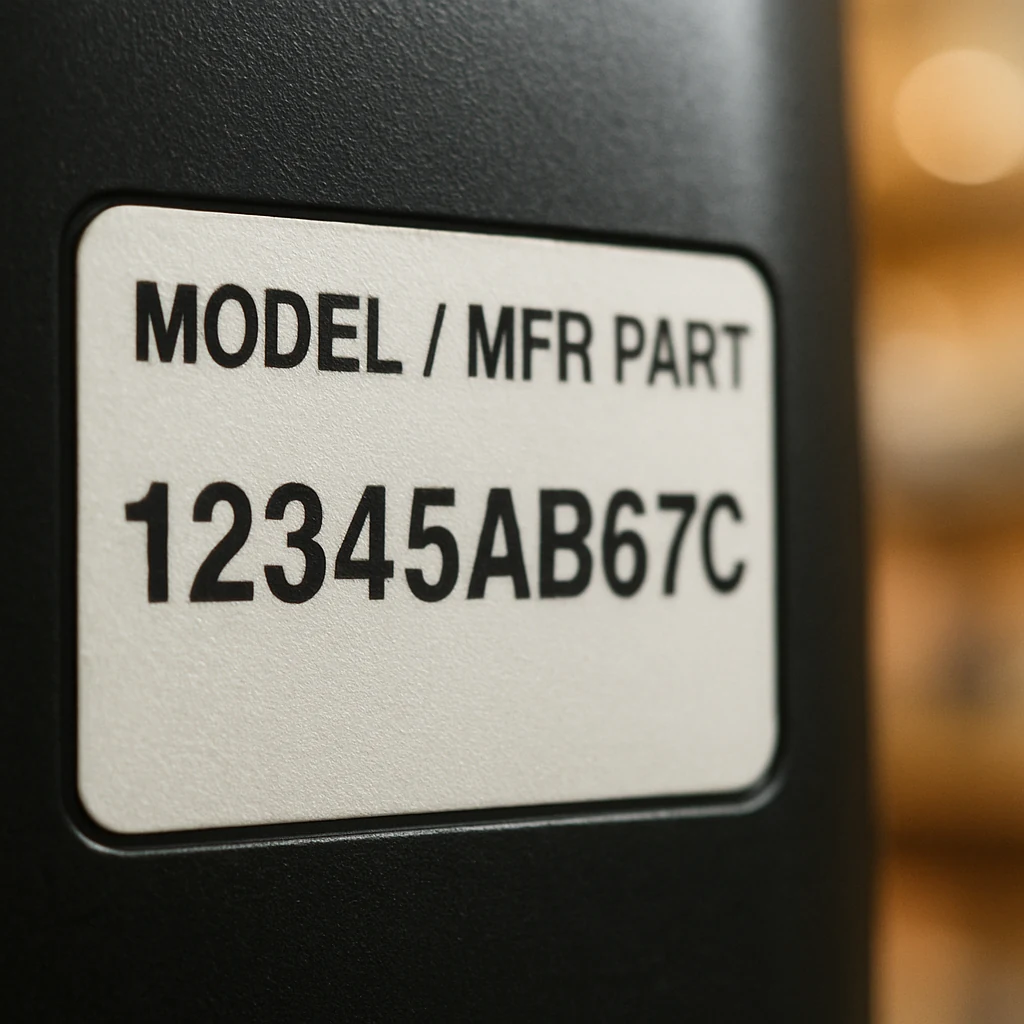
Retail listings often lead with a friendly product name (“Ultra 4K Smart TV”) and bury the identifiers. Model numbers are the closest thing to a product’s legal identity.
During huge sales, it’s common to see:
- Retailer-exclusive model numbers (sometimes with minor differences)
- “Special buy” or “doorbuster” SKUs that don’t match the standard version
- Bundles (extra accessories) that change the SKU and muddy the comparison
None of that is inherently a scam. But it changes your job as a shopper: you’re not only hunting a discount—you’re confirming you’re comparing apples to apples.
A practical 6-minute method to confirm a “real” deal
You don’t need a spreadsheet. You need a quick, repeatable check.
Step 1: Find the model number (not just the series)
On most US retailer pages, look for “Model,” “Model number,” “Mfr. part number,” or “Item #.” If you only see a series name, scroll further down or open the specs section.
If the listing doesn’t clearly provide a model number, that’s a yellow flag. You can still buy it, but you’re accepting more uncertainty.
Step 2: Search the model number, then compare the spec sheet
Paste the model number into a search engine and look for:
- The manufacturer’s product page (best)
- A PDF spec sheet Ofertas manual (often most accurate)
- Other major retailer listings for the exact model
Don’t focus on marketing language. Focus on the boring details.
Step 3: Check the “quiet” specs that get downgraded in sale-only versions
Different categories have their own gotchas. Here are a few that matter a lot in real life:
TVs: panel type, refresh rate, HDMI version/ports, brightness ratings (if provided), processor/platform version
Laptops/tablets: exact CPU generation, screen resolution, RAM type, storage type, Wi‑Fi version, port selection
Appliances (vacuums, air purifiers, blenders): motor power (if listed), filter model availability, included attachments, bin size
Headphones: codec support, mic version, whether it’s a previous generation with a new name
You don’t have to become an engineer. You’re just checking if the “deal” version quietly loses the one feature you actually care about.

Case study #1: The “doorbuster” TV that’s cheaper for a reason
Decision you’re facing: A big-box retailer has a TV on sale for what looks like an unbelievable price. The model number is slightly different from the one you’ve been tracking.
Trade-offs to consider:
If the model number doesn’t match, ask yourself what matters most:
- If you want it mainly for casual streaming in a bright living room, a slight spec change might not matter.
- If you’re buying for gaming (or you care about motion handling), small spec differences can matter a lot.
What to do:
Instead of chasing the lowest price, confirm whether the sale model has the same key features you’re paying for (ports, refresh behavior, platform version). If the spec sheet is unclear, assume you’re taking on risk.
The “deal” can still be real—it’s just a different product than the one you thought you were comparing.
Case study #2: The laptop listing that’s “almost” the same
Decision you’re facing: You find a laptop that matches the brand and line you wanted. The price looks great. But another retailer has a similar one for more, and the specs don’t line up neatly.
Common reality: Retailers often sell very similar configurations with tiny differences (RAM, screen type, storage speed) that change how the laptop feels day-to-day.
The smart move: Pick your non-negotiables first, then evaluate the deal.
For example:
- If you care about portability and battery life, the screen type and processor generation are often more important than the storage size.
- If you’re doing creative work, the display (resolution/color) may matter more than a small discount.
If the “deal” version cuts a non-negotiable feature, it’s not a deal for you—even if the sticker price is lower.
Case study #3: The bundle that makes comparison impossible (but might still be worth it)
Decision you’re facing: A retailer offers a “bundle” (product + accessories) that looks like a discount, but you can’t compare it directly elsewhere.
Trade-off: Bundles can be great if you would buy the extras anyway. They’re not great if the extras are low-quality filler and the base product is a downgraded model.
Quick test: Price the base item and the extras separately.
If you can’t find the base item’s model number or the included extras are vague (“bonus accessory kit”), assume the bundle’s value is uncertain.
Also factor in US checkout realities:
- Sales tax: If the bundle pushes you into a higher taxable total, the “savings” may shrink.
- Shipping: “Free shipping” bundles sometimes ship in multiple boxes or with slower delivery; that can matter if you need it by a date.
- Returns: Some retailers require returning the entire bundle, not just one part.
When it’s okay to buy the “hard-to-compare” deal
You don’t always need a perfect match. Here’s when uncertainty is acceptable (and when it isn’t).
It’s usually fine when:
You’re buying a low-risk item, the return process is easy, and the performance difference won’t change your daily use. Think basic kitchen gear, simple home accessories, or a second-room TV where top specs aren’t the priority.
Be more cautious when:
You’re buying something you’ll keep for years (mattress, major appliance, primary laptop/phone), or you’re choosing it for one specific feature (gaming performance, noise cancellation, allergy filtration).
In those cases, a model-number mismatch isn’t a dealbreaker—but it’s a reason to slow down and confirm.
A simple way to avoid “sale-only” versions altogether
If you don’t want to play detective during big sales, do this before the rush:
Choose 2–3 acceptable models (not just one) and save their exact model numbers in a note. When the sale hits, you’ll instantly know whether a listing is your target or a lookalike.
This pairs nicely with the shopping tools and guides on the homepage at /, especially when you’re trying to stay calm during major seasonal promos.
FAQ (the questions that come up at checkout)
Are different model numbers always worse?
No. Sometimes it’s just a retailer-specific SKU or a color variation. The point isn’t to assume it’s bad—it’s to confirm whether the differences affect what you care about.
What if I can’t find the model number anywhere?
Treat that as added risk. If you still buy, make sure you’re comfortable with the retailer’s return window, return shipping policy, and restocking-fee rules (if any).
If the model number matches, is it definitely the same product?
Usually, yes. But still glance at key specs and the included accessories. Listings can be messy, and bundles can change what arrives in the box.
Should I rely on reviews for the product name?
Be careful: reviews often combine multiple variants. If you’re reading reviews, try to confirm the reviewer bought the same model number (or at least the same generation).
The one action to take today
Pick one item you plan to buy in the next 30–60 days (even something small), find its exact model number, and save it. Next time a “too good to be true” deal pops up, you’ll know in seconds whether it’s a true discount—or a different product wearing a similar name.
You may also be interested

Cash Back or Coupon? Keep Your Online Savings From Disappearing
Learn when to use coupons, cash-back portals, or card offers—and how to avoid tracking mistakes before Black Friday and Cyber Monday.

Open-Box and Refurbished Deals: A Smarter Way to Shop Holiday Sales
Learn how to vet open-box and refurbished deals before Black Friday, from condition and warranties to battery health, seller quality, and gift readiness.

Discounted Gift Cards: 6 Mistakes That Can Erase Your Savings
Buying discounted gift cards for holiday shopping? Avoid balance problems, refund traps, and bonus-card restrictions before locking up your money.