

Stop “Great Deals” From Getting Expensive: 7 Online Shopping Mistakes
Avoid shipping, sales tax, return, and subscription traps that quietly erase your savings when buying online in the US.
Online “deals” don’t usually fail because the price was wrong. They fail because the checkout reality is different than the product page—shipping, sales tax, returns, and sneaky add-ons quietly eat your savings.
Below are the most common (and very fixable) mistakes US online shoppers make—plus exactly what to do instead so a discount stays a discount.

Mistake #1: Treating the listed price like the final price
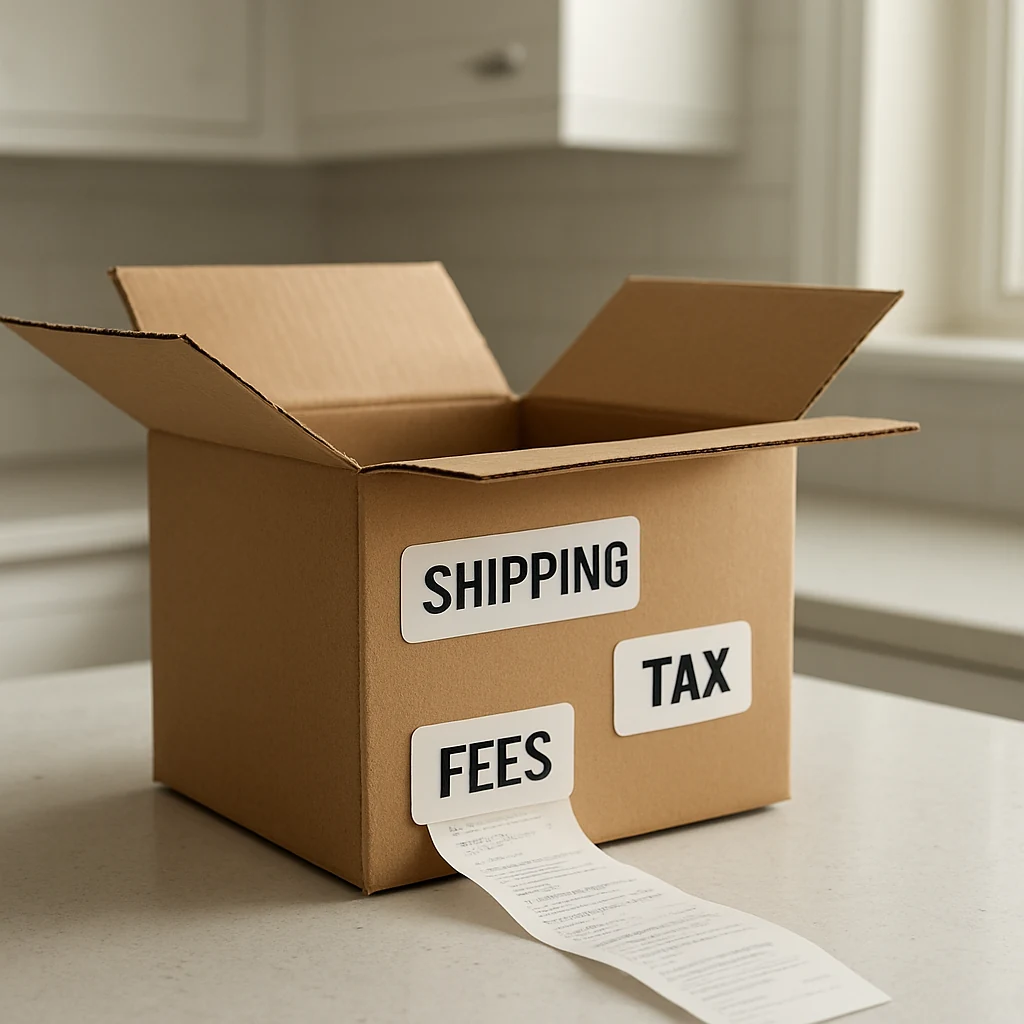
A $49.99 item can stop feeling like a deal once you add sales tax, shipping, and a “handling” fee. The problem isn’t paying tax (that’s normal). The problem is comparing stores using different “almost-final” numbers.
Do this instead: build a habit of comparing all-in prices.
Before you decide, get to the last step right before clicking “Place order.” Check:
- Item price (and whether the discount is already applied)
- Shipping cost (and whether it changes by speed)
- Sales tax (varies by state and sometimes by product type)
- Any fees (marketplace service fees, bulky item fees, etc.)
If two stores are close, the “winner” is usually the one with cheaper shipping or easier returns—not the one with the flashier percent-off badge.
Mistake #2: Falling for “free shipping” that isn’t actually free
“Free shipping” often comes with strings: minimum spend thresholds, membership trials, or slower delivery that makes you pay for speed at the end.
Another common trap: you add one extra item to hit the free-shipping minimum… but that extra item wasn’t something you truly needed. Congratulations, you just paid for shipping in a different form.
Do this instead: treat shipping like a line item you’re allowed to negotiate.
Try these moves (pick the one that fits):
- Consolidate orders (one bigger cart can be cheaper than three small shipments)
- Check “store pickup” or “ship to store” if available
- Look for a slightly higher priced listing with free shipping—sometimes it’s cheaper all-in
- If you’re close to a free-shipping minimum, add a true staple (paper goods, pantry basics) rather than a random impulse item

Mistake #3: Ignoring the seller behind the listing
On major marketplaces, the product page can look identical whether it’s sold by the platform itself or a third-party seller. That matters because shipping speed, return rules, and customer support can change dramatically.
Do this instead: pause for 10 seconds and check “Sold by” and “Ships from.”
Then decide if the tradeoff is worth it:
- If it’s a time-sensitive purchase (gift, back-to-school, replacement part), prioritize predictable delivery and easy returns.
- If it’s a low-stakes item and the savings are meaningful, a third-party seller can be fine—just confirm return terms first.
Also watch for “restocking fees” and short return windows. A deal isn’t a deal if returning it is a hassle.
Mistake #4: Assuming the return policy is standard
US shoppers often assume every store has a generous return window and free return shipping. That’s not always true—especially for final sale items, clearance, international shipments, or bulky goods.
And even when returns are accepted, the method matters. A prepaid label is very different from “contact the seller for instructions,” and both are different from “you pay return shipping.”
Do this instead: read the return policy like you’re already unhappy.
Two quick checks that prevent most headaches:
- Who pays return shipping? (You, the store, or it depends on the reason.)
- How is the refund issued? (Original payment method, store credit, or exchange only.)
If it’s clothing or shoes, see whether free return shipping applies to your chosen shipping method. Some retailers only offer free returns on specific carriers or through in-store drop-off.
Mistake #5: Letting “Subscribe & Save” (or free trials) quietly become full-price
Subscriptions can be a legit way to save on essentials. They can also be the reason your budget gets nickeled-and-dimed for months.
Common scenario: you subscribe for a discount on a household item, forget about it, and later you’re paying full price (or close to it) on autopilot.
Do this instead: subscribe like a grown-up, not like an optimist.
Right after purchase:
- Screenshot (or note) the subscription price and cadence
- Set a calendar reminder a few days before the next shipment
- If the first shipment is the only one you truly needed, pause/cancel immediately after it ships (most stores allow managing this in your account)
This keeps the savings and drops the “surprise box at your door” problem.

Mistake #6: Buying add-ons you didn’t plan to buy (because checkout nudged you)
Online stores are extremely good at upsells: extended warranties, accessories, “protection plans,” expedited shipping, buy-now-pay-later prompts, and “customers also bought.” None of these are automatically bad—but the default is designed to increase your cart total.
Do this instead: decide your “yes” list before you reach checkout.
Ask yourself:
- Is this add-on solving a real problem I’ve had before?
- Would I buy this if it wasn’t presented as a one-click offer?
- Is there a cheaper equivalent (or included coverage) already available?
For electronics, it’s also worth checking whether your credit card already extends warranty coverage or offers purchase protection. (Terms vary by issuer—verify in your card benefits.)
Mistake #7: Comparing prices without comparing versions
Sometimes a “deal” looks incredible because you’re not comparing the same thing: a smaller size, older model year, different bundle, or a variant with fewer features.
Even when the product name looks the same, small differences can change value. A bundle might include accessories you don’t need. A cheaper variant might be missing a key feature you assumed was standard.
Do this instead: compare what you actually get, not just the headline price.
A practical approach:
- Confirm size/quantity (especially for household and personal care items)
- Confirm key specs (storage, connectivity, compatibility)
- For bundles, price the core item alone and treat extras as “nice-to-have,” not value you must count
If you want more deal-spotting habits like this, you can also browse our latest guides at / and build your own repeatable shopping system.

Quick tips (small moves that save real money)
Use these when you’re short on time and just want fewer regrets:
- Open the cart in an incognito/private window to sanity-check whether a promo is truly applied.
- If shipping is high, test one slower option and one pickup option before abandoning the cart.
- Take 30 seconds to scan the return window and who pays return shipping—especially for clearance.
- Screenshot the order total if there’s a promised discount (handy if customer support needs proof).
A simple “deal filter” to use before you buy
When you’re about to click “Place order,” run this quick filter:
- All-in total (item + shipping + sales tax + fees) still feels like a win.
- Return path is acceptable if it doesn’t work out.
- No accidental commitments (subscriptions, trials, warranties) slipped in.
If you do only one thing today: pick one current cart you’re about to buy and re-check it for shipping, returns, and subscriptions before paying. That single habit prevents most “how did this get so expensive?” moments.
You may also be interested

Cash Back or Coupon? Keep Your Online Savings From Disappearing
Learn when to use coupons, cash-back portals, or card offers—and how to avoid tracking mistakes before Black Friday and Cyber Monday.

Open-Box and Refurbished Deals: A Smarter Way to Shop Holiday Sales
Learn how to vet open-box and refurbished deals before Black Friday, from condition and warranties to battery health, seller quality, and gift readiness.

Discounted Gift Cards: 6 Mistakes That Can Erase Your Savings
Buying discounted gift cards for holiday shopping? Avoid balance problems, refund traps, and bonus-card restrictions before locking up your money.