


Discounted Gift Cards: The Safer Way to Save on Online Orders
Use discounted gift cards to lower your online total—without chasing coupon codes. Practical steps, trade-offs, and safety checks for US shoppers.
If you’ve ever watched a “great deal” turn average at checkout—thanks to sales tax, shipping, or a coupon that won’t apply—discounted gift cards can be the quiet workaround. You’re not hunting a magic promo code. You’re lowering what you pay for the money you’re about to spend anyway.
This isn’t a hack for every purchase. It’s a strategy with trade-offs: you can save real dollars, but you also take on restrictions (and you have to avoid sketchy sellers). Here’s how to use discounted gift cards in a practical, low-stress way for online shopping in the US.
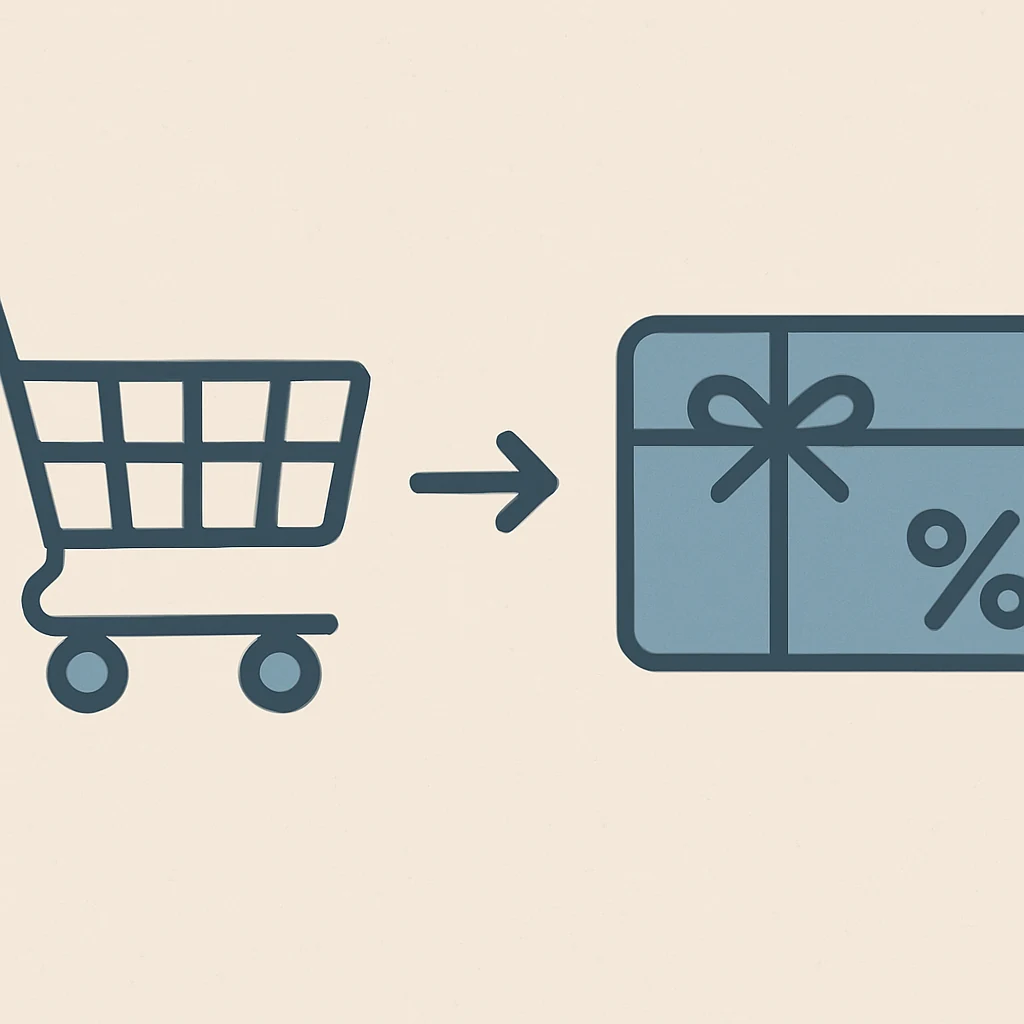
The core idea: buy “store money” for less than $1 on the dollar
When you buy a discounted gift card, you’re essentially pre-paying a purchase—only you’re doing it at a better rate than paying with your debit/credit card directly.
The appeal is simple:
- It often stacks with sales that don’t accept coupon codes.
- It works even when a retailer blocks promo extensions or restricts discounts.
- It can reduce your out-of-pocket total without changing what you buy.
The catch is also simple: gift cards can be restrictive. Returns may go back to store credit. Some cards can’t be reloaded. And you want to be picky about where you buy them.
A real-life scenario: “Sale price is good, but I want the best final total”
Imagine you’re buying a $300 item online from a big US retailer during a predictable promo window—maybe a Back-to-School sale, a Memorial Day weekend promo, or a Black Friday/Cyber Monday price drop.
You try the usual routes:
- The coupon field says “not eligible.”
- Cashback is fine, but nothing exciting.
- You still have sales tax, and maybe shipping unless you hit a threshold.
This is where discounted gift cards can be a clean win. If you can source a legitimate gift card for that retailer at a discount, you can pay the same checkout total but spend fewer actual dollars to fund it.
The decision point is not “Can I get a bigger discount?” It’s “Is the flexibility I’m giving up worth the savings?”
When discounted gift cards make the most sense (and when they don’t)
Gift card savings are strongest when your purchase is planned, likely to stick, and easy to price-check.
Best use cases
You’ll usually feel happiest using discounted gift cards when:
- You already buy there regularly. Groceries, household essentials, pet supplies, beauty refills, kids’ basics—stores you know you’ll use.
- The item is unlikely to be returned. Replacements, staples, or a model you’ve owned before.
- Coupons are restricted. Some brands and categories block promo codes, but gift cards still work.
- You’re shopping big seasonal events. Prime Day-style deal periods, holiday promotions, and end-of-season clearances often don’t stack with promo codes. Gift cards can still lower your out-of-pocket cost.
Times to skip it
It’s usually not worth adding the gift card layer when:
- Return risk is high. Apparel sizing, “try it and see” gadgets, or anything you might need to send back.
- You need flexibility across stores. Gift cards lock you into one retailer.
- You’re chasing a deal emotionally. If buying the gift card pushes you into spending more than you planned, the savings isn’t real.
The trade-offs that matter (US checkout reality)
This strategy sounds simple, but the details are what make it work.
1) Returns and refunds: what happens if you send it back?
In the US, many retailers refund purchases to the original payment method. But with gift cards, that “payment method” may be store credit or a gift card balance.
Practical takeaway: only use gift cards for purchases where you’re comfortable being refunded in-store.
2) Sales tax: gift cards don’t erase it
In most cases, you’ll still pay sales tax based on shipping address rules. Gift cards change how you pay, not the taxable amount.
Practical takeaway: discounted gift cards help most when you’re already committed to buying—because they reduce the cash you spend, even though tax still applies.
3) Shipping: don’t let shipping fees eat the savings
If your order misses free-shipping thresholds, your “savings” can disappear fast.
Practical takeaway: before you buy a gift card, mock up the cart, estimate shipping, and decide if you’ll bundle items to hit free shipping.
4) Fraud risk: the real reason people hesitate
This is the biggest downside. Gift cards are a popular target for scams.
Practical takeaway: buy from reputable marketplaces and sellers, keep documentation, and load/apply balances quickly after purchase.
A practical workflow: “commit late” to avoid regret
A lot of shoppers do this backward: they buy a discounted gift card first, then try to figure out what to buy.
Flip it.
Step 1: Build your cart and finalize the plan
Pick the exact item, color, size, and shipping speed. Confirm it’s in stock and sold by the retailer you expect (not a random third-party seller if that matters for returns and warranty).
Step 2: Check the retailer’s payment rules
Before you buy any gift card, verify:
- Does the retailer allow multiple gift cards per order?
- Can you combine a gift card with a credit card?
- Are there category restrictions (digital goods, subscriptions, marketplace sellers)?
These rules vary, and they can change.
Step 3: Buy only what you need (plus a tiny buffer)
Instead of buying a round-number gift card balance “for later,” buy close to your checkout total. If you need a buffer, keep it small so you don’t strand extra money.
Step 4: Apply gift card balance right away and save proof
As soon as you receive the code, add it to your account or apply it at checkout. Save the email/receipt and take a screenshot of the balance page.
If there’s ever a problem, you’ll want a paper trail.
Step 5: Pay the remainder with the card that helps you most
If you can split payment, the “remainder” is where you can still optimize—maybe a card that offers extended warranty protection, purchase protection, or category rewards.

Quick tips (the ones that prevent headaches)
- Treat discounted gift cards like cash: if it feels sketchy, it is.
- Don’t buy gift cards for stores you don’t already shop at.
- If a deal requires you to buy more to “make it worth it,” pass.
- Apply codes promptly and document balances.
Case study style decisions: three common situations
Situation A: You’re buying a “boring” essential you’ll keep
Think printer ink, shampoo you already use, pet food, or pantry items. Return risk is low. You’ll shop there again.
Decision: discounted gift card is a strong fit, even if the savings per order feels modest—because it’s repeatable.
Situation B: You’re buying a pricey item with return risk
Maybe a pair of shoes you haven’t tried, or a tech accessory you’re not sure will solve your problem.
Decision: consider paying normally, or only partially funding with gift cards. The flexibility of a clean refund can be worth more than saving a few dollars.
Situation C: You’re shopping a major sale event and coupons won’t work
During big US deal moments (Black Friday weekend, Cyber Monday, post-holiday clearance, back-to-school promos), items may already be “discounted as low as they go,” and promo codes are blocked.
Decision: discounted gift cards can be the stack that still works, as long as you’re confident about the purchase.
Where this fits with other savings strategies
Discounted gift cards aren’t a replacement for smart shopping basics—they’re a layer you can add when it makes sense.
If you’re building a broader system for saving online, pair this with your usual routine (price comparisons, return policy checks, and avoiding fee traps). If you want more deal-hunting fundamentals, you can always start at the guides on our homepage: /
FAQs
Are discounted gift cards legal and legitimate?
Yes—when purchased through reputable sources. The risk is not legality; it’s whether the specific card/code you receive is valid and unused. Stick to established platforms and verify balances quickly.
Can I still earn rewards points if I pay with gift cards?
Usually, you won’t earn credit card points on the portion paid with gift card balance (because you’re not charging that amount to your card). You may still earn the retailer’s loyalty points, depending on their program.
If I return an item bought with a gift card, do I get cash back?
Often no. Many retailers refund to store credit or back to a gift card. Read the return policy for that retailer and assume you’ll be refunded in-store.
Should I buy discounted gift cards before a sale like Black Friday?
Only if you’re confident you’ll use them regardless of what happens with pricing. If you buy too early and change your mind, you’ve traded flexibility for a small savings.
What’s the safest way to use them for online orders?
Buy close to the amount you need, apply the balance immediately, keep receipts/screenshots, and use reputable sellers. If something feels off, skip it—there are always other ways to save.
Bottom line: save like a planner, not like a gambler
Discounted gift cards work best when you treat them as a checkout tool—not as a treasure hunt. Build the cart first, confirm the rules, buy only the balance you need, and keep your documentation.
Do that, and you’ll get a repeatable way to shave dollars off online orders in USD—especially during the times of year when promo codes are dead on arrival but you still want a better final total.
You may also be interested

Cash Back or Coupon? Keep Your Online Savings From Disappearing
Learn when to use coupons, cash-back portals, or card offers—and how to avoid tracking mistakes before Black Friday and Cyber Monday.

Open-Box and Refurbished Deals: A Smarter Way to Shop Holiday Sales
Learn how to vet open-box and refurbished deals before Black Friday, from condition and warranties to battery health, seller quality, and gift readiness.

Discounted Gift Cards: 6 Mistakes That Can Erase Your Savings
Buying discounted gift cards for holiday shopping? Avoid balance problems, refund traps, and bonus-card restrictions before locking up your money.